Financial
CAGLCC names new board members
The Capital Area Gay & Lesbian Chamber of Commerce elected a new board of directors earlier this week.
The new board includes Mike Larson, president; Max Barger, vice president of programs and events; Joe Kolb, vice president of membership; Ernesto Santalla, secretary; and Tavarious Butts, treasurer.
“The Chamber’s new leadership brings fresh perspectives to grow the organization,” CAGLCC executive director Mark Guenther said in a statement. “In 2011, CAGLCC will focus on three major initiatives. Our top priority is membership. There is strength in numbers, but also in diversity. Increased membership opens doors to new opportunities for all. Our second area of focus is events and programs. … Finally, we will continue to engage the GLBT community to reinforce the message that CAGLCC means business.”
Real Estate
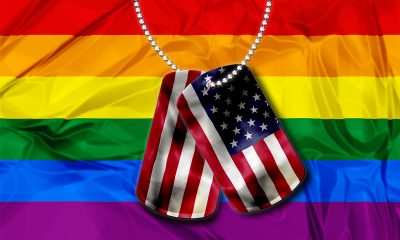
Honoring LGBTQ+ veterans and advancing housing equality
Because everyone deserves a place to call home

Home is more than a place to live. It represents safety, stability, belonging, and the freedom to be yourself. For LGBTQ+ individuals, couples, families, and veterans, finding a welcoming home is an important part of building a secure future.
As we honor LGBTQ+ veterans who have served our country with courage and dedication, we must also recognize the importance of equal opportunities to buy, sell, and own a home. Despite progress in LGBTQ+ rights, discrimination and housing inequality remain concerns for many members of the community.
Housing equality means making sure everyone is treated with dignity and respect.
Service, Sacrifice, Homeownership
LGBTQ+ veterans have served throughout our nation’s history, often facing additional challenges because of their sexual orientation or gender identity. Many served during periods when being openly LGBTQ+ could jeopardize their military careers and personal safety.
Their courage deserves recognition and lasting support.
For LGBTQ+ veterans transitioning to civilian life, homeownership can represent an important milestone. A stable home provides a foundation for reconnecting with family, pursuing careers, building relationships, and enjoying the freedoms they helped defend.
Eligible veterans should explore VA home loan benefits, which can include no required down payment in many circumstances and no private mortgage insurance. LGBTQ+ veterans deserve equal access to knowledgeable mortgage professionals and inclusive real estate representation.
Where LGBTQ+ Veterans Are Finding Community
Choosing where to live involves more than finding an affordable home. LGBTQ+ veterans may also prioritize inclusive communities, access to VA healthcare, veteran organizations, LGBTQ+ resources, and local housing opportunities.
While there is no definitive national ranking of cities specifically chosen by LGBTQ+ veterans, several destinations stand out for their combination of community resources and veteran support.
1. Seattle
Seattle and the surrounding King County area offer an established LGBTQ+ community and dedicated veteran resources. Minority Veterans of America operates Q’mmunity House, a transitional housing program specifically serving LGBTQ+ veterans experiencing homelessness. Washington also has an LGBTQ+ Veterans Outreach Coordinator through its Department of Veterans Affairs.
Real estate appeal: Buyers can explore Seattle neighborhoods and surrounding communities such as Tacoma and Bellevue, comparing housing costs, transportation, and access to services.
2. Portland, Ore.
Portland has an established LGBTQ+ community and veteran support network. The Portland VA offers LGBTQ+-focused healthcare navigation, and Oregon has an LGBTQ+ Veterans Program. The city also has community organizations and resources connecting veterans with housing assistance.
Real estate appeal: Portland offers a variety of housing options, from urban condominiums to suburban homes and surrounding communities. Buyers should compare neighborhood affordability and access to VA services.
3. San Diego
San Diego is attractive to veterans seeking coastal living, outdoor recreation, and access to established military and veteran communities. The region also has LGBTQ+ community organizations and VA healthcare resources.
Real estate appeal: Buyers can explore neighborhoods throughout San Diego County, considering housing costs, proximity to healthcare, and access to community amenities.
4. Denver
Denver combines an active LGBTQ+ community with access to veteran services and outdoor recreation. The VA Eastern Colorado Health Care System has participated in LGBTQ+ veteran support initiatives, making the region worth researching for veterans seeking inclusive healthcare resources.
Real estate appeal: From city condominiums to suburban properties, the Denver metropolitan area offers different homeownership opportunities and lifestyles.
5. Washington, D.C.
The nation’s capital offers established LGBTQ+ advocacy organizations, veteran support networks, and access to government and military-related employment opportunities. Regional resources also connect LGBTQ+ veterans with community support and services.
Real estate appeal: Buyers can compare Washington, D.C., with nearby communities in Maryland and Northern Virginia, evaluating transportation, housing costs, and local protections.
Before relocating, research current state and municipal protections, healthcare availability, property taxes, housing affordability, and community resources. The best city is ultimately the one that supports your lifestyle, financial goals, and sense of belonging.
Understanding LGBTQ+ Housing Rights
The federal Fair Housing Act prohibits discrimination based on race, color, national origin, religion, sex, familial status, and disability. Federal protections involving sexual orientation and gender identity have been recognized through interpretations of discrimination based on sex, while state and local laws may offer additional explicit protections.
LGBTQ+ buyers and sellers should document discriminatory behavior, save communications, and contact HUD, a fair housing organization, or a qualified attorney if they believe their rights have been violated.
Finding LGBTQ+-Friendly Real Estate Agents
Choosing the right real estate professional can make a significant difference.
Whether you are searching for a gay realtor, lesbian realtor, or LGBTQ+ friendly real estate agent, look for someone who respects your identity, understands your priorities, protects your privacy, and provides professional guidance without judgment.
GayRealEstate.com has served as a leading source for LGBTQ+ real estate connections and LGBTQ+ home buyer and seller representation for over 30 years. It is a valuable resource for finding inclusive real estate professionals who understand the community’s needs.
Home-Buying and Selling Tips for LGBTQ+ Individuals
Whether purchasing your first home or preparing to sell, consider these practical steps:
- Get financially prepared: Review your credit, establish a realistic budget, and compare mortgage options.
- Explore VA benefits: Eligible LGBTQ+ veterans should investigate VA-backed home loans and available assistance.
- Research neighborhoods: Evaluate community inclusivity, local protections, healthcare, and housing affordability.
- Understand ownership arrangements: Unmarried couples and partners should discuss property titles, shared expenses, and estate planning with qualified professionals.
- Choose inclusive representation: Work with an agent who respects your identity and understands your real estate goals.
- Protect your interests when selling: Establish a pricing strategy, evaluate offers objectively, and document any discriminatory treatment.
Resources for LGBTQ+ Veterans and Homeowners
Several organizations offer valuable information and assistance:
- GayRealEstate.com: LGBTQ+ real estate connections and inclusive buyer and seller representation.
- U.S. Department of Veterans Affairs: VA home loan benefits and veteran healthcare resources.
- HUD: Federal fair housing information and discrimination reporting.
- Minority Veterans of America: Advocacy, community support, and housing resources for underrepresented veterans.
- Human Rights Campaign: LGBTQ+ equality information and its Municipal Equality Index, which evaluates municipal policies and services.
Everyone Deserves a Place to Call Home
Honoring LGBTQ+ veterans means recognizing their service while continuing to advocate for equality in civilian life. Every veteran, couple, family, and individual deserves the opportunity to find a home where they feel safe, respected, and welcome.
Whether you are a first-time gay home buyer, a same-sex couple purchasing a property, a lesbian homeowner preparing to sell, or an LGBTQ+ veteran beginning a new chapter, you deserve professional representation that understands your journey.
GayRealEstate.com has spent more than 30 years connecting LGBTQ+ home buyers and sellers with real estate professionals who value inclusion, understanding, and representation.
Your identity should never be a barrier to homeownership. Your home should be a place where you feel safe, celebrated, and free to be yourself.
Because everyone deserves a place to call home.
Scott Helms is CEO of GayRealEstate.com. Reach him at [email protected].
Real Estate
Clients will confide almost anything in a real estate agent
Helping buyers feel the vibes and overcome the noise

Buying a home isn’t just a financial decision. As they say, if a person makes one change, the dominoes start to fall in other areas of life. One may end up with new neighbors and stop seeing the old ones. Someone may become besties with their real estate agent (at least for a few months). There was a meme going around that an agent marked himself as “in a relationship” with his client because they had been looking for a place for so many months. While meant as a joke, it’s not completely wrong. For a period of a few months, a client and their agent may be chatting every week. In some instances, even daily.
One phenomenon I noticed in my career as an agent and even when working side hustles as a bartender and as a rideshare driver – is that people would confide in me things they often wouldn’t even tell some of their best friends. The word “agent” literally has its root in the word “agency” – meaning, to act on one’s own behalf, to side with themselves, to support their own interests. As an agent, my job was to do those things for my client. To cheer them on, to help them act on their own behalf. To side with them. Or at least to remind them to do that for themselves. Occasionally they would confide in me that a family member or an influential person in their life, such as a parent, was trying to get involved in more of the decision making than they were comfortable with. Or that all their friends wanted them to live in “X” neighborhood, but that they really were leaning toward looking in “Y” neighborhood.
My experiences as a bartender and a rideshare driver were not unlike being the priest in a confessional, to be honest. “In vino veritas” or maybe “In the back seat veritas” – the anonymity that they may never see me again, so why not spill their whole life story? Sometimes I think they just needed to tell someone what was on their mind and were trying to figure out their next move in a confusing situation.
While working as an agent, I was helping people with one of the biggest decisions in their lives: Where are they going to park hundreds of thousands of dollars, as well as live? Each person spends a huge percentage of their life in the home. The home is for decorating, personalizing, studying, working, socializing, living with pets, dreaming, laughing, crying and hitting the “reset button” when the world becomes too much. It’s only normal that on occasion the conversation turned to what made a client feel safe, feel comfortable, joyful, or not. People literally get a “vibe” off the homes they step in, the people they are around, and the places they work. Those vibes can be good, or the vibes can be bad.
I often just stood back and let my clients gather a vibe. Sometimes they would walk in the front door, get to the front living room or dining room, and stop. They would say, “this is it.” Or they would get three steps in the door and say, “Nope. Not it. Let’s go. I don’t even want to go upstairs.”
What is the point of this article? I guess it’s about vibes and listening to oneself. There is a lot of noise out there in the world. If one spends five minutes on Instagram, they will see at least 15 posts with “5 Things you NEED TO KNOW about Walk in Closets and James Talarico.” “Top Ten Reasons You Should Build your House out of Protein!” “16 ways you can clean out your colon AND your closets in the same day!”
Often, I found, as an agent, the best I could do was to help a client hear their own voice over all the noise. After all, it’s their money, and their house. And it’s their decision. And often the vibes that one is picking up from a house, or a situation can say a lot, if we listen to them. Some people may call them “vibes” and others may call it “intuition”; either way, they can often guide someone to the next step.
Joseph Hudson is a referral agent with RLAH. Reach him at 703-587-0597 or [email protected].
Real Estate
The gayborhood is changing. Are we?
Some say we priced ourselves out of our former safe enclaves

There was a time when moving to Dupont Circle wasn’t just a real estate decision. It was practically a declaration of independence.
You weren’t simply choosing an apartment. You were choosing a life. One where you could hold someone’s hand on the sidewalk, flirt badly at a bar, or walk into a room without first figuring out who was safe to be yourself around.
For many of us, the gayborhood wasn’t just where we lived. It was where we finally exhaled.
And now? Well, that same one-bedroom might cost more than your parents’ first house. The gay bar is a boutique fitness studio, the bookstore is long gone, and the guy who once organized protests now has very strong opinions about his condo association.
Progress is complicated.
But here’s a question worth asking: Did we outgrow our gayborhoods, or did we make them so desirable that we priced ourselves out?
Probably a little of both.
Washington’s LGBTQ+ geography has been shifting for decades. Dupont Circle was once the undisputed center of gay D.C. Logan Circle, Shaw, and eventually neighborhoods farther north and east became part of an expanding map of queer life.
Today, you’ll find LGBTQ+ couples planting gardens in Brookland, restoring old houses in Petworth, raising families in Takoma, dining in Mount Rainier, and hosting spectacularly opinionated “The Traitors” watch parties in Hyattsville.
And isn’t that what we wanted?
We fought for the freedom to live openly, to marry, to build families, to own homes together, and to exist in places where being gay wasn’t the first, last, and only thing anyone knew about us.
In many ways, we won something extraordinary: the freedom to choose.
But freedom and affordability aren’t the same thing.
The neighborhoods LGBTQ+ people helped make vibrant, interesting, and culturally significant have become some of the most expensive places to live. The artists, activists, bartenders, drag performers, and young people who gave those neighborhoods their pulse aren’t necessarily the ones benefiting from rising property values.
There’s a particularly bitter irony in watching a neighborhood celebrate its queer history while becoming financially inaccessible to the next generation of queer people.
A rainbow crosswalk is lovely. It doesn’t help you make the mortgage.
And yet, we shouldn’t confuse change with loss. Not entirely.
As real estate agents—and as two men who’ve built a life together in this region—we get a front-row seat to what home means to people. And what we hear isn’t always about square footage, interest rates, or whether the kitchen has enough counter space for an espresso machine nobody knows how to use.
People want to belong.
They want neighbors who notice when they haven’t been around. A porch where friends can gather. A street where their family, whatever shape that family takes, is simply another family on the block.
For LGBTQ+ buyers, those things can carry an extra layer of meaning. Some of us grew up believing that the life we have today wasn’t even possible. A house with our partner’s name on the deed. A wedding photograph on the mantel. A neighborhood where nobody asks which one of us is the husband.
Well, technically, we’re both the husband. That’s rather the point.
But here’s where we think the conversation gets interesting.
Maybe the future of the gayborhood isn’t a specific collection of streets. Maybe it’s a set of values we carry into the places we choose to call home.
The willingness to welcome the outsider. To defend the neighbor who is different. To make room for the person who hasn’t yet found their people or their place.
Because the magic of the old gayborhood was never really the bars or the rainbow flags. Those were the visible parts. The real magic was that people looked out for one another, often when nobody else would.
And we shouldn’t romanticize that history too much, either. Those neighborhoods weren’t equally welcoming or affordable to everyone. Race, gender, and money shaped who got to belong then, just as they do now.
So perhaps the question isn’t whether Dupont Circle will ever be what it once was. It won’t. Cities change. People change. Even our favorite dive bars eventually discover artisanal cocktails.
The better question is whether we’re taking the best parts of what we built and bringing them with us.
Because if we move into beautiful homes, watch our property values rise, and forget to hold the door open for the next generation, what exactly have we accomplished?
We spent decades fighting for the right to live wherever we wanted. Now we have to make sure we’re not the last ones who can afford to.
The gayborhood may be changing.
The responsibility to make people feel at home shouldn’t.
Randy LiVorsi and Daren Phillips are with the 2 Rivers Team at Compass. Learn more at 2riversteam.com.

VIDA Fitness owner ‘devastated’ over fatal shooting

‘Blue Wave’ proves transphobia is not a winning political strategy

Many ways to move forward after the elections

Authorities identify VIDA Fitness shooter

Witness describes scene inside Logan Circle gym during fatal shooting

Epic ‘La bola negra’ delivers powerful romance for the ages

Kim Kardashian gets the bio treatment in new book

Honoring LGBTQ+ veterans and advancing housing equality

Botswana’s marriage equality case and the politics of family values

New Orchestra of Washington to perform ‘Requiem for a People’
-

 Movies5 days ago
Epic ‘La bola negra’ delivers powerful romance for the ages
-
Books4 days ago
Kim Kardashian gets the bio treatment in new book
-
Real Estate4 days ago
Honoring LGBTQ+ veterans and advancing housing equality
-
Botswana4 days ago
Botswana’s marriage equality case and the politics of family values