Local
Anniversary for marriage
One year after the first same-sex couples wed in D.C., all eyes are on Maryland
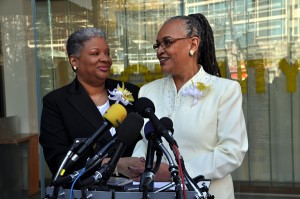
Candy Holmes (left) and Darlene Garner on their wedding day last March. (Blade file photo by Michael Key)
As the battle over marriage equality in Maryland reaches its endgame, the sparks it throws are reflected in the lives of real people, including a married couple wed just next door in Washington on the first day the D.C. same-sex marriage law went into effect in March of 2010.
Residents of Bowie, Md., one of the three couples wed with fanfare at the Human Rights Campaign headquarters on March 9, 2010 — Candy Holmes and Darlene Garner — looked back this week at the struggles to win equality in D.C. and the continuing efforts in Maryland.
“In retrospect, it’s been a mixed year,” Holmes says. “Because it was a great year to be married in D.C. in my hometown and Darlene’s adopted city, really it was a year of a piece of heaven, once we got through the murky waters that it might be taken away by the courts. It was the realization of something long desired by us, to be married, and legally acknowledged so, to the love of my life.”
“But when we come back to where we live, in Maryland, where our marriage is not recognized, the struggle goes on because we were free to be married in D.C., but we are not free to be married in Maryland — yet.”
Holmes and Garner — who dated on and off for 14 years before getting married — are both ordained ministers in the Metropolitan Community Church (MCC), a liberal, mostly gay Christian denomination — and now they are determined to see the blessings afforded to them by marriage become theirs by right also where they live.
“We have so much enjoyed the last 12 months as a married couple,” Garner says. “We have been completely embraced by our extended and blended families — children, grandchildren, even great-grandchildren, cousins — and I will be eternally grateful to the D.C. government elected officials, and also remain hopeful that the elected officials in my home state will follow the example set in our national capital.”
When Garner and Holmes boast of their blended, extended family, they are not talking idly. Garner is the mother of four, grandmother of seven and great-grandmother of three, the eldest of whom is now 3 years old.
Holmes considers Garner’s offspring hers too.
The giddiness and hoopla from a year ago now long since subsided, how do they assess what marriage equality means to them today? Once they were married, “there’s been a big difference at work,” says Holmes, who has worked as a manager in the federal government’s GAO (now called the Government Accountability office) for 34 years. “It shows up in how people greet me and treat me, the respect and regard from others.”
Statistics from D.C. Superior Court’s Marriage Bureau show a surge of weddings in the District, more than double the number from the prior year, March 2009-March 2010.
Those numbers — 6,604 marriages in D.C. from March 3, 2010, when the same-gender right to marry, enacted in December 2009, went into effect, through March 2, 2011 — vaulted over the number from the prior year, when only 3,101 couples applied for marriage licenses in D.C.
The city doesn’t track how many straight couples there were versus same-sex couples, but the court attributes the spike to the change in the marriage law.
Speaking last week at an event held to celebrate enactment of the new law, Mayor Vincent Gray said he “was thrilled to hear this,” adding that the new law “has been so smoothly implemented,” even though he acknowledged that he has lost some friends due to his own outspoken support for the measure when he served on City Council until being elected mayor in November. But he said that was a price he willingly has paid for doing what he called “the right thing.”
As for the possibility that the new Republican majority in the U.S. House of Representatives might still seek to roll back the new law, the mayor said he was aware it could happen, but “I haven’t heard anything yet” about it.
And so the dust in D.C. has settled. And in the wake of the new law have come party planners and experts in wedding officiating like Deborah Cummings-Thomas and Sheila Alexander-Reid, both licensed and ordained to perform weddings, lesbians and partners since May of last year in Marry Me in D.C., which helps connect people wanting to marry in D.C. with what Cummings-Thomas calls “our network of gay and gay-friendly service providers who celebrate, not just tolerate them on their wedding day.”
On March 19, Marry Me in D.C. hosts a “Marriage Equality Wedding Expo,” from noon to 4 p.m. at the Washington Court Hotel, 525 New Jersey Avenue NW, on Capitol Hill. Tickets are $10 in advance or $15 at the door. Advance registration is encouraged at marrymeindc.com.
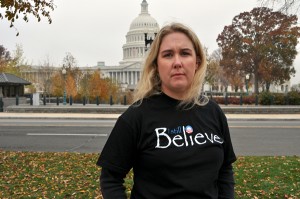
Robin McGehee (Blade file photo by Michael Key)
Marriage not a happy ending for all
With the legalization of same-sex marriage comes, inevitably, gay divorce.
Robin McGehee has felt its sting. The 37-year-old California resident and lesbian who decided to wed in June 2008, says she decided to un-wed a year and a month later, in July 2009. She and her partner took their vows under California’s same-sex marriage law prior to its being overturned by the state’s voters in November 2008 ballot when Proposition 8 passed. Their marriage remained valid however under a grandfather clause.
But it fell victim nevertheless, in an ironic way, says McGehee, since it was the fight against its passage that brought her into the fray to oppose Prop 8.
After getting iced out of volunteer work at her son’s Catholic school, she became a gay activist and helped organize the National Equality March, held in Washington in October 2009. As a newly mobilized activist, she says, she was “on the road almost every weekend for months at a time.”
And that activism led her away, she acknowledges, from placing a focus needed at home, to repair the fraying ties that bound her with her spouse, a woman 19 years her senior, with whom she had joined in 2001 in a domestic partnership contract under California law. They had been a couple for 11 years at the time of their wedding.
She says she “met someone on the road, someone I connected with emotionally.” Basically, she admits, “I fell for someone else.” They have now been together for a year and a half, and they face, McGehee says, “the same challenges,” because now she is also working a second job, as executive director of GetEqual, a group that focuses on using non-violent civil disobedience to advance LGBT rights.
As for her former spouse, they remain in constructive discussions over dual issues, caught up still in legal proceedings over the terms of ending both their marriage and their earlier domestic partnership. Closure should come, she expects, “any time now.”




District of Columbia
To school to homeschool to school again
‘Pandemic took more than 2 years of school. It took 2 years of my childhood’
It wasn’t until I no longer had those 30 minutes of lunch and recess, when all the boys and girls would come together to trade bracelets, make up games, gossip about who we liked, play tag and sports, that I realized how much of my childhood happened during the parts of school that had nothing to do with schoolwork.
I was in the third grade when the COVID-19 pandemic began. I remember my parents explaining that I couldn’t go back to school and wondering when I would see my friends again — or whether I wanted to go back at all. But after spending two years learning from home, cut off from the friends, teachers and routines I had known, I began to understand what I had lost.
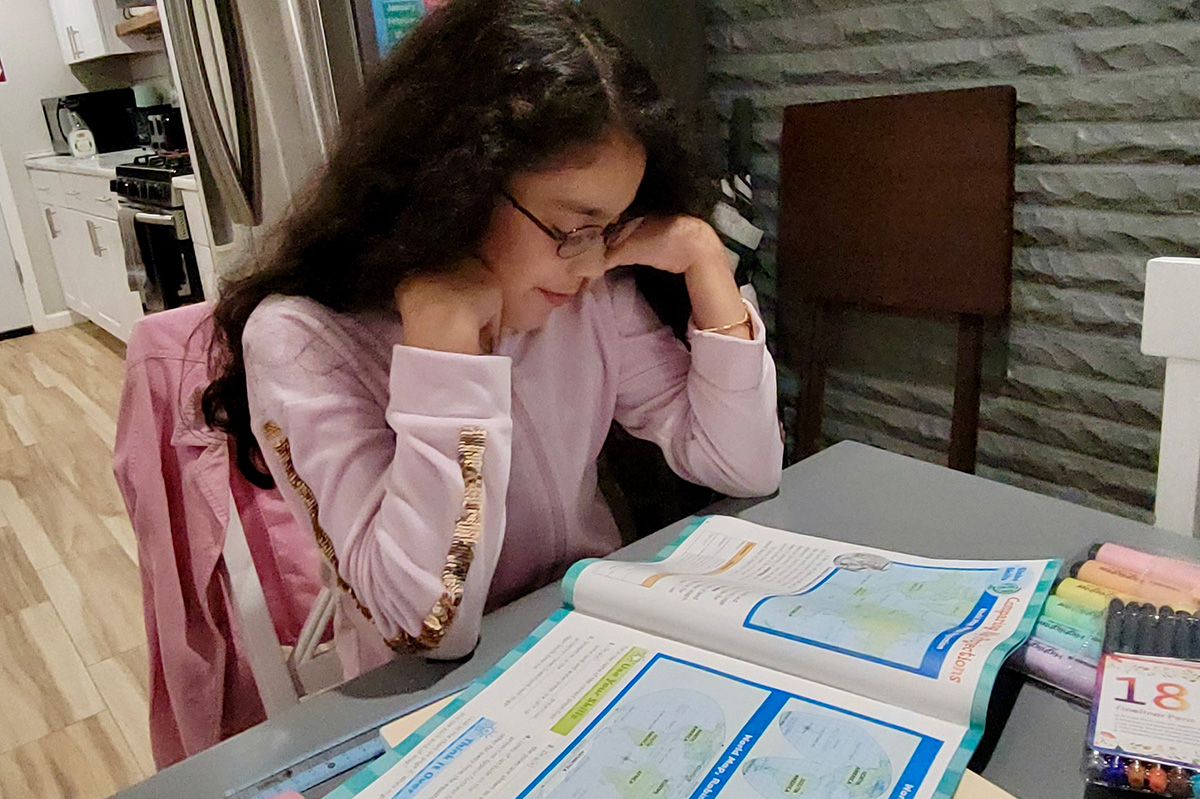
For many of my friends and classmates, going to school changed from a bus ride every morning to clicking a link and seeing their teachers and classmates through a screen. My experience was a little different. Instead of going to virtual school, I was homeschooled. My new routine was sitting at my kitchen table, with my mom teaching me how to write a paragraph or solve a math problem, surrounded by the same walls I saw every day.
My family was not alone. Many families across the country turned to homeschooling after schools shut down. Homeschooling increased sharply during the pandemic, especially among Black families, rising from 3.3 percent in the spring of 2020 to 16.1 percent that fall, according to the U.S. Census Bureau’s Household Pulse Survey.
It would be two years before I entered a classroom again.
At first, I loved homeschooling.
I didn’t have to wake up early or put on a uniform. I liked the comfort of my own room, surrounded by my stuffed animals and toys. I didn’t have to push my way through that horrible lunch line because my food was now waiting for me at the kitchen table.
It felt like a fever dream where school was canceled and all day was fun. That was my view as a 9-year-old.
But as days turned into weeks and weeks into months, that initial excitement wore off.
Every day became the same routine. There was no recess when I could play princess with all the other girls. There were no conversations in the lunch line and none of the small things that had broken up the school day before. I didn’t realize how much those moments mattered until I could no longer experience them.
With less to look forward to, I started spending more time on the internet.
I turned to platforms such as YouTube and TikTok to distract myself. Instead of seeing what the kids around me were doing every day, I could watch people online show off their clothes, makeup, dances, art and lives.
Over time, I started comparing myself with what I saw. I thought the way I dressed was childish and wanted to be like the superstars I saw online. I followed what was trendy and admired the girls and boys who looked so confident on screen.
Before the pandemic, my friends and I didn’t need the internet to tell us what was popular. But during those years at home, I became much more aware of what other people thought was cool and what someone my age was supposedly supposed to like. I felt as though I was growing up without getting to experience all the steps in between.
When I finally returned to school, I thought my classmates would be excited to see each other again after spending so much time apart.
Instead, I realized how much we all changed.
When I walked through those doors, I remembered vague memories of running down those halls and always seeing my peers with smiles on their faces. Now those same faces were tired, with eye bags. The lunchroom, which used to be full of life with happy kids eating to their hearts’ content, turned into a lunch where all the girls controlled what they ate and talked about the latest trend on TikTok.
Maybe some of that change would have happened anyway. Kids grow up. Interests change. Middle school has always been awkward.
But I didn’t get to watch my classmates gradually change or change alongside them. I left one social world and came back to another.
When I returned, I was expected to understand a social world that had changed while I was gone. I felt I missed so much that I would never get back, and without that day-to-day learning to help me adapt to these new norms, I struggled.
Those everyday interactions are an important part of how children learn to get along with others: A 2026 meta-analysis of 157 studies from 33 countries published in the academic journal Child Development found that children’s social and emotional skills declined during the pandemic, along with their overall well-being. The researchers noted that schools are not just places where children learn math and reading. They are also places where children learn how to make friends, work through disagreements, understand other people’s feelings and manage their own emotions.
Years later, many parents say some of those effects are still being felt. In a 2025 Gallup survey, 45 percent of parents with school-age children said the pandemic hurt their child’s social skills, and 22 percent said those problems were still ongoing. Forty-two percent said the pandemic negatively affected their child’s mental health. Parents were more likely to report problems with their children’s social skills and mental health than with their academics or physical health.
I saw some of those changes around me, too. Classmates who once seemed outgoing became quieter or more withdrawn. Starting conversations felt harder. Making new friends felt harder. Sometimes retreating into myself felt easier than trying to figure out where I belonged.
Now, the kids who were in elementary school when the pandemic began are moving through high school. We are older, but some of us are still figuring out what those missing years meant.
Before the pandemic, I thought lunch and recess were simply breaks from learning. Now I understand that we were learning during those 30 minutes, too. We were learning how to make friends, how to disagree and make up, how to be embarrassed and recover from it, what we liked and what we didn’t, and slowly who we wanted to become.
I can’t know exactly who I would be if I had spent those years inside a classroom instead of at home. Maybe middle school still would have been awkward. Maybe I still would have worried about fitting in.
But I know I missed something I didn’t understand was important until it was gone: the ordinary, sometimes boring, sometimes ridiculous parts of growing up alongside other kids.
You can make up schoolwork. You can return to the classroom. But there are some parts of childhood you don’t get to repeat.
Gloria Collazo Huamani is a sophomore at Benjamin Banneker Academic High School in D.C., one of Youthcast Media Group’s journalism class partners. Gloria worked with James Jarvis, a YMG mentor-editor and reporter for Inside Health Policy, on this story.
Virginia
Gay Va. couple hopeful voters will enshrine marriage equality in state constitution
Early voting has already begun in the state
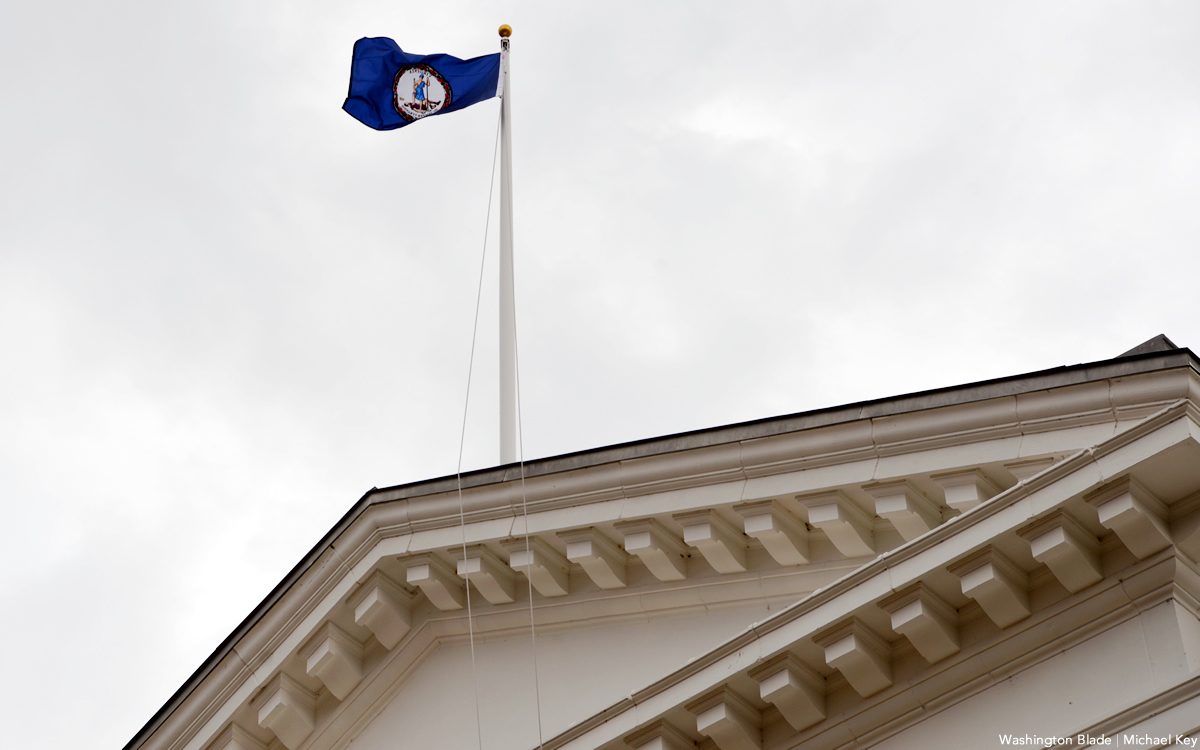
A referendum on whether to enshrine marriage equality in Virginia’s constitutional amendment is on the ballot this year.
If voters approve Question 2, it will codify the U.S. Supreme Court’s Obergefell ruling in 2015 that extended marriage rights to same-sex couples across the country — gays and lesbians have been able to legally marry in Virginia since Oct. 6, 2014.
Ron Bookbinder and James Fisher are a married couple who live in Arlington.
They have been together for 38 years — Bookbinder and Fisher married in 2014.
“We think this is a critical vote to remove this discriminatory language from the constitution and to ensure that going forward, no matter what happens, the state of Virginia will ensure marriage equality,” Fisher told the Washington Blade. “It is it is really difficult and upsetting to think that our current state constitution would prohibit same-sex marriage, even though the federal government overrides that now. There’s no saying what may happen in the future.”
Bookbinder said it was important for him and Fisher to get married “to gain social equality.”
“I was surprised how good it felt, how important it was to begin to say, ‘my husband rather than my partner,'” Bookbinder said.
Bookbinder then explained why it feels good to be married.
“Is it a legal partner, a business partner, a tennis partner, you know, or a romantic partner? But when you say my husband James, everyone knows exactly what you mean and confers an equal status with everyone else who’s married, and we were both surprised at how good it felt and how equal it felt to suddenly be married and be able to state that you were married and discuss your husband rather than your partner, and I would hate to lose that,” he said.
Bookbinder and Fisher said they are hopeful that voters will approve the amendment, noting Virginia has become more progressive over the years.
“I think people have, with the Supreme Court decision, people have seen that a same-sex marriage is just a marriage,” stated Fisher. “It’s just two people who love each other, and I think more and more people have attended a same-sex marriage, someone in their family or a friend, and the experience of what this is, firsthand experience, is so important in shaping people’s opinions, and I think the period of time that we’ve had since the Obergefell decision has given a lot of voters that experience, which I think is really important and powerful.”
The couple also said the push to enshrine marriage equality in Virginia’s constitution is in response to the Trump-Vance administration.
“And I think due to President Trump doing all the horrible things he’s done to so many groups, including LGBTQ, especially trans people, that Virginians are kind of pushed to be even more progressive to protect those who need protection, which would include the LGBTQ community in terms of marriage equality, so I’m confident it will pass,” said Bookbinder.
Narissa Rahaman, executive director of Equality Virginia, sent the Blade a statement about early voting on Question 2 that has already begun.
“With early voting now underway, our focus is making sure every Virginian knows Question 2 is on their ballot,” said Rahaman. “The outdated ban on same-sex marriage still in Virginia’s state constitution leaves a gap in protections for the thousands of same-sex couples that call this state home, but after 20 years we have the chance to fix it.”
Log onto www.mobilize.us/vaformarriage to find out more about the campaign in support of Question 2.
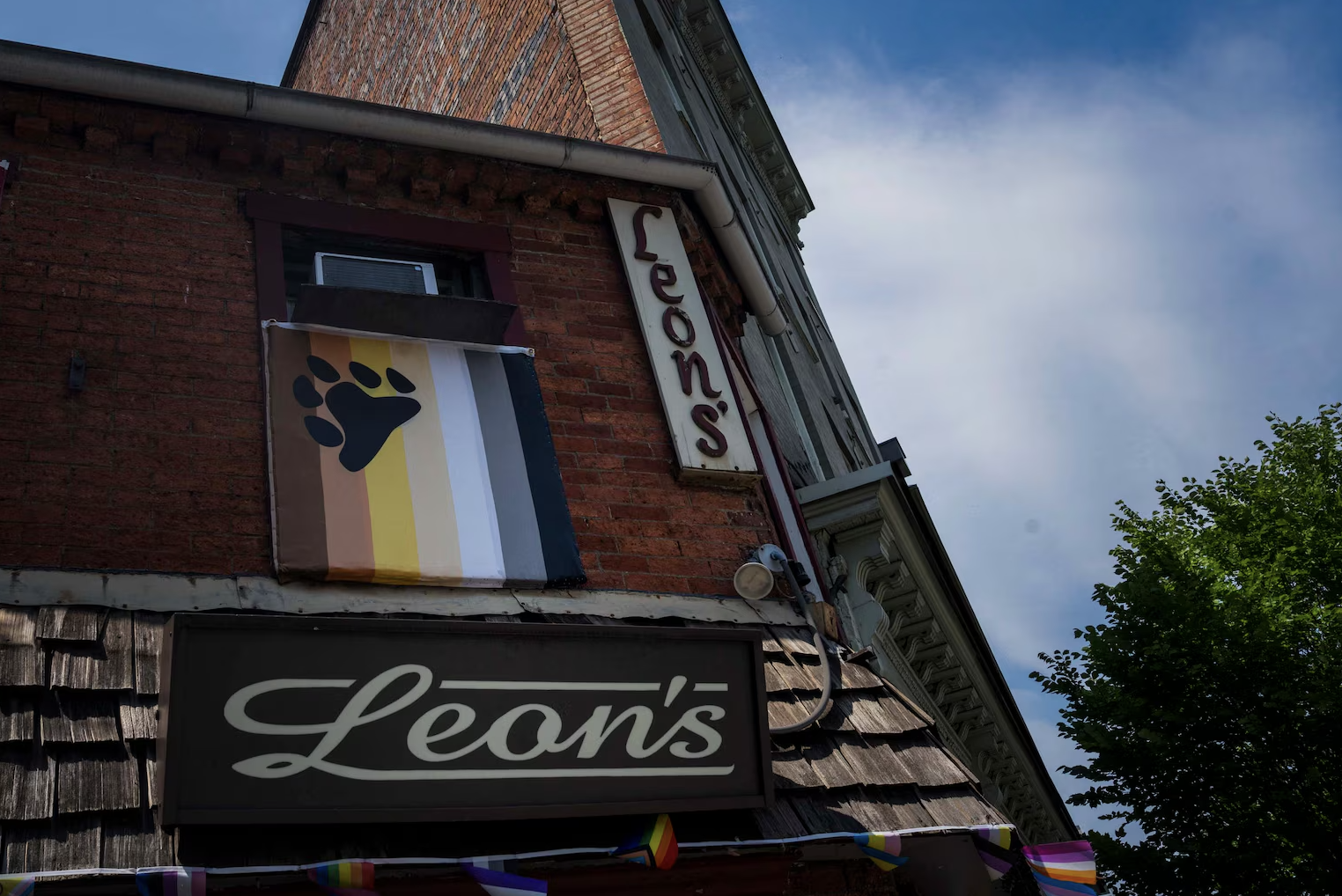
By JOHN-JOHN WILLIAMS IV | Those legendary heavy-handed pours, spirited karaoke and trivia nights, and groan-worthy wall-to-wall patrons on packed nights are back!
Leon’s will live to see another day.
Baltimore’s oldest gay bar, which opened in the 1950s, closed in July following the death of its owner, Ron Singer.
The rest of this article can be read on the Baltimore Banner’s website.

To school to homeschool to school again

Ryan Murphy’s ‘Monster’ vilifies the lesbian

The right to be an ordinary transgender man

LGBTQ community must vote in big numbers

Victory Fund board investigates former staffers’ allegations against CEO Evan Low

PHOTOS: HRC National Dinner

What’s frightening is also funny in ‘Venus’

I’m 66, he’s 27. Is it love or am I being played?

The LGBTQ real estate map is being redrawn