Connect with us

Arts & Entertainment

Gaining ‘Momentum’

DJ Alyson Calagna kicks off Cherry with Apex party

Published

on

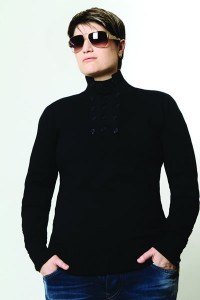
DJ Alyson Calagna says she likes to start her sets slow and work to a boil. (Photo courtesy of the Cherry Fund)

Cherry Fund’s annual charity circuit party may have officially kicked off Thursday, but the party has barely started with more events all day Friday, Saturday and Sunday.

The big party tonight is Momentum hosted by Miss Foozie at Apex (1415 22nd St., N.W.) with lesbian DJ Alyson Calagna and DJ Steve Henderson.

With a line-up of mostly male DJs, Calagna, who has been spinning for 19 years, kind of sticks out of the crowd, and she likes it that way.

“It feels pretty good … now things have changed and it’s a lot easier to be a girl DJ,” Calagna says. “I have a much more masculine essence so its good to be among the boys.”

She doesn’t stay at one club and spin, but tours and goes somewhere new every weekend, with fans sometimes traveling to hear her at the bigger parties.

Circuit parties don’t seem to be as big as they once were, and Calagna thinks it’s just the way the club culture goes every five or six years with peaks and drops.

“Right now, I think we’re in a bit of a reorganizing phase, weeding out what’s not working, changing things,” she says. “There are some circuit parties that do really, really well.”

Music has always been a part of Calagna’s life.

When she was young, she wanted to be a radio DJ, until she started clubbing.

She became a resident dancer at a teen club, getting close to the different DJs there. One night, she went up to the DJ and just asked if he’d teach her.

“The first time I went to his studio where he practiced, that was it … I knew the moment I touched a turntable, that was what I wanted to do,” Calagna says, adding she almost gave up dancing right there.

This isn’t Calagna’s first turn at Cherry.

“I play a lot of circuit parties … Cherry is one of the ones that really still stands for something,” Calagna says. “I really like what they’re doing.”

Her style is house-based, but Calagna doesn’t stay in a single genre or follow a set list when she spins, rather going with the vibe of the crowd, comparing what she does to a chef visiting another country and changing regional recipes to fit his style of cooking.

Don’t expect the music to be fast and rocking right away tonight. That’s one of her biggest DJ pet peeves, time-appropriate music.

“I start deeper and more soulful and melodic in the beginning because I don’t like to bang out clubs until there’s a lot of people in there,” Calagna says. “I like the music to start slow and kind of build.”

Calagna does get paid for her appearance at Cherry, but she gives the organizers a big break and she donates a large portion of the money she receives to the Cherry Fund, which benefits AIDS charities.

Calagna is probably looking forward to seeing the other DJs on Saturday night at the main event the most.

“I’ve always really enjoyed playing in D.C.” she says. “I love the city … I’m looking forward to having the next night off.”

DJs Oscar G, BennyK and Town’s own Wess will be spinning at Town (2009 8th St., N.W.) from 9 p.m. to 4 a.m. with performances by Macaviti and the Ladies of Town.

Friday also has two other events, a fashion show at Caramel Boutique (1603 U St., N.W.) with local designer Andrew Nowell from 2 to 8 p.m. and a bachelor auction at Town with DJ Bandit and D.C. Bear Crue from 7 to 9 p.m.

After the main event on Saturday is an after-hours party at Fur (33 Patterson St., N.E.) with DJ Peter Rauhofer from 4 to 9:30 a.m.

Sunday continues with a Tea Dance at Cobalt (1639 R St., N.W.) from noon to 4 p.m. with DJ Mike Reimer and Ovation with DJs Stephan Grondin and Sin Morera from 7 p.m. to 2 a.m. at Ultrabar (911 F St., N.W.).

For more information and to purchase tickets to events, visit cherryfund.org.

Advertisement
FUND LGBTQ JOURNALISM
SIGN UP FOR E-BLAST

Drag

PHOTOS: Drag in rural Virginia

Performers face homophobia, find community

Published

on

Four drag performers dance in front of an anti-LGBTQ protester outside the campus of James Madison University in Harrisonburg, Va. (Blade photo by Landon Shackelford)

Drag artists perform for crowds in towns across Virginia. The photographer follows Gerryatrick, Shenandoah, Climaxx, Emerald Envy among others over eight months as they perform at venues in the Virginia towns of Staunton, Harrisonburg and Fredericksburg.

(Washington Blade photos by Landon Shackelford)

Continue Reading

Books

New book explores homosexuality in ancient cultures

‘Queer Thing About Sin’ explains impact of religious credo in Greece, Rome

Published

on

(Book cover image courtesy of Bloomsbury)

‘The Queer Thing About Sin’
By Harry Tanner
c.2025, Bloomsbury
$28/259 pages

Nobody likes you very much.

That’s how it seems sometimes, doesn’t it? Nobody wants to see you around, they don’t want to hear your voice, they can’t stand the thought of your existence and they’d really rather you just go away. It’s infuriating, and in the new book “The Queer Thing About Sin” by Harry Tanner, you’ll see how we got to this point.

When he was a teenager, Harry Tanner says that he thought he “was going to hell.”

For years, he’d been attracted to men and he prayed that it would stop. He asked for help from a lay minister who offered Tanner websites meant to repress his urges, but they weren’t the panacea Tanner hoped for. It wasn’t until he went to college that he found the answers he needed and “stopped fearing God’s retribution.”

Being gay wasn’t a sin. Not ever, but he “still wanted to know why Western culture believed it was for so long.”

Historically, many believe that older men were sexual “mentors” for teenage boys, but Tanner says that in ancient Greece and Rome, same-sex relationships were common between male partners of equal age and between differently-aged pairs, alike. Clarity comes by understanding relationships between husbands and wives then, and careful translation of the word “boy,” to show that age wasn’t a factor, but superiority and inferiority were.

In ancient Athens, queer love was considered to be “noble” but after the Persians sacked Athens, sex between men instead became an acceptable act of aggression aimed at conquered enemies. Raping a male prisoner was encouraged but, “Gay men became symbols of a depraved lack of self-control and abstinence.”

Later Greeks believed that men could turn into women “if they weren’t sufficiently virile.” Biblical interpretations point to more conflict; Leviticus specifically bans queer sex but “the Sumerians actively encouraged it.” The Egyptians hated it, but “there are sporadic clues that same-sex partners lived together in ancient Egypt.”

Says Tanner, “all is not what it seems.”

So you say you’re not really into ancient history. If it’s not your thing, then “The Queer Thing About Sin” won’t be, either.

Just know that if you skip this book, you’re missing out on the kind of excitement you get from reading mythology, but what’s here is true, and a much wider view than mere folklore. Author Harry Tanner invites readers to go deep inside philosophy, religion, and ancient culture, but the information he brings is not dry. No, there are major battles brought to life here, vanquished enemies and death – but also love, acceptance, even encouragement that the citizens of yore in many societies embraced and enjoyed. Tanner explains carefully how religious credo tied in with homosexuality (or didn’t) and he brings readers up to speed through recent times.

While this is not a breezy vacation read or a curl-up-with-a-blanket kind of book, “The Queer Thing About Sin” is absolutely worth spending time with. If you’re a thinking person and can give yourself a chance to ponder, you’ll like it very much.

Continue Reading

Theater

‘Octet’ explores the depths of digital addiction

Habits not easily shaken in Studio Theatre chamber musical

Published

on

The cast of Octet (left to right): Aidan Joyce, Jimmy Kieffer, Chelsea Williams, Tracy Lynn Olivera, Amelia Aguilar (sitting upright), Ana MarcuAngelo Harrington II, and David Toshiro Crane. (Photo by Margot Schulman) 

‘Octet’
Through Feb. 26
Studio Theatre
1501 14th Street, N.W.
Tickets start at $55
Studiotheatre.org

David Malloy’s “Octet” delves deep into the depths of digital addiction. 

Featuring a person ensemble, this extraordinary a capella chamber musical explores the lives of recovering internet addicts whose lives have been devastated by digital dependency; sharing what’s happened and how things have changed. 

Dressed in casual street clothes, the “Friends of Saul” trickle into a church all-purpose room, check their cell phones in a basket, put away the bingo tables, and arrange folding chairs into a circle. Some may stop by a side table offering cookies, tea, and coffee before taking a seat. 

The show opens with “The Forest,” a haunting hymn harking back to the good old days of an analog existence before glowing screens, incessant pings and texts.

“The forest was beautiful/ My head was clean and clear/Alone without fear/ The forest was safe/ I danced like a beautiful fool / One time some time.”

Mimicking an actual step meeting, there’s a preamble. And then the honest sharing begins, complete with accounts of sober time and slips.

Eager to share, Jessica (Chelsea Williams) painfully recalls being cancelled after the video of her public meltdown went viral. Henry (Angelo Harrington II) is a gay gamer with a Candy Crush problem. Toby (Adrian Joyce) a nihilist who needs to stay off the internet sings “So anyway/ I’m doing good/ Mostly/ Limiting my time/ Mostly.”

The group’s unseen founder Saul is absent, per usual.

In his stead Paula, a welcoming woman played with quiet compassion by Tracy Lynn Olivera, leads. She and her husband no longer connect. They bring screens to bed. In a love-lost ballad, she explains: “We don’t sleep well/ My husband I/ Our circadian rhythms corrupted/ By the sallow blue glow of a screen/ Sucking souls and melatonin/ All of my dreams have been stolen.”

After too much time spent arguing with strangers on the internet, Marvin, a brainy young father played by David Toshiro Crane, encounters the voice of a God. 

Ed (Jimmy Kieffer) deals with a porn addiction. Karly (Ana Marcu) avoids dating apps, a compulsion compared to her mother’s addiction to slot machines.

Malloy, who not only wrote the music but also the smart lyrics, book, and inventive vocal arrangements, brilliantly joins isolation with live harmony. It’s really something. 

And helmed by David Muse, “Octet” is a precisely, quietly, yet powerfully staged production, featuring a topnotch cast who (when not taking their moment in the spotlight) use their voices to make sounds and act as a sort of Greek chorus. Mostly on stage throughout all of the 100-minute one act, they demonstrate impressive stamina and concentration. 

An immersive production, “Octet” invites audience members to feel a part of the meeting. Studio’s Shargai Theatre is configured, for the first, in the round. And like the characters, patrons must also unplug. Everyone is required to have their phones locked in a small pouch (that only ushers are able to open and close), so be prepared for a wee bit of separation anxiety. 

At the end of the meeting, the group surrenders somnambulantly. They know they are powerless against internet addiction. But group newbie Velma (Amelia Aguilar) isn’t entirely convinced. She remembers the good tech times.

In a bittersweet moment, she shares of an online friendship with “a girl in Sainte Marie / Just like me.” 

Habits aren’t easily shaken.

Continue Reading

Popular