Living
Most U.S. Catholics back civil marriage for gays
Support for LGBT rights stronger than among general public


Phil Attey, executive director of Catholics for Equality, said poll findings showing Catholics are more supportive of LGBT equality than the general public are 'heartening but not surprising.' (Washington Blade photo by Michael Key)
U.S. Catholics are more supportive of LGBT rights, including same-sex marriage, than the general public and other Christians, according to a newly released study analyzing public opinion polls taken in 2010.
The study, conducted by the D.C.-based Public Religion Research Institute (PRRI), found that nearly three-quarters of Catholics support either allowing same-sex couples to marry (43 percent) or allowing them to legalize their relationships through a civil union (31 percent).
Just 22 percent of Catholics indicated same-sex couples’ relationships should not be legally recognized, the study found.
“If marriage for gay couples is defined as a civil marriage ‘like you get at city hall,’ Catholic support for allowing gay couples to marry increases by 28 points, from 43 percent to 71 percent,” a 22-page report describing the study’s findings says.
“It may come as a surprise to many that rank and file Catholics are more supportive of rights for gays and lesbians than other Christians and the public,” said Robert P. Jones, PRRI’s chief executive officer. “But the best data available paints this consistent portrait across a range of issues, including same-sex marriage, workplace non-discrimination, open military service, and adoption rights for gay and lesbian couples.”
PRRI released its study report, Catholic Attitudes on Gay and Lesbian Issues: A Comprehensive Portrait from Recent Research,” on March 22, four days after the release of an ABC News-Washington Post poll showing similar views among U.S. Catholics.
The ABC News/Post poll, conducted March 10-13 by landline and cell phone among 1,005 adults — of all Americans, not just Catholics — found that an all-time high of 53 percent of those responding said it should be legal for gays and lesbians to marry.
The 53 percent support for legalized same-sex marriage represents an increase from 32 percent support for same-sex marriage shown in a similar poll conducted in 2004, the ABC News-Post pollsters said. Forty-four percent of respondents in the March 2011 ABC-Post poll said they oppose legalizing same-sex marriage compared to 62 percent saying they opposed such marriages in the 2004 poll.
The ABC News-Post poll showed that support for same-sex marriage among white Catholics increased by a dramatic 23 points between 2006 and 2011, from 40 percent to 63 percent.
Support for same-sex marriage among white Evangelical Protestants rose from 14 percent in 2006 to 25 percent this year, the poll shows. It shows that support for marriage equality among white non-Evangelical Protestants increased from 41 percent in 2006 to 57 percent in 2011.
The Public Religion Research Institute study is based on findings of six separate polls conducted between July and December of 2010. Three were conducted by PRRI and three were conducted by other survey research organizations.
The sample size for the six polls ranged from a little more than 1,000 to just over 3,000. According to the report, the Catholic “subsample” for the six polls ranged from just over 185 to a little over 350, resulting in a margin of error ranging from plus or minus 3 percent to plus or minus 7 percent, the report says.
The PRRI study report lists these additional findings:
• “Seventy-three percent of Catholics favor laws that would protect gay and lesbian people against discrimination in the workplace; 63 percent of Catholics favor allowing gay and lesbian people to serve openly in the military; and 6-in-10 Catholics favor allowing gay and lesbian couples to adopt children.”
• “Compared to the general church-going public, Catholics are significantly less likely to hear about the issue of homosexuality from their clergy, but those who do are much more likely to hear negative messages.”
• “Compared to other religious groups, Catholics are significantly more likely to give their church poor marks for how it is handling the issue of homosexuality.” Thirty-nine percent of Catholics give their own church or parish a grade of either “A” or “B” on its handling of the issue of homosexuality.
• “Seven-in-ten Catholics say messages from America’s places of worship contribute a lot (33 percent) or a little (37 percent) to higher rates of suicide among gay and lesbian youth.”
• “Catholics overwhelmingly reject the idea that sexual orientation can be changed. Nearly 7-in-ten (69 percent) of Catholics disagree that homosexual orientation can be changed; less than 1-in-4 (23 percent) believe that it can be changed.”
• “A majority of Catholics (56 percent) believe that sexual relations between two adults of the same gender is not a sin. Among the general population, less than half (46 percent) believe it is not a sin.”
The PRRI study found that support for same-sex marriage among Catholics varied greatly depending on how frequently they attend church. A PRRI poll conducted in September 2010 found that just 38 percent of Catholics respondents who reported attending church weekly or more frequently support legalizing same-sex marriage.
The poll found that 43 percent of those saying they attend church “once or twice a month” support legalizing same-sex marriage. Among Catholics saying they attend church less often than once or twice a month, 59 percent support legalized same-sex marriage, the poll found.
Phil Attey, executive director of the D.C.-based group Catholics for Equality, said poll findings showing Catholics are more supportive of LGBT equality than the general public are “heartening but not surprising.”
“American Catholics consistently poll higher on progressive social justice issues – including the freedom to marry for all,” Attey said. “Our Catholic faith tradition is strongly based on social justice and our duty to take care of those who are unjustly oppressed and marginalized.”






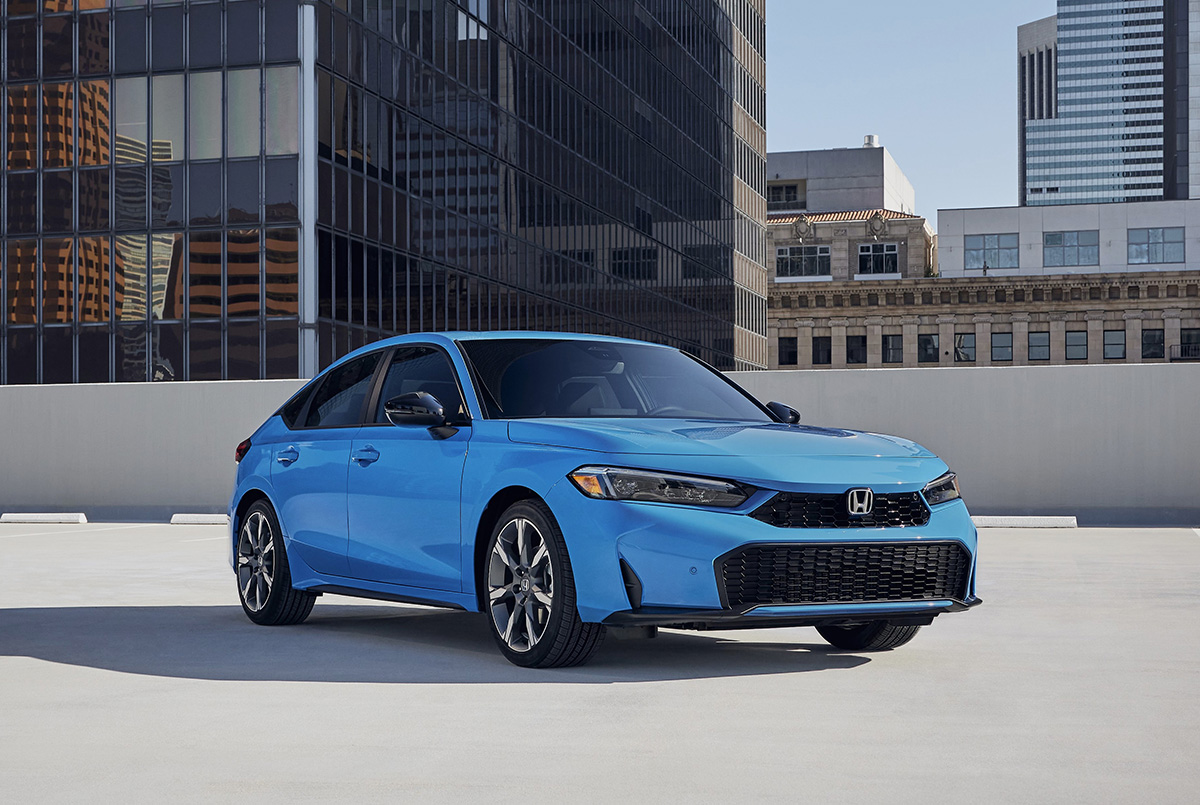
The latest Honda Civic hatchback and Subaru Impreza are two of the segment’s stars. Both offer sensible pricing, excellent utility and enough personality to avoid feeling like appliances.
The Civic is more polished. The Impreza, more rugged. Luckily, neither is trying to be obnoxiously flashy.
HONDA CIVIC
$28,000
MPG: 30 city/38 highway
0 to 60 mph: 8.9 seconds
Cargo space: 24.5 cu. ft.
PROS: Fuel efficient. Spacious cargo area. Good resale value.
CONS: No all-wheel drive. Fussy infotainment. Low rear headroom.
WHAT’S NEW: Only minor updates for 2026. The biggest change carries over from last year’s refresh: the addition of the hybrid, which has become a star performer.
The Honda Civic hatchback won’t scream for attention. It won’t arrive wearing sequins and carrying a smoke machine. It’s more like Nomi Marks from “Sense8”: intelligent, sophisticated and impressively capable.
The styling remains handsome and clean. Long hood. Low roofline. Crisp lines everywhere.Honda resisted the urge to make this vehicle look like a spaceship or an angry robot. That’s refreshing.
Inside, the dashboard is simple and elegant. The honeycomb air-vent treatment remains one of the coolest interior details in the segment. Materials feel expensive. Controls are easy to understand. And visibility is excellent.
I love how the cargo space is generous, with rear seats that fold flat. A bicycle, several suitcases or enough supplies for an ambitious weekend road trip fit without much hassle.
Then there’s the hybrid. The system produces a healthy amount of power while delivering fuel economy that borders on the absurd. Around town, handling feels smooth, quiet and surprisingly quick. You almost glide through traffic. The standard gasoline engine isn’t bad, but the hybrid is stellar.
The Civic also shines on twisty roads. Steering is precise. Body motions stay controlled. The suspension strikes a sweet balance between comfort and sportiness.
Biggest weakness? No all-wheel drive. For drivers in snowy climates, that’s not so good.
Still, the Civic’s stellar combination of efficiency, quality, and driving enjoyment remains incredibly hard to beat.
SUBARU IMPREZA
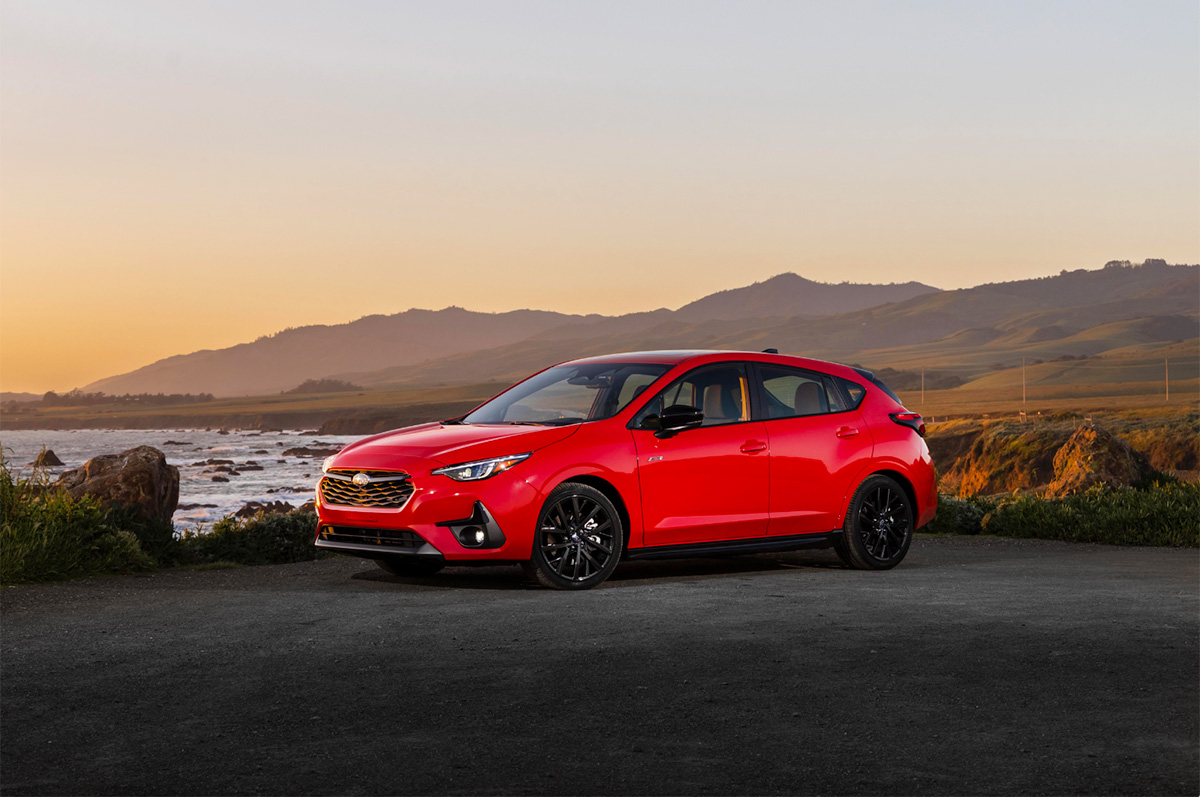
$27,000
MPG: 27 city/33 highway
0 to 60 mph: 8.5 seconds
Cargo space: 20.4 cubic feet
PROS: All-wheel drive. User-friendly tech. Safety cred.
CONS: No hybrid version. Some road noise. Modest cargo room.
WHAT’S NEW: The Impreza receives relatively minor updates for 2026. Subaru continues refining this hatchback rather than reinventing it.
If the Honda Civic is urbane, the Subaru Impreza is unfussy. There’s a kind of Kristen Stewart energy here. Cool without trying too hard.
The styling isn’t dramatic, but it works. This hauler appears ready to tackle rain, snow, dirt roads or an impromptu weekend escape.
And all-wheel drive comes standard on every Impreza. (Most competitors only offer front-wheel drive or include all-wheel drive as a pricey option.)
The result: Slippery roads simply don’t create much anxiety. The suspension absorbs bumps nicely. Long trips are comfortable. Visibility is great, thanks to relatively thin roof pillars and large windows.
I like how the cabin is functional rather than fancy. Materials don’t quite match the Civic’s upscale vibe, but everything feels sturdy. A large infotainment screen dominates the dashboard and generally works well, though some drivers may prefer more physical buttons.
Cargo space is respectable, and the design makes loading bulky items easy.
Performance depends heavily on trim. The base engine gets the job done, but nobody will confuse it for a sports car. The RS trim’s larger engine provides more power and makes the ride livelier. But even then, acceleration remains merely adequate.
The Impreza’s real appeal lies elsewhere, with a mix that few rivals can match: hatchback practicality, standard all-wheel drive, strong safety scores and reasonable pricing.
Perhaps that’s the key difference between these two hatchbacks. The Honda Civic impresses immediately. The Subaru Impreza grows on you.
Fortunately, choosing between them is less stressful than deciding who gets the last mimosa at brunch.
Real Estate
When buying a home, it’s decisions, decisions, decisions
Keeping notes on the process makes for an informed purchase

When looking to buy a home, there are lots of details to consider. Many of my clients would come to me and say, “Joe I want to buy a place, but I haven’t decided which neighborhood to buy in.” And the struggle was real. A few clients had everything decided from the color of the hallway walls to the cabinet handles and sometimes which three square blocks they wanted to look at.
But other clients were occasionally looking at properties in areas as distinct as Union Market/NOMA, Brookland, Logan Circle, and then we would even go across the river to look at a property in Shirlington or the Van Dorn areas of Virginia, which all have their own unique flavor and characteristics.
Sometimes clients would tell me, “I only want to look in Mount Pleasant or Adams Morgan.” Or, “don’t even show me any properties west of this street or south of that street.” My job wasn’t to convince people where to live. It was to just take the parameters they set for me and find as good of a property in that zone as I could, coordinate the showings and, if necessary, offer the strategy.
One can see that buyers often had more decisions to make than a seller. From a seller’s perspective, the house was where it was, and we just had to make the best of it. But working with a buyer could mean looking at five different neighborhoods, and then being a “thought partner” to help them figure out which were the top two or three areas they had seen, and then further distilling those down into what was available and weighing those options against each other.
One house could have the dream bathroom but also be located six blocks further from a Metro stop, walkable shopping and dining, and “just too far away from my friends.” Another house could have all the neighborhood options a client was looking for, but was just not in turnkey condition, and would require an additional $30,000 of upgrades once purchased to make it into the dream home they envisioned.
One activity I often asked buyers to do was to keep an active list in their heads of the properties they liked, and to keep a running rank of the top three. I often encouraged them to bring a notebook along on the journey where they could take notes and write down questions they thought of as they looked. It was an important decision, and sometimes the largest purchase of their lives. Why not take it a little seriously, and take notes? This could often help the buyer later when they felt it was time to decide.
The point here is, keeping a notebook handy can sometimes help a person with what feels like an overwhelming process. It provides a space to explore how one feels, jot down important details to remember, and then use that to make an informed decision.
Joseph Hudson is a referral agent with RLAH. Reach him at 703-587-0597 or [email protected].
Real Estate
Under-the-radar Delaware beach towns smart buyers are targeting
There are other options if Rehoboth prices are scaring you off
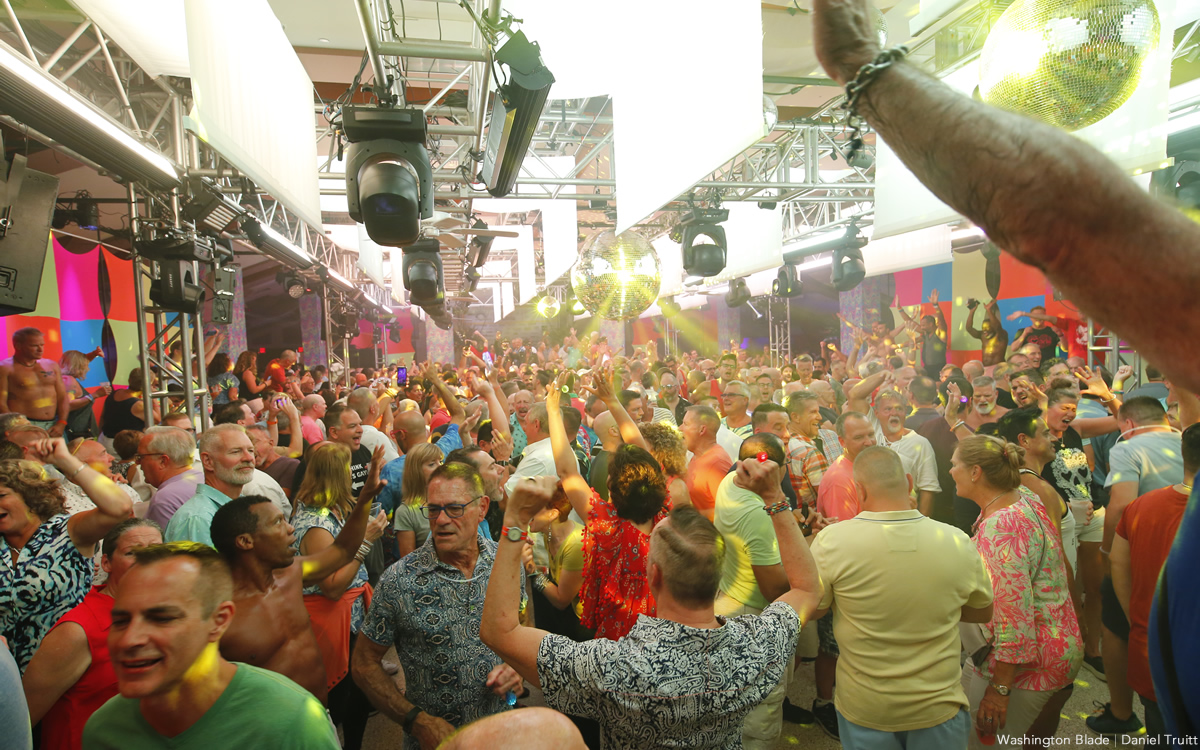
Look, we love Rehoboth. We will always love Rehoboth. Queer folks have been flocking there since the 1940s, and with scores of LGBTQ-owned businesses and a Pride calendar packed tighter than the boardwalk in July, “Rehomo” earned its crown fair and square.
But let’s be honest with each other: trying to buy property there right now feels a lot like trying to get a reservation at the one good restaurant in town on a Saturday in August. Everyone wants in, inventory is tighter than your swim trunks after Labor Day brunch, and the prices have officially entered “are you kidding me” territory.
So here’s a thought: What if you didn’t fight the crowd? What if, instead, you let Rehoboth keep doing its glorious, chaotic, glitter-bomb thing and you quietly built your beach life 15 minutes away for considerably less drama and considerably more square footage? Here are four towns ready for their close-up.
Lewes: The Charming Overachiever
Lewes is what happens when a beach town actually has its life together. Historic charm, walkability, proximity to Cape Henlopen State Park, less crowding, and a strong year-round community. Unlike towns that turn into ghost towns after Labor Day, Lewes maintains a real community all year long, which is more than we can say for some situationships.
And right now, the market is practically begging you to make a move. It’s one of the most desirable and stable markets in the county — built for buyers thinking long-term, not flippers, and Sussex County overall has flipped into genuine buyer’s market territory for the first time in years. Translation: you finally get to be the one with leverage.
Bethany Beach: My Personal Pick
Full disclosure: I own in Bethany. So consider this section a little biased — and also the most honest thing I’ll tell you in this whole article.
When I drive down from D.C., I’m not looking for more of D.C. I love this city, but I also love leaving it — and yes, some of the people in it too (you know who you are, and so do I). Bethany gives me that full exhale. It’s quiet in the way that actually means something: fewer crowds, slower mornings, a soundtrack that’s mostly waves instead of nightlife. It leans hard into its “quiet resort” reputation, with low property taxes and a limited geographic footprint, and it is not the least bit sorry about it.
But quiet doesn’t mean isolated. I’ve got a genuinely excellent food scene nearby, real shopping, and a string of charming neighboring beach towns — and when I do want a taste of Rehoboth’s energy, it’s a short, easy drive away. I get to choose my dose of chaos instead of living inside it.
And here’s the part that matters most for this article: the price. If you’ve looked at Rehoboth listings and quietly closed the tab in despair, I need you to hear this — you can absolutely afford a beach house. It just doesn’t have to be in Rehoboth. Bethany’s average home value sits around $848,592, which is still real money, no question — but it buys you more house, more land, and more peace than the same budget gets you closer to the boardwalk. Bethany is welcoming too, just without Rehoboth’s decades of built-in queer institutional history — and for plenty of us, that trade-off is more than worth it.
Fenwick Island: Small Town, Big Flex
Fenwick rarely gets mentioned and, frankly, it should be insulted. It’s tiny, it’s quiet, and it has beach access without the carnival energy. The market data tends to lump it in with Bethany, where single-family oceanfront homes clear $1 million while entry-level condos start in the $600s — proof that “under-the-radar” doesn’t mean “bargain bin,” it means “fewer people fighting you for it.”
South Bethany: For the Boat Gays
Some of us want sand between our toes. Others want a private dock and a boat named something deeply unserious. South Bethany’s canal communities are built for the latter — water access on both sides, fewer crowds, and a lifestyle that says, “I have a captain’s hat and I am not afraid to wear it.”
The Math Works in Your Favor Now
Here’s the part that should really get your attention: Sussex County’s median sold price has dropped to $440,000, down 3.3% year-over-year, and buyers are routinely closing around 88 cents on the dollar compared to asking price. That’s a far cry from the unhinged bidding wars of 2021 and 2022, when overpaying was basically a competitive sport. Inventory across the county sits at nearly 2,500 active listings — the most of any county in Delaware, meaning you actually get to be picky for once. Revolutionary, we know.
And no, choosing one of these towns doesn’t mean leaving your people behind. Sussex Pride serves the entire county, not just Rehoboth proper, and CAMP Rehoboth’s resources extend well beyond town limits too. You’re not exiling yourself to the suburbs of queerness — you’re just getting a bigger kitchen, a quieter porch, and a much shorter line for the bathroom.
Add in the fact that Delaware has no estate tax and some of the lowest property taxes around, savings that genuinely add up over a retirement horizon, and the case writes itself. Rehoboth will always be the beating, sequined heart of queer beach culture in Delaware. But if you’ve been telling yourself a beach house isn’t in the cards — I’m here to tell you it absolutely is. It just might be 15 minutes south, with your own quiet porch, your own salt air, and considerably more room to breathe.
Have a real estate question or Rehoboth market tip? Reach out to [email protected] for LGBTQ-friendly real estate resources in the Rehoboth area.
Justin Noble is a Realtor licensed in D.C., Maryland, and Delaware with Monument Sotheby’s International Realty. Reach him at [email protected] or 302-897-7499.

1 dead, 15 injured when van drives into crowd at Berlin Pride

‘Into the Grey’ unites Cavill, Gyllenhaal for thrills and gay love

Winsome Earle-Sears launches campaign against Va. marriage equality amendment

Calendar: July 24-30

Pentagon says hormones make trans troops unfit but gives them to men

Tickets on sale for chef Patrick O’Connell’s book launch event

Remembering Victoria Cruz, Stonewall veteran and beloved trans activist

In the middle of the Bible Belt, a summer camp lets trans kids exhale

Polish president vetoes same-sex relationship recognition bills

LGBTQ ‘human rights crisis is unfolding in Puerto Rico’
-

 a&e features5 days ago
Tickets on sale for chef Patrick O’Connell’s book launch event
-
National5 days ago
Remembering Victoria Cruz, Stonewall veteran and beloved trans activist
-
North Carolina5 days ago
In the middle of the Bible Belt, a summer camp lets trans kids exhale
-
Poland5 days ago
Polish president vetoes same-sex relationship recognition bills