National
National News in Brief: July 1
13 U.S. Senators release an ‘It Gets Better’ video, Chicago Pride parade marred by vandalism and a new court case for marriage in New Jersey

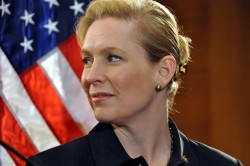
Kristen Gillibrand joined 12 other U.S. Senators in a new 'It Gets Better' video. (Washington Blade photo by Michael Key)
13 senators release ‘It Gets Better’ video
WASHINGTON — U.S. Sens. Chris Coons (D-Del.), Ron Wyden (D-Ore.), Chuck Schumer (D-N.Y.), Mark Udall (D-Col.), and Richard Blumenthal (D-Conn.) unveiled a new “It Gets Better,” Wednesday, aimed at encouraging LGBT youth not to give up when facing bullying and depression.
The video also features Sherrod Brown (D-Ohio), Maria Cantwell (D-Wash.), Dick Durbin (D-Ill.), Dianne Feinstein (D-Calif.), Al Franken (D-Minn.), Kirsten Gillibrand (D-N.Y.), Jeanne Shaheen (D-N.H.), and Sheldon Whitehouse (D-R.I.).
A study released last year by the Gay, Lesbian and Straight Education Network found 90 percent of LGBT students were harassed at school. The ‘It Gets Better Project,’ which has produced more than 10,000 encouraging videos for LGBT youth from everyone from the president to sports teams, seeks to ease those fears for youth.
“We’re proud so many elected officials are working to make it better for struggling LGBT youth and hope other leaders from both sides of the aisle will join them,” said Scott Zumwalt, a spokesperson for the It Gets Better Project.
Chicago Pride marred by violence
CHICAGO — Despite celebrating the beginning of Illinois’ civil unions law, vandalism prior to the Chicago Pride march cast a pall over the Midwest’s best-attended Pride parade, Sunday.
Tires were slashed on 51 floats gathered in a lot operated by Associated Attractions. Several of the entries were forced to abandon their floats completely.
“It was a reminder of why we are still marching in the streets with pride celebrating the LGBTQ community in remembrance of the beginning of the fight for our civil rights,” said Anthony Martinez, executive director of the Civil Rights Agenda whose float won “Best Organizational Float,” despite being damaged.
During the Lincoln Park neighborhood-based parade, tensions heightened by overcrowding led to several fights, which forced Chicago police to reroute parts of the contingent at the last minute. During the violence at least one parked car was damaged near the route.
“I think the violent act that started the Pride parade and the overcrowding set a negative tone for some bystanders,” said Lindsey Dietzler co-founder of the Video Action League. “Some organizations and businesses like GayCo and Berlin had their floats diverted and were devastated to be unable to participate in the parade after months of hard work.”
Andy Thayer, co-founder of the Gay Liberation Front, said the vandalism was “clearly a hate crime,” and suggested that the violence during the Pride parade was due to overcrowding from Pride-goers running into fans arriving for a Cubs game blocks away from the path of the parade.
“With all the perks that professional sports teams get in our town, you’d think that the mayor and aldermen could jaw-bone the Cubs into scheduling away-games on Pride weekend,” Thayer said.
Group files suit in N.J. seeking marriage rights
TRENTON, N.J. — On Wednesday, Lambda Legal, Garden State Equality and seven same-sex couples announced Garden State Equality v. Dow, a new suit against New Jersey in an effort to correct what advocates call inequalities in the state’s institutions for recognizing same-sex couples.
In a joint statement, the groups announced the case “argues that the civil union law violates both the New Jersey Constitution and the Fourteenth Amendment of the federal Constitution.”
In Lewis v. Harris October 2006, the New Jersey Supreme Court struck down as unequal a domestic partnership registry law enacted in 2003, compelling the state legislature to offer the same rights to same-sex couples as opposite-sex married couples. However, in December, the lawmakers turned down the opportunity to become the second marriage equality state and opted instead for civil unions.
In 2009, outgoing Gov. John Corzine pushed to upgrade the unions to full marriage, but a bill failed to pass. Current Gov. Chris Christie is opposed to same-sex marriage.
In addition to naming workplace benefits, and medical visitation as primary reasons for upgrading civil unions to marriages, the statement concludes “exclusion of same-sex couples from marriage deprives them and their children of their dignity as a family and certainty in their legal rights and status to each other.”





National
BREAKING NEWS: Shots fired at the White House Correspondents’ Dinner
Shooter reportedly opened fire inside hotel

Four loud bangs were heard in the International Ballroom of the Washington Hilton during the annual White House Correspondents’ Dinner on Saturday.
According to the Associated Press, a shooter opened fire inside the hotel outside the ballroom.
Attendees could hear four loud bangs as people started to duck and take cover. During the chaos sounds of salad and glasses were dropped as hotel employees, and guests ducked for cover.
The head table — which included President Donald Trump, Vice President JD Vance, first lady Melania Trump, and White House Correspondents Association President Weijia Jiang — were rushed off stage.
“The U.S. Secret Service, in coordination with the Metropolitan Police Department, is investigating a shooting incident near the main magnetometer screening area at the White House Correspondents’ Dinner,” the U.S. Secret Service said in a statement. “The president and the First Lady are safe along all protects. One individual is in custody. The condition of those involved is not yet known, and law enforcement is actively assessing the situation.”
Trump held a press conference at the White House after he left the hotel.
“A man charged a security checkpoint armed with multiple weapons and he was taken down by some very brave members of Secret Service,” said Trump.
Trump said the shooter is from California. He also said an officer was shot, but said his bullet proof vest “saved” him.
D.C. Mayor Muriel Bowser, interim D.C. police chief Jeffrey Carroll, U.S. Attorney for D.C. Jeanine Pirro, and other officials held their own press conference at the hotel.
Carroll said the gunman who has been identified as Cole Tomas Allen was armed with a shotgun, handgun, and “multiple” knives when he charged a Secret Service checkpoint in a hotel lobby. Carroll also told reporters that law enforcement “exchanged gunfire with that individual.”
Both he and Bowser said the gunman appeared to act alone.
“We are so very thankful to members of law enforcement who did their jobs tonight and made sure all guests were safe,” said Bowser. “Nobody else was involved.”
The Washington Blade will update this story as details become more available.
State Department
State Department implements anti-trans bathroom policy
Memo notes directive corresponds with White House executive order
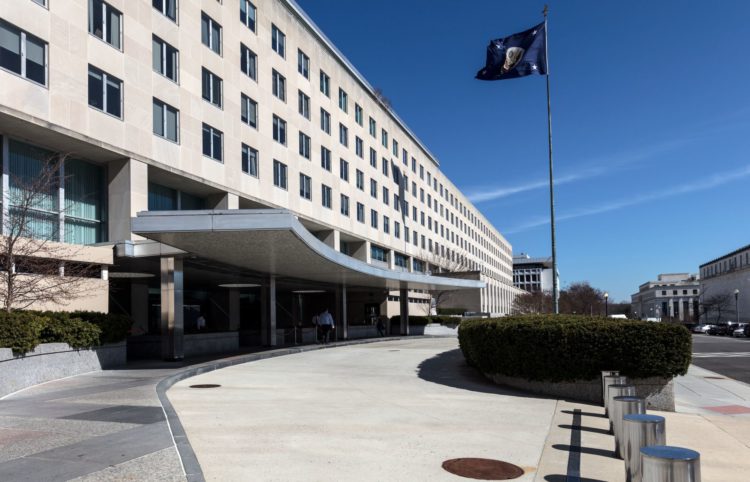
The State Department on April 20 announced employees cannot use bathrooms that correspond with their gender identity.
The Daily Signal, a conservative news website, reported the State Department announced the new policy in a memo titled “Updates Regarding Biological Sex and Intimate Spaces, Including Restrooms.”
The State Department has not responded to the Washington Blade’s request for comment on the directive.
“The administration affirms that there are two sexes — male and female — and that federal facilities should operate on this objective and longstanding basis to ensure consistency, privacy, and safety in shared spaces,” State Department spokesperson Tommy Piggot told the Daily Signal. “In line with President Trump’s executive order this provides clear, uniform guidance to the department by grounding policy in biological sex as determined at birth.”
President Donald Trump shortly after he took office in January 2025 issued an executive order that directed the federal government to only recognize two genders: male and female. The sweeping directive also ordered federal government agencies to “effectuate this policy by taking appropriate action to ensure that intimate spaces designated for women, girls, or females (or for men, boys, or males) are designated by sex and not identity.”
The Daily Signal notes the new State Department policy “does not prohibit single-occupancy restrooms.”
National
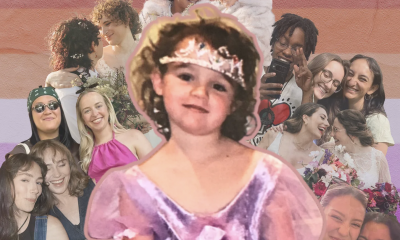
I’m telling the scared little girl I once was it’s okay to feel free
This week is Lesbian Visibility Week
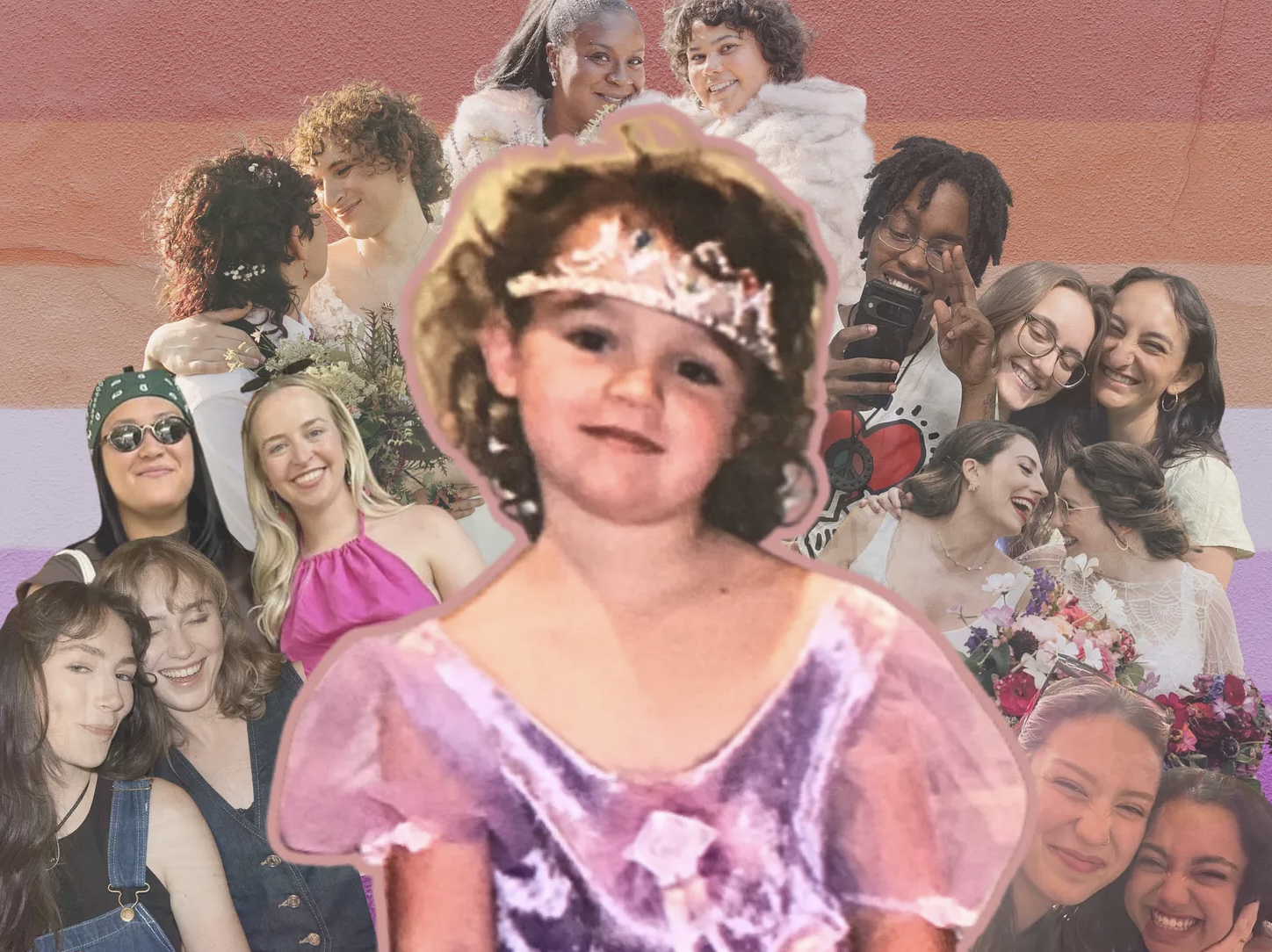
Uncloseted Media published this article on April 23.
By SOPHIE HOLLAND | At 13 years old, I remember looking in the mirror in my Toronto bathroom and thinking, “Yeah, I’m a lesbian.” At the time, I thought it was a dirty word. Thinking back, it could be because the first time I heard it was when a family member said, “I don’t know what a lesbian is, they are like aliens.”
And although I walked around in camouflage Crocs with a rainbow My Little Pony charm, plaid knee-length shorts and a shark tooth necklace (yes, these are all, in my opinion, stereotypically lesbian apparel!), I didn’t feel like I fit the mold. The longer I thought about it, the worse I felt, so I buried my feelings deep inside.
Now I am 25, and I have been out since I was 22. Three years ago, I never could have imagined that I’d be working for a queer news publication and celebrating Lesbian Visibility Week, an annual event meant to honor and uplift lesbian perspectives and highlight the hardships our community faces. To me, LVW is so important because, frankly, it has been an absolute shit show getting here, to a place where I feel love and joy most days.
I think back to the frustration of constantly being asked, “Do you have a boyfriend?” Of watching princess movies and seeing a broken girl only find herself when her prince charming arrives. I remember listening to music that was always about heterosexual relationships. I remember feeling left out in high school when, one by one, my friends got boyfriends.
I tried the boyfriend, and I tried really hard for it to work at a large detriment to my wellbeing. I brainwashed myself into thinking I was probably bisexual, which I told my closest friends around 16 and unsuccessfully told my parents at the same age. I was probably subconsciously using this as a litmus test of their acceptance and to soothe the anxiety I felt around my sexuality.
Learning to love who I am did not only come from me unraveling my internalized lesbophobia and dissecting the oppressive societal messages of heteronormativity. It came from meeting an awesome community of lesbians and queers. I found people who understood my worldview and who showed me the ropes. I no longer had to stutter over concepts like lesbian loneliness or my frustration with misogynistic straight men.
They all just got it.
Without this community, I am not sure if I could be as warm and confident in myself as I am today.
And while I still experience homophobia, like being spat on while walking with an ex in downtown Toronto or having a stranger yell in my face “Are you fucking lesbians?” in Kensington Market, the joy and love still outweighs the nasty.
So, as the sentimental dyke that I have become, I decided to ask a set of lesbians in my orbit — including my friends as well as Uncloseted staffers, board members and followers — if they would share a little bit about what makes them love being a lesbian. And now, I can share it with all of you. Here they are. Happy LVW!
Timi Sotire
Falling in love with her was a reset. I felt like a kid again, hopeful about the future. We’ve had to overcome many obstacles to be together, but I’d choose her in every lifetime. I was sick with a long-term health condition when we met, and hanging out with Sophia really helped me with my recovery after my surgery.
Bella Sayegh
Being a lesbian is one of the most beautiful things in the world. To be authentically yourself in resistance and joy is so special within the lesbian community.
Parker Wales
When I met Liv, I finally understood why almost every song is about love.
Gillian Kilgour
There is no connection quite as perfect as between lesbians, no one sees me like my lesbians do.
Chyna Price
There’s many things I love about being a lesbian. But here are my top three:
- There’s just a deeper understanding when it comes to being loved by another woman.
- The next one would be the sense of community, especially being a POC masculine-presenting lesbian. I don’t feel like I’m cosplaying as someone else like I felt like I was doing before I came out.
- There’s so much history going back to the 1800s on how we found and fought for our love. That fight makes me proud because it shows me … that we’ve [found] ways to express our love even when it was misunderstood, illegal and deemed as madness.
Hope Pisoni
Before I knew I was a lesbian, romantic relationships seemed suffocating — it felt like everyone would expect me to act my part in the meticulous performance that is heterosexuality. But meeting my spouse and discovering our identities together showed me just how freeing it could be to love without a script to follow.
Leital Molad
It was the joy of watching the New York Sirens defeat the Toronto Sceptres at our first professional women’s hockey game — surrounded by hundreds (maybe thousands?) of cheering lesbians.
Angela Earl
I spent years building a life that looked right. But I never felt settled, and eventually I started asking what would actually make me happy. Coming out was about more than who I love, it was letting go of everything I was told to be. The last few years have felt like coming home to a life that had been waiting for me.
Tali Bray
What I love about being a lesbian is what I love about being in love … the wonder and joy of “oh, this is what it’s supposed to feel like.” I love moving through the world with women.
Izzy Stokes
I didn’t fall in love until I realized that queerness was an option. My queer friends have helped me see so much more than I grew up seeing. I’m so proud of us, and I’m so grateful for my lesbian community.
Nandika Chatterjee
When I met my fiancée is when I started to feel most like myself. That meant loving myself for who I am and embracing my identity as a lesbian. I felt free in a way I have never before. That’s the long and short of it.
Liz Lucking
The love and joy of being a lesbian is getting to live the life I dreamed of but never thought I would get to have!
Reflections
As I read these beautiful entries, it’s not lost on me that we’re still living in a world where lesbians are more likely to struggle with maternity problems, fetishization, and compulsory heterosexuality — not to mention the intersectional pressures of racism from both inside and outside the queer community. That’s part of why, according to a 2024 survey, 22 percent of LGBTQ women have attempted suicide, and 66 percent have sought treatment for trauma.
So if you are a lesbian who isn’t out or doesn’t feel safe, I hope you read this and can glean some hope from these messages. So when you look in the mirror, you know that it’s okay to release the weight — which can feel so heavy — of a heteronormative world.
We still have a long fight until all lesbians can feel safe to be themselves, but this is a community that does not back away from the tough, from the joy, from being loud and from all the other things that it takes to start a small revolution.
Hell yeah, lesbians! Here’s to you.
*I am signing off with my cat on my lap and a pride flag over my head <3.

From red carpet to chaos: A first-person narrative of the WHCD shooting

World premiere of ‘Everything, Devoured’ oozes queer energy
BREAKING NEWS: Shots fired at the White House Correspondents’ Dinner

An acting legend meets his match in ‘The Christophers’

Community mourns passing of D.C. trans rights advocate SaVanna Wanzer

Second trans member announces plans to resign from Capital Pride board

State Department implements anti-trans bathroom policy

I’m telling the scared little girl I once was it’s okay to feel free

ROSENSTEIN: Chavous for Democratic D.C. Council-at-Large

Memorial for groundbreaking bisexual activist set for May 2
-

 District of Columbia4 days ago
Second trans member announces plans to resign from Capital Pride board
-
State Department5 days ago
State Department implements anti-trans bathroom policy
-
National5 days ago
I’m telling the scared little girl I once was it’s okay to feel free
-
Opinions5 days ago
ROSENSTEIN: Chavous for Democratic D.C. Council-at-Large