Arts & Entertainment
Trials and tribulations
Ford’s takes chance on daring musical ‘Parade’
‘Parade’
Through Oct. 30
Ford’s Theatre
511 1oth Street, NW
$15-$75
fords.org
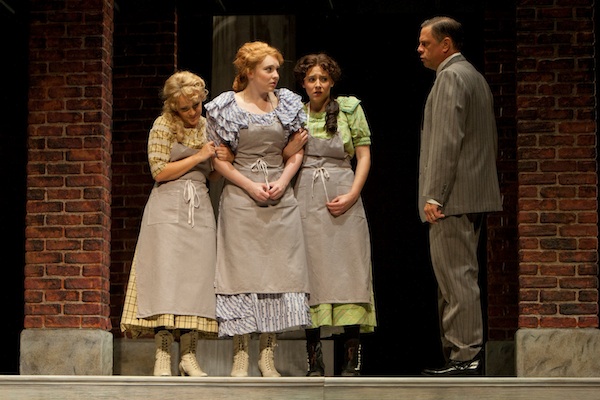
From left, Erin Driscoll, Bligh Voth and Carolyn Agan as the young factory girls and Stephen F. Schmidt as Governor Slayton in the Ford’s Theatre production of the musical drama ‘Parade,’ directed by Stephen Rayne. (Photo by T. Charles Erickson; courtesy Ford’s Theatre)
Not all musicals end happily. Case in point: “Parade.” Based on the real life trial and lynching of Leo Frank in early 20th century Atlanta, the Tony Award winner (currently playing at Ford’s Theatre) is some depressing stuff.
Yes, Jason Robert Brown’s gorgeous score softens the grim facts and when sung by the talented actors gathered for this respectable production, the show remains a sad story, but one that’s beautifully told.
It’s 1913 and the bloody body of 13-year-old Mary Phagan (Lauren Williams) is found in the basement of Atlanta’s National Pencil factory on Confederate Memorial Day. Following a mishandled investigation, Frank (Euan Morton), a young Brooklyn Jew who has moved south to marry nice Jewish girl Lucille (Jenny Fellner) and run the factory, is arrested for the murder of his young employee.
Atlanta’s citizenry is out for blood. A lingering resentment of Northerners (it’s just 50 years since the Civil War) combined with a heavy dose of anti-Semitism are the prefect recipe for injustice. One by one, the coached and coerced give damning testimony in a mostly sung-through trial sequence whose high point is the sensational “That’s What He Said” in which slippery witness James Conley (Kevin McAllister) backed by the ensemble set the stage for Frank’s railroading.
Fellner sings a heartrending rendition of “You Don’t Know This Man,” Lucille’s balladic defense of her husband. Similarly, Morton as Leo (an uptight adding machine so unfamiliar with southern ways) begins to open up with “It’s Hard to Speak My Heart.” But despite the couple’s best efforts, their foes — ambitious prosecuting attorney Hugh Dorsey (James Konicek) and rabble-rousing publisher Tom Watson played by a mustachioed Will Gartshore (local gay actor whose glorious tenor was also heard in “Parade” when it opened on Broadway in 1998, but in a different part) — aren’t listening.
Morton, the versatile Scottish actor who became well known for playing Boy George in Broadway’s musical “Taboo,” is terrific. His Leo is at turns nebbishy, brusque, slightly superior, but in the end loving. Unfortunately neither Brown’s score nor the show’s book by Alfred Uhry (who also wrote “Driving Miss Daisy,” another peek into Atlanta’s Jewish community) provides an opportunity for Leo to reveal his fear and anguish.
The heart of the story is Leo and Lucille’s changing marriage. What starts out as a loveless seemingly arranged union forges into a respectful partnership as the pair work to secure Leo’s freedom and ultimately blossoms into full blown romance. Jailhouse visits are breezy. Lucille sets out her finicky husband’s home cooked favorites while Leo busily works on his appeal. If only for a short time, they behave like a happily married couple despite the macabre circumstance.
Conducted by Steven Landau, Brown’s soaring score references military marches, spirituals and waltzes. There are sad ballads and grave melodies aplenty, but a few tunes encourage toe tapping too. It’s those along with choreographer Karma Camp’s cake-walking moves that remind us of the circus like good time surrounding Leo’s trial and lynching. They were big entertainment, the hottest tickets in town.
Sure-handedly staged by Stephen Rayne, the production moves at a good clip. Set designer Tony Cisek imagines the newly industrialized Atlanta as two tiers of red brick arches that serve variously as factory, courthouse, jail, governor’s mansion and the Frank home. Two towering columns – each in unchecked stages of decay — stand as fading remnants of a prouder, more glorious South. And Wade Laboissonniere’s many period costumes are spot on and superbly rendered.
There’s a lingering sadness to Ford’s “Parade.” Long after the actors have taken their bows, we’re haunted by the ghosts of little Mary Phagan, Leo Frank, his wife and the people of Atlanta. Neither they nor the tragic events are easily forgotten.
Out & About
Equality Chamber hosts Pride in Business Expo and Profits & Pours
Entrepreneurs, business leaders, professionals to meet at Mayor’s Office of LGBTQ Affairs

The Equality Chamber of Commerce is bringing together LGBTQ+ entrepreneurs, business leaders, professionals, advocates, and community partners on Thursday, Oct. 15 at 2:30 p.m. at the D.C. Mayor’s Office for LGBTQ Affairs (899 N. Capitol Street, NE).
This is an afternoon and evening focused on one essential question: How do we build businesses and a business community that can thrive? The Pride in Business Expo and Profits & Pours with Stephanie will create a powerful forum for connection, practical knowledge, and economic opportunity at the Mayor’s Office of LGBTQ Affairs. The Pride in Business Expo, taking place from 4-7 p.m., brings the region’s LGBTQ+ business community together to showcase businesses, build relationships, discover resources, and create new opportunities.
Out & About
Learn more about Virginia’s queer history
‘The Remarkable Visibility of Hannah Nokes’ event scheduled for Wednesday
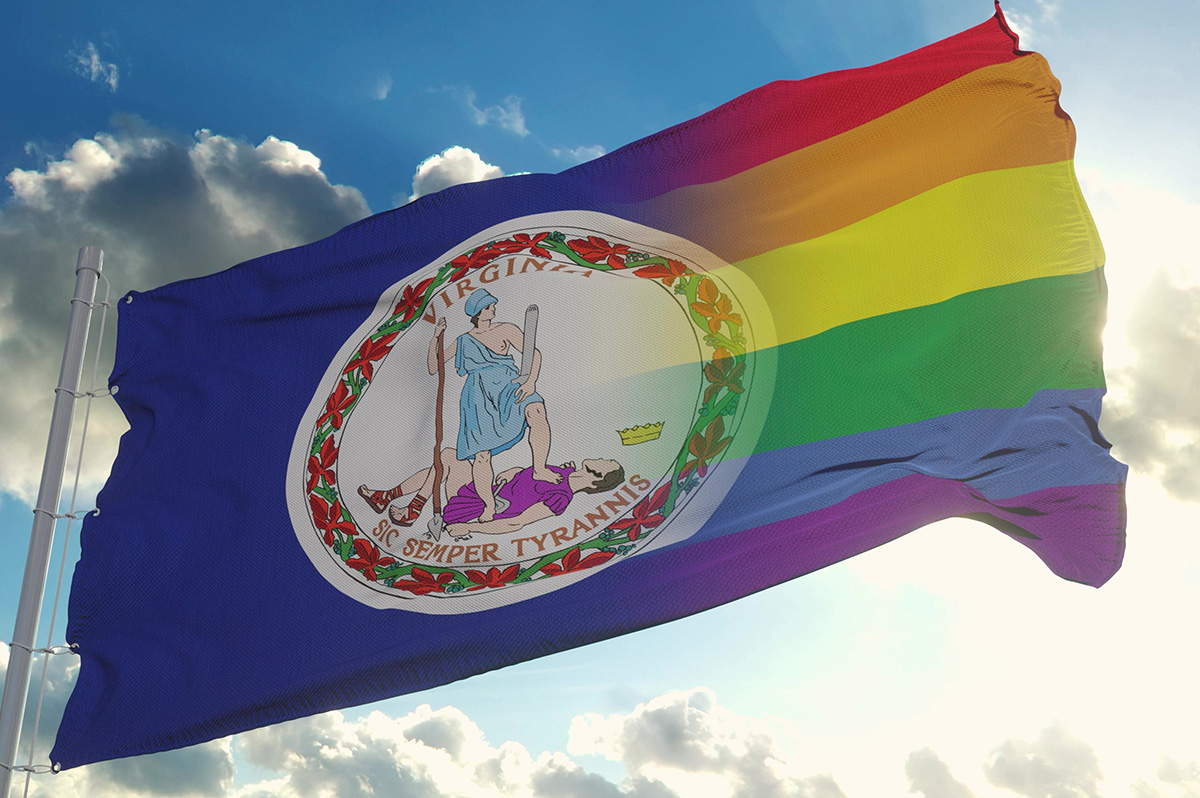
Queer Virginia Contributor Amy Bertsch will host “The Remarkable Visibility of Hannah Nokes” on Wednesday, Oct. 14 at 6 p.m. at Sprouse Rare Book Room inside the Kate Waller Barrett Branch Library (717 Queen St., Alexandria, Va.).
Amy will share the story of Hannah Nokes, an African-American transgender woman who made headlines in 1933 when she testified in a high-profile murder trial. Learn about Nokes’s life, her place in history, and the broader social context of her remarkable story. Her story is among those featured in the book “Queer Virginia: New Stories in the Old Dominion.”
Register at the Alexandria Library website.
Out & About
Annapolis Pride arrives this weekend
Sixth annual LGBTQ celebration held in Maryland capital
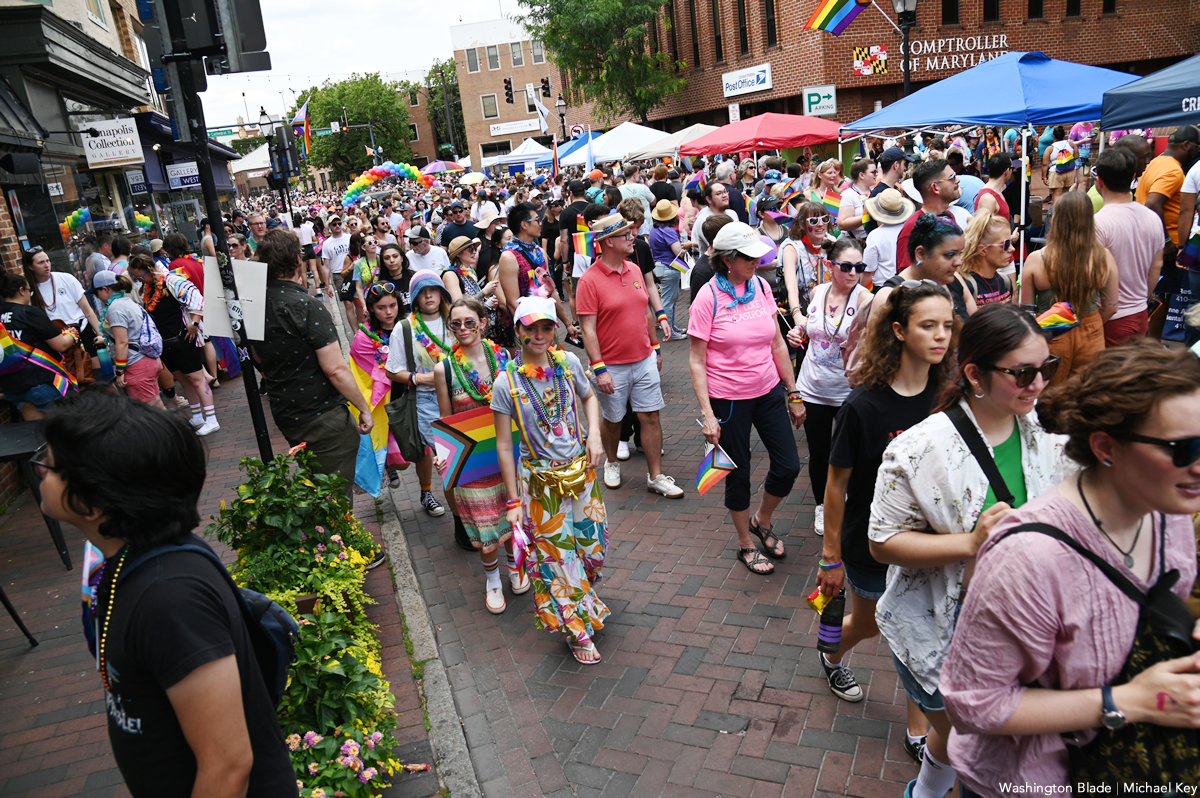
The Sixth Annual Annapolis Pride Parade and Festival will be held on Saturday, Oct. 3 at 11 a.m. on the streets adjacent to St. John’s College.
The theme of this year’s Annapolis Pride Parade and Festival celebration is “United in Pride, Together We Thrive!” Saturday’s parade will begin on St. John’s Street adjacent to St. John’s College, continue along Calvert Street to Northwest Street, to Church Circle, and onto West Street. The parade route then turns onto Amos Garrett Boulevard and eventually ends on Constitution Avenue near Maryland Hall.
Those with disabilities will be able to watch the parade from a special viewing porch at the Graduate Hotel at 126 West St. An Annapolis Pride volunteer will be there and available to assist.
For more details, visit the festival’s website.

Equality Chamber hosts Pride in Business Expo and Profits & Pours

Learn more about Virginia’s queer history

Annapolis Pride arrives this weekend

Calendar: October 2-8

Renee Good’s family files two federal lawsuits

Lesbian Bar Project co-founder: purity politics could destroy our remaining spaces

529 openly LGBTQ candidates running in Brazilian election

Meet the LGBTQ candidates running for U.S. House, Senate

Ana Brnabić becomes world’s first openly lesbian head of state

Vote now! Best Of LGBTQ DC readers’ choice awards
-

 Bars & Parties5 days ago
Lesbian Bar Project co-founder: purity politics could destroy our remaining spaces
-
Brazil5 days ago
529 openly LGBTQ candidates running in Brazilian election
-
2026 Midterm Elections4 days ago
Meet the LGBTQ candidates running for U.S. House, Senate
-
Serbia4 days ago
Ana Brnabić becomes world’s first openly lesbian head of state