National
Obama includes support for marriage equality in Pride proclamation
Employment protections absent from statement
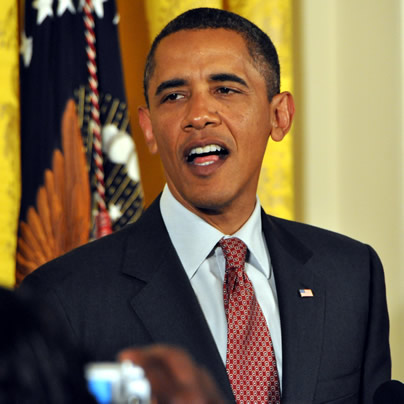
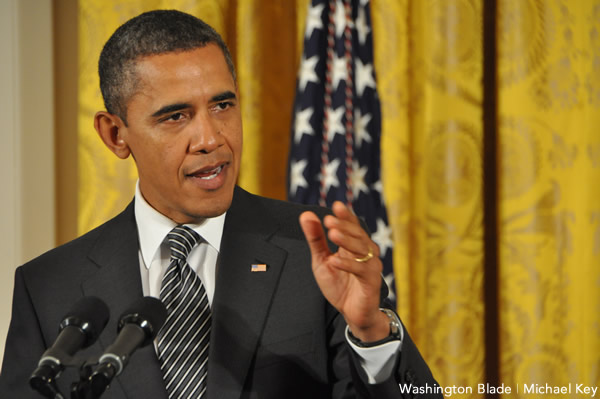
President Obama mentions marriage in his 2012 Pride proclamation (Washington Blade photo by Michael Key)
President Obama for the first time included support for marriage rights for gay couples in his annual proclamation commemorating June as the month of Pride.
The president — who has issued a Pride proclamation for each of the four years in office — notes his personal support for marriage rights for gay couples in the 2012 proclamation issued on Friday following his recent announcement in favor of same-sex marriage during an ABC News interview. Last year’s proclamation made no mention whatsoever of relationship recognition for gay couples.
“And because we must treat others the way we want to be treated, I personally believe in marriage equality for same-sex couples,” Obama writes.
Evan Wolfson, president of Freedom to Marry, redoubled his previous praise for Obama when asked about the inclusion of marriage equality in the Pride proclamation.
“Support for the freedom to marry — like strong, authentic leadership — is good for the country and a political winner,” Wolfson said. “President Obama is showing both.”
Obama makes a special note to include LGBT people in the larger American story of “a proud and inexorable march toward freedom, fairness, and full equality under the law,” saying no one in the country should be deemed a second-class citizen or denied basic rights.
“The lesbian, gay, bisexual, and transgender (LGBT) community has written a proud chapter in this fundamentally American story,” Obama writes. “From brave men and women who came out and spoke out, to union and faith leaders who rallied for equality, to activists and advocates who challenged unjust laws and marched on Washington, LGBT Americans and allies have achieved what once seemed inconceivable. This month, we reflect on their enduring legacy, celebrate the movement that has made progress possible, and recommit to securing the fullest blessings of freedom for all Americans.”
The president also ticks off other accomplishments over his nearly three-and-a-half years in office, including legislative repeal of “Don’t Ask, Don’t Tell,” passage of hate crimes protections legislation, the enactment of a federal rule prohibiting LGBT discrimination in federal housing and a memorandum mandating hospitals offer visitation rights for same-sex couples.
The proclamation also states “more remains to be done to ensure every single American is treated equally, regardless of sexual orientation or gender identity” and says the Obama administration will continue to move forward in this area. However, the president makes no specific mention of further achievements that he wants to pursue.
Absent from the proclamation is any mention of the lack of federal employment non-discrimation protections for LGBT workers. In April, the White House announced that it wouldn’t issue at this time an executive order barring federal contractors from discriminating on the basis of sexual orientation and gender identity, opting instead to pursue legislation to institute these protections known as the Employment Non-Discrimination Act.
Tico Almeida, president of Freedom to Work, said he’s “not surprised that White House staffers” excluded any mention of employment non-discrimination for the proclamation because “workplace fairness for LGBT Americans is the one area of weakness and embarrassment in an otherwise impressive record of accomplishment by President Barack Obama.” Still, Almeida offered general praise.
“I think that overall the Proclamation is beautifully written and I am heartened that it mentions the need to make more progress on work that remains undone,” Almeida said.
Almeida said Pride month would be an “excellent time” for the White House to reconsider its decision and issue an executive order barring LGBT job bias. Additionally, Almeida called on Labor Secretary Hilda Solis to issue guidance this month saying the existing directive prohibiting sex discrimination will cover transgender workers to keep in line with a recent U.S. Equal Employment Opportunity Commission ruling.
Obama isn’t the only public official on the national stage to issue a statement commemorating June as the month of Pride. House Minority Leader Nancy Pelosi (D-Calif.) also issued a statement reflecting on the achievements of the LGBT community.
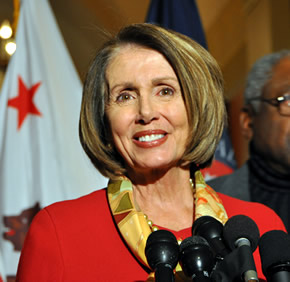
House Minority Leader Nancy Pelosi (Blade file photo by Michael Key)
“During LGBT Pride Month, we celebrate how far we’ve come in the fight for civil rights, we pledge to keep working to ensure our nation lives up to the American ideal of equality, our heritage and our hope,” Pelosi said. “Since the dark days of the Stonewall riots more than four decades ago, millions of Americans have joined the struggle for equal protection under the law; the right to life, liberty, and the pursuit of happiness; respect and dignity for all Americans. Despite setbacks and obstacles along the way, we have made progress.”
Pelosi’s statement makes explicit mention of the lack of federal employment non-discrimination protections for LGBT people in addition to discrimination in other places. The House Democratic leader says,”We must keep up the charge for an end to discrimination in all its forms – in the workplace, in schools, in government, and in our laws.”
The text of Obama’s Pride proclamation follows:
THE WHITE HOUSE
Office of the Press Secretary
For Immediate Release
June 1, 2012
LESBIAN, GAY, BISEXUAL, AND TRANSGENDER PRIDE MONTH, 2012
– – – – – – –
BY THE PRESIDENT OF THE UNITED STATES OF AMERICA
A PROCLAMATION
From generation to generation, ordinary Americans have led a proud and inexorable march toward freedom, fairness, and full equality under the law — not just for some, but for all. Ours is a heritage forged by those who organized, agitated, and advocated for change; who wielded love stronger than hate and hope more powerful than insult or injury; who fought to build for themselves and their families a Nation where no one is a second-class citizen, no one is denied basic rights, and all of us are free to live and love as we see fit.
The lesbian, gay, bisexual, and transgender (LGBT) community has written a proud chapter in this fundamentally American story. From brave men and women who came out and spoke out, to union and faith leaders who rallied for equality, to activists and advocates who challenged unjust laws and marched on Washington, LGBT Americans and allies have achieved what once seemed inconceivable. This month, we reflect on their enduring legacy, celebrate the movement that has made progress possible, and recommit to securing the fullest blessings of freedom for all Americans.
Since I took office, my Administration has worked to broaden opportunity, advance equality, and level the playing field for LGBT people and communities. We have fought to secure justice for all under the Matthew Shepard and James Byrd, Jr., Hate Crimes Prevention Act, and we have taken action to end housing discrimination based on sexual orientation and gender identity. We expanded hospital visitation rights for LGBT patients and their loved ones, and under the Affordable Care Act, we ensured that insurance companies will no longer be able
to deny coverage to someone just because they are lesbian, gay, bisexual, or transgender. Because we understand that LGBT rights are human rights, we continue to engage with the international community in promoting and protecting the rights of LGBT persons around the world. Because we repealed “Don’t Ask, Don’t Tell,” gay, lesbian, and bisexual Americans can serve their country openly, honestly, and without fear of losing their jobs because of whom they love. And because we must treat others the way we want to be treated, I personally believe in marriage equality for same-sex couples.
More remains to be done to ensure every single American is treated equally, regardless of sexual orientation or gender identity. Moving forward, my Administration will continue its work to advance the rights of LGBT Americans. This month, as we reflect on how far we have come and how far we have yet to go, let us recall that the progress we have made is built on the words and deeds of ordinary Americans. Let us pay tribute to those who came before us, and those who continue their work today; and let us rededicate ourselves to a task that is
unending — the pursuit of a Nation where all are equal, and all have the full and unfettered opportunity to pursue happiness and live openly and freely.
NOW, THEREFORE, I, BARACK OBAMA, President of the United States of America, by virtue of the authority vested in me by the Constitution and the laws of the United States, do hereby proclaim June 2012 as Lesbian, Gay, Bisexual, and Transgender Pride Month. I call upon the people of the United States to eliminate prejudice everywhere it exists, and to celebrate the great diversity of the American people.
IN WITNESS WHEREOF, I have hereunto set my hand this first day of June, in the year of our Lord two thousand twelve, and of the Independence of the United States of America the two hundred and thirty-sixth.
BARACK OBAMA
# # #





National
Trump ends direct HIV prevention funding to community groups
Advocates say transfer of funds to states may disrupt local programs

A decision by the U.S. Office of Management and Budget (OMB) at the request of the Trump administration to discontinue direct federal funding of community-based organizations and clinics that provide HIV prevention services has raised concern among community health advocates, including LGBTQ advocates.
News surfaced earlier this month that the OMB informed the U.S. Centers for Disease Control and Prevention that it would not renew $46 million in funding for 96 community-based organizations that provide HIV testing, referrals to medical care, and arrangements for obtaining pre-exposure HIV prevention medication known as PrEP that has been shown to be 99 percent effective in preventing HIV infection.
Under the new policy arranged by OMB, the funds will be redirected to the states to be allocated to state and local health departments. The policy calls for states to encourage but not require their respective state and local health departments to allocate some of those funds for community-based organizations. Under the new policy, the funding is scheduled to last until May of 2027, before a renewal decision is made.
Some political observers have speculated that the decision to end direct federal funding to community-based organizations could be motivated by the Trump administration’s hostility to diversity, equity, and inclusion or DEI programs and organizations that promote those programs, with the belief that some of the groups receiving the federal HIV prevention funds are promoting DEI.
Carl Schmid, executive director of the D.C.-based HIV+ Hepatitis Policy Institute, is among the leaders of many AIDS advocacy organizations expressing strong opposition to the OMB action. Schmid said that in places like D.C. and some states, local officials will be willing to redirect the federal funds to local community-based organizations.
A list of the 96 community-based organizations across the country that are currently receiving the federal AIDS funds includes the D.C.-based Whitman-Walker Health, which has a long history of healthcare support for the LGBTQ community, and La Clinica del Pueblo, which reaches out to the Latino community.
Schmid said Whitman-Walker and La Clinica del Pueblo have longstanding good relationships with the local D.C. government.
“But other states and jurisdictions don’t have that relationship with the community-based organizations,” Schmid said. “It depends on the state,” he said, adding, “Not all states send their money to the communities that really need it most. And not all states are fast in getting money to the community-based organizations.”
Spokespersons for Whitman-Walker and La Clinica del Pueblo couldn’t immediately be reached for comment on whether they think the Trump administration’s latest action related to funding will adversely impact their respective organizations.
Schmid said under the current federal grant program slated to be discontinued, which has been in effect for at least five years, HIV-related health organizations receiving the federal grant funds were eligible for an existing federal policy enabling them to purchase HIV-related medication, including the PrEP prevention medication, at a significant discount from pharmaceutical companies. With the ending of the direct federal HIV funds to community-based organizations, Schmid said it was unclear whether problems may surface in obtaining drug discounts.
“They could still qualify as a sub-grantee from a state,” Schmid said. “But what if they don’t get that grant again? They would not be able to qualify to obtain the drugs” at the discounted price, he said.
Among the organizations expressing strong concern over the decision to discontinue the direct HIV prevention funding to community-based organizations has been the Federal AIDS Policy Institute and its subgroup called the HIV Prevention Action Coalition.
In a July 22 letter bearing the names of 71 community-based organizations from throughout the country sent to U.S. Department of Health and Human Services Secretary Robert F. Kennedy Jr. and Centers for Disease Control and Prevention Acting Director Jay Bhattacharya, the group called for the Trump administration to “reconsider” ending the current funding policy.
“Ending this program without a clear plan for what comes next would dismantle prevention infrastructure that has taken more than three decades of federal investment to build and do so just as that long record of measurable returns is accelerating,” the letter states.
It says the initiative by President Trump in his first term as president to end the HIV epidemic and reduce new HIV infections by 90 percent by 2030 was moving ahead by the funding program for community-based organizations that the administration now wants to end.
“Discontinuing this program would also cost far more than it saves,” the letter says. “Every HIV transmission prevented avoids an estimated lifetime treatment cost of roughly half a million dollars per person to the healthcare system – costs that fall heavily on taxpayer-funded programs, including Medicaid, Medicare, and the Ryan White HIV/AIDS program,” the letter continues.
“The choice before the administration is straightforward: a modest, targeted investment in prevention now, or far greater public expense for treatment later,” the letter concludes.
Spokespersons for the OMB and the Department of Health and Human Services, which oversees the CDC, have not immediately responded to news media requests for comment on the opposition to the funding change policy.
National
At Alliance Defending Freedom’s summit, church and state are one
House Speaker Mike Johnson (R-La.) among speakers

Uncloseted Media published this article on July 23.
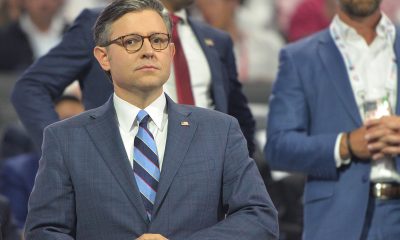
By SPENCER MACNAUGHTON | Earlier this month, hundreds of people filled a conference room in San Diego. These included Speaker of the House Mike Johnson, Assistant Secretary of Health Admiral Brian Christine, OpenAI executive Dean Ball, and the attorneys general of West Virginia and Idaho.
They all came together for Alliance Defending Freedom’s 2026 Summit. The Christian legal group, also a Southern Poverty Law Center-designated anti-LGBTQ hate group, described the event as a “gathering of leaders from many different spheres, including law, public policy, media, business, education, and Christian leadership.”
Johnson — who has said that “homosexual relationships are inherently unnatural and … society cannot give its stamp of approval to such a dangerous lifestyle” — was a featured speaker.
In his speech, he seemed unconcerned with the separation of church and state: “It is so encouraging to Kelly and I to be among friends and fellow warriors for this cause and people who understand that God is not done with America yet. … ADF’s on the very tip of the spear, front line, defending those very truths and keeping the door open for the spread of the Gospel. This is our moment. I’m telling you, I believe the next season … is going to be the greatest season of this ministry since its inception.”
That ministry is one that has espoused aggressively anti-LGBTQ views since its inception in the early 1990s. It was co-founded by a group of evangelical men, including Alan Sears, who co-authored a book called “The Homosexual Agenda: Exposing the Principal Threat to Religious Freedom Today.” Since then, ADF has opposed gay marriage and supported bans on gay sex and on gender-affirming care for minors.
After helping overturn Roe v. Wade, ADF lawyers have led key victories at the Supreme Court. In 303 Creative v. Elenis, SCOTUS ruled that a website designer could refuse service to gay weddings. And this year they convinced the Court to overturn Colorado’s ban on conversion therapy and to uphold state laws in West Virginia and Idaho that ban trans girls from playing on girls’ sports teams.
At the summit, ADF President Kristen Waggoner, who has promoted conversion therapists and consistently misgenders trans people, interviewed these states’ attorneys general.
“The lawyers who were defending women’s sports were among the best I’ve ever seen in my entire life,” West Virginia Attorney General JB McCuskey told Waggoner.
Similar to Johnson, Trump’s Assistant Secretary of Health Christine showed his commitment to governing based on conservative Christianity. He gave a Bible-thumping speech against gender transition and trans healthcare, saying that it “contradicts … the deeper moral order that is woven into creation itself. For Genesis 1:27 informs us that God created man in his own image. … Male and female” He also said the “complementary relationship between man and woman is divine” and advocated for youth with gender dysphoria to receive care from a pastor.
All of these remarks from politicians made me think of the interview I published earlier this week with Pete Hegseth’s pastor, Doug Wilson. He wants a Christian theocracy in America and told me that: both the perpetrator and the victim should be disciplined in some cases of marital rape; that transgender people are “sad;” that execution is justifiable for certain homosexual acts; and that gay sex should be illegal.
The ADF Summit is glossy and polished. And while its messaging may be less explicit than Pastor Wilson’s, the track record of the organizations shows they have the exact same desires. They’re just deeply strategic in what they say and when and how they say it.
I believe the political power players who attended this year’s summit know this. They know they are endorsing an organization whose members have essentially called for the illegalization of most — if not all ‚ forms of queer behavior and presentation.
In the last few years, these perspectives have become increasingly embedded in the highest rooms of the federal government and they have been effective in stripping away LGBTQ rights. Wilson, who just installed a full-time pastor in Washington to lead services, says there are 10 to 20 government officials who align with his church’s ideology.
It is vital for Americans to keep their eyes wide open to the ultimate goal of groups like ADF: to create a United States that leaves LGBTQ people without rights and that pushes us back in the closet.
Puerto Rico
LGBTQ ‘human rights crisis is unfolding in Puerto Rico’
Activist spoke at Congressional Hispanic Caucus briefing in D.C. on July 15
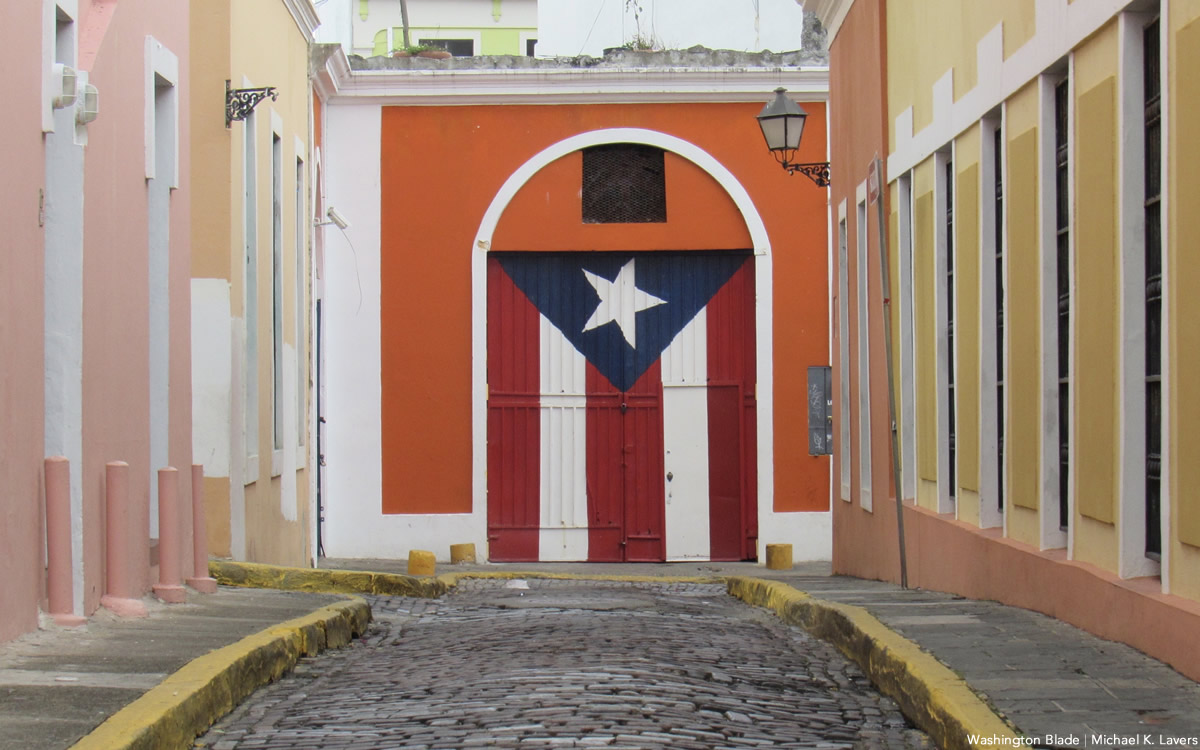
An activist from Puerto Rico who spoke at a Congressional Hispanic Caucus briefing last week in D.C. said anti-LGBTQ laws and policies have left the LGBTQ community in the U.S. commonwealth even more vulnerable.
“A human rights crisis is unfolding in Puerto Rico — one that disproportionately affects LGBT+ people, particularly transgender and nonbinary Puerto Ricans,” said True Self Foundation Executive Director Miguel Vázquez-Rivera.
The True Self Foundation and LatinoJustice PRLDEF participated in the briefing that took place on July 15.
Vázquez-Rivera during the briefing highlighted several anti-LGBTQ laws and policies that have been implemented since Gov. Jenniffer González took office in January 2025. These include Law 63-2025, which prohibits gender-affirming healthcare for anyone under 21, and Law 26-2026, which prohibits the University of Puerto Rico and other “government facilities” from installing “mixed or gender-neutral multi-occupancy restrooms.”
“The legislation aims to strengthen public safety standards while ensuring that no individual is subjected to unlawful discrimination,” noted the Puerto Rico Federal Affairs Administration on Feb. 25 in a press release after González signed it.
González, a Republican who is a member of the pro-statehood New Progressive Party, was Puerto Rico’s resident commissioner in the U.S. House of Representatives before she became governor. González supports President Donald Trump.
Vázquez-Rivera during the briefing highlighted anti-LGBTQ measures that have been introduced in the Puerto Rico Legislative Assembly. These include House Bill 164, which would prohibit transgender athletes from school sports teams that correspond with their gender identity, and House Bill 131, which would allow faith-based adoption agencies to deny services to same-sex couples.
“The overwhelming scientific evidence is clear: children raised by same-sex parents do just as well as those raised by different-sex parents,” said Vázquez-Rivera. “What matters is not the gender or the sexual orientation of the parents; but the presence of love, stability, and support.”
Trump upon taking office for a second time on Jan. 20, 2025, signed his “Defending Women from Gender Identity Extremism and Restoring Biological Truth to the Federal Government” executive order. Among its provisions is the federal government’s recognition of two genders: male and female.
Vázquez-Rivera noted “other proposals” in Puerto Rico “would recognize only ‘biological sex’ in government documents, prohibit inclusive language throughout public institutions, continue challenging recognition of nonbinary identities, and reverse protections for LGBT+ students previously adopted by the University of Puerto Rico.”
“The challenges facing LGBT+ Puerto Ricans cannot be viewed as isolated debates about healthcare, sports, bathrooms, or language,” said Vázquez-Rivera. “They are part of a much larger picture.”
“Puerto Rico is already confronting poverty, disaster recovery, healthcare shortages, and economic instability,” he added. “When discrimination is added to these realities, existing inequities become even deeper. Mental health worsens. Families are displaced. Communities become more vulnerable.”
Vázquez-Rivera further stressed “these issues are interconnected, and our response must be as well.” He also urged the LGBTQ rights movement to do more to support — and fund — advocacy efforts in Puerto Rico.
“Ultimately, this is not about granting special rights,” said Vázquez-Rivera. “It is about ensuring that more than three million American citizens living in Puerto Rico have the same opportunity to live healthy, safe, and dignified lives as every other American.”
The Puerto Rican government has not responded to the Washington Blade’s request for comment.

US official protested at 2026 International AIDS Conference

Advocates for trans students urge Md. to fight White House threats

‘Heated Rivalry’ star takes it off in new ads for Under Armour

Trump ends direct HIV prevention funding to community groups

We must not scapegoat refugees after Berlin Pride terrorist attack

Pentagon says hormones make trans troops unfit but gives them to men

At Alliance Defending Freedom’s summit, church and state are one

Winsome Earle-Sears launches campaign against Va. marriage equality amendment

Calendar: July 24-30

1 dead, 29 injured in Berlin Pride attack
-

 Opinions4 days ago
Pentagon says hormones make trans troops unfit but gives them to men
-
National4 days ago
At Alliance Defending Freedom’s summit, church and state are one
-
Virginia4 days ago
Winsome Earle-Sears launches campaign against Va. marriage equality amendment
-
Calendar4 days ago
Calendar: July 24-30