Connect with us

Arts & Entertainment

Stuck in D.C.?

Those who can’t make it home for Thanksgiving have several local dining options
Published

on

turkey, Thanksgiving, dining, Washington Blade, gay news

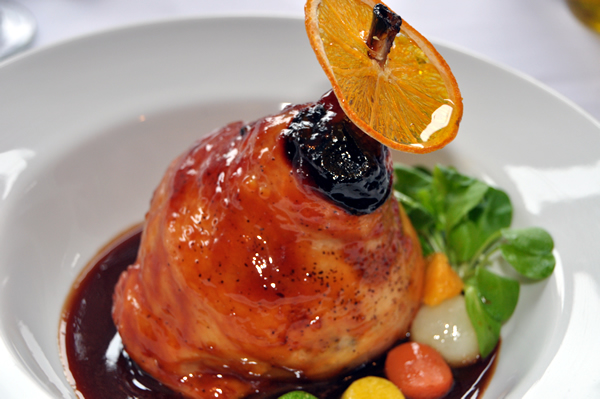
D.C. has lots of dining options for those staying in town next week. (Blade photo by Michael Key)

Looking to enjoy a Thanksgiving feast without the hassle of spending hours in the kitchen cooking and cleaning up? Then, a number of D.C.’s finest and most popular restaurants will be the most welcome Thanksgiving day sight since the Pilgrims first spotted Plymouth Rock.

On Thanksgiving Day (Nov. 22) dozens of area restaurants will be serving up menus ranging from traditional to innovative holiday meals.

Here’s a list of what some will be offering:

Ardeo Bardeo Restaurant
3311 Connecticut Ave. NW
202-244-6750

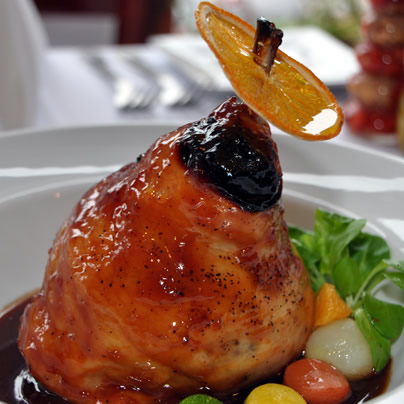
Celebrate a traditional Thanksgiving meal or enjoy one of Chef Nate Garyantes’ dinner specials at Ardeo Bardeo from 5-11 p.m., which features everything from butternut squash soup to wild mushroom risotto to ricotta agnolotti. Turkey of course will be served but other dining choices include grilled swordfish, seven hour-braised Shenandoah lamb shoulder or grilled beef strip loin.

Art and Soul
415 New Jersey Ave., NW
202-393-7777

Executive Chef Wes Morton will pull out all the southern-inspired stops with his Thanksgiving buffet menu, featuring house-made maple ham, a roast of local heritage turkey and all the best holiday favorites. Seatings are available from 11 a.m. to 9 p.m. Adults are $55 per person and children ages 6 to 12 are $25. All customers will receive a “leftover” roast turkey sandwich complete with cranberry sauce and gravy to take home.

Beacon Bar and Grill
1615 Rhode Island Ave. NW
202-872-1126

Chef Steven Hunter will welcome all to Beacon Bar and Grill’s Thanksgiving Day dining celebration with traditional holiday fare and great seasonal alternatives. The three-course dinner is available from noon to 7 p.m. Adults $34.95, children $15.95.

Bistro Francais
3124 M St. NW
202-338-3830

This Georgetown French eatery will be offering a traditional three-course Thanksgiving meal, as well as an a la carte option from 11 a.m. to midnight. Lunch begins at $29.95 for adults, $19.95 for children, with dinner fetching $10 more.

Brasserie Beck
1101 K St. NW
202-408-1717

Chef Brian McBride will prepare Brasserie Beck’s first Thanksgiving Day feast with seatings from noon to 9 p.m. This contemporary Belgian brasserie will also offer special holiday desserts.

Café Berlin
322 Massachusetts Ave. NE
202-543-7656

This German-themed restaurant will be offering menu choices from its regular and special Thanksgiving Day menu from 1 to 8 p.m. The holiday meal begins with pumpkin soup and is followed by roasted turkey with all the trimmings and choice of dessert. Cost is $27 per person.

Darlington House
1610 20th St. NW
202-332-3722

Owners Fabio and Patricia Beggiato invite Thanksgiving revelers to head to their Italian eatery for a special holiday meal, that starts with a glass of prosecco. Traditional offerings will be available from 2 to 11 p.m. Adults cost $49, children $25.

Freddie’s Beach Bar & Restaurant
555 S. 23rd St., Arlington, VA
703-685-0555

The restaurant will be offering its annual Thanksgiving all-you-can-eat buffet from noon to 7 p.m., featuring a traditional menu of turkey, stuffing, yams plus pumpkin pie and other dessert favorites. Cost is $19.99 per person.

Palm Restaurant
1225 19th St. NW
202-293-9091

Looking to give thanks in style? This Dupont Circle steakhouse is offering a three-course Thanksgiving prix fixe menu featuring slow-roasted hand carved turkey with all the trimmings. Dinner is served from 2 to 8 p.m. at $45 for adults and $19 for children under 12.

Rasika West End
1190 New Hampshire Ave. NW
202-466-2500

This contemporary Indian restaurant will be serving turkey in addition to its regular menu from noon to 11 p.m.

Roberts Restaurant at the Omni Shoreham
2500 Calvert St. NW
202-756-5300

Executive Chef Dan Murray and his culinary team will be offering a Thanksgiving brunch from 11 a.m. to 3 p.m., featuring all the traditional favorites mixed in with his signature style. Brunch is $64 for adults, $27 per child.

Taberna del Alabardero
1776 I St. NW
202-429-2200

Celebrate the holiday at this Spanish restaurant with a prefixed menu and live entertainment. Enjoy a lavish Turkey meal and finish the night with a special dessert of cherry sponge cake, corn cream, blueberry mousse and pumpkin marmalade. Price is $64 a person. Dinner will be served beginning at 5 p.m.

Trio
1537 17th St. NW
202-232-6305 

From noon to midnight Trio will be offering a special four-course Thanksgiving meal for $17.95. On tap for the menu is cream of turkey soup, choice of salad, an entrée of roast turkey with giblet gravy, roast duckling aux oranges or baked sugar-cured ham with raisin sauce, plus all the fixings. Dessert will offer pumpkin pie, homemade bread pudding and rice pudding.


 

Advertisement
FUND LGBTQ JOURNALISM
SIGN UP FOR E-BLAST

Celebrity News

Housewives take Capitol Hill by storm

Bravolebrities promote expanded PrEP access, HIV/AIDS funding

Published

on

U.S. Sen. Tammy Baldwin (D-Wis.) speaks with NeNe Leakes at the U.S. Capitol on March 18, 2026. (Washington Blade photo by Joe Reberkenny)

Real Housewives from across the country took over Capitol Hill on Wednesdayto advocate for expanded PrEP access and to push for continued — if not increased — funding for HIV/AIDS research.

The event brought together Housewives from multiple franchises, including NeNe Leakes and Phaedra Parks from Atlanta; Candiace Dillard Bassett from Potomac; Erika Jayne from Beverly Hills; Luann de Lesseps from New York; Melissa Gorga from New Jersey; and Marysol Patton from Miami, alongside Tristan Schukraft, founder and CEO of MISTR, an online platform that connects people to HIV prevention tools and care.

MISTR, the nation’s largest telehealth platform for sexual health, brought stars from across Bravo’s Real Housewives franchise to Washington for Housewives on the Hill, a day of advocacy focused on expanding access to HIV prevention and treatment. During the event, the Housewives shared personal stories on how HIV has impacted their lives and the ongoing impact of HIV across communities in the U.S.

PrEP, the medication MISTR helps get out to the public, is a medication that can, if taken properly, reduce the risk of contracting HIV through sex by up to 99 percent, according to public health officials. Advocates say wider access to the medication — including through insurance coverage and telehealth services — is critical to reducing new HIV infections across the United States.

The day began with a panel in the ornate Kennedy Caucus Room of the Russell Senate Office Building, where the Housewives shared personal stories about the importance of HIV prevention.

Many of the Housewives offered personal accounts of why HIV prevention matters to them.

Bassett drew on her experience under the Obama-Biden administration in public affairs and spoke about how policy decisions can directly impact marginalized communities.

“Before my career in entertainment, I actually worked in the White House Offices of Public Engagement and Intergovernmental Affairs, and part of my job was to liaise between the White House and communities,” Bassett shared to the crowded room. “And so I got to see firsthand the effect that federal policy could have on those communities and the outcomes that could come out of that work, particularly marginalized communities.”

She then looked toward her fellow Housewives, pointing out that the issue does not affect all communities equally, with minority groups disproportionately impacted by HIV.

“And just what Phaedra said about this disease and HIV and AIDS, and how it disproportionately affects so many, particularly Black people — we make up, as you said, 12 percent of the population, and we are 40 percent of those affected by HIV. Just let that sink in. Let the walls hear that … It’s so important that we have these conversations, not just in forums like this, but around your kitchen tables, in your group chats, on the street — wherever we are. We need to be talking about what we can be doing as communities and as individuals to combat HIV and AIDS.”

After the panel, the group moved to the Lincoln Room, part of the Majority Whip’s office suite, where they continued conversations with lawmakers and staff about access to care, education, and prevention.

Bassett, fresh out of “The Traitors” castle, emphasized the need to humanize heavy topics like HIV.

“While you may not have anyone in your direct family affected by HIV, six degrees of separation — everyone knows someone who has been affected,” Bassett told the Washington Blade. “If you can tie the nature of dealing with illness back to families, they have to hopefully see themselves in it. People want community. Social media has done a good job connecting us in that way.”

Bassett encouraged attendees to be brave, to educate themselves about preventive measures, and to take advantage of telemedicine through platforms like MISTR.

“Step out and have faith that the people who are supposed to bind you are supposed to help you,” she added.

Schukraft said the turnout reflected the public’s strong interest in HIV prevention and awareness.

“Over 400 people attended the panel, and we had to turn people away,” Schukraft told the Blade. “These are real communities across the country, sharing stories and emphasizing the importance of HIV prevention and long-term care. Telemedicine is key — it helps rural and urban communities, reduces stigma, and allows people to consult doctors from home. The more honest you are with the doctor, the better care you get.”

For Leakes, using her iconic voice to educate others was a natural extension of her platform.

“Talking about sex, HIV, those topics can be embarrassing,” she admitted. “Atlanta has a high HIV rate, particularly in the Black and gay communities. Confidence to speak and educate my community feels good. The number of people that came out to support us this morning — some were turned away — was amazing. It’s important to make the conversation fun and approachable for the younger generation.”

“Atlanta has a high HIV rate, particularly in the Black and gay communities,” Leakes added to the Blade. “The South, Miami, Houston — these areas remain high, and ignorance contributes. Confidence to speak and educate my community feels good.”

Parks echoed the sentiment, highlighting both the challenges and the resilience of the LGBTQ community.

“Many people need this incentive and don’t have a voice. Medical care is expensive and inaccessible for some, so MISTR provides resources and telemedicine access to PrEP,” Parks said. “The LGBTQ+ community fights battles daily; sometimes they lose, but they keep going. Housewives show that women can stay the course.”

The lawyer, who also teased some new and upcoming projects, highlighted Atlanta’s return to Bravo on April 5 with “two new peaches in the house,” which she assured would be must-see TV. She also mentioned her upcoming role in “Dancing with the Stars.”

Patton said that the atmosphere on the Hill was very welcoming (more so than Andy Cohen’s couch at reunion time, one might assume.) She also noted that by working with Schukraft and MISTR, she was able to see firsthand how technology and telehealth can remove barriers to care.

“Everyone’s been so friendly, enthusiastic, and encouraging,” said Patton. “I was impressed with MISTR — how they get medication to people who can’t see a doctor or don’t have funds. Telehealth and medication delivery reduce stigma and help prevent the spread of HIV. Access needs to be available for prevention to work.”

Jayne gave the Blade a more personal reflection, particularly touching on how much treatment has changed since the disease began in the 1980s.

“Growing up in the late ‘80s and early ‘90s, an HIV diagnosis meant death,” she said. “The stigma was terrible, and I lost many people in the arts community. Now, people live longer, but the disease remains. I think it’s important to use whatever influence I have to educate.”

U.S. Sen. Tammy Baldwin (D-Wis.), the first openly lesbian senator who has long advocated for HIV research and prevention, said the Housewives’ visit underscored the importance of public awareness and celebrity influence in the fight against HIV.

“When I first got involved, AIDS was a death sentence — no treatment, no cure. Now we know so much more due to public education and health research. Advocacy spreads awareness that PrEP exists, prevents transmission, and funds research toward a cure. Bipartisan pressure is needed to keep funding going.”

Baldwin continued, explaining that this is not a one-and-done effort. To end the epidemic, all of Congress must come together to fight a virus that does not recognize political party, class, sexuality, or gender.

“We have the end of this epidemic within our reach, but we have to keep focused on it. We have to keep investing. That’s why what we’re doing today, and why … the Real Housewives coming to Capitol Hill with their celebrity and pressing this topic is so important because we have seen this administration, the Trump administration, propose cuts globally, drastic cuts globally, to the fight against AIDS, but also locally. I’m in a position as a member of the Senate Appropriations Committee to fight back, to actually fund programs that they’re trying to cut, but that’s not a given, and we need to really keep the pressure up on a bipartisan basis to keep that funding going.”

Continue Reading

Movies

‘It’s Dorothy’ traces lasting influence of a cultural icon

Thoughtful and scholarly with a celebratory tribute to the character

Published

on

A scene from ‘It’s Dorothy.’ (Photo courtesy of Peacock)

There was a time, according to queer lore, when gay men referred to themselves as a “Friend of Dorothy” as a coded way of communicating their sexual orientation to each other without fear of “the straights” catching on. The reference, of course, is a winking nod to the love and affinity felt by the community toward the main character of L. Frank Baum’s 1900 novel “The Wonderful Wizard of Oz” – especially as personified by Judy Garland in the classic 1939 big screen musical version from MGM.

It may be that the origins of this phrase have been mythologized, exaggerated and/or retro-fitted to convey the underground nature of the queer community – as, indeed, is suggested in “It’s Dorothy!” (the new documentary from filmmaker Jeffrey McHale, now streaming on Peacock), which concerns itself with the enduring cultural legacy of this quintessentially American fictional heroine. But regardless of whether it truly served as a sort of “secret password,” it has come to be embraced as a part of the LGBTQ lexicon. As “campy” as the reference may be, being a “Friend of Dorothy” is now a proudly held communal watchword not just for gay men, but for an entire rainbow community – and McHale’s fizzy-yet-reverential exploration taps into all the reasons how and why this fictional Kansas farm girl has come to be a touchstone for so many by tracking her journey across popular culture over the 125 years since she first sprung to life in the pages of Baum’s timeless literary fantasy.

It gives particular attention to the commentary of cultural figures – writers, performers, and other artists whose paths have become associated with Dorothy’s legacy across pop culture, as well as scholars and historians – to provide insight on the appeal that has made her into a sort of avatar for anyone who feels marginalized in a wild and self-contradictory world; enriched by a plentiful trove of clips from the myriad incarnations through which she has become embedded into the American pop culture imagination, it’s a documentary that leans heavily into the notion that Baum’s timeless heroine remains relevant through her universal relatability. Given a minimum of descriptors by the author who created her, and portrayed in the public imagination through a widely divergent array of perspectives, she represents a kind of “blank page” on which we can imprint ourselves; but at the same time, there is something about her – perhaps her nebulous status as presumed orphan, raised by an aunt and uncle who don’t quite understand her and thrust without warning into a world of contradictory rules, nonsensical beliefs, and unfair expectations – that gives her a particularly personal appeal to anyone who feels like an outsider, and who dreams of freedom, acceptance, and personal agency beyond the proverbial rainbow.

Naturally, McHale imprints on Dorothy’s most iconic incarnation off the pages of Baum’s books; the cultural legacy of Dorothy cannot be separated from that of her most iconic representative (Garland, of course), and his documentary easily makes the case that the beloved actress – who was frequently judged and stigmatized through a career marked by both public success and personal heartbreak, all while living under the scrutiny of Hollywood’s publicity-and-propaganda machine – somehow came to “merge” identites with her most famous character. Judy was Dorothy, but Dorothy was Judy, too. “It’s Dorothy” takes advantage of this almost mystical transfiguration to reflect on the qualities that make this pairing of actress and character so deeply complementary, while also using it to illuminate why the empathy which binds both Garland and Dorothy with LGBTQ people is so tightly connected to the shared qualities they seemed to personify, and which have made both into undisputed icons of the queer community.

As famous as Garland’s Dorothy is, however, it’s not the end-and-be-all of Baum’s beloved heroine, and much of McHale’s movie is devoted to the numerous other performers who have taken on the role throughout the decades, in various incarnations of the “Wizard of Oz” mythos – particularly through “The Wiz,” the 1974 Broadway musical that reframes and remolds the story (and Dorothy) through the lens of Black culture, but also in other iterations that have emerged from pop culture as a testament to her enduring appeal. Indeed, the movie brings illumination to the way that Dorothy – and the “Oz” mythos in general – has become a touchstone within the Black community as well, and how artists (like musician Rufus Wainwright, gay counterculture icon John Waters, comedian/actor Margaret Cho, comedian/writer/director Lena Waithe, and “Wicked” author Gregory Maguire, all of whom participate in the film’s conversation) have found inspiration in the character and her story that has helped to shape their own creative lives.

Thoughtful and scholarly while also delivering a celebratory tribute to the character, “It’s Dorothy” provides a well-rounded examination of Baum’s iconic character (and the world he created around her), and of her impact on the American popular imagination. It’s an entertaining journey through cultural history, connecting the dots to give us insight on why Dorothy and her adventures continue to speak to us with such profound resonance. It’s also entertaining in a way that feels like a “guilty pleasure,” but is validated by the reverence it exudes for its subject; loaded with memorably evocative clips from movies, shows, and performances from across the decades, it gives us glimpses of less-famous appearances of the character and reminds us of just how enmeshed in our imaginations she has come to be; and while it may begin to feel a bit repetitive, at points, as it profiles the various actresses who have played Dorothy over the years (most of whom share the same or similar stories about their personal connections to the role), it nevertheless maintains a sincerity of feeling that keeps us invested.

And just in case you might feel like the times are too somber for a nostalgic stroll down the “yellow brick road” of cultural memories, be aware that McHale also explores the ominous presence of the Wizard himself in these tales, a phony who pretends at power while hiding behind a benevolent mask to maintain it.

As if the “Wicked” movies didn’t make the point clearly enough, we’re in a world that’s a lot more Oz-like than we would like to imagine, and it’s hard not to wish we had the ability to go “home” simply by tapping our heels together in fabulous footwear. “It’s Dorothy!” conveys that longing in a way that feels light-hearted and joyful, and reminds us why being a “friend of Dorothy” has been and continues to be a resonant way of identifying ourselves in a world full of wizards, witches, and “twisters” that can carry us far away from home.

And if you want to follow it up with an impromptu rewatch of the 1939 classic, we wouldn’t blame you. It’s a movie that, for so many of us, conjures the very feeling of “home” itself – and there’s no place like it.

Continue Reading

Arts & Entertainment

The very few queer highlights of the Oscars

Streisand’s live performance, a shocking tie, and more

Published

on

(Photo courtesy of AMAS)

LOS ANGELES — While Sunday’s Academy Awards saw the expected winners “One Battle After Another” and “Sinners” nab a collective 10 Oscars throughout the evening, dominating most of the major categories, there were a few moments for queer film fans to celebrate.

During the ceremony’s prolonged and emotional In Memoriam segment, which paid tribute to Robert Redford, Rob Reiner, and Catherine O’Hara, queer icon Barbra Streisand went on stage and gave a rare live performance of “The Way We Were” as a tribute to Redford, who died last September at the age of 83. Before singing, Streisand said, “Now, Bob had real backbone on and off the screen. He spoke up to defend freedom of the press, protect the environment, and encouraged new voices at his Sundance Institute — some of whom are up for Oscars tonight, which is so great. He was thoughtful and bold.”

Both “I Lied to You” from “Sinners” and “Golden” from “KPop Demon Hunters” were performed live; Alabama Shakes front woman Brittany Howard performed during the evening’s powerful rendition of “Sinners’” “pierce the veil” scene. “Golden” ended up winning the Best Original Song award.

One of the most shocking moments of the night arrived early on when Kumail Nanjiani presented the Best Live Action short category, which was a tie between “The Singers” and “Two People Exchanging Saliva” — only the seventh tie in Oscars history (one of which involved Streisand’s 1969 win for “Funny Girl”). The latter short, which is currently streaming on The New Yorker, is described as “a dystopian version of Paris where kissing is forbidden and purchases are made through small acts of violence” and follows the unexpected connection between two women.

When accepting the award, “Two People Exchanging Saliva” director and producer Natalie Musteata said: “Thank you to the Academy for supporting a film that is weird, and that is queer, and that is made by a majority of women!”

“One Battle After Another’s” editor, Andy Jurgensen (who collaborated with Paul Thomas Anderson on “Licorice Pizza” and “Phantom Thread”), kissed his husband before going on stage to accept his award for film editing. He said, “To my partner, Bill, who brings so much joy to my life every day.”

Overall, the 2026 award season did not feature many queer films or actors in the lineup, and that was reflected in both the Oscar nominees and eventual winners. Smaller award shows like the Gotham Awards and the Film Independent Spirit Awards provided opportunities for indies like “Sorry, Baby,” “Twinless,” and “Lurker” to get proper recognition. “One Battle After Another” won Best Picture and Best Director for Paul Thomas Anderson; “Sinners” star Michael B. Jordan won Best Actor; and “Hamnet’s” Jessie Buckley won Best Actress.

Continue Reading

Popular