News
Cardinal admits sexual misconduct with priests
‘He started fondling my body, kissing me’
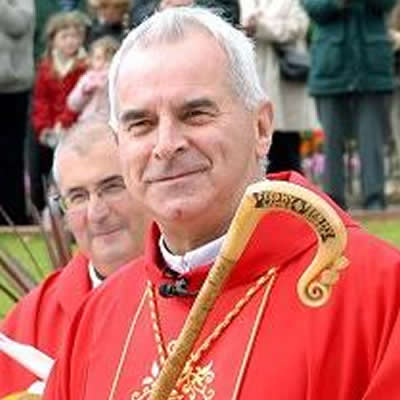
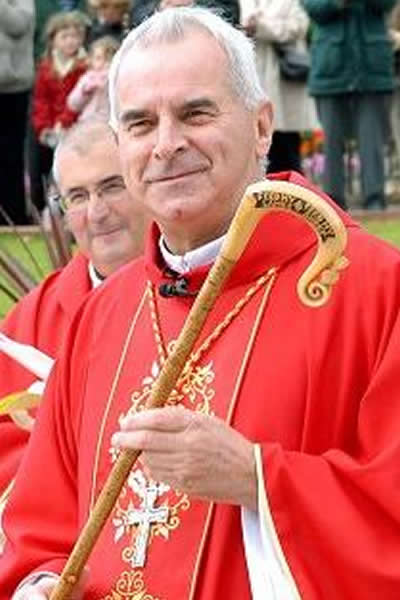
Cardinal Keith Michael Patrick O’Brien (Photo public domain)
In a dramatic development just days before the selection process for a new Pope was to begin at the Vatican, a British Cardinal admitted in a public statement on March 3 that he engaged in sexual misconduct with priests over a period of more than 30 years.
Cardinal Keith O’Brien, 74, the highest-ranking Catholic leader in the United Kingdom and an outspoken opponent of same-sex marriage, issued his statement one week after he abruptly resigned from all of his church duties.
Last week, the Washington Blade reported that the Vatican was downplaying reports of a gay sex scandal after several allegations, including those against O’Brien.
Church insiders believe his resignation was ordered by outgoing Pope Benedict XVI following a report in the British newspaper The Guardian that three priests and a former priest filed formal complaints accusing him of engaging in “intimate” acts with them against their will in the 1980s.
The complaints were filed with the Vatican’s ambassador to the United Kingdom.
“In recent days certain allegations which have been made against me have become public,” O’Brien said in his statement. “Initially, their anonymous and non-specific nature led me to contest them,” he said.
“However, I wish to take this opportunity to admit that there have been times that my sexual conduct has fallen below the standards expected of me as a priest, archbishop and cardinal,” he said. “To those I have offended, I apologize and ask forgiveness.”
He added, “To the Catholic Church and the people of Scotland, I also apologize. I will now spend the rest of my life in retirement. I will play no further part in the public life of the Catholic Church in Scotland.
O’Brien had served as head of the Catholic Church in Scotland, where the three current and one former priest said he made inappropriate advances toward them when three of them were young priests and one of them was a seminarian.
O’Brien’s statement of admission and apology came one day after The Observer published a follow-up story providing specific details of the allegations made by the three priests and former priest.
“He started fondling my body, kissing me and telling me how special I was to him and how much he loved me,” The Observer quoted one of the priests as saying.
The former priest told The Observer he was a seminarian when O’Brien used bedtime prayers as an opportunity to make advances toward him.
“I knew myself to be heterosexual, but I did say to others that I thought it would be easier to get through seminary if you were gay,” The Observer quoted him as saying.
The Observer said it chose to report the additional details with the full consent of the three priests and former priest, whose motives had come under attack by some church defenders because they haven’t publicly disclosed their names.
According to The Observer, the four men disclosed their names in the written complaints they filed with the Vatican ambassador to the U.K., Archbishop Antonio Mennini, in early February.
The Observer reports that the four decided to file their complaint after they discovered for the first time earlier this year that each of them had encountered what they believed to be improper advances from O’Brien years earlier.
The paper said the men chose to contact the media about their complaint when church officials led them to believe that little would be done about their revelations and that O’Brien would be going to Rome to help select a new Pope.
“I’d never wanted to ‘out’ Keith just for being gay,” the former priest, who is now married, told The Guardian. “But this was confirming that his behavior towards me was part of his modus operandi. He has hurt others, probably worse, than he affected me,” The Observer quoted him as saying.
“And that only became clear a few weeks ago,” he told The Observer, in noting his recent discovery of the three others to whom O’Brien made inappropriate advances.
The Observer and other British newspapers have reported that support by church critics for exposing O’Brien’s inappropriate behavior toward priests whose careers and duties were under his control was based also on what they believe to be his blatant hypocrisy.
In recent years, O’Brien spoke out harshly against same-sex marriage and warned the Scottish Parliament that Scotland would suffer dire consequences if it legalized civil marriage for same-sex couples.
He called same-sex marriage a “grotesque subversion of a universally accepted human right. Gay activists in the U.K. said they were especially offended by his description of same-sex relationships as unhealthy and inferior to heterosexual relationships. Among other things, he told the media that legal recognition of same-sex marriage would result in schools being required to teach kids “homosexual fairy stories.”
O’Brien’s statement admitting to sexual misconduct makes him the highest ranking Catholic Church official to make such an admission, according to Vatican observers.
The admission came one week after Vatican officials denounced reports in the Italian press that an underground network of gay priests assigned to the Vatican organized meetings for sex and may have been subjected to blackmail.




District of Columbia
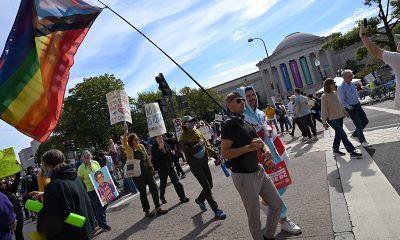
‘No Kings’ protests set for D.C.
Anti-Trump demonstrations to take place across country on Saturday

As President Donald Trump and his administration escalate rhetoric targeting transgender youth and student athletes, push efforts to restrict voting access for millions of Americans, and pursue foreign policy decisions that critics say bypass congressional authority, organizers across the country are once again mobilizing in protest.
For many LGBTQ advocates, the moment feels especially urgent.
In recent months, activists have pointed to a surge in anti-trans legislation, attacks on gender-affirming care, and efforts to roll back nondiscrimination protections as direct threats to the safety and visibility of queer and trans communities. Organizers say the demonstrations are not just about policy, but about defending the right of LGBTQ people — particularly trans youth and people of color — to live openly and safely.
Thousands of “No Kings” protests are planned nationwide, with multiple demonstrations set to take place in D.C.
One of the primary events, “No Kings Washington,” will be held in Anacostia, an overwhelmingly Black area of D.C. that is often at the center of conversations around racial justice, policing, and access to resources in the nation’s capital.
The protest in Anacostia is focused on what organizers describe as the “power behind the throne,” specifically Stephen Miller, the White House Deputy Chief of Staff for Policy and Homeland Security Advisor. Miller has been closely associated with the administration’s “zero tolerance” immigration policy, including the family separation practice that resulted in thousands of children being separated from their parents at the Southern border.
Activists have also linked immigration enforcement policies to broader concerns about LGBTQ migrants, including queer asylum seekers who often face heightened risks of violence and discrimination both in their home countries and within detention systems.
Anacostia protest details:
Participants are asked to gather starting at 1:30 p.m. on the southeast side of the Frederick Douglass Bridge. The closest Metro station is Anacostia on the Green Line, about an 8-minute walk from the starting point. Organizers strongly encourage attendees to use public transportation, as street parking is limited.
The march will proceed past Fort McNair and conclude near the Waterfront Metro station.
D.C. icon and LGBTQ activist Rayceen Pendarvis is set to speak at the protest around 2 p.m.
Kalorama protest details:
A separate protest will take place earlier in the day in Kalorama, a neighborhood long associated with political power and home to presidents, cabinet officials, and foreign ambassadors. Demonstrators are expected to gather at 10 a.m., with a march running until approximately noon near the intersection of Connecticut Avenue and Kalorama Road.
Arlington/National Mall protest details:
Another group is expected to assemble at Memorial Circle near Arlington National Cemetery at 10 a.m. before crossing the Memorial Bridge into D.C., passing the Lincoln Memorial and continuing on to the Washington Monument. Organizers say the march is intended to defend “American democracy, the rule of law, and a healthy planet.”
Unlike last June — when organizers discouraged large-scale demonstrations in D.C. due Trump’s military/birthday parade — activists are now explicitly calling on people to show up in the nation’s capital and surrounding areas.
The protests also coincide with Transgender Day of Visibility weekend, which includes additional gatherings and celebrations on the National Mall. At the same time, peak bloom for the National Cherry Blossom Festival is expected to draw large crowds to the city. With multiple major events happening simultaneously, officials and organizers anticipate significant congestion, increased traffic, and crowded public transit throughout the weekend.
Organizers are urging participants to plan ahead and come prepared.
“Bring your signs, noisemakers, music, and creative ideas, and gather in joyful, nonviolent protest,” they said. “Children are very welcome.”
For more information, visit nokings.org.
Pennsylvania
Pa. House passes bill to codify marriage equality in state law
Governor supports gay state Rep. Malcolm Kenyatta’s measure
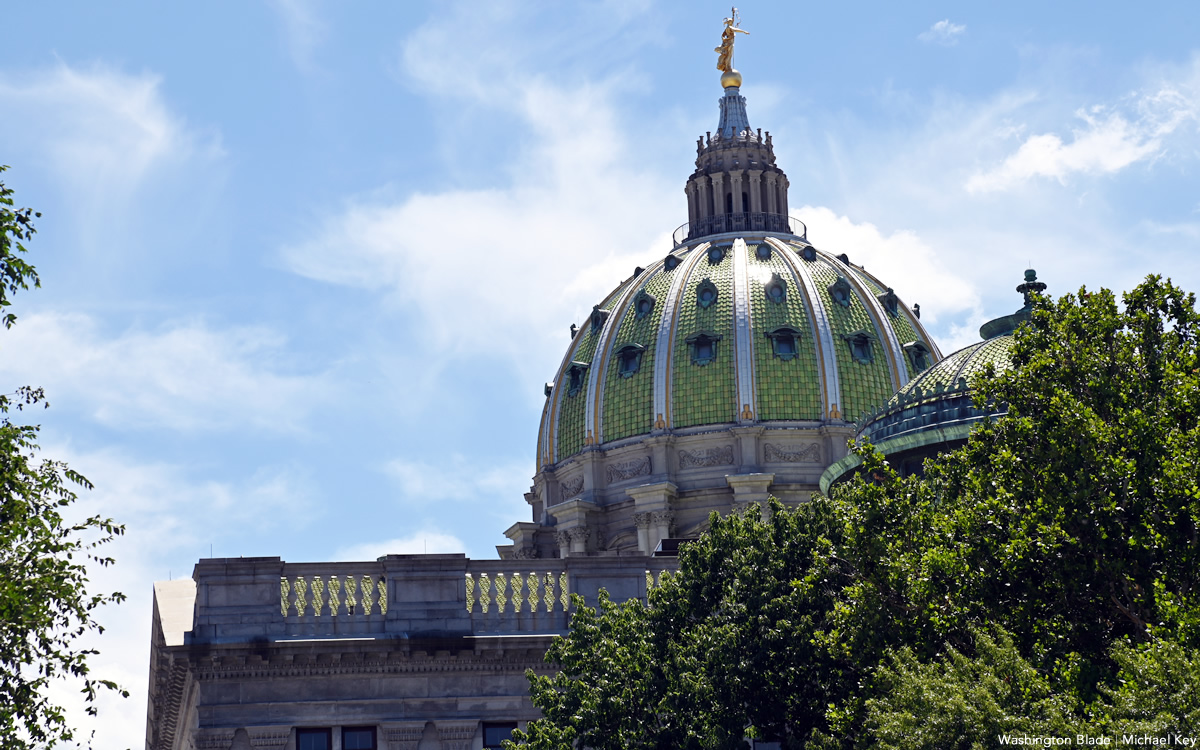
The Pennsylvania House of Representatives on Wednesday passed a bill that would codify marriage equality in state law.
House Bill 1800 passed by a 127-72 vote margin. Twenty-six Republicans voted for the measure.
The Republican-controlled Pennsylvania Senate will now consider the bill that state Rep. Malcolm Kenyatta (D-Philadelphia), who is the first openly gay person of color elected to the state’s General Assembly, introduced. Democratic Gov. Josh Shapiro supports the measure.
“Here in Pennsylvania, we believe in your freedom to marry who you love,” said Shapiro on Wednesday. “Today, the House has stepped up to protect that right.”
BREAKING: The Pennsylvania House just passed @RepKenyatta's bill to codify marriage equality into law in PA — and they did it with broad bipartisan support.
— Governor Josh Shapiro (@GovernorShapiro) March 25, 2026
Here in Pennsylvania, we believe in your freedom to marry who you love. Today, the House has stepped up to protect that…
Florida
DeSantis signs emergency bill that restores Fla. ADAP funding
Temporary funds to last through June 30
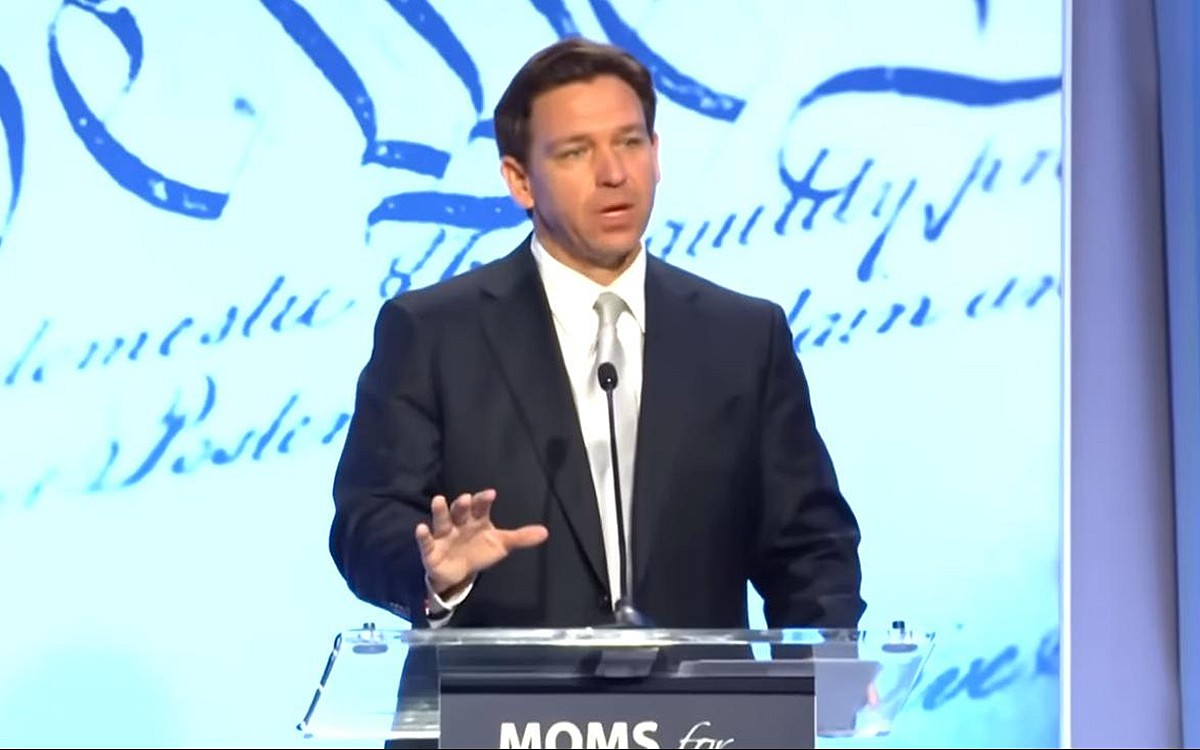
After the Florida Department of Health made huge cuts to the AIDS Drug Assistance Program in January, Republican Gov. Ron DeSantis has signed emergency legislation restoring HIV access to more than 12,000 Floridians.
Two months ago, as the Washington Blade reported, the Sunshine State cut the vast majority of those in ADAP by shifting the income levels required for eligibility — without following standard procedure when changing government policy outside of legislative or executive action.
The bill, signed by DeSantis on Tuesday, passed both chambers of the Florida Legislature unanimously and appropriates $30.9 million in emergency bridge funding through June 30, 2026. It restores Florida’s ADAP income eligibility to 400 percent of the Federal Poverty Level — the level it was prior to the January cuts. The legislation also requires the FDOH to submit detailed monthly financial reports to legislative leadership beginning April 1.
Under the old policy, eligibility would have been limited to those making no more than 130 percent of the federal poverty level, or $20,345 per year.
“For 10 weeks, 12,000 Floridians living with HIV did not know if they could fill their next prescription. Today, they can,” Esteban Wood, director of advocacy and legislative affairs at AIDS Healthcare Foundation, said in a statement.
The detailed reports now required to be sent to legislative leadership must include all federal revenues and expenditures, including manufacturer rebates; enrollment figures by county and insurance status; prescription utilization by drug class; and any projected funding shortfalls. This is the first time the Legislature has required this level of financial transparency from the program.
DeSantis signed the legislation one day after a Leon County Circuit Court judge denied AIDS Healthcare Foundation’s request for an injunction to block the significant changes the DeSantis administration is making to the program, which it claims faces a $120 million shortfall for calendar year 2026.
AIDS Healthcare Foundation, a national organization focused on protecting and expanding HIV healthcare access and prevention methods, filed a lawsuit over the change in eligibility, arguing the Florida Department of Health did not follow the laid out path for formally changing policy and was acting outside established procedures.
Typically, altering eligibility for a statewide program requires either legislative action or adherence to a multistep rule-making process, including: publishing a Notice of Proposed Rule; providing a statement of estimated regulatory costs; allowing public comment; holding hearings if requested; responding to challenges; and formally adopting the rule. According to AIDS Healthcare Foundation, none of these steps occurred.
The long-term structure of ADAP will be determined by the 2026–2027 fiscal year state budget, something that lawmakers have until June 30 to finish.

‘No Kings’ protests set for D.C.

Border to border: modern slavery and human trafficking in refugee movements across East Africa

New IOC policy bans trans women from Olympics

Introducing the Torchbearers Awards honoring queer, trans women and nonbinary people

Pa. House passes bill to codify marriage equality in state law

PHOTOS: Capital Stonewall Democrats 50th anniversary

Small is beautiful: subcompact SUVs

‘Inherit the Wind’ isn’t about science vs. religion, but the right to think

Polish court rules country must recognize same-sex marriages from EU states

Capital Stonewall Democrats 50th anniversary gala draws sold out crowd
-

 Photos4 days ago
PHOTOS: Capital Stonewall Democrats 50th anniversary
-
Autos5 days ago
Small is beautiful: subcompact SUVs
-
Theater5 days ago
‘Inherit the Wind’ isn’t about science vs. religion, but the right to think
-
Poland4 days ago
Polish court rules country must recognize same-sex marriages from EU states