News
Gay Vatican suicide now documentary film
American filmmaker wants story of Italian writer’s death to be message for new Pope

St. Peter’s in Vatican City. (Photo by Jean-Christophe Benoist via wikimedia commons)
Gay activists in Italy say Italian gay writer Alfredo Ormando is credited with triggering Italy’s version of the Stonewall rebellion in 1998 when he took his own life by setting himself on fire in St. Peter’s Square at the Vatican to protest the Catholic Church’s condemnation of homosexuality.
A documentary film called Alfredo’s Fire, which tells the story of Ormando’s struggle to cope with anti-gay bias and religious intolerance, and the subsequent gay Vatican suicide, is intended to send a message to the Vatican and the new Pope, according Andy Abrahams Wilson, the gay American filmmaker who is nearing completion of the documentary.
“In Alfredo’s name and in the names of countless other LGBT people – from those burnt at the stake in the Middle Ages, to Alfredo’s fire, to the lives and spirits that are routinely extinguished because of the Catholic Church’s anti-gay teachings – may Pope Benedict XVI’s abdication signal new light and hope for all of us,” Wilson said in a statement.
He told the Blade he’s been working on the film for fifteen years, while working on other projects, and considers it a labor of love. Among other things, he hopes the 40-minute documentary will enable the tragedy of Alfredo Ormando’s death to shed light on how religious teachings can result in dire consequences for LGBT people.
The film is expected to be released in late spring or early summer, Wilson said. He plans to submit it to various international film festivals and will enter it as a potential nominee for a short film-documentary for an Academy Award.
As a conclave of cardinals from throughout the world gathers at the Vatican to select Benedict XVI’s successor, Abrahams Wilson and his non-profit film company, Open Eye Pictures of Sausalito, Calif., are making an appeal for contributions to help cover post-production costs for the film.
He said the film will be made available to faith-based organizations and LGBT groups for viewing as an educational tool to address anti-LGBT prejudice and discrimination.
“On January 13, 1998 Alfredo Ormando, a 39-year-old Italian writer, arrived in Rome just as the sun was rising,” a promotional write-up released by Open Eye Pictures says. “After a long journey from his native Sicily, he found his way to the empty plaza of St. Peter’s Square and, facing the entrance to the Basilica, knelt down as if to pray,” the write up says.
“He made a rapid hand gesture and suddenly was engulfed in flames. Before the Church and God, Alfredo Ormando had lit himself on fire,” the write-up says.
In letter he sent to a friend about a month before his death, Ormando said, “I hope they’ll understand the message I want to leave: it is a form of protest against the Church that demonizes homosexuality, and at the same time all of nature, because homosexuality is her offspring.”
Wilson said he began filming the documentary in 1998 shortly after Ormando’s death. He said he returned to Italy in 2000 to continue his work on the project during a week when Italian and European LGBT activists held an international LGBT Pride festival and parade in Rome. The LGBT events took place during the Catholic Church’s Year of the Jubilee in Rome celebrating 2000 years of Christianity, which attracted thousands of Catholics throughout the world.
In a protest at the Vatican at that time, Wilson and several American gay activists, including Rev. Mel White of the U.S. group Soul Force and members of the U.S. gay Catholic group Dignity, joined Italian gay activists in demanding that the Catholic Church modify its stance on LGBT people.
While carrying poster size photos of Ormando, the protesters planned to deliver a letter to then Cardinal Joseph Ratzinger, who later became Pope Benedict XVI, according to Wilson. At the time, Ratzinger was in charge of the Church’s Congregation for the Doctrine of the Faith, which several years earlier issued a statement written by Ratzinger calling gay people “intrinsically disordered.”
Although the protesters were unable to deliver the letter to Ratzinger, Wilson said the gathering inspired him to examine the life of Alfredo Ormando through interviews with those who knew him and through his numerous writings.
Wilson said he hopes to premiere the film in Palermo, Sicily, in June, in the Italian region where Ormando was born and raised, during Italy’s 2013 National LGBT Pride celebration, which takes place in that city.




Germany
1 dead, 15 injured when van drives into crowd at Berlin Pride
Incident took place in city’s Tiergarten park
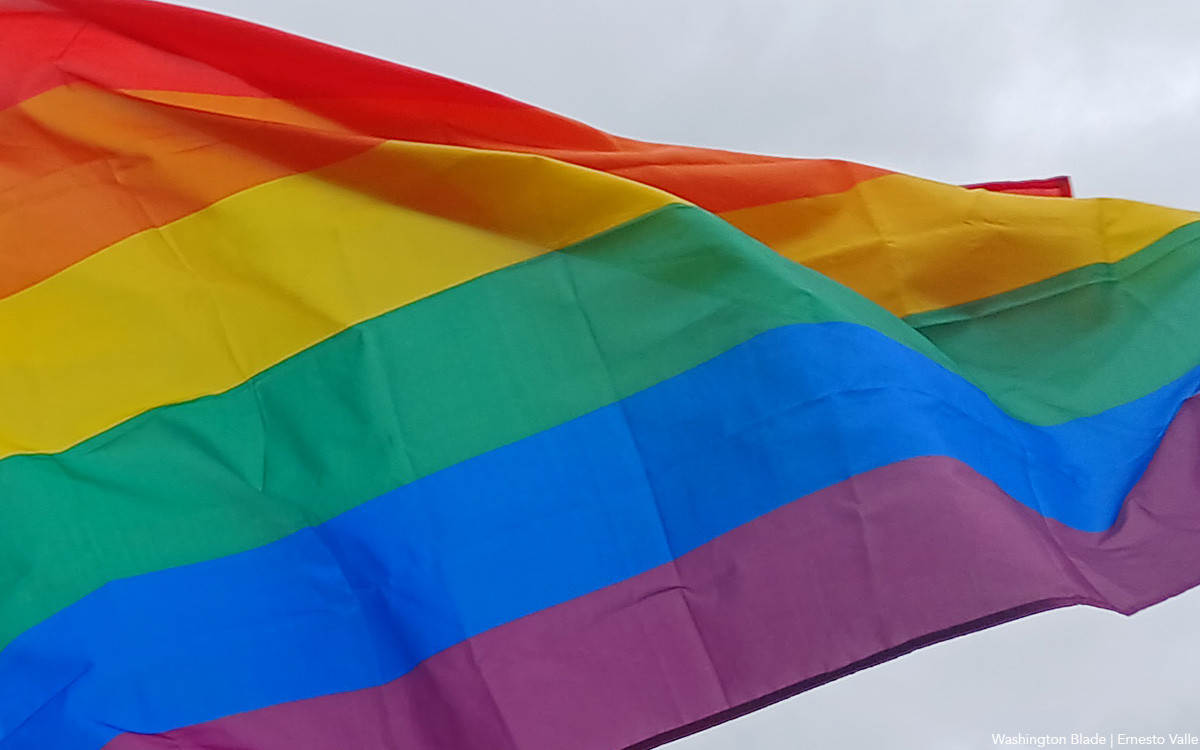
At least one person died on Saturday when a van drove into a crowd at Berlin’s annual Pride march.
German media reports indicate the incident took place shortly before 10 p.m. local time (4 p.m. ET) in Tiergarten park.
Berlin police say “the driver of a white vehicle … struck several people.”
At least 15 people were injured, with some of them having “life-threatening injuries.” The driver remains at-large, and the police have launched a manhunt to find them.
Hundreds of thousands of people participate in the annual Christopher Street Day parade — which is one of Europe’s largest Pride events — that winds its way through Berlin. Tiergarten is near June 17 Street and the Brandenberg Gate where post-parade parties and concerts take place.
Authorities cancelled the remaining Pride events after the incident.
The Washington Blade will update this story.
Virginia
Winsome Earle-Sears launches campaign against Va. marriage equality amendment
Former LG lost to Abigail Spanberger in 2025 gubernatorial race
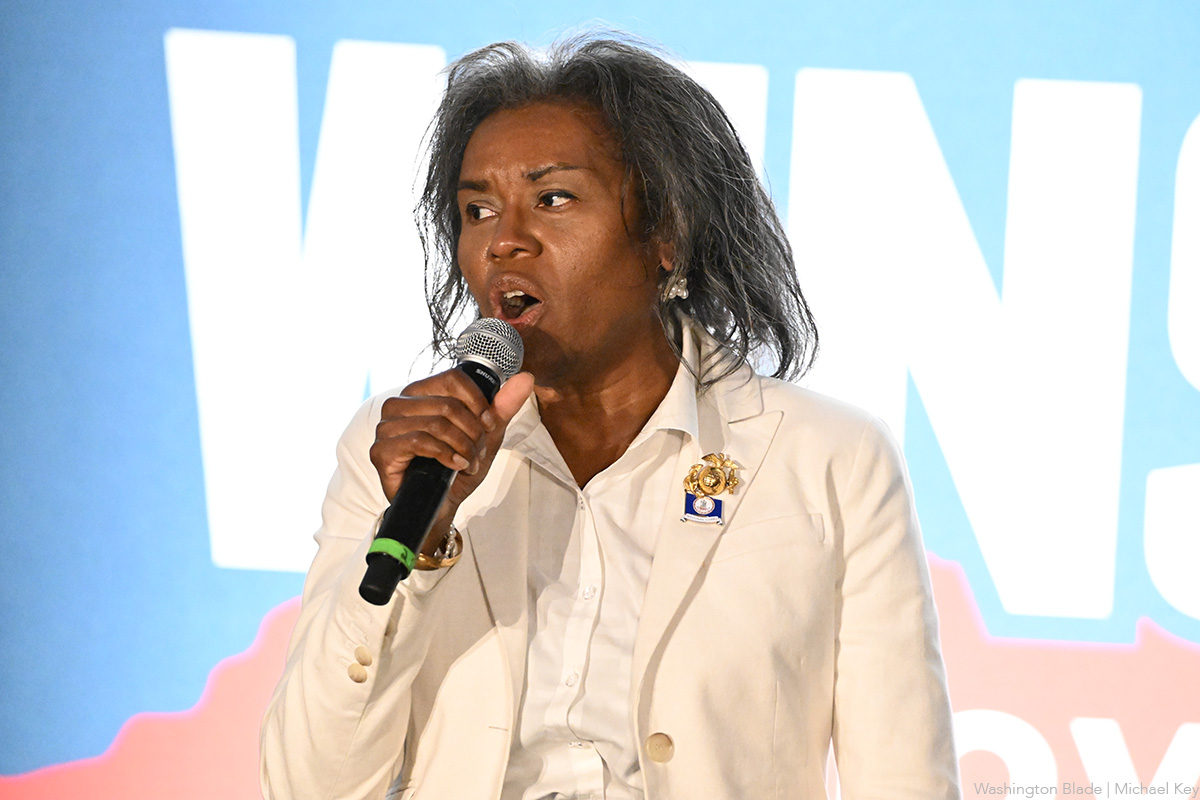
Less than a year after losing Virginia’s gubernatorial race, former Lt. Gov. Winsome Earle-Sears is campaigning across the state against constitutional amendments that would protect marriage equality and reproductive freedom.
She is launching a statewide “Life and Marriage Tour” ahead of November’s election.
Although same-sex couples can legally marry under the U.S. Supreme Court’s 2015 Obergefell v. Hodges decision, Virginia’s constitution still contains language that defines marriage as between one man and one woman. Supporters say removing the language would protect marriage equality should federal precedent change.
The original ban was written into the state constitution in 2006.
It has been hinted at in the past by Supreme Court Judge Clarence Thomas that he would consider revisiting Obergefell v. Hodges regarding contraception and marriage rights for same-sex couples. He stated this in his concurring opinion regarding the Dobbs v. Jackson ruling, which allows for state-level abortion bans.
Equality Virginia Executive Director Narissa Rahaman said removing the ban would bring the state’s constitution in line with existing law.
“20 years after banning marriage equality, it’s time for our commonwealth to fully complete our evolution — and finish the job on protecting marriage equality for all,” Rahaman said.
In an email to supporters, Earle-Sears said these amendments “raise serious concerns” and could alter principles about which Virginians care.
“That is why our efforts are focused not only on informing voters, but also encouraging them to carefully consider these proposals and vote NO on both amendments,” Earle-Sears said.
Virginia voters will consider three constitutional amendments this November.
Earle-Sears is campaigning for voters to reject two of them: the Virginia Remove Constitutional Same-Sex Marriage Ban Amendment and the Right to Reproductive Freedom Amendment.
A “Yes” vote on the Same-Sex Marriage Ban Amendment would include removing a provision that states marriage is between one man and one woman and prohibitng the state from denying a marriage license to two adults based on their sex, gender, or race, according to the Virginia Department of Elections.
In 2025, during debates against now Gov. Abigail Spanberger, Earle-Sears argued it is not discrimination to think that gay people should not be allowed to marry. She claims it conflicts with her faith.
According to ABC 8, in 2024 she wrote that she had a “moral opposition” to marriage equality, after former Gov. Glenn Youngkin, a Republican, signed a marriage equality bill that barred denying marriage licenses based on sex, gender, or race.
According to the Virginia Department of Elections, a “Yes” vote on the Reproductive Freedom amendment supports adding a section to the state constitution that would give Virginians the right to make and carry out decisions regarding reproductive healthcare, except in specific exemptions.
The Virginia Department of Elections wrote that if accepted, the amendment would allow the state government to pass laws to regulate abortion care in the third trimester of pregnancy, but require abortion care when it is medically needed to protect the life and health of the pregnant person or because the fetus is not viable.
During the 2025 election cycle, Earle-Sears was clear on her anti-abortion stance.
According to the Virginia Independent, she utilized campaign funds to donate to the Family Foundation of Virginia. The group is a faith-based, anti-abortion, and anti-in vitro fertilization non-profit.
The “Life and Marriage Tour” will include traveling throughout Virginia to speak with citizens, churches, community organizations, and local leaders. The exact locations have yet to be announced.
National
At Alliance Defending Freedom’s summit, church and state are one
House Speaker Mike Johnson (R-La.) among speakers

Uncloseted Media published this article on July 23.
By SPENCER MACNAUGHTON | Earlier this month, hundreds of people filled a conference room in San Diego. These included Speaker of the House Mike Johnson, Assistant Secretary of Health Admiral Brian Christine, OpenAI executive Dean Ball, and the attorneys general of West Virginia and Idaho.
They all came together for Alliance Defending Freedom’s 2026 Summit. The Christian legal group, also a Southern Poverty Law Center-designated anti-LGBTQ hate group, described the event as a “gathering of leaders from many different spheres, including law, public policy, media, business, education, and Christian leadership.”
Johnson — who has said that “homosexual relationships are inherently unnatural and … society cannot give its stamp of approval to such a dangerous lifestyle” — was a featured speaker.
In his speech, he seemed unconcerned with the separation of church and state: “It is so encouraging to Kelly and I to be among friends and fellow warriors for this cause and people who understand that God is not done with America yet. … ADF’s on the very tip of the spear, front line, defending those very truths and keeping the door open for the spread of the Gospel. This is our moment. I’m telling you, I believe the next season … is going to be the greatest season of this ministry since its inception.”
That ministry is one that has espoused aggressively anti-LGBTQ views since its inception in the early 1990s. It was co-founded by a group of evangelical men, including Alan Sears, who co-authored a book called “The Homosexual Agenda: Exposing the Principal Threat to Religious Freedom Today.” Since then, ADF has opposed gay marriage and supported bans on gay sex and on gender-affirming care for minors.
After helping overturn Roe v. Wade, ADF lawyers have led key victories at the Supreme Court. In 303 Creative v. Elenis, SCOTUS ruled that a website designer could refuse service to gay weddings. And this year they convinced the Court to overturn Colorado’s ban on conversion therapy and to uphold state laws in West Virginia and Idaho that ban trans girls from playing on girls’ sports teams.
At the summit, ADF President Kristen Waggoner, who has promoted conversion therapists and consistently misgenders trans people, interviewed these states’ attorneys general.
“The lawyers who were defending women’s sports were among the best I’ve ever seen in my entire life,” West Virginia Attorney General JB McCuskey told Waggoner.
Similar to Johnson, Trump’s Assistant Secretary of Health Christine showed his commitment to governing based on conservative Christianity. He gave a Bible-thumping speech against gender transition and trans healthcare, saying that it “contradicts … the deeper moral order that is woven into creation itself. For Genesis 1:27 informs us that God created man in his own image. … Male and female” He also said the “complementary relationship between man and woman is divine” and advocated for youth with gender dysphoria to receive care from a pastor.
All of these remarks from politicians made me think of the interview I published earlier this week with Pete Hegseth’s pastor, Doug Wilson. He wants a Christian theocracy in America and told me that: both the perpetrator and the victim should be disciplined in some cases of marital rape; that transgender people are “sad;” that execution is justifiable for certain homosexual acts; and that gay sex should be illegal.
The ADF Summit is glossy and polished. And while its messaging may be less explicit than Pastor Wilson’s, the track record of the organizations shows they have the exact same desires. They’re just deeply strategic in what they say and when and how they say it.
I believe the political power players who attended this year’s summit know this. They know they are endorsing an organization whose members have essentially called for the illegalization of most — if not all ‚ forms of queer behavior and presentation.
In the last few years, these perspectives have become increasingly embedded in the highest rooms of the federal government and they have been effective in stripping away LGBTQ rights. Wilson, who just installed a full-time pastor in Washington to lead services, says there are 10 to 20 government officials who align with his church’s ideology.
It is vital for Americans to keep their eyes wide open to the ultimate goal of groups like ADF: to create a United States that leaves LGBTQ people without rights and that pushes us back in the closet.

1 dead, 15 injured when van drives into crowd at Berlin Pride

‘Into the Grey’ unites Cavill, Gyllenhaal for thrills and gay love

Winsome Earle-Sears launches campaign against Va. marriage equality amendment

Calendar: July 24-30

Pentagon says hormones make trans troops unfit but gives them to men

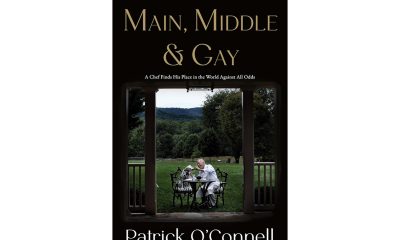
Tickets on sale for chef Patrick O’Connell’s book launch event

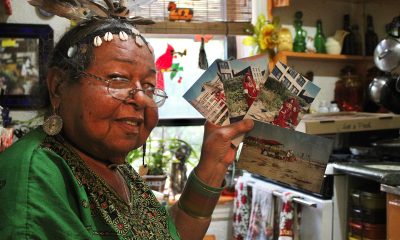
Remembering Victoria Cruz, Stonewall veteran and beloved trans activist

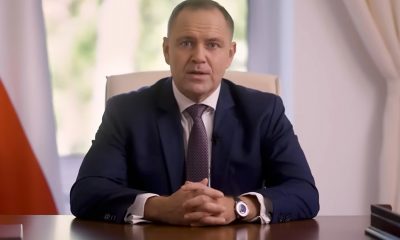
Polish president vetoes same-sex relationship recognition bills

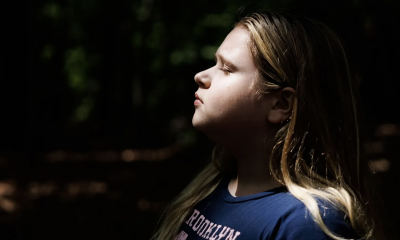
In the middle of the Bible Belt, a summer camp lets trans kids exhale

LGBTQ ‘human rights crisis is unfolding in Puerto Rico’
-

 a&e features5 days ago
Tickets on sale for chef Patrick O’Connell’s book launch event
-
National5 days ago
Remembering Victoria Cruz, Stonewall veteran and beloved trans activist
-
Poland5 days ago
Polish president vetoes same-sex relationship recognition bills
-
North Carolina5 days ago
In the middle of the Bible Belt, a summer camp lets trans kids exhale