Sports
Sports: Big red rubber ball
Recess-time staple revived in successful gay league
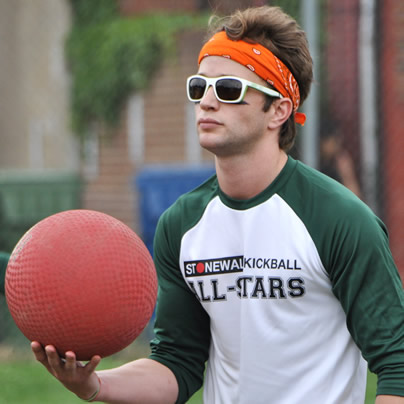
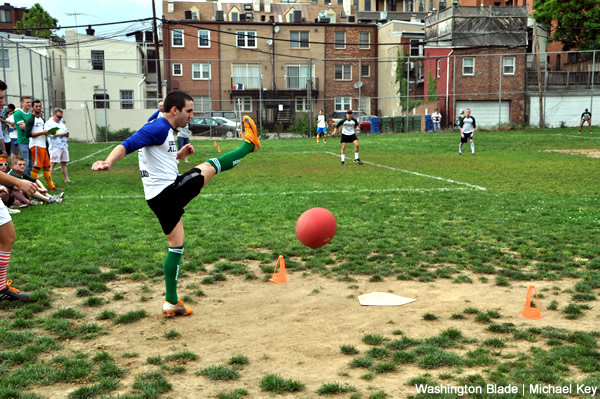
Stonewall Kickball players in action. (Washington Blade file photo by Michael Key)
One of the great stories to come out of the LGBT sports community in D.C. over the last few years has been the emergence of Stonewall Kickball.
The group was founded in the fall of 2010 by Martin Espinoza and Mark Gustafson who were both playing in the D.C. Kickball League.
The first season was a huge success with 90 players making up six teams. In about two years those numbers have grown to 550 players making up 20 teams. And that’s just in the Sunday league.
With limited space at Stead Park Field, the only option to expand was to add a league on Thursday nights within the D.C. Kickball League whose members held the permit for that night.
“It was the best option as we did not want to compete for the permit,” Espinoza says.
That league features competitive teams along with more social teams that fall under the Junior Varsity classification.
Along with kickball, the Stonewall Sports umbrella has grown to include Stonewall Bocce and Stonewall Darts.
“We decided to use the Stonewall name because there are a lot of young LGBT transients in the D.C. area,” Espinoza says. “Many of them are unfamiliar with the Stonewall riots and we like to think of it as honoring those who came before us in the fight for gay rights.”
The league operates a spring season that runs from March to May and a fall season from September to November. Both seasons last nine weeks, games last 45 minutes and up to 11 people can be on the field at a time.
For many, the memory of those red rubber playground balls can conjure up painful dodge ball memories. But along with that are sweet childhood kickball memories.
“The whole reason we decided to start this league was because we were not having fun in the other league,” Espinoza says. “They were very competitive and we ran into some homophobia. The goal of Stonewall Kickball is to have fun. It’s human nature to want to win, but we have adopted the attitude of ‘you win some, you lose some.’”
That attitude seems to pervade throughout the players as on any given Sunday you can see a mixture of team colors walking along together in groups on 17th Street.
Giving back to the community is also a focal point for Stonewall Kickball. Registration fees for the league are $40-$50, but teams are encouraged to reach preset fundraising goals.
Their main beneficiary over the last two and a half years has been the D.C. Center. They will also be hosting their third Drag Ball fundraiser this June, which also raises funds for Capital Pride.
Last summer the group paid for the mulching and painting of the tree boxes along 17th Street and Espinoza was the leading force behind the Save Stead Park petition, which sought to stop renovations to the park that would reduce field space by 25 percent.
Coming up for the kickball players is a mixer with the bocce league, the dart league and the D.C. Gay Flag Football League and also a community day that will focus on 17th Street and Stead Park.
You can follow them at stonewallsports.org.






Sports
New IOC policy bans trans women from Olympics
New regulation to be in effect at 2028 summer games in Los Angeles
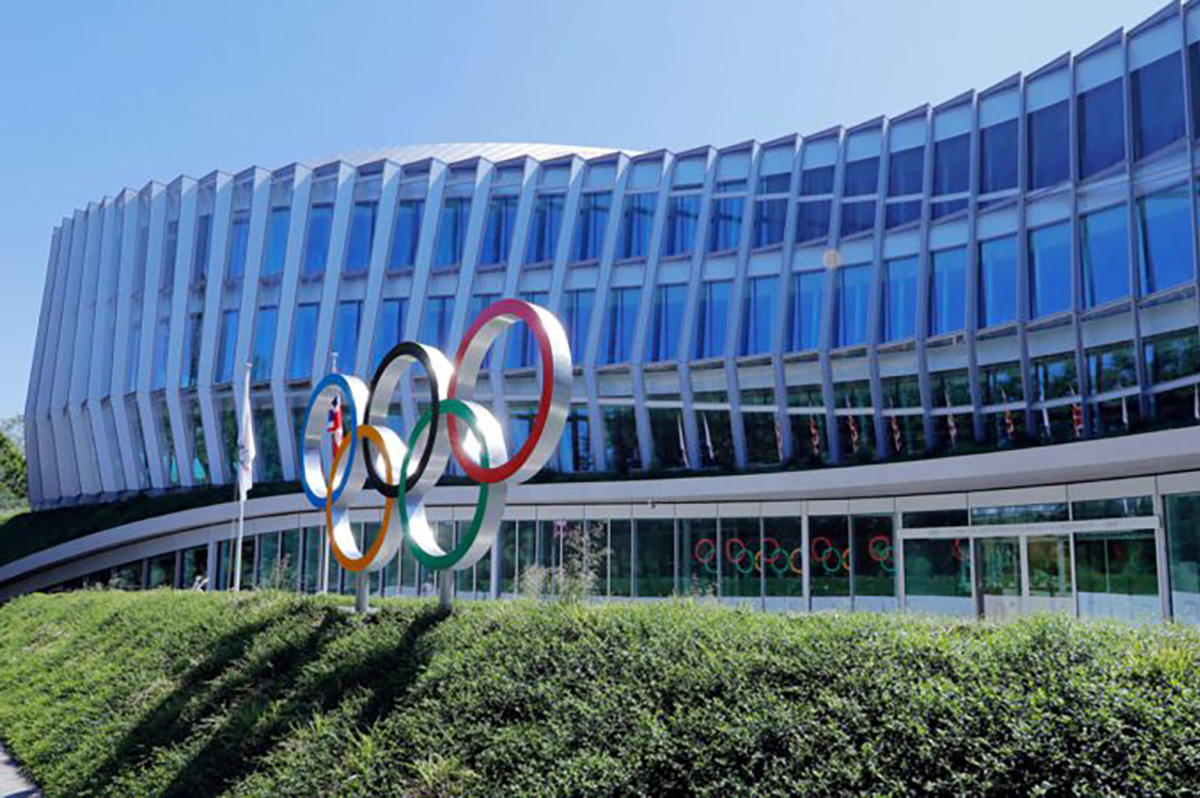
The International Olympic Committee on Thursday announced it will not allow transgender women from competing in female events at the Olympics.
“For all disciplines on the Sports Program of an IOC event, including individual and team sports, eligibility for any Female Category is limited to biological females,” reads the new policy.
The policy states “eligibility for the Female Category is to be determined in the first instance by SRY Gene screening to detect the absence or presence of the SRY Gene.”
“On the basis of the scientific evidence, the IOC considers that the SRY (sex-determining Region Y) Gene is fixed throughout life and represents highly accurate evidence that an athlete has experienced or will experience male sex development,” it reads. “Furthermore, the IOC considers that SRY Gene screening via saliva, cheek swab or blood sample is unintrusive compared to other possible methods. Athletes who screen negative for the SRY gene permanently satisfy this policy’s eligibility criteria for competition in the Female Category.”
The policy states the test “will be a once-in-a-lifetime test” unless “there is reason to believe a negative reading is in error.”
The new regulation will be in place for the 2028 Summer Olympics in Los Angeles.
“I understand that this a very sensitive topic,” said IOC President Kirsty Coventry on Thursday in a video. “As a former athlete, I passionately believe in the rights of all Olympians to take part in fair competition.”
“The policy that we have announced is based on science and it has been led by medical experts with the best interests of athletes at its heart. The scientific evidence is very clear: male chromosomes give performance advances in sport that rely on strength, power, or endurance,” she added. “At the Olympic Games, even the smallest margins can be the difference between victory and defeat. So, it is absolutely clear that it would not be fair for biological males to compete in the female category. In addition, in some sports it would simply not be safe.”
(Video courtesy of the IOC)
Laurel Hubbard, a weightlifter from New Zealand, in 2021 became the first trans woman to compete at the Olympics.
Imane Khelif, an Algerian boxer, won a gold medal at the 2024 Summer Olympics in Paris. Khelif later sued JK Rowling and Elon Musk for cyberstalking after they questioned her gender identity.
Ellis Lundholm, a mogul skier from Sweden, this year became the first openly trans athlete to compete in any Winter Olympics when he participated in Milan Cortina Winter Olympics in Italy.
President Donald Trump in February 2025 issued an executive order that bans trans women and girls from female sports teams in the U.S.
The U.S. Olympic and Paralympic Committee last July banned trans women from competing in female sporting events. Republican lawmakers have demanded the IOC ban trans athletes from women’s athletic competitions.
“I’m grateful the Olympics finally embraced the common sense policy that women’s sports are for women, not for men,” said U.S. Sen. Tom Cotton (R-Ark.) on X.
An IOC spokesperson on Thursday referred the Washington Blade to the press release that announced the new policy.
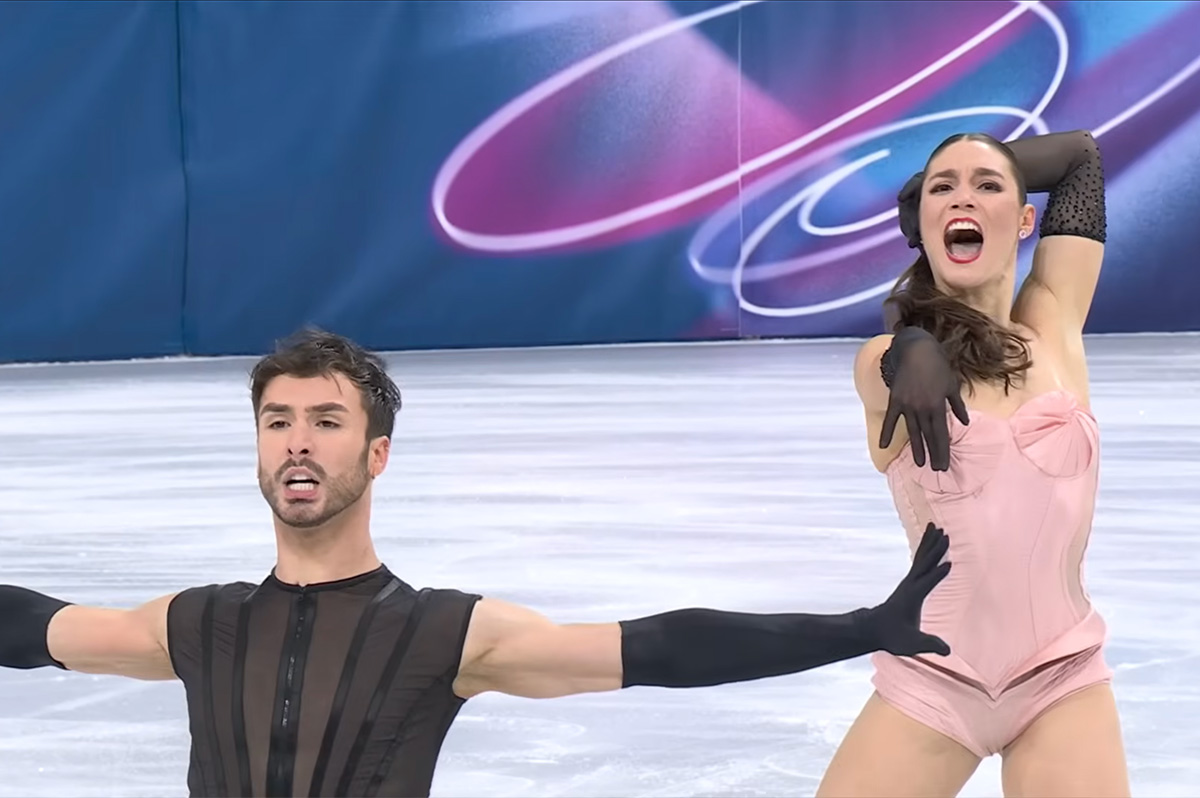
More than a dozen LGBTQ athletes won medals at the Milan Cortina Winter Olympics that ended on Sunday.
Cayla Barnes, Hilary Knight, and Alex Carpenter are LGBTQ members of the U.S. women’s hockey team that won a gold medal after they defeated Canada in overtime. Knight the day before the Feb. 19 match proposed to her girlfriend, Brittany Bowe, an Olympic speed skater.
French ice dancer Guillaume Cizeron, who is gay, and his partner Laurence Fournier Beaudry won gold. American alpine skier Breezy Johnson, who is bisexual, won gold in the women’s downhill. Amber Glenn, who identifies as bisexual and pansexual, was part of the American figure skating team that won gold in the team event.
Swiss freestyle skier Mathilde Gremaud, who is in a relationship with Vali Höll, an Austrian mountain biker, won gold in women’s freeski slopestyle.
Bruce Mouat, who is the captain of the British curling team that won a silver medal, is gay. Six members of the Canadian women’s hockey team — Emily Clark, Erin Ambrose, Emerance Maschmeyer, Brianne Jenner, Laura Stacey, and Marie-Philip Poulin — that won silver are LGBTQ.
Swedish freestyle skier Sandra Naeslund, who is a lesbian, won a bronze medal in ski cross.
Belgian speed skater Tineke den Dulk, who is bisexual, was part of her country’s mixed 2000-meter relay that won bronze. Canadian ice dancer Paul Poirier, who is gay, and his partner, Piper Gilles, won bronze.
Laura Zimmermann, who is queer, is a member of the Swiss women’s hockey team that won bronze when they defeated Sweden.
Outsports.com notes all of the LGBTQ Olympians who competed at the games and who medaled.
Sports
US wins Olympic gold medal in women’s hockey
Team captain Hilary Knight proposed to girlfriend on Wednesday
The U.S. women’s hockey team on Thursday won a gold medal at the Milan Cortina Winter Olympics.
Team USA defeated Canada 2-1 in overtime. The game took place a day after Team USA captain Hilary Knight proposed to her girlfriend, Brittany Bowe, an Olympic speed skater.
Cayla Barnes and Alex Carpenter — Knight’s teammates — are also LGBTQ. They are among the more than 40 openly LGBTQ athletes who are competing in the games.
The Olympics will end on Sunday.

PHOTOS: ‘Studio 69’

White House counterterrorism strategy targets ‘anti-American, radically pro-transgender’ groups

Anti-LGBTQ violence prevention efforts highlighted at D.C. community fair

Celebrated performer Rose Levine plays Rehoboth on May 15

The rise of accidental landlords

Your guide to D.C. region’s many Pride celebrations

LGBTQ people, weed, and mental health: what you need to know

New Vatican report acknowledges LGBTQ Catholics feel isolated in the church

Repression, toxic masculinity fuel intense queer drama ‘Half Man’

Barney Frank, a hero of mine
-

 District of Columbia5 days ago
Your guide to D.C. region’s many Pride celebrations
-
Cannabis Culture5 days ago
LGBTQ people, weed, and mental health: what you need to know
-
The Vatican5 days ago
New Vatican report acknowledges LGBTQ Catholics feel isolated in the church
-
Television5 days ago
Repression, toxic masculinity fuel intense queer drama ‘Half Man’