World
Irish constitutional commission backs same-sex marriage
79 percent of 100 members supported recommendation, 2014 referendum possible
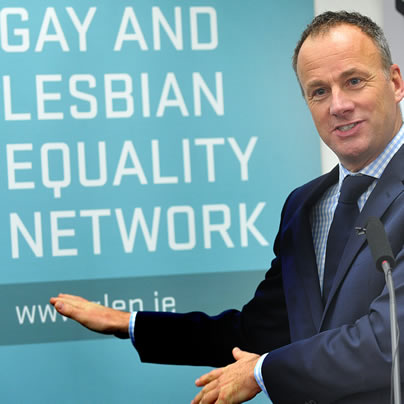
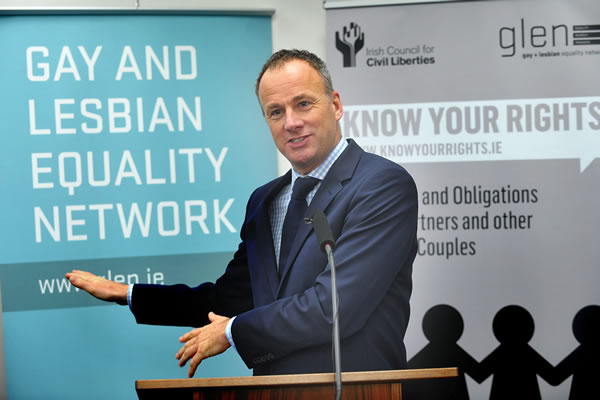
Gay and Lesbian Equality Network (GLEN) Director Brian Sheehan. (Photo courtesy of Brian Sheehan)
Seventy-nine percent of the Constitutional Convention’s 100 members supported the recommendation to amend the country’s constitution on which they voted at the end of a two day meeting at a Dublin hotel. Eighty-one percent of them also recommended the government expand adoption and other rights to gay and lesbian couples and protections to their children that are not included under the country’s civil partnership law that took effect in 2011.
“We are delighted with today’s result at the Constitutional Convention on the issue of same-sex marriage,” Marriage Equality Director Moninne Griffith said in a statement. Her group worked with the Gay and Lesbian Equality Network and the Irish Council for Civil Liberties to urge commission members to support the issue. “This proves that Ireland is ready for equality for same-sex couples and wants equal access to civil marriage for loving committed lesbian and gay couples.”
The Irish Catholic Bishops Conference, which argued against same-sex marriage alongside the Evangelical Alliance of Ireland and the Order of the Knights of Columbanus, criticized the vote.
“While the result of the Constitutional Convention is disappointing, only the people of Ireland can amend the constitution,” a spokesperson told the Irish Times. “The Catholic Church will continue to promote and seek protection for the uniqueness of marriage between a woman and a man, the nature of which best serves children and our society.”
The convention’s recommendation comes 20 years after the Irish government decriminalized homosexuality.
Ireland in 1996 began to grant asylum to refugees on grounds they suffered anti-gay persecution in their countries of origin. Laws that banned discrimination based on sexual orientation in employment and public accommodation took effect in 1998 and 2000 respectively.
Ireland’s High Court in 2006 declined to hear the case of a lesbian couple who wanted the government to recognize their Canadian marriage. They subsequently appealed the ruling to the country’s Supreme Court.
Irish overwhelmingly back same-sex marriage
Recent polls show roughly 75 percent of the Irish people now support the extension of marriage rights to gays and lesbians.
GLEN Director Brian Sheehan noted to the Washington Blade during an interview from Dublin on Sunday a number of factors have contributed to this increased support. These include the decriminalization of homosexuality in the country, the Catholic Church’s diminished influence in Ireland over the last two decades, and former Irish President Mary McAleese and President Obama’s public support of same-sex marriage.
Sheehan also pointed out more than 1,000 couples have thus far taken advantage of Ireland’s civil partnership law. He noted newspapers across the country have featured what he described as “really positive stories” about these celebrations.
“The vision of lesbian and gay people has radically altered,” Sheehan told the Blade. “I’m not by any means trying to say that [the movement for LGBT rights is] over, but we have come a long way in a very, very short period of time.”
The convention approved the recommendation to extend marriage rights to same-sex couples in the Irish constitution two days after the French Senate approved a bill that would allow gay and lesbian couples to tie the knot and adopt children.
Iceland, Norway, Sweden, Denmark, the Netherlands, Belgium, Spain and Portugal are among the countries in which same-sex couples can legally marry. The British House of Commons in February approved a bill that would allow nuptials for gays and lesbians in England and Wales.
The Scottish Parliament is expected to consider a similar measure later this year.
The Irish government will announce within the next four months whether a same-sex marriage referendum will take place.
Sheehan said he expects it would occur next year.
“It is seen as the next step in a remarkable journey,” he said in response to the Blade’s question about how the Irish people feel about the potential same-sex marriage referendum. “Referendums in Ireland are complex for very many reasons and we may be in the position of having a referendum. But rather than a referendum to remove something, this is a referendum to enable something.”



Colombia
Colombians protest against Trump after he threatened country’s president
Tens of thousands protested the US president in Bogotá
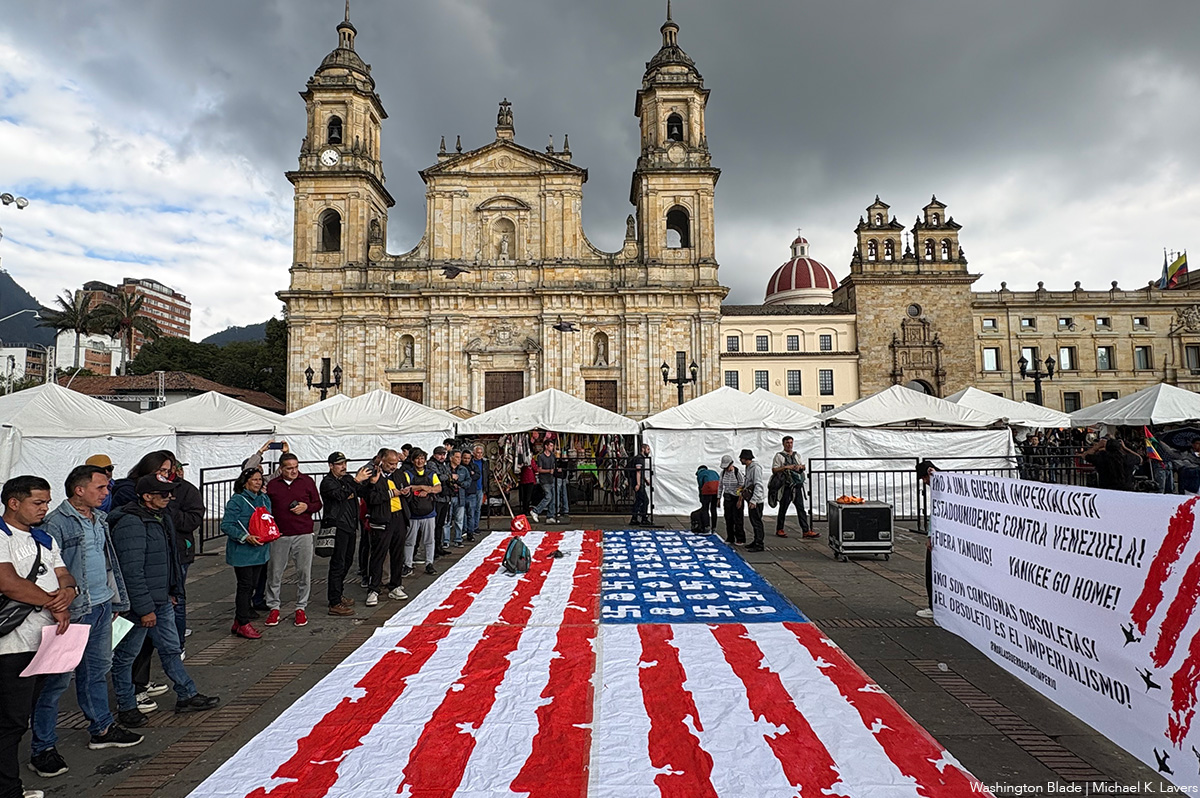
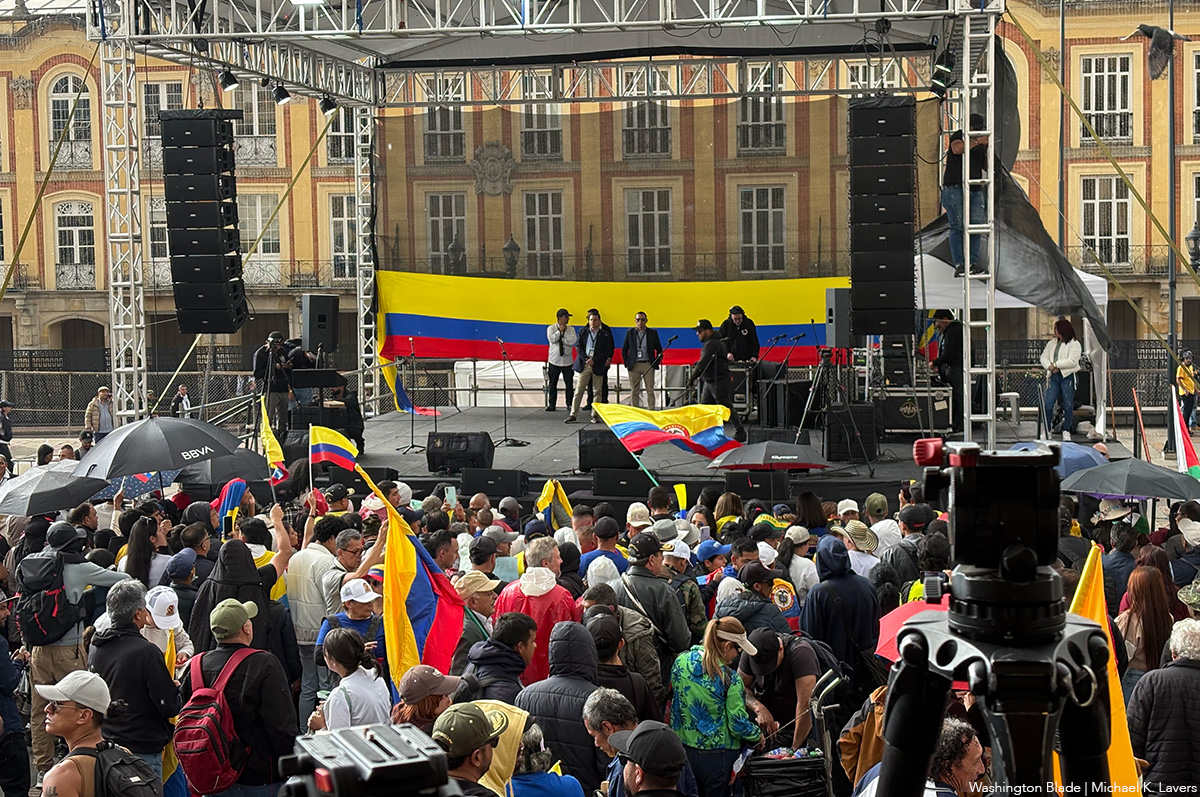
BOGOTÁ, Colombia — Tens of thousands of people on Wednesday gathered in the Colombian capital to protest against President Donald Trump after he threatened Colombian President Gustavo Petro.
The protesters who gathered in Plaza Bolívar in Bogotá held signs that read, among other things, “Yankees go home” and “Petro is not alone.” Petro is among those who spoke.
The Bogotá protest took place four days after American forces seized now former Venezuelan President Nicolás Maduro and his wife, Cilia Flores, at their home in Caracas, the Venezuelan capital, during an overnight operation.
The Venezuelan National Assembly on Sunday swore in Delcy Rodríguez, who was Maduro’s vice president, as the country’s acting president. Maduro and Flores on Monday pleaded not guilty to federal drug charges in New York.
Trump on Sunday suggested the U.S. will target Petro, a former Bogotá mayor and senator who was once a member of the M-19 guerrilla movement that disbanded in the 1990s. Claudia López, a former senator who would become the country’s first female and first lesbian president if she wins Colombia’s presidential election that will take place later this year, is among those who criticized Trump’s comments.
The Bogotá protest is among hundreds against Trump that took place across Colombia on Wednesday.
Petro on Wednesday night said he and Trump spoke on the phone. Trump in a Truth Social post confirmed he and his Colombian counterpart had spoken.
“It was a great honor to speak with the president of Colombia, Gustavo Petro, who called to explain the situation of drugs and other disagreements that we have had,” wrote Trump. “I appreciated his call and tone, and look forward to meeting him in the near future. Arrangements are being made between Secretary of State Marco Rubio and the foreign minister of Colombia. The meeting will take place in the White House in Washington, D.C.”
Colombia
Gay Venezuelan man who fled to Colombia uncertain about homeland’s future
Heberth Aguirre left Maracaibo in 2018

BOGOTÁ, Colombia — A gay Venezuelan man who has lived in Colombia since 2018 says he feels uncertain about his homeland’s future after the U.S. seized now former Venezuelan President Nicolás Maduro.
“On one hand I can feel happy, but on the other hand I feel very concerned,” Heberth Aguirre told the Washington Blade on Tuesday during an interview at a shopping mall in Bogotá, the Colombian capital.
Aguirre, 35, is from Maracaibo, Venezuela’s second-largest city that is the heart of the country’s oil industry.
He developed cultural and art initiatives for the Zulia State government.
“Little by little, I suddenly became involved in politics because, in a way, you had to be involved,” recalled Aguirre. “It was necessary to be involved because the regime often said so.”
“I basically felt like I was working for the citizens, but with this deeply ingrained rule we had to be on their side, on the side of the Maduro and (former President Hugo) Chávez regime,” he added.
Maduro in 2013 became Venezuela’s president after Chávez died.
“There are things I don’t support about the regime,” Aguirre told the Blade. “There are other things that were nice in theory, but it turned out that they didn’t work when we put them into practice.”
Aguirre noted the Maduro government implemented “a lot of laws.” He also said he and other LGBTQ Venezuelans didn’t “have any kind of guarantee for our lives in general.”
“That also exposed you in a way,” said Aguirre. “You felt somewhat protected by working with them (the government), but it wasn’t entirely true.”
Aguirre, 35, studied graphic design at the University of Zulia in Maracaibo. He said he eventually withdrew after soldiers, members of Venezuela’s Bolivarian National Guard, and police officers opened fire on students.
“That happened many times, to the point where I said I couldn’t keep risking my life,” Aguirre told the Blade. “It hurt me to see what was happening, and it hurt me to have lost my place at the university.”
Venezuela’s economic crisis and increased insecurity prompted Aguirre to leave the country in 2018. He entered Colombia at the Simón Bolívar Bridge near the city of Cúcuta in the country’s Norte de Santander Province.
“If you thought differently, they (the Venezuelan government) would come after you or make you disappear, and nobody would do anything about it,” said Aguirre in response to the Blade’s question about why he left Venezuela.
The Simón Bolívar Bridge on the Colombia-Venezuela border on May 14, 2019. (Washington Blade video by Michael K. Lavers)
Aguirre spoke with the Blade three days after American forces seized Maduro and his wife, Cilia Flores, at their home in Caracas, the Venezuelan capital, during an overnight operation.
The Venezuelan National Assembly on Sunday swore in Delcy Rodríguez, who was Maduro’s vice president, as the country’s acting president. Maduro and Flores on Monday pleaded not guilty to federal drug charges in New York.
President Donald Trump on Tuesday in a Truth Social post said Venezuela’s interim authorities “will be turning over between 30 and 50 million barrels of high quality, sanctioned oil, to the United States of America.”
“This oil will be sold at its market price, and that money will be controlled by me, as president of the United States of America, to ensure it is used to benefit the people of Venezuela and the United States,” wrote Trump.
Trump on Sunday suggested the U.S. will target Colombian President Gustavo Petro, a former Bogotá mayor and senator who was once a member of the M-19 guerrilla movement that disbanded in the 1990s.
Petro has urged Colombians to take to the streets on Wednesday and “defend national sovereignty.” Claudia López, a former senator who would become the country’s first female and first lesbian president if she wins Colombia’s presidential election that will take place later this year, is among those who criticized Trump’s comments.
“Let’s be clear: Trump doesn’t care about the humanitarian aspect,” said Aguirre when the Blade asked him about Trump. “We can’t portray him as Venezuela’s savior.”
Meanwhile, Aguirre said his relatives in Maracaibo remain afraid of what will happen in the wake of Maduro’s ouster.
“My family is honestly keeping quiet,” he said. “They don’t post anything online. They don’t go out to participate in marches or celebrations.”
“Imagine them being at the epicenter, in the eye of the hurricane,” added Aguirre. “They are right in the middle of all the problems, so it’s perfectly understandable that they don’t want to say anything.”
‘I never in my life thought I would have to emigrate’
Aguirre has built a new life in Bogotá.
He founded Mesa Distrital LGBTIQ+ de Jóvenes y Estudiantes, a group that works with migrants from Venezuela and other countries and internally placed Colombians, during the COVID-19 pandemic. Aguirre told the Blade he launched the group “with the need to contribute to the general population, not just in Colombia.”
Aguirre met his husband, an American from California, at a Bogotá church in December 2020 during a Christmas event that SDA Kinship Colombia, an LGBTQ group, organized. A Utah judge virtually officiated their wedding on July 12, 2024.
“I love Colombia, I love Bogotá,” said Aguirre. “I love everything I’ve experienced because I feel it has helped me grow.”
He once again stressed he does not know what a post-Maduro Venezuela will look like.
“As a Venezuelan, I experienced the wonders of that country,” said Aguirre. “I never in my life thought I would have to emigrate.”
The Colombian government’s Permiso por Protección Temporal program allows Aguirre and other Venezuelans who have sought refuge in Colombia to live in the country for up to 10 years. Aguirre reiterated his love for Colombia, but he told the Blade that he would like to return to Venezuela and help rebuild the country.
“I wish this would be over in five years, that we could return to our country, that we could go back and even return with more skills acquired abroad,” Aguirre told the Blade. “Many of us received training. Many of us studied a lot. We connected with organizations that formed networks, which enriched us as individuals and as professionals.”
“Returning would be wonderful,” he added. “What we’ve built abroad will almost certainly serve to enrich the country.”
Colombia
Claudia López criticizes Trump over threats against Colombian president
Presidential candidate would become country’s first lesbian head of government
BOGOTÁ, Colombia — Colombian presidential candidate Claudia López has criticized President Donald Trump after he suggested the U.S. will target Colombian President Gustavo Petro.
“Colombia is very sick, too, run by a sick man, who likes making cocaine and selling it to the United States, and he’s not going to be doing it very long,” Trump told reporters on Air Force One on Sunday.
Trump made the comments a day after American forces carried out an overnight operation and seized now former Venezuelan President Nicolás Maduro and wife, Cilia Flores, at their home in Caracas, the Venezuelan capital.
Maduro and Flores on Monday pleaded not guilty to federal drug charges in New York.
Petro is a former Bogotá mayor and senator who was once a member of the M-19 guerrilla movement that disbanded in the 1990s. He has urged Colombians to take to the streets and “defend national sovereignty.”
“Colombians are the ones who decide who governs Colombia,” said López on her X account. “President Gustavo Petro won free elections and has a constitutional mandate.”
López did not mention Trump by name in her comment.
The first-round of Colombia’s presidential election will take place on May 31. The country’s 1991 constitution prevents Petro from seeking re-election.
López in 2019 became the first woman and first lesbian elected mayor of Bogotá, the Colombian capital and the country’s largest city. She took office on Jan. 1, 2020, less than a month after she married her wife, Colombian Sen. Angélica Lozano.
“This year we will decide at the polls what direction (the country) is heading and what leadership will advance Colombia,” said López in her X post. “Supporting soft dictatorships and attacking democracies is an absurd and unacceptable political action by the United States towards Colombia, Venezuela, and Latin America.”
Quién gobierna en Colombia lo decidimos los colombianos.
El presidente @petrogustavo ganó unas elecciones libres y tiene un mandato constitucional. Este año decidiremos en las urnas qué rumbo y a cargo de qué liderazgo avanza Colombia.
Sostener dictablandas y atacar democracias… https://t.co/K61G2QUcck— Claudia López Hernández (@ClaudiaLopez) January 5, 2026
López would be Colombia’s first female president if she wins the election. López would also become the third openly lesbian woman elected head of government — Jóhanna Sigurðardóttir was Iceland’s prime minister from 2009-2013 and Ana Brnabić was Serbia’s prime minister from 2017-2024.
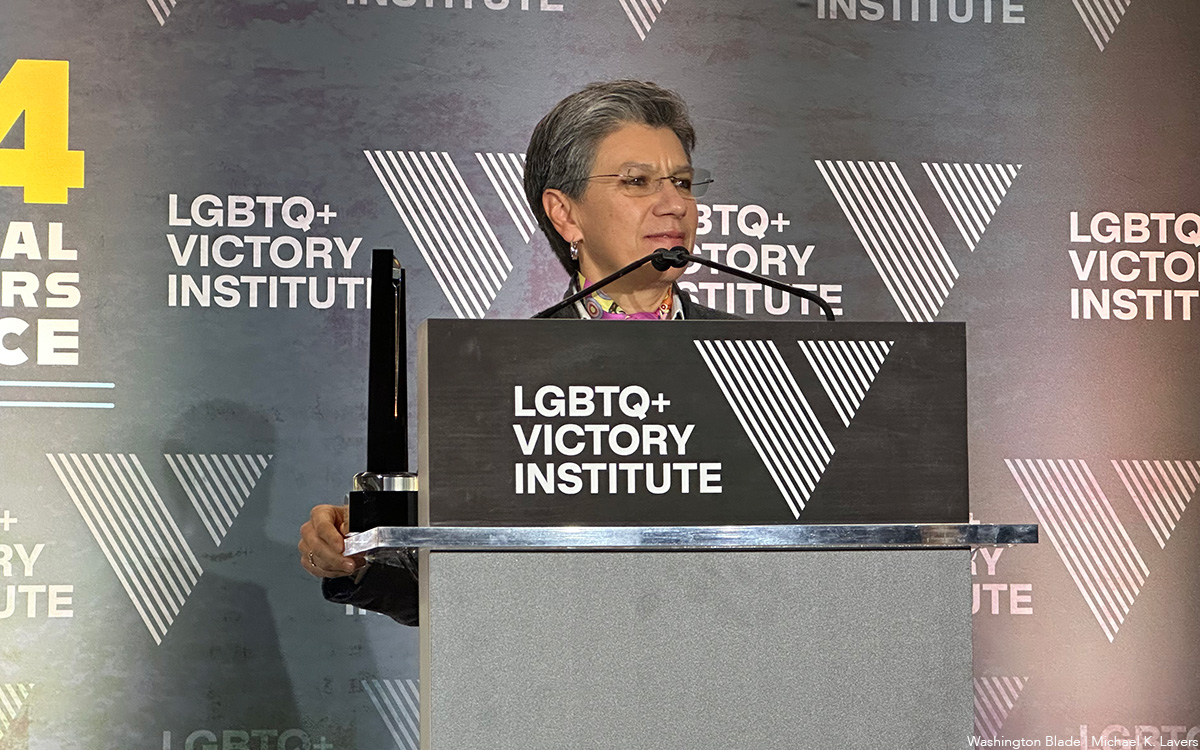
The LGBTQ+ Victory Institute in 2024 honored López at its annual International LGBTQ Leaders Conference in D.C. The Washington Blade interviewed her during the gathering.

Reports say woman killed by ICE was part of LGBTQ community

U.S. in midst of ‘genocidal process against trans people’: study

Gay Va. State Sen. Ebbin resigns for role in Spanberger administration

Steny Hoyer, the longest-serving House Democrat, to retire from Congress

Just say no to the felon in the White House

Safer Ways to Pay for Online Performances and Queer Events

Two pioneering gay journalists to speak at Thursday event

Blade travels to Colombia after U.S. forces seize Maduro in Venezuela

Queer highlights of the 2026 Critics Choice Awards: Aunt Gladys, that ‘Heated Rivalry’ shoutout and more

LGBTQ groups to join Spanberger inaugural parade
-

 Sponsored5 days ago
Safer Ways to Pay for Online Performances and Queer Events
-
District of Columbia4 days ago
Two pioneering gay journalists to speak at Thursday event
-
Colombia3 days ago
Blade travels to Colombia after U.S. forces seize Maduro in Venezuela
-
a&e features4 days ago
Queer highlights of the 2026 Critics Choice Awards: Aunt Gladys, that ‘Heated Rivalry’ shoutout and more