News
Court asked to overturn marriage bans in Nevada, Hawaii
14 attorneys general and Hawaii governor among those to file briefs.

Massachusetts Attorney General Martha Coakley, Delaware Attorney General Beau Biden and Hawaii Governor Neil Abercrombie signed briefs before the Ninth Circuit seeking marriage equality. (Photo of Martha Coakley by Fogster via Wikimedia Commons; Washington Blade photos of Biden and Abercrombie by Michael Key)
Five months after the U.S. Supreme Court issued two decisions in favor of marriage equality, a chorus of voices is calling on the U.S. Ninth Circuit to make a similar ruling on behalf of gay couples seeking marriage rights in Nevada and Hawaii.
Legal briefs were submitted to the Ninth Circuit by numerous public figures who’ve previously articulated their support for marriage equality, ranging from Hawaii Gov. Neil Abercrombie to Delaware Attorney General Beau Biden. However, the Obama administration didn’t submit a brief to the court by the deadline articulating its views of favor of same-sex marriage.
The cases before the court are Sevick v. Sandoval, a federal lawsuit filed by Lambda Legal last year seeking marriage equality in Nevada, and Jackson v. Abercrombie, a similar lawsuit filed by private attorneys seeking to overturn the ban on same-sex marriage in Hawaii. Both are on appeal before the Ninth Circuit after district courts in those states affirmed that the bans on same-sex marriage were constitutional.
Abercrombie, who previously said he wouldn’t defend the ban on same-sex marriage in court, submitted an opening brief from his lawyers on Oct. 18 that seeks permission to file an additional, more lengthy document because the lawsuit a “landmark civil rights case.”
But the 112-page brief makes initial arguments about why the ban on same-sex marriage is unconstitutional, arguing that it fails any rational basis test and laws related to sexual orientation should be subject to heightened scrutiny.
“Only legalization of same-sex marriage would allow plaintiffs, and tens of thousands of other same-sex couples in Hawaii, to ‘pursue the happiness’ and assume the mutual responsibilities — important to human ‘existence and survival’ — that are at the heart of the fundamental right to marry,” the brief states. “And only legalization will give plaintiffs the equality they so justly deserve.”
On Friday, friend-of-the-court briefs were also due before the Ninth Circuit. One high-profile brief was signed by 14 attorneys general who had previously signed a brief before the Supreme Court arguing in favor of marriage equality. Signers of the brief include Massachusetts Attorney General Martha Coakley, who’s running for governor, California Attorney General Kamala Harris and Biden.
The 32-page argues that the bans on same-sex marriage in Hawaii and Nevada are unconstitutional, among other reasons, because including same-sex couples into the institution of marriage enhances state interest and the current laws aren’t rationally related to interests in procreation or child-rearing.
“Since the founding, states have sanctioned marriages to support families, strengthen communities, and facilitate governance,” the brief states. “Because same-sex couples form families, raise children, and avail themselves of the benefits and abide by the obligations of marriage in the same manner as different-sex couples, the states’ interest in marriage are furthered by allowing same-sex couples to marry.”
The 14 states represented in the brief are California, Connecticut, Delaware, Iowa, Illinois, Maine, Maryland, Massachusetts, New Hampshire, New Mexico, New York, Oregon, Vermont and Washington. D.C. Attorney General Irving Nathan also signed.
Because the cases are before the Ninth Circuit, they are the most advanced federal lawsuits on marriage equality and the closest to the Supreme Court. However, the lawsuits may not be the ones to reach the high court first because the Ninth Circuit is notoriously slow in reviewing litigation.
Both briefs from the attorneys general and Abercrombie make use the Supreme Court’s decision against the Defense of Marriage Act.
The brief filed by the attorneys generals says in a footnote that the DOMA decision has particular impact on gay couples in Hawaii and Nevada because marriage laws in those states are now preventing them from accessing the federal benefits of marriage.
“Nevada and Hawaii marriage laws now prevent same-sex couples and their families from obtaining important federal benefits and protections otherwise available to married couples,” the brief states. “This works significant and practical harm to those families and further undercuts the rationality of state laws that create two classes of state-sanctioned relationships.”
The attorneys general filed a brief before the Ninth Circuit even though they had previously articulated their views on marriage before the Supreme Court, but one party that didn’t follow suit is the Obama administration.
The Justice Department filed a friend-of-the-court brief when California’s Proposition 8 had come before the Supreme Court, arguing the ban on same-sex marriage is unconstitutional and suggesting states with domestic partnerships must allow marriage rights for gay couples.
Although Nevada and Hawaii similarly have domestic partnership registries, the Obama administration didn’t make a filing in the Nevada or Hawaii cases. The Justice Department didn’t respond to a request to comment on why no brief was filed.
Evan Wolfson, president of Freedom to Marry, nonetheless said the lack of a brief from the Obama administration isn’t of concern.
“It is not disappointing and not a problem; the Department of Justice’s conclusion that the denial if the freedom to marry violates the Constitution is clear and a matter of record,” Wolfson said.
Lambda Legal had previously said it would “welcome” a brief from the Obama administration in the Nevada case for the Ninth Circuit. In response to an inquiry about the absence of input from the Justice Department, Lambda Staff Attorney Peter Renn pointed to the friend-of-the-court briefs filed by other parties in the lawsuit.
“A total of 17 amicus briefs were filed, in support of ending the unconstitutional exclusion of same-sex couples from marriage and the real harm it does to same-sex couples and their families,” Renn said. “The Obama Administration’s support for marriage equality is already well-established, and there may be future opportunities to file amicus briefs in this case as it proceeds further.”
A number of other parties submitted friend-of-the-court briefs before the Ninth Circuit in favor of overturning the bans on same-sex marriage.
* A group of 13 political scientists filed a 39-page brief arguing the marriage bans should be overturned because laws related to sexual orientation should be subject to heightened scrutiny. Gay people, the political scientists say, should be considered a suspect class because they continue to lack political power.
“Gay men and lesbians lack political power,” the brief states. “They are underrepresented in political office; they are viewed negatively by a majority of Americans; their interests are opposed by powerful, well-funded interest groups that use ballot initiatives to try to undo the limited political successes that gay men and lesbians have achieved; and they have limited influence over their political allies.”
* Another brief was filed by the National Association for the Advancement of Colored People, which argues that the 1967 Supreme Court decision overturning state bans on interracial marriage in Loving v. Virginia applies to prohibitions on same-sex marriage.
“The basic 14th Amendment principles addressed in Loving are not limited to race,” the brief states. “To the contrary, they govern any state action that denies two consenting adults – including those of the same sex – the right to marry. While the nature of discrimination against lesbians and gay men differs fundamentally from the de jure racial segregation at issue in Loving, the legal issues addressed by Loving are analogous to the legal issues raised in these appeals.”
Other briefs were filed by Gay & Lesbian Advocates & Defenders, the American Psychological Association, the Columbia Law School Sexuality & Gender Law Clinic and the Gay & Lesbian Medical Association.
UPDATE: This article has been updated with a comment from Lambda Legal and a listing on the states that signed the brief from the attorneys general.


National
Four bisexual women on stereotypes, erasure, representation, and joy
Panel talks coming out, pop culture, and why dating men doesn’t erase queerness
Uncloseted Media published this article on Feb. 7.
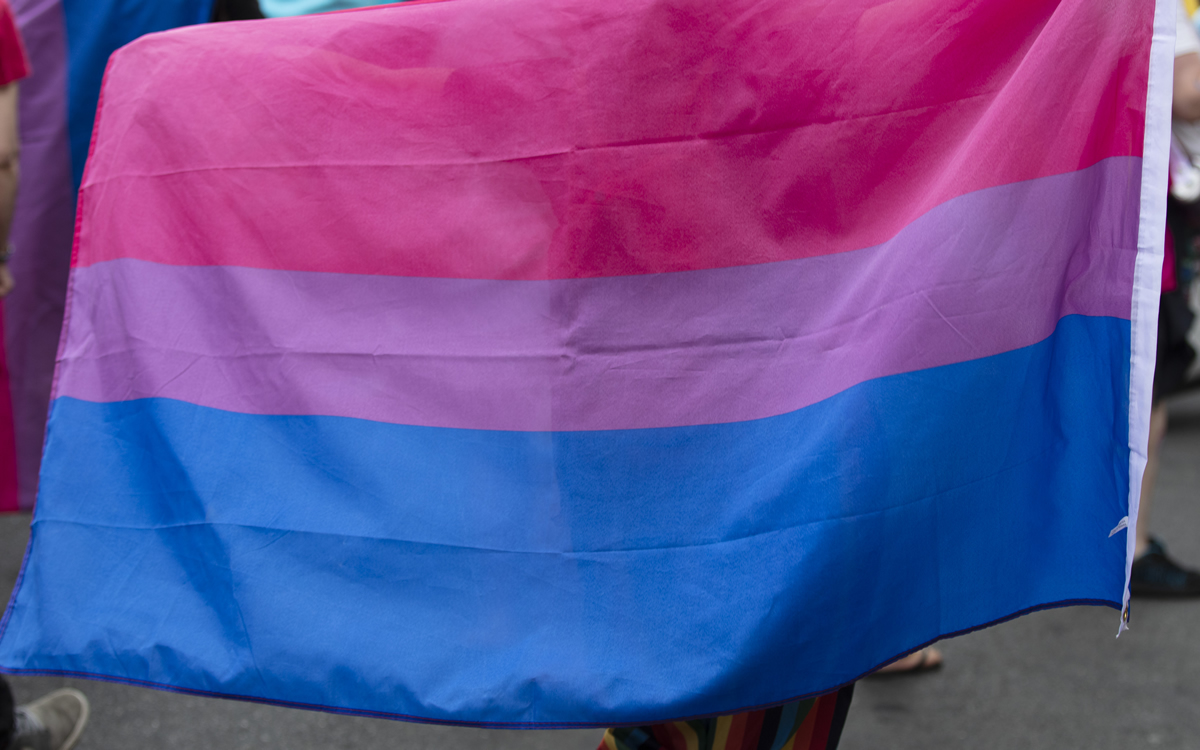
By SPENCER MACNAUGHTON, TAYA STRAUSS, and SAM DONNDELINGER | The number of openly LGBTQ American adults has skyrocketed in the past few years, but there’s one group that’s been leading the way: Gen Z women, 20.7 percent of whom are bisexual.
Despite this increase, many bi women still feel deeply misunderstood. To understand this, Uncloseted Media put together a panel of four bisexual women who spoke candidly about coming out, bi erasure and why bisexuality is often treated as a phase or something that disappears the moment a woman dates a man.
Watch the full interview above or read the transcript here:
Spencer Macnaughton: Hi everyone, I’m Spencer Macnaughton and today I am here with a panel of four bisexual women from across the United States. Thank you all so much for speaking with me and Uncloseted today.
Sophie Sandberg: Thanks so much for having us.
SM: So I always like to start with people’s coming out stories. So yeah, does somebody want to tell me their coming out story a little bit, or when you realized you were bi?
SS: I think part of being bisexual was that it was a long coming out story and kind of a long period of coming out. I always dated cis men when I was in middle school and high school. I started having boyfriends really early and was kind of even boy crazy, I would say. But I did always notice these crushes on my friends, on girls, on more queer and androgynous people I was seeing in the media. So, I would say I started noticing it myself in high school and definitely in college, but I didn’t have to come out because I was in serious relationships with cis men and very straight-passing. So I didn’t officially come out to everyone in my life until I was about 23.
SM: And was that like, I know when I was closeted, I’d hook up with girls, but I didn’t want to be hooking up with girls, right? And it stressed me out. But was there a stressor on that? I always wonder if the stress levels are the same or different as somebody who’s bisexual because you can date people you’re still genuinely interested in.
SS: Yeah, that’s a good point, and I think this is something that differs between me and my lesbian friends. They’ll be like, “yeah, I never enjoyed it, I was so unhappy, and then suddenly everything made sense when I came out.” And for me, I did genuinely have love and connection with cis men who I was in relationships with and slept with, but I also did always have this kind of knowledge or curiosity or interest in sleeping with people who weren’t cis men. So I think I was able to kind of have something genuine there, but also was always aware that there was more than just that for me. If that makes sense.
SM: Yeah. Kelly, how about you?
Kellie Wilson: Yeah, so I actually really only realized that I was bi about a year and a half ago, and so I feel a little bit of imposter syndrome being on a bi panel because I’m pretty new to this actually, and it was an interesting realization of learning that one of my friends that I had been growing closer with actually had feelings for myself and my husband. And at the time it was kind of like a, “whoa, I don’t know what to do with this information.” But over the course of the next few weeks and a bit of identity crisis and thinking about my past and my life and things like that, I realized “oh, I have a crush on her too.” And that I’ve probably had crushes on many women because there have been so many people in my life where I’d see them and like, “oh my gosh, they’re just, they are so cool. I love their vibe, they’re so pretty. I really want to be friends with them.” But then most of the time I wouldn’t actually become friends with them because I’d be too nervous when I was around them. There were absolutely signs and it just never clicked because I think, kind of like what you were saying Sophie, I had been in a long-term relationship with a cis man since my freshman year in college, which, he was my first boyfriend, my first everything. We got engaged, we got married, we had kids. And so there was never necessarily … I don’t know, there was no drive or reason for me to be questioning it, and I think part of that was some internalized biphobia from growing up in a very Christian, not fundamentalist, but gayness was of course a sin in the eyes of the church and all these things. It was something that I think I had internalized enough that it never really crossed my mind because I had feelings for cis men, and so it was like, “okay, yeah, I like men, I must be straight.”
Abby Stein: I think it’s a bit more complicated for me just because I’m also trans, and to add more to it, I grew up in a very gender-segregated community. So that played a very big role in this whole conversation. But the first, I guess, let’s call him a boyfriend for now, was in this very religious school. I was in upstate New York, kind of in the middle of nowhere. I guess in some ways it was a coming out but in other ways in my mind I made sense of it by being like “I’m actually a girl.” Then when, I guess when I was 18, I got married, arranged marriage, very much part of my community, to a woman, and I was very into that as well. So it’s hard for me to be like “okay at what point did I realize both of these people have been very interesting and therefore it says something about my sexuality.” I don’t know, I actually am having a hard time to be like the exact moment or even date or year.
SM: Yeah. And how does, obviously coming out as trans, especially in a gender-segregated community is a very tall task that I’m sure is an entirely different conversation, right? Was coming out as bi, did it feel like even a thing after having come out as trans or how did that play into it all?
AS: I think I struggled with it a lot more than with gender. People tell me a lot, “oh, you must have been struggling with your gender.” And I’m like, “no, I don’t know.” I think my gender, I was very comfortable with who I was and knew who I was since I was a child. Sexuality, I think, I’m still figuring out every day exactly what I do and don’t like. And it’s a constant struggle and journey. Not necessarily a struggle, sometimes a struggle. Sometimes a really great adventure. But it’s definitely something that has been, I think, more complicated to me than gender.
Katie Marie: I thought that I was straight for a very long time, thought that I was just an ally. I was married to a man for about 10 years. I had the house, the picket fence, the master’s degree, the job, and I was still very, very unhappy at the end of every day. I am Indigenous. I started leaning back into my spirituality and started to really dig deep into understanding who I am. It was at that moment in time, I had a really beautiful dream. And in that dream, I saw myself with a woman. I didn’t know that she was a woman, funnily enough, I just felt the energy. And I awoke from that dream and immediately turned to the man who was my husband at that moment in time and said, “I think I am interested in women.” Of course, whenever you first come out as bisexual in a situation like that — I was from the South — there are some negative implications that come with saying that you’re bisexual, especially even from the gay community, right? It’s that implication that you can’t choose a side or that you must choose a side or some version of that?
SM: Tell me a little bit about the biggest misconceptions about bisexual women in society specifically. What are the stereotypes, the misconceptions that are perhaps most frustrating for you guys?
KM: For me, I can speak to one. And this was just one that I experienced very quickly was this idea that for some, because I was bisexual, I was going to now have sex with everybody, right? This idea that I can’t choose a side, so I’m just gonna have relations with everyone and I just can’t make up my mind.
SM: A stereotype of promiscuity.
KM: Yes, exactly. That was a big one. And it came through in my marriage, actually, that was one of the initial problems is my husband started assuming that I was going to have sexual relationships with all of my girlfriends. And that became a big barrier for me to have to overcome.
SS: I feel like there’s a misconception, well, one, that bisexual women just want to be with men. I feel like there’s this misogynistic misconception that anyone who’s bisexual actually wants to be with a cis man, whether it’s a bisexual man or a bisexual woman.
SM: Interesting, I didn’t know that.
SS: If you’re a bisexual man you must really want to be with a man and if you are a bisexual woman you probably also just really want to be with a man. But I think in general just, yeah, people not fully understanding that bisexuality is more fluid and open than that.
KW: I think one of the things that I most often see would be on this idea of fluidity in levels of attraction and the bi cycle, right? And this idea that, “oh, it’s just a phase,” if you start off being more attracted to one gender and then it’s shifting over time, that it’s not gonna shift back. Existing in the middle space is not something that can happen. So I’m also biracial. I’m half black, half white, and I think that it’s this consistent theme in society, like, you can’t be both. And I think that’s really pervasive in the idea of stereotypes about bisexual women. You just have to pick one or you’re never gonna be enough of the other to fully fit. And so it’s sometimes easier to just exist in one space or the other. But then the internal experience of that is where it gets more uncomfortable. Like, no, it’s both. It’s absolutely both.
AS: So I’ve definitely had people saying, “oh, your sexuality” — by people I mean, literally my brother just a few weeks ago — “your sexuality is just part of your entire personality that’s just very confused.” And I don’t see it as that. I just don’t think that everything needs to fit in a very neat box. So it all ties into this idea, for me it all makes sense, which is that I like to look at things and constantly explore them and never decide that something has to be a specific way. And it’s like that with my sexuality, it’s that with the way I see my cultural and spiritual practices. And I think that’s beautiful.
SM: Well, I think it’s really interesting what you said. And I think it takes me back to what Kellie was mentioning about the bi cycle, right? Where people can be more interested in men one day, women the next day, anything in between, right? But I also think, Kellie, what you were mentioning is that there’s people who won’t accept that people can live in this gray zone. I could imagine that’s really frustrating.
KW: I don’t understand why people are so caught up on this need to check one box, right? And that you have to fit into one box. Because, I mean, to me, it’s just the most natural thing in the world to exist in this space of both and all the time and to understand that they — and I think everyone else is confused. I don’t understand why there’s this need to think you can only have one thing.
SS: And people wanna snap us back into a heteronormative space. So I think that’s something I experienced a lot early on coming out as bisexual. People saying, “you’re probably really straight, you’re probably gonna end up in a straight relationship, but this is kind of a phase or something you’re just trying out.” So, I think it comes from this heteronormative society that we live in. People just wanting to force us back into that box. And I think that’s what’s so beautiful about bisexuality. It’s constantly moving into the gray space, getting uncomfortable, having to explore and figure ourselves out. Yeah, I love that about bisexuality.
SM: I think I’ve heard before, “not queer enough.” I’ve heard that from bisexual folks as well. And is the reverse sometimes true as well? Can there be biphobia from gay people?
SS: Yes, absolutely, “not queer enough, not actually gay, just a little bit gay, half gay.” I feel like, yeah, this idea of bisexual as one half gay, one half straight has never made any sense to me ‘cause we’re all fully bisexual, that’s who we are. So yeah, that’s always a really frustrating stereotype too.
KW: I have been pretty nervous in terms of coming out to people who I know who are lesbian because of this stigma or this idea that can exist in the lesbian community, this idea of the gold standard, or if you’ve been with men, then you’re somehow tainted, or you’re not actually fully invested in other women and things like that. Or that if you’re with a woman, then you’re just gonna leave them for a man because of these heteronormative biases and things like that. And so I’ve found myself, I think more nervous to come out to people who I know who are lesbian than people who I know are straight.
AS: Just gonna add, and I think it’s very similar to what you’re saying, Kellie, which is this idea that people constantly assume that you’re never gonna be satisfied, whether from gay people, from straight people, from your own partners. Which is very weird to me, because I think even if you’re a straight person, if you have more than one very specific type, which I think a lot of people do, no one assumes, “oh, you’re never gonna be satisfied because this is not all your types in one person.” It’s not how it works.
SM: Again, frustrating too. I wanted to ask specifically, obviously in many societies in the U.S. right now, it’s still dominated, especially in religious areas, of patriarchal governance structures, right? There’s obviously still a lot of misogyny in society at large. How do you find men treat bisexual women differently than straight women, lesbian women, other women?
KW: Women are already so hypersexualized, and then when they find out that you’re bi it’s like this new level you didn’t even know existed of hypersexualization, of like, oh, they’re thinking, threesomes are always the first thought, and “this would be so hot,” and the idea of … what’s the word I’m looking for? Watching people …
SM: Voyeurism?
KW: There we go. Wanting to watch women be with women but then they’re also with you. And so then there’s this heightened level of fantasization that can happen when they find out that you’re bisexual. I noticed it at bars when I was with my husband and my girlfriend at the time and people trying to figure out the nature of your relationship and then, “oh, there’s these two bi women here, this is so hot.”
SM: Do people feel like they have more free rein to say things like that to you, perhaps because you’re bi?
KW: Not even, I think it’s not even saying things to me, but about me to the man, right? So then they’re directing their comments to my husband, like, “oh, you’re so lucky. How did you manage this?” And one, then that strips me of my own autonomy. And so then it’s weird because you’re objectified as this thing that this other man has somehow managed to collect, achieve. Yes, and then they’re not even directed at me. It’s just like I’m there as this object that exists for the satisfaction of the men in this interaction.
SM: It sounds like these men almost characterize it as though you don’t have agency to come out and say, “I am a proud bisexual woman,” but rather it’s your partner, your male partner who activated the bisexuality, which is obviously crazy. All very interesting. I want to talk quickly about pop culture and the media in 2026. Obviously I think — I’m a geriatric millennial here — and I think we’ve come a long way since Katie Perry’s “I kissed a girl and I liked it.” So we have celebrities now coming out as bi, Jojo Siwa, Billie Eilish. It feels like there’s more of a normalization, but I don’t know, I’m curious about the state of media representation of bi women in 2026. Go for it.
KM: For me, I feel like everybody’s gay. And I think that it is beautiful that more celebrities are coming out. It’s showing the natural progression of understanding who we are as beings, as people. Because I think as children, whenever we don’t get the chance to figure out who we are and who we love, and we’re told instead who we are and who we love, then we have a whole group of geriatric millennials figuring out just now, “wait a minute, maybe I’m somebody else.”
AS: There definitely seems to have been a very intentional, which has to do with the moment we’re in and with funding from federal grants and the attack on DEI and so on, that there’s definitely been. Shows that have been filmed over the past year, if that makes sense, seem to be less queer than, I think, what we had five, six years ago. Specifically traditional media, like network TV and the big name studios, are trying to dial back a bit, a lot of queer representation.
KW: I see that too, Abby. And I think that they’re, especially when it comes to bi representation in the media, I feel like it’s still much lower. When I was first realizing that I was bi, I was like, I couldn’t think of hardly anyone that I had seen in a movie or books that I knew that were about bisexuality. I couldn’t think of any. I had to really go and research and go on reddit and do all this googling to find things to watch to see representation.
SM: I do think what’s fascinating is that the Gallup poll came out this year, and it reported that 23 percent of Gen Z respondents self-identified as bisexual. That’s versus a 9 percent average of the population at large, and that’s a 146 percent rise. Why do you guys think young people are coming out so much more as bi?*1
AS: I think a lot of people, at least in religious communities, and I know some people who I grew up [with] who are like this, who are bi, and they would tell me directly, “if I was gay, I would leave this community and just go do my thing. But I’m bi, I made it work, it’s fine, I will be in this straight-passing relationship and it’s fine.” And the more we give people permission to be themselves, the more people are gonna come out. I don’t think suddenly there are more queer people, I think there’s just more people who are not afraid to literally be shunned from their families and societies for coming out as queer. So I think that is a big part of it. But I definitely think the bi part of this specifically is that even though it has been easier — it’s still not easy, but it has gotten easier over the past few decades. And I think that impacts bi people perhaps even more than — it gets harder for lesbians and gay people to choose not to be that, and to choose to be in a straight-passing relationship. If it’s hard to come out, it can be easier for bi people. So as we are making it easier for people to come out, the numbers go up by a lot.
SS: Abby I really agree with you there, I think that’s really interesting. But I also wonder if Gen Z is more flexible with gender identity and just fluidity in general, and I wonder if that creates more space for a bi identity, ‘cause we’re all talking about how bi-ness is fluidity and it has created this space for a gray area. And I think of Gen Z as being very open also with gender identity and being very fluid and accepting. So I wonder if that in turn creates more space for the bisexual identity. Because there’s fluidity in that too, if that makes sense.
SM: No, it definitely does. And I think a lot of what we’ve talked about today has been around, especially in years past, the idea of bi erasure, right? That’s a concept that’s discussed a lot. And I’m curious what you think we can do as a society to make bi erasure less of a problem and something that feels very prevalent still in 2026.
KW: I think the more that we deconstruct the idea that sexuality is a choice, I think the less bi erasure there will be. The idea of sexuality as a choice has been so harmful for the gay community, right? When people who are bi have been like, “oh, I’ve had the gay erased out of me or prayed the gay away” and things like that. This idea that you can have gayness removed has been so harmful. And so there’s that side of it. And then from the straight side of things, there’s no threat of “oh, well, now someone might see me as gay because there’s these people who are both,” you can never prove that you’re just straight or just lesbian. If you take away the need to prove this and take away this idea that it is a choice at all, then that’s where people can have this more accepting perspective of existence.
AS: I just wanna say we need to focus also on joy, bi joy and queer joy and our joy generally, because at the end of the day, it is really cool. I mean, we get to experience so much of the world. I’m not gonna say that people who are not open to all kinds of genders don’t have that, but I definitely think we are experiencing a very fun and very unique part of the world and that’s amazing.
SM: That is a great thing that I absolutely should have asked more about. What are the best parts about being bisexual?
KM: Freedom for me, freedom to love. It gave me a deeper understanding of self. And at the end of the day, I think that that’s what everybody deserves.
SS: I think that bisexuality has allowed me to understand my gender and my queerness differently because of my attractions to different types of people, and I think that’s a beautiful way that bisexuality allows for freedom and yeah, just like feeling more yourself. Also, I was just gonna say we need more representation. This conversation made me realize wow, yeah, I can’t think of a bi character who I found and looked up to, except for like Alice in The L Word, but she was basically within the lesbian community. So, if anyone’s out there listening and is like, “I wanna create an amazing, joyful bi character,” I feel like that would also be very helpful.
KW: I was just gonna echo the freedom piece, and having the freedom to explore and learn so much about myself has been so freeing, and this feeling of wholeness, I think, has been the most joyful thing of realizing there was a whole piece of me that I didn’t even know existed. It’s just been incredible.
SM: Sophie, Kellie, Katie and Abby, I’m so grateful for your time and for sharing all of this with me and Uncloseted Media today. It’s been a really fantastic conversation, so thank you.
KW: Thanks so much for having us.
SS: Thank you.
New York
Pride flag raised at Stonewall after National Park Service took it down
‘Our flag represents dignity and human rights’
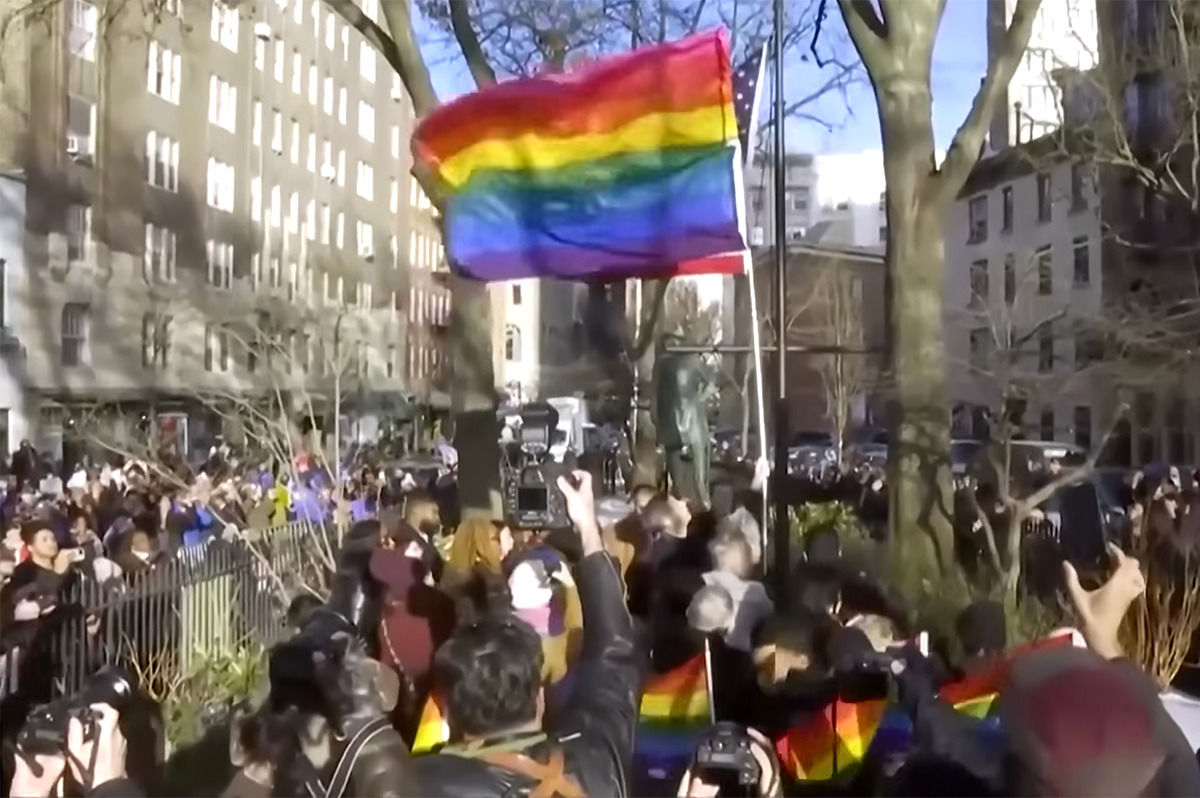
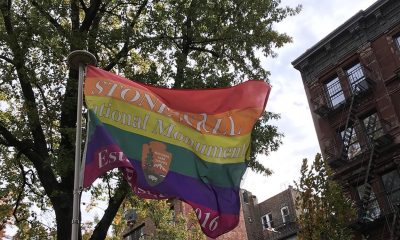
A Pride flag was raised at the site of the Stonewall National Monument days after a National Park Service directive banned flying the flag at the birthplace of the LGBTQ rights movement in the U.S.
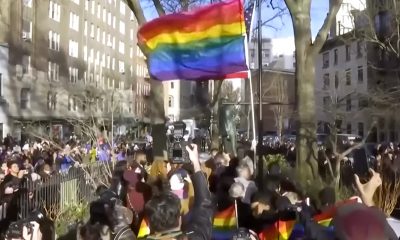
The flag-raising was led by Manhattan Borough President Brad Hoylman-Sigal and supported by other elected officials.
“The community should rejoice. We have prevailed,” Hoylman-Sigal said shortly after the flag was hoisted. “Our flag represents dignity and human rights.”
The flag now sits in Christopher Street Park, feet away from the Stonewall Inn, where in 1969 a police raid of the gay bar sparked outrage and led to a rising of LGBTQ people pushing back on NYPD brutality and unjust treatment.
Elected officials brought a new flagpole with them, using plastic zip ties to attach it to the existing pole.
In 2016, President Barack Obama declared the site a national monument.
One day before the planned re-raising of the Pride flag, the National Park Service installed only an American flag on the flagpole, which days prior had flown a rainbow flag bearing the NPS logo.
The directive removing the flag was put forward by Trump-appointed National Park Service Acting Director Jessica Bowron.
This comes one day after more than 20 LGBTQ organizations from across the country co-signed a letter to Interior Secretary Doug Burgum and General Services Administrator Ed Forst, demanding the flag be restored to the monument.
“It is our understanding that the policy provides limited exceptions for non-agency flags that provide historical context or play a role in historic reenactments. Simply put, we urge you to grant this flag an exception and raise it once again, immediately,” the letter read. “It also serves as an important reminder to the 30+ million LGBTQ+ Americans, who continue to face disproportionate threats to our lives and our liberty, that the sites and symbols that tell our stories are worth honoring … However, given recent removals of the site’s references to transgender and bisexual people — people who irrefutably played a pivotal role in this history — it is clear that this is not about the preservation of the historical record.”
The letter finished with a message of resilience the LGBTQ community is known for: “The history and the legacy of Stonewall must live on. Our community cannot simply be erased with the removal of a flag. We will continue to stand up and fight to ensure that LGBTQ+ history should not only be protected — it should be celebrated as a milestone in American resilience and progress.”
When asked about the directive, the NPS responded with this statement:
“Current Department of the Interior policy provides that the National Park Service may only fly the U.S. flag, Department of the Interior flags, and the Prisoner of War/Missing in Action flag on flagpoles and public display points. The policy allows limited exceptions, permitting non-agency flags when they serve an official purpose. These include historical context or reenactments, current military branch flags, flags of federally recognized tribal nations affiliated with a park, flags at sites co-managed with other federal, state, or municipal partners, flags required for international park designations, and flags displayed under agreements with U.S. Citizenship and Immigration Services for Naturalization ceremonies.”
An Interior Department spokesperson on Thursday called the move to return the flag to the monument a “political stunt.”
“Today’s political pageantry shows how utterly incompetent and misaligned the New York City officials are with the problems their city is facing,” a department spokesperson said when reached for comment.
The clash comes amid broader efforts by the Trump-Vance administration to minimize LGBTQ history and political power. The White House has spent much of President Donald Trump’s second presidency restricting transgender rights — stopping gender-affirming care for transgender youth, issuing an executive order stating the federal government will recognize only two sexes, male and female, and blocking Medicaid and Medicare from being used for gender-affirming care.
India
Trans students not included in new India University Grants Commission equity rules
Supreme Court on Jan. 29 delayed implementation
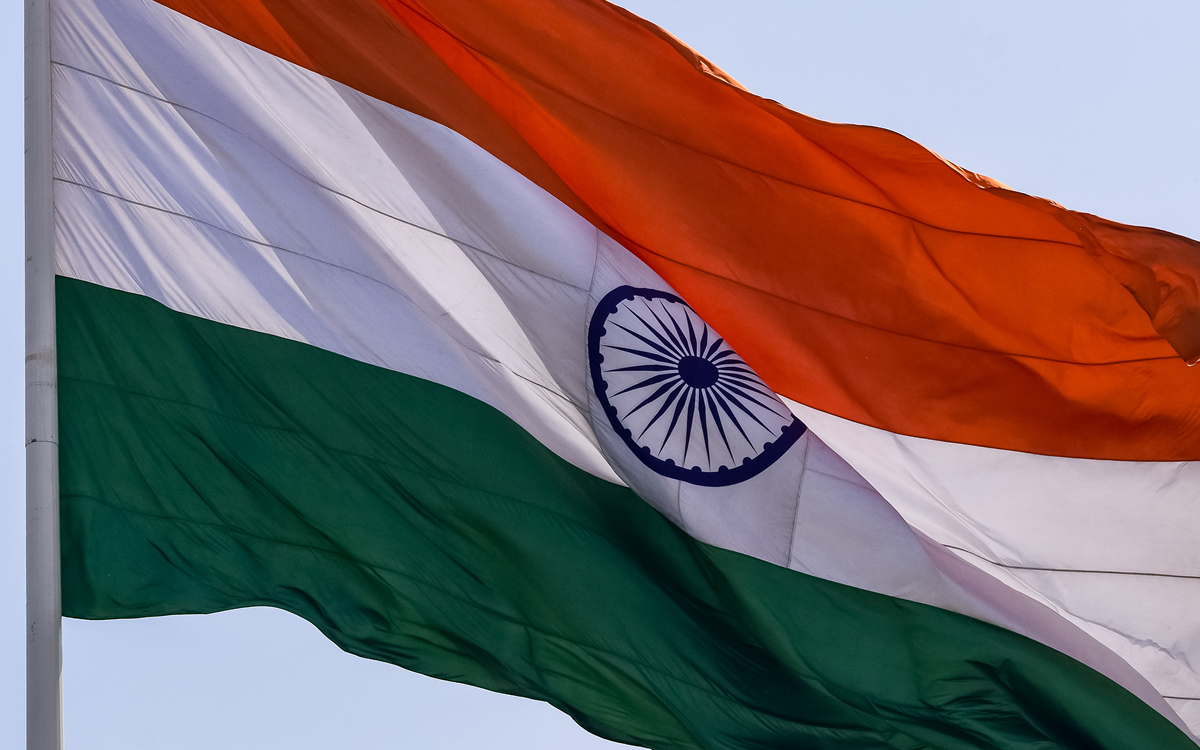
The University Grants Commission is a regulatory body under India’s Education Ministry that is responsible for coordinating and maintaining standards in higher education. The University Grants Commission Equity Regulations, 2026, aim to address discrimination and promote the inclusion of lower castes, tribes, people with disabilities, those who are economically disadvantaged, and other marginalized groups in higher education.
The regulations quickly triggered controversy.
Students, faculty and civil society groups criticized them, largely around concerns about potential discrimination against students and the absence of certain procedural safeguards. Yet, even as the debate intensified, there was little public discussion about the lack of explicit mention of transgender students in the framework. The omission, though not central to the overall controversy, raised questions among some advocates about the scope of the regulations and who they ultimately protect.
According to the All India Survey on Higher Education, trans student enrollment in universities and colleges rose from 302 in the 2020-2021 academic year to 1,448 in the 2022-2023 academic year, reflecting a sharp increase but still representing a very small share of India’s overall higher education population.
The Supreme Court in its 2024 National Legal Services Authority v. Union of India affirmed trans people are entitled to full constitutional protection, including equality, dignity and access to education, and directed governments to treat them as a socially and educationally disadvantaged group eligible for quota-based protections in education and public employment. The ruling recognized gender identity as integral to personal autonomy and held that discrimination on this ground violates fundamental rights under Articles 14, 15, 16, and 21.
Against this legal backdrop, the regulations do not explicitly reference trans students, an omission that has drawn attention in discussions on how constitutional protections are implemented within higher education institutions.
In the Indian constitutional framework, Articles 14, 15, 16, and 21 collectively form the foundation of equality and personal liberty.
Article 14 guarantees equality before the law and equal protection of laws; Article 15 prohibits discrimination on grounds such as religion, race, caste, sex or place of birth; Article 16 ensures equality of opportunity in public employment; and Article 21 protects the right to life and personal liberty, which courts have interpreted to include dignity, autonomy, and access to education. These provisions underpin judicial recognition of protections for marginalized communities, including trans people, within public institutions.
Judicial and policy frameworks in India have increasingly recognized the need for institutional support for trans students, underscoring the contrast with the absence of explicit mention in the University Grants Commission Equity Regulations, 2026, regulations.
The Madras High Court has directed educational institutions to implement measures such as gender-neutral restrooms, mechanisms to update name and gender in official records, inclusion of trans identities in application forms and the appointment of LGBTQ-inclusive counselors for grievance redressal alongside enforcement of the Transgender Persons (Protection of Rights) Act and its Rules.
Policy instruments have echoed similar priorities.
The National Youth Policy 2014 acknowledged trans youth as a group facing social stigma and called for targeted interventions, while the National Education Policy 2020 emphasized reducing dropout rates and ensuring equitable access to education. The University Grants Commission itself has previously indicated that universities should adopt affirmative steps and institution-specific plans to support trans people, making their absence from the current regulatory text more pronounced.
Research and policy analyses have consistently documented structural barriers faced by trans students in India’s education system. The Center for Development Policy and Practices and other academic studies note that discrimination, bullying, and the absence of gender-sensitive infrastructure contribute to high dropout risks among trans students in both school and higher education. Census data underscore this disparity.
The 2011 Census recorded a literacy rate of about 56.1 percent among trans people, significantly lower than the national average of roughly 74 percent, reflecting long-standing barriers to access and retention in formal education.
The controversy intensified after the Supreme Court on Jan. 29 stayed the implementation of the University Grants Commission Equity Regulations, 2026, and agreed to examine their constitutional validity.
A bench led by Chief Justice Surya Kant observed the regulations raised serious legal questions, including concerns that some provisions appeared vague and potentially open to misuse, and sought responses from the federal government and the University Grants Commission. The court directed that the earlier 2012 anti-discrimination framework would remain in force in the interim and listed the matter for further hearing, signalling the need for detailed judicial scrutiny.
Public and political reactions followed, with student groups, academics, and political actors divided over the stay and the broader policy direction. The federal government, led by Prime Minister Narendra Modi, maintained the regulations were intended to address caste-based discrimination and strengthen accountability within higher education institutions even as debate intensified nationally.
The regulations go beyond paperwork. They require universities to create on-campus equity monitoring teams and designated officers responsible for identifying incidents of discrimination, receiving complaints and reporting them to institutional committees for action. However, while the framework spells out protections for certain caste and social categories, it does not explicitly include trans students within this structure. In practice, that absence could leave uncertainty about whether routine monitoring, reporting and grievance mechanisms would extend to them with the same clarity, particularly in campuses where implementation already varies widely.
The regulations also prescribe penalties for faculty and staff found responsible for discrimination, including suspension, withholding of promotions, or termination of service following institutional inquiry. For students, disciplinary action may range from warnings to suspension depending on the severity of the misconduct. Where an incident amounts to a violation of existing statutory or criminal law, institutions are required to refer the matter to law enforcement authorities, placing responsibility on universities to escalate cases beyond internal mechanisms when warranted.
The regulations do not create new criminal offences but require institutions to escalate cases to law enforcement when conduct violates existing statutes. These may include the Scheduled Castes and Scheduled Tribes (Prevention of Atrocities) Act, relevant provisions of the country’s penal code, such as criminal intimidation, assault or sexual harassment, disability rights protections, workplace harassment laws, and statutes addressing campus hazing. The framework is therefore stringent: campus inquiries can lead to disciplinary action, and, where legal thresholds are met, mandatory reporting to police. In the absence of explicit mention of trans students within the framework, questions remain about how individuals from the community would navigate complaint systems, interact with authorities, and access consistent institutional protections under these processes.
The Scheduled Castes and Scheduled Tribes (Prevention of Atrocities) Act, 1989 is among India’s strictest anti-discrimination criminal laws and applies to students, staff and any individual accused of caste-based offences. It criminalizes acts such as intentional insults or humiliation, social exclusion, threats, physical assault and other forms of harassment directed at members of specific castes or tribes. Offenses under the law can lead to arrest, non-bailable charges in several categories, and imprisonment that may extend from months to years depending on the severity of the conduct, along with fines. The law also restricts anticipatory bail in many cases and mandates prompt registration of complaints, which is why it is often viewed as a powerful legal safeguard for marginalized communities while also being regarded by some as carrying serious legal consequences once invoked.
Nishikant Dubey, a member of India’s ruling Bharatiya Jana Party, welcomed the Supreme Court’s decision to stay the regulations, stating the judges had acted appropriately and that the matter required careful legal scrutiny. Indrani Chakraborty, an LGBTQ rights activist and mother of a trans woman, told the Washington Blade the University Grants Commission Equity Regulations, 2026, is a welcome step toward supporting vulnerable students.
“The saddest part is that the transgender community is excluded which is very unfair,” said Chakraborty. “Presently, the transgender community is the most vulnerable and not mentioning the community in the act. I regard it as the biggest discrimination and will never help in changing the scenario of the transgender students.”
Chakraborty told the Blade the trans community, as a minority facing persistent social stigma and taboo, is often overlooked and must repeatedly advocate even for basic rights.
“I believe that grouping of individuals under caste, religion, gender, etc., is the base of discrimination. Personally, I disagree with naming and tagging any individual. Equity over equality is the need now for the most vulnerable. And the transgender community faces discrimination the most. Discrimination against any individual in educational institutions needs immediate attention and preventive measures should be necessarily implemented.”
Chakraborty said the absence of explicit inclusion of trans students amounts to discrimination, undermining equality in education and violating human dignity.
Ankit Bhupatani, a global diversity, equity and inclusion leader and LGBTQ activist, told the Blade that debate around the University Grants Commission Equity Regulations, 2026, has largely centered on concerns raised by relatively privileged students, particularly those in the unreserved category, while communities with limited visibility in higher education have received far less attention. Bhupatani also referenced the All India Survey on Higher Education statistics.
“According to Queerbeat, more than half of these 1,448 students are clustered in a few states and several large states still report almost no transgender students at all. Any serious equity regime has to guard every individual, including upper-caste students who are unfairly targeted or stereotyped , but the public conversation cannot pretend this tiny, highly vulnerable group does not exist,” said Bhupatani. “When outrage dominates headlines and the most marginalized are barely mentioned, the word ‘equity’ starts to lose meaning.”
Bhupatani told the Blade that the University Grants Commission Equity Regulations, 2026, define gender to include the “third gender” and prohibit discrimination on that basis, but then repeatedly identify lower castes, tribes, economically disadvantaged groups, people with disabilities, and women as specific groups, while trans students and teachers are not explicitly listed. Bhupatani said that for a young trans person reading the regulations, the message can feel indirect — that others are clearly recognized while their protections depend on interpretation. He added that explicitly naming trans people as a protected group would not dilute safeguards for others, but would instead ensure those already facing stigma are not left to seek recognition case by case.
“Transgender people sit at the intersection of legal vulnerability and social prejudice, so if they are not named and centered in large regulatory exercises, they quickly disappear from view,” said Bhupatani. “Campus rules need to start with a simple moral intuition. No one, whether Dalit or Brahmin, trans or cis, rich or poor, should be harassed, excluded or denied opportunity because of who they are. The University Grants Commission (Promotion of Equity in Higher Education Institutions) Regulations, 2026 already move in this direction by defining discrimination broadly for all students and staff and by listing grounds such as caste, gender, religion, disability, and place of birth. That universal shift is essential.”
Bhupatani said a fair equity framework should operate on two levels. First, it must guarantee that any individual, regardless of background, can seek redress if treated unfairly. Second, it should explicitly identify groups that face entrenched barriers — including lower castes and tribes, people with disabilities, and trans people — and build specific safeguards for them. He added that concerns about misuse could be addressed through clearer definitions, transparent procedures, trained inquiry committees, representation from diverse groups, and meaningful penalties for false or malicious complaints.
Kalki Subramaniam, a trans activist and artist, told the Blade that trans students face layered vulnerabilities — including social stigma, harassment, and systemic neglect — that often go unaddressed on campuses. When policies do not explicitly name them, she said, it signals that their struggles are not seen as warranting recognition, reinforcing isolation, and undermining their ability to access safe and dignified education.
“I have faced this and I really do not want this generation of transgender students to go through the same kind of exclusion and treatment,” said Subramaniam. “If the government truly believes in inclusive education, transgender students must be explicitly recognised in every policy conversation. Otherwise, we remain erased from the very spaces that claim to be suitable. We will certainly urge the government to ease and prioritise education for transgender community students.”
Subramaniam said limiting protections primarily to caste categories reflects a narrow approach to justice, noting that discrimination on campuses can also be shaped by gender, class, disability, and sexuality. She said a more expansive framework would protect any student facing discrimination, regardless of identity, and emphasized that equity must operate universally for campuses to function as spaces of learning rather than exclusion.

Magic is happening for Round House’s out stage manager

Four bisexual women on stereotypes, erasure, representation, and joy

Unconventional love: Or, fuck it, let’s choose each other again

Pride flag raised at Stonewall after National Park Service took it down

Trans students not included in new India University Grants Commission equity rules

McPike wins special election for Va. House of Delegates

Philippines Supreme Court rules same-sex couples can co-own property

Attitude! French ice dancers nail ‘Vogue’ routine

N.Y. lawmaker vows ‘Pride flag will fly again’ at Stonewall Monument

Meet D.C.’s Most Eligible Queer Singles
-

 Virginia3 days ago
McPike wins special election for Va. House of Delegates
-
Sports5 days ago
Attitude! French ice dancers nail ‘Vogue’ routine
-
Philippines5 days ago
Philippines Supreme Court rules same-sex couples can co-own property
-
New York4 days ago
N.Y. lawmaker vows ‘Pride flag will fly again’ at Stonewall Monument