News
Defense bill contains gay-related provisions
Expanded conscience protections; sodomy ban repealed in military code
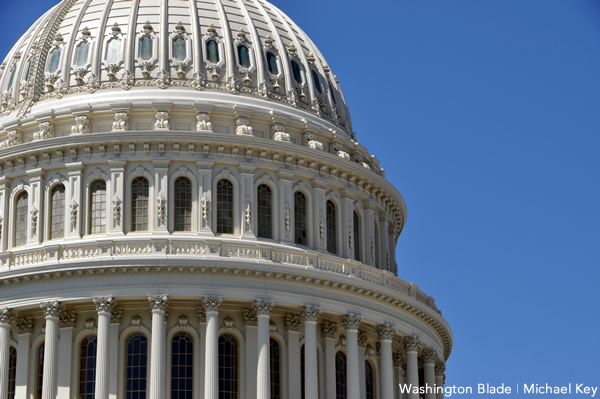
The defense authorization passed by Congress includes gay-related provisions. (Washington Blade file photo by Michael Key)
The U.S. Congress passed major defense budget legislation on Thursday that includes provisions related to the LGBT community — both good and bad — in the aftermath of “Don’t Ask, Don’t Tell.”
The fiscal year 2014 defense authorization bill contains an expansion of the conscience protections for service members under current law, but also repeals the sodomy ban under military law and calls for a report on HIV policy within the U.S. military.
The Senate approved late Thursday by a vote of 84-15 a $630 billion version of the bill, which primarily reauthorizes pay for troops and funding for military programs. The House already approved the legislation, so it’s heading to President Obama’s desk.
Sen. Carl Levin (D-Mich.), the retiring chair of the Senate Armed Services Committee, issued a statement upon passage of the legislation praising the bipartisan nature of its approval.
“Tonight we passed legislation that is good for our national security, and for the men and women who protect us and their families,” Levin said. “The Senate vote is a strong bipartisan statement that, despite our differences, we can come together and accomplish important business for the good of the country.”
Under Section 532, the legislation contains an expansion of the conscience provision that was enacted as part of last year’s defense authorization bill. Under this provision, the armed services shall accommodate service members’ expression of their beliefs — unless it would have an adverse impact on military readiness or good order and discipline.
The language was inserted by Sen. Mike Lee (R-Utah) during the Senate Armed Services Committee markup of the fiscal year 2014 defense authorization. It’s along the lines of a conscience amendment submitted by Rep. Mike Fleming (R-La.) during the House Armed Services Committee markup of its version of the bill, but not quite as strong. LGBT advocates decried the House version of the amendment as a means to enable service members to discriminate and harass their gay colleagues.
A related provision, Section 533, instructs the Inspector General of the Department of Defense to submit a report to Congress no longer than 18 months after the bill is signed into law on incidents of adverse personnel actions or discrimination against troops based on their moral beliefs.
Tony Perkins, president of the anti-gay Family Research Council, praised Congress in a statement over inclusion of the provision, which he said is a means for “protecting the right of service members to freely practice and express their faith.”
“Congress acted appropriately after investigating numerous incidents involving service members who have had their careers threatened, and harassed simply for practicing their faith in a real and tangible way,” Perkins said. “The religious liberty violations have grown so frequent in recent years leading many service members to report being too fearful to share their faith.”
After the enactment of the earlier conscience provision under the previous defense authorization bill, Obama said the Pentagon assured him the language wouldn’t change how the armed forces operated. The Defense Department didn’t respond to the Washington Blade’s request for comment on how implementation will work this time around.
Ian Thompson, legislative representative of the American Civil Liberties Union, said the inclusion of the conscience provision in the defense authorization bill was unnecessary.
“The ACLU believes that the Constitution and existing laws and regulations already offer all members of the Armed Forces, including chaplains, strong protections for their religious beliefs,” Thompson said.
Fred Sainz, the Human Rights Campaign’s vice president of communications, expressed a similar sentiment that the provision is unnecessary because service members’ religious views are already protected under current policy.
“Although this amendment is unnecessary, Congress dropped a different version adopted by the House of Representatives that would have been truly harmful, requiring the military to accommodate beliefs, actions, and speech of service members unless the armed forces could prove ‘actual harm’ to good order and discipline,” Sainz said.
But the legislation as a whole also contains positive language sought by LGBT advocates in the aftermath of “Don’t Ask, Don’t Tell” repeal. Among these provisions is Section 1707 — repeal of the ban on sodomy for gay and straight service members under Article 125 of the Uniform Code of Military Justice. The provision was added by Sen. Mark Udall (D-Colo.).
In its place, the legislation inserts into military code a provision making “unnatural carnal copulation” with another person “by force” subject to a court martial. The provision also reasserts the ban on bestiality in military code.
Although the sodomy ban was rarely enforced for service members engaging in consensual sex in private, it has remained on the books and been used to prosecute troops in combination with additional infractions.
ACLU’s Thompson said the repeal of the sodomy ban is an important step forward to guarantee the liberty of service members — gay and straight — in the aftermath of “Don’t Ask, Don’t Tell” repeal.
“This is a welcome and overdue step forward that respects the liberty and privacy of all service members, and is especially significant for gay and lesbian service members whose intimate relationships, including marriages, were labeled a violation of military criminal law,” Thompson said. “Removing this stigmatizing and discriminatory provision from the Uniform Code of Military Justice advances the promise of equal treatment for all military personnel.”
Additionally, under Section 572, the legislation directs the Pentagon to submit a report to Congress no later than 180 days after the bill is signed into law on personnel policies regarding service members with HIV or Hepatitis B. The bill directs the Pentagon to include a description of the policies as well as related retention, deployment and disciplinary actions as well as an assessment of whether these policies are evidence-based and medically accurate.
According to the LGBT military group SPART*A, service members become non-deployable once they’re discovered to have HIV; can’t commission as an officer or warrant officer; can’t fly aircraft or work in any jobs requiring a flight physical; are restricted to stateside duty assignments (with the exception of the Navy); and are not eligible for special schools such as Ranger, Special Forces or other special ops jobs.
Thompson said the provision is welcome because it will examine whether the military’s current HIV policy is appropriate or outdated.
“This review is welcome and overdue becausemany of our laws, policies, and regulations regarding HIV were written at a time when we knew far less about the routes and risks of HIV transmission, and prior to the development of effective HIV treatment,” Thompson said.
Another important non-LGBT provision in the defense authorization bill replaces foreign transfer restrictions in current law to enable President Obama to close the detention facility in Guantanamo Bay. The bill also seeks to aid victims of sexual assault in the military by criminalizing retaliation against victims who report it, preventing military commanders from overturning jury convictions and protecting victims of sexual assault from abusive treatment during pre-trial proceedings.
The LGBT group Freedom to Work had said insertion of the Employment Non-Discrimination Act into the defense authorization bill could be a viable way to pass the measure. However, prior to ENDA’s passage in the Senate, Senate Majority Leader Harry Reid (D-Nev.) told the Washington Blade such inclusion wasn’t a viable option because he didn’t know if the larger defense bill would pass.
On Thursday, White House Press Secretary Jay Carney issued a statement saying the administration has concerns with certain aspects of the legislation, but supports it overall.
“Although the bill includes a number of provisions that restrict or limit the Defense Department’s ability to align military capabilities and force structure with the President’s strategy and implement certain efficiencies, overall the Administration is pleased with the modifications and improvements contained in the bill that address most of the Administration’s significant objections with earlier versions regarding these issues,” Carney said. “The Administration supports passage of the legislation.”



District of Columbia
‘Queer Love’ campaign launched to address domestic violence
D.C. event set for LGBTQ+ Domestic Violence Awareness Day on May 28
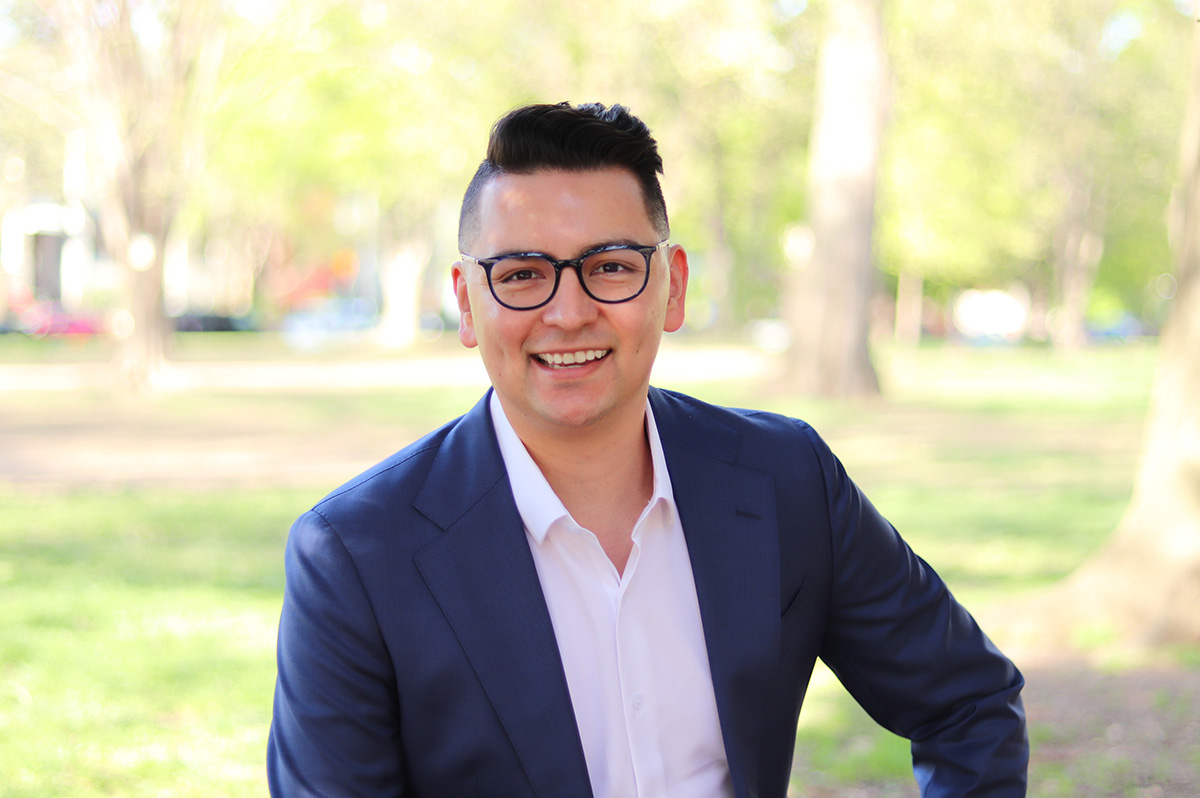
The D.C.-based Wanda Alston Foundation, which provides housing and support services for homeless LGBTQ youth, announced earlier this month that it has joined partner organizations to launch a Queer Love Shouldn’t Hurt campaign aimed at addressing domestic violence within the LGBTQ community.
In a May 18 statement, the Alston Foundation said the campaign involves a public awareness initiative leading up to LGBTQ+ Domestic Violence Awareness Day scheduled for May 28.
“Domestic and family violence in LGBTQ+ communities is real and too often invisible,” Cesar Toledo, the Alston Foundation’s executive director, said in the statement. “As a community, we do not talk about it enough, and that silence can leave survivors feeling isolated and alone,” he said. “We must break that silence.”
He added that culturally competent care for those impacted by domestic violence is available through a newly launched website, queerlove.org, “where people can safely access vital resources, educational toolkits, and support networks they need on their healing journey.”
The website announces one of the project’s first events, a Queer Love Community Social, was scheduled for Thursday, May 28, from 6-8 p.m. at the D.C. LGBTQ+ Community Center at 1827 Wiltberger St., N.W.
“Join us this LGBT+ Domestic Violence Awareness Day for a community social dedicated to visibility and survivor resilience,” the website statement says. “Let’s gather to strengthen our bonds, honor the path to healing, and share free resources,” it says of the May 28 event.
The website also announces a June 1 workshop called Empowering Survivors of LGBTQ+ Intimate Partner Violence, which it says will be presented by Jesse Wedell, an official with the D.C. LGBT+ Counseling Collaborative. The website provides an online form to register for the workshop upon which its location would be disclosed.
It identifies the partner organizations working with the Alston Foundation on the Queer Love Public Awareness Campaign as the LGBT+ Counseling Collaborative, Whitman-Walker Health, the D.C. LGBTQ+ Community Center, and Equality Chamber.
The resources and information provided by the project can be accessed at www.queerlove.org.
2026 Midterm Elections
Ken Paxton wins Texas Republican primary runoff
LGBTQ rights opponent will face Democrat James Talarico in November

Attorney General Ken Paxton won the Republican Senate primary in Texas on Tuesday, ousting incumbent U.S. Sen. John Cornyn.
Paxton won the primary against the four-term incumbent in large part due to President Donald Trump’s endorsement. Despite Cornyn voting with Trump more than 90 percent of the time, political insiders say being supportive isn’t enough to win Trump’s endorsement anymore — Republican candidates need to embrace the full MAGA image, something Paxton has done.
Paxton has served as Texas attorney general since 2015 and, before that, worked as a Texas state representative. He has approached both roles with what LGBTQ activists call a “consistently Anti-LGBTQ+ Record.” Following the landmark U.S. Supreme Court decision in Obergefell v. Hodges — the case that made same-sex marriage the law of the land — Paxton advised Texas county clerks they could refuse marriage licenses to same-sex couples on religious grounds.
His anti-LGBTQ crusade doesn’t stop at fighting against marriage equality.
Paxton has repeatedly demanded medical records for transgender youth in multiple states — including Texas, Georgia, and Washington — in hopes of making the practice illegal. His anti-trans actions go far past medical records. Paxton issued an opinion barring trans Texans from changing the sex on their driver’s licenses and birth certificates, claiming any changes made were “unlawfully altered,” and helped the DOJ reach an agreement with a Texas’s children’s hospital for providing minors gender-affirming care, eventually leading to a 10 million dollar settlement. He also authored a non-legally binding opinion equating gender-affirming healthcare for youth to child abuse.
In addition to his long history of anti-LGBTQ policy in the Lone Star State, Paxton is no stranger to controversy.
Multiple impeachment efforts brought against him in the state House of Representatives for “abuse of office” — with the state Senate later acquitting him — allegations that he used his office to assist large campaign donors, namely Nate Paul, and a widely publicized separation from his wife, state Sen. Angela Paxton, all impacted his run for the U.S. Senate seat — but not enough to keep him from the office.
Lynne Bowman, vice president of campaigns at the Human Rights Campaign, issued a statement following the announcement of Paxton’s primary win.
“Texans have a clear choice this fall, and an opportunity to reject failed policies that hurt all families,” Bowman sent to the Blade via email. “Ken Paxton is so out of step that he has fought to undercut marriage equality and spent time demanding personal medical records for young people who do not even live in Texas, all while becoming the most corrupt politician in America. The more than 2 million Equality Voters in Texas will send him packing.”
Paxton will face off against Democratic hopeful and vocal Trump critic James Talarico in the fall.
Talarico, who won the Democratic primary in April against Congresswoman Jasmine Crockett, has been a vocal supporter of LGBTQ rights, citing his ministry work as the source of his support for the community.
The race for Texas’s Senate seat will be decided on Nov. 3.
China
China’s top court acknowledges anti-LGBTQ discrimination
Postgraduate student petitioned for legal clarification

China’s Supreme People’s Court on May 8 issued a rare response to a petition involving LGBTQ discrimination.
In a surprising response; it discussed sexual orientation, gender identity, and gender expression. The response also mentioned workplace discrimination, public humiliation, and school bullying, language considered uncommon from China’s legal system.
The response stemmed from a proposal submitted by a postgraduate student in Qingdao through China’s xinfang petition system on March 25, urging the court to establish clearer judicial standards against discrimination based on sexual orientation and gender identity. Six weeks later, the Supreme People’s Court Research Office issued a written reply.
The Research Office is an internal legal and policy body within the Supreme People’s Court. It studies legal issues, drafts judicial guidance, and responds to legal inquiries submitted through official channels. Its responses do not carry the same legal weight as a judicial interpretation or court ruling.
“The opinions and suggestions you raised are of great value,” reads a translated version of the Supreme People’s Court Research Office response. “In order to thoroughly implement the Constitution, Civil Code, Employment Promotion Law and other legal provisions, and effectively protect citizens’ personality rights from infringement, the Supreme People’s Court has guided local courts at all levels to handle a number of related cases, and through typical cases and other forms has clarified adjudication rules.”
The response stated that courts may determine public insults, defamation and, discriminatory conduct targeting sexual orientation, gender identity and gender expression as infringement of personality rights. It also said employers treating individuals differently in hiring, employment, transfer or dismissal based on those characteristics could face employment discrimination claims. Schools could also bear legal responsibility for improper discipline or bullying involving students based on sexual orientation, gender identity and gender expression, according to the response.
“It’s not a systematic change from the authorities recognizing LGBTQ rights,” said Renn Hao, an LGBTQ activist in China. “However, it’s an informal statement from the Supreme Court. According to a scholar researching LGBTQ legal cases in China, courts are recognizing more cases involving LGBTQ discrimination and same-sex partners through their verdicts.”
China decriminalized consensual same-sex sexual relations in 1997 and removed homosexuality from the country’s list of mental disorders four years later. Chinese law, however, does not recognize same-sex relationships.
Public advocacy involving LGBTQ issues also remains tightly controlled. Authorities in recent years have continued restricting community organizing, public events, and online expression involving sexual minorities.
Discussions involving LGBTQ issues are also frequently censored on Chinese social media platforms.
Activists and advocacy groups say Chinese authorities in recent years have removed online content, shut down LGBTQ student group accounts and restricted public discussion involving sexual minority issues. After the Supreme People’s Court response began circulating online, related posts and articles were also removed from some Chinese platforms.
“It may still be too early to fully assess the long-term impact, as this development has only just happened and the situation is still unfolding,” said Xiaogang Wei, a Beijing-based LGBTQ rights activist, filmmaker, and founder of the China Rainbow Collective Foundation. “Although the reply is not legally binding, it represents a rare form of institutional acknowledgment of SOGIE-related discrimination in China. For Chinese LGBTQ people and advocates, this could become a meaningful reference point for future legal advocacy, public communication, and community awareness.”
Wei said the rapid removal of related posts and articles limited the development’s broader public impact and underscored how fragile LGBTQ visibility remains in China.
“This is why we believe it is important to continue sharing verified information and ensuring that this development is not erased from public understanding,” Wei said.
Chinese courts in recent years have also heard a number of LGBTQ-related employment discrimination cases, despite the absence of explicit nationwide protections based on sexual orientation or gender identity. In one notable case, the Supreme People’s Court in 2018 formally recognized “equal employment rights disputes” as a legal cause of action, allowing some discrimination-related cases to proceed through the courts.
Chinese courts have previously handled several LGBTQ-related disputes involving employment discrimination, custody, and so-called conversion therapy. In 2024, a Beijing court drew attention after recognizing visitation rights for a child involving a same sex couple, a decision activists described as a milestone for LGBTQ families in China.

Cedric Neal on his juicy narrator role in ‘Pippin’

Dual endorsement for Independent Council-at-large: Patterson or Crawford

What I learned from Barney Frank and a bit of queer history

‘How to Survive a Plague’ screens June 5