Local
Maryland Senate committee holds hearing on transgender rights bill
Heather Mizeur among those who testified
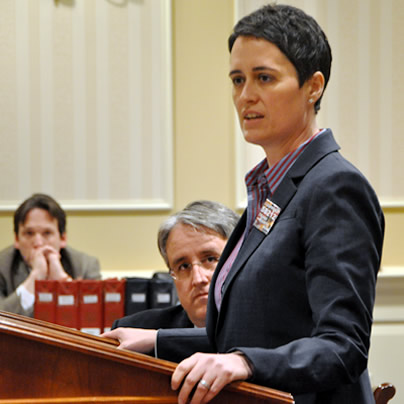
State Del. Heather Mizeur (D-Montgomery County) on Tuesday testified in support of a transgender rights bill. (Washington Blade photo by Michael Key)
ANNAPOLIS, Md.—Maryland lawmakers on Tuesday held a hearing on a bill that would ban anti-transgender discrimination in the state.
Members of the Senate Judicial Proceedings Committee heard testimony from supporters and opponents of Senate Bill 212 that state Sen. Rich Madaleno (D-Montgomery County) introduced last month. The measure would ban discrimination based on gender identity and expression in employment, housing, public accommodation and credit.
“At its core, SB 212 is about securing basic civil rights for transgender Marylanders: the right to a job, a place to live and fair treatment in public spaces,” said Madaleno.
Gov. Martin O’Malley is among those who submitted testimony in support of SB 212.
Gubernatorial candidate Heather Mizeur pointed out during her testimony that the Baltimore County Council passed a trans rights bill after two teenagers attacked Chrissy Lee Polis at a Rosedale McDonald’s in 2011.
“This is a protection we want to make sure gets extended statewide,” said Mizeur. “Protection against discrimination shouldn’t depend on your zip code.”
Mizeur’s Democratic challengers and their running mates — Lieutenant Gov. Anthony Brown and Howard County Executive Ken Ulman and Attorney General Doug Gansler and state Del. Jolene Ivey (D-Prince George’s County) — back SB 212.
Brown and Gansler both submitted written testimony in support of the measure.
“The Fairness for All Marylanders Act of 2014 is critical to our ability to move forward as a state because no Marylander should face discrimination based on gender identity or sexual orientation,” said Brown. “Whether they’re using a public accommodation or finding housing, looking for private sector employment, leasing a commercial space for their business or deciding what to wear for work, all Marylanders deserve to be treated equally.”
Senate President Thomas V. “Mike” Miller (D-Prince George’s and Calvert Counties) and House Speaker Michael Busch (D-Anne Arundel County) also back SB 212.
“The protections in Senate Bill 212 are needed in real people’s lives,” said Equality Maryland Executive Director Carrie Evans. “These individuals are our spouses, our friends, our co-workers and our fellow Marylanders.”
Francis DeBernardo, executive director of New Ways Ministry in Mount Rainier, and Sister Jeannine Gramick, executive co-director of the National Coalition of American Nuns, also testified in support of SB 212.
“We need to incorporate the vulnerable members of our society into our laws and our customs,” said Gramick.
The Maryland Catholic Conference is among the organizations that submitted testimony in opposition to SB 212.
“The church firmly opposes undue harassment or discrimination against any person,” said the group. “That principle does not, however, warrant creating a new class of protected individuals in the state’s anti-discrimination statute, especially when the extension of the law would presumably apply to only a small number of individuals.”
Elaine McDermott of Maryland Citizens for a Responsible Government and Peter Sprigg of the Family Research Council are among those who also spoke against the measure.
“I am here to stand up for women, children and their safety,” said McDermott, who submitted to the committee newspaper articles that detail men who allegedly targeted women and girls in restrooms and locker rooms. “Women worry about their safety in bathrooms and locker rooms. Proponents of this bill deny that there will be problems with restrooms and locker rooms.”
Zane Walsh, 13, of Baltimore County countered McDermott.
“I am not a pervert lurking in the bathroom,” he said. “I’m pretty much a normal kid.”
The Senate Judicial Proceedings Committee last year narrowly killed an identical bill that Madaleno introduced.
State Sens. C. Anthony Muse (D-Prince George’s County) and James Brochin (D-Baltimore County), who voted against the aforementioned measure in 2013, asked Madaleno and other SB 212 supporters about access to restrooms and locker rooms during the hearing. Michael Lore, an aide to state Sen. Norman Stone (D-Baltimore County), told the Washington Blade on Monday that LGBT rights advocates should not expect the lawmaker’s position on the issue to change unless SB 212 supporters address his concerns over employment contracts.
“He was certainly sympathetic to some of the concerns,” said Lore, discussing Stone’s vote against the 2013 bill. “He’s willing to listen to all sides.”
Baltimore City and Baltimore, Montgomery and Howard Counties have already added gender identity and expression to their non-discrimination laws. Hyattsville in December became the first jurisdiction in Prince George’s County to pass a trans-inclusive anti-discrimination ordinance.
“It is time for Maryland to pass this legislation,” said Madaleno.
Gender Rights Maryland Executive Director Dana Beyer, who announced last week she will challenge Madaleno in the June Democratic primary, noted only 47 percent of Marylanders live in jurisdictions that have adopted trans-inclusive anti-discrimination laws.
“This situation is patently unfair,” said Beyer in written testimony. “I ask you to favorably report SB 212 to the floor to remedy that situation.”
Neighboring Delaware is among the 17 states along with D.C. and Puerto Rico that ban discrimination based on gender identity and expression. Lawmakers in Pennsylvania, New York and other states have introduced similar measures.
The Maryland House of Delegates in 2011 approved a trans rights bill. There are enough votes in the state Senate to ensure passage of SB 212 if it advances out of committee.




Virginia
Gay Va. couple hopeful voters will enshrine marriage equality in state constitution
Early voting has already begun in the state

A referendum on whether to enshrine marriage equality in Virginia’s constitutional amendment is on the ballot this year.
If voters approve Question 2, it will codify the U.S. Supreme Court’s Obergefell ruling in 2015 that extended marriage rights to same-sex couples across the country — gays and lesbians have been able to legally marry in Virginia since Oct. 6, 2014.
Rob Bookbinder and James Fisher are a married couple who live in Arlington.
They have been together for 38 years — Bookbinder and Fisher married in 2014.
“We think this is a critical vote to remove this discriminatory language from the constitution and to ensure that going forward, no matter what happens, the state of Virginia will ensure marriage equality,” Fisher told the Washington Blade. “It is it is really difficult and upsetting to think that our current state constitution would prohibit same-sex marriage, even though the federal government overrides that now. There’s no saying what may happen in the future.”
Bookbinder said it was important for him and Fisher to get married “to gain social equality.”
“I was surprised how good it felt, how important it was to begin to say, ‘my husband rather than my partner,'” Bookbinder said.
Bookbinder then explained why it feels good to be married.
“Is it a legal partner, a business partner, a tennis partner, you know, or a romantic partner? But when you say my husband James, everyone knows exactly what you mean and confers an equal status with everyone else who’s married, and we were both surprised at how good it felt and how equal it felt to suddenly be married and be able to state that you were married and discuss your husband rather than your partner, and I would hate to lose that,” he said.
Bookbinder and Fisher said they are hopeful that voters will approve the amendment, noting Virginia has become more progressive over the years.
“I think people have, with the Supreme Court decision, people have seen that a same-sex marriage is just a marriage,” stated Fisher. “It’s just two people who love each other, and I think more and more people have attended a same-sex marriage, someone in their family or a friend, and the experience of what this is, firsthand experience, is so important in shaping people’s opinions, and I think the period of time that we’ve had since the Obergefell decision has given a lot of voters that experience, which I think is really important and powerful.”
The couple also said the push to enshrine marriage equality in Virginia’s constitution is in response to the Trump-Vance administration.
“And I think due to President Trump doing all the horrible things he’s done to so many groups, including LGBTQ, especially trans people, that Virginians are kind of pushed to be even more progressive to protect those who need protection, which would include the LGBTQ community in terms of marriage equality, so I’m confident it will pass,” said Fisher.
Narissa Rahaman, executive director of Equality Virginia, sent the Blade a statement about early voting on Question 2 that has already begun.
“With early voting now underway, our focus is making sure every Virginian knows Question 2 is on their ballot,” said Rahaman. “The outdated ban on same-sex marriage still in Virginia’s state constitution leaves a gap in protections for the thousands of same-sex couples that call this state home, but after 20 years we have the chance to fix it.”
Log onto www.mobilize.us/vaformarriage to find out more about the campaign in support of Question 2.
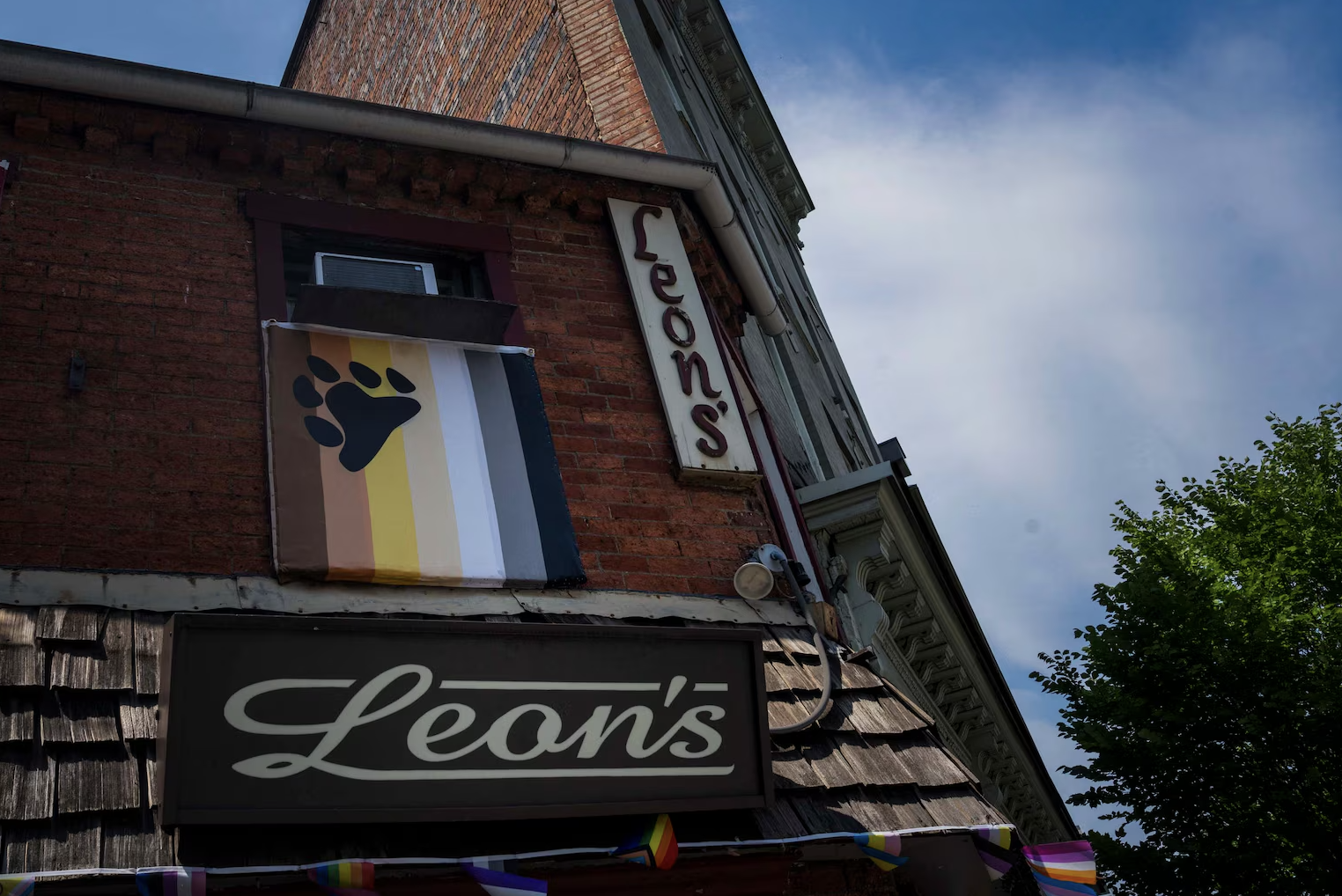
By JOHN-JOHN WILLIAMS IV | Those legendary heavy-handed pours, spirited karaoke and trivia nights, and groan-worthy wall-to-wall patrons on packed nights are back!
Leon’s will live to see another day.
Baltimore’s oldest gay bar, which opened in the 1950s, closed in July following the death of its owner, Ron Singer.
The rest of this article can be read on the Baltimore Banner’s website.
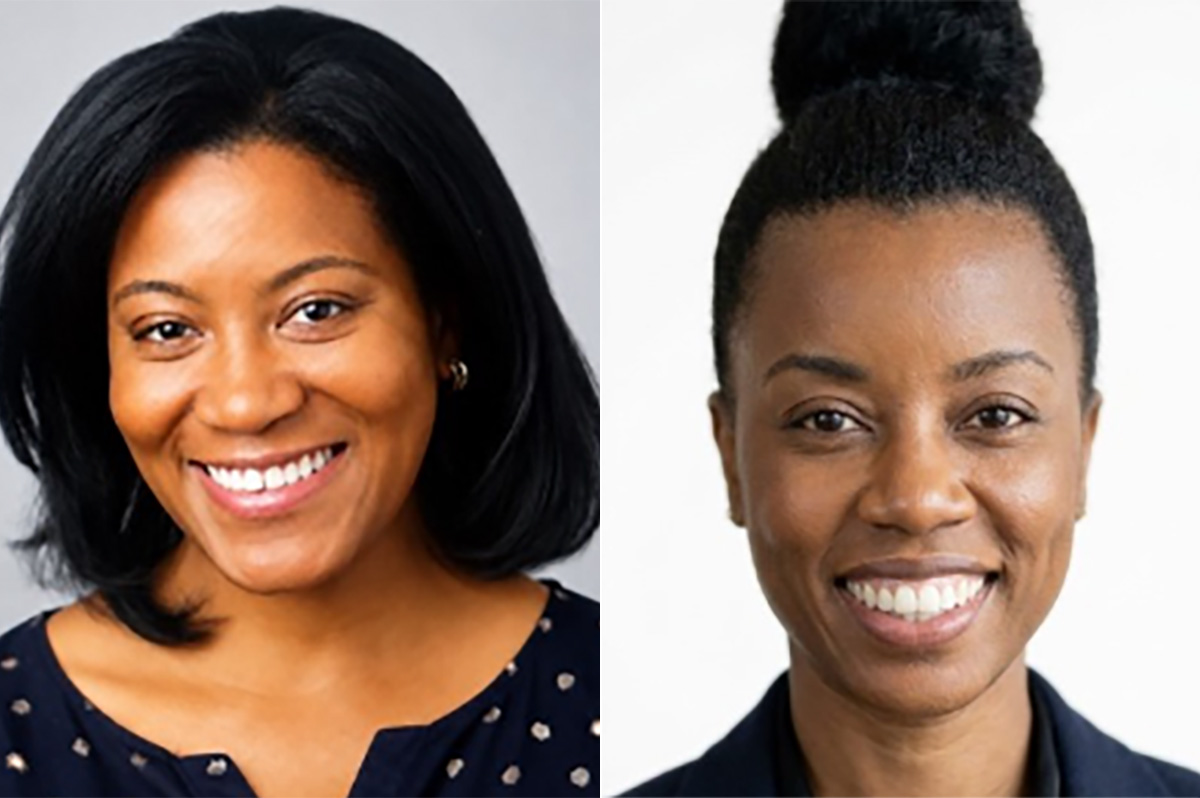
The Comings & Goings column is about sharing the professional successes of our community. We want to recognize those landing new jobs, new clients for their business, joining boards of organizations and other achievements. Please share your successes with us at [email protected].
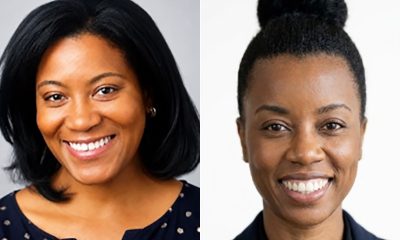
Congratulations to Leigh Miles Jackson, Ph.D., named executive director of The Institute for Health Research & Policy at Whitman-Walker, and Angel Earle, Ph.D. named as chief operating officer, Whitman-Walker Health System.
Upon her appointment Dr. Jackson said, “Under my leadership, I would love for The Institute for Health Research & Policy at Whitman-Walker to be known as a trusted, forward-looking research organization that shapes policies, strengthens practices and creates measurable change for the community.” Dr. Jackson spent 12 years with the National Academies of Sciences, Engineering and Medicine, leading national initiatives on minority-serving institutions and economic evidence for investments in children, youth and families. Dr. Jackson holds an extensive educational background, including postdoctoral fellowships in developmental Psychology and Neurogenomics from Vanderbilt University, a Ph.D. in molecular and systems pharmacology from Emory University and a bachelor’s degree in chemistry from Wake Forest University.
Upon her appointment Dr. Earle said, “When we talk about parity and inequities and research, it’s never just about the dollars that are out there. It’s about making sure that we’re cultivating a change that embraces equity at the heart of everything that it does. As the COO for Whitman-Walker Health System I will be working closely to support The Institute for Health Research & Policy at Whitman-Walker and the Whitman-Walker Foundation to drive advancement in research and support the strategic goals of all of the Whitman-Walker Heath System entities.”
Dr. Earle is a genetic epidemiologist and senior executive. She brings a background from the London School of Economics and the University of South Carolina, with expertise in global health, corporate strategy and socioeconomic policy. She has co-authored peer-reviewed research on cancer genetics, nephrology biomarkers and reproductive genomes.
Dr. Heather Aaron, CEO of Whitman-Walker Health System said, “both leaders bring research-driven expertise and operational strength to the organization as it continues expanding research, health care access, and health outcomes for residents across the Washington, D.C., region, including the LGBTQ+ community, people living with and at risk for HIV, and communities experiencing persistent health disparities.”
The Institute for Health Research & Policy at Whitman-Walker is also expanding its research agenda beyond HIV to address the complex health conditions affecting people living with and at risk for HIV, as well as the broader communities The Institute for Health Research & Policy at Whitman-Walker serves.

Gay Va. couple hopeful voters will enshrine marriage equality in state constitution

Vote now! Best Of LGBTQ DC readers’ choice awards

Meet the LGBTQ candidates running for U.S. House, Senate

Ana Brnabić becomes world’s first openly lesbian head of state