News
Lesbian judicial nominee confirmed to fed’l court in Michigan
Senate unanimously approves Levy by 97-0 vote
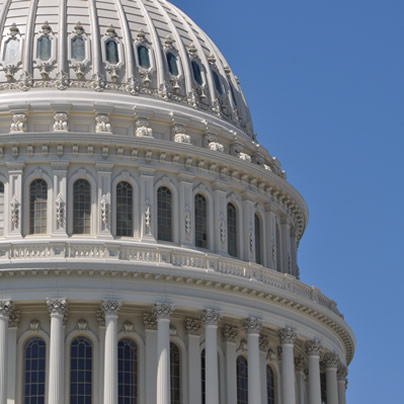
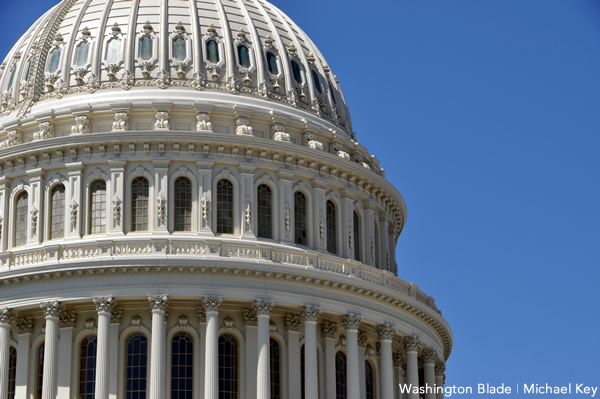
The U.S. Senate voted to confirm Judith Levy to the federal bench by a 97-0 vote. (Washington Blade file photo by Michael Key)
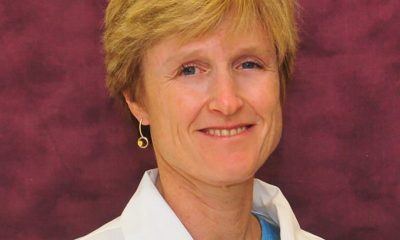
The U.S. Senate added to the increasing number of openly LGBT people on the federal judiciary Wednesday by confirming an out lesbian by a unanimous vote.
The Senate voted to approve Judith Levy, whom President Obama nominated in July for a seat on the U.S. District Court for the Eastern District of Michigan, by a vote of 97-0 along with other judicial nominees.
D’Arcy Kemnitz, executive director of the LGBT Bar Association, commended the Senate for confirming Levy and for increasing LGBT representation on the federal judiciary.
“Judith Levy will make an incredible addition to Michigan’s judiciary,” Kemnitz said. “LGBT representation in our courts is critical and speaks to the tremendous advocacy and support our community has received.”
Levy, who was approved by the Senate Judiciary Committee in January, has been an assistant U.S. attorney in the Eastern District of Michigan since 2000 and chief of the civil rights unit for that office over the past three years. The American Bar Association gave her a rating of “unanimously qualified.”
According to her questionnaire, Levy has been a member of the Human Rights Campaign from 2001 to present and is board member for DOJ Pride, the affinity group for LGBT employees at the Justice Department. She’ll become the first openly LGBT person to serve on federal court in Michigan.
Shin Inouye, a White House spokesperson, commended the Senate for confirming Levy and said her record will make her an excellent contribution to the federal judiciary.
“The President welcomes the confirmation of Judith Levy,” Inouye said. “She will serve the American people well from the Eastern District of Michigan bench.”
But the Levy confirmation wasn’t the only news on Wednesday related to LGBT judicial nominees. Earlier in the day, Staci Michelle Yandle, nominated for a seat on the U.S. District Court in the Southern District of Illinois, sailed through her confirmation hearing in the Senate Judiciary Committee without opposition from panel members.
Russia
Russian neocolonial politics promote anti-LGBTQ imperialistic values
Influence seen in neighboring countries
The idea that Western colonialism spread queerphobia around the globe is not something new for American millennials and Gen Z. It is well known among them that the British Empire brought “anti-sodomy” laws to some African countries, such as Uganda and Nigeria, as well as to South Asia.
But very few modern American and British people know the history of Russian colonialism, and the way Russian neocolonial politics is ruining the lives of queer people right now, in real time. It’s happening all across Eastern Europe, the Northern Caucasus, and Central Asia. Throughout these regions, the Kremlin promotes imperialistic values that include direct discrimination against queer people.
Let’s start with the most obvious example and move toward the less known ones.
In modern-day Ukraine, LGBTQ rights have become more visible and widely discussed than before the Revolution of Dignity. Even during the war, Ukraine has taken some steps forward in recognizing LGBTQ rights. For example, in 2025 the Desnianskyi District Court of Kyiv for the first time recognized a same-sex couple married abroad as legally married, and in 2026 the Supreme Court made a similar decision. LGBTQ people openly serve in the Ukrainian military.
But the situation with LGBTQ rights in Russian-occupied Crimea and Donbas is completely different.
Ukrainian LGBTQ citizens are persecuted by Russian military forces. Materials with positive LGBTQ representation are banned because of Russia’s “anti-propaganda” laws. Transgender people cannot access gender-affirming therapy. According to people currently living in occupied Donbas, LGBTQ teenagers have been subjected to conversion therapy after being taken from supportive families and sent to Russia.
Russia is not shy about this policy. The war against LGBTQ people — and Ukraine’s growing openness toward LGBTQ rights — has been used as one of the official justifications for Russia’s attack on Ukraine. Russian politicians have repeated this narrative, and so has the leader of the largest Russian Christian church closely connected to the government. In 2022 the head of the Russian Orthodox Church openly claimed that the war in Ukraine was happening because people in Donbas did not want gay pride parades. The claim is absurd. First and foremost, people in Donbas do not want to be bombed — and I say this as someone who was born there.
This blatant Russian attempt to destroy LGBTQ rights on foreign land did not start in Ukraine, just as Russian colonialism itself did not start there. The Soviet Union was famous for criminalizing homosexuality.
When the Soviet Union collapsed in 1991, Soviet republics gained independence, including the Chechen Republic of Ichkeria. Chechen people had many grievances against the Kremlin, including the genocide committed against Chechen and Ingush people by Joseph Stalin in 1944. There was also resentment over the Soviet attempt to erase Chechen identity. Despite Chechens having a completely different culture, language group, and traditions from Slavic Russia, Ukraine, and Belarus, the Soviet government tried to assimilate them and make them more “Slavic.”
In the new Russia that emerged after the Soviet collapse, Chechens struggled to rent apartments in Moscow and were frequently ridiculed for being Muslim. Racial slurs like “black-assed” were commonly used against Chechen students in Russia. In 1994, Russia decided to “civilize” independent Chechnya and launched an unprovoked attack, only to lose the war to this small Muslim nation of fewer than one million people in 1997. When Vladimir Putin came to power, he built his popularity partly by launching the Second Chechen War and occupying Chechnya.
Today Chechnya is ruled by Ramzan Kadyrov, an extremely unpopular leader imposed on the region through pressure and blackmail from the Russian military. It was under Kadyrov that the infamous purge of gay people — described in David France’s HBO documentary “Welcome to Chechnya” — began. But the documentary failed to explain the broader context. As many Chechen activists and ordinary people told me — people who refused to give their names to a foreign LGBT outlet because of the risks to themselves and their relatives — Chechen society has never been explicitly queerphobic. Chechens are proud of having traditions of democracy dating back to the Middle Ages and of respecting individual freedom and family rights.
This is exactly where discussions about sexuality traditionally belong in Chechen social norms: inside the family. Family is almost sacred to Chechens. Every Chechen knows seven generations of their paternal ancestors and stays in contact with uncles, aunts, and cousins. Later, Russia weaponized these family structures by blackmailing and torturing even distant relatives of activists.
For generations, matters of sex were considered private family affairs that the state — an independent Chechen state — should never interfere with. This does not mean Chechnya was especially LGBTQ-friendly. Parents and siblings may be queerphobic — or may not — and society would not question it. But police, commenting on private sexual relationships? This is an abomination!
This is exactly what the Russian occupational authorities introduced. They turned the private into the public, kidnapping and torturing queer people as part of a wider colonial campaign of repression. It was never just about gay people. The authorities also targeted people who subscribed to opposition channels online, spoke against the Kremlin, wore the “wrong” clothes or the “wrong” kind of beard, or listened to prohibited music.
It was never just about gay people. In occupied Chechnya, it has always been about colonial control. Moreover, as my Chechen respondents pointed out, “Welcome to Chechnya” tells the story largely from the perspective of Russian LGBTQ activists. Some of them also have colonial ways of viewing the Northern Caucasus. This is why the film “forgets” to mention that many gay people who were rescued by activists left Chechnya with the active help of their own parents and siblings.

Another example of Russian interference in predominantly Muslim nations can be seen in Kazakhstan, one of the largest countries in Central Asia. In the West, it is not widely known that Kazakh people living in Slavic regions of Russia face everyday discrimination. They are often targets of anti-immigrant hatred similar to the way Mexicans are treated in the United States. In everyday life they are frequently called “churkas,” an extremely derogatory racist slur roughly comparable to the English N-word. When I lived in Russia, almost everyone I knew — even progressive people — used this word from time to time against Kazakh immigrants.
Despite all of that, the Kazakh government has aligned itself closely with the Kremlin. Late last year, the Kazakh parliament adopted an anti-LGBTQ law similar to the Russian one. The law followed earlier bans in Kyrgyzstan in 2023 and Georgia in 2024 and prohibits the dissemination of information about “non-traditional sexual orientation,” affecting culture, education, advertising, media, and cinema.
Critics called these laws a “copycat” of Russian policy and part of Moscow’s colonial influence.
“Are we an independent and sovereign republic, or are we a colony of the Russian Federation?” prominent Kazakh LGBTQ activist and feminist Zhanar Sekerbayeva asked during a press conference.
“As an educated and intelligent woman … I cannot understand why lawmakers allow themselves to violate the fundamental law of the constitution,” she said.
It was therefore not surprising that in February 2026 a criminal case was opened against Sekerbayeva for allegedly “promoting LGBT” during a peaceful gathering at the “French Café.” The real reason, however, is more likely not just her LGBTQ activism but her opposition to pro-Russian politicians.
In Georgia, pro-Russian political movements similarly weaponized anti-LGBTQ conspiracies to mobilize opposition against the European Union. These movements falsely claim that Brussels demands “LGBT propaganda” and threatens “traditional family values.”
This conspiracy narrative has even been supported by Belarus’s dictator Alexander Lukashenko, who said he is “scared for Georgia” because Europe allegedly promotes LGBTQ rights there. Of course, Belarus itself has no meaningful legal protections for LGBTQ people — and it is unlikely to develop them while its leadership is protected by the Kremlin.
The list could continue. In Moldova, another post-Soviet country, the last widely promoted study of schooling has shown that LGBTQ teenagers are among the most vulnerable students in schools, facing bullying from peers, parents, and even teachers. Once again, pro-Russian politicians in Moldova actively use anti-LGBTQ rhetoric that contributes to this hostile environment.
Of course, Russia is not the single reason for queerphobia in post-Soviet countries. There are many other factors, from everyday stereotypes to the influence of American fundamentalist groups on local conservative movements. But Russia remains the main force preventing these countries from developing independent LGBTQ policies. Local queerphobia is a target audience for Russia, and anti-LGBTQ narratives have become an inseparable part of Russian neo-colonial politics.
Federal Government
Gay Venezuelan man ‘forcibly disappeared’ to El Salvador files claim against White House
Andry Hernández Romero had asked for asylum in US
A gay Venezuelan asylum seeker who the U.S. “forcibly disappeared” to El Salvador has filed a claim against the federal government.
Immigrant Defenders Law Center, who represents Andry Hernández Romero, on Friday announced their client and five other Venezuelans who the Trump-Vance administration “forcibly removed” to El Salvador under the Alien Enemies Act of 1798, filed “administrative claims” under the Federal Tort Claims Act.
The White House on Feb. 20, 2025, designated Tren de Aragua, a Venezuelan gang, as an “international terrorist organization.”
President Donald Trump less than a month later invoked the Alien Enemies Act of 1798, which the Associated Press notes allows the U.S. to deport “noncitizens without any legal recourse.” The White House then “forcibly removed” Hernández, who had been pursuing his asylum case in the U.S., and more than 250 other Venezuelans to El Salvador.
Immigrant Defenders Law Center disputed claims that Hernández is a Tren de Aragua member.
Hernández was held at El Salvador’s Terrorism Confinement Center, a maximum-security prison known by the Spanish acronym CECOT, until his release on July 18, 2025. Hernández, who is back in Venezuela, claims he suffered physical and sexual abuse while at CECOT.
“As a Venezuelan citizen with no criminal record anywhere in the world, I would like to tell not only the government of the United States but governments everywhere that no human being is illegal,” said Hernández in the Immigrant Defenders Law Center press release. “The practice of judging whole communities for the wrongdoing of a single individual must end. Governments should use their power to help every person in the nation become more aware and informed, to strengthen our cultures and build a stronger generation with principles and values — one that multiplies the positive instead of destroying unfulfilled dreams and opportunities.”
Immigrant Defenders Law Center filed claims on behalf of Hernández and the five other Venezuelans less than three months after American forces seized then-Venezuelan President Nicolás Maduro and his wife, Cilia Flores, at their home in Caracas, the Venezuelan capital.
Maduro and Flores have pleaded not guilty to federal drug charges. Delcy Rodríguez, who was Maduro’s vice president, is Venezuela’s acting president.
‘Due process and accountability cannot be optional’
Immigrant Defenders Law Center on Friday also made the following demands:
- The Trump administration must officially release the names of all people the United States sent to CECOT to ensure that everyone has been or will be released.
- The federal government must clear the names of the 252 men wrongfully labeled as criminal gang members of Tren de Aragua.
- DHS (Department of Homeland Security) must end the practice of outsourcing torture through third‑country removals, restore humanitarian parole, and rebuild a functioning, humane asylum system.
- DHS must reinstate Temporary Protected Status for all individuals who cannot safely return to their home countries, halt mass deportations and unlawful raids and arrests, and guarantee due process for everyone navigating the immigration system.
- Congress must pass the Neighbors Not Enemies Act, which would repeal the Alien Enemies Act.
“In all my years as an immigration attorney, I have never seen a client simply vanish in the middle of their case with no explanation,” said Immigration Defenders Legal Fund Legal Services Director Melissa Shepard. “In court, the government couldn’t even explain where he was — he had been disappeared.”
“When the government detains and transfers people in secrecy, without transparency or access to the courts, it tears at the basic protections a democracy is supposed to guarantee,” added Shepard. “What this experience makes painfully clear is that due process and accountability cannot be optional. They are the only safeguards standing between people and the kind of lawlessness our clients suffered. We must end third country transfers, restore the asylum system, and humanitarian parole, and reinstate temporary protective status so this nightmare never happens again.”
The White House
Trump proclamation targets trans rights as State Dept. shifts visa policy
Recent policy actions from the White House limit transgender rights in sports, immigration visas, and overarching federal policy.
In a proclamation issued by the Trump White House Thursday night, the president said he would, among other things, “restore public safety” and continue “upholding the rule of law,” while promoting policies that restrict the rights of transgender people.
“We are keeping men out of women’s sports, enforcing Title IX as it was originally written, and ensuring colleges preserve — and, where possible, expand — scholarships and roster opportunities for female athletes,” the proclamation reads. “At the same time, we are restoring public safety and upholding the rule of law in every city so women, children, and families can feel safe and secure.”
The statement comes amid a broader series of actions by the Trump administration targeting transgender people across multiple federal policy areas, including education, health care, and immigration. A nearly complete list of policies the current administration has put forward can be found on KFF.org.
One day before the proclamation was issued, the U.S. State Department announced changes to visa regulations that could impact transgender and gender-nonconforming people seeking entry into the United States.
The policy, published March 11 and scheduled to take effect April 10, introduces changes to the Diversity Immigrant Visa Program, commonly known as the “DV Program.” The rule is framed by the department as an effort to strengthen oversight and prevent fraud within the visa lottery system, which allocates a limited number of immigrant visas annually to applicants from countries with historically low rates of immigration to the United States.
However, the updated language also standardizes the use of the term “sex” in federal regulations in place of “gender,” a change that LGBTQ advocates say could create additional barriers for transgender and gender-diverse applicants.
The policy states: “The Department of State (‘Department’) is amending regulations governing the Diversity Immigrant Visa Program (‘DV Program’) to improve the integrity of, and combat fraud in, the program. These amendments require a petitioner to the DV Program to provide valid, unexpired passport information and to upload a scan of the biographic and signature page in the electronic entry form or otherwise indicate that he or she is exempt from this requirement. Additionally, the Department is standardizing and amending its regulations to add the word ‘shall’ to simplify guidance for consular officers; ensure the use of the term ‘sex’ in lieu of ‘gender’; and replace the term ‘age’ in the DV Program regulations with the phrase ‘date of birth’ to accurately reflect the information collected and maintained by the Department during the immigrant visa process.”
Advocates say the shift toward using “sex” rather than “gender” in federal immigration rules reflects a broader push by the administration to roll back recognition of transgender identities in federal policy.
According to the National Center for Transgender Equality, an estimated 15,000 to 50,000 undocumented transgender immigrants currently live in the United States, with many entering the country to seek refuge from persecution and hostile governments in their home countries.
-
The White House3 days agoTrump proclamation targets trans rights as State Dept. shifts visa policy
-
Chile5 days agoFar-right Chilean President José Antonio Kast takes office
-
Opinions4 days agoA dream: Democrats focus on candidates who can win
-
a&e features4 days ago‘Queer Eye’ star Dorriene Diggs on life before and after appearing on hit show