News
U.S. aid program to Uganda ends after anti-gay law signed
Agreement paid salaries of Ugandan Ministry of Health employees


Dickson Mujuni of the RPL AIDS Foundation in Uganda working with youth
peer educators in the East African country. (Photo courtesy of Dickson
Mujuni)
The Washington Blade has confirmed the U.S. has not renewed a program with the Ugandan Ministry of Health that helps fund the country’s HIV/AIDS response after an anti-gay bill became law.
The agreement that fully or partially funded the salaries of 87 employees of the Ugandan Ministry of Health who support the country’s response to the epidemic expired on Feb. 28.
Reuters late on Thursday reported the Centers for Disease Control and Prevention spent $3.9 million on the program last year, but a U.S. official did not say how much aid the Obama administration has withheld. A spokesperson for the Ugandan Ministry of Health told the news agency it would “no longer be able to access money from a fund” to purchase anti-retroviral drugs and HIV testing kits.
A source familiar with the aid program told the Blade on background the funds sent to the Ugandan Ministry of Health were not used to purchase or distribute anti-retroviral drugs. The source added the expiration of the contract will not “directly impact” the “ability to deliver lifesaving medications in Uganda” through the President’s Emergency Plan for AIDS Relief (PEPFAR).
Uganda receives nearly $300 million each year through PEPFAR to fight the HIV/AIDS epidemic in the East African country. The Ugandan government in 2013 received more than $485 million in aid from the U.S.
“We did not renew these contracts because we wanted to have a dialogue with the government of Uganda about whether it should assume greater responsibility for core government functions associated with HIV/AIDS response, including these salaries,” said the source familiar with the Ugandan Ministry of Health aid program.
The program expired four days after President Yoweri Museveni signed into law a bill that would impose a life sentence upon anyone found guilty of repeated same-sex sexual acts.
The Obama administration subsequently announced it is reviewing its relationship with the Ugandan government over the issue. The World Bank, the Netherlands and other European countries have postponed loans or cut aid to the East African country after Museveni signed the so-called Anti-Homosexuality Bill into law.
Dickson Mujuni of the RPF AIDS Foundation told the Blade late last month during a telephone interview from Kampala, the Ugandan capital, his organization has had to abandon plans to build a hospital because of the anti-gay law. Mujuni said gay and lesbian Ugandans have also gone “underground.”
“The community is very scared, very worried,” Mujuni told the Blade.
A coalition of Ugandan human rights organizations that includes HIV/AIDS and LGBT advocates on March 11 filed a challenge to the law with the country’s Constitutional Court.
The State Department said Secretary of State John Kerry highlighted the law’s “negative impact” on fighting the HIV/AIDS epidemic and other public health initiatives during a telephone call with Museveni on Feb. 27.
“It complicates our relationship with Uganda,” Uzra Zeya, acting assistant secretary of the Bureau of Democracy, Human Rights and Labor at the State Department, told the Blade in a follow-up interview. “We have deep concerns about the law posing a threat to the safety and security of the LGBT community, but also the safety and protection of all Ugandan citizens.”






Obituary
U.S. int’l trade negotiator, consultant James Bedore dies at 82
Longtime D.C. resident was prominent supporter of Dignity Washington
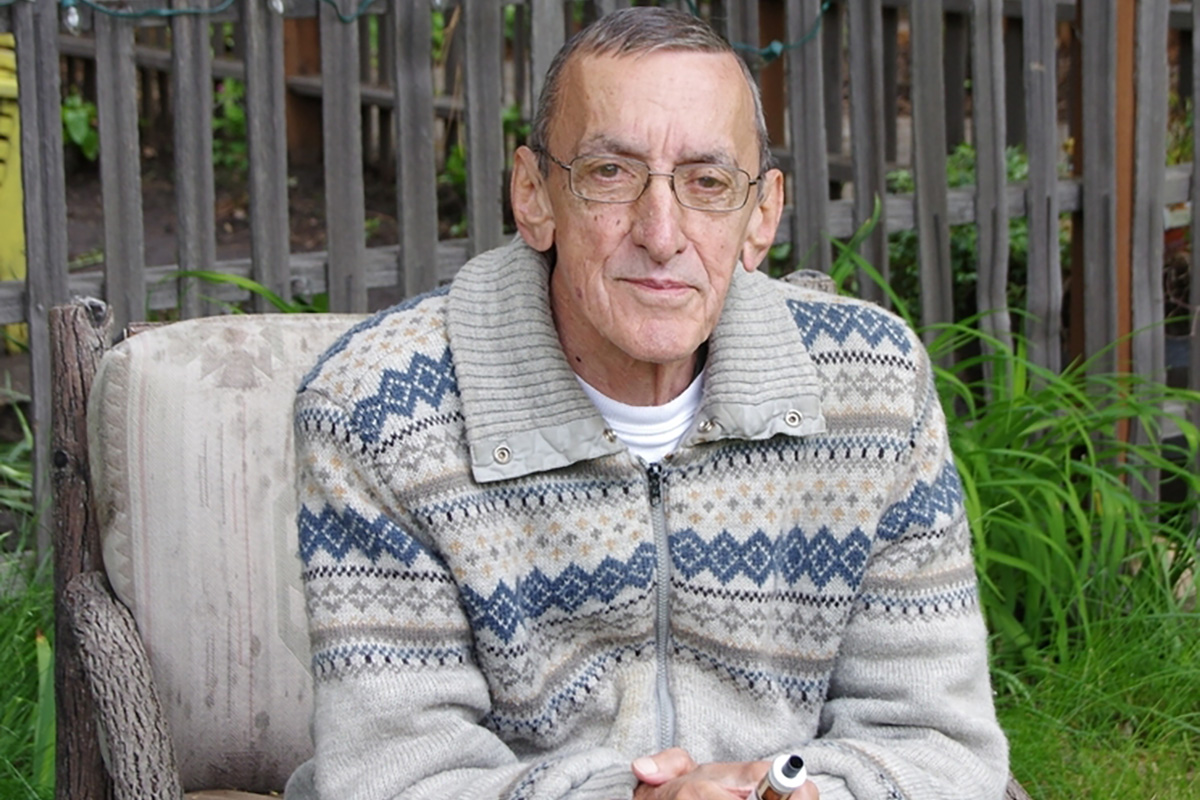
James “Jim” Bedore, an international affairs specialist whose career included work for the U.S. Department of State and as a private sector consultant in Europe with a focus on Middle Eastern and African development before his retirement in 2000, died on Sept. 2 at his home in D.C. He was 82.
His sister, Carol Bedore, said the cause of death was lung cancer.
Dignity Washington, the D.C.-based LGBTQ Catholic organization, released a detailed statement on Bedore’s life and career that, among other things, says Dignity Washington “became a huge part of Jim’s social life after his retirement in 2000.”
Carol Bedore said her brother was born and raised in Unionville, Mich., as the sixth of eight kids and the oldest boy in their family. She said he graduated from high school there before going on to “amazing” things in a distinguished career.
The Dignity Washington statement says upon the completion of his “B.A. in History and Economics,” Bedore served in the U.S. Peace Corps in West Africa in the mid-1960s. The statement says after completing his Peace Corps service Bedore taught briefly at Voorhees College, a historically Black college in South Carolina. He next earned a master’s degree from the East-West Center in Honolulu before undertaking advanced graduate work at the London School of Economics, according to the statement.
“During the Vietnam War, he served a two-year assignment in the Mekong Delta with the U.S. Department of State,” the statement continues. “He later worked in the private sector in Hong Kong, Saudi Arabia, and London, residing in London for fifteen years,” it says, adding, “He served as a Research Fellow at Chatham House (the Royal Institute of International Affairs in London) and co-authored a volume on Middle East Industrialization, (Macmillan in 1979).”
The statement says other articles and commentaries that Bedore wrote appeared in several prominent publications, including the journals Foreign Affairs, International Affairs, the Financial Times of London, and the International Herald Tribune. It says he remained active in international affairs after his retirement in 2000, including involvements with ‘think tank” organizations in D.C.
The Dignity Washington statement says Bedore, who lived for many years until the time of his passing in a condominium in D.C.’s Dupont Circle neighborhood, was a dedicated volunteer and organizer of Dignity related events.
“He did what he could to organize practical and social events, including some 14 years cooking and feeding approximately 100 homeless individuals monthly at Christ House,” the statement says, referring to the D.C. Adams Morgan neighborhood organization that provides medical care and other services for homeless people.
“Additionally, he initiated the ‘Moon Over Washington’ pot-luck event on the incredible roof on his condominium building,” it says. “The event continues to be one of Dignity Washington’s signature events to this day.” Among other things, it says Bedore was part of Dignity Washington’s annual LGBTQ Pride parade contingent, and he helped to sew 60 AIDS Memorial Quilts.
The statement says Bedore also “built a good relationship with St. Matthews’s Cathedral and created a gay chapter there, where he collaborated with parents with gay children.”
Dignity Washington President Peter Edwards called Bedore a beloved, dedicated Dignity Washington member. Edwards said the group recently issued its Willick Award to Bedore, which he said, “is a special award that we give to people who have done wonderful things for our community.”
“We will remember Jim for his sharp mind, his humor, his generosity, and his unwavering belief in the power of human connection,” the statement adds. “He lived a life shaped by service, curiosity, and love – and he leaves behind a community forever enriched by his presence,” it concludes.
Edwards said Dignity Washington will hold a Catholic Mass in Bedore’s honor in the coming weeks.
The statement says Bedore was pre-deceased by two life partners, Geoffrey Lawrence of 19 years, and Al Lunde, who the statement says passed away in 1999.
Bedore’s sister, Carol, said Bedore was cremated and his ashes have been returned to the family’s hometown in Michigan where an interment is being planned at the family’s cemetery plot.
Virginia
Campaign urges Virginia High School League to reverse stance on trans athletes
Equality Arlington and other advocacy groups behind ‘Right 2 Play’ VA’ initiative

Virginia advocacy groups have launched a campaign that urges the Virginia High School League to once again allow student athletes to compete on sports teams that correspond with their gender identity.
Equality Arlington on Sept. 16 published an article about the “Right 2 Play VA” campaign. Amy, a group representative, spoke about the initiative with the Washington Blade.
“The primary goal is to reverse the Virginia High School League’s discriminatory ban on allowing transgender girls to play on girls’ sports and replace it with a policy that is fair for all students.” they said.
The Virginia High School League in 2025 announced the policy, which reversed a previous position in support of transgender and nonbinary athletes. The 2025 policy coincided with President Donald Trump’s executive order — “Keeping Men Out of Women’s Sports” — that threatened to “rescind all funds from educational programs that deprive women and girls of fair athletic opportunities, which results in the endangerment, humiliation, and silencing of women and girls.”
The Arlington Gender Identity Alliance, Equality Virginia, and the American Civil Liberties Union of Virginia have also joined the “Right 2 Play VA” campaign.
“We had a policy in Virginia for 12 years that allowed transgender girls to play on girls’ sports teams, and we had not one instance — not one instance — that was brought forward demonstrating an unfair advantage or any type of safety concern,” said Amy.
Amy then discussed what they described are the benefits of trans youth playing sports.
“There are physical benefits. There are mental health benefits. There are community and social development benefits, and those are all well documented,” they said. “All kids should have the right to benefit from playing youth sports. We are talking about kids. We are talking about youth. We are not talking about Olympians. We are not talking about Division One college athletes. We are talking about kids in Virginia, and because the benefits of sports are so well documented, we think that every kid should have the ability to play sports.”
California
Calif. GOP gubernatorial candidate ad ‘disgusting attempt to exploit lesbian intimacy’
Activists, anti-LGBTQ religious leaders criticized Steve Hilton spot

Two women sit on a bed, a Pride flag hanging behind them. One is nervous; the other tells her to be calm and that she’ll do “all the work.” The music swells. The two hold hands and — fill out a ballot voting for Steve Hilton?
This is the new advertisement from the Hilton gubernatorial campaign that is drawing rebuke from both sides of the aisle, but for very different reasons.
Jorge Reyes Salinas, the communications director at Equality California, said the ad was an insult to the queer community.
“This ad is a disgusting attempt to exploit lesbian intimacy for political attention,” he said. The advertisement plays on media tropes that Salinas says “reduce lesbian and bisexual women … to sexual entertainment,” rather than showing them as well-rounded characters. “Any group of the LGBTQ+ community deserves the same dignity and respect as everyone else,” he said.
The ad is truly hyper-sexualized. It ends with one woman telling the other, “Now lick it.” The two pause and stare before she reveals an envelope to send the ballot, and large text pops up saying, “Just try it!”
Salinas characterized the ad as a desperate attempt to get attention from a candidate who is trailing far behind in the polls in heavily Democratic California. The Democratic candidate Xavier Becerra, who is endorsed by Equality California, holds a 25-point lead over Hilton according to recent polling by the UC Berkeley Institute of Governmental Studies.
Conservatives have also criticized the ad.
Influential evangelical Pastor Jack Hibbs thought the ad was distasteful and said, “lesbianism among college girls and some high school girls that right now is an actual pandemic of social ill.” Republican attorney general candidate Michael Gates said it undermines “the sanctity of the relationship between parents and their children.” This criticism is rather confusing because although the ad features two relatively young women, they both appear to be adults, not minors.
“The comments from Pastor Jack Hibbs should be criticized because there is nothing wrong with two women being attracted to each other,” Salinas said. “We’re calling out the ad’s stereotypes, while also rejecting the homophobia in the response to it … by other Republicans.”
The backlash from Hilton’s own party and supporters shows that an advertisement full of queer innuendo was ill-considered, considering the national GOP’s attacks on LGBTQ people in recent years. Hilton himself has been campaigning against transgender girls and women competing in school sports and using locker rooms that correspond with their gender identity. This context might be why Hilton’s political base responded to the ad just as poorly as the liberal voters he was attempting to court.
Hilton says the ad is part of a new series rolling out before Election Day, showing stereotypical California liberal archetypes voting for Hilton. He claims these ads are authentically filmed with real actors, as opposed to being A.I. generated, like many of his previous ads. One other advertisement has been released so far by the campaign showing a man at a spiritual retreat also being swayed to vote for Hilton, although it is notably absent of sexual innuendo.
Caleb Kaufman is a California Local News Fellow placed with the Los Angeles Blade. The California Local News Fellowship is a state-funded initiative to support and strengthen local news reporting. Learn more about it at fellowships.journalism.berkeley.edu/cafellows.

Bar Betsie, inviting and intimate, marks one-year anniversary

Trump, Netanyahu, and Putin are all war criminals

Center Arts Gallery celebrates 10 years with reception, auction

U.S. int’l trade negotiator, consultant James Bedore dies at 82

Campaign urges Virginia High School League to reverse stance on trans athletes

Eliot Glazer’s new book an engaging collection of essays

Equality Chamber hosts Pride in Business Expo and Profits & Pours

Learn more about Virginia’s queer history

‘Merrily’ is for Sondheim super fans, the uninitiated, and anyone in between

Lula, Flávio Bolsonaro to face off in second round of Brazilian presidential election
-

 Books4 days ago
Eliot Glazer’s new book an engaging collection of essays
-
Out & About4 days ago
Equality Chamber hosts Pride in Business Expo and Profits & Pours
-
Out & About4 days ago
Learn more about Virginia’s queer history
-
Theater4 days ago
‘Merrily’ is for Sondheim super fans, the uninitiated, and anyone in between