News
White House backs efforts on review of trans military ban
Carney won’t say policy should change, but transgender advocates praise commitment
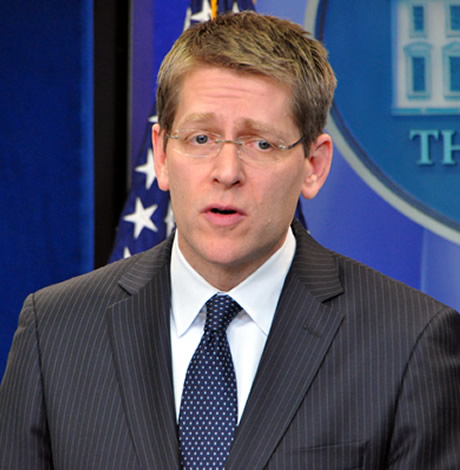
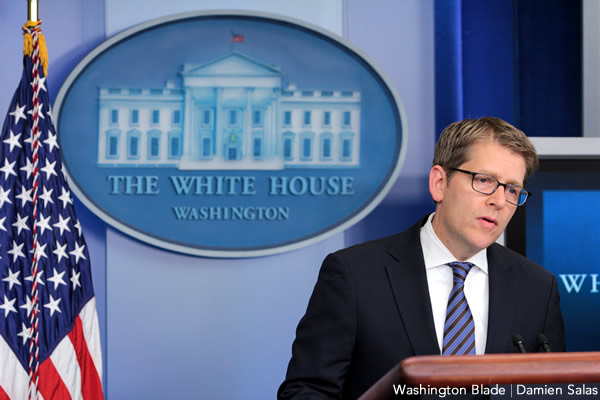
Press Secretary Jay Carney said the White House backs the Pentagon’s efforts on the military trans ban (Washington Blade file photo by Damien Salas).
White House Press Secretary Jay Carney signaled support on Friday for Pentagon efforts to review the ban on openly transgender service in the military, but stopped short of endorsing an end to the policy outright.
Days after Defense Secretary Chuck Hagel said on ABC’s “This Week” the military trans ban “continually should be reviewed,” Carney said the White House backs his efforts in response to a question on whether President Obama has had any conversations with the Pentagon chief on this issue.
“Well, the president speaks with Secretary Hagel regularly, meets with him weekly,” Carney said. “I don’t have a readout on all his conversations, but I would certainly point you to what Secretary Hagel said and certainly we support his efforts in this area.”
But efforts at the Pentagon to reconsider the policy seem to have already lost traction. A Pentagon official confirmed for the Washington Blade on Friday that no review of the trans military ban has been ordered.
According to the Washington Post, Hagel told reporters en route to Jeddah he’s disinclined to review the Pentagon’s policy formally, but expressed interest in learning more.
“I’ve not asked for a specific task force,” Hagel was quoted as saying. “I’ve not asked for a specific study. I would want to hear more from individuals who are close to this issue, know this issue, who I would value their judgment and their direction on.”
Moreover, Carney didn’t outright say Obama wants to see the ban on transgender service lifted when asked if he thinks the policy should be changed at some point in time.
“I would simply at this point leave it to Secretary Hagel’s comments,” Carney said. “I haven’t spoken to him directly about this issue, but I would note what Secretary Hagel said and that we support him.”
Nonetheless, transgender advocates praised Carney’s words as a commitment from the Obama administration to move forward with a reassessment of the regulatory ban on transgender service.
Mara Keisling, executive director of the National Transgender Center for Equality, was among those praising the White House for endorsing of Hagel’s views.
“It is wonderful to hear that the White House agrees with the Secretary about the need to update these outdated and discriminatory policies,” Keisling said. “There are currently 15,000 trans service members. Having reasonable and modern policies that guide their service is in everyone’s interest and is good for military readiness and national security. Clearly this issue is now on the agenda. Now we need to push for a quick analysis and implementation.”
Instituted sometime before 1980, the ban on transgender service is a medical regulation that, unlike “Don’t Ask, Don’t Tell,” could be lifted any time administratively by the stroke of a pen.

India
India’s Jharkhand state works to improve trans people’s access to health care
People for Change working with local officials to address disparities
The transgender community has been part of India’s social fabric for centuries, but decades of policy neglect pushed many into poverty and inadequate health care.
The Supreme Court formally recognized trans people as a third gender in 2014, yet state-level services developed slowly. Telangana opened India’s first dedicated trans clinic, the Mitr Clinic, in 2021 with support from the U.S. Agency for International Development and Johns Hopkins University. Jharkhand State has now ordered all government hospitals and medical colleges to establish dedicated outpatient units for transgender patients.
People for Change, an LGBTQ organization, spent the past year mapping gaps in trans health care across Jharkhand. Its surveys of 100 trans residents in five districts found limited access to gender-affirming care, hormone therapy, dermatology, and mental-health services. The group followed this survey with a May 2025 consultation in Jamshedpur, an industrial town in Jharkhand, that brought together clinicians and community leaders to outline a feasible outpatient model.
Those findings were presented to Health Minister Irfan Ansari in June, backed by input from allied organizations and more than 50 trans leaders. The process helped inform the state’s decision to introduce dedicated trans outpatient departments in all government hospitals and medical colleges.
People for Change, which played a central role in shaping the policy, noted that government hospitals in Jharkhand still face infrastructure and resource gaps. Even so, the group said the order reflects a clear policy commitment to creating dedicated trans health services.
If Jharkhand’s trans outpatient departments system functions as planned, it could become a regional model for states with comparable gaps in public health access.
Government data from the 2011 Census — the latest official count to identify an “other” gender category — lists 13,463 trans residents in Jharkhand, alongside sizable populations in neighboring states: 40,827 in Bihar, 30,349 in West Bengal, 22,364 in Odisha, 18,489 in Chhattisgarh, and 137,465 in Uttar Pradesh. Though likely underreported, these figures underscore the scale of need across eastern and central India.
“The decision to start dedicated transgender OPDs (outpatient departments) is not just an administrative step — it is a statement of inclusion, a recognition that the transgender community deserves discrimination-free, dignified, and responsive healthcare. When the government takes such a deliberate step, it sets a tone for systemic change,” said Souvik Saha, founder of People for Change. “It creates an official entry point for transgender healthcare.”
“For the first time, transgender persons will have a recognized and respectful space within the public health system,” added Saha. “That itself is a major shift. It signals to doctors, nurses, and administrators that transgender health is a priority. This leads to sensitization, accountability, and the gradual improvement of attitudes within hospitals.”
Saha told the Washington Blade the policy is likely to trigger broader improvements, noting that once a service is formally notified, budget allocations, training, infrastructure, and staffing typically follow. He said the move could strengthen the system gradually, “step by step.”
“We are realistic: we know improvements won’t happen overnight. But we are also optimistic because the state has already shown genuine leadership and empathy by issuing this order,” said Saha. “And since Jharkhand is celebrating its 25th year of formation, this decision reflects the state’s intention to move towards greater equality and social justice.”
“For the transgender community, this is not just a service — it is dignity. It is visibility. It is inclusion,” he added. “And with the government, civil society, and community working together, we believe this will lead to meaningful and lasting change in the years ahead.”
Saha told the Blade that the dedicated transgender outpatient will operate within existing government medical colleges and hospitals in Jharkhand and will be staffed by current medical and paramedical teams, with no separate funding required at this stage. He said the policy does not call for separate wards or beds, but for clearly designated outpatient spaces for trans patients. The service, he added, will be run by existing staff who will receive training and orientation as needed.
“At this moment, the specific operational details are still being discussed with the government of Jharkhand. However, what is clear is: the OPD will function as a dedicated space within the hospital, not limited to a specific day,” said Saha. “Transgender individuals will have access to focused, discrimination-free services through this dedicated space. The clinic will run through existing hospital systems, with linkages to psychiatry, dermatology, endocrinology, and other departments when required.”
“This structure allows the government to start services immediately without needing new construction, new staff positions, or separate budget lines,” he added. “It is a practical and efficient first step, making the service accessible while keeping the doors open for: future budget allocations, specialized staffing, expansions into gender-affirming services, and strengthened infrastructure. The government’s intent is very clear: to ensure dignified, equitable, and discrimination-free healthcare for the transgender community. This order is a strong beginning, and operational details will continue to evolve through collaborative discussions between the government, hospitals, and People for Change.”
Saha acknowledged that taboos, misinformation, and stereotypes about the trans community persist in Jharkhand and in many other states. However, Saha said there are encouraging models at which to look.
He pointed to Kerala and Chhattisgarh, which have introduced sensitization programs and begun integrating trans-inclusive practices into their public health systems. These examples, he noted, show that when health departments invest in training and awareness, attitudes shift and services become more respectful and accessible.
“In Jharkhand, People for Change has proposed a similar approach. We have formally recommended to the government that civil surgeons, chief medical officer, doctors, nurses, and other hospital staff be trained on gender sensitization and transgender health challenges. This includes understanding gender identity, psychological needs, respectful communication, medical protocols, and ways to ensure discrimination-free services,” said Saha. “The encouraging part is that these proposals are already being discussed in detail with the government of Jharkhand. The government has shown strong intent through the issuance of the transgender OPD order, and training health professionals is naturally the next crucial step.”
Saha noted that it remains unclear whether trans people will be recruited into government health roles, saying it is too early to make any definitive statement. He explained that recruitment requires separate processes, policies, and approvals, and the current order does not address new staffing or the creation of government positions.
A recent performance audit by the Comptroller and Auditor General of India, the constitutional authority responsible for auditing government spending and administration, outlined severe human-resource and medicine shortages across Jharkhand’s public health system.
Tabled in the state assembly in February, the report found that about 61 percent of sanctioned posts for medical officers and specialists were vacant, along with more than half of all staff-nurse positions and roughly four-fifths of paramedic posts. The audit also documented acute shortages of essential drugs in the hospitals it reviewed, with stock gaps ranging from 65 to 95 percent during the 2020-2022 period. The findings highlight the systemic constraints that the new trans outpatients will have to navigate.
Saha acknowledged that drug shortages remain a serious issue in government hospitals and said the concern is valid. Even so, he added that he is approaching the new outpatient policy with hope and confidence.
“The government of Jharkhand has made a historic and intentional decision by opening dedicated transgender OPDs,” said Saha. “When a government takes such a strong step of recognition and inclusion, it also shows the readiness to understand the specific health challenges and medication needs of the transgender community.”
“As more transgender persons start coming to the OPDs and their health requirements become clearer through proper documentation and reporting, we are confident that the state will make every effort to ensure that essential medicines are available for them,” he added.
Saha said People for Change is also seeking support outside the public system. The organization has begun briefing civic service groups — including Lions Club, Rotary Club and Inner Wheel, international volunteer organizations that run local welfare and health projects — on the outpatient order and the community’s needs. According to Saha, several of these groups have indicated they may help trans patients with medicines and other essentials when prescribed by a doctor.
“So the effort is two-fold: the government is creating an inclusive health system and will be informed of the community’s specific medicinal needs through the OPDs. People for Change and partners are strengthening the safety net to ensure that transgender persons are never left unsupported,” said Saha. “We truly believe that this collaborative approach will ensure that transgender individuals receive the medication and care they deserve — with dignity, consistency, and compassion.”
“Every hospital may take a slightly different amount of time depending on internal readiness, but overall: The foundational work is already underway, Hospitals have started preparing their designated OPD spaces, And coordination is happening at the level of civil surgeons, medical superintendents, and hospital management teams,” he added.
The Comings & Goings column is about sharing the professional successes of our community. We want to recognize those landing new jobs, new clients for their business, joining boards of organizations and other achievements. Please share your successes with us at [email protected].
Congratulations to RODRIGO HENG-LEHTINEN on his new role as Trevor Project Senior Vice President of Public Engagement Campaigns. On accepting the position, he said, “My mission has long been to stop LGBTQ, and especially trans, people from being perceived as political footballs and start getting us seen as real people – your friends, your families, your neighbors. Now I get to focus on that 100% at The Trevor Project.”
Prior to this, he was executive director, Advocates for Trans Equality (A4TE), where he co-led the merger of two national transgender rights organizations, NCTE and TDLEF, to create the new organization. He had served as executive director of the National Center for Transgender Equality, leading that organization through a period of growth, restoring organizational size and stability. He had served as deputy executive director prior to that. Previously he served as vice president of Public Education, Freedom for All Americans, where he led a successful campaign for transgender nondiscrimination protections in New Hampshire. He oversaw a full range of legislative lobbying, field organizing, and communications strategies and oganized a leadership coalition, established structure, and divided roles for key committees of 17 state and national partner organizations and local activists.
Heng-Lehtinen conducted English-language interviews with outlets such as The New York Times, CNN, MSNBC, and Politico. He planned a Transgender Leadership Summit for the Transgender Law Center and served as Development & Donor Services Assistant, Liberty Hill Foundation. He earned his bachelor’s degree in Latin American Studies from Brown University.
Local
D.C., Va., Md. to commemorate World AIDS Day
Cathedral of St. Matthew the Apostle will hold a Mass, candlelight prayer vigil
The D.C. area will observe World AIDS Day on Dec. 1 through a variety of community events.
Established by the World Health Organization in 1988, World AIDS Day aims to raise awareness about HIV/AIDS and honor the individuals affected by the epidemic. The global theme for 2025 is “overcoming disruption, transforming the AIDS response.”
Washington
DC Health will host a World AIDS Day event at the Martin Luther King, Jr. Library from noon to 9 p.m on Dec. 1. Attendees can expect live performances, free food and free HIV testing.
The all-day event will also feature community resources from DC Health, DC Public Library, DC Health Link, Serve DC, and the Mayor’s Office of LGBTQ Affairs.
The Lily and Earle M. Pilgrim Art Foundation is partnering with Visual AIDS, a New York-based non-profit that uses art to fight AIDS, to reflect on World AIDS Day with a film screening on Dec. 1.
The David Bethuel Jamieson Studio House at Walbridge in Mount Pleasant will premiere “Meet Us Where We’re At,” an hour-long collection of six videos. The free screening highlights the complexity of drug use in intersection with the global HIV epidemic.
The videos, commissioned by artists in Brazil, Germany, Nigeria, Puerto Rico and Vietnam, showcase the firsthand experience of drug users, harm reduction programs, and personal narratives. The program intends to showcase drug users as key individuals in the global response to HIV.
In addition to streaming the videos, the event will include an evening potluck and conversation led by Peter Stebbins from 6-8 p.m.
The Cathedral of St. Matthew the Apostle will hold a 5:30 p.m. Mass and candlelight prayer vigil at 6 p.m. in honor of World AIDS Day on Dec. 1. The event is open to all and includes a subsequent reception at 6:30 p.m.
The Capital Jewish Museum is hosting a speaker series on Dec. 2 from 6:30-8 p.m. that explores the response to AIDS within the Jewish community. Speakers include LGBTQ psychiatrist Jeffrey Akman, physician assistant Barbara Lewis and Larry Neff, lay service leader at Bet Mishpachah, a synagogue founded by LGBTQ Washingtonians. Heather Alt, deputy director of nursing at Whitman-Walker Health, will moderate the event.
The program is free for museum members. General admission is $10 and Chai tickets, which help subsidize the cost of general admission, are $18. Tickets include access to LGBT Jews in the Federal City, a temporary exhibition that collectively explores Washington, Judaism, and LGBTQ history. The exhibition is on view through Jan. 4, 2026.
Virginia
Alexandria Mayor Alyia Gaskins and local residents will commemorate World AIDS Day on Dec. 1 at the Lee Center.
The event, which is free to attend, will include music, choir performances, educational moments and more. The commemoration will be held from 6:30-8:30 p.m.
Maryland
The Frederick Center will host talks, tabling and a raffle in honor of World AIDS Day. The Frederick County Health Department will conduct free HIV testing.
The event, which is free to attend, will be held on Nov. 30 from 1-4 p.m. The Frederick County Health Department always offers free, walk-in HIV testing on Tuesdays and Fridays from 9 a.m. to 3 p.m.
The Prince George’s County Alumnae Chapter of Delta Sigma Theta Sorority will host a community day of awareness in honor of World AIDS Day on Dec. 6 from 1 a.m. to 2 p.m. The free event will feature free, confidential HIV testing, private talks with medical professionals and health workshops.
The event will be held at Suitland Community Center in Forestville and will include breakfast and snacks.
Damien Ministries is commemorating World AIDS Day on Dec. 1 through the grand opening of the We the People Community & Wellness Collaborative. The event, held at 11:30 a.m. at 4061 Minnesota Avenue, N.E., is free to attend.
Damien Ministries is a faith-based non-profit committed to supporting those with HIV/AIDS.
Begin Anew, a Baltimore non-profit that provides education, outreach and resources to improve public health, wellness and economic stability, is hosting its 4th Annual World AIDS Day Community Celebration on Dec. 1 alongside community partners.
Hosted at the University of Maryland BioPark from noon to 3 p.m., the program will feature keynote speaker Jason E. Farley of the Johns Hopkins School of Medicine. The celebration will also dedicate awards to local heroes focused on fighting HIV/AIDS and promoting health equity.
The free event includes lunch, live entertainment and networking opportunities with health advocates and partners.