a&e features
Top 45 headlines of the Blade’s 45 years
The biggest LGBT stories, from DOMA to ‘Will & Grace’
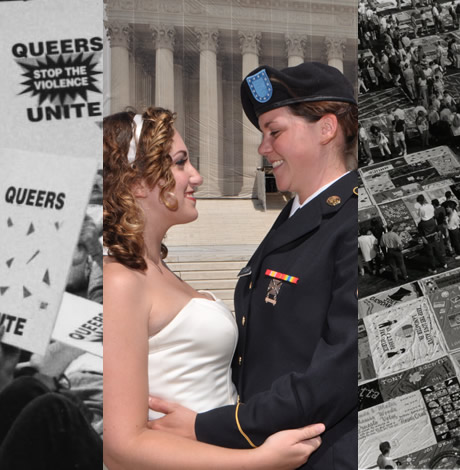
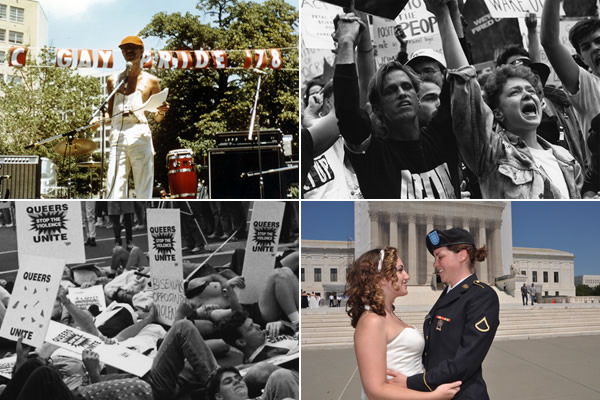
(Washington Blade photos)
To help commemorate the Blade’s 45th anniversary, the editorial staff worked to identify the top 45 headlines from our archives.
These headlines often represent single events, but sometimes are used thematically to encompass a series of related events. Each one survived several rounds of voting to make the cut and determine its order in the final list.
The stories are a mix of local and national events that helped shape the LGBT movement.
45. 2013: Former Washington Wizards center Jason Collins in April became the first male athlete who actively plays in a major American professional sports league to come out as gay. The watershed announcement prompted other athletes to declare their sexual orientation. These include former University of Missouri defensive end Michael Sam who came out in February and was drafted by the NFL’s Rams.
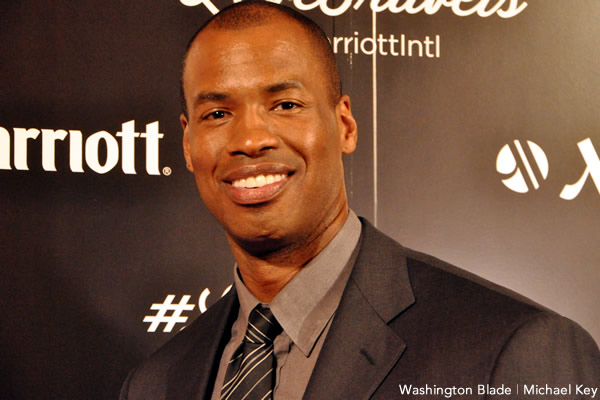
Jason Collins (Washington Blade photo by Michael Key)
44. 1982: An investigation by the Washington Blade reveals that the FBI is spying on D.C. gays. Sources said the FBI and D.C. police were looking into prostitution with adults or minors, the sale and distribution of child pornography and possible infiltration by foreign intelligence agents. The Blade, which interviewed more than 25 people to verify that the investigation was taking place, found that D.C. gay bars, bar owners and some patrons were under surveillance. Spokespeople for the D.C. police and the FBI denied that gays were being singled out for different treatment.
43. 1998: “Will & Grace” debuts in September, marking a significant change in Hollywood’s presentation of LGBT people, their lives and relationships. The sitcom featured Will Truman, a gay lawyer living in New York City, and his straight friend and roommate Grace Adler, an interior designer. Storylines in the comedy involved Will and Grace’s problems seeking romantic relationships as well as struggles in maintaining their own friendship. The most successful TV series featuring gay characters, “Will & Grace” ran for eight years, earned 16 Emmys and made it into the Nielsen Top 20 for half of its network run.
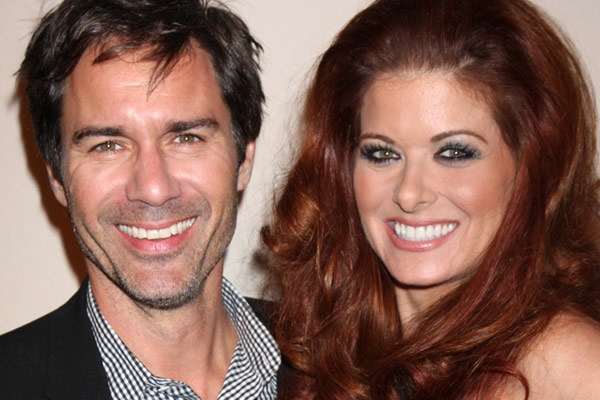
Eric McCormack and Debrah Messing of ‘Will & Grace.’
42. 1992: In October, more than 500,000 people come to see the NAMES Project’s AIDS Memorial Quilt on the National Mall. The 23,000 panels on display covered more than 15 acres around the Washington Monument, and the Quilt included panels from every state and 28 countries. The Quilt was displayed for the first time on the National Mall in 1987, during the National March on Washington for Lesbian & Gay Rights. In January of 1993, the NAMES Project was invited to march in President Clinton’s inaugural parade.
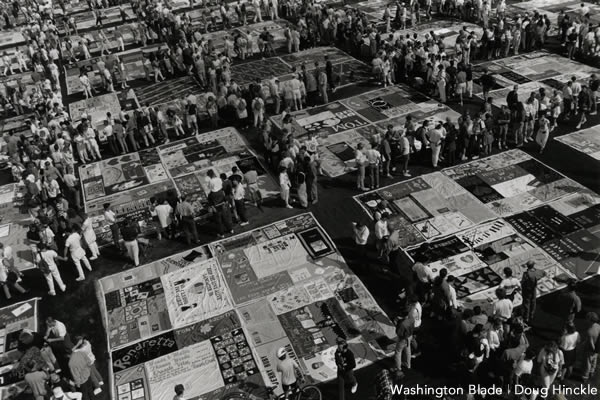
Names Project Quilt on Oct. 10, 1992. (Washington Blade archive photo by Doug Hinckle)
41. 1991: The country’s first Black Gay Pride Day is held in Washington drawing 800 participants. Activists Welmore Cook, Theodore Kirkland and Ernest Hopkins organized the event in response to their concern of supporting the increasing number of HIV-positive black people in the District. The event raised nearly $3,000 for AIDS charities with the support of the D.C. Coalition of Black Lesbians & Gay Men and the Inner City AIDS Network.

Black Gay and Lesbian Pride Day in 1991. (Washington Blade archive photo by Doug Hinckle)
40. 1976: Former nun-turned-gay rights activist Jean O’Leary is elected as the first openly gay delegate to the 1976 Democratic National Convention. O’Leary, who started the Lesbian Feminist Liberation in 1972 and co-founded National Coming Out Day in 1987, was also the organizer of the first meeting of gay rights activists in the White House under President Carter in 1977. O’Leary continued to serve on the Democratic National Committee for 12 years after she became a delegate.
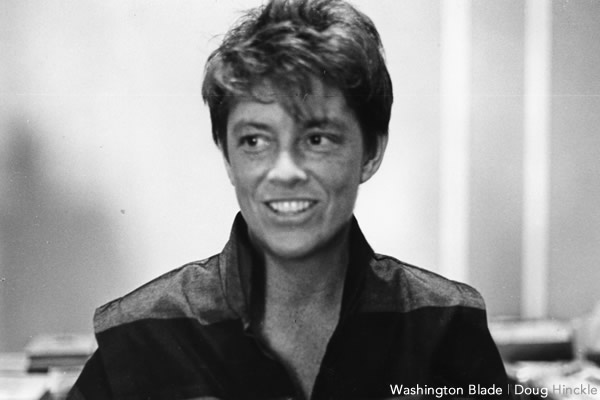
Jean O’Leary (Washington Blade archive photo by Doug Hinckle)
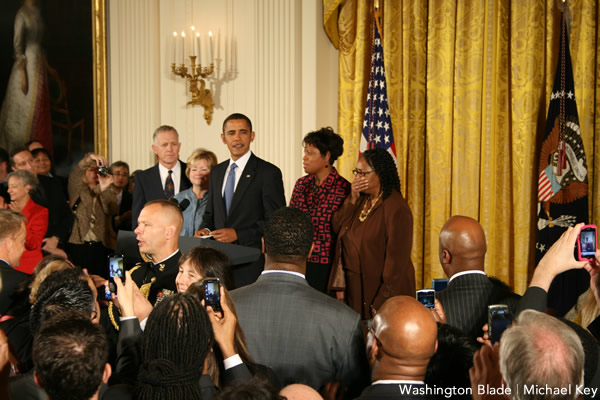
39. 2008: After running a largely gay-friendly campaign, Barack Obama is elected as the nation’s first black president. He frequently pledged during the campaign to seek “equality for all,” vowing to fight for full federal recognition of same-sex couples and develop a comprehensive national HIV/AIDS strategy, among other steps. But in the months following his inauguration, Obama drew criticism from some activists for not doing more to advance LGBT priorities in Congress.
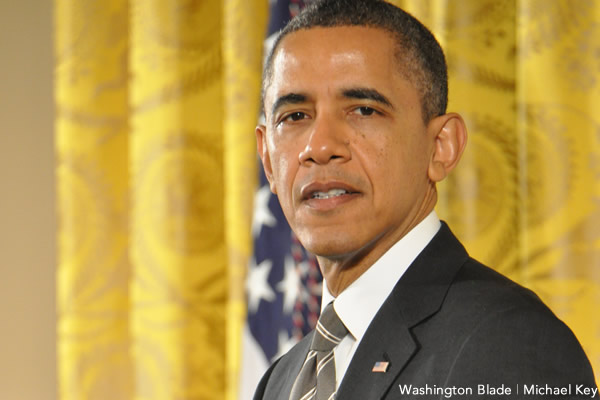
President Barack Obama (Washington Blade file photo by Michael Key).
38. 1973: D.C. Mayor Walter Washington signs into law Title 34, which bans discrimination on the basis of sexual orientation in housing, public accommodations, bank credit and employment. The law also banned discrimination on the basis of marital status and personal appearance. It narrowed the “business necessity” exclusion, which said that businesses would have to prove that practicing nondiscrimination would cost them money and render it impossible to remain in business at all in order to ignore the law.
37. 2011: Franklin E. Kameny, who is credited with playing the lead role in establishing an assertive and credible civil rights movement for lesbians and gays in the early 1960s and who coined the phrase “Gay is Good,” died at his home in Washington, D.C. on Oct. 11 at the age of 86. His voluminous papers chronicling his gay and later LGBT rights work covering the repeal of sodomy laws, allowing gays and lesbians to serve in the military, and the enactment of local and state laws banning LGBT discrimination, among many other efforts, are available for scholars and researchers at the Library of Congress.
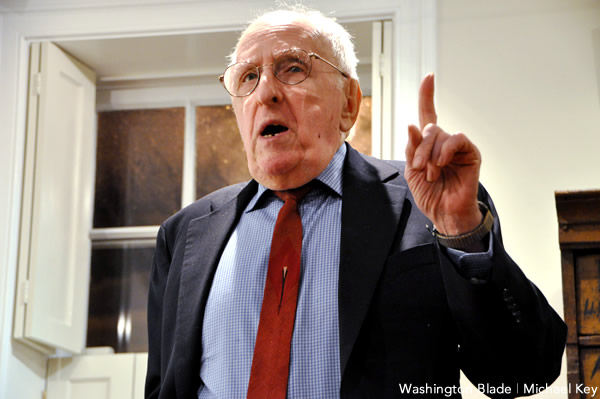
Frank Kameny (Washington Blade file photo by Michael Key)
36. 2004: On Nov. 2, voters in 11 states vote overwhelmingly in support of state constitutional amendments prohibiting same-sex unions. The development came after two other states voted earlier in the year to add constitutional amendments banning gay marriage. President George W. Bush also supported that year the Federal Marriage Amendment, but his endorsement did not rally sufficient support to pass the measure through Congress. The amendment stalled in the U.S. Senate, and was rejected outright in the U.S. House.
35. 1988: About 1,100 AIDS activists, angry at the Food & Drug Administration for taking too long to approve new drugs for people with AIDS, stage a protest at FDA headquarters and close it for the day. Protesters sat or sprawled on the pavement outside the building’s main entrance, preventing employees from entering or leaving. Some demonstrators, who climbed onto an overhanging roof above the building’s main entrance, attached placards and banners proclaiming “silence = death” and “test drugs, not people” to office windows. The demonstration resulted in 176 arrests.
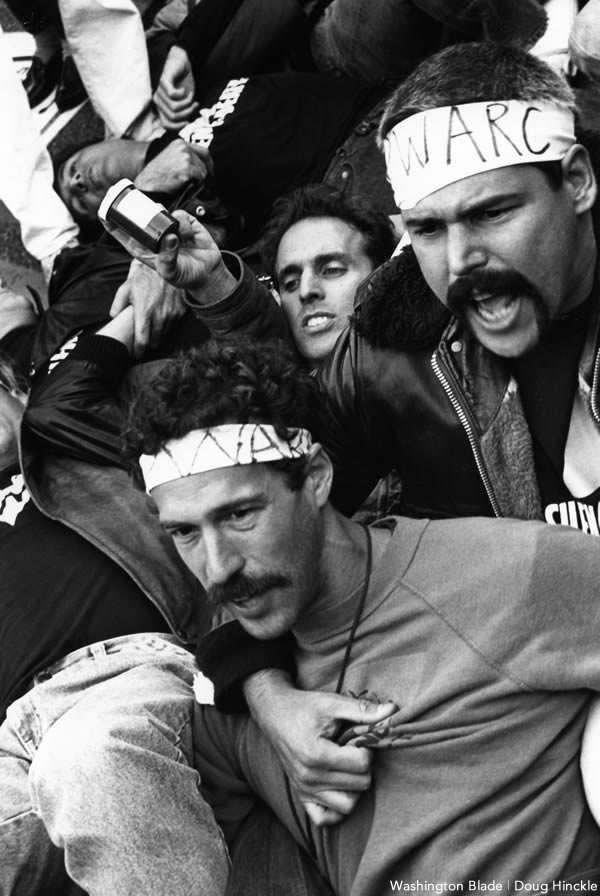
Civil disobedience at the FDA on Oct. 11, 1988. (Washington Blade archive photo by Doug Hinckle)
34. 1987: The Second National March on Washington for Lesbian & Gay Rights draws between 200,000 and 600,000 participants. In addition to demanding civil rights, participants also called on President Ronald Reagan to take greater action to confront the growing AIDS epidemic. The event included the unveiling of Cleve Jones’ NAMES Project AIDS Memorial Quilt and a protest before the Supreme Court building for its 1986 ruling upholding sodomy laws. Speakers included Latino civil rights leader Cesar Chevez; comedian Whoopi Goldberg; and Jesse Jackson, then a Democratic presidential contender.
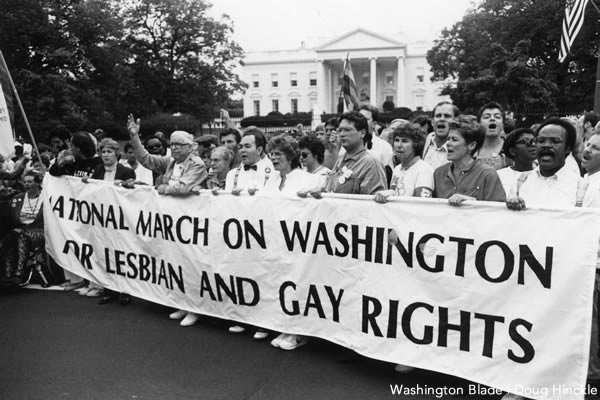
The National March on Washington for Lesbian and Gay Rights on Oct. 14, 1987. (Washington Blade archive photo by Doug Hinckle)
33. 1980: Gay activist Mel Boozer becomes the first openly gay person to have his name placed in nomination as a candidate at the Democratic National Convention. Supporters named Boozer, then a president of the Gay Activists Alliance, as a vice presidential candidate. Boozer, who was black, also addressed the convention during primetime. “I know what it means to be called a ‘nigger’ and I know what it means to be called a ‘faggot,’ and I understand the differences in the marrow of my bones. And I can sum up that difference in one word: none.”
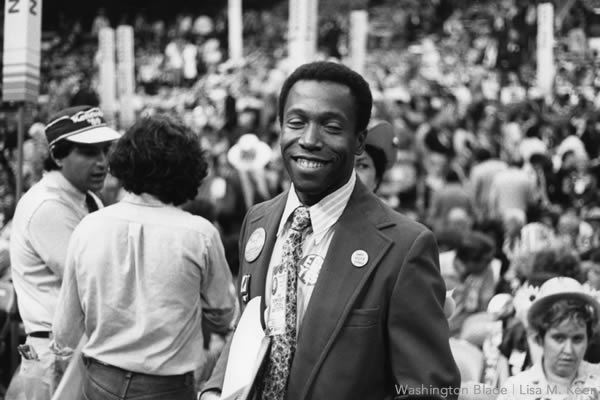
Mel Boozer on the floor of the Democratic National Convention on Aug. 13, 1980. (Washington Blade archive photo by Lisa M. Keen)
32. 1986: The U.S. Supreme Court ruled in Hardwick v. Bowers that homosexual activity is not protected by the Constitution. The court upheld a Georgia sodomy law that criminalized oral and anal sex in private between consenting adults, and said that “majority belief that sodomy is immoral” was sufficient reason to validate sodomy laws. The issue in the case was the right of privacy, and the court ruled that the Constitution’s 14th Amendment right did not extend to private, homosexual conduct.
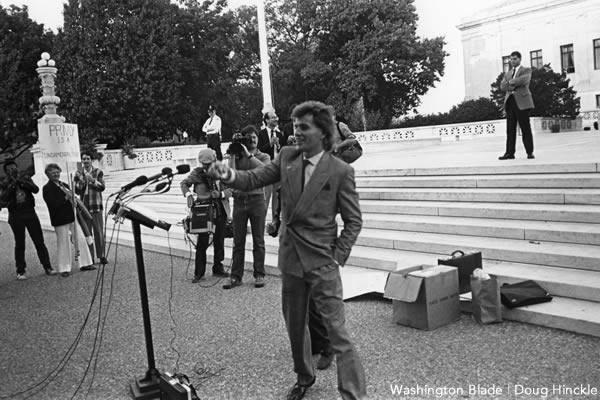
Michael Hardwick in front of the Supreme Court on Oct. 8, 1986. (Washington Blade archive photo by Doug Hinckle)
31. 1983: Gay leaders, independent medical researchers and health and social service agency officials testify before a congressional panel that the federal government’s response to AIDS had been too little, too late. Organizations such as the National Gay Task Force called on the federal government to give substantial funding to AIDS research and create a commission specifically designed to fight the AIDS epidemic. Several witnesses echoed the plea, alleging that the lack of resources had already cost researchers the ability to study the first generation of AIDS cases.
30. 1993: On April 25, the March on Washington for Gay, Lesbian & Bi Equal Rights & Liberation drew an estimated 750,000 participants to Washington. The political rally drew more mainstream media coverage — including a Newsweek cover story — and more participants than previous marches. Protesters also took part in more than 250 march-related events, including conferences, workshops, lobbying events and religious ceremonies.
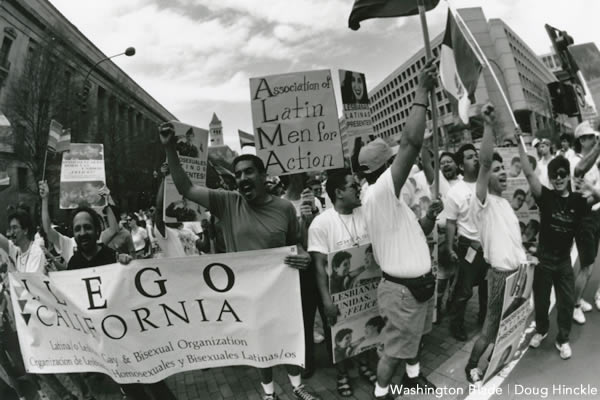
National March on Washington for Lesbian, Gay and Bisexual Rights and Liberation on April 25, 1993. (Washington Blade archive photo by Doug Hinckle)
29. 1982: Wisconsin Gov. Lee Dreyfus signs into law the nation’s first statewide gay civil rights bill, making it illegal in the Badger State to discriminate on the basis of sexual orientation in housing, employment and public accommodations. “There are some questions the government has no business asking,” Dreyfus said of the bill.
28. 2012: U.S. Rep. Tammy Baldwin (D-Wisc.) made history in November when she became the nation’s first out lesbian or gay person to win election to the United States Senate. Her decisive victory over Republican Tommy Thompson, the state’s former governor, solidified Baldwin’s status as a popular and respected public official with strong support from gay and straight voters alike.
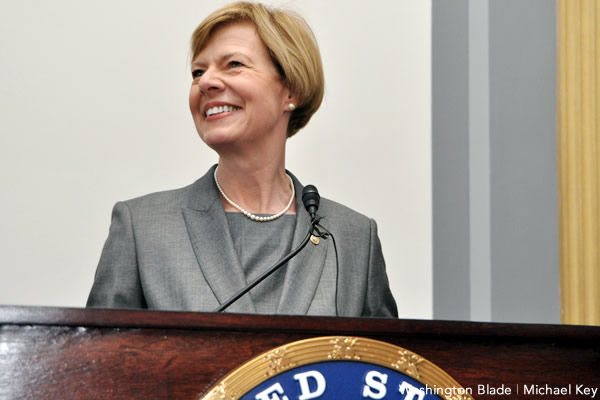
Sen. Tammy Baldwin (D-Wis.) (Washington Blade photo by Michael Key)
27. 1979: On Oct. 14, tens of thousands of people participate in the National March on Washington for Lesbian & Gay Rights. It was the first such march on Washington. Among the many participating groups were the National Gay Task Force, the Gertrude Stein Democratic Club, and the D.C. Area Feminist Alliance. In the days following the march, activists from across the country descended upon Capitol Hill to speak to lawmakers about anti-discrimination laws.
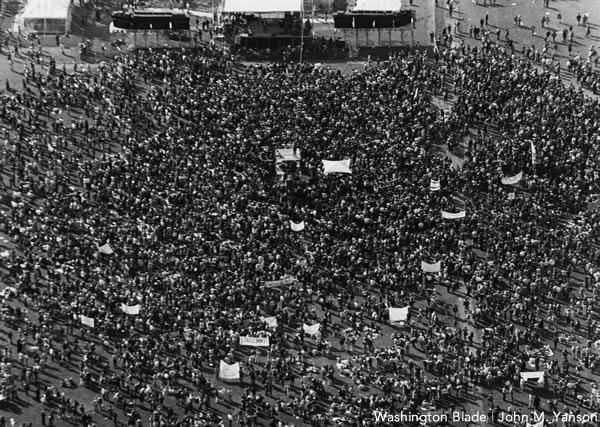
National March on Washington for Lesbian and Gay Rights on Oct. 14, 1979. (Washington Blade archive photo by John M. Yanson)
26. 1985: In late July, actor Rock Hudson issues a statement saying he has AIDS and is receiving treatments in Paris that are unavailable in the U.S. He died three months later at age 59. His announcement and death drew massive mainstream media attention to AIDS, and numerous AIDS fundraisers ensued to help fund research, treatment and services for people with AIDS. Actress Elizabeth Taylor, a friend of Hudson’s, went on to start an AIDS fundraising organization, the American Foundation for AIDS Research.
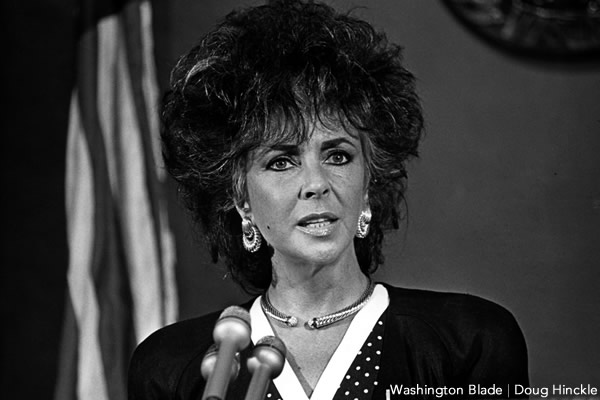
Elizabeth Taylor (Washington Blade archive photo by Doug Hinckle)
25. 1997: Actress Ellen DeGeneres comes out in an article in the April 17 issue of Time magazine. The headline: “Yep, I’m Gay.” Her alter ego, Ellen Morgan, also came out in the April 30 episode of “Ellen,” becoming the first gay lead character on television. The hour-long episode featured Laura Dern as Ellen’s romantic interest; Oprah Winfrey played a therapist who assured Ellen that there’s nothing wrong with being gay.
24. 2007: A debate raged among LGBT activists over how to best advance LGBT rights after the U.S. House of Representatives passed an Employment Non-Discrimination Act that lacked explicit protections for transgender people. Rep.Tammy Baldwin (D-Wis.), a lesbian, introduced an amendment to add a trans provision to the bill, but withdrew it before a vote. Her move was considered a symbolic gesture to assure trans people they were not forgotten. The bill passed the House, 235-184, but after President Bush threatened a veto, the Senate failed to take up the measure.
23. 2012: The American Psychiatric Association on Dec. 2, removed Gender Identity Disorder from its list of mental disorders. The organization specifically removed GID from its Diagnostic and Statistical Manuel (DSM) of Mental Disorders and replaced it with Gender Dysphoria. The process to revise the DSM began more than a decade earlier.
22. 2009: Throughout the year, more same-sex couples win the right to marry. The Iowa Supreme Court unanimously strikes down the state’s ban on same-sex marriage; Vermont becomes the first state to legalize same-sex marriage via the legislative path after it overrides Gov. Jim Douglas’s veto; Maine lawmakers followed, with Gov. John Baldacci signing the bill; and New Hampshire becomes the sixth state to legalize same-sex marriage.
21. 2013: More states begin to legalize same-sex marriage in the aftermath of the Supreme Court’s decision striking down DOMA. Marriage laws in Rhode Island and Hawaii took effect on Aug. 1, 2013, and Dec. 2, 2013, respectively. Illinois’ same-sex marriage law took effect statewide on June 1. Gays and lesbians also gained marriage rights in New Mexico, Oregon and Pennsylvania since the DOMA decision.
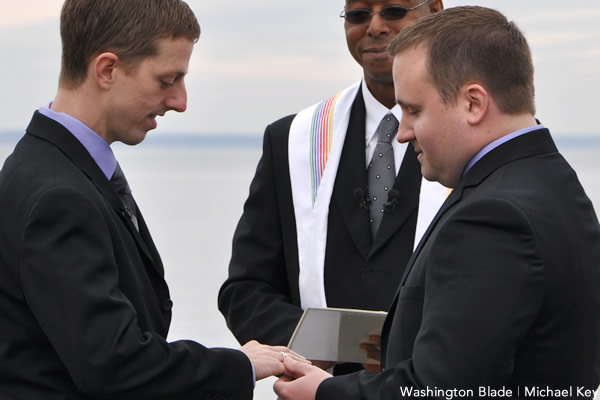
(Washington Blade file photo by Michael Key)
20. 1996: At the 1996 International Conference on AIDS in Vancouver, it’s announced that HIV/AIDS cocktails, three-drug combinations used to combat the disease, held promise in combating symptoms. The introduction of the cocktails fundamentally changed the way AIDS was perceived, shifting it away from an inevitably fatal disease to one that, while chronic, was more manageable. The cocktails showed promise in blood tests of people with access to the drugs even though the number of available cocktails was limited at the time.
19. 1982: Gay Related Immune Disorder, or GRID, becomes the first name to describe what now is known as AIDS. Cases reached epidemic proportions, moving beyond clusters of gay men in New York and San Francisco and into groups with no obvious risk factors. Scientists later agreed that Acquired Immune Deficiency Syndrome more accurately described the disease, which did not exclusively affect gay men. In 1984, government researchers identify what they believe is the “probable cause” of AIDS: HTLVIII, the Human T-cell Leukemia Virus. In June 1988, the Presidential Commission on the Human Immunodeficiency Virus Epidemic, a 13-member panel, released a comprehensive report of 583 recommendations to address the AIDS epidemic.
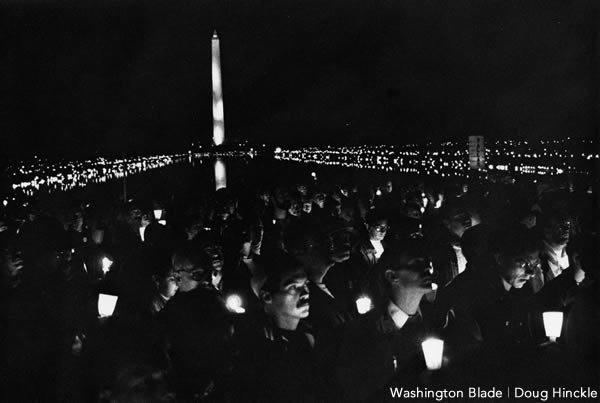
(Washington Blade archive photo by Doug Hinckle)
18. 1993: President Clinton angers gays across the country when he backs off his campaign promise to end the ban on gays in the military, instead endorsing a policy by Sen. Sam Nunn (D-Ga.). Supporters touted the law — which became known as “Don’t Ask, Don’t Tell” — as a compromise because it would allow gays to serve in the military provided that they didn’t disclose their sexual orientation. Under the policy, about 13,000 service members were discharged, some because their sexual orientation was disclosed by others to commanding officers.
17. 1996: The Defense of Marriage Act abruptly surfaces in May before quickly working its way through Congress and winning President Clinton’s signature in September. The law prohibits the federal government from recognizing same-sex marriage, and allows states not to recognize same-sex unions performed in other states. Same-sex marriage was not legal anywhere in the U.S. when Clinton signed DOMA into law, but now marriage rights for gay couples are available in six states. Because of DOMA, legally married same-sex couples in these states aren’t eligible for federal benefits.
16. 1970: A crowd of 2,000 gay demonstrators in New York commemorates the first anniversary of the Stonewall Riots with a march and rally. The event, known as Christopher Street Liberation Day, occurred June 28 and reportedly took up about 15 blocks of the street. The New York Times reported there was little animosity, and “some bystanders applauded when a tall, pretty girl carrying a sign ‘I am a Lesbian’ walked by.” Pride marches took place simultaneously in Los Angeles and Chicago.
15. 2009: Mayor Adrian Fenty on Dec. 18 signed a bill approved days earlier by the D.C. City Council in an 11-2 vote legalizing same-sex marriage in the nation’s capital. The legislation successfully cleared a required legislative review by Congress and withstood efforts by opponents who attempted unsuccessfully to require that it come before voters in a referendum. The Religious Freedom and Civil Marriage Equality Amendment Act of 2009 took effect March 3, 2010.
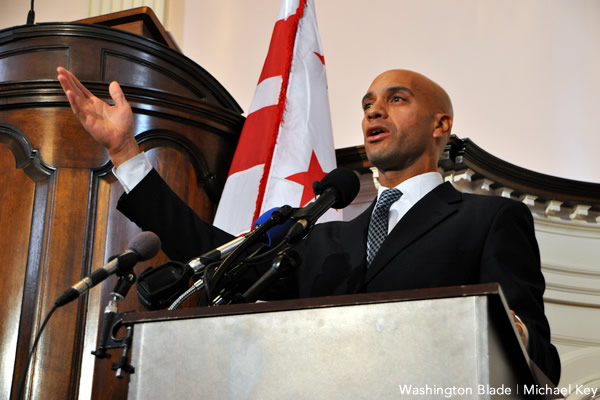
Mayor Adrian Fenty at the same-sex marriage bill signing. (Washington Blade photo by Michael Key)
14. 2012: Same-sex marriage laws were upheld at the ballot box for the first time. Voters in Maryland, Maine and Washington on Nov. 6 backed gay nuptials statutes in their respective states. Minnesotans on the same day rejected a proposed state constitutional amendment that would have defined marriage as between a man and a woman.
13. 2008: In May, a California Supreme Court ruling legalizes same-sex marriage in the state. Later that year, the Connecticut Supreme Court rules similarly. A ballot initiative to overturn the California ruling was put to voters on Election Day in November. Following an expensive campaign funded largely by the Mormon Church and anti-gay groups such as Focus on the Family, California voters passed Proposition 8, which rescinded same-sex marriage rights in the state.
12. 1977: In June, singer Anita Bryant leads a highly publicized campaign to repeal a gay civil rights ordinance in Dade County, Florida. The ordinance made it illegal to discriminate on the basis of sexual orientation in housing, employment, loans and public accommodations. Bryant founded Save Our Children to protest the ordinance and she led several more campaigns around the country to repeal other local anti discrimination ordinances. A boycott was organized against the Florida Citrus Commission, who used Bryant in advertising. Bryant’s campaign in Dade County was overturned in 1998.
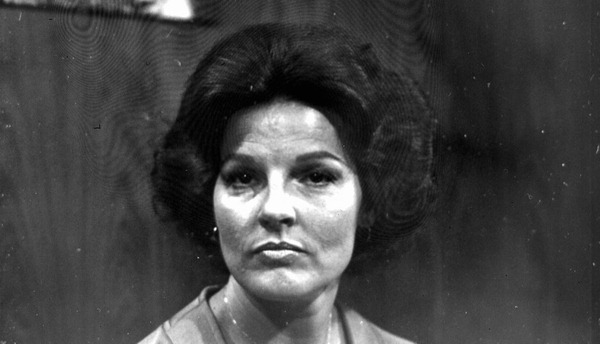
Anita Bryant (Photo public domain)
11. 1974: U.S. Reps. Bella Abzug and Edward Koch, Democrats from New York, introduce the Equality Act of 1974.The bill would have added “sexual orientation” to the 1964 U.S. Civil Rights Act, making it illegal to discriminate against gays and lesbians in employment, housing and public accommodations. The Equality Act, the first federal legislation in support of gay rights, never passed.
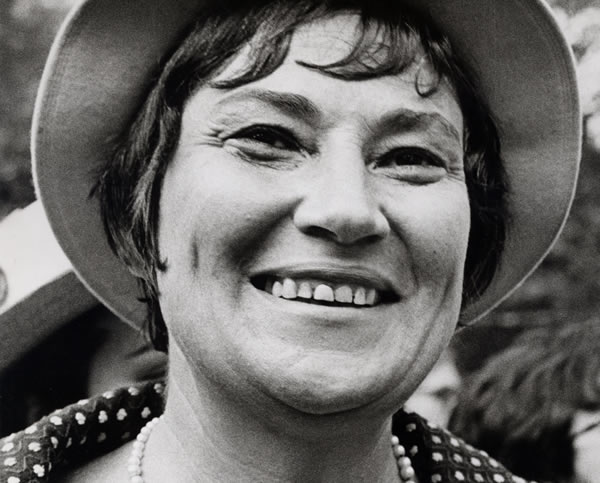
Rep. Bella Abzug (D-N.Y.) (Photo public domain)
10. 2009: Eleven years after the murder of the gay college youth for whom the bill was partly named, President Obama signed into law the Matthew Shepard & James Byrd, Jr. Hate Crimes Prevention Act. It was the first time federal protections for the LGBT community were enshrined into U.S. code. Byrd, a black man, was dragged to death behind a truck in 1998 by three white men in Texas.
Signing of the Matthew Shepard and James Byrd Hate Crimes Prevention Act in 2009. (Washington Blade photo by Michael Key)
9. 1998: Matthew Shepard, a gay college student, is tortured and left to die near Laramie, Wyo., in October. He was found tied to a fence and was brought to a hospital, where he later died. The killers were sentenced in April 1999 and November 1999 to life in prison. Grief following his death led to the introduction of federal legislation that would enable the Justice Department to prosecute hate crimes against LGBT people. The bill languished in Congress for years before becoming law (see number 10).
8. 2010: After nearly two years of struggles in Congress, President Obama signed legislation known as the “Don’t Ask, Don’t Tell” Repeal Act to lift the U.S. military’s ban on openly gay service. The armed forces discharged more than 13,000 service members under the law before it was formally lifted one year later.
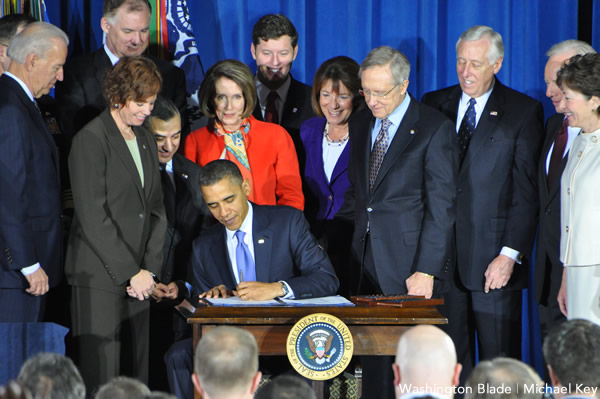
President Obama signed the repeal of ‘Don’t Ask, Don’t Tell’ in December 2010, but it didn’t take effect until September 2011. (Washington Blade photo by Michael Key)
7. 2003: On June 26, the U.S. Supreme Court rules in Lawrence v. Texas that sodomy laws are unconstitutional. In 1998, John Lawrence and Tyron Garner were arrested in Lawrence’s Houston home and jailed overnight after officers responding to a disturbance report found the men having sex. The court voted 6-3 to strike down the law, and the opinion covered similar laws in 12 other states. With its decision, the court also reversed Bowers v. Hardwick, its 1986 decision that upheld Georgia’s sodomy law on the argument that it had been harmful to gay people’s struggles for liberty and equality.
6. 2012: Ending the evolution he started 18 months earlier, President Obama announced during a TV interview with then-closeted ABC anchor Robin Roberts that he supports marriage rights for same-sex couples. Obama made history by winning re-election just six months after taking that position in a race against Mitt Romney, who remained opposed to marriage equality.
5. 1978: San Francisco City Supervisor Harvey Milk is gunned down by Supervisor Dan White, who also shoots and kills Mayor George Moscone. Milk, who was gay and a pioneer for LGBT rights, in 1978 helped to defeat the Briggs Initiative, which would have prevented gays from working as teachers in California. On the day of his assassination, U.S. Sen. Dianne Feinstein, then the president of the Board of Supervisors, heard gunshots and called police, found Milk’s body and announced the news to the media. A candlelight vigil to the City Hall of between 25,000 and 40,000 marchers followed the assassination. More than 2,000 angry gay demonstrators protested the 1979 sentence of voluntary manslaughter of Dan White on May 21.

Harvey Milk (Photo by Daniel Nicoletta; courtesy Wikimedia Commons)
4. 1981: It is reported that an estimated 170 gay men have succumbed to a rare pneumocystis carinii pneumonia and Kaposi’s sarcoma over the preceding two years. The U.S. Centers for Disease Control issued reports on three studies that cited a serious malfunctioning of the body’s immune systems in these cases. By December, 43 percent of those infected with either pneumocystis or Kaposi’s had died. The reports were the nation’s first indication of the coming HIV/AIDS epidemic.
3. 2003: The Massachusetts Supreme Court rules in November that same-sex marriage is legal, making the Bay State the first in the country to grant marriage rights to gay couples. In its ruling for the case, known as Goodrich v. Department of Public Health, the court specified state law prohibited gays from marrying and gave state lawmakers 180 days to take appropriate action to address the issue. Then-Gov. Mitt Romney ordered town clerks to begin issuing marriage licenses to same-sex couples.
2. 1973: The American Psychiatric Association in December resolves that homosexuality should no longer be considered a mental disorder. Officials rendered the decision after intense lobbying from gays, including veteran activist Frank Kameny, as well as an endorsement from all 68 district branches of the APA. The new resolution — adopted by 13 members of the APA Board of Trustees with two remaining members abstaining — called for an end to discrimination and repeal of sodomy laws throughout the country. The National Gay Task Force at the time called the decision “an instant cure.”
1. 2013 & 2014: The U.S. Supreme Court issued its most historic rulings on LGBT rights to date. First, in 2013, by striking down Section 3 of the Defense of Marriage Act and issuing a decision restoring marriage equality to California after passage of Proposition 8. Same-sex marriage returned to the largest state in the nation, and for the first time, federal benefits began to flow to married same-sex couples. Then, just this week, the court declined to hear marriage cases from five states, instantly bringing marriage equality to Virginia, Utah, Oklahoma, Indiana and Wisconsin.
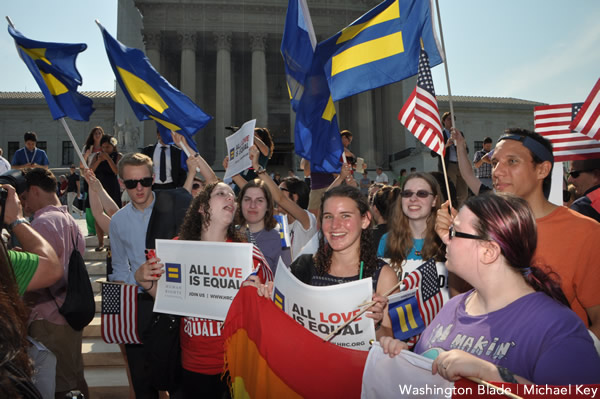
(Washington Blade file photo by Michael Key)


a&e features
Introducing the Torchbearers Awards honoring queer, trans women and nonbinary people
Meet the Legends and Illuminators lighting new paths
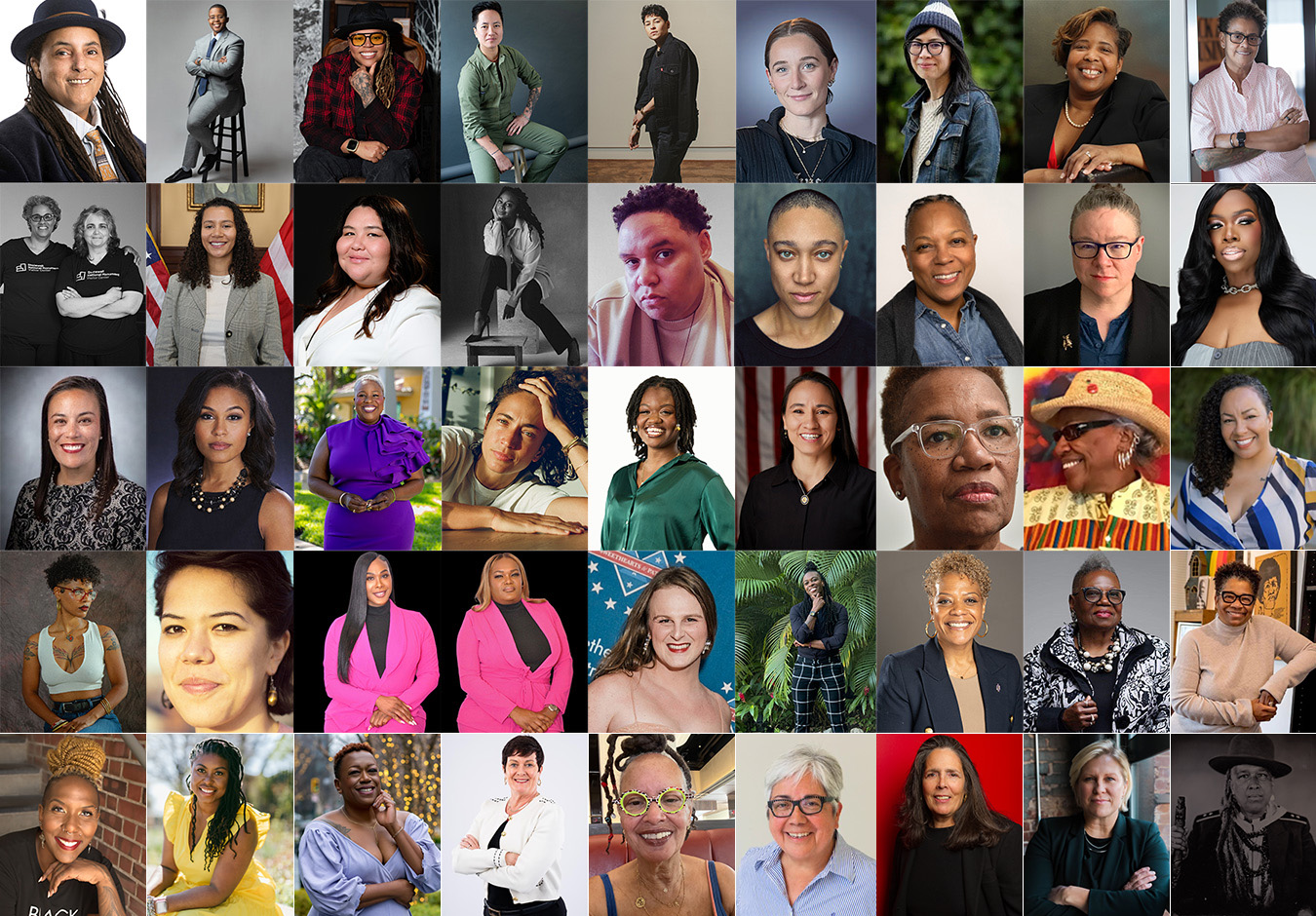
The Torchbearers Awards are more than recognition—they are a continuation of legacy. They honor the quiet architects of progress in our community: those who organize, advocate, build, and protect, often without fanfare but always with purpose. Rooted in a belief in intentional recognition, this honor names those who carry our movements forward—those who make room for others, who remind us that change is both generational and generative. In a time marked by uncertainty and challenge, these leaders push forward with courage, clarity, and an unwavering commitment to expanding opportunity and equity.
This year’s honorees reflect the full breadth of our community, spanning generations, backgrounds, identities, and industries. From Legends, with decades of leadership and having created pathways for others, to Illuminators, who are lighting new paths with creativity and innovation, each Torchbearer represents the power of intergenerational leadership and the strength found in our diversity. They are organizers, advocates, artists, policy leaders, healers, and changemakers whose lived experiences shape a shared vision for equity and liberation.
This award is our love letter to queer and trans women and nonbinary people who carry the flame when it would be easier to let it dim. To those who consistently show up, who use their voice and visibility and stand firm, often without recognition, so that others may live more freely and fully. The Torchbearers Awards celebrates not just what has been done, but the enduring spirit, responsibility, and collective care that ensure the work continues, and that the flame is always passed forward.
Co-Creators of the Torchbearers Awards: Shannon Alston, June Crenshaw, Heidi Ellis
Torchbearers Awards Advisory Board: Aditi Hardikar, Lesley Bryant, Jasmine Wilson-Bryant, Stephen Rutgers
ILLUMINATOR AWARDEES
- Representative Sharice Davids (she/her), (D, KS-03)
— U.S. House of Representatives - Greisa Martinez Rosas (she/her/ella)
— Executive Director, United We Dream - Paola Ramos (she/her)
— Journalist & Correspondent - Meagan A. Fitzgerald (she/her)
— Journalist & Correspondent - Jessica L. Lewis (she/her)
— Founder / Producer, Play Play DC - Savannah Wade (she/her)
— Founder, OAR Agency - Suhad Babaa (she/her)
— Filmmaker/ Former Executive Director of Just Vision - Ashlee Davis (she/her)
— Global Head of Inclusive Outcomes, Ancestry - Jazmine Hughes (she/her)
— Journalist and Former Editor at New York Times Magazine - Queen Adesuyi (she/they)
— Policy Advisor & Organizer, ReFrame Health & Justice - Michele Rayner, Esq. (she/her)
— Civil Rights Attorney, State Representative (Florida House of Representatives) - Gaby Vincent (she/her)
— Sports/Cultural Commentator and Community Leader - Jenny Nguyen (she/her)
— Founder & Owner, The Sports Bra - Denice Frohman (she/her)
— Independent Artist, Poet / Performer - Vida Rangel (she/her)
— Founder, Our Trans Capital - Roxanne Anderson (they/them)
— Executive Director, Our Space - Ann Marie Gothard (she/her)
— Co-Founder & President, Pride Live (Stonewall National Monument Visitor Center) - Diana Rodriquez (she/her)
— Co-Founder & CEO, Pride Live (Stonewall National Monument Visitor Center) - Wendi Cooper (she/her)
— Founder / Executive Director, Transcending Women - Toya Matthews (she/her)
— City of San Antonio, Texas - Mayor Gina Ortiz Jones (she/her)
— Sports/Cultural Commentator and Community Leader - Charity Blackwell (she/her)
— Poet, LGBTQ Advocate & Community Leader - Wilhelmina Indermaur (she/her)
— Director of Communications, Tyler Clementi Foundation - Em Chadwick (she/her)
— CMO, For Them & Autostraddle - Kylo Freeman (they/he)
— CEO, For Them & Autostraddle
LEGEND AWARDEES
- Sheila Alexander-Reid (she/her)
— Executive Director, PHL Diversity, Philadelphia Convention & Visitors Bureau - Cassandra Cantave Burton (she/her)
— Interim Director of Thought Leadership & Senior Research Advisor, AARP - leigh h. mosley (she/her)
— Photographer / Educator, PhotoFlo Photography - Jenn M. Jackson, PhD (they/them)
— Assistant Professor of Political Science; Author & Columnist, Syracuse University - Jordyn White (she/her)
— COO, Washington Prodigy / VP of Leadership Development & Research, HRC Foundation - AJ Hikes (they/them)
— Deputy Executive Director, ACLU - RaeShanda Lias (she/her)
— Digital Creator, RL Lockhart - Donna Payne-Hardy (she/her)
— Educator, EEO Specialist, Founder of NBJC, Former Leader at the Human Rights Campaign - Courtney R. Snowden (she/her)
— Principal, Blueprint Strategy Group - Gaye Adegbalola (she/her)
— Musician & Activist, Musician / Inductee of the Blues Hall of Fame - Cheryl A. Head (she/her)
— Independent Author, Novelist (Crime Fiction) - Letitia Gomez (she/her)
— The American LGBTQ+ Museum, Board Chair - Lynne Brown (she/her)
— Publisher, Washington Blade - Shay Franco-Clausen (She/Her/Ella/Queen)
— Political Strategist and Organizer - Melissa L. Bradley (she/her)
— Founder & Managing Partner, New Majority Ventures - Meghann Burke (she/her)
— Executive Director, NWSL Players Association - Victoria Kirby York, MPA (she/they)
— Director of Public Policy & Programs, National Black Justice Collective - Joli Angel Robinson (she/her)
— CEO, Center on Halsted - Jeannine Frisby LaRue (she/her)
— CEO, Moxie Strategies - Alice Wu (she/her)
— Film Director (Saving Face, The Half of It) / Screenwriter - Storme Webber (she/her)
— Interdisciplinary Artist / Educator, University of Washington - Kim Stone
— CEO of the Washington Spirit, Washington Spirit - Mickalene Thomas
— American Visual Artist, Mickalene Thomas Studio - Erika Lorshbough (any/they/she)
— Executive Director, interACT - J. Gia Loving (she/ella)
— Co-Executive Director, GSA Network
a&e features
D.C. springs back to life with new, returning events
Cherry blossoms, Rehoboth season kickoff, and more on tap
Longer and warmer days are back meaning: It’s time to get out of the house and enjoy Washington D.C.’s many events. Below are a few to check out this spring.
The National Museum of Women in the Arts will host “Making their Mark: Works from the Shah Garg Collection” until Sunday, July 26. This exhibition illustrates women artists’ vital role in abstraction, considers historical contributions, formal and material breakthroughs and intergenerational relationships among women artists over the last eight decades. For more details, visit. NMWA’s website.
Art in the Attic will host a pop-up on Saturday, March 14 at 6 p.m. at 1012 Madison St., Alexandria, Va. There will be a variety of vendors selling products across different modes of art. For more details, visit Eventbrite.
Play Play will host “Indoor Recess – The art of play” on Sunday, March 15 at 2 p.m. This event will embody classic recess energy, including opportunities to build and experience community and connections through games, movement, art stations, and creative freedom. Tickets are $12.51 and can be purchased on Eventbrite.
Spark Social will host “Gay Bar Crawl on U Street” on Friday, March 20 at 7:30 p.m. This will be a fun night out in gay D.C. with other gay people, whether you’re visiting D.C., new to the area, or just looking to expand your social circle. Many crawlers have formed lasting friendships and even romantic relationships after just one night out. Tickets are $35.88 and are available on Eventbrite.
Creative Suitland Arts Center will host “EFFERVESCENT: House of Swann” on Saturday, May 30 at 7 p.m. This will be a gay, good time where we will celebrate love, joy, wellness, and visibility for the LGBTQIA+ community. Tickets start at $17.85 and can be purchased on Eventbrite.
SWAG Works DC will host “Unapologetically Her” on Saturday, March 14 at 2 p.m. at 701 E St., S.E. This event is a powerful celebration of womanhood, resilience, creativity, and self-expression in honor of Women’s History Month. This all-women exhibition highlights the diverse voices, stories, and artistic perspectives of women who create boldly, live authentically, and stand confidently in their truth. This event is free and more details are available on Eventbrite.
9:30 Club will host “Gimme Gimme Disco: A Dance Party Inspired by ABBA” on Saturday, March 14 at 6 p.m. There will also be a “Donna Summer Power Hour – The Queen of Disco” segment during this event. It’ll be one hour of music with no skips. Tickets are available on 9:30 Club’s website.
Harder Better Faster Stronger will host “Heated Rivalry Rave” on Friday, March 20 at 9 p.m. at Howard Theatre. This event is open to all ages. Tickets are available on the theater’s website.
CAMP Rehoboth hosts its 25th annual Women’s+ FEST, April 9-12 in Rehoboth Beach, Del. Entertainers include headliner Mina Hartong, a comedian, storyteller, and founder of Lez Out Loud; and singer Yoli Mayor. There are dances, dinners, pickleball, and much more. Details and tickets at camprehoboth.org.
Also in Rehoboth Beach, the Washington Blade’s 19th annual Summer Kickoff Party is set for Friday, May 15 featuring Ashley Biden, who will accept an award on behalf of her brother Beau. State Rep. Claire Snyder-Hall will also speak. More speakers and the venue to be announced soon.
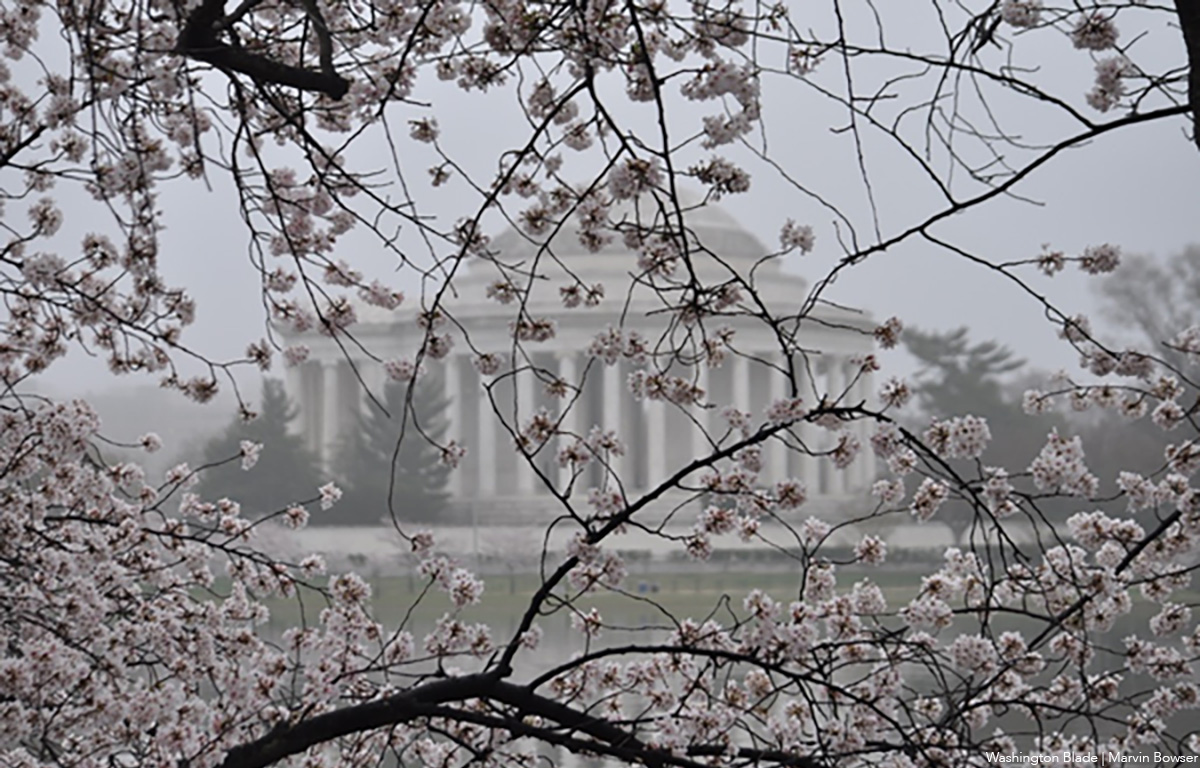
The annual D.C. Cherry Blossom Festival kicks off March 21 at DAR Constitution Hall and culminates with Petalpalooza on April 4, the day-long, outdoor street party with music and art, stretching across Navy Yard, and ending with fireworks over the Anacostia River.
a&e features
‘Queer Eye’ star Dorriene Diggs on life before and after appearing on hit show
Emotional January episode highlighted 40-year love affair with partner

Dorriene Diggs, 70, whose 40-year relationship with her domestic partner, Diane until Diane’s passing in 2020, the couple’s tense relationship with their respective parents, and Dorriene’s current living arrangement with her straight sister Jo, were the focus of a final season episode of the popular TV series “Queer Eye.”
In a recent interview with the Washington Blade, Diggs told of how her appearance on the show has impacted her life. She elaborated on the many aspects of her life experiences that she told to the five “Queer Eye” co-hosts who interviewed her and her sister in their D.C. home.
Although her parents and her partner’s parents, who have since passed away, were not accepting of their relationship, Diggs has said most of her family members at this time reacted positively to her appearance on the show.
“They loved it,” she told the Blade. “Yes, everybody that saw the show called me and said they loved the show, they really enjoyed themselves watching it.”
Through an arrangement with D.C.’s Rainbow History Project, the “Queer Eye” show featuring Diggs and her sister was presented in a special screening on a large video screen at the D.C. History Center in January.
“Dorriene, a 70-year-old Black lesbian living in Washington, D.C., had spent decades building a life with her partner while navigating silence within her own family,” a “Queer Eye” statement announcing the episode on Diggs states.
“The Fab Five did not arrive to introduce Dorriene to herself, but to help ensure her story was finally heard in full,” the statement says.
Blade: Can you tell us how your appearance on the “Queer Eye” program came about? How did they find out about you?
Diggs: You know, I still don’t have all the details. I think it was my niece, Missy. And she knows somebody there from “Queer Eye.”
Blade: So, did you first learn about it when someone from “Queer Eye” contacted you?
Diggs: No, the “Queer Eye” guy knocked on my bedroom door and started talking. I was in my bedroom watching television and the next thing I know my door opened up and there was Karamo [Karamo Brown, one of the “Queer Eye” co-hosts] with his big black cowboy hat on, opening the door grinning. … They contacted Jo first. And when they came here, they realized there was a gay woman in the house, too. Because my name was not mentioned at first. After they came here, they learned about me, because when Missy reached out to them, she reached out to them about Jo. But that doesn’t bother me. This was all about Jo in the beginning, and not me. … They started talking to me and Jo. And he said, Dorriene, ‘you’ve done so much for so many people, it’s time for someone to do something for you.’ That’s what they said. He said, ‘this is the day we’re doing it for you.’
And so, they put me and my sister up in a hotel for a week. They gave us a personal driver to take us anywhere we wanted to go. And then they took us to a bunch of places. We didn’t know why they were doing all of this. We had no idea that they were renovating the house and renovating our bedrooms. We had no idea.
Blade: What was your reaction when you saw the home renovation?
Diggs: It was amazing. And they bought us all new complete wardrobes – clothes, shoes. But most of the stuff they got me I gave away to a women’s shelter. But it was so nice. Actually, to meet the guys. I’ve been watching the show for 10 years. I have watched it from the beginning. And actually, it brought me and my sister closer – really. We’re closer now than we’ve ever been. She’s my baby sister – not the baby, but next to the baby. She’s the younger one.
Blade: What has been the reaction to your appearance on the show? Do more people now recognize you?
Diggs: Yes, yes. I’m getting phone calls and it’s almost like I’m a celebrity. And I don’t want people to make a fuss over me. All the things I did I did from the heart. I really did. And I don’t want people to think I’m more than I am. I’m just a good Christian woman that believes in giving back.
And I do. God gives me help giving. That’s what I do. And I don’t want anything in return from anyone. You know, because I know what it means to not to have. I know what it means to go to bed hungry, with no food. Going to school with holes in your shoes. I know that. I know that feeling. I’ve been there. And I promised myself as a kid I would never live like this again. And when I got bold enough to leave home, I left home at 14, and I moved in with a drag queen. Damen was his name.
Blade: Did your appearance on the show change your life and your relationship with your sister?
Diggs: Yeah, yeah, it actually did. We are actually closer now than we’ve ever been. Because, like I said, I moved away from home early and I never went back. My parents had a problem with my lifestyle. They really did. My mom looked at me with such hatred. When I was old enough to say goodbye, I never looked back. And to come back around now in the last few years after Diane died, that’s when I came back here.
And at one point I stayed with my nephew Todd and his wife – but he got killed in a car accident. I couldn’t stay at his house anymore. So, then I called Jo and told her I need to get out of here. And without hesitating she came and picked me up and brought me to her home. And I’ve been here ever since.
Blade: Can you tell a little about when it came about and how you met your partner?
Diggs: We lived on 18th Avenue in condos. I just bought one. Hers was above mine. I bought the bottom one. When my brother came over, she was getting out of her car. She was driving a Vega. And I turned to my brother and I said – this is the God’s honest truth – I said Keith, that’s the woman I’m going to spend the rest of my life with. Just like that. And he started laughing. He said, girl you’re crazy. I said I know I’m crazy, Keith, but I’m telling you that woman right there is who I’m going to spend the rest of my life with.
Blade: And when was that?
Diggs: It was 1980 actually. And then I started going to the laundry room to do my laundry. So I started talking to her. She said, ‘I’m not speaking to you.’ Isaid ‘why not?’ She said ‘because you’re nothing but a female gigolo.’ And I said I’m not dating anymore. I’m waiting for you. ‘No, you’re too fast for me.’ I said, ‘well, I’m not giving up.’
And I didn’t give up. So, I was playing an album one day and she knocked on the door and asked what I was playing, I think. I said you liked that. She said yeah. I said OK, I’ll bring it upstairs and we can listen to it together. So, when I went up there to her apartment that day and whenever I went up there, I never left.
Blade: So, your partner’s name was Diane?
Diggs: Yes, Ruth Diane Robinson. But she hated the name Ruth. So, the only people who called her Ruth were at work, the people she worked with. Everybody else called her Diane.
Blade: And how many years were you together?
Diggs: Forty. Forty years together
Blade: And where were you living with her most of the time?
Diggs: We lived in Hagerstown the longest, Hagerstown, Md. And so, if Diane hadn’t died I probably still would have been in our house in Hagerstown.
Blade: Can you tell me a little about what you were doing career wise during those years?
Diggs: I do computers. I used to do computers. And before that I cooked. I love to cook like my mom. And then I wanted to do something else. So, I taught myself computers. I taught myself how to build computers and stuff. So, then I got my own computer business called Ida One Computer Consulting. And so, we helped build computers for people.
Blade: Around when was this, in the 1980a or 1990s?
Diggs: Yes, in the 1980s. I think I stopped I would say around ’96, when I stopped. Because we both said we were going to retire at 55. And we did. We both retired at 55. And then she started diabetes. Every day I had to give her an injection because she was afraid of needles. She couldn’t give it to herself. So, I had to give her an injection every day One time, I don’t remember when, she had a mild stroke. And I had to take care of her. I’ve always taken care of her. And I don’t regret it. I never regretted it. It’s taking care of the one you love.
Blade: When was it that she passed away?
Diggs: In 2020. I found her on the kitchen floor.
Blade: How did your family and your extended family react to your relationship with Diane?
Diggs: Well, her family, oh my God, they hated me – her mother the worst. Because I put a stop to them treating her really bad. I told her mother – I said never in my life – my mother raised me well. Never disrespect someone’s mother. I said but this time I’m going to disrespect you because you are going to start treating Diane like you ought to. This is a wonderful woman and you and your son and you it’s always about your son. You never, ever say anything good about your daughter.
I said it isn’t going to happen again. You’re never going to disrespect her again. I said you take a damn good look at her because you’ll never see her again. I meant that. I grabbed Diane. I said it’s time to go. They don’t care about you.
Blade: Can you tell a little about your family?
Diggs: Yeah, I’m a triplet sister. So, it’s Dorriene, Chorine, and Chrissy — we are the triplets. So, my mom had a set of twins and a set of triplets within nine months. One of the twins died at birth. So, the other twin is Margaret.
Blade: So then how did your family react to you and Jo being on “Queer Eye”?
Diggs: Most of my family really had no problem with it.
Blade: Were you out to them?
Diggs: Oh yeah. I was never in the closet. I didn’t give a damn what people felt about me, sweetheart. I really didn’t. I didn’t care. Because I was going to be me. And for people who didn’t like it, I wasn’t living for them, I was living for me. I’ve always been out. I had a brother who was also gay, Marvin. God rest his soul, too. But he stayed in the closet. He was in the closet until he was about 55 years old.
But everything I said on the show was the truth – my account. The things that I went through with family … You can’t tell me how I felt. If they try to make mom and dad out as perfect, they weren’t perfect. They were the worst parents. That’s my account of it.
So yes, everything I said on that interview was the truth. That’s one thing people who know me know – I do not lie.
Blade: What are some of the things you like to do these days?
Diggs: I’m a sports lover. I love sports. So, my baseball season is getting ready to get started. Baseball is my favorite sport. Yes, I love baseball. I like the statistics of it. And watching the guys. I wish they had a women’s professional baseball team, honestly. … I’m a D.C. sports fan. The Wizards, the Nationals, the Mystics, the Caps. … And see, I’m a diehard Redskins fan and I refuse to call them the Commanders. They’re the Redskins. They will always be the Redskins to me. I love my sports teams.
Blade: Can you tell a little about the history of the house where you and Jo now live and where they did the filming of the “Queer Eye” show?
Diggs: Jo had a house on 17th Street, I think it was Northeast because it was over there by H Street, N.E. And I think somebody wanted to buy her house. I don’t know why she moved. So, she found this house. Because she wanted to buy something where she could buy a house straight out. She didn’t want a mortgage on another house.
Blade: What are your thoughts on being on the last season of “Queer Eye?”
Diggs: Yeah, we were the last ones. We took it out with a bang, me and Jo. That was it.
Blade: Can you say how you and Jo appearing on the show impacted your life?
Diggs: I don’t know. I’m the same person. I’ve been getting calls from people saying I saw you on the show. And friends who I haven’t seen in years have been calling. … So yeah, the show, people I haven’t seen and talked to in years have been calling. I think that’s a good thing.

‘Jonah’ an undeniably compelling but unusual memory play

The Oscar-losing performance that’s too good to miss

Trump tells Fox News he won the ‘gay vote’ — but polls tell a different story

Anti-trans visa ruling echoes Nazi regime destroying trans documents

Japanese Supreme Court to consider marriage equality

D.C. goes gaga for Gaga

Menaka Guruswamy celebrated as India’s first openly LGBTQ MP

HRC to host National Rainbow Seder

UPDATED: Trans-led HIV clinic in Portsmouth struggles amid funding cuts