News
Clinton emails: ‘We should emphasize LGBT human rights’
Former secretary of state responds to Iraq, creation of LGBT liaison
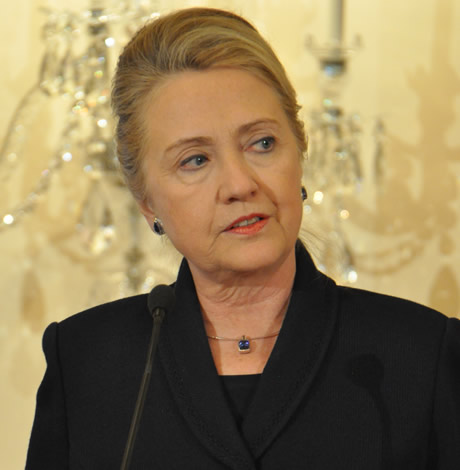
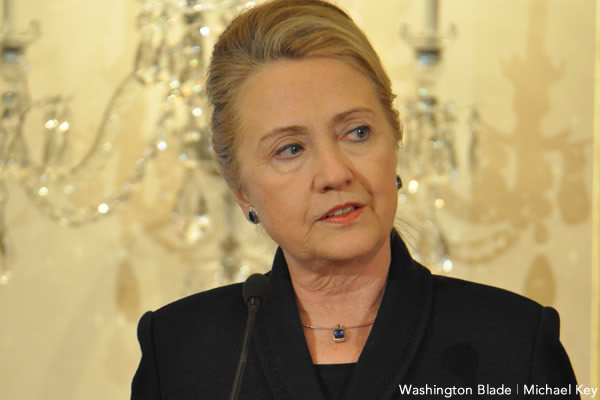
Hillary Clinton called for emphasis of LGBT rights in her State Department emails. Washington Blade photo by Michael Key)
Clinton, who’s now pursing the Democratic nomination for president in 2016, expressed the view in response to a 2009 Voice of America report forwarded to her by adviser Cheryl Mills on the alleged murder and torture of gay Iraqi men, many of whom reportedly said they were more secure under the regime of Saddam Hussein.
Clinton responded 11 minutes after Mills sent her the article.
“So sad and terrible,” Clinton writes. “We should ask Chris Hill to raise this w govt. If we ever get Posner confirmed we should emphasize LGBT human rights.”
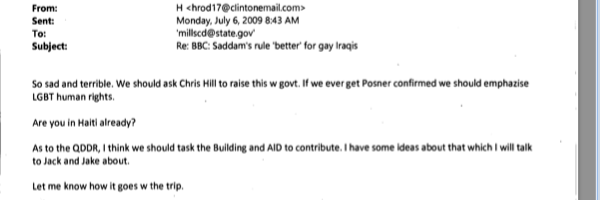
The Chris Hill to which Clinton is referring is likely the U.S. ambassador to Iraq during the first two years of the Obama administration. Posner is likely Michael Posner, who came to serve in the State Department after his confirmation as assistant secretary of state for democracy, human rights and labor.
Clinton’s call for pushing LGBT rights within the State Department is consistent with her stated philosophy that “gay rights are human rights and human rights are gay rights” and her 2011 speech in Geneva in which she highlighted international LGBT rights concerns.
Other emails in the batch unveiled on Tuesday, which span from March to December 2009, demonstrate the hang-wringing on the perceived lack of progress on LGBT issues in the first years of the Obama administration and the potential creation of a State Department official dedicated to LGBT human rights.
The emails reveal that among the individuals forwarding articles to the Clinton State Department on LGBT rights was Richard Socarides, a gay New York-based advocate who advised former President Bill Clinton on gay rights issues.
Socarides told the Washington Blade that as a former White House official he sometimes passed along information and reports he thought would be of interest to the State Department. Sometimes, Socarides said, Clinton’s staff reached out to him with a specific question.
“From what I can tell, these emails are all part of that back-and-forth,” Socarides.
In one email to Mills, Socarides forwards a Gay City News article on anti-LGBT brutality in Iraq and writes, “You guys will have to deal with this at some point if not already.”
In response to the exchange, Socarides expressed satisfaction with how issues related to the rights of LGBT Iraqis were handled, saying it was part of ongoing concern about the country and “raised by our government at many levels and on repeated occasions.”
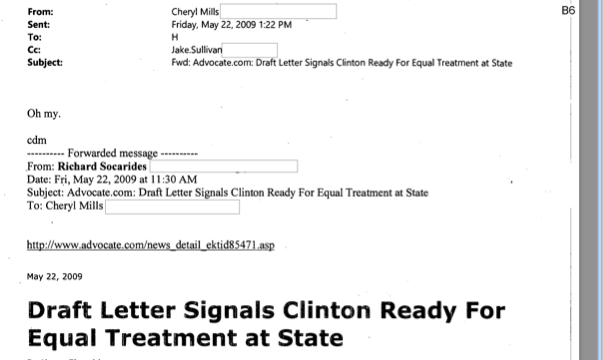
In another email dated May, 22, 2009, Mills forwards to Clinton an article in the Advocate on a draft letter signaling the State Department’s intention to extend partner benefits to gay Foreign Service officers.
Clinton’s response isn’t revealed, but Mills commentary on the article is simply “Oh my.”
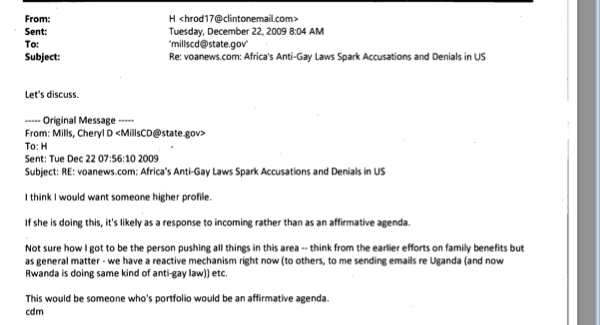
In another December 2009 email in which he forwards a Voice of America article on evangelical leaders spreading anti-gay sentiment in Africa, Socarides recommends the creation of an international LGBT point person.
“There is a lot of appreciation for everything the Dept has done around this so far and I think you could really build on it by putting someone there in charge of international LGBT human right issues,” Socarides said.
Socarides’ email was in turn forwarded to Clinton by Mills, who endorsed the idea, saying, “I think this is a good idea — what do you think?”
Clinton’s initial response was “Mira patel in sp told me she is already starting to do this. Do you want someone in drl.” The rest of Clinton’s response is redacted by the State Department. Mira Patel served at the State Department as an advisor for Clinton after having served on her Senate staff.
The response from Clinton apparently wasn’t adequate for Mills, who responded she “would want someone higher profile” and Patel is likely preparing a “response to incoming rather as an affirmative agenda.”
“Not sure how I got to be the person pushing all things in this area — think from the earlier reports on family benefits but as a general matter — we have a reaction mechanism right how (to others, to me sending emails re Uganda (and now Uganda is doing same kind of anti-gay law)) etc.,” Mills writes. “This would be someone who’s profile would be an affirmative agenda.”
Clinton has a short response to Mills eight minutes later, “Let’s discuss.” The Clinton emails don’t reveal the resolution of this discussion, which may have been taken offline.
In response to the email exchange, Socardies pointed to the appointment of Daniel Baer as deputy assistant secretary in the Bureau of Democracy, Human Rights & Labor. Part of the portfolio for Baer, who now serves as U.S. ambassador to Organization for Security & Cooperation in Europe, was international LGBT rights issues.
No specific LGBT international affairs official was appointed during Clinton’s tenure, but the State Department named Randy Berry as special envoy for the human rights of LGBTI persons under current Secretary of State John Kerry.
The emails unveiled by the State Department aren’t the last missives expected to be made public. As a result of a Freedom of Information Act request and the direction from Clinton herself, the emails are slated to keep coming on a rolling basis and all 55,000 pages should be public by Jan. 29. Clinton deleted an estimated 32,000 emails on recommendation from her legal team.
Over the course of her tenure at the State Department period, Clinton opposed same-sex marriage. The Blade could find no emails discussing the issue or any potential evolution on her views. Clinton endorsed same-sex marriage after she left the State Department in 2013.




Hungary
Hungarian authorities lift Budapest Pride ban
Country’s new government took office last month
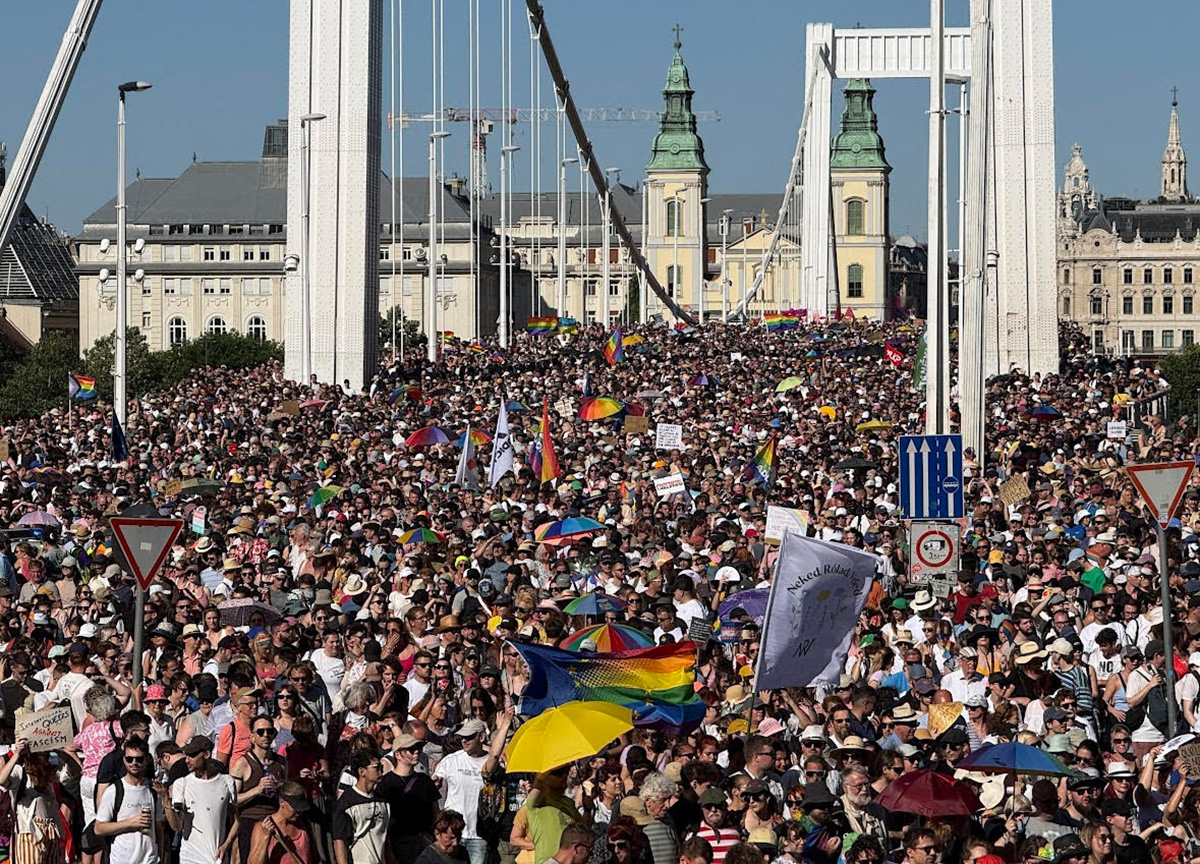
Hungarian police on May 29 announced they will allow the annual Budapest Pride march to take place.
“The Budapest Metropolitan Police has approved the 2026 Budapest Pride Parade and also has issued restrictive orders in relation to three counter-demonstrations,” a Budapest Metropolitan Police spokesperson told Politico.
Budapest is Hungary’s capital and largest city.
Hungarian lawmakers last year passed a bill that banned Pride events and allowed authorities to use facial recognition technology to identify participants. MPs later amended the Hungarian constitution to ban public LGBTQ events.
More than 100,000 people defied the ban and participated in last year’s Budapest Pride parade. The event became one of the largest protests against then-Prime Minister Viktor Orbán and his government since he took office in 2010.
Prime Minister Péter Magyar took office last month after his center-right Tisza party ousted Orbán’s Fidesz-KDNP coalition in elections that took place on April 12. The European Union’s top court, the EU Court of Justice, days after Orbán’s ouster struck down Hungary’s anti-LGBTQ propaganda law that MPs approved in 2021.
The EU on May 29 announced it will release more than €16 billion ($18.59 billion) in funds to Hungary that it withheld while Orbán was in office.
The Budapest Pride march will take place on June 27.
“We will march freely in fresh air for our rights, for the democratic Hungary,” said Budapest Pride on its Facebook page.
Colombia
Claudia López comes up short in Colombian presidential election
Former Bogotá mayor would have been country’s first lesbian head of government
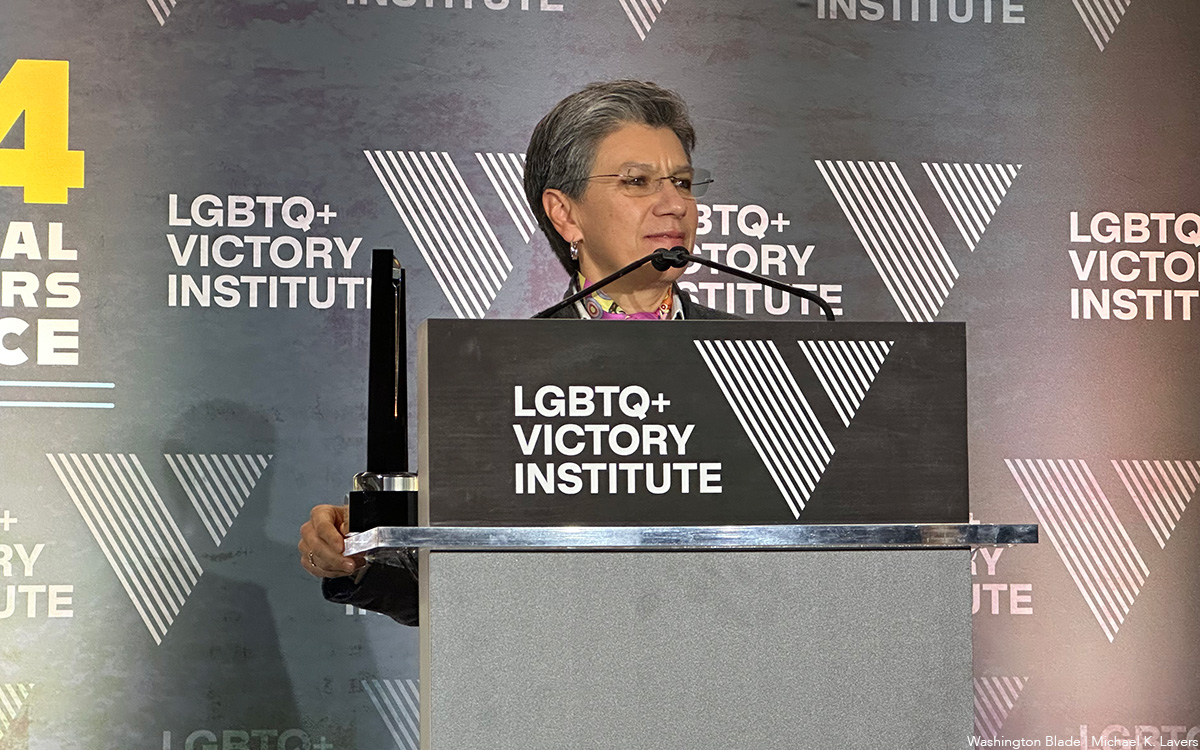
Former Bogotá Mayor Claudia López on Sunday finished fifth in the first round of Colombia’s presidential election.
López, a centrist who ran as an independent, received 225,517 votes. This figure is .95 percent of the total votes cast.
López was the Colombian capital’s mayor from 2020-2023. She was a member of the Colombian Senate from 2014-2018. López, whose wife is outgoing Colombian Sen. Angélica Lozano, would have become the country’s first female and first lesbian president if she would have won the election.
The LGBTQ+ Victory Institute honored López in D.C. in 2024.
“We need to listen to each other again, we need to have a coffee with each other again, we need to touch each other’s skin,” she told the Washington Blade during an interview. She hadn’t yet declared her candidacy, and did not specifically discuss her plans to run.
Runoff to take place June 21
Abrelardo de la Espriella, a far-right lawyer who has praised U.S. President Donald Trump and Salvadoran President Nayib Bukele, on Sunday finished first with 43.74 percent of the vote. Senator Iván Cepeda, a member of outgoing President Gustavo Petro’s Historic Pact party, came in second with 40.9 percent of the vote.
Neither men received a majority of votes. A runoff between them will take place on June 21.
Ghana
Ghanaian lawmakers approve anti-LGBTQ bill
Measure that would criminalize allyship awaits president’s signature

Ghanaian lawmakers on Friday approved a bill that would, among other things, criminalize LGBTQ allyship.
Reuters reported MPs approved the Human Sexual Rights and Family Values Bill, 2025, in a voice vote after parliament’s Constitutional and Legal Affairs Committee backed it.
MPs in 2024 approved a similar bill, but it faced legal challenges and then-President Nana Akufo-Addo didn’t sign it. Lawmakers last year reintroduced the measure after President John Dramani Mahama took office.
The bill awaits his signature.
Rightify Ghana, a Ghanaian LGBTQ advocacy group, in a series of social media posts notes MPs passed the bill days before the 4th African Inter-Parliamentary Conference on Family Values and Sovereignty will take place in Accra, the country’s capital.

PHOTOS: Hagerstown Pride

Hungarian authorities lift Budapest Pride ban

Claudia López comes up short in Colombian presidential election

Barney Frank’s powerful legacy for LGBTQ federal employees

Books for a pre-Pride celebration

Dual endorsement for Independent Council-at-large: Patterson or Crawford

Introducing Next-Generation Assisted Living & Memory Support.

D.C. Pride flag raising ceremony set for June 1

Cedric Neal on his juicy narrator role in ‘Pippin’

Still marching: Rev. Troy Perry and the ongoing fight for liberation
-

 Opinions5 days ago
Dual endorsement for Independent Council-at-large: Patterson or Crawford
-
Real Estate5 days ago
Introducing Next-Generation Assisted Living & Memory Support.
-
District of Columbia4 days ago
D.C. Pride flag raising ceremony set for June 1
-
Theater5 days ago
Cedric Neal on his juicy narrator role in ‘Pippin’