a&e features
A milestone for 9:30 Club
Famed venue has welcomed gay acts throughout 35-year history
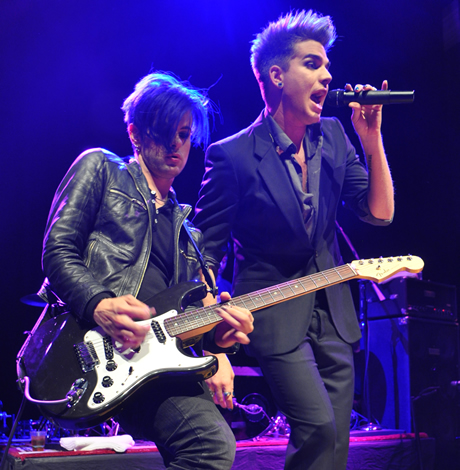
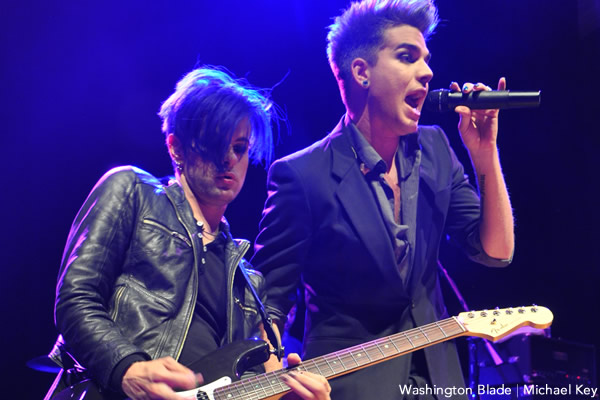
The 9:30 Club, celebrating its 35th anniversary this month, has been a gay-friendly spot since day one. Adam Lambert is among the out acts who have performed there. (Washington Blade photo by Michael Key)
The 9:30 Club is one of the nation’s most iconic venues and has hosted an enormous variety of artists since its founding in 1980. The club is currently celebrating its 35th anniversary with a new deluxe hardcover, “9:30 The Book,” which details the history of the hallowed venue and includes reflections from many of the countless artists who have performed there over the last three-and-a-half decades.
There has been no shortage of LGBT artists to play both at its original F Street location and its current location at 815 V St., N.W. The club was known for the roster of punk and hardcore heavyweights that regularly blew the doors off the place (Circle Jerks, Mission of Burma, Agent Orange, Minor Threat, Government Issue, Misfits, Black Flag, Killing Joke, Dead Kennedys and others). Seminal post-punk/goth pioneers Bauhaus played a show in early 1981, only a few months after the release of their debut album “In the Flat Field.” It wasn’t long, though, until a wider variety of artists made the 9:30 Club their tour stop in D.C., including LGBT artists of all genres.
Self-described queer artist Michael Stipe performed with R.E.M. at the venue multiple times, including in November 1982 in support of their “Chronic Town” EP, and a show on March 12, 1983, precisely one month before the band released its classic full-length debut “Murmur.” The main set opened with “Gardening at Night” and closed with “Radio Free Europe,” the two early songs that cracked open the door for their wider success. Minnesota-based Hüsker Dü, who would become one of the ‘80s most important alternative rock titans, played their first gig at the 9:30 Club on April 24, 1983. It was the start of a long and fruitful relationship between the club and Bob Mould, who’s gay, which continues to this day.
The first of multiple appearances by pop duo Erasure was on May 14, 1987 in support of their second album, “The Circus.” Gay singer Andy Bell shared his fond memories of that first 9:30 Club appearance: “The stage was so teeny and it was so crowded that I felt like Alice in Wonderland after she ate the cookie that turned her into a giant. It was an amazing gig, your head touched the ceiling and the audience would grab you by the ankles. Also it was very, very hot.”
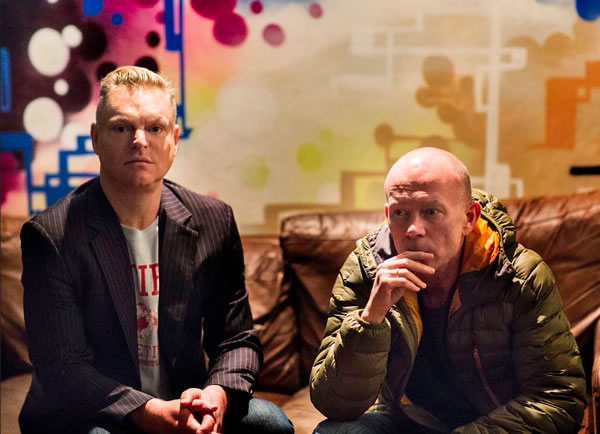
Andy Bell, left, and Vince Clarke of Erasure. (Photo by Phil Sharpe; courtesy Mitch Schneider Organization)
The duo’s most recent stop was for two electrifying performances in September 2014 in support of their album “The Violet Flame.”
Rufus Wainwright, the acclaimed Canadian singer/songwriter who is gay, has played at the 9:30 Club numerous times, with the crowd growing with his popularity.
“The 9:30 Club has a stage that moves back depending on how many spectators are at the show, always making the room look well attended,” he says. “I cherish the experience of starting out there with a sliver to work with, then a rectangle, and finally a big fat square full of punters thanks to the backwards moving stage. Hope that stage don’t start moving forward.”
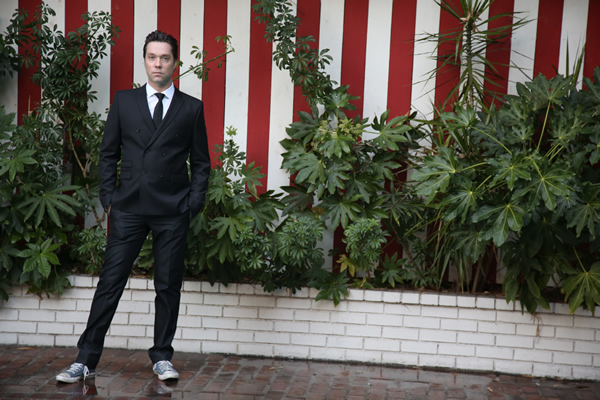
Rufus Wainwright (Photo by Sean James; courtesy Slate PR)
Melissa Etheridge, a rock legend who has been churning out great albums since her 1988 self-titled debut, played a highly publicized string of dates at the 9:30 Club in November 2014 in support of her album “This is M.E.”
Boy George, one of the all-time great pop figures of the last 30 years, appeared at the 9:30 Club on April 21, 2014 to support his excellent solo album, “This is What I Do.”
Gay icons The B-52’s have performed at the 9:30 Club in 2008 in support of their comeback album, “Funplex.”
Passion Pit, whose lead singer Michael Angelakos is gay, performed on June 3, 2010. Not long after, gay pop sensation Adam Lambert played on June 28, 2010, in support of his debut album “For Your Entertainment.”
Electric pop/rockers Neon Trees, whose lead singer Tyler Glenn is gay, performed at the club in July 2010, just as their single “Animals” was becoming a major hit.
In November 2012, Macklemore and Ryan Lewis performed their massive hit “Same Love” in support of same-sex marriage.
Visionary hip-hop artist Frank Ocean, who had recently revealed same-sex attraction and wrote about unrequited love for a man in the stunning track “Bad Religion,” performed at a show surrounded by buzz on July 23, 2012.
Critically acclaimed singer/songwriter John Grant, whose lyrics are sometimes startlingly confessional and self-deprecating, graced the 9:30 Club stage on May 11, 2014.
Atlas Sound, led by openly gay Bradford Cox, has appeared multiple times. Local D.C.-area genre-bending powerhouse Meshell Ndegeocello has also graced the 9:30 Club stage.
The flamboyant and always entertaining Scissor Sisters, featuring three gay members (Jake Shears, Babydaddy and Del Marquis) became a fixture at the club as they performed eight times between May 2004 and July 2012.
Kele Okereke, the talented frontman for Bloc Party, has appeared both with his band and as a solo artist.
Widely renowned lesbian duo Indigo Girls played at the club in March 2005.
The wonderfully outlandish and always memorable Canadian artist Peaches first appeared at the club in November 2006.
Against Me! first performanced at the 9:30 Club on Nov. 12, 2007. This was, of course, before Laura Jane Grace came out as a trans woman in 2012, as detailed in the band’s stunning 2012 album “Transgender Dysphoria Blues” (they’d play two dates in September 2014 after Grace’s transition).
Mika, the uber-creative openly gay British pop experimentalist, played on June 12, 2007.
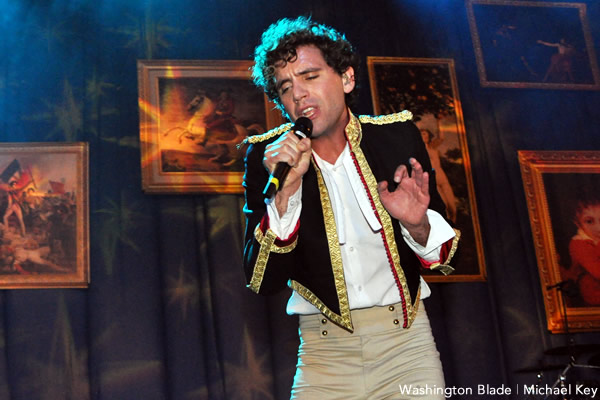
Mika (Washington Blade file photo by Michael Key)
Hercules and Love Affair, whose breakthrough hit “Blind” is about coming out as gay and then losing yourself in a world of endless hedonism, performed in November, 2008.
The lesbian country/folk/rock singer/songwriter Brandi Carlile, who released the stunning album “The Firewatcher’s Daughter” last year, played the club in October 2009, the same night at the electrifying new wave revivalists Gossip, led by the amazing Beth Ditto who has referred to herself as a “fat, feminist lesbian from Arkansas.”
Other notable appearances by LGBT artists include Ani DiFranco (who’s identifies as bisexual), who first performed at the club in 1990 and has made many stops since, the most recent being in November 2013 and with another show coming up on Jan. 26.
A month and a half after the release of their breakthrough album “Dookie,” Rock and Roll Hall of Fame Inductees Green Day (led by openly bisexual frontman Billie Joe Armstrong), played their first 9:30 Club gig on March 15, 1994.
British alt-rockers Placebo (vocalist Brian Molko is bisexual, guitarist/bassist Steven Olsdal is openly gay) performed at the club in December 1998 in support of their classic album “Without You I’m Nothing.” Skunk Anansie, led by the dynamic bisexual vocalist Skin, played in September 1999.
Indie darlings Sleater-Kinney, featuring bisexual vocalists Corin Tucker and Carrie Brownstein (who once dated), played the 9:30 Club in May 2000 and then again in September. A month later, openly gay leather-clad metal icon Rob Halford of Judas Priest fame rocked the club with his band Halford.
Critically lauded Icelandic band Sigur Rós, whose amazing lead singer Jónsi is openly gay, first performed at the club in September 2001. Jónsi would play a couple solo dates in 2010. The 9:30 Club hosted synthpop legends Soft Cell, featuring pioneering gay artist Marc Almond, in 2002 when they toured in support of their final album “Cruelty Without Beauty.”
Tegan and Sara, the openly gay duo of Canadian twin sisters, first appeared at the club in October 2002.
The 9:30 Club has also hosted other events, including “RuPaul’s Drag Race: Battles of the Seasons” in March 2015. The club frequently has gay-themed dance parties in conjunction with Capital Pride every year.
And of course, getting back to Bob Mould, the alternative rock titan teamed up with DJ/producer/musician extraordinaire Rich Morel — who at last count has an astonishing 25 No. 1 singles on the Billboard Dance Chart to his credit — for the Blowoff dance party, which started small in the club’s back bar and turned into a mega event that eventually traveled to other cities. Morel cites the 9:30 Club as essential to Blowoff’s success.
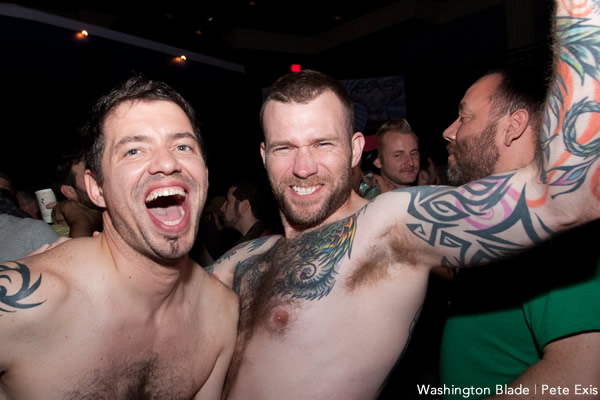
Blowoff (Washington Blade file photo by Pete Exis)
“The 930 club was Blowoff’s home base,” he says. “When Blowoff expanded and started doing shows around the country the vibe and mood we had built at the 930 was what we brought with us. The staff was so great and the space made for many memorable nights.”
He also fondly recounted for us the time a certain Lady Gaga came to see Blowoff in all its glory.
“I had first met Lady Gaga when I was touring with Cyndi Lauper,” Morel says. “Gaga opened a show we were playing in San Francisco. Gaga was just starting out and we chatted a bit and exchanged info. Fast forward a couple years and she’s the biggest thing on the planet. I got a text message from her PR guy that she was in D.C. and wanted to come down to Blowoff. It was a crazy night. She arrived with a security crew all dressed in Armani. We were hanging backstage and she burned a CDR of her new song, which was not released yet. She said the song was delicious and asked if I would debut it. It was “Bad Romance.” I played it during my set while she stood and waved at the crowd from the balcony. It was a surreal pop moment that I was delighted to be a part of.”
There is no question that if the 9:30 Club walls could talk, the stories they could tell would fill volumes. So many of the biggest artists in rock history have performed at the club that it’s hard to keep track, and that includes many LGBT artists as well. It’s been an impressive 35-year run for the club, with lots of rock ‘n’ roll memories made along the way.
Blade, 9:30 neighbors at former location
For a few years in the 1980s, the Washington Blade was a neighbor to the 9:30 Club at its original F Street location.
Although the Blade staff — especially on production night deadlines — sometimes worked late, long-time employees say the two entities had no major issues.
“We would of course work later hours back then,” says Phil Rockstroh, a long-time Blade staffer. “Everything was typeset and done by hand without computers and fax machines so getting through deadlines was much more time consuming.”
He says the noise wasn’t a problem.
“It wasn’t too bad as older buildings were constructed more solidly,” Rockstroh says. “There was only one entrance to the building and you entered so far to the elevator that went up to the other floors and then continued down the hall to the entrance to the 9:30 Club. Frequently at night if I was coming or going, there were people spilling out the doors.”
Despite the proximity, Rockstroh says he only remembers going to a concert there once to see a punk showcase with a former co-worker, the late Lyn Frizzell.
“The Blade has always had a friendly relationship with the 9:30 Club,” he says.



a&e features
Introducing the Torchbearers Awards honoring queer, trans women and nonbinary people
Meet the Legends and Illuminators lighting new paths
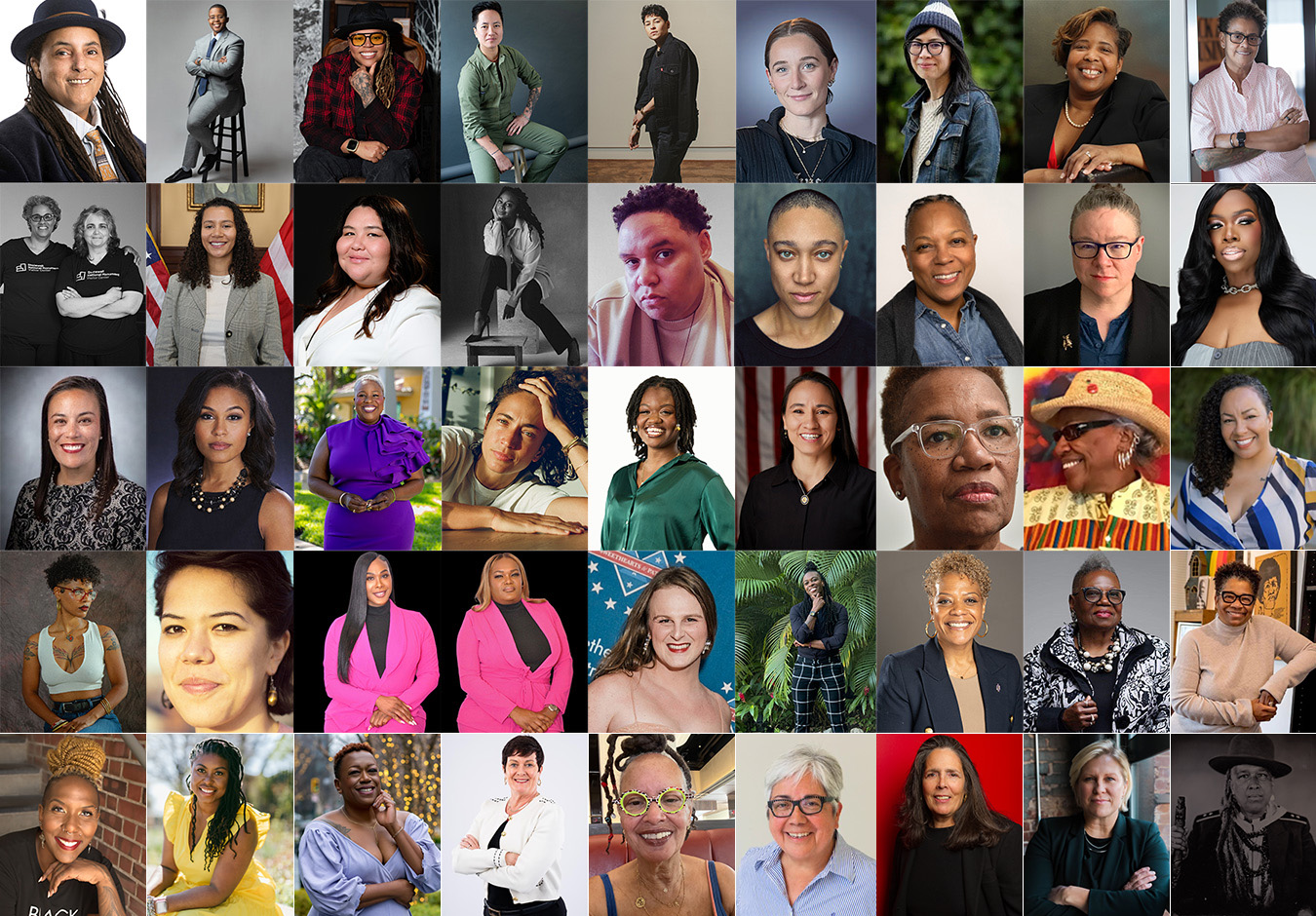
The Torchbearers Awards are more than recognition—they are a continuation of legacy. They honor the quiet architects of progress in our community: those who organize, advocate, build, and protect, often without fanfare but always with purpose. Rooted in a belief in intentional recognition, this honor names those who carry our movements forward—those who make room for others, who remind us that change is both generational and generative. In a time marked by uncertainty and challenge, these leaders push forward with courage, clarity, and an unwavering commitment to expanding opportunity and equity.
This year’s honorees reflect the full breadth of our community, spanning generations, backgrounds, identities, and industries. From Legends, with decades of leadership and having created pathways for others, to Illuminators, who are lighting new paths with creativity and innovation, each Torchbearer represents the power of intergenerational leadership and the strength found in our diversity. They are organizers, advocates, artists, policy leaders, healers, and changemakers whose lived experiences shape a shared vision for equity and liberation.
This award is our love letter to queer and trans women and nonbinary people who carry the flame when it would be easier to let it dim. To those who consistently show up, who use their voice and visibility and stand firm, often without recognition, so that others may live more freely and fully. The Torchbearers Awards celebrates not just what has been done, but the enduring spirit, responsibility, and collective care that ensure the work continues, and that the flame is always passed forward.
Co-Creators of the Torchbearers Awards: Shannon Alston, June Crenshaw, Heidi Ellis
Torchbearers Awards Advisory Board: Aditi Hardikar, Lesley Bryant, Jasmine Wilson-Bryant, Stephen Rutgers
ILLUMINATOR AWARDEES
- Representative Sharice Davids (she/her), (D, KS-03)
— U.S. House of Representatives - Greisa Martinez Rosas (she/her/ella)
— Executive Director, United We Dream - Paola Ramos (she/her)
— Journalist & Correspondent - Meagan A. Fitzgerald (she/her)
— Journalist & Correspondent - Jessica L. Lewis (she/her)
— Founder / Producer, Play Play DC - Savannah Wade (she/her)
— Founder, OAR Agency - Suhad Babaa (she/her)
— Filmmaker/ Former Executive Director of Just Vision - Ashlee Davis (she/her)
— Global Head of Inclusive Outcomes, Ancestry - Jazmine Hughes (she/her)
— Journalist and Former Editor at New York Times Magazine - Queen Adesuyi (they/she)
— Policy Advisor & Organizer, ReFrame Health & Justice - Michele Rayner, Esq. (she/her)
— Civil Rights Attorney, State Representative (Florida House of Representatives) - Gaby Vincent (she/her)
— Sports/Cultural Commentator and Community Leader - Jenny Nguyen (she/her)
— Founder & Owner, The Sports Bra - Denice Frohman (she/her)
— Independent Artist, Poet / Performer - Vida Rangel (she/her)
— Founder, Our Trans Capital - Roxanne Anderson (they/them)
— Executive Director, Our Space - Ann Marie Gothard (she/her)
— Co-Founder & President, Pride Live (Stonewall National Monument Visitor Center) - Diana Rodriquez (she/her)
— Co-Founder & CEO, Pride Live (Stonewall National Monument Visitor Center) - Wendi Cooper (she/her)
— Founder / Executive Director, Transcending Women - Toya Matthews (she/her)
— City of San Antonio, Texas - Mayor Gina Ortiz Jones (she/her)
— Sports/Cultural Commentator and Community Leader - Charity Blackwell (she/her)
— Poet, LGBTQ Advocate & Community Leader - Wilhelmina Indermaur (she/her)
— Director of Communications, Tyler Clementi Foundation - Em Chadwick (she/her)
— CMO, For Them & Autostraddle - Kylo Freeman (they/he)
— CEO, For Them & Autostraddle
LEGEND AWARDEES
- Sheila Alexander-Reid (she/her)
— Executive Director, PHL Diversity, Philadelphia Convention & Visitors Bureau - Cassandra Cantave Burton (she/her)
— Interim Director of Thought Leadership & Senior Research Advisor, AARP - leigh h. mosley (she/her)
— Photographer / Educator, PhotoFlo Photography - Jenn M. Jackson, PhD (they/them)
— Assistant Professor of Political Science; Author & Columnist, Syracuse University - Jordyn White (she/her)
— COO, Washington Prodigy / VP of Leadership Development & Research, HRC Foundation - AJ Hikes (they/them)
— Deputy Executive Director, ACLU - RaeShanda Lias (she/her)
— Digital Creator, RL Lockhart - Donna Payne-Hardy (she/her)
— Educator, EEO Specialist, Founder of NBJC, Former Leader at the Human Rights Campaign - Courtney R. Snowden (she/her)
— Principal, Blueprint Strategy Group - Gaye Adegbalola (she/her)
— Musician & Activist, Musician / Inductee of the Blues Hall of Fame - Cheryl A. Head (she/her)
— Independent Author, Novelist (Crime Fiction) - Letitia Gomez (she/her)
— The American LGBTQ+ Museum, Board Chair - Lynne Brown (she/her)
— Publisher, Washington Blade - Shay Franco-Clausen (She/Her/Ella/Queen)
— Political Strategist and Organizer - Melissa L. Bradley (she/her)
— Founder & Managing Partner, New Majority Ventures - Meghann Burke (she/her)
— Executive Director, NWSL Players Association - Victoria Kirby York, MPA (she/they)
— Director of Public Policy & Programs, National Black Justice Collective - Joli Angel Robinson (she/her)
— CEO, Center on Halsted - Jeannine Frisby LaRue (she/her)
— CEO, Moxie Strategies - Alice Wu (she/her)
— Film Director (Saving Face, The Half of It) / Screenwriter - Storme Webber (she/her)
— Interdisciplinary Artist / Educator, University of Washington - Kim Stone
— CEO of the Washington Spirit, Washington Spirit - Mickalene Thomas
— American Visual Artist, Mickalene Thomas Studio - Erika Lorshbough (any/they/she)
— Executive Director, interACT - J. Gia Loving (she/ella)
— Co-Executive Director, GSA Network
a&e features
D.C. springs back to life with new, returning events
Cherry blossoms, Rehoboth season kickoff, and more on tap
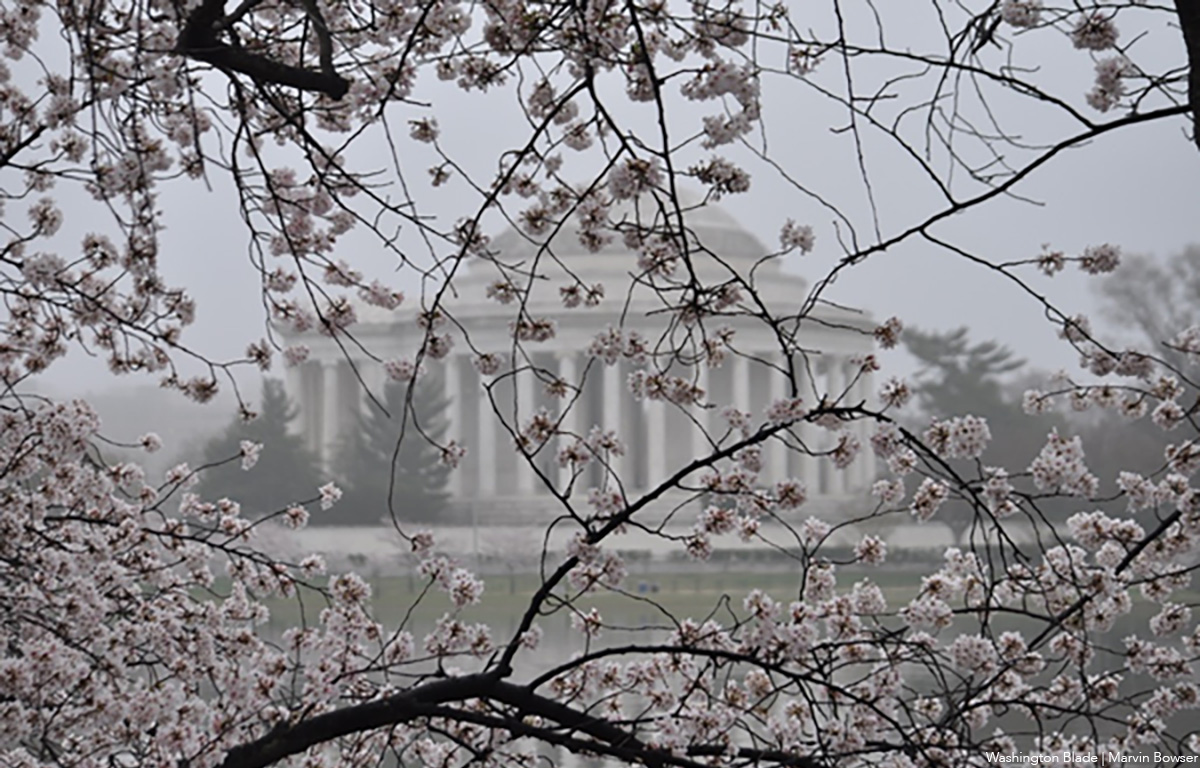
Longer and warmer days are back meaning: It’s time to get out of the house and enjoy Washington D.C.’s many events. Below are a few to check out this spring.
The National Museum of Women in the Arts will host “Making their Mark: Works from the Shah Garg Collection” until Sunday, July 26. This exhibition illustrates women artists’ vital role in abstraction, considers historical contributions, formal and material breakthroughs and intergenerational relationships among women artists over the last eight decades. For more details, visit. NMWA’s website.
Art in the Attic will host a pop-up on Saturday, March 14 at 6 p.m. at 1012 Madison St., Alexandria, Va. There will be a variety of vendors selling products across different modes of art. For more details, visit Eventbrite.
Play Play will host “Indoor Recess – The art of play” on Sunday, March 15 at 2 p.m. This event will embody classic recess energy, including opportunities to build and experience community and connections through games, movement, art stations, and creative freedom. Tickets are $12.51 and can be purchased on Eventbrite.
Spark Social will host “Gay Bar Crawl on U Street” on Friday, March 20 at 7:30 p.m. This will be a fun night out in gay D.C. with other gay people, whether you’re visiting D.C., new to the area, or just looking to expand your social circle. Many crawlers have formed lasting friendships and even romantic relationships after just one night out. Tickets are $35.88 and are available on Eventbrite.
Creative Suitland Arts Center will host “EFFERVESCENT: House of Swann” on Saturday, May 30 at 7 p.m. This will be a gay, good time where we will celebrate love, joy, wellness, and visibility for the LGBTQIA+ community. Tickets start at $17.85 and can be purchased on Eventbrite.
SWAG Works DC will host “Unapologetically Her” on Saturday, March 14 at 2 p.m. at 701 E St., S.E. This event is a powerful celebration of womanhood, resilience, creativity, and self-expression in honor of Women’s History Month. This all-women exhibition highlights the diverse voices, stories, and artistic perspectives of women who create boldly, live authentically, and stand confidently in their truth. This event is free and more details are available on Eventbrite.
9:30 Club will host “Gimme Gimme Disco: A Dance Party Inspired by ABBA” on Saturday, March 14 at 6 p.m. There will also be a “Donna Summer Power Hour – The Queen of Disco” segment during this event. It’ll be one hour of music with no skips. Tickets are available on 9:30 Club’s website.
Harder Better Faster Stronger will host “Heated Rivalry Rave” on Friday, March 20 at 9 p.m. at Howard Theatre. This event is open to all ages. Tickets are available on the theater’s website.
CAMP Rehoboth hosts its 25th annual Women’s+ FEST, April 9-12 in Rehoboth Beach, Del. Entertainers include headliner Mina Hartong, a comedian, storyteller, and founder of Lez Out Loud; and singer Yoli Mayor. There are dances, dinners, pickleball, and much more. Details and tickets at camprehoboth.org.
Also in Rehoboth Beach, the Washington Blade’s 19th annual Summer Kickoff Party is set for Friday, May 15 featuring Ashley Biden, who will accept an award on behalf of her brother Beau. State Rep. Claire Snyder-Hall will also speak. More speakers and the venue to be announced soon.
The annual D.C. Cherry Blossom Festival kicks off March 21 at DAR Constitution Hall and culminates with Petalpalooza on April 4, the day-long, outdoor street party with music and art, stretching across Navy Yard, and ending with fireworks over the Anacostia River.
a&e features
‘Queer Eye’ star Dorriene Diggs on life before and after appearing on hit show
Emotional January episode highlighted 40-year love affair with partner

Dorriene Diggs, 70, whose 40-year relationship with her domestic partner, Diane until Diane’s passing in 2020, the couple’s tense relationship with their respective parents, and Dorriene’s current living arrangement with her straight sister Jo, were the focus of a final season episode of the popular TV series “Queer Eye.”
In a recent interview with the Washington Blade, Diggs told of how her appearance on the show has impacted her life. She elaborated on the many aspects of her life experiences that she told to the five “Queer Eye” co-hosts who interviewed her and her sister in their D.C. home.
Although her parents and her partner’s parents, who have since passed away, were not accepting of their relationship, Diggs has said most of her family members at this time reacted positively to her appearance on the show.
“They loved it,” she told the Blade. “Yes, everybody that saw the show called me and said they loved the show, they really enjoyed themselves watching it.”
Through an arrangement with D.C.’s Rainbow History Project, the “Queer Eye” show featuring Diggs and her sister was presented in a special screening on a large video screen at the D.C. History Center in January.
“Dorriene, a 70-year-old Black lesbian living in Washington, D.C., had spent decades building a life with her partner while navigating silence within her own family,” a “Queer Eye” statement announcing the episode on Diggs states.
“The Fab Five did not arrive to introduce Dorriene to herself, but to help ensure her story was finally heard in full,” the statement says.
Blade: Can you tell us how your appearance on the “Queer Eye” program came about? How did they find out about you?
Diggs: You know, I still don’t have all the details. I think it was my niece, Missy. And she knows somebody there from “Queer Eye.”
Blade: So, did you first learn about it when someone from “Queer Eye” contacted you?
Diggs: No, the “Queer Eye” guy knocked on my bedroom door and started talking. I was in my bedroom watching television and the next thing I know my door opened up and there was Karamo [Karamo Brown, one of the “Queer Eye” co-hosts] with his big black cowboy hat on, opening the door grinning. … They contacted Jo first. And when they came here, they realized there was a gay woman in the house, too. Because my name was not mentioned at first. After they came here, they learned about me, because when Missy reached out to them, she reached out to them about Jo. But that doesn’t bother me. This was all about Jo in the beginning, and not me. … They started talking to me and Jo. And he said, Dorriene, ‘you’ve done so much for so many people, it’s time for someone to do something for you.’ That’s what they said. He said, ‘this is the day we’re doing it for you.’
And so, they put me and my sister up in a hotel for a week. They gave us a personal driver to take us anywhere we wanted to go. And then they took us to a bunch of places. We didn’t know why they were doing all of this. We had no idea that they were renovating the house and renovating our bedrooms. We had no idea.
Blade: What was your reaction when you saw the home renovation?
Diggs: It was amazing. And they bought us all new complete wardrobes – clothes, shoes. But most of the stuff they got me I gave away to a women’s shelter. But it was so nice. Actually, to meet the guys. I’ve been watching the show for 10 years. I have watched it from the beginning. And actually, it brought me and my sister closer – really. We’re closer now than we’ve ever been. She’s my baby sister – not the baby, but next to the baby. She’s the younger one.
Blade: What has been the reaction to your appearance on the show? Do more people now recognize you?
Diggs: Yes, yes. I’m getting phone calls and it’s almost like I’m a celebrity. And I don’t want people to make a fuss over me. All the things I did I did from the heart. I really did. And I don’t want people to think I’m more than I am. I’m just a good Christian woman that believes in giving back.
And I do. God gives me help giving. That’s what I do. And I don’t want anything in return from anyone. You know, because I know what it means to not to have. I know what it means to go to bed hungry, with no food. Going to school with holes in your shoes. I know that. I know that feeling. I’ve been there. And I promised myself as a kid I would never live like this again. And when I got bold enough to leave home, I left home at 14, and I moved in with a drag queen. Damen was his name.
Blade: Did your appearance on the show change your life and your relationship with your sister?
Diggs: Yeah, yeah, it actually did. We are actually closer now than we’ve ever been. Because, like I said, I moved away from home early and I never went back. My parents had a problem with my lifestyle. They really did. My mom looked at me with such hatred. When I was old enough to say goodbye, I never looked back. And to come back around now in the last few years after Diane died, that’s when I came back here.
And at one point I stayed with my nephew Todd and his wife – but he got killed in a car accident. I couldn’t stay at his house anymore. So, then I called Jo and told her I need to get out of here. And without hesitating she came and picked me up and brought me to her home. And I’ve been here ever since.
Blade: Can you tell a little about when it came about and how you met your partner?
Diggs: We lived on 18th Avenue in condos. I just bought one. Hers was above mine. I bought the bottom one. When my brother came over, she was getting out of her car. She was driving a Vega. And I turned to my brother and I said – this is the God’s honest truth – I said Keith, that’s the woman I’m going to spend the rest of my life with. Just like that. And he started laughing. He said, girl you’re crazy. I said I know I’m crazy, Keith, but I’m telling you that woman right there is who I’m going to spend the rest of my life with.
Blade: And when was that?
Diggs: It was 1980 actually. And then I started going to the laundry room to do my laundry. So I started talking to her. She said, ‘I’m not speaking to you.’ Isaid ‘why not?’ She said ‘because you’re nothing but a female gigolo.’ And I said I’m not dating anymore. I’m waiting for you. ‘No, you’re too fast for me.’ I said, ‘well, I’m not giving up.’
And I didn’t give up. So, I was playing an album one day and she knocked on the door and asked what I was playing, I think. I said you liked that. She said yeah. I said OK, I’ll bring it upstairs and we can listen to it together. So, when I went up there to her apartment that day and whenever I went up there, I never left.
Blade: So, your partner’s name was Diane?
Diggs: Yes, Ruth Diane Robinson. But she hated the name Ruth. So, the only people who called her Ruth were at work, the people she worked with. Everybody else called her Diane.
Blade: And how many years were you together?
Diggs: Forty. Forty years together
Blade: And where were you living with her most of the time?
Diggs: We lived in Hagerstown the longest, Hagerstown, Md. And so, if Diane hadn’t died I probably still would have been in our house in Hagerstown.
Blade: Can you tell me a little about what you were doing career wise during those years?
Diggs: I do computers. I used to do computers. And before that I cooked. I love to cook like my mom. And then I wanted to do something else. So, I taught myself computers. I taught myself how to build computers and stuff. So, then I got my own computer business called Ida One Computer Consulting. And so, we helped build computers for people.
Blade: Around when was this, in the 1980a or 1990s?
Diggs: Yes, in the 1980s. I think I stopped I would say around ’96, when I stopped. Because we both said we were going to retire at 55. And we did. We both retired at 55. And then she started diabetes. Every day I had to give her an injection because she was afraid of needles. She couldn’t give it to herself. So, I had to give her an injection every day One time, I don’t remember when, she had a mild stroke. And I had to take care of her. I’ve always taken care of her. And I don’t regret it. I never regretted it. It’s taking care of the one you love.
Blade: When was it that she passed away?
Diggs: In 2020. I found her on the kitchen floor.
Blade: How did your family and your extended family react to your relationship with Diane?
Diggs: Well, her family, oh my God, they hated me – her mother the worst. Because I put a stop to them treating her really bad. I told her mother – I said never in my life – my mother raised me well. Never disrespect someone’s mother. I said but this time I’m going to disrespect you because you are going to start treating Diane like you ought to. This is a wonderful woman and you and your son and you it’s always about your son. You never, ever say anything good about your daughter.
I said it isn’t going to happen again. You’re never going to disrespect her again. I said you take a damn good look at her because you’ll never see her again. I meant that. I grabbed Diane. I said it’s time to go. They don’t care about you.
Blade: Can you tell a little about your family?
Diggs: Yeah, I’m a triplet sister. So, it’s Dorriene, Chorine, and Chrissy — we are the triplets. So, my mom had a set of twins and a set of triplets within nine months. One of the twins died at birth. So, the other twin is Margaret.
Blade: So then how did your family react to you and Jo being on “Queer Eye”?
Diggs: Most of my family really had no problem with it.
Blade: Were you out to them?
Diggs: Oh yeah. I was never in the closet. I didn’t give a damn what people felt about me, sweetheart. I really didn’t. I didn’t care. Because I was going to be me. And for people who didn’t like it, I wasn’t living for them, I was living for me. I’ve always been out. I had a brother who was also gay, Marvin. God rest his soul, too. But he stayed in the closet. He was in the closet until he was about 55 years old.
But everything I said on the show was the truth – my account. The things that I went through with family … You can’t tell me how I felt. If they try to make mom and dad out as perfect, they weren’t perfect. They were the worst parents. That’s my account of it.
So yes, everything I said on that interview was the truth. That’s one thing people who know me know – I do not lie.
Blade: What are some of the things you like to do these days?
Diggs: I’m a sports lover. I love sports. So, my baseball season is getting ready to get started. Baseball is my favorite sport. Yes, I love baseball. I like the statistics of it. And watching the guys. I wish they had a women’s professional baseball team, honestly. … I’m a D.C. sports fan. The Wizards, the Nationals, the Mystics, the Caps. … And see, I’m a diehard Redskins fan and I refuse to call them the Commanders. They’re the Redskins. They will always be the Redskins to me. I love my sports teams.
Blade: Can you tell a little about the history of the house where you and Jo now live and where they did the filming of the “Queer Eye” show?
Diggs: Jo had a house on 17th Street, I think it was Northeast because it was over there by H Street, N.E. And I think somebody wanted to buy her house. I don’t know why she moved. So, she found this house. Because she wanted to buy something where she could buy a house straight out. She didn’t want a mortgage on another house.
Blade: What are your thoughts on being on the last season of “Queer Eye?”
Diggs: Yeah, we were the last ones. We took it out with a bang, me and Jo. That was it.
Blade: Can you say how you and Jo appearing on the show impacted your life?
Diggs: I don’t know. I’m the same person. I’ve been getting calls from people saying I saw you on the show. And friends who I haven’t seen in years have been calling. … So yeah, the show, people I haven’t seen and talked to in years have been calling. I think that’s a good thing.

Blade contributor, husband exchange vows in D.C.

Ghanaian president welcomed to Philadelphia amid backlash over anti-LGBTQ bill

PHOTOS: ‘No Kings’ rally and march

‘Out for McDuffie’ event held at D.C. gay bar

‘Jonah’ an undeniably compelling but unusual memory play

Pa. House passes bill to codify marriage equality in state law

DeSantis signs emergency bill that restores Fla. ADAP funding

Introducing the Torchbearers Awards honoring queer, trans women and nonbinary people

A surtax would end this war quickly

New IOC policy bans trans women from Olympics
-

 Pennsylvania4 days ago
Pa. House passes bill to codify marriage equality in state law
-
Florida5 days ago
DeSantis signs emergency bill that restores Fla. ADAP funding
-
a&e features4 days ago
Introducing the Torchbearers Awards honoring queer, trans women and nonbinary people
-
Opinions4 days ago
A surtax would end this war quickly