Arts & Entertainment
Tony Awards honors Orlando victims; ‘Hamilton’ wins 11 awards
theater community takes time to recognize tragedy
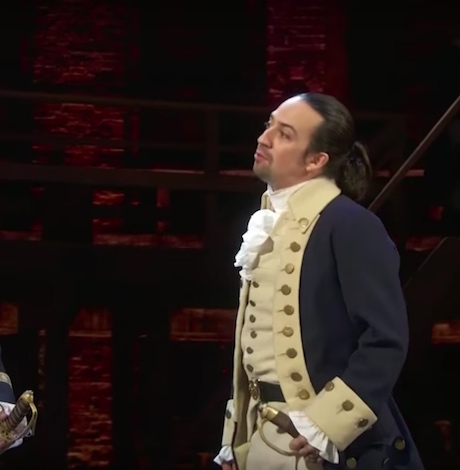
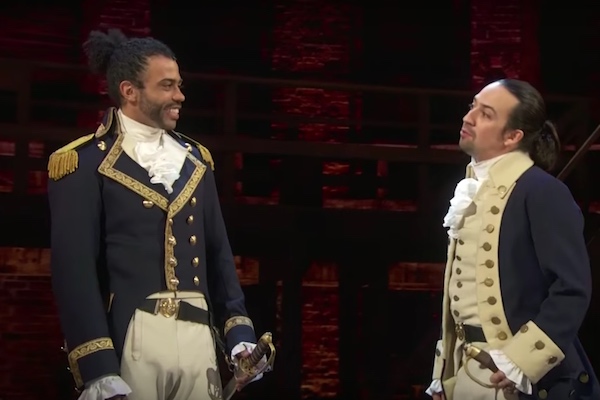
(Daveed Diggs and Lin-Manuel Miranda performing in ‘Hamilton’ at 70th Annual Tony Awards. Screenshot via YouTube)
The 70th annual Tony Awards recognized the top contenders in the theatre community, but the victims of the biggest mass shooting in U.S. history was still top of mind.
Host James Corden began the awards show with a message to Orlando.
“On behalf of the whole theater community and every person in this room, our hearts go out to all of those affected by this atrocity,” Corden said in reference to the Orlando massacre at gay nightclub Pulse early Sunday morning. “All we can say is you are not on your own right now. Your tragedy is our tragedy. Theater is a place where every race, creed, sexuality and gender is equal, is embraced and is loved. Hate will never win. Together, we have to make sure of that. Tonight’s show stands as a symbol and a celebration of that principle. This is the Tony Awards.”
Lin-Manuel Miranda accepted the award for Best Score for his musical brainchild “Hamilton” by reciting a sonnet that served as a moving tribute to both his wife Vanessa Nadal and to the Orlando victims.
“When senseless acts of tragedy remind us. That nothing here is promised, not one day. This show is proof that history remembers. We live through times when hate and fear seem stronger. We rise and fall, and light from dying embers. Remembrances that hope and love last longer. And love is love is love is love is love is love is love is love; Cannot be killed or swept aside. I sing Vanessa’s symphony; Eliza tells her story. Now fill the world with music, love, and pride,” Miranda tearfully read.
The “Hamilton” cast performed “History Has Its Eyes on You” and “Yorktown (The World Turned Upside Down), with the latter performance including a noted difference between the Broadway production and the Tony performance. This particular performance did not include prop guns in the choreography. New York Times theater reporter tweeted early Sunday the cast had decided to omit the muskets from the stage in light of the Orlando tragedy.
Actor Frank Langella accepted the award for Best Lead Actor in a Play for “The Father” and used his speech, which he admitted in the press room following his win to writing before the broadcast, to offer encouraging words to Orlando.
“I found some words that will mean more to you than a list of names,” Langella said. “When something bad happens we have three choices: we let it define us, we let it destroy us, or we let it strengthen us. Today in Orlando we had a hideous dose of reality, and I urge you Orlando to remain strong.”
The Tony Awards also tweeted Sunday evening nominees and attendees would be wearing silver ribbons, created by Broadway costume designer William Ivey Long, at the ceremony.
“Hamilton” raked in 11 awards including for Best Musical, Best Book of a Musical, Best Choreography and Best Costume Design of a Musical. Actor Leslie Odom Jr. won Best Performance by an Actor in a Leading Role in a Musical for his role as Aaron Burr in “Hamilton.” Renée Elise Goldsberry’s role as Angelica Schuyler earned her a win for Best Featured Actress in a Musical. Daveed Diggs also won Best Featured Actor in a Musical for his dual roles as Marquis de Lafayette and Thomas Jefferson.
“The Color Purple” won for Best Revival of a Musical and Cynthia Erivo won for Best Lead Actress in a Musical for her role as Celie Harris Johnson in the production.
All four acting awards went to actors and actresses of color.
“The Humans” won for Best Play and Jessica Lange won for Best Lead Actress in a Play for her role as Mary Tyrone in “Long Day’s Journey Into Night.”
For a complete list of winners, visit here.




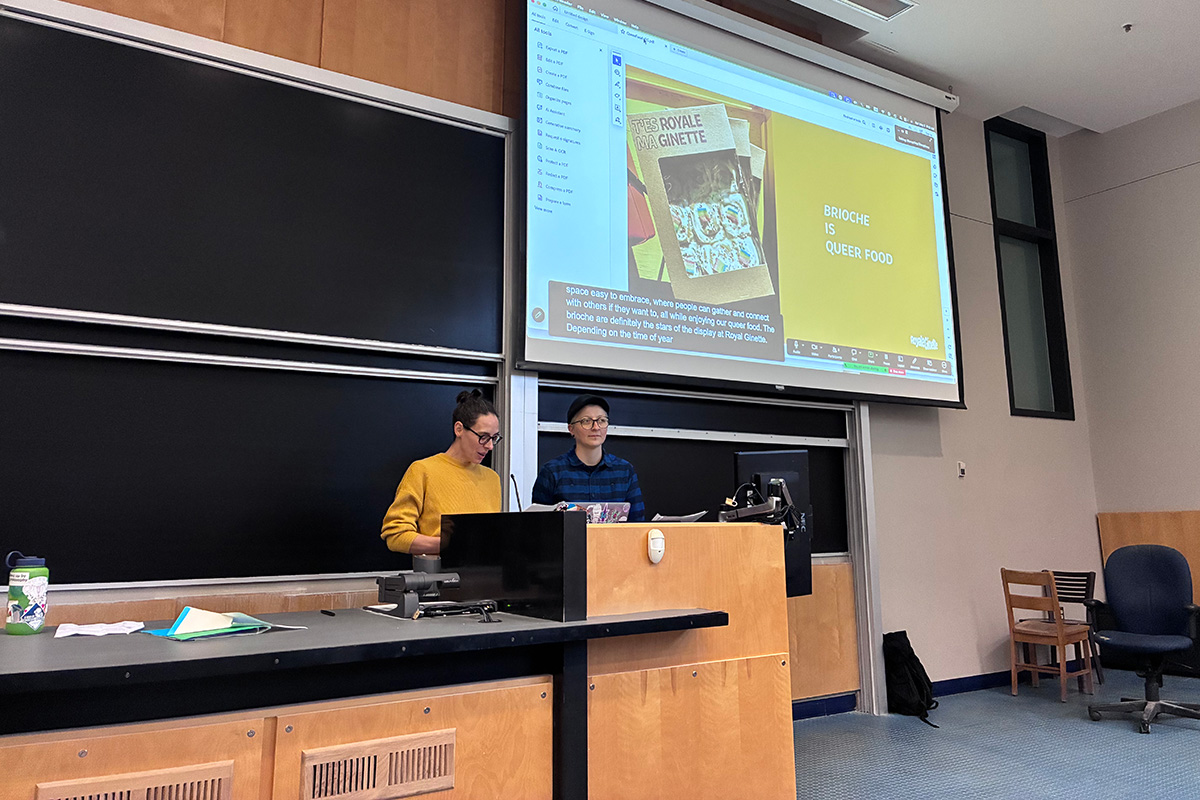
Just as humans have always had meals, queer humans, too, have enjoyed meals. Yet what is it that makes “queer food” distinct?
At the beginning of May in Montreal, the Queer Food Conference 2026 sought not to answer that question, but to further interrogate it. The conference united scholars, activists, artists, journalists, farmers, chefs, and other food industry professionals for three days of panels, workshops, discussions, and, yes, meals, in an inclusive, thoughtful, contemplative-yet-whimsical environment, taking a comprehensive view of the landscape of queer food.
The two organizers – Professor Alex Ketchum, at the Institute for Gender, Sexuality, and Feminist Studies of McGill University in Montreal, and Professor Megan Elias, Director of Food Studies & Gastronomy at Boston University – met in 2022 when Elias acted as a peer reviewer for Ketchum’s second book, “Ingredients for a Revolution,” a wide-ranging history of more than 230 feminist and lesbian-feminist restaurants, cafes, and coffeehouses from 1972 to the present in the US.
Elias, taken by the book and its exploration, invited Ketchum to speak at one of Elias’s courses, at which pastries were served and feminist bread making was baked into conversation. Elias floated the idea of co-organizing a queer food conference – and a hot 24 hours later, Ketchum said yes, with plans sketched out, from grants to topics to speakers. In parallel, the duo started to conceptualize “Queers at the Table,” a book based on their work (published last year).
The conference, the book, the research: their work is, in part, grounded in the question: What is queer food? True to queer theory, each has her own nuanced response as drivers of their research, challenging the traditional and looking beyond norms of food studies. Ketchum’s view is that it is grounded on food by and for the queer community, in specific histories, and especially in the labor behind the food. Elias posits that queer food is at the intersection of queerness and culinary studies, beyond gender norms and binaries, back to the societal basics of queer food as part of queer humans always having meals. “Queer food destabilizes assumptions about food, gender and sexuality, making space for a wider range of relationships to food,” she says.
The academics’ professed enthusiasm, however, rarely reached beyond small circles.
“I regularly attended big food studies conferences, but almost never saw presentations about gender identity beyond women’s roles,” says Elias about her prior work, and when her students would ask for additional literature about sexuality and food, results had been sparse. Ketchum echoed this gap: When she was in graduate studies, she received hesitation from leadership about her chosen field of study. By 2024, however, queer food as an area of study and practice had grown, whether in popular culture or well as in publishing, setting the stage for the first Queer Food Conference in 2024 in Boston. Their aim at that even was to launch the subfield of queer food studies into the mainstream, so that fellow academics, students, and those interested in the space could convene, “creating space for others to build,” says Ketchum. “People were enthusiastic.”
Once Ketchum and Elias published “Queers at the Table” in 2025 (notably, gay author John Birdsall also published a book examining queer identity through food last year, “What Is Queer Food?”), they laid the foundation for the 2026 conference in Montreal. This edition was an “embodied” conference, inclusive of various ontologies in queer food studies: theory, labor, art, taste, an interdisciplinary, expansive grounding.
Topics ranged from cookbooks and influencers to farming and land movements, bars and cafes, brewing and baking, history and sociology, writing and printmaking, healthcare and community, and centering marginalized – especially trans – voices.
Naturally, food was centered. The conference’s keynotes were not academics, but the chefs themselves who created the food with their own hands that attendees ate over the three days. “Not to disregard a pure academic space,” says Ketchum, “but to not have food in a room when we talk about food would be wild.”
Jackson Tucker, a Distinguished Graduate Fellow at the University of Delaware, said that “What I found [at the conference] was a genuinely diverse gathering: scholars who did grounded social research but also practitioners, organizers, and people who had never thought about an academic conference in their lives and didn’t need to. That mix is the soul of this whole project for me. Without the people who are out in the world doing queer food, the conference wouldn’t exist.”
Ketchum – her home being Montreal – also worked to fold in community-driven events so that attendees could get a taste of queer food in the city outside of classroom walls; for example, attendees participated in a collaborative evening pizza-making class at a queer-owned pizzeria.
The interdisciplinary nature of the conference led to sharing of research, thoughts, activities, and planning. There was a “value of bringing people together of different backgrounds, which leads to richer discussion,” she says.
Elias picked up on this theme: “I saw people bonding and connecting and believing in Queer Food Studies,” – one of the central goals that Ketchum noted, further legitimizing a nascent field. As both professors continue their research and leadership, they envision a continued layering of centering the queer experience and community through the shared value and study of food.
a&e features
Gay Men’s Chorus celebrates 45 years at annual gala
‘Sapphire & Sparkle’ Spring Affair held at the Ritz Carlton
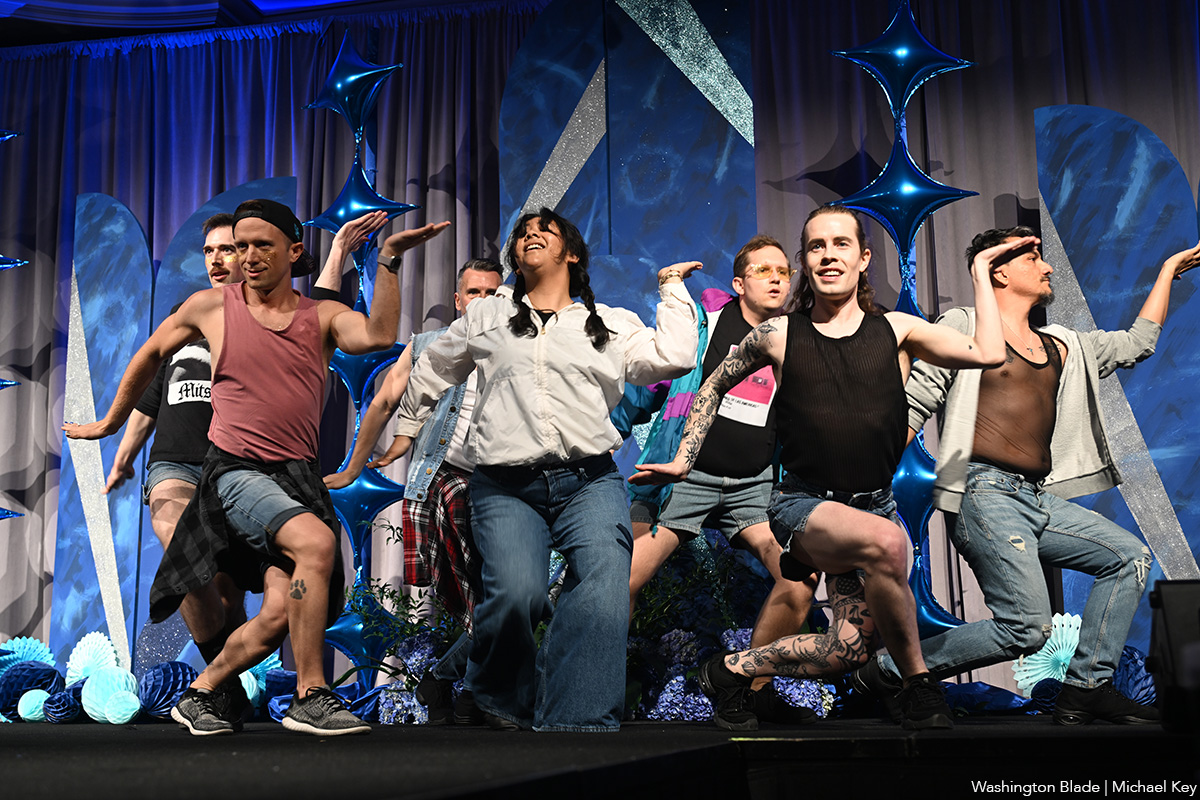
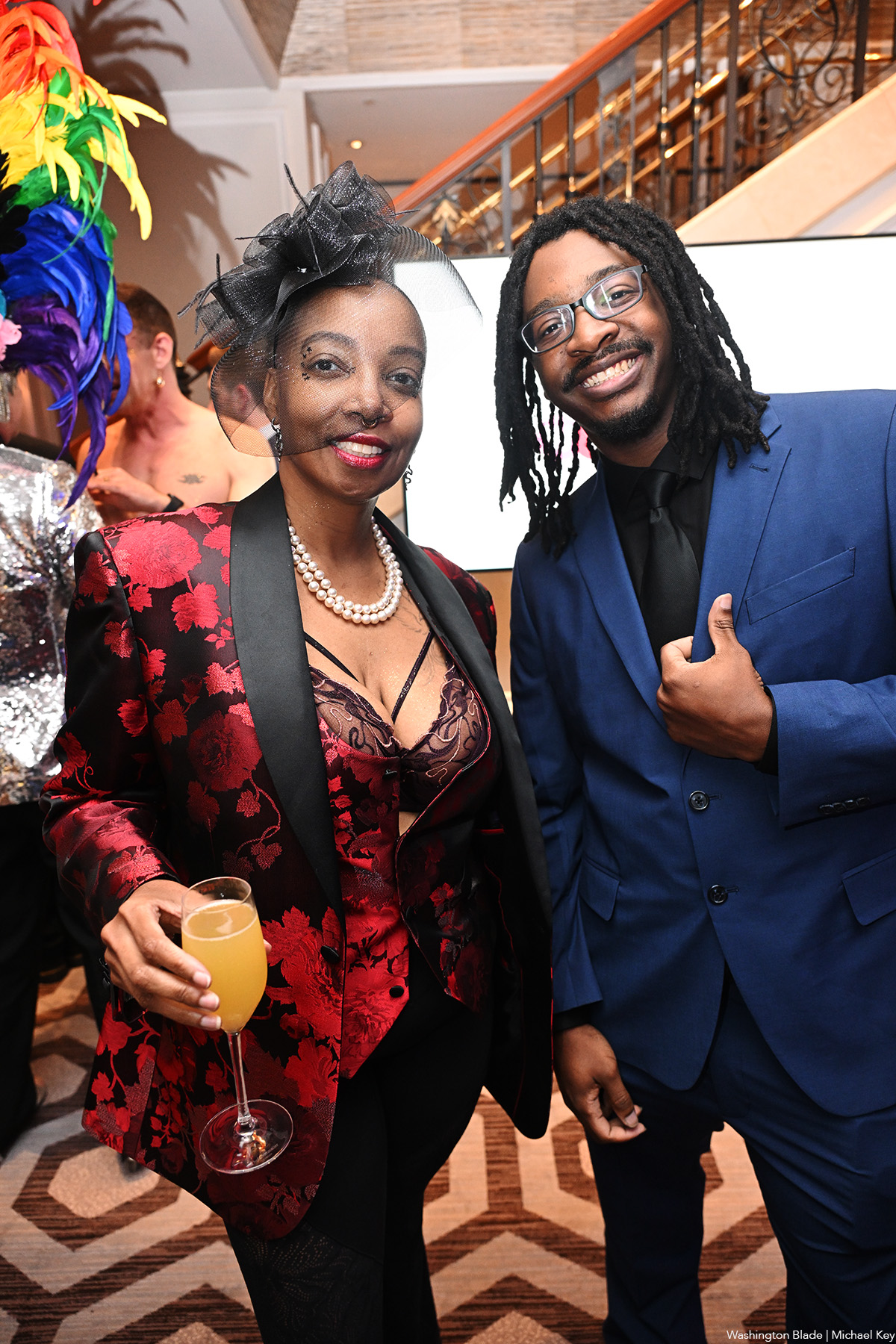
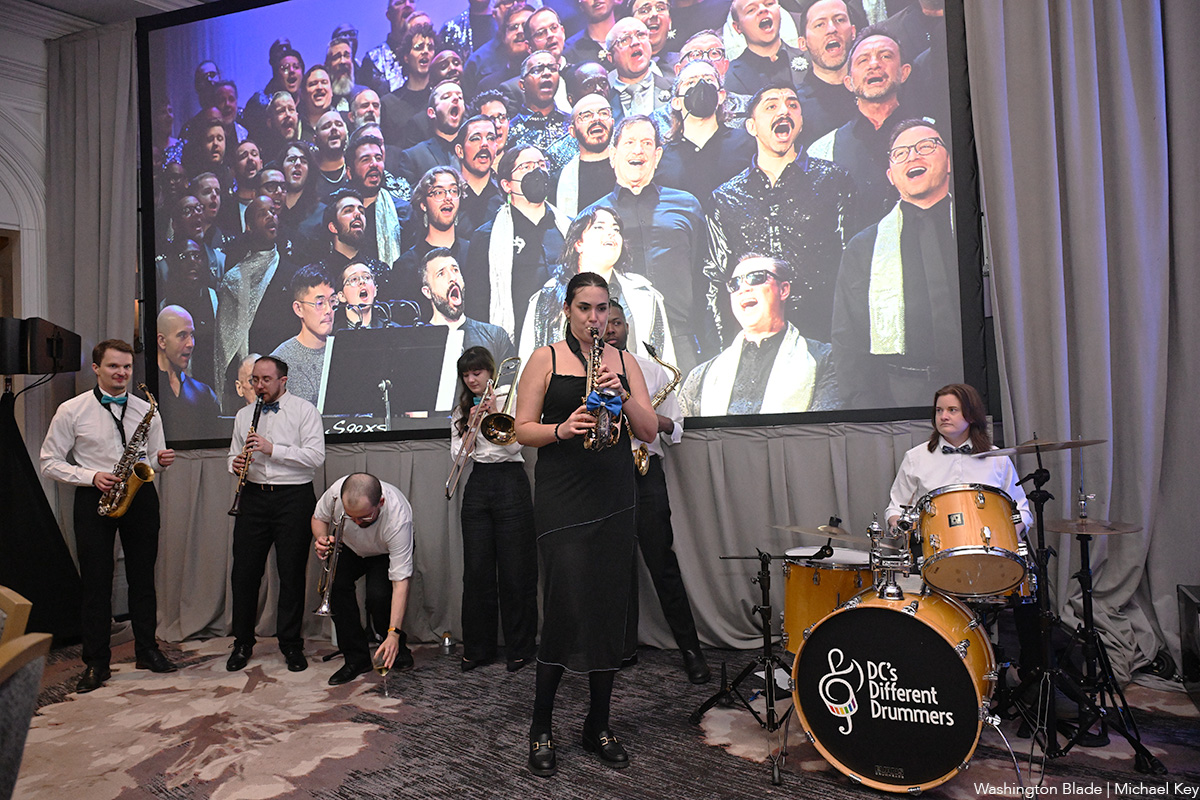
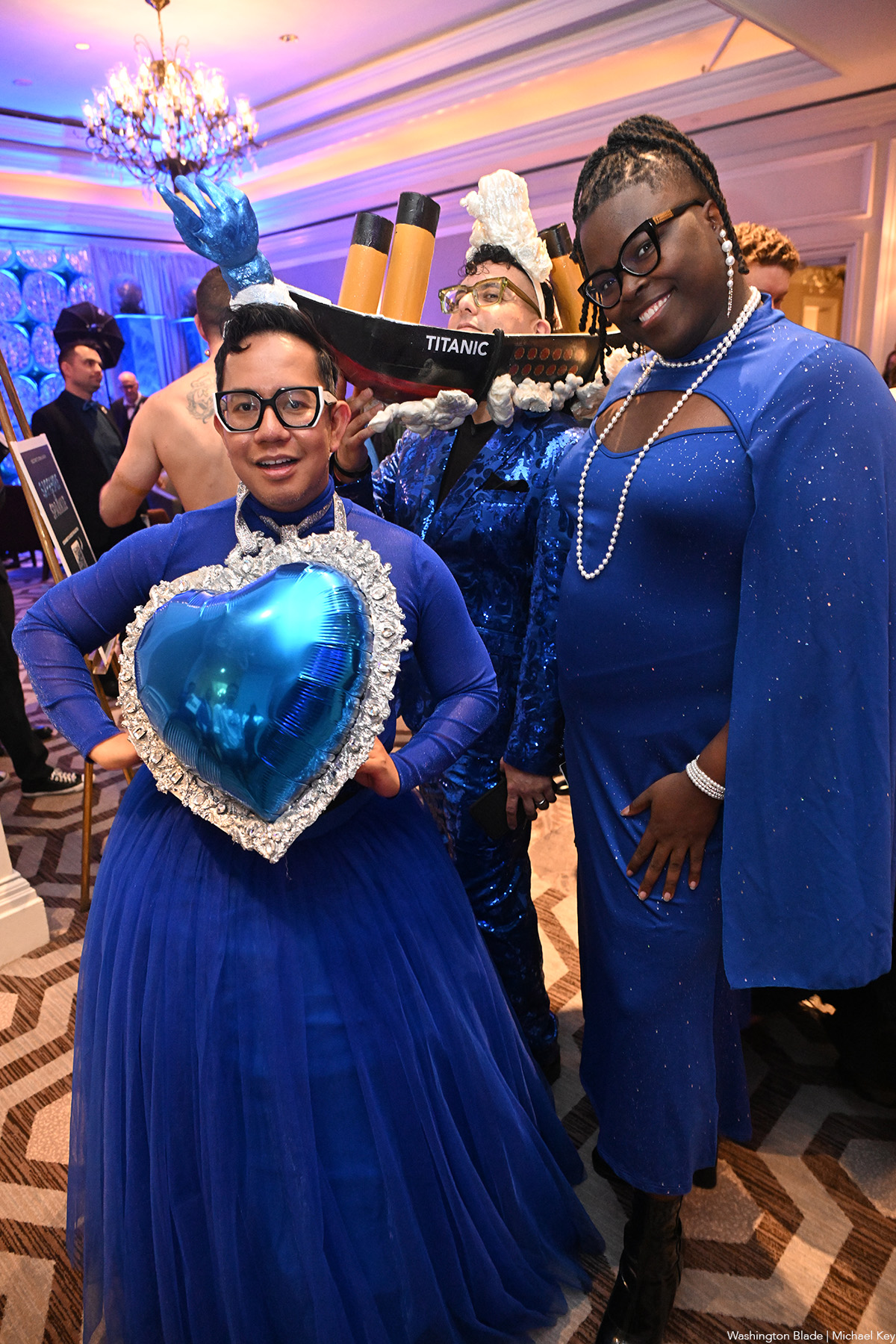
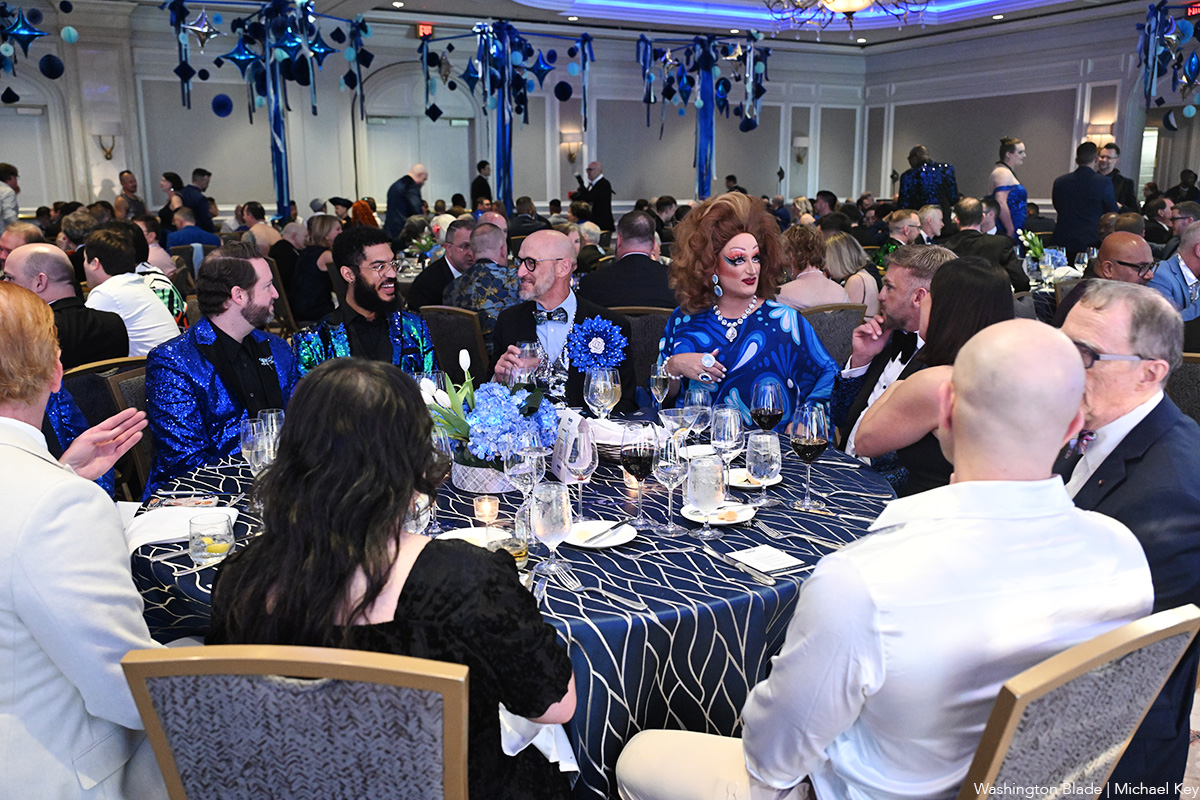
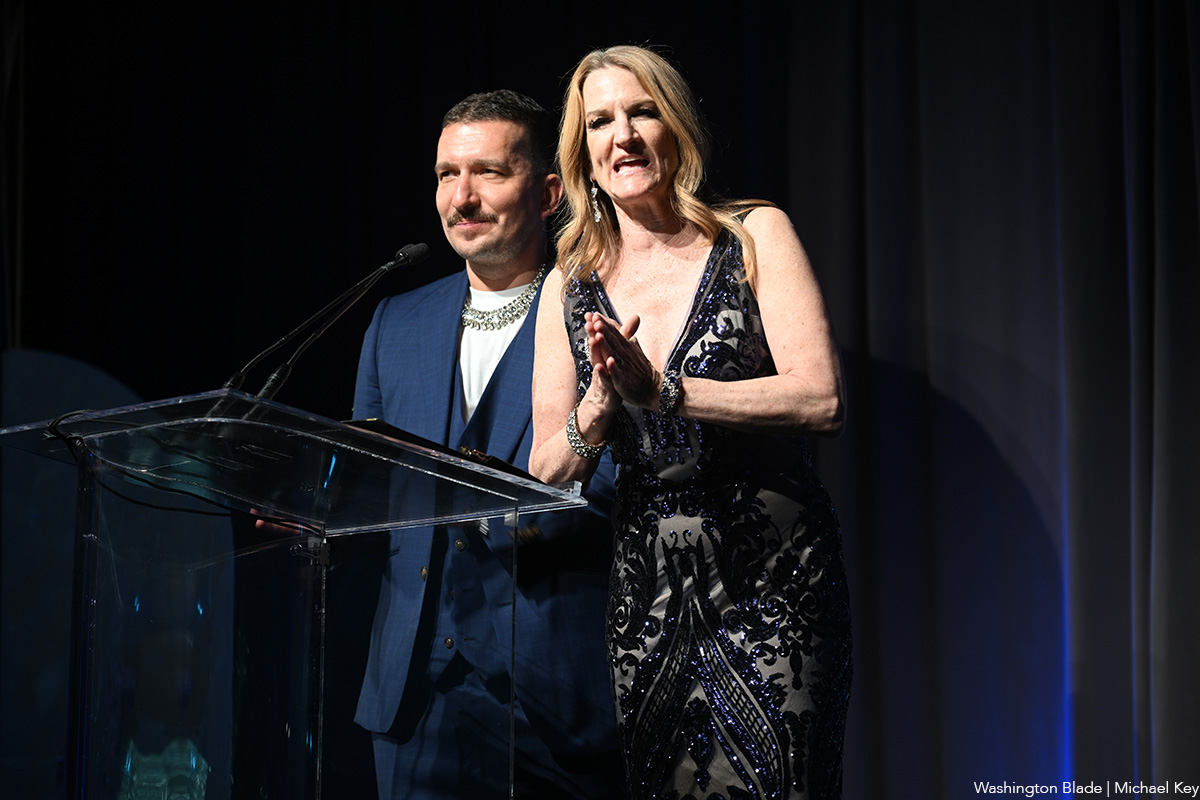
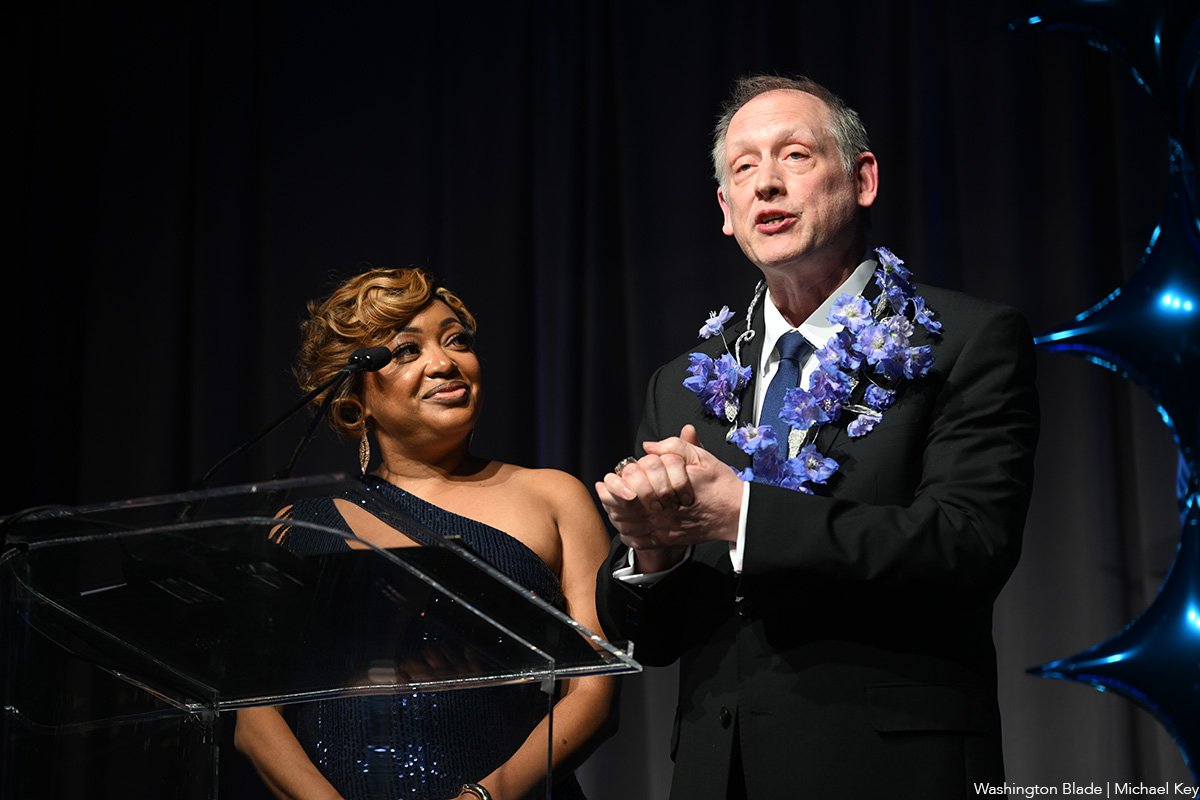
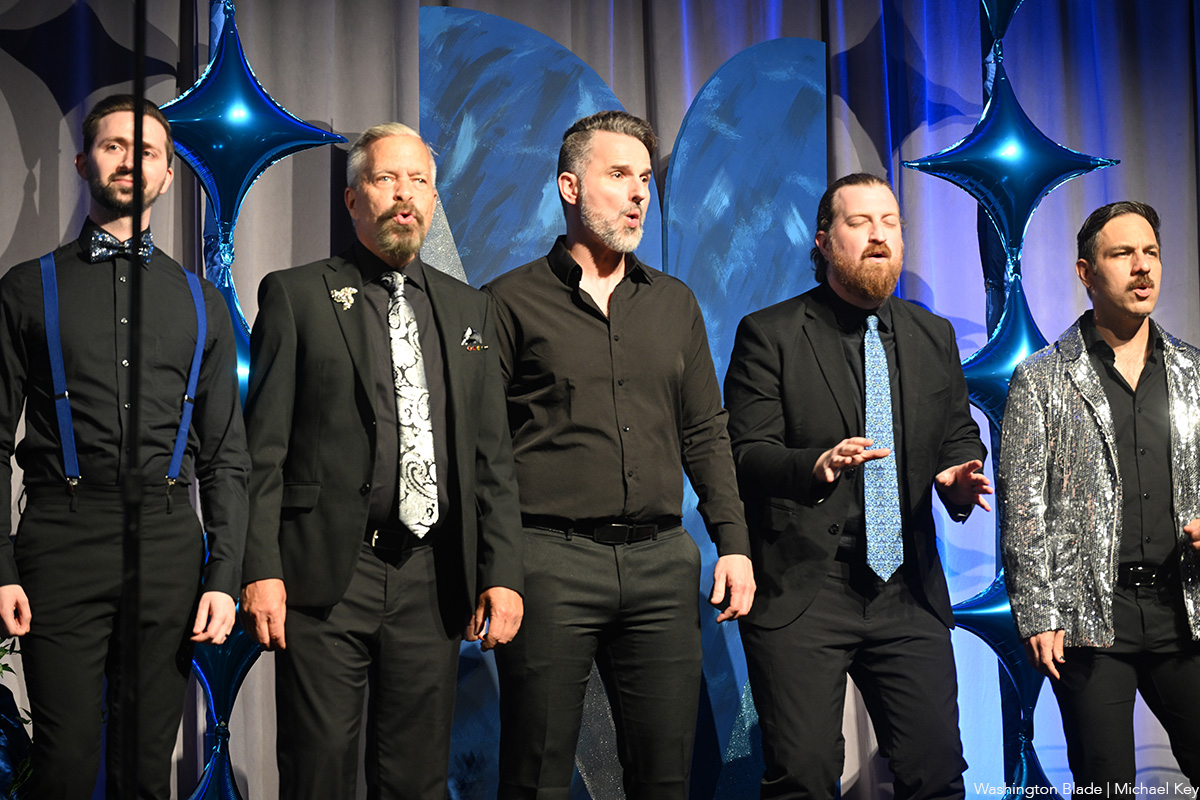
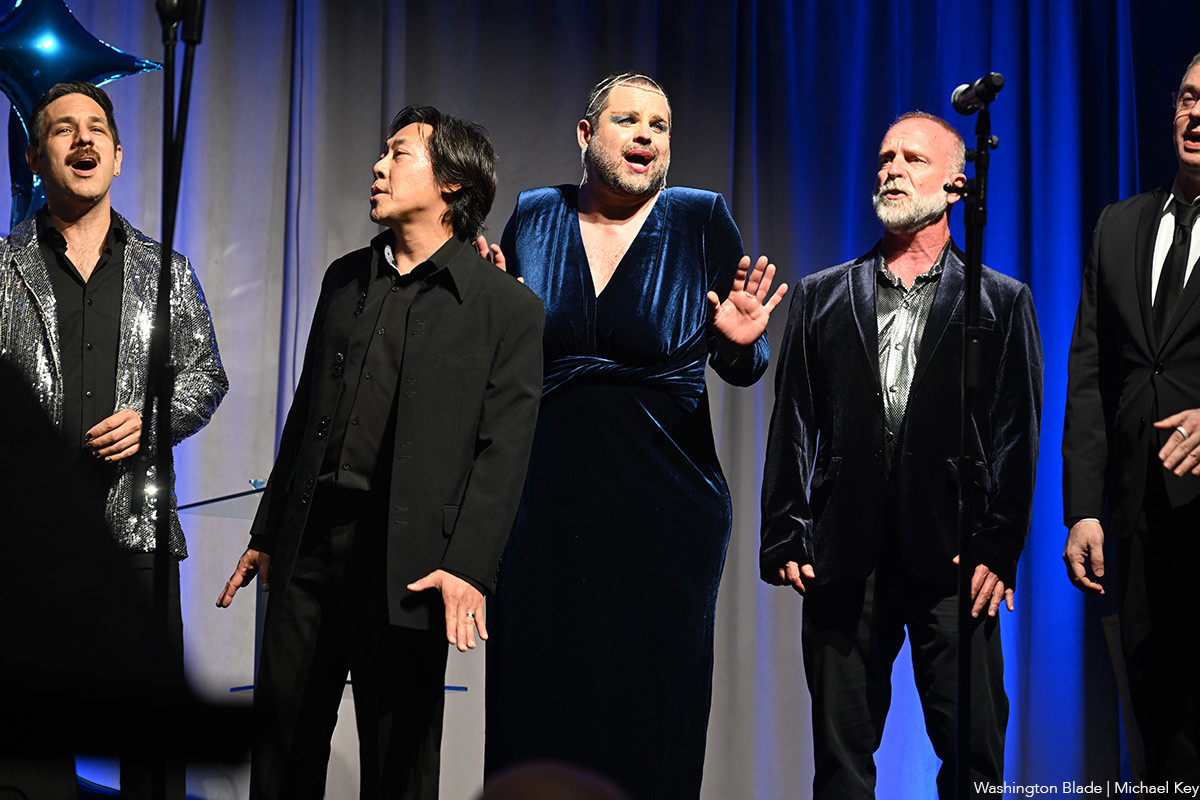
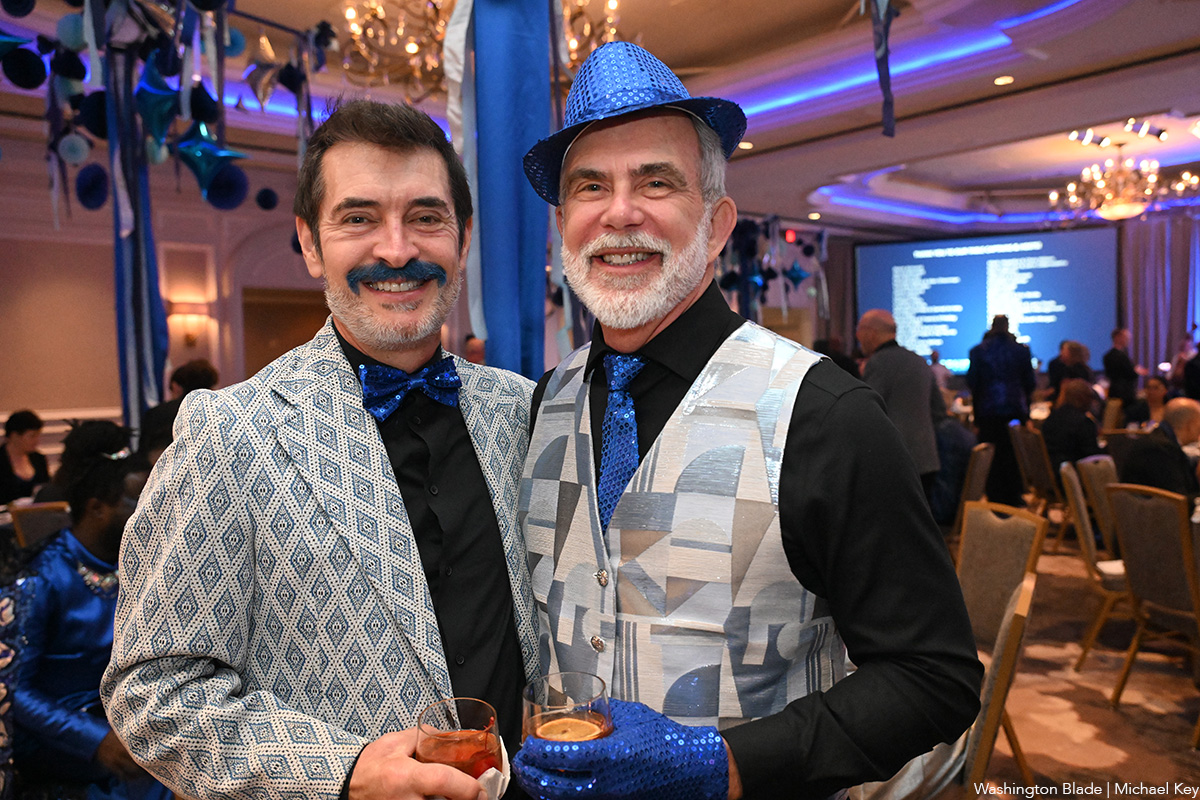
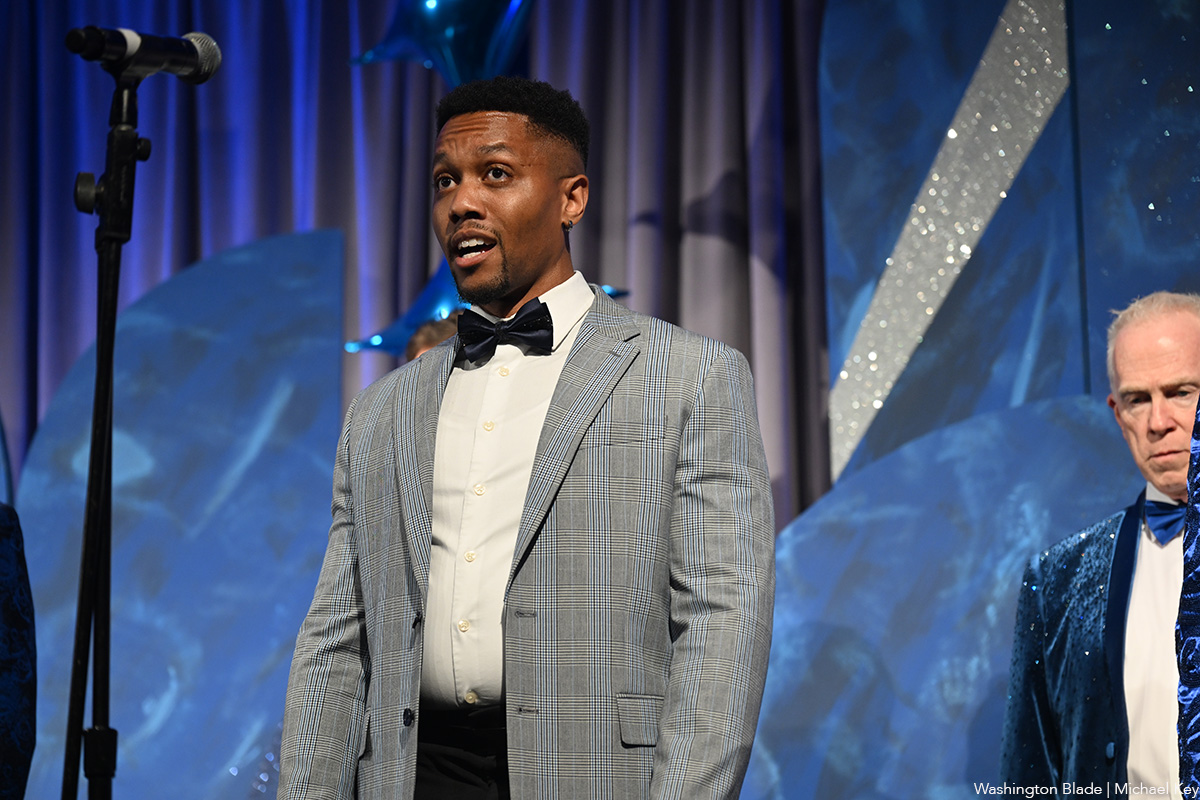
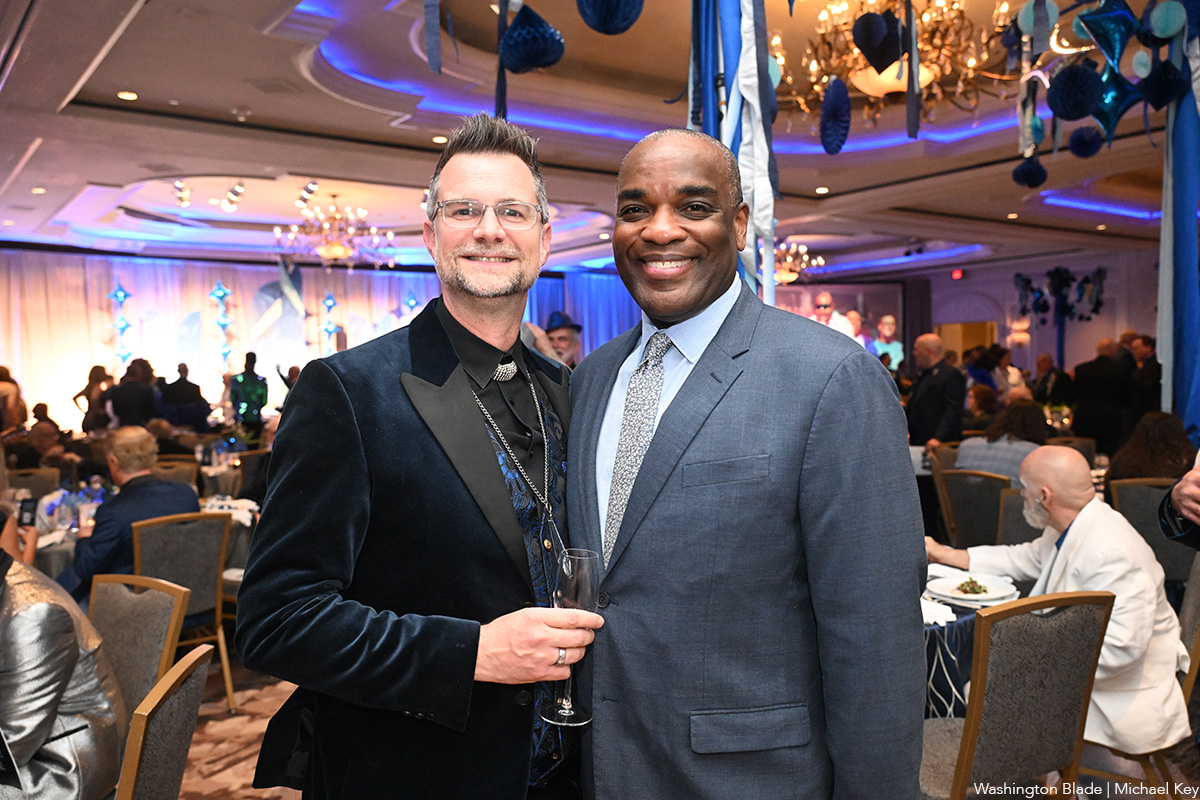
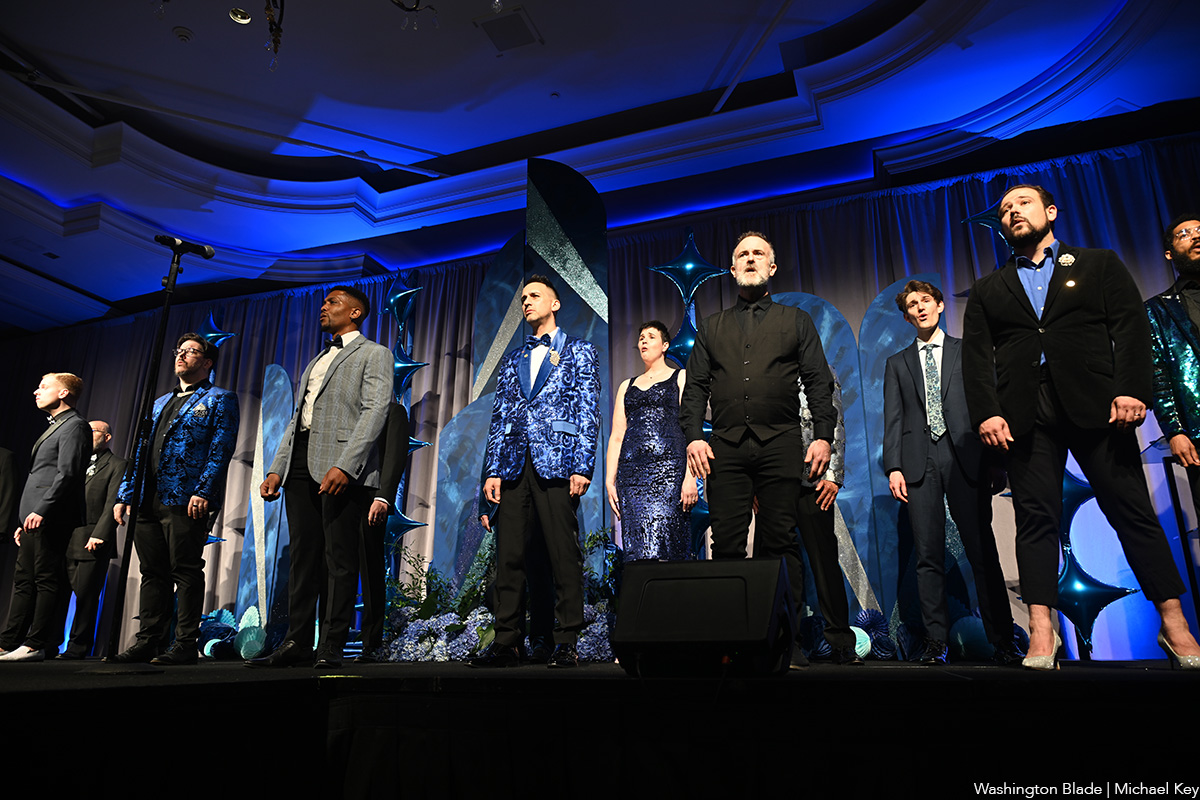
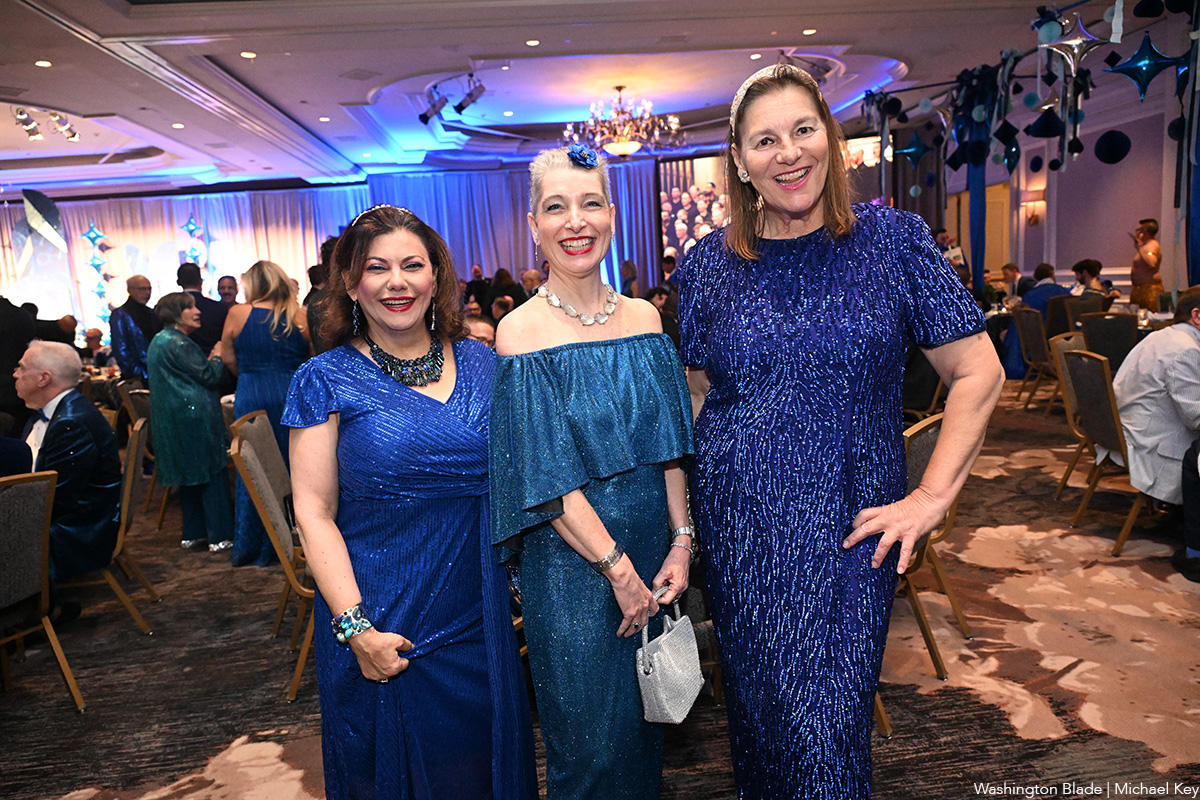
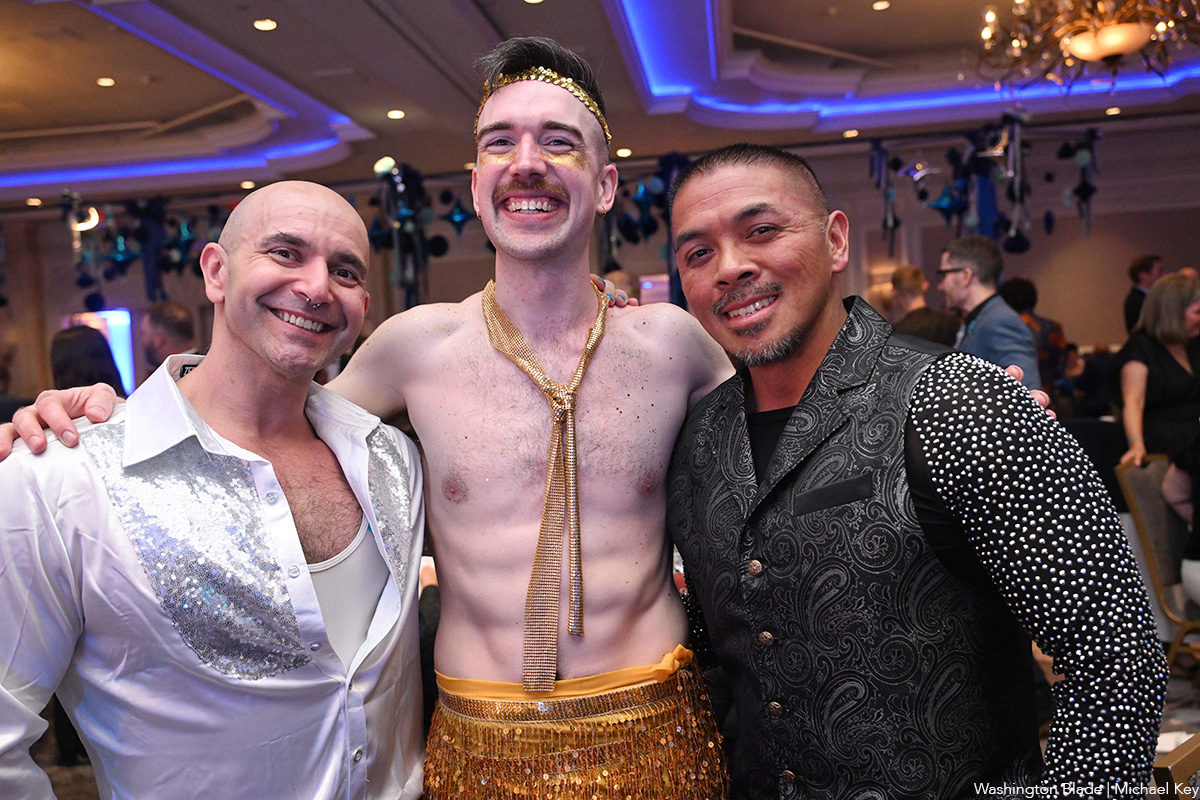
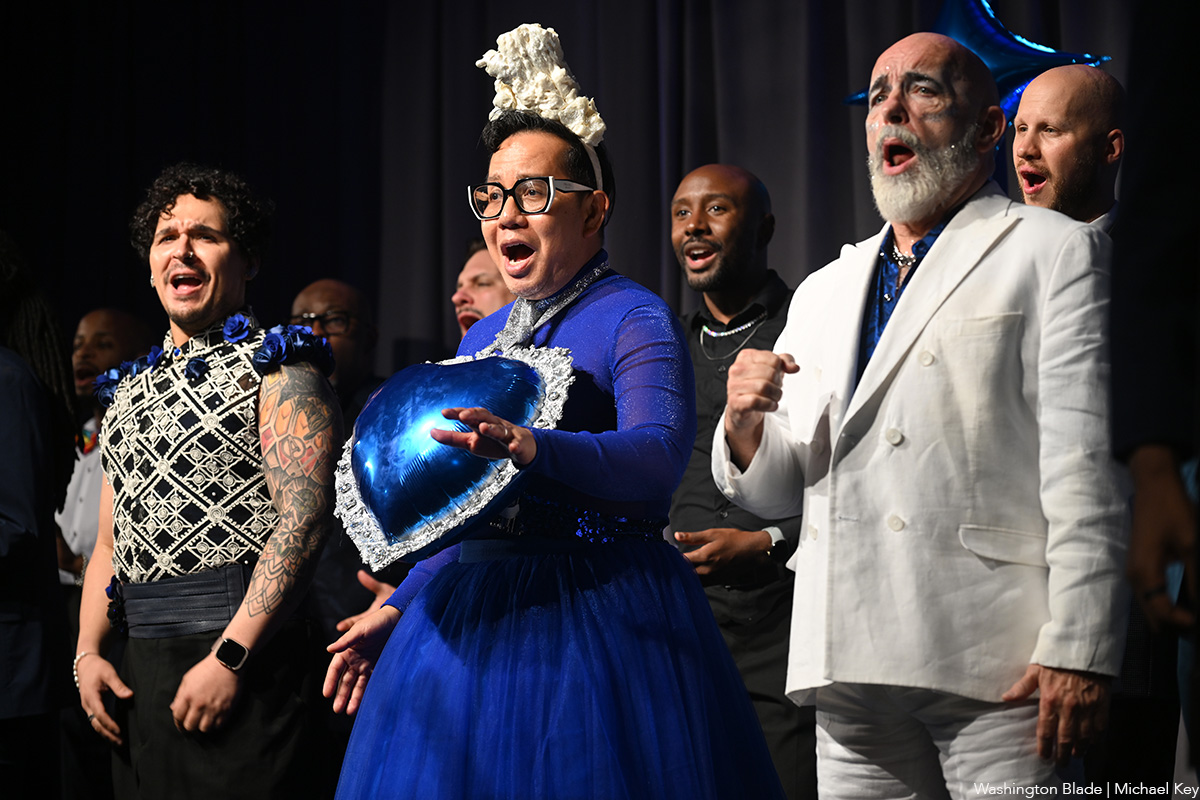
The Gay Men’s Chorus of Washington held the annual Spring Affair gala at the Ritz Carlton Washington, D.C. on Saturday. The theme for this year’s fete was “Sapphire & Sparkle.” The chorus celebrated 45 years in D.C. with musical performances, food, entertainment, and an awards ceremony.
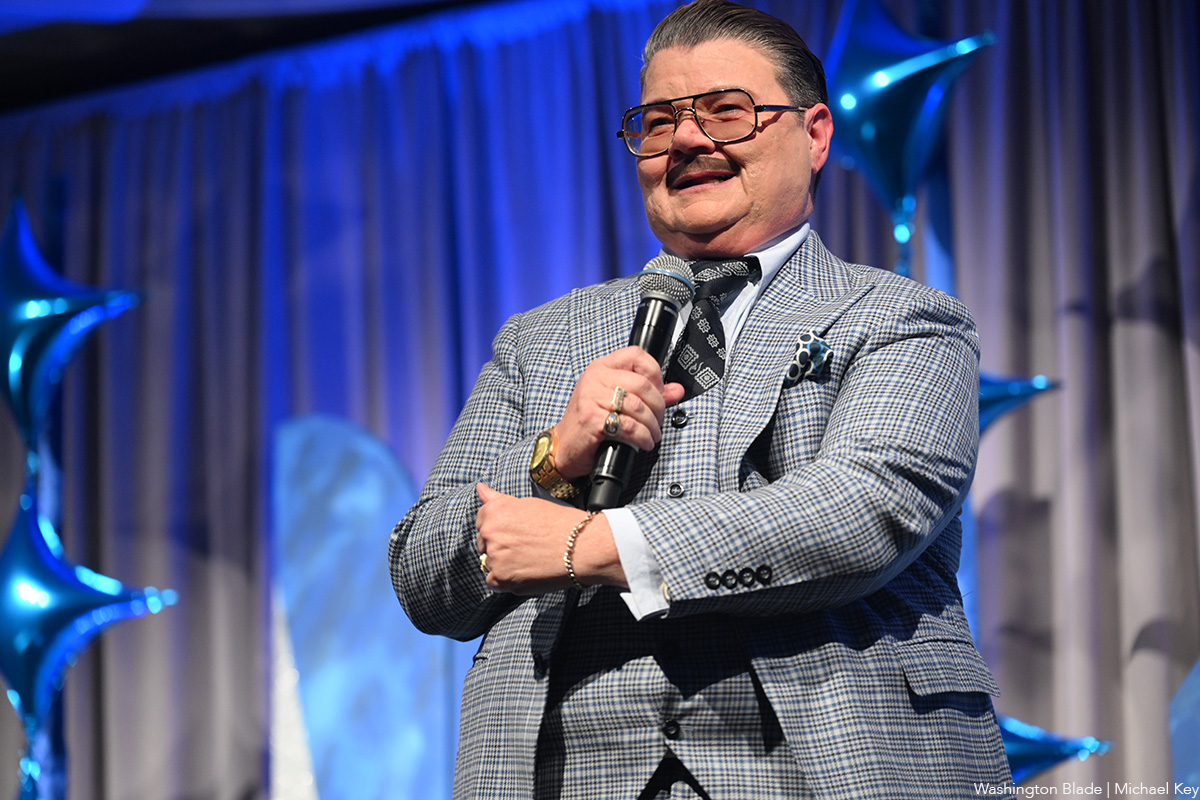
Gay Men’s Chorus of Washington Executive Director Justin Fyala and Artistic Director Thea Kano gave welcoming speeches. Opening remarks were delivered by Spring Affair co-chairs Tracy Barlow and Tomeika Bowden. Uproariously funny comedian Murray Hill performed a stand-up set and served as the emcee.
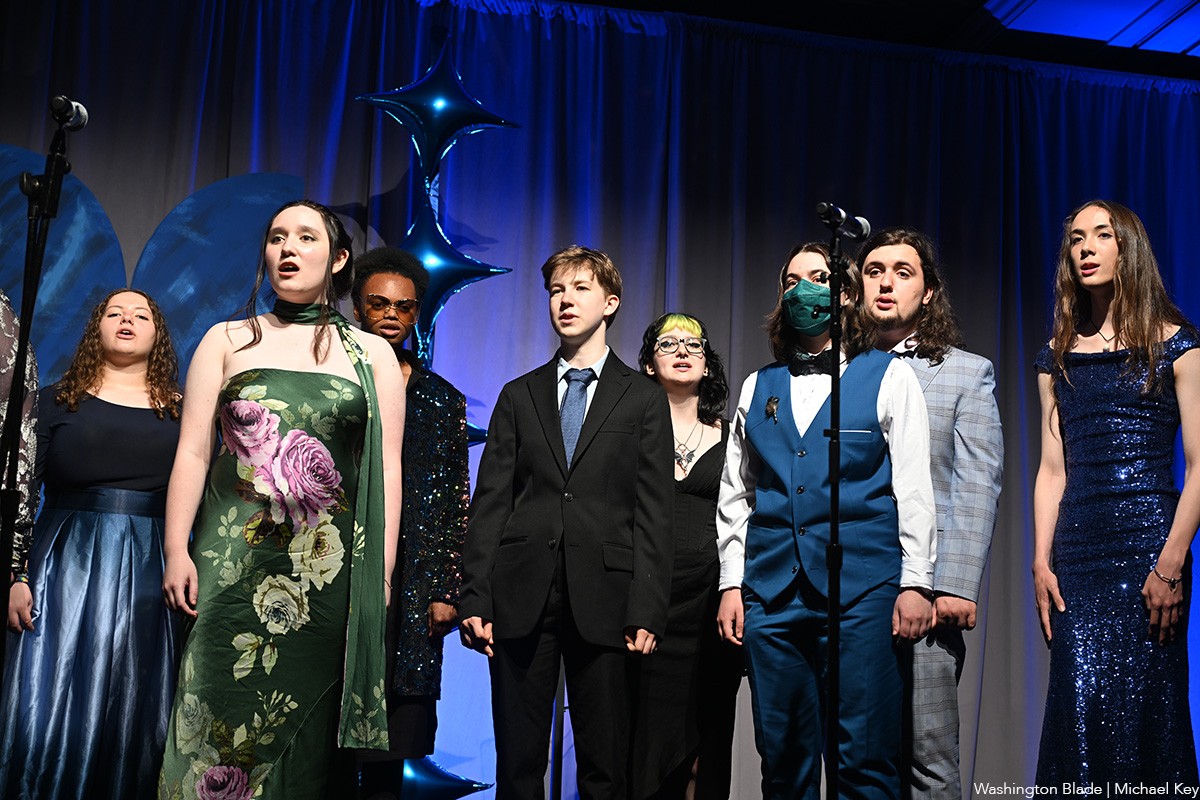
There were performances by Gay Men’s Chorus of Washington groups Potomac Fever, 17th Street Dance, the Rock Creek Singers, Seasons of Love, and the GenOUT Youth Chorus.
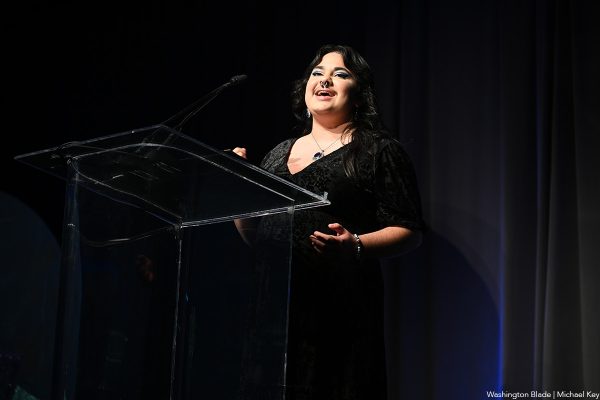
Anjali Murthy, a member of the chorus and a graduate of the GenOUT Youth Chorus, addressed the attendees of the gala.
“The LGBTQ+ community isn’t bound by blood ties: we are brought together by shared experience,” Murthy said. “Being Gen Z, I grew up with Ellen [DeGeneres] telling me through the TV screen that it gets better: that one day, it’ll all be okay. The sentiment isn’t wrong, but it’s passive. What I’ve learned from GMCW is that our future is something we practice together. It exists because people like you continue to show up for it, to believe in the possibilities of what we’re still becoming”
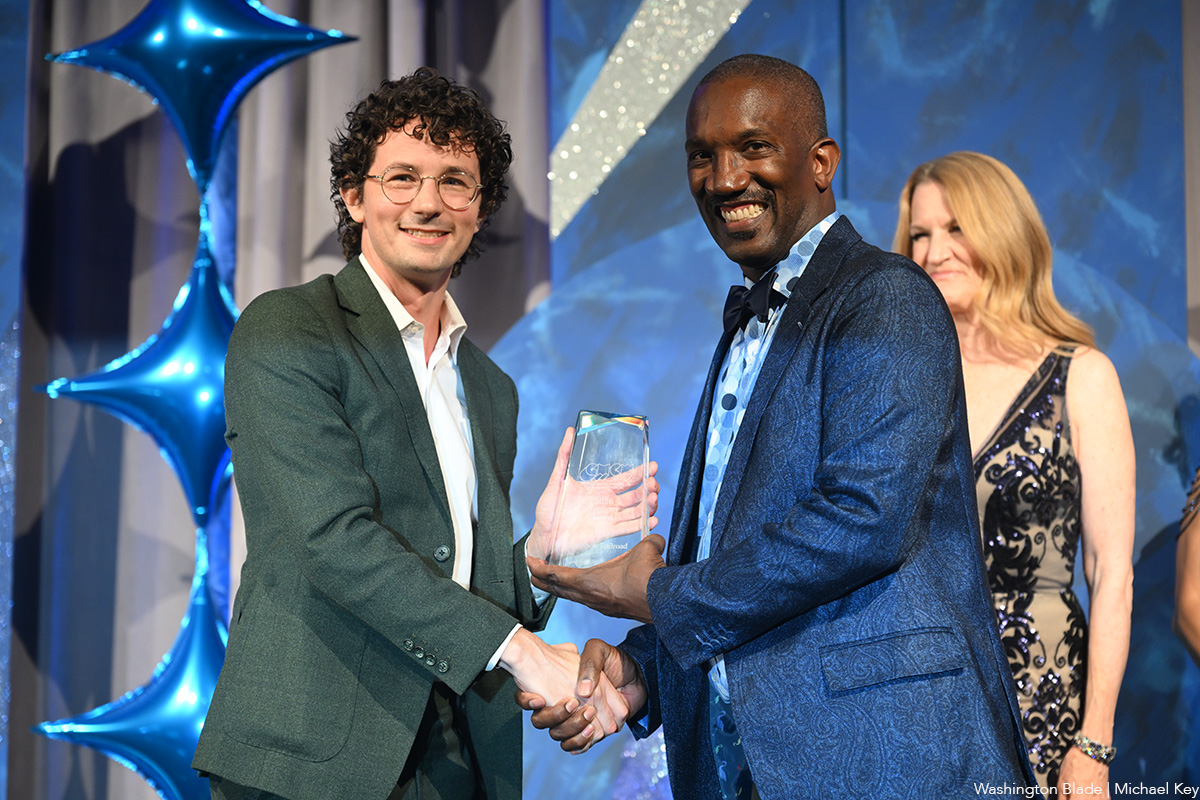
The event concluded with the presentation of the annual Harmony Awards. This year’s awardees included local drag artist and activist Tara Hoot, the human rights organization Rainbow Railroad as well as Rocky Mountain Arts Association Executive Director, Dr. Chipper Dean.
(Washington Blade photos and videos by Michael Key)











Equality Prince William Pride was held at the Harris Pavilion in Manassas, Va. on Saturday, May 16.
(Washington Blade photos by Landon Shackelford)


Elevated Living. Personalized Care.

Politicians, activists pay tribute to Barney Frank

Skipping Memorial Day crowds in Rehoboth Beach

What is queer food?

GLAA’s 2026 primary election ratings show candidates agree on basics

Disillusioned about democracy? Think of it as a community garden

Honey, have we been priced out of gay paradise?

IDAHOBiT a reminder we all must stand up against transphobia

PHOTOS: Blade Summer Kickoff Party