Local
New Maryland LGBT foundation debuts
Aims to promote culture, well-being of LGBT community
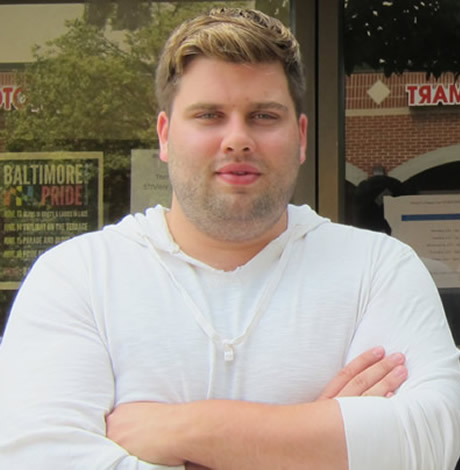
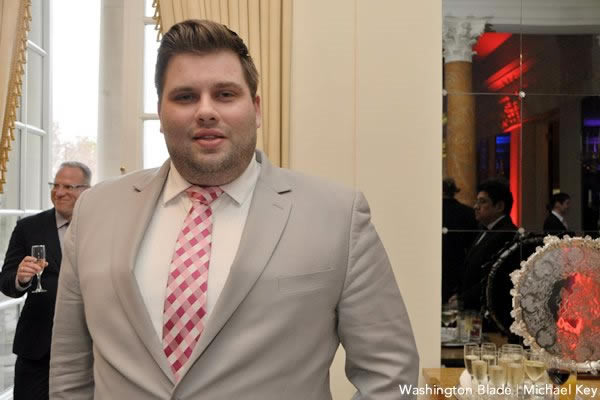
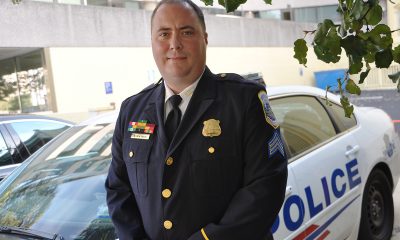
Matt Thorn is one of three co-founders of the newly launched Pride Foundation of Maryland. (Washington Blade file photo by Michael Key)
Coinciding with the 47th anniversary of the Stonewall uprising and to honor the victims of the Orlando massacre on June 12, a new tax-exempt, Internet-based, all-volunteer organization was launched June 28 called the Pride Foundation of Maryland.
It was formed to promote the culture, history, and well-being of Maryland’s LGBT community, according to the group’s press release announcing its formation.
Three individuals who previously had ties to the Gay, Lesbian, Bisexual and Transgender Community Center of Baltimore and Central Maryland (GLCCB) founded the organization. Brian Gaither, Matt Newcomer and Matt Thorn are all former board members of the GLCCB. They have managed the basic financial, operational and regulatory obligations since June 2014 when the foundation was chartered.
Unique to many LGBT organizations, the foundation is designed to be managed entirely by volunteers. It employs social media and will use the talents of LGBT people “to create and promote programs that celebrate our lives and uplift us as individuals,” the statement notes.
“I’ve worked with a number of LGBT organizations. Some need staff. But the model for the Pride Foundation only works if it’s committed to the principle of being a volunteer-run organization,” says Thorn, who was the GLCCB’s executive director from 2013-2014.
The foundation is a shared resource of Maryland’s LGBT community, which will provide fundraising tools, targeted outreach and other support to those working to fulfill the foundation’s mission.
“Through its digital infrastructure, the foundation can support all programming conceived by and directed toward the multiple points of intersectionality in the diverse LGBT community,” says the statement. “Programming may include a speaker’s series, coordinated exhibits with Maryland institutions, festivals for our families or professional networking. Ultimately, the scale and scope of our programming will be determined by those who step forward to work through the foundation.”
For example, an LGBT family may want to organize an LGBT family fair. The foundation can help connect with existing organizations to plan the event. It can offer support in developing a fundraising page on the website, and it can send emails to other members of the foundation to publicize the event.
The foundation will not be housed in an office, and since it is all-volunteer organization, overhead costs are expected to be minimal. The founders expect to draw from volunteers throughout the community to carry out programs and events to reach every part of the community.
“Over time, the capacity of the Foundation will be enhanced by a broader base of supporters,” says the statement. “Our volunteers will become more efficient organizers, and our lists will become better qualified to connect individuals with programming that his most relevant to them.”
The founders say that there is no reason why the foundation could not be used to support the efforts of existing groups such as the Frederick Center, Baltimore’s GLCCB, and others.
“The financial woes that have plagued LGBT organizations are not going away,” Gaither told the Blade. “Unfortunately, we’re stuck in a place where we can’t afford to maintain them, but at the same time the community can’t afford to be without them. Shifting the model in the way that the foundation has been designed to do means we can be connected and organized without constantly shuffling for resources just to keep the lights on.”
To connect with the foundation, and to learn more, visit pridemd.org or email [email protected].



District of Columbia
Community mourns passing of D.C. trans rights advocate SaVanna Wanzer
Acclaimed activist credited with founding D.C. Trans Pride
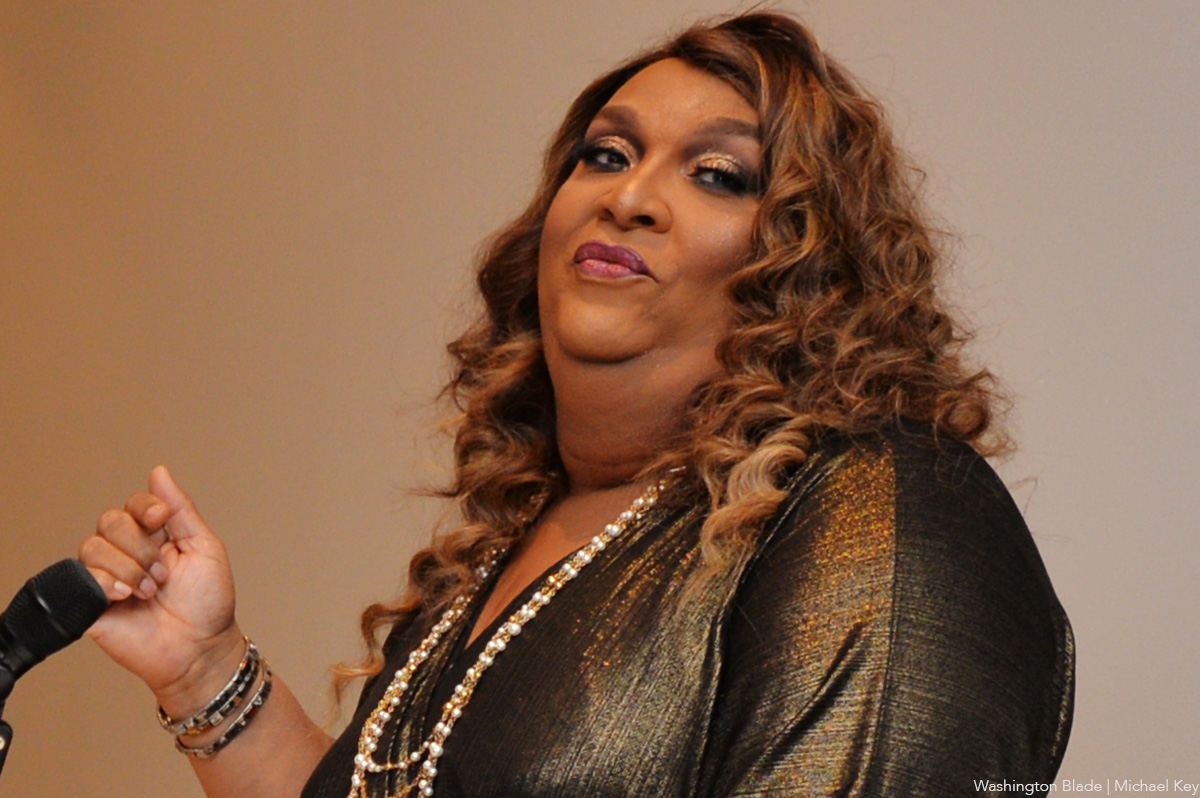
Three D.C.-based LGBTQ advocacy organizations released statements on April 24 announcing that highly acclaimed D.C. transgender rights advocate SaVanna Wanzer has passed away.
A family member told the Blade that Wanzer died on Friday, April 24 of natural causes. She was 63.
Among other things, the advocacy groups noted that Wanzer is credited with being the lead founder of the D.C. Trans Pride and D.C. Black Trans Pride celebrations and events.
“As a trailblazing transgender activist, educator, and founder of D.C. Trans Pride, D.C. Black Trans Pride, and May Is All About Trans, SaVanna created and led transformative transgender programming during D.C. Black Pride that ensured trans voices, stories, leadership, and lived experiences were centered, celebrated, and protected,” according to the statement from the Center for Black Equity, an LGBTQ organization.
“Her work was not just about representation, it was about liberation, community, and making sure Black Trans lives were honored in rooms, stages, policies, and movements that too often overlooked them,” the statement says.
In its own statement, the Human Rights Campaign, the nation’s largest LGBTQ advocacy organization, called Wanzer an icon of D.C.’s Black trans community and longtime leader in many LGBTQ organizations.
“SaVanna Wanzer was a D.C. legend,” Tori Cooper, HRC’s Director of Strategic Outreach and Training, said in the statement. “She advocated for many years for the trans community and for people living with HIV, and served with many organizations, including D.C. Black Pride, Capital Pride, and NMAC [National Minority AIDS Council],” the statement adds.
“I can say firsthand that SaVanna will not just be missed for her work, but for her sisterly wisdom and her sense of humor,” Cooper said in the HRC statement.
In its own statement, Capital Pride Alliance, which organizes D.C.’s annual LGBTQ Pride events, called Wanzer a “trailblazer” in her role as founder of Capital Trans Pride, D.C. Black Trans Pride, and the May Is All About Trans events. It says she served on the Capital Pride Board of Directors
“SaVanna was not just an advocate and community organizer but also a knowledge holder and elder voice in our movement,” the statement adds
In an undated statement on its website released before Wanzer’s passing, the D.C. group Food and Friends, which provides home-delivered meals to people in need, including people with HIV and cancer, says Wanzer had been one of its clients in the past. It says she had been living with heart problems since she was 16 and learned she had HIV in 1985 when she went to donate blood while working at the time for the U.S. Department of Veterans Affairs. It also says she had diabetes, which was under control.
Among her many involvements, Wanzer also served as a volunteer for D.C.’s Whitman-Walker Health, which provides medical services for the LGBTQ community along with other communities. In 2015, Whitman-Walker selected Wanzer as the first recipient of its Robert Fenner Urquhart Award for her volunteer services at Whitman-Walker for more than 20 years.
The Center for Black Equity appeared to capture the sentiment of those in the LGBTQ community who knew Wanzer in the concluding part of its statement on her passing.
“Her vision continues to guide us,” it says. “Her courage continues to inspire us. Her impact will continue to live through every person, every Pride, and every space made more possible because she dared to lead,” it says. “Rest in power, SaVanna Wanzer. Your light remains with us.”
Mayor Muriel Bowser posted a remembrance on social media: “I am deeply saddened by the passing of SaVanna Wanzer. SaVanna Wanzer’s impact spans more than three decades in Washington, DC. The founder of DC Trans Pride, DC Black Trans Pride, and May Is All About Trans, she was a fierce advocate and a beloved leader. We are grateful for SaVanna’s commitment to making sure that transgender people—especially Black trans residents—are visible and respected.
“Her legacy lives on in the communities she built and the countless lives she touched. My condolences are with all who loved SaVanna Wanzer.”
The family member said funeral arrangements are expected to be announced early next week. This story will be updated.
Virginia
Prominent activists join ‘Living History’ panel at Freddie’s Beach Bar
Event organized by owner of new Friends of Dorothy Café in Alexandria

Six prominent LGBTQ community leaders and elders, including a beloved drag performer, talked about their role in advancing the rights of LGBTQ people and their thoughts on how the upcoming generation of LGBTQ youth should get ready to join the movement participated in an April 23 “Living History” panel discussion at Freddie’s Beach Bar.
The event was organized by Dorothy Edwards, who plans to open Friends of Dorothy Café in Alexandria. She said the café will be an LGBTQ community “intergenerational space” that will host events like the one she organized at Freddie’s Beach Bar.
“It will be a space for connection, storytelling, and belonging, especially for LGBTQ+ youth and community members who don’t always have places like that,” she said in a statement announcing the event at Freddie’s.
The six panelists at the Freddie’s event included Kierra Johnson, president of the D.C.-based National LGBTQ Task Force; Freddie Lutz, owner of Freddie’s Beach Bar located in the Crystal City section of Arlington, Va.; Donnell Robinson, who for many years performed in drag as the icon Ella Fitzgerald; Taylor Chandler Walker, a local transgender rights advocate, author and public speaker; Heidi Ellis, coordinator of the D.C. LGBTQ Budget Coalition; and Leti Gomez, an LGBTQ Latino community advocate and chair of the board of the American LGBTQ+ Museum.
Dr. Ashley Elliott, an LGBTQ community advocate and clinician who also goes by the name Dr. Vivid, served as moderator of the panel discussion, asking each of the panelists a serious of questions before opening the event to questions from the audience.
Among the issues discussed by the panelists was who was “centered” and who was excluded in the earlier years of LGBTQ organizing. Elliot also asked the panelists to address topics such as racism within queer spaces, gender dynamics, and strategies for coalition building between the LGBTQ community and other movements, including civil rights, feminism, and immigrant rights.
Each of the panelists expressed various thoughts on how the LGBTQ rights movement can make changes in response to the questions: “What can we do better?” and “Who is being left out?”
“I’m overwhelmed and so thankful that everyone on this panel said yes and agreed to come,” Edwards told the Washington Blade at the conclusion of the event. “I think every one of those people, including the moderator, was so brilliant and has done such good work for this community,” she said.
Edwards noted that each of the panelists, who have been involved in LGBTQ advocacy work for many years, talked about how they interact with younger LGBTQ people who are just beginning to become involved in activism.
“Truly, it’s an intergenerational conversation, and their wisdom and their words and their experiences can be disseminated to younger generations and people who want to do this work, people who want to fight for our community,” Edwards said.
“I was pleasantly surprised,” Lutz said. “I thought it was a good turnout, and everybody was very enthusiastic and engaged,” he said. “And I think it was great and fabulous.”
Lutz has operated Freddie’s Beach Bar for more than 25 years and has hosted numerous LGBTQ events. A sign above the front entrance door to the popular LGBTQ bar and restaurant says, “Straight Friendly Gay Bar.”
Edwards said the April 23 event was recorded and she will make arrangements for the recording to be released for others to view it. The Blade will post the link in this story when it becomes available.
District of Columbia
Second trans member announces plans to resign from Capital Pride board
Zion Peters cites ‘lack of interest in the Black trans community’
Zion Peters, a member of the Capital Pride Alliance Board of Directors who identifies as transgender, told the Washington Blade he plans to resign from the board “due to the lack of interest in the trans community, specifically the Black trans community.”
Peters continued, “Nobody has checked on me in the last two months so that shows their level of unprofessionalism towards their board members and the community as a whole.”
If he resigns, Peters would be the second known trans person to resign from the Capital Pride board since February, when longtime trans activist Taylor Lianne Chandler informed the board of her resignation in a detailed letter that was sent to the Blade by an anonymous source.
Chandler, who served as chair of the Capital Pride Transgender, Gender Non-Conforming, and Intersex Committee, stated in her Feb. 24 letter that she resigned from the board out of frustration that the board had failed to address instances of “sexual misconduct” within the Capital Pride organization. The organization’s and the board’s transgender-related policies were not cited in her letter as a reason for her resignation.
The Blade learned of Peters’s plans to resign from an anonymous source who thought Peters had already resigned along with four other board members identified by the anonymous source. The others, who Capital Pride confirmed this week had resigned, include Anthony Musa, Bob Gilchrist, Kaniya Walker, and Dai Nguyen.
Musa and Gilchrist told the Blade they resigned for personal reasons related to their jobs and that they fully support Capital Pride’s work as an organization that coordinates the city’s annual LGBTQ Pride events.
The Blade has been unable to reach Walker and Nguyen to determine their reasons for resigning.
Capital Pride CEO Ryan Bos and Board Chair Anna Jinkerson didn’t respond to a Blade question asking if they knew why Walker or Nguyen resigned.
In response to a request by the Blade for comment on the resignations and the concern raised by Zion Peters about trans-related issues, Bos and Jinkerson sent separate statements elaborating on the organization and the board’s position on various issues.
“We can confirm that the individuals you referenced, except for Zion, no longer serve on the Capital Pride Alliance Board of Directors,” Jinkerson said in her statement.
She added that following the WorldPride festival hosted by D.C. last May and June that was organized by Capital Pride Alliance, the group anticipated a “significant level of board transition,” with many board members reaching the end of their terms. But she said many board members chose to extend their service or apply for an additional term, showing a “powerful reflection of commitment.”
Without commenting on the specific reasons for the resignations of Peterson, Walker, and Nygun, Jinkerson noted, “As with all volunteer leadership roles, transitions occur for a range of personal and professional reasons, and we appreciate those transitions with both understanding and gratitude.”
In his own statement, Bos addressed Capital Pride’s record on transgender issues.
“The Capital Pride Alliance is committed to supporting and uplifting the Trans community through our work with the Trans Coalition under the Diversity of Prides Initiative, our partnership with Earline Budd on the LGBTQ+ Burial Fund with a focus on our Trans siblings, our collaboration with the National Trans Visibility March, and our ongoing investment in programming for Transgender Day of Visibility and Transgender Day of Remembrance,” Bos said in his statement.
“We also recognize there is always continued work to be done, and we always welcome feedback from our community to ensure our commitment remains unwavering,” he said.
At the time of her resignation in February, Chandler said she could not provide specific details of the instances of sexual misconduct to which she referred in her resignation letter, or who allegedly engaged in sexual misconduct, saying she and all other board members had signed a Non-Disclosure Agreement preventing them from disclosing further details.
Board Chair Jinkerson in a statement released at that time said she and the board were aware of Chandler’s concerns but did not specifically address allegations of sexual misconduct.
“When concerns are brought to CPA, we act quickly and appropriately to address them,” she said. “As we continue to grow as an organization, we’re proactively strengthening the policies and procedures that shape our systems, our infrastructure, and the support we provide to our team and partners,” she said.

Democracy Forward files FOIA request for State Department bathroom policy records

House Republicans push nationwide ‘Don’t Say Gay’ bill

Botswana repeals colonial-era sodomy law

LGBTQ people are leaving Orthodox Judaism behind

Madonna makes rare club appearance in West Hollywood

Adoption under suspicion

Why we need to recognize and celebrate Lesbian Day of Visibility

Calendar: April 24-30

DC Center marks one year at new location