National
Most LGBT adults don’t have a will: survey
Surviving spouse may not receive full inheritance by marriage


‘Leaving a positive, meaningful legacy is important for LGBT adults,’ said Wonhong Lee of Mass Mutual.
Sixty-two percent of LGBT adults aged 45 to 60 do not have a will, according to a newly released survey conducted by the Massachusetts Mutual Life Insurance company.
The survey, which was conducted online, found that a similar number (60 percent) of adults in the general population in that same age range did not have a will.
By comparison, 69 percent of Hispanic respondents and 71 percent of African-American respondents reported not having a will, according to the survey, which consisted of a total sample of 2,500 Americans between the ages of 45 and 60. Out of that total, 500 identified as members of the LGBT community.
The survey was conducted Aug. 8-14, 2016.
“Leaving a positive, meaningful legacy is important for LGBT adults,” said Wonhong Lee, assistant vice president for Mass Mutual’s consumer and diversity group, which provides services for LGBT consumers. “That’s why we want to help them align their legacy, values and aspirations when planning for their loved ones’ financial future,” he said.
Lee said that although Mass Mutual’s main product is life insurance policies the company also provides financial planning services to its clients.
Michele Zavos, a Silver Spring, Md., attorney specializing in LGBT family law, said she and other members of her firm, Zavos-Juncker, have observed anecdotally a similarly high number of LGBT people who don’t have a will.
“I think that one misimpression that should be corrected when we say people don’t have wills is that they don’t have a will that they proactively prepared themselves,” she said. “But they do have a will. Their jurisdiction of residence writes it for them.”
Added Zavos: “So everybody has a will. It’s just a matter of whether you know what it says or not” and whether it’s in your best interest or not.
According to Zavos, people who are married – whether gay or straight – often don’t realize that state laws that determine who inherits the assets of someone who doesn’t have a will often do not award the entire estate to the surviving spouse. In many states, Zavos said, the deceased person’s children and parents are awarded a sizable part of the estate, with the spouse getting a smaller part.
It all depends on the laws of your jurisdiction of residence, which are known as intestate succession laws, she said. “It’s the equivalent of a will. It just says what the state wants to say, not what you want to say.”
For that and other reasons, Zavos said, it is important that all adults, especially LGBT people who may be estranged from blood relatives who aren’t accepting of their sexual orientation or gender identity, take immediate steps to obtain a legally prepared will.
The survey found that LGBT adults along with adults in the general population have a better record of documenting personal financial information such as financial accounts and insurance information. Sixty-one percent of LGBT adults aged 45 to 60 reported having done this, the survey found, compared to 60 percent of adults in that same age range in the general population.
But the survey also found that LGBT respondents in the survey were among the least likely to say they have a child who has access to their important financial information (10 percent). By comparison, 33 percent of African-American respondents and 25 percent of Hispanic respondents reported having a child with access to their financial information.
LGBT respondents, however, were significantly more likely to report having shared their financial information with a “special friend” (10 percent) versus 3 percent with Hispanic and 3 percent African-American respondents.
More information about the survey can be obtained at massmutual.com/lgbt.




Iran
LGBTQ groups condemn Trump’s threat to destroy Iranian civilization
Ceasefire announced less than two hours before Tuesday deadline

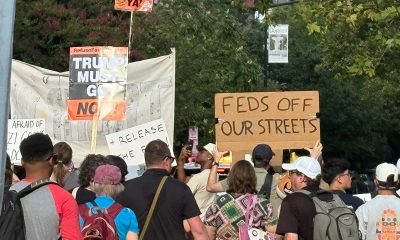
The Council for Global Equality is among the groups that condemned President Donald Trump on Tuesday over his latest threats against Iran.
Trump in a Truth Social post said “a whole civilization will die tonight” if Tehran did not reach an agreement with the U.S. by 8 p.m. ET. on Tuesday.
Iran is among the handful of countries in which consensual same-sex sexual relations remain punishable by death.
Israel and the U.S. on Feb. 28 launched airstrikes against Iran.
One of them killed Supreme Leader Ayatollah Ali Khamenei. Iran in response launched missiles and drones against Israel and other countries that include Kuwait, Bahrain, Qatar, the United Arab Emirates, Jordan, Saudi Arabia, Azerbaijan, and Cyprus.
Gas prices in the U.S. and around the world continue to increase because the war has essentially closed the Strait of Hormuz, a strategic waterway that connects the Persian Gulf and the Gulf of Oman through which roughly 20 percent of the world’s crude oil passes.
Trump less than 90 minutes before his deadline announced a two-week ceasefire with Iran that Pakistan helped broker.
“We the undersigned human rights, humanitarian, civil liberties, faith-based and environmental organizations, think tanks and experts are deeply alarmed by President Trump’s threat regarding Iran that ‘a whole civilization will die tonight’ if his demands are not met. Such language describes a grave atrocity if carried out,” reads the statement that the Council for Global Equality more than 200 other organizations and human rights experts signed. “A threat to wipe out ‘a whole civilization’ may amount to a threat of genocide. Genocide is a crime defined by the Genocide Convention and by the Rome Statute of the International Criminal Court as committing one or more of several acts ‘with intent to destroy in whole or in part a national, racial or religious groups as such.'”
The statement states “the law is clear that civilians must not be targeted, and they must also be protected from indiscriminate or disproportionate attacks.”
“Strikes on civilian infrastructure — such as the recent attack on a bridge and the attacks President Trump is repeatedly threatening to carry out to destroy power plants — have devastating consequences for the civilian population and environment,” it reads.
“We urge all parties to respect international law,” adds the statement. “Those responsible for atrocities, including crimes against humanity and war crimes, can and must be held accountable.”
The Alliance for Diplomacy and Justice, Amnesty International USA, Human Rights Watch, the American Civil Liberties Union, the NAACP, MADRE, and the Robert and Ethel Kennedy Human Rights Center are among the other groups that signed the letter.
National
Glisten’s 30th annual Day of Silence to take place April 10
Campaign began as student-led protests against anti-LGBTQ bullying, discrimination
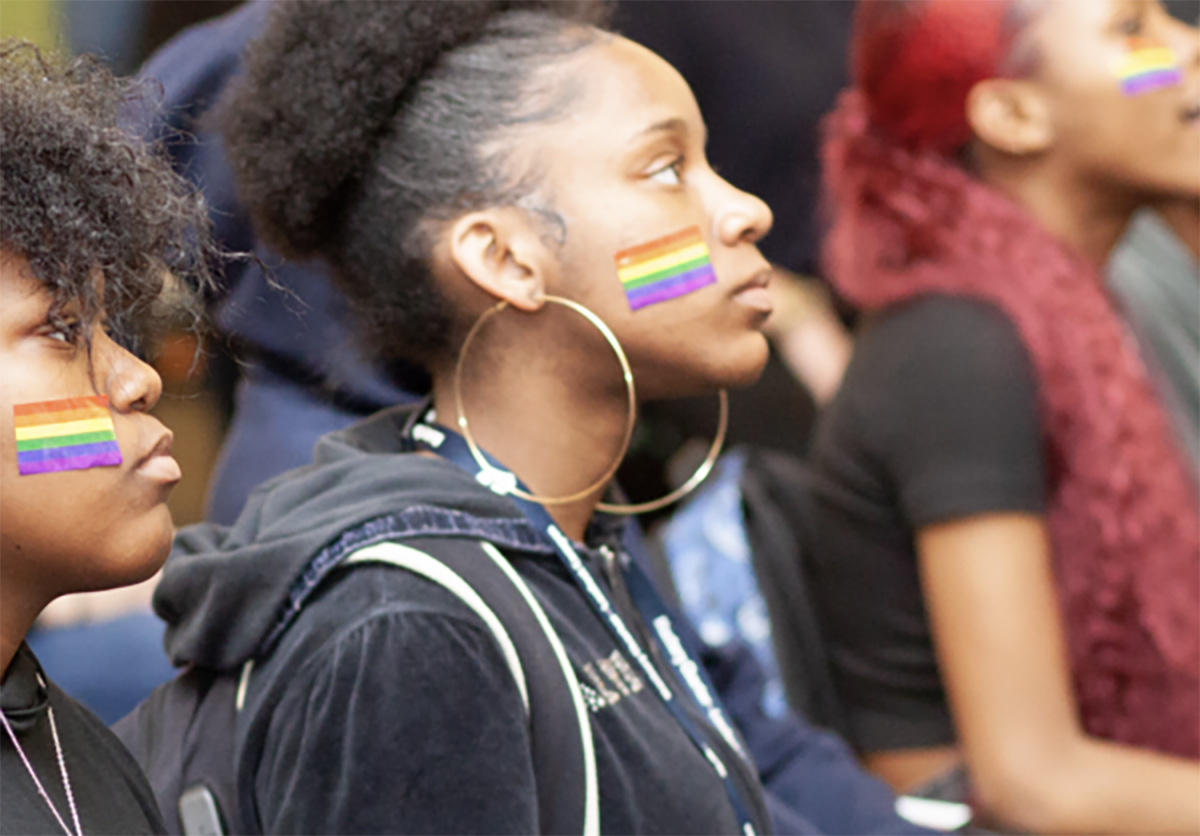
Glisten’s 30th annual Day of Silence will take place on April 10.
The annual Day of Silence began as a student-led protest in response to bullying and discrimination that LGBTQ students face. It is now a national campaign for the LGBTQ community and their allies to come together for LGBTQ youth.
It takes place annually and has multiple ways for supporters to get involved in the movement.
Glisten, originally GLSEN, champions LGBTQ issues in schools, grades K-12. Glisten’s mission is to create more inclusive and accepting environments for LGBTQ students through curriculum, supportive measures, education campaigns, and engagement, such as the Day of Silence.
There are three main ways for the community to get involved in the Day of Silence.
Glisten has a Day of Silence frame, a series of pictures used as profile photos across social media that feature individuals holding signs. The signs allow for personalization, by providing a space to put the individual’s name, followed by filling in the prompt “ … and I am ENDING the silence by…”
Participants are encouraged to post the photo on social media and use it as a profile picture. The templates can be found on Google Drive through this link.
Using #DayOfSilence and #NSCS, as well as tagging Glisten’s official Page @glistencommunity, is another way to participate in the Day of Silence.
Glisten also encourages participants to tag creators, friends, family and use a call to action in their caption, to call attention to the facts and stories behind the Day of Silence.
“Today’s administration in the U.S. wants us to stay silent, submit to their biased and hurtful conformity, and stop fighting for our right to be authentically ourselves,” said Glisten CEO Melanie Willingham-Jaggers. “We urge supporters to use their social platforms and check in with local chapters to be boots on the ground to help LGBTQ+ students feel seen, heard, supported, and less alone. By participating in the ‘Day of Silence,’ you are showing solidarity with young people as they navigate identity, safety, and belonging. Our voices matter.”
Hungary
Vance speaks at Orbán rally in Hungary
Anti-LGBTQ prime minister trailing ahead of April 12 vote
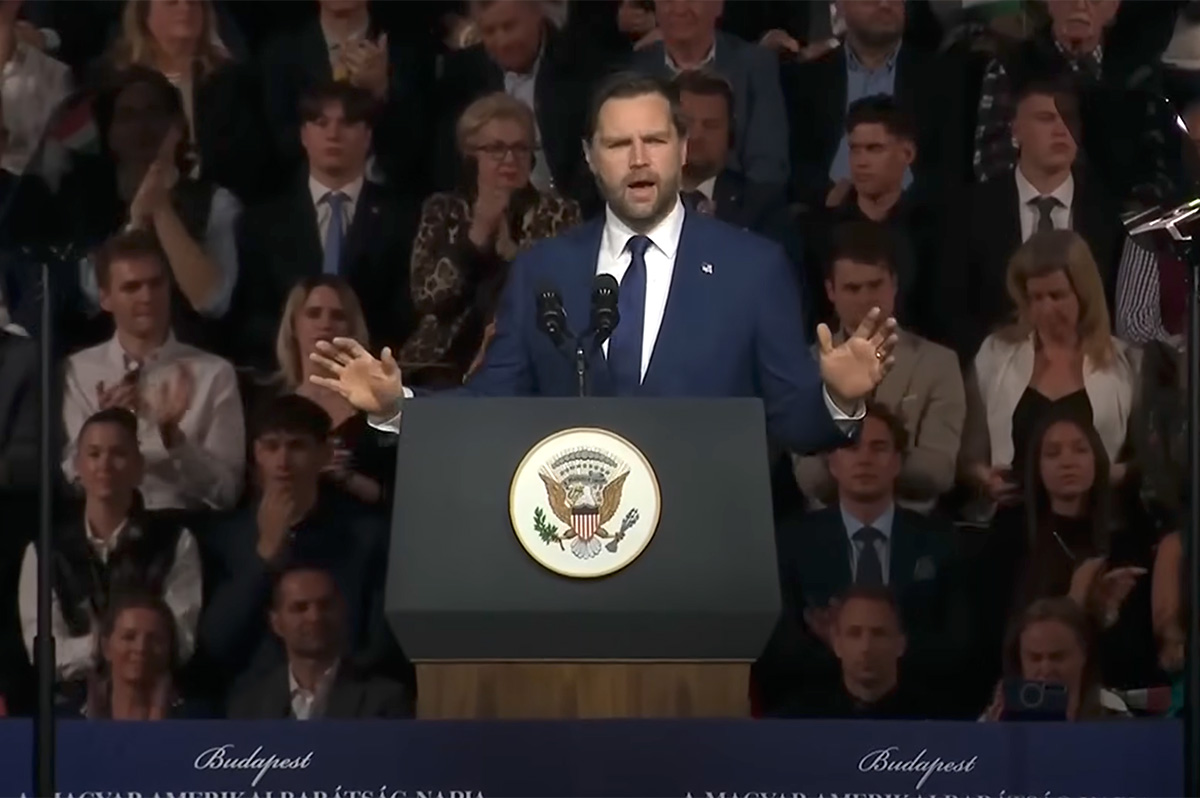
Vice President JD Vance on Tuesday urged Hungarians to support Prime Minister Viktor Orbán in the country’s April 12 elections.
“We have got to get Viktor Orbán re-elected as prime minister of Hungary,” Vance told Orbán supporters who gathered at Budapest’s MTK Sportpark.
Vance and Orbán on Tuesday met before they held a press conference in Budapest. Orbán also spoke at the rally.

The U.S. vice president after he took to the stage called President Donald Trump, who told the crowd he is “a big fan of Viktor” and is “with him all the way.” Vance, as he did during Tuesday’s press conference with Orbán, criticized the European Union.
“We want you to make a decision about your future with no outside forces pressuring you or telling you what to do. I’m not telling you exactly who to vote for, but what I am telling you is that the bureaucrats in Brussels, those people should not be listened to,” said Vance. “Listen to your hearts, listen to your souls, and listen to the sovereignty of the Hungarian people.”
Vance in his speech noted “across the West, we’ve got a small band of radicals” who, among other things, “condemn children to mutilization and sterilization in the name of gender care.” Vance also criticized a “far-left ideology given quarter in university circles, in the media, and in our entertainment industry, and increasingly among bureaucrats on both sides of the Atlantic.”
Vice President JD Vance speaks at MTK Sportpark in Budapest, Hungary, on April 7, 2026
Orbán has been in office since 2010. He and his Fidesz-KDNP coalition government have faced widespread criticism over its anti-LGBTQ crackdown.
A Hungarian activist with whom the Washington Blade previously spoke said it is “impossible to change your gender legally in Hungary” because of a 2020 law that “banned legal gender recognition of transgender and intersex people.” Hungarian MPs the same year effectively prohibited same-sex couples from adopting children and defined marriage in the country’s constitution as between a man and a woman.
The European Commission in 2022 sued Hungary, which is a member of the EU, over the country’s anti-LGBTQ propaganda law.
Hungarian lawmakers in March 2025 passed a bill that banned Pride events and allowed authorities to use facial recognition technology to identify those who participate in them. MPs later amended the Hungarian constitution to ban public LGBTQ events.
Upwards of 100,000 people last June defied the ban and marched in Budapest’s annual Pride parade.
Polls indicate Orbán is trailing Péter Magyar and his center-right Tisza party ahead of the April 12 election. Vance at Tuesday’s rally told Orbán supporters that he and Trump “want you to make a decision about your future with no outside forces pressuring you or telling you what to do.”
“I’m not telling you exactly who to vote for, but what I am telling you is that the bureaucrats in Brussels, those people should not be listened to,” said Vance. “Listen to your hearts, listen to your souls, and listen to the sovereignty of the Hungarian people.”
“Unlike some of the leadership of Brussels, I’m not threatening you or telling you that we’re going to withhold funds to which you’re legally entitled,” he added. “You will make the decision about Hungary’s future.”
Magyar on Tuesday appeared to dismiss Vance’s comments.
“No foreign country may interfere in Hungarian elections. This is our country. Hungarian history is not written in Washington, Moscow, or Brussels — it is written in Hungary’s streets and squares,” said Magyar on his X account.
A spokesperson for the Háttér Society, a Hungarian LGBTQ rights group, told the Blade that neither Magyar, nor his party have reached out to the organization.
The spokesperson said the group does not “campaign directly for them or for any other political party.” The Háttér Society, however, is encouraging LGBTQ Hungarians to vote.
“Ahead of election day, we will encourage everyone on our social media channels to go out and vote, as this is the only way we can act against a system that has been working against the LGBTQI community for many years,” said the spokesperson.

LGBTQ groups condemn Trump’s threat to destroy Iranian civilization

Glisten’s 30th annual Day of Silence to take place April 10

D.C. Council member honored by LGBTQ homeless youth group

Vance speaks at Orbán rally in Hungary

White House ends protections for trans students in multiple school districts

Belarusian lawmakers approve bill to crackdown on LGBTQ rights

How new barriers to health care coverage are hitting D.C.

Calendar: April 3-9

Women’s FEST returns to Rehoboth Beach next week