Arts & Entertainment
Kathy Griffin fired from CNN after gory Trump photo shoot
the comedian has also been removed from her Squatty Potty ad campaign


(Screenshot via TMZ.)
Kathy Griffin has been fired from CNN for participating in a photo shoot which showed her holding up a fake, decapitated and bloody Donald Trump head. The photos have caused criticism from both the left and right.
In a behind-the-scenes video, Griffin is shown posing with the severed head for photographer Tyler Shields. She jokes that she and Shields will have to run away to Mexico when the images go public and says, “I won’t give away what we’re doing but Tyler and I are not afraid to do images that make noise.”
Griffin tweeted the photo writing, “I caption this: ‘There was blood coming out of his eyes, blood coming out of his … wherever.'”
The video has since been deleted and the photo removed from social media.
Trump tweeted Griffin, “should be ashamed of herself” and says the image particularly affected his youngest son.
Kathy Griffin should be ashamed of herself. My children, especially my 11 year old son, Barron, are having a hard time with this. Sick!
— Donald J. Trump (@realDonaldTrump) May 31, 2017
Donald Trump Jr. tweeted the photo was “not surprising” and accused the left of finding the behavior acceptable.
Disgusting but not surprising. This is the left today. They consider this acceptable. Imagine a conservative did this to Obama as POTUS? https://t.co/QdghcbIjS7
— Donald Trump Jr. (@DonaldJTrumpJr) May 30, 2017
Melania Trump called the photo shoot “disgusting” and released a statement questioning Griffin’s mental health to NBC News.
“When you consider some of the atrocities happening in the world today, a photo opportunity like this is simply wrong and makes you wonder about the mental health of a person who did it,” the first lady said in a statement.
The left was also disturbed by the photo shoot. Chelsea Clinton called the images “vile and wrong” and Anderson Cooper, Griffin’s co-host on CNN’s New Year’s Eve special, said the photos were “disgusting and completely inappropriate.”
This is vile and wrong. It is never funny to joke about killing a president. https://t.co/zIiuKoMyFw
— Chelsea Clinton (@ChelseaClinton) May 30, 2017
For the record, I am appalled by the photo shoot Kathy Griffin took part in. It is clearly disgusting and completely inappropriate.
— Anderson Cooper (@andersoncooper) May 31, 2017
“We found what she did disgusting and offensive,” a CNN representative said in a statement on Tuesday. “We are pleased to see she has apologized and asked that the photos be taken down. We are evaluating New Year’s Eve and have made no decisions at this point.”
CNN officially announced it has cut ties with the comedian on Wednesday.
CNN has terminated our agreement with Kathy Griffin to appear on our New Year’s Eve program.
— CNN Communications (@CNNPR) May 31, 2017
Squatty Potty also announced it would no longer use ads featuring Griffin.
“We were shocked and disappointed to learn about the image Ms. Griffin shared today,” Squatty Potty CEO Bobby Edwards said in a statement. “It was deeply inappropriate and runs contrary to the core values our company stands for. In response, Squatty Potty has suspended its ad campaign featuring Ms. Griffin. We have acted swiftly and decisively to demonstrate our commitment to a culture of decency, civility and tolerance.”
On Tuesday, Griffin tweeted a 30-second apology video saying she understands she crossed the line.
“I’m a comic. I crossed the line. I move the line, then I cross it. I went way too far. The image is too disturbing. I understand how it offends people. It wasn’t funny. I get it. I’ve made a lot of mistakes in my career. I will continue. I ask your forgiveness,” Griffin says in the video.
I am sorry. I went too far. I was wrong. pic.twitter.com/LBKvqf9xFB
— Kathy Griffin (@kathygriffin) May 30, 2017




Books
‘Transcendent’ a tough but important read
Laverne Cox’s memoir recounts horrific abuse as a child
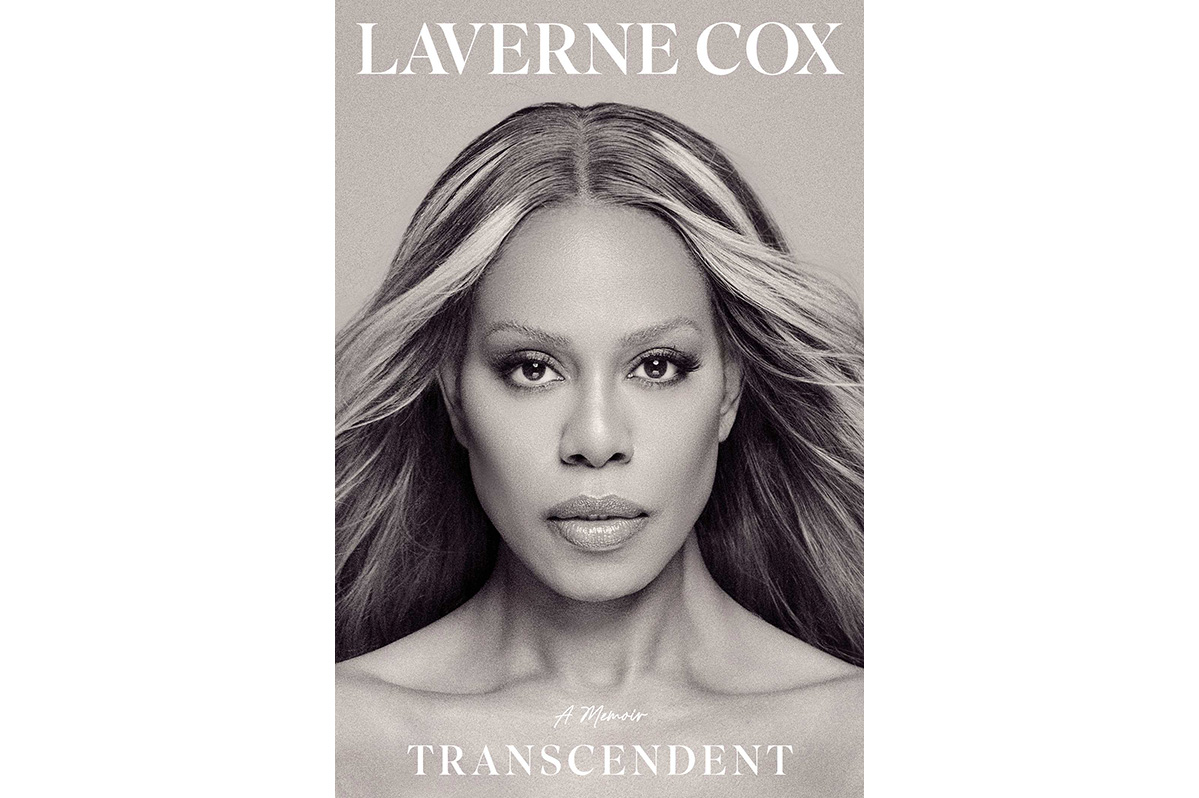
‘Transcendent: A Memoir’
By Laverne Cox
c.2026, Gallery Books
$30/238 pages
OK, let’s just say it: You’re tired of lies.
They come from above, behind, from either shoulder. They’re repeated, laid out in a line, told as if they’re true but they’re not. You wish people would stop lying to you. As in the new memoir “Transcendent” by Laverne Cox, you wish you could tell the truth about yourself.

Sissy.
If the bullies in the neighborhood weren’t constantly calling Laverne Cox that name, then Cox’s mother was. “Sissy,” was just one word, though; the others were worse. The boys would say those things while they beat Cox, when they could catch her. Her mother screamed at her gentle child who didn’t like “boy” activities.
Even at eight years old, says Cox, “I was a prim and proper lady.”
Despite the verbal abuse about her perceived feminine behavior and a furtive, failed attempt at conversion therapy, Cox’s mother sent her and her brother to the Alabama School of Fine Arts, where Cox learned to dance. It was a lifeline for her, and the talent gained there helped Cox get into college in Indiana.
From there, Cox expected to find fame and fortune in New York City.
And yet, the abuse she suffered as a child held Cox back, and the words “There is something wrong with me” became a daily mantra.
“I didn’t know how to say it.” Cox says. “I’m a girl.”
There were therapy sessions to get to that point, as Cox learned the language and skills needed to speak the truth. Landing a sense of style helped, as did her brother’s support, a handful of friends, and happy, scent-infused memories of her mother’s make-up table.
At each step, Cox says, “I was expressing myself, I was also allowing myself to edge closer to my girlhood.”
Let’s start here: “Transcendent” is a difficult read – not for style, but for substance.
From her earliest memory of being sexually abused as a toddler; to verbal and physical abuse from many sources; to what, judging by photo captions, seems perhaps like forgiveness, author Laverne Cox glosses over nothing. Be ready, in other words, for pages and pages of memories that, like a roller-coaster, will make you cringe and want to hide your eyes, although doing so would be a mistake.
As this book progresses, Cox’s story does, too. We see a child who knows a truth but has no words for it. The child becomes a teen with a bursting sense of self, then a young adult who craves love as she’s stretching her wings. By the time Cox advances to writing about her career and the abuse is (mostly) over, readers will breathe a well-deserved sigh of relief. Whew, you’ve winced through a harrowing tale to reach a satisfying but not complete update.
Fans of Cox’s work will want “Transcendent,” as will anyone who’s transitioned, is thinking about it, or loves someone who has. It’s a rough read, but a necessary one, then, and that’s no lie.
The Blade may receive commissions from qualifying purchases made via this post.
Movies
Ethereal ‘Camp’ a moody allegory for queer shame
An unsentimental yet empathetic exploration of guilt

When one watches movies for a living, it’s as easy to fall into routine as it is with any job. Each movie is different, of course, each with its own characters, its own viewpoint, and its own story – (or at least its own variation on one), but in so many other ways, they have a tendency to be very much the same.
This is because there is an entire “language” of filmmaking, established from the earliest days of cinematic storytelling, a process so subtle that most of us are barely aware of it: the image directs our attention, the script provides the shape and structure of the story, and the actors are our stand-ins, allowing us to “experience” the reality of the film through a transference of identity that occurs so reflexively that we don’t even notice it’s happened.
That’s why it can be such a jolt when we come across a movie that doesn’t follow the expected rules, and we can’t think of a better recent example than Avalon Fast’s “Camp,” which drew attention as it made the rounds at last year’s festival circuit and embarked on a series of screenings in select cities beginning on June 26.
Fast, 26, is a queer Canadian filmmaker who specializes in “Girl Horror” (a genre that centers female experience), and who has already become a prominent force in the “new queer indie” movement. Her first feature, “Honeycomb,” got a Slamdance “virtual” screening, and she’s appeared as a performer in films like Alice Maio Mackay’s “The Serpent’s Skin” and leading trans filmmaker Jane Schoenbrun’s yet-to-be-released Cannes hit, “Teenage Sex and Death at Camp Miasma.” With “Camp,” however, she stakes her claim to territory in a burgeoning field of queer/trans/feminist cinema to establish herself as a formidable “brand” of her own.
Rooted in a blend of trope-ish horror conventions and presented in a dreamy, ethereal style that elevates feeling over cognition, it’s the story of Emily (Zola Grimmer), a young woman accidentally responsible for two horrific tragedies, who feels hopelessly trapped by guilt and shame. At the suggestion of her father (Mike Tan), she takes a summer job as a counselor at a camp for “troubled” young people like herself, where she is quickly embraced and assimilated by the core group of female counselors – most of them “hot weirdos” who are more interested in all-night partying and a kind of home-grown witchcraft than they are in the wholesome camp activities they supervise during the day. Her initial response to this new environment is guarded, but as the summer goes on she comes to feel a strong connection to her fellow counselors, beginning to hope that she has – at last – found her place among a “family” that accepts her despite the life-shattering incidents that have come to define her sense of self. Yet at the same time, she becomes ever more aware of a call to confront and quiet the ghosts of her misfortunate past – even if it requires an unthinkable sacrifice.
Dreamy and purposefully opaque when it comes to differentiating between real experience and metaphysical reflection, Fast’s movie draws us in from the start with its edgy mix of visual atmosphere, blending an aesthetic that combines home-movie nostalgia with the ironically whimsical flourishes of the digital age to establish a tone that feels like a half-forgotten memory reconstructed in the form of an Instagram “reel.” It’s a potent effect, creating a milieu of surreal impressionism in which the plot advances more through mood and fragments of subjective experience than through concrete narrative form; at times, it feels untethered, yes, but it always manages to orchestrate its seemingly disjointed perspective into a shape that makes sense — even if we’re not quite sure how or why, or even what is actually happening.
The effect is cumulative, as the story becomes less bound to logic and realism while leaning further into a perspective that favors the arcane and mysterious over the rational and concrete. And while that might prove frustrating for viewers expecting a more traditional kind of “horror,” it provides for an experience that’s more likely to satisfy the kind of fans who appreciate being left to provide their own interpretations. The most obvious comparison would be with the work of David Lynch; there’s clearly an influence there for Fast’s darkly intuitive approach, which goes beyond the obvious parallels of its “Twin Peaks”-ish setting (the forest is most definitely a character here) to emulate the stream-of-consciousness narrative flow that marked much of Lynch’s late-career work.
“Camp” is far from imitative, however. While it may share some traits with the work of Lynch and other masters of contemporary surreal horror, it creates a unique “vibe” by allowing its own creative feminine energy to take the lead. The traumas it depicts spring from a definitively female space, from first-menstruation nightmares to the absurdities of having to defer to the “leadership” of a mediocre male who has more power than you (in this case, Austyn Van de Kamp as the camp’s supervisor, a naive but endearing yokel whose Jesus-centric worldview is undermined by the “coven” under his tentative command), and the overall treatment of its few male characters is largely less than forgiving. Yet on a deeper level, its subtext of carrying “unforgivable sin” that affects every aspect of one’s interactive life feels ultimately as much an expression of queer trauma as it does feminist ideology. The result is just cryptic enough to leave us pondering what we’ve just seen yet clear enough to deliver an emotional catharsis which feels, if not exactly curative, at least healing enough to pave a way forward.
Admittedly, it’s not a film that will likely tick off all the boxes for hardcore horror fans; while it might deal in dark emotions and a certain witchiness that ties it to the legacy of such pagan-flavored classics as “The Wicker Man” or “Midsommar,” its terrors are more existential than visceral, pondering the difficulties of overcoming self-hatred rather than pitting us against a palpable physical threat, supernatural or otherwise. Indeed, it’s more introspective psychodrama than it is traditional horror – which is less a criticism than it is a disclaimer.
Though it’s Fast’s moody aesthetic that emerges as the “star” attraction of “Camp,” much of its effectiveness hinges on the performances of its cast. Grimmer, especially, is central, and she succeeds admirably not only in winning our empathy but in peeling back the morally murky layers of Emily’s path to redemption in a way that feels like empowerment rather than ethical compromise. However, the ensemble of “soul sisters” that surrounds her (Alice Wordsworth, Cherry Moore, Ella Reece, Lea Rose Sebastianis, and Sophie Bawks-Smith) all play their own particular part in creating the “magic” that makes the whole thing work.
All in all, “Camp” is an exhilaratingly fresh – if sometimes opaque – expression of queer filmmaking from a feminine perspective; that’s a regrettably rare occurrence which makes Fast’s fastidiously unsentimental (yet deeply empathetic) exploration of queer guilt all the more powerful, and makes her movie an essential addition to your watchlist.

The 13th annual Frederick Pride Festival was held at Carroll Creek Park in Frederick, Md. on Saturday, June 27.
(Washington Blade photos by Michael Key)


View on Threads


‘Transcendent’ a tough but important read

SMYAL receives $25,000 award for ‘courageous acts’

Queen Camilla meets with JK Rowling

Ethereal ‘Camp’ a moody allegory for queer shame

D.C. queer faith leaders commit to exist, resist, persist

Supreme Court upholds state laws banning trans athletes from sports teams

Longtime Blade staffer Stephen Rutgers steps down after 14 years

‘Girlfriends’ wanted for murder in Silver Spring arrested in Ohio

EXCLUSIVE: Pressley rips State Department over LGBTQ rights rollbacks abroad

PHOTOS: Frederick Pride Festival
-

 U.S. Supreme Court5 days ago
Supreme Court upholds state laws banning trans athletes from sports teams
-
District of Columbia5 days ago
Longtime Blade staffer Stephen Rutgers steps down after 14 years
-
Maryland5 days ago
‘Girlfriends’ wanted for murder in Silver Spring arrested in Ohio
-
Massachusetts5 days ago
EXCLUSIVE: Pressley rips State Department over LGBTQ rights rollbacks abroad