Sports
Life after the ‘Chinese Sports Machine’
Champion swimmer Abi Liu finds rewarding new chapter as coach, wife
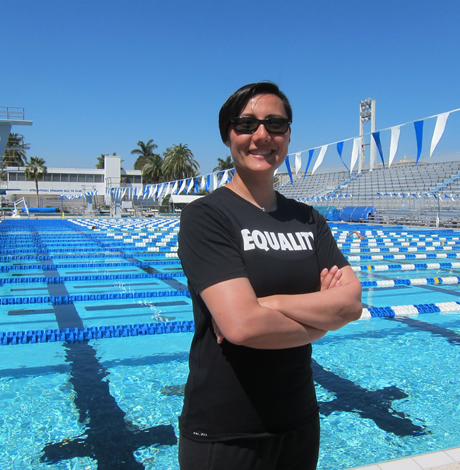
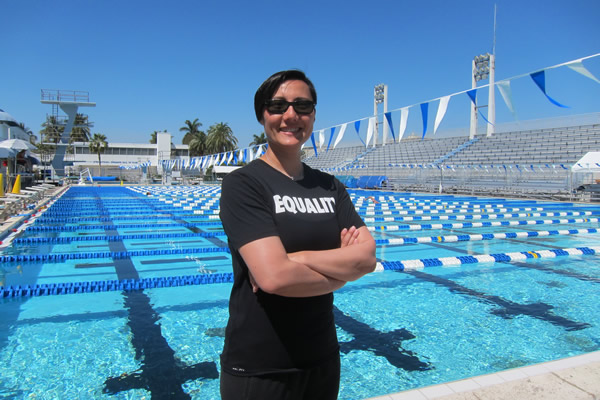
Abi Liu (Washington Blade photo by Kevin Majoros)
For years, Abi Liu was out, but not out. In her role as the head coach of 150 age group swimmers at Peak Swimming in San Jose, Calif., she was and still is, working with youth. In addition to the swim team, she is also running two swim schools, Saratoga Star Aquatics and Milpitas Star Aquatics with 4,500 students weekly.
The kids always seemed to pick up on things, but she was guarded around the parents. In 2013, Liu was falling in love and when her future wife came to see her at work, she couldn’t hold back anymore.
“That moment was really the turning point,” says Liu. “When KR arrived at the pool, I ran out and we hugged and kissed. The parents saw it and just smiled.”
Still, with her career focused on youth swimmers, Liu hadn’t had much interaction with out adult athletes. That all changed in April when she was asked to coach 40 LGBT masters swimmers at a training camp in Fort Lauderdale hosted by Team New York Aquatics. She wasn’t sure what she was walking into, but found a pleasant surprise when she arrived.
“It was like I returned to the mother ship,” Liu says. “I found a like-minded community that felt like my home team. I was even cracking dirty jokes.”
Liu was raised in Wenzhou, China and started swimming at age eight. In 1989 at age 13, she captured a title at the Chinese Junior National Championships and was recruited to the Chinese National Team. She would spend the next eight years of her life inside of what is commonly referred to as the Chinese Sports Machine.
“My parents wanted me to stay home and finish school, but this was my dream come true,” says Liu. “Twenty family members came to see me off on the bus and there were a lot of tears.”
As a national team member, Liu lived in a dorm with other athletes in Beijing, ate in the dorm and wore a uniform with the Chinese national emblem. Her dorm mates included divers, ping pong players and weightlifters.
“It was a very controlled environment where you work, live and socialize with other athletes. The mental burnout had to be kept in check,” Liu says. “I would choose the same path if I had it to do over again. It was a great life experience.”
During her career, Liu was a Chinese national record holder in the 200-meter backstroke, two-time Chinese national champion, gold medalist at the FINA World Cup, silver medalist at the Asia Games and bronze medalist at the FINA World Championships.
Home visits with her family in Wenzhou were limited to 15 days per year and in her dorm, 60 athletes per floor shared one phone to call home. Her new family unit became her teammates.
As for being a gay athlete, Liu says that it was not discussed.
“Nobody talked about sexuality, but having no parental supervision allowed me to be free to do whatever I wanted,” says Liu. “It was a dorm after all.”
When she finished her swimming career with the national team, she was contacted by a sports reporter about colleges in the United States that were giving out full swimming scholarships. She was granted a green card for people with special abilities and began swimming for the University of Nevada, Reno in 1997.
Liu left collegiate swimming after two years and found a coaching position in the Bay Area. She returned to school at San Jose State University and earned a degree in Kinesiology and Biomechanics.
In 2010, a group of investors approached her to start a new swim school in the area. Liu agreed to the offer and negotiated to have a swim team added as well.
“All those years of swim training was a physical experience. What I learned at school was a scientific experience,” Liu says. “It gave me the ability to explain why, and to educate my swimmers with techniques and information that stays with them.”
Liu’s relationship with KR evolved to a point where it was time to come out to her parents who reside in both Vancouver and Wenzhou. The news didn’t go over well and there was no communication with them for more than two years.
Abi Liu and KR Liu were married on Aug. 8, 2015, in Maui and returned to the Bay Area for a celebration. One of Liu’s brothers attended the party and was surprised to see all the people there supporting the newlyweds. The news spread back to her family and her dad reached out and asked them to come to Vancouver.
In Chinese societies, there is a custom of handing out red envelopes on special occasions. The red color of the envelope symbolizes good luck and is a symbol to ward off evil spirits.
“I wasn’t sure what to expect when we were heading to Vancouver,” says Liu. “When we arrived, my parents came out and started hugging us. My Grandma handed us a red envelope.”
These days, the Liu family is happily reattached and communicate on a regular basis. Abi Liu’s coaching career has soared and she is a two-time Pacific Swimming coach of the year.
She is also serving as an ambassador for USA Swimming’s LGBT Cultural Inclusion Group. The outreach program has evolved into diversity camps and Liu recently coached at a camp in Colorado Springs.
“I am so fortunate that my parents came around and that I have a loving wife,” Liu says. “I feel so much lighter and open now. Everything has lifted and I am 100% myself. I want others like me to know that they are never alone.”
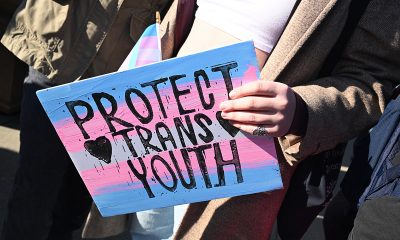




Sports
New IOC policy bans trans women from Olympics
New regulation to be in effect at 2028 summer games in Los Angeles
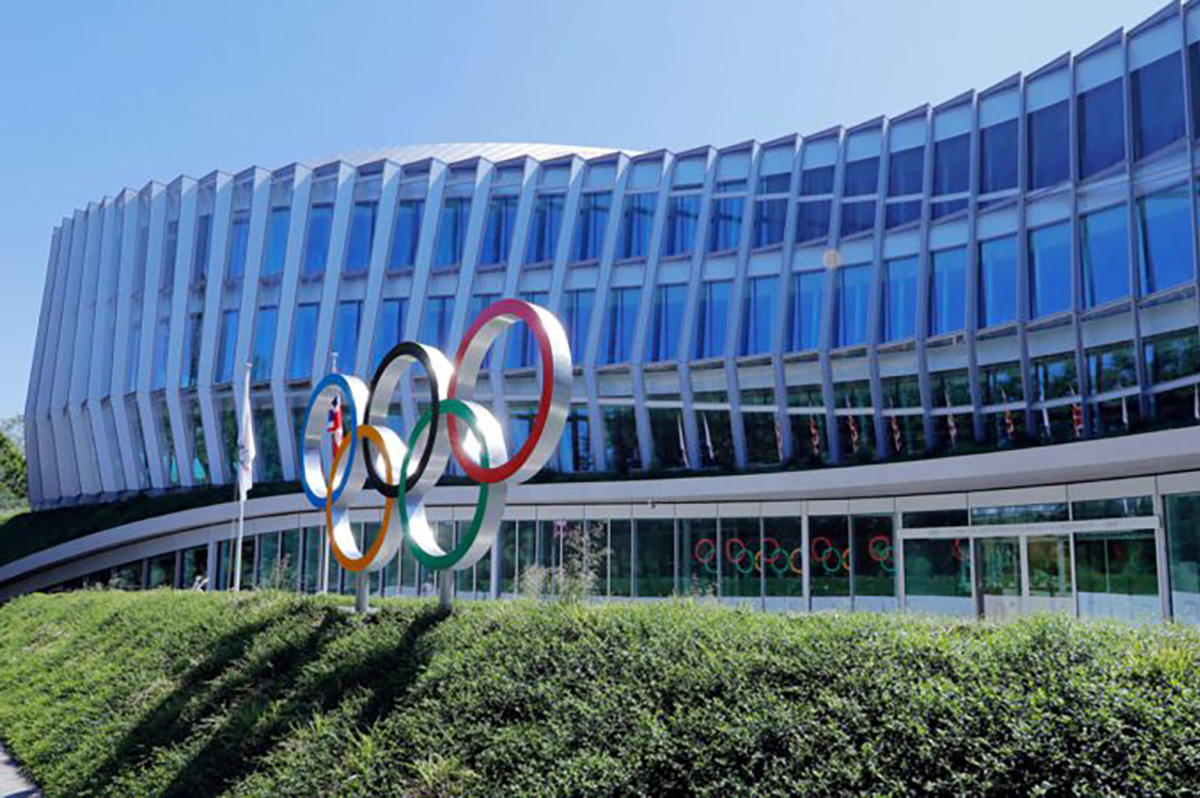
The International Olympic Committee on Thursday announced it will not allow transgender women from competing in female events at the Olympics.
“For all disciplines on the Sports Program of an IOC event, including individual and team sports, eligibility for any Female Category is limited to biological females,” reads the new policy.
The policy states “eligibility for the Female Category is to be determined in the first instance by SRY Gene screening to detect the absence or presence of the SRY Gene.”
“On the basis of the scientific evidence, the IOC considers that the SRY (sex-determining Region Y) Gene is fixed throughout life and represents highly accurate evidence that an athlete has experienced or will experience male sex development,” it reads. “Furthermore, the IOC considers that SRY Gene screening via saliva, cheek swab or blood sample is unintrusive compared to other possible methods. Athletes who screen negative for the SRY gene permanently satisfy this policy’s eligibility criteria for competition in the Female Category.”
The policy states the test “will be a once-in-a-lifetime test” unless “there is reason to believe a negative reading is in error.”
The new regulation will be in place for the 2028 Summer Olympics in Los Angeles.
“I understand that this a very sensitive topic,” said IOC President Kirsty Coventry on Thursday in a video. “As a former athlete, I passionately believe in the rights of all Olympians to take part in fair competition.”
“The policy that we have announced is based on science and it has been led by medical experts with the best interests of athletes at its heart. The scientific evidence is very clear: male chromosomes give performance advances in sport that rely on strength, power, or endurance,” she added. “At the Olympic Games, even the smallest margins can be the difference between victory and defeat. So, it is absolutely clear that it would not be fair for biological males to compete in the female category. In addition, in some sports it would simply not be safe.”
(Video courtesy of the IOC)
Laurel Hubbard, a weightlifter from New Zealand, in 2021 became the first trans woman to compete at the Olympics.
Imane Khelif, an Algerian boxer, won a gold medal at the 2024 Summer Olympics in Paris. Khelif later sued JK Rowling and Elon Musk for cyberstalking after they questioned her gender identity.
Ellis Lundholm, a mogul skier from Sweden, this year became the first openly trans athlete to compete in any Winter Olympics when he participated in Milan Cortina Winter Olympics in Italy.
President Donald Trump in February 2025 issued an executive order that bans trans women and girls from female sports teams in the U.S.
The U.S. Olympic and Paralympic Committee last July banned trans women from competing in female sporting events. Republican lawmakers have demanded the IOC ban trans athletes from women’s athletic competitions.
“I’m grateful the Olympics finally embraced the common sense policy that women’s sports are for women, not for men,” said U.S. Sen. Tom Cotton (R-Ark.) on X.
An IOC spokesperson on Thursday referred the Washington Blade to the press release that announced the new policy.
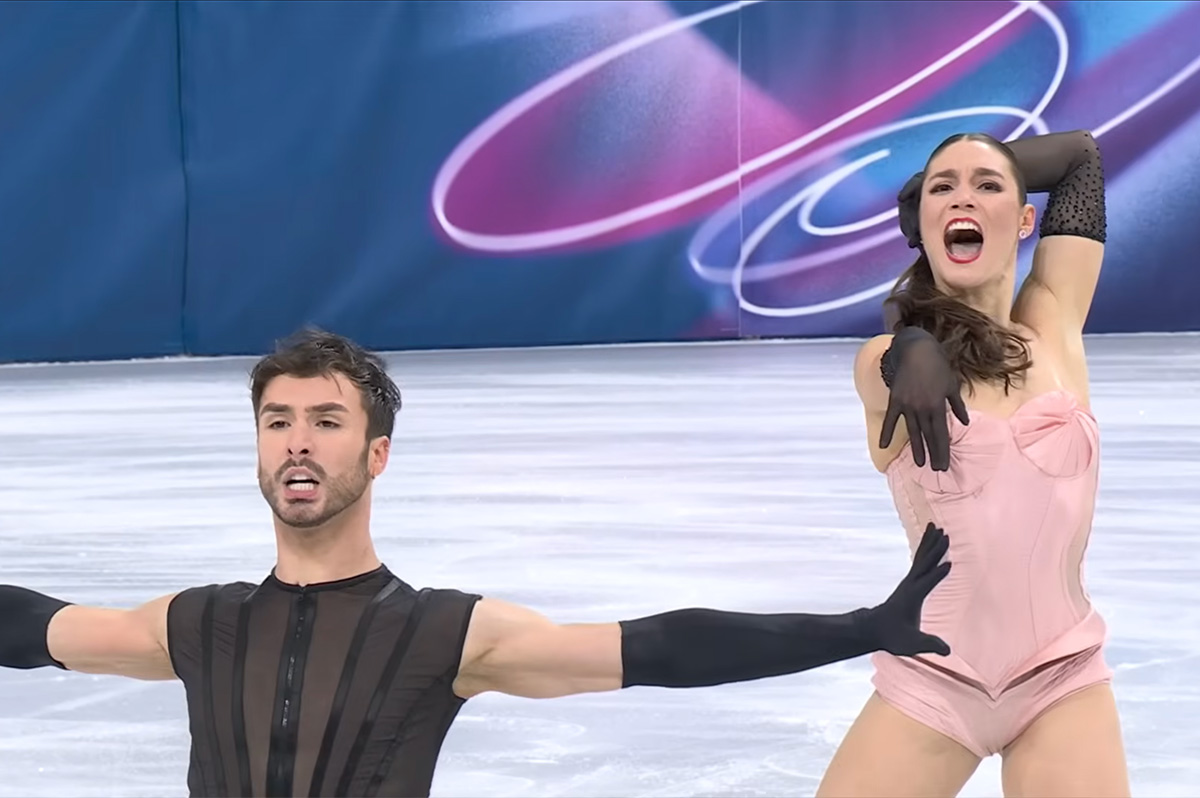
More than a dozen LGBTQ athletes won medals at the Milan Cortina Winter Olympics that ended on Sunday.
Cayla Barnes, Hilary Knight, and Alex Carpenter are LGBTQ members of the U.S. women’s hockey team that won a gold medal after they defeated Canada in overtime. Knight the day before the Feb. 19 match proposed to her girlfriend, Brittany Bowe, an Olympic speed skater.
French ice dancer Guillaume Cizeron, who is gay, and his partner Laurence Fournier Beaudry won gold. American alpine skier Breezy Johnson, who is bisexual, won gold in the women’s downhill. Amber Glenn, who identifies as bisexual and pansexual, was part of the American figure skating team that won gold in the team event.
Swiss freestyle skier Mathilde Gremaud, who is in a relationship with Vali Höll, an Austrian mountain biker, won gold in women’s freeski slopestyle.
Bruce Mouat, who is the captain of the British curling team that won a silver medal, is gay. Six members of the Canadian women’s hockey team — Emily Clark, Erin Ambrose, Emerance Maschmeyer, Brianne Jenner, Laura Stacey, and Marie-Philip Poulin — that won silver are LGBTQ.
Swedish freestyle skier Sandra Naeslund, who is a lesbian, won a bronze medal in ski cross.
Belgian speed skater Tineke den Dulk, who is bisexual, was part of her country’s mixed 2000-meter relay that won bronze. Canadian ice dancer Paul Poirier, who is gay, and his partner, Piper Gilles, won bronze.
Laura Zimmermann, who is queer, is a member of the Swiss women’s hockey team that won bronze when they defeated Sweden.
Outsports.com notes all of the LGBTQ Olympians who competed at the games and who medaled.
Sports
US wins Olympic gold medal in women’s hockey
Team captain Hilary Knight proposed to girlfriend on Wednesday

The U.S. women’s hockey team on Thursday won a gold medal at the Milan Cortina Winter Olympics.
Team USA defeated Canada 2-1 in overtime. The game took place a day after Team USA captain Hilary Knight proposed to her girlfriend, Brittany Bowe, an Olympic speed skater.
Cayla Barnes and Alex Carpenter — Knight’s teammates — are also LGBTQ. They are among the more than 40 openly LGBTQ athletes who are competing in the games.
The Olympics will end on Sunday.

Risking it all for love during World War II

Surviving spring cleaning

Iconic Eddie Izzard takes on 23 characters in ‘Hamlet’

How Pepper the courthouse dog helps victims of abuse

Women’s FEST returns to Rehoboth Beach next week

Kristi Noem ‘devastated’ as husband’s alleged fetish spending surfaces

D.C.’s affirming congregations to mark Holy Week, Easter

Glisten report details hostile climate for LGBTQ students

Supreme Court ruling against conversion therapy bans could affect Md. law

VIDEO: Gay journalist detained for booing Trumps at ‘Chicago’ opening night
-

 The White House4 days ago
Kristi Noem ‘devastated’ as husband’s alleged fetish spending surfaces
-
Local5 days ago
D.C.’s affirming congregations to mark Holy Week, Easter
-
Research/Study4 days ago
Glisten report details hostile climate for LGBTQ students
-
Maryland4 days ago
Supreme Court ruling against conversion therapy bans could affect Md. law