Arts & Entertainment
New database lets you track alleged sexual predators in TV shows and movies
projects like ‘House of Cards,’ ‘Transparent’ on the list
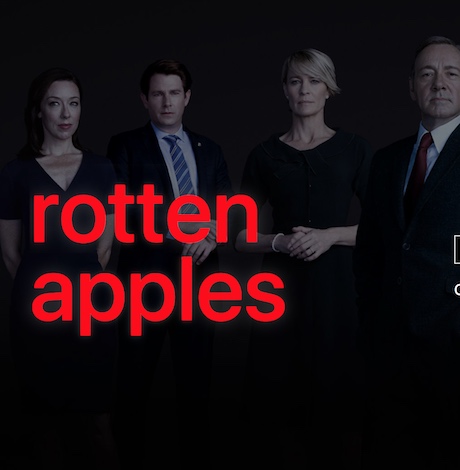
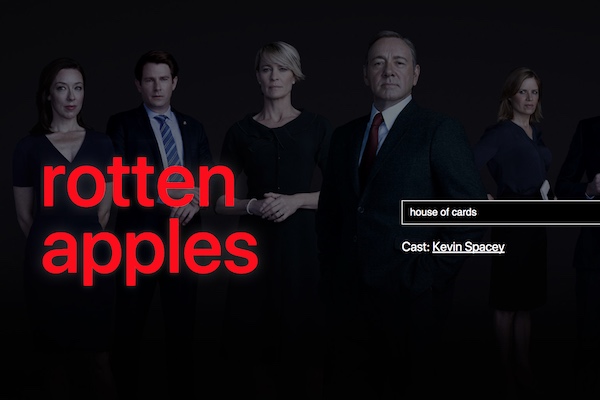
(Website screenshot.)
In light of the numerous sexual misconduct allegations springing up in Hollywood you can now check which of your favorite TV shows and movies are connected to alleged sexual predators through the new database, Rotten Apples.
The database functions as a search engine where you can enter the title of a TV show or movie and see if anyone involved in the project, including cast-members, screenwriters, executive producers or directors, have been accused of sexual misconduct.
“The goal of this site is to further drive awareness of just how pervasive sexual misconduct in film and television is and to help make ethical media consumption easier. By no means is this site meant to serve as a condemnation of an entire project.This database is not perfect, nor are the results meant to be taken as fact. Each link is sourced from an existing article and is not a reflection of our own opinions,” the website reads.
A search for TV shows “House of Cards” and “Transparent” come up “rotten apples” for the allegations against their stars Kevin Spacey and Jeffrey Tambor. Search for old classics like “Rear Window” and the site reminds you of the allegations against acclaimed filmmaker Alfred Hitchcock. The film “Good Will Hunting” lists actors Ben and Casey Affleck and producers Harvey and Bob Weinstein for their sexual misconduct allegations.
Projects with no known alleged sexual abusers that have earned a “fresh apples” rating include films like ‘Moonlight” and Christopher Nolan’s “The Dark Knight.”
Music & Concerts
DJ Chanel Santini is bringing the heat and some gender-fluid diversity to XBIZ Miami
Pool party celebrates most charismatic personalities, creative artists in adult entertainment
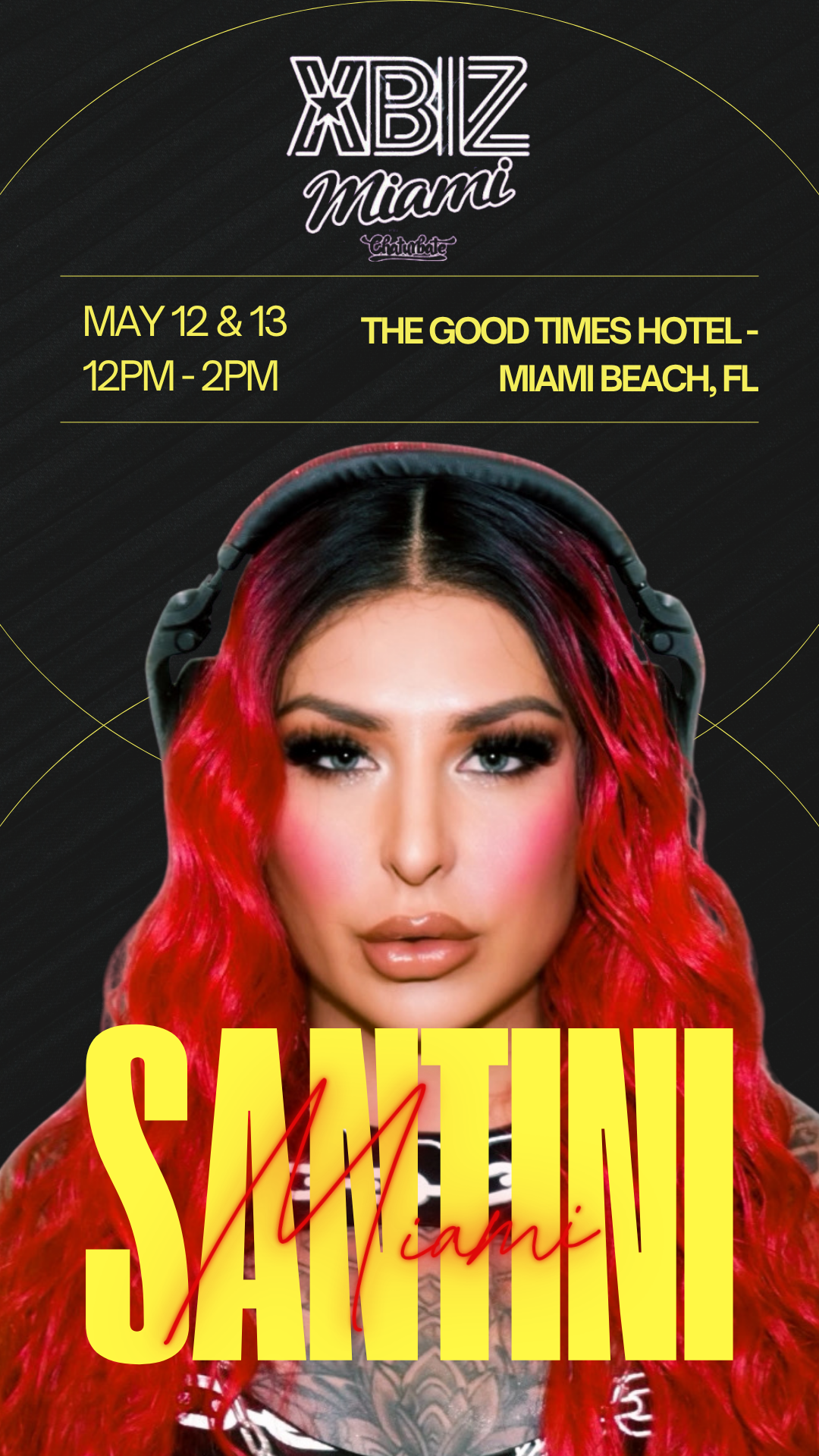
Chanel Santini has crossed over to being a DJ, performing at clubs all over the country. Now known as Santini, they will be making music and hyping the pool party, DJ-ing at XBIZ, the conference for adult creators and digital players, in Miami.
Taking place on Monday to Wednesday, the event honors the most charismatic personalities and creative artists in entertainment.
“I am honestly so excited — getting to DJ in Miami Beach is literally a DJ’s dream!” Santini told the Los Angeles Blade.
“I thought it would be a good opportunity because I haven’t been around my industry peers in a long time. It’s a great event to network and show off the new me!” said Santini.
While Santini is unsure what music they will be playing, they want everyone to have a good time. “My goal is to ignite the dance floor and play great music that everyone will vibe to. My sound includes house music, bass house, tech house, and I always like to throw a little bit of hip-hop in my sets.”
Santini loves how DJ-ing brings people together.
“Music really ignites us all! It is so universal, no matter what language you speak. I think it’s the best high in the world when you play a banger track, and everybody on the dance floor screams loudly. You can’t describe that feeling until you’re up there on that stage.”
Santini describes DJs as the “modern rock stars” in today’s world.
“I always feel like such a superstar when I’m up on that stage. The best feeling is after my set when I have people come up to me and say, ‘Thank you for sharing that amazing music.’ That’s how you know that you’re a good DJ — I love when I get those types of compliments!”
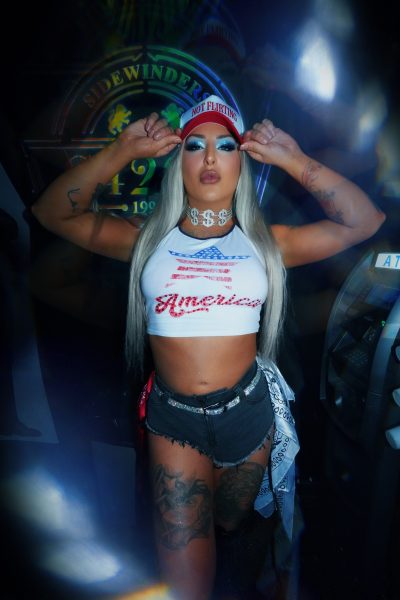
While sometimes it’s hard to please everyone’s musical tastes, Santini endeavors to try! “You just have to go out there and give it your all and be the best DJ that you can be,” he noted.
Santini, who had previously identified as transgender, recently decided to transition back to being gender fluid.
“It’s definitely been a journey, but I’m definitely happier in my own skin now than I was. I don’t go by he/him pronouns. I don’t go by they/them either. I guess I just really don’t have a preference. Whatever you see me as is your opinion. I’ve learned over the years that I’m not trying to be one specific thing. I’m just Santini. I’m just me.”
Santini acknowledged they felt respected more when dressed as a woman.
“I think it’s just because femininity runs the world. When I started to de-transition, I felt like I had to just be a boy all the time. But I’ve realized over the years that I don’t need to stick to one specific thing. I am always gonna be feminine, and that’s OK.”
Recently, Santini has been embracing their feminine side more.
“I definitely feel more comfortable in female presentation, and more powerful when I’m on stage dressed as Chanel. I love DJ-ing in drag because there are so many straight male DJs in the world. It’s almost like a superhero when he puts on his cape! I think it makes me confident and stand out more as an artist.”
And because Santini loves makeup and fashion, they can incorporate that into their sets. “I’m not just bringing you good vibes and good music. I’m bringing you a show/ production!”
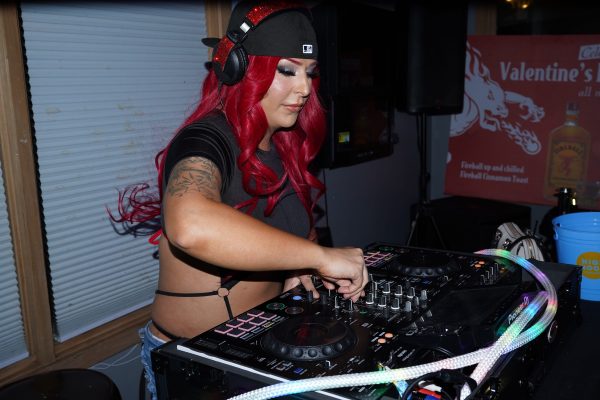
Santini is already working on big plans for the future.
“I’m opening up for a huge Pride block party in my hometown, Albuquerque, N.M., on June 12 and 13. It’s a two day festival and I’m super excited for this opportunity. I’m even hiring backup dancers and a choreographer.”
Santini plans to go “all out” for this show.
“It’s gonna be the biggest crowd that I’ve ever played for,” Santini enthused. “I’m putting my heart and soul into this performance, especially because it’s Pride in my hometown, and that means so much to me. I know the younger me would be so proud.”
Santini remembers going to Pride when they were younger and telling themself they couldn’t wait to be up on that stage.
“I’m truly living my dream right now, and I’m so excited for the future. The last 10 years of being in the adult entertainment business have been great and have given me major success. But I always knew that I didn’t want to be in this industry for long.”
Santini acknowledged that, in the recent past, it was a struggle.
“I’ve been trying to find myself and figure out what I wanna do next with my life. Now that I’ve found this passion for DJ-ing, it makes me want to go far in this business.”
In addition to being a DJ/artist, Santini is starting college next semester.
“I’m gonna get my degree in audio engineering,” Santini enthused. “I can’t wait to start producing my own tracks. I especially can’t wait till the day I’m headlining a major festival! I know with a little bit of patience and hard work that I can get there! I just have to continue believing in myself.”
Santini wanted to thank all of their fans for their support. “Truly, if it wasn’t for them, I wouldn’t be able to fund my art in the way that I have. I’m truly grateful. And I’m excited for the future!”
Out & About
Learn more about queer love
Friends of Dorothy Cafe hosts event at City-State Public House
Friends of Dorothy Cafe will host “Living History: How We Loved” on Thursday, May 14 at 7:30 p.m. at City-State Public House.
Guests will hear how queer and trans people have loved and cared for one another, especially when legal, medical, and social systems did not recognize those relationships. We’ll reflect on chosen family, long-term partnerships before marriage equality, caregiving during the AIDS crisis, hidden romances, friendship as survival, chosen family, and the loves that changed the course of our lives. This evening is about honoring lived experience, preserving community memory, and strengthening the bridge between generations.
Tickets are $24.57 and are available on Eventbrite.
Friday, May 8
Center Aging Monthly Luncheon With Yoga will be at noon at the DC Center for the LGBT Community. Email Mac at [email protected] if you require ASL interpreter assistance, have any dietary restrictions, or questions about this event.
Women in their Twenties and Thirties will be at 7 p.m. on Zoom. This is a social discussion group for queer women in the Washington, D.C. area. For more details, visit the group’s Facebook.
The DC Center for the LGBT Community will host “We Are Pat” at 12:30 p.m. This event takes a fresh look at the iconic Saturday Night Live sketch “It’s Pat” and traces how ideas about gender and what we laugh at have shifted from the ’90s to today. What began as a character born out of cultural anxiety around gender now lands in a world shaped by ongoing debates about transness and queerness. For more details, visit the DC Center’s website.
Saturday, May 9
Go Gay DC will host “LGBTQ+ Community Brunch” at 11 a.m. at Freddie’s Beach Bar & Restaurant. This fun weekly event brings the DMV area LGBTQ community, including allies, together for delicious food and conversation. Attendance is free and more details are available on Eventbrite.
Sunday, May 10
Drag Queen Sip and Paint Experience Washington DC will be at 4 p.m. at Town Tavern. This is a fabulous experience brought to you by Sip and Paint USA and combines the joy of painting with the lively energy of a drag queen, offering an hour and a half of fun, creativity, and entertainment. Participants paint a canvas while enjoying cocktails, all under the guidance of a glamorous drag queen host. Tickets are $47.19 and can be purchased on Eventbrite.
Monday, May 11
Center Aging: Monday Coffee Klatch” will be at 10 a.m. on Zoom. This is a social hour for older LGBTQ adults. Guests are encouraged to bring a beverage of choice. For more information, contact Adam ([email protected]).
Genderqueer DC will be at 7 p.m. on Zoom. This is a support group for people who identify outside of the gender binary, whether you’re bigender, agender, genderfluid, or just know that you’re not 100% cis. For more details, visit genderqueerdc.org or Facebook.
Tuesday, May 12
Trans Discussion Group will be at 7 p.m. on Zoom. This event is intended to provide an emotionally and physically safe space for trans* people and those who may be questioning their gender identity/expression to join together in community and learn from one another. For more details, email [email protected].
Coming Out Discussion Group will be at 7 p.m. on Zoom. This is a safe space to share experiences about coming out and discuss topics as it relates to doing so — by sharing struggles and victories the group allows those newly coming out and who have been out for a while to learn from others. For more details, visit the group’s Facebook.
Wednesday, May 13
Job Club will be at 6 p.m. on Zoom upon request. This is a weekly job support program to help job entrants and seekers, including the long-term unemployed, improve self-confidence, motivation, resilience and productivity for effective job searches and networking — allowing participants to move away from being merely “applicants” toward being “candidates.” For more information, email [email protected] or visit thedccenter.org/careers.
The DC Center for the LGBT Community will host “Movement for Healing” at 3 p.m. This trauma- and yoga therapy–informed class is designed to help guests gently reconnect with their body and their breath. Through mindful movement, somatic awareness, and grounding practices, guests will explore how to release tension, increase mobility, and cultivate a deeper sense of safety and ease within. For more details, visit the DC Center’s website.
Thursday, May 14
Virtual Yoga Class will be at 7 p.m. on Zoom. This free weekly class is a combination of yoga, breathwork and meditation that allows LGBTQ+ community members to continue their healing journey with somatic and mindfulness practices. For more details, visit the DC Center’s website.

DJ Chanel Santini is bringing the heat and some gender-fluid diversity to XBIZ Miami

New Hungarian prime minister takes office

Comings & Goings

Learn more about queer love

Calendar: May 8-14

DOE investigates Smith College’s trans-inclusive policy

Key West Pride’s state funding pulled

PHOTOS: Miss Gay Western Maryland

Barney Frank on trans rights, 2028, and the need to ‘reform the left’