a&e features
BACK TO SCHOOL 2018: Gay Howard student says much work remains
Micro-aggressions, token support among challenges for campus LGBT group
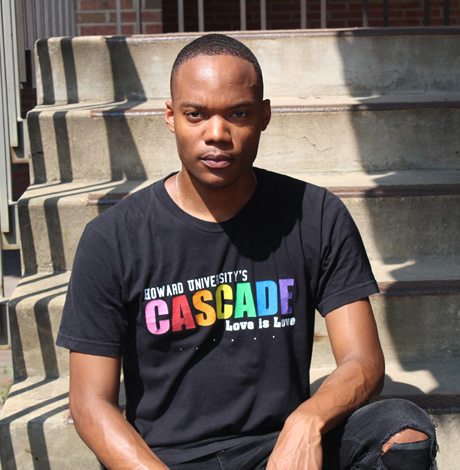
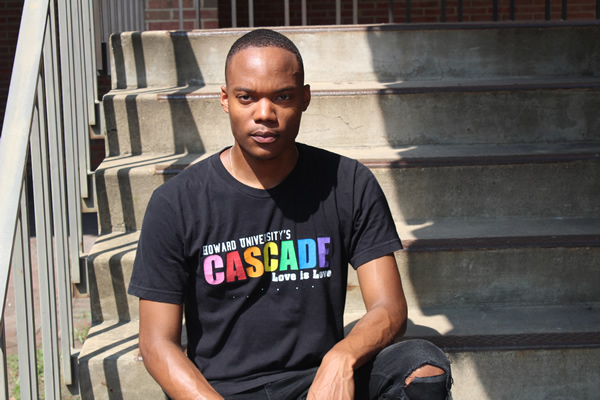
Justin Calhoun overcame extreme homophobia in his native Mississippi before relocating to Washington for college. (Photo courtesy Calhoun)
Justin Calhoun chose Howard University in part to escape the homophobia he grew up with in the Mississippi Delta. However, he continues to face oppression for being gay at the D.C. HBCU (historically black colleges and universities); now, it’s just on a micro rather than macro scale.
When Calhoun was deciding which college to attend, he knew he wanted to go somewhere where his peers “affirmed and understood” him and his gay identity. He thought Howard would offer a “safer, more progressive” environment than Morehouse (an all-male HBCU in Atlanta) or a state school in Mississippi.
The junior, political science major is all too familiar with homophobia thanks to growing up in Ruleville (a small town in northern Mississippi with about 3,000 residents) with parents who are still struggling to accept his gay identity.
“I’ve come to my mom three times, and there will be a fourth time,” Calhoun says. “Each time, my mom has basically lied to herself and been really in denial about it. … After I come out, she always says, ‘I can’t wait till you get a wife and kids.’”
Although Calhoun has known since second grade that he is gay, he didn’t start coming out to his friends till sixth grade, and even then, he intentionally didn’t come out to his parents because he knew they wouldn’t be accepting.
However, one of Calhoun’s teachers approached his parents independently without his knowledge.
“When my parents found out, we had a long talk, and I eventually admitted I was gay,” Calhoun says. “My parents immediately started crying; my dad walked out of the room and said, ‘That’s some bullshit.’ … Several days after that, there were some prayer sessions, prayer warriors, people coming in the house to pray and lift the corners of the house from the evil spirit that was me.”
Beyond social stigma and rejection, Calhoun was also concerned about his physical safety because of recent events near his hometown in Clarksdale, Miss., where Marco McMillian, an openly gay candidate running for mayor, was found murdered at age 34. Although there remains no evidence proving the murderer was motivated by McMillian’s sexual orientation, the event still shook up the LGBT community, making many queer Mississippians like Calhoun frightened and uneasy.
“My dad said, ‘Is this what you want to happen to you? Because that’s basically what you’re asking to happen; you’re gonna die if you keep acting gay.’ So he told me to go to school and tell all my friends I was straight ‘or else,’” Calhoun says. “I never really questioned the ‘or else,’ but I was very aware of what that could possibly mean in terms of physical violence.”
Now at Howard, Calhoun is far from closeted.
“I’m very loud about being gay at Howard and actually most places I go, except my parents’ home. I just don’t like being quiet about it.”
He joined CASCADE (Coalition of Activist Students Celebrating the Acceptance of Diversity and Equality), the campus’ LGBT group, which Calhoun describes as “the hub for all queer activism on campus,” at the end of his freshman year and became the president last semester as a sophomore.
The group currently has 16 advocacy interests for next school year, such as the creation of an LGBT resource center, which would institutionalize queer spaces and Black Gayze, a magazine which will champion and explore the lives of queer students at Howard. CASCADE has also placed trans and gender-non-conforming folks at the forefront of their advocacy with its gender-neutral bathroom initiative.
Currently, only one building on Howard’s campus has gender-neutral restrooms, Frederick Douglas Memorial Hall. However, the hall is currently under renovation until 2020, meaning the campus functionally has no gender-neutral restrooms anywhere on campus. CASCADE hopes to designate at least two such restrooms in all student buildings (dormitories, cafeterias, academic spaces, etc.) by December and at least two in all administrative buildings by April 2019.
Calhoun says Trump has in some ways benefitted queer activism at Howard since his election two years ago.
“I think Trump has been a benefit in that people are realizing how emboldened people feel now and they’re starting to hear their views and people want to make sure they’re not on that side of history, so people have been trying to be politically correct,” Calhoun says.
Yet Calhoun says there remains a lot of passive partnership on campus.
“There’s no resistance (to our agenda). I think the only resistance is silence,” Calhoun says. “A lot of people like to partner with LGBTQ organizations on campus … (but) being intentional with these (queer) groups means talking to them year round and caring. It means funding them. It means partnering with them on long-lasting partnerships. It means coming to their meetings. It means showing the initiative that you care outside of a one-time event that maybe attracts 10-20 people.”
Calhoun says this lack of “initiative” and “intentionality” contributes to micro-aggressions he and other queer students continue to experience. However, he also says these micro-aggressions are partially due to the black community’s historic relationship with the church.
“Howard is supposed to be this safe space where black students can come and explore their identities safely in this microcosm of black creativity and exploration,” Calhoun says. “And that’s cute for one type of student, mainly cis hetero students. But for queer students, that’s not at all the reality … (partially) because of black people’s relationship with the church and (how) the church has had a long history of saying that queerness is wrong. Because of Howard’s history with all of that, the campus has a lot of micro-aggressive oppression.”
One day, Calhoun hopes to start his own nonprofit catered to black, queer people in the South, filling a void he himself experienced growing up. Until then, he hopes to see Howard continue advancing queer rights and voices on campus.
“I would like to see more queer voices and yes I would like to see them represented, but mostly I would like them to be visible … (for example) in classrooms where I see a black, queer teacher talking about their black, queer experience just as they would their black experience now,” Calhoun says. “I just want it (queerness) to be integrated into (the community’s) everyday thoughts and actions, so that students know and feel radical acceptance.”




a&e features
New book celebrates 1970s dance music icons
‘A Night at the Disco’ features interviews with Donna Summer, Debbie Harry, more
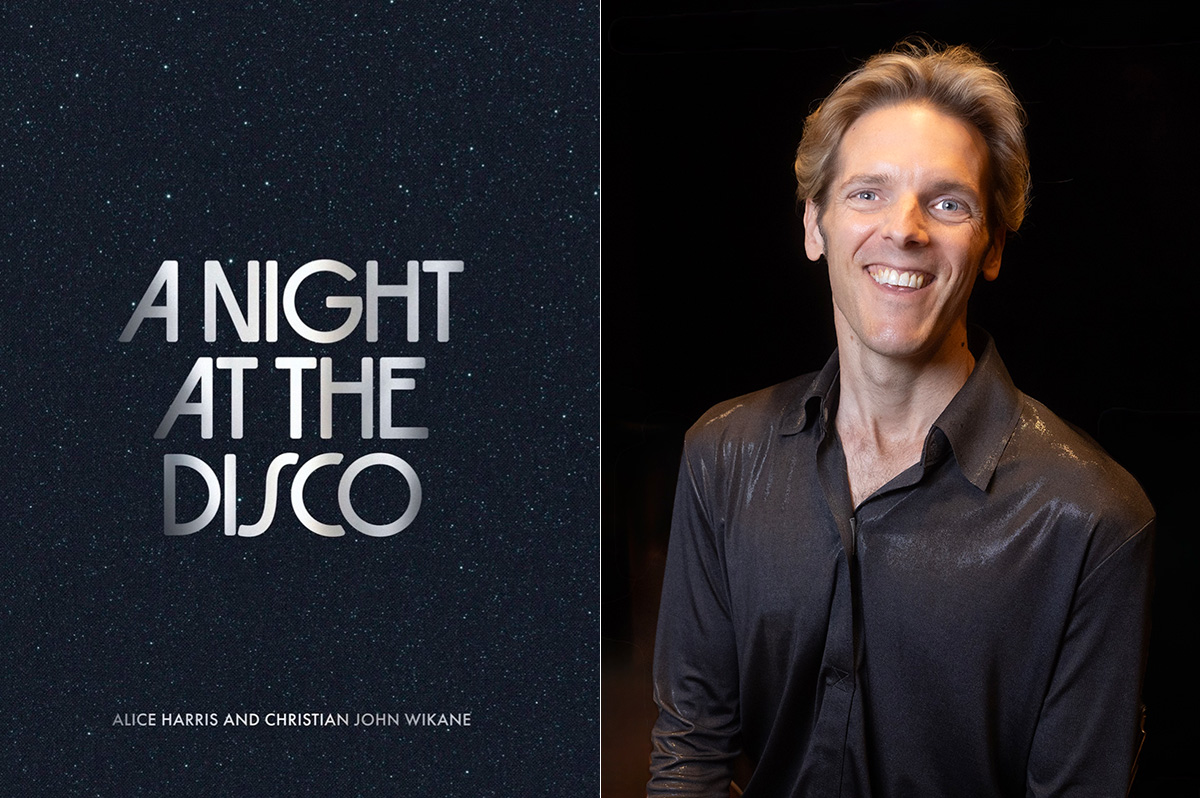
If you’re a fan of 1970s-era dance music, don’t miss the irresistible new book by Christian John Wikane and Alice Harris, “A Night at the Disco,” which revisits more than 90 interviews conducted with some of the biggest names in pop culture.
“A Night at the Disco” (ACC Art Books) was published on March 24, and distributed by Simon & Schuster. It celebrates more than 100 artists who sparked a phenomenon in dance music from 1970-1979 and features excerpts from interviews with everyone from Donna Summer to Debbie Harry.

Lost City Books (2467 18th St., N.W.) will welcome author Christian John Wikane for a book signing and conversation about “A Night at the Disco” on Thursday, April 16 at 6 p.m. Details at lostcitybookstore.com. Bird in Hand Coffee & Books in Baltimore (11 E. 33rd St.) )will also host a Q&A with the author on Wednesday, April 15 at 6 p.m. Details at theivybookshop.com.
Below is an excerpt from “A Night at the Disco.”
“I’ll let in anyone who looks like they’ll make things fun.” Steve Rubell is guiding a New York Times reporter through Studio 54 as resident DJ Richie Kaczor dazzles the crowd with records by CHIC, Odyssey, and T-Connection. “Disco, that’s where the happy people go,” The Trammps sing as dancers spin and twirl underneath tubes of flashing lights. Seven months since Rubell and co-owner Ian Schrager opened Studio 54 in April 1977, it’s welcomed untold numbers of “happy people” … at least those lucky enough to pass through the doors.
“We were part of the chosen few,” says André De Shields, who immortalized the title role in The Wiz on Broadway at the time. “We could show up at Studio 54 and the doorman at the velvet stanchion would look over everyone and point to us from The Wiz to come in, that kind of thing.” As the lead vocalist in the GRAMMY-nominated Dr. Buzzard’s Original Savannah Band, whose debut modernized big band sophistication for the discothèques, Cory Daye had carte blanche in the club. “The energy was like a New Year’s Eve party every night,” she says. “I would go up to the mezzanine and watch the mechanical light pillars go up and down, metallic confetti falling from the ceiling, the spoon and the moon. I was so fascinated and enamored by it.
“When a certain song came on, the people would just rush to the dance floor. There was no contact dancing — the hustle was pretty much on its way out — but it was just an amazing experience to see all the cultures together. It was a fusion of cultures, which described my life and my band, so I was right at home there.”
“Studio 54 was the place,” adds Linda Clifford. “Crazy parties. If you could think it, you would see it. It was like a circus. Just an amazing place to be. I worked 54 so many times. It was like a second home to me. The people there treated me so well. The crowd always seemed to enjoy my show. I always had a good time with them. That was the most important thing: making sure that they had fun.”
Well before Studio 54 opened, disco had become a business juggernaut. “A four billion dollar market and still growing,” Billboard announced in February 1977, with dance music offering more variety than ever. “There is no longer a single, readily identifiable disco beat, but a kaleidoscope of sounds that are melodic and danceable,” Tom Moulton told the magazine. In the clubs, records by veteran artists like Stevie Wonder and the Bee Gees were mixed in with a range of new acts like Grace Jones, Boney M., and The Ritchie Family, while everyone from ABBA to Marvin Gaye scored number one pop hits with songs that had club-centric storylines.
Beyond the charts, disco itself remained as idiosyncratic as ever, especially on several productions by Laurin Rinder and W. Michael Lewis, whose studio creations, El Coco (“Let’s Get It Together,” “Cocomotion”) and Le Pamplemousse (“Le Spank”), joined their own “Lust” from Seven Deadly Sins (1977) among the most tantalizing releases on AVI Records. Rinder & Lewis also produced acts for the newly hatched Butterfly Records in Los Angeles, where Saint Tropez (“On a Rien à Perdre”) and Tuxedo Junction (“Moonlight Serenade”) reflected the duo’s high gloss sound, spanning everything from European sophistication to a more literal translation of the ’40s sensibilities popularized by Dr. Buzzard’s Original Savannah Band.
12-inch singles had also grown as the preferred format to approximate the club music experience at home. Nearly a year after Atlantic Records introduced its series of promotional 12-inch singles for DJs, New York-based Salsoul Records released the industry’s first commercially available 12-inch single, “Ten Percent” by Double Exposure, in May 1976. A year later, T.K. Records was the first label to certify a gold record for a 12-inch single when Peter Brown’s “Do You Wanna Get Funky With Me” tallied one million sales.— Christian John Wikane
(From “A Night at the Disco” by Alice Harris & Christian John Wikane. Published by ACC Art Books.)
The Blade may receive commissions from qualifying purchases made via this post.
a&e features
Award-winning D.C. chef reaching new culinary heights
Anthony Jones of Marcus DC competing on ‘Top Chef’
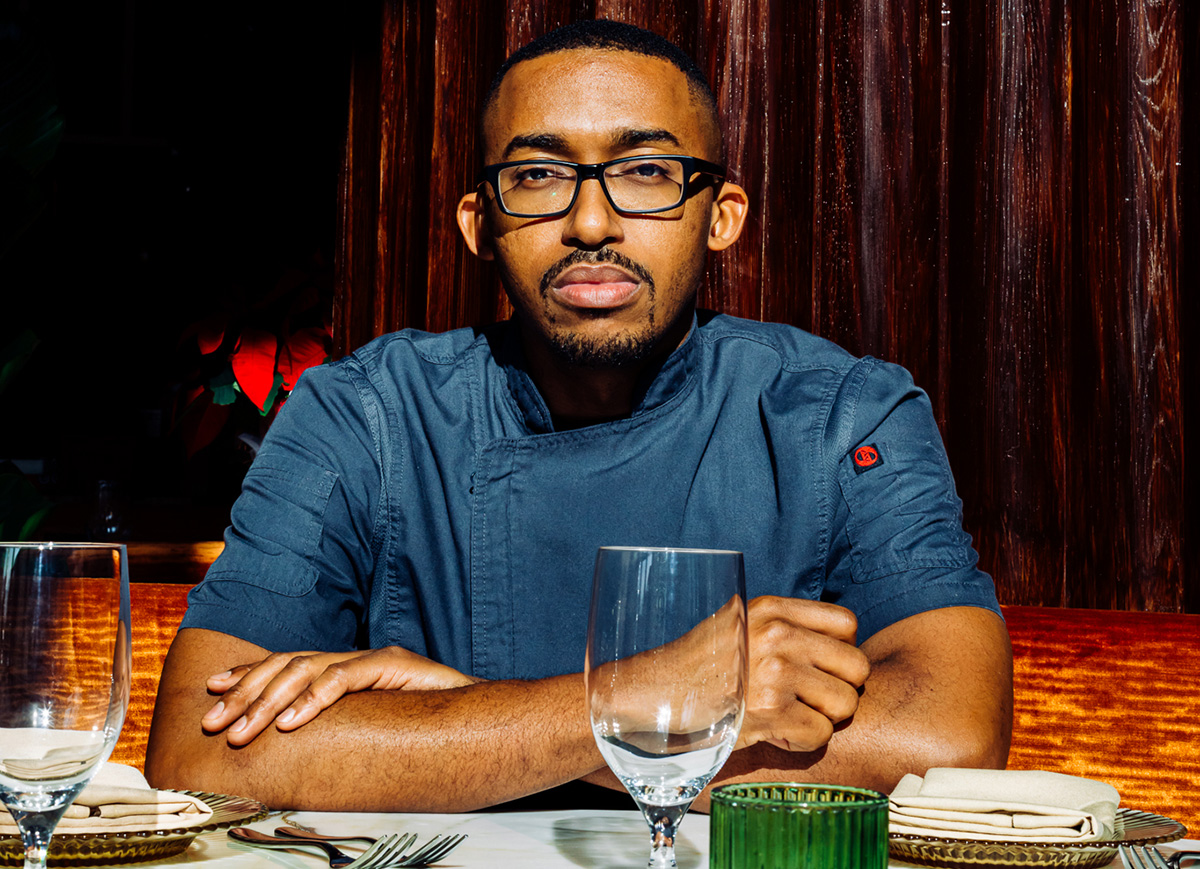
In Anthony Jones’s kitchen, all sorts of flags fly, including his own. Executive chef at award-winning restaurant Marcus DC, Jones has reached culinary heights (James Beard Award semifinalist for Emerging Chef, anyone?), yet he’s just getting started.
Briefly stepping away from his award-winning station, Jones took a moment under a different set of lights. Recently, he temporarily gave up his post at the restaurant for a starring small-screen slot on the latest season of “Top Chef,” which debuted in March. (The show airs weekly on Bravo and Peacock).
Before his strategic slice-and-dice competition, however, Jones, who identifies as gay, draws from his deep DMV roots. In the years before “Top Chef” and the top chef spot at Marcus, he was born and raised in Sunderland, Md., in southern Maryland, near the Chesapeake.
Early memories were steeped in afternoons on boats with his dad bonding over fishing, and wandering the garden of his great-grandparents spread with fresh vegetables and a few hogs. “It was Southern, old-school ethics and upbringing,” he said. “Family and food went hand in hand.” Weekends meant grabbing bushels of crabs, dad and grandma would cook and crack them. Family members would host fish fries for extra cash. In this seafood-heavy youth, Jones managed time to sneak in episodes of the “OG” Japanese “Iron Chef” show, which helped inspire him to pursue a career in the kitchen.
Jones moved to D.C. after graduating from college, ending up at lauded Restaurant Eve, and met famed chef Marcus Samuelson, who brought him to Miami to be part of the opening team for Red Rooster Overtown. After three years, Jones moved back to D.C., where he ran Dirty Habit, reinventing and reimagining the menu, integrating West African flavors and ingredients.
Samuelson, however, wouldn’t let a talent like Jones stay away for too long. Pulling Jones back into his orbit, Samuelson elevated Jones to help him open his namesake restaurant Marcus DC, which has been named a top-five restaurant by the Washington Post. Since then, Jones has been nominated as a semifinalist for the RAMMYs Rising Culinary Star in 2026 and won the Eater DC’s Rising Chef award in 2025.
Samuelson’s Marcus is a tour de force interpreting the Black Diaspora on the plate, from the American South to West Africa, along with his signature “Swedopian” touches. Yet it’s Jones who has deeply informed the plate, elevating his own story to date. Marcus DC is primarily a seafood restaurant, which serves Jones well.
“Where I’m from is seafood heavy, and as I’ve progressed in my career, I’ve moved away from meat.” Veggies and fish are hero dishes. His own dish, Mel’s Crab Rice, was not only lauded by the Washington Post, but is framed by his youth carrying home the crustaceans from Mel’s crab truck. It’s a bowl of Carolina rice, layered with pickled okra, uni béarnaise, and crab. Jones also points to a dish on the opening menu, rockfish and brassica, paying respect to a landmark D.C. institution, Ben’s Chili Bowl. Jones reverse engineered a favorite bowl of chili that’s seafood instead of meat forward, leveraging octopus and rockfish along with different riffs of cauliflower: showing his intellectual, creative, and cultural sides.
While “Top Chef” is showing Jones’s spotlight side, he also lets his identity show at work. “In the kitchen, I make sure we’re inclusive. We don’t tolerate discrimination. Everyone that’s here should feel confident to express themselves. There are so many different flags in the kitchen.”
Jones says that he didn’t fully express his gay identity until fairly recently. He felt reluctant coming out to certain family members, “you’re scared to tell them about being different,” he says, and while that anxiety ate at him, “I’m lucky and fortunate to have unconditional love and that weight off my shoulders.”
Today, “I’m me all the time, Monday to Sunday. I’m honest with people, and my staff is honest with me.”
“Being a chef is hard,” he says, “and being a chef of color is even more difficult.”
Yet his LGBTQ identity is a juggling act, he says. “I need to keep that balance, because once someone finds out something about you, their opinion can change, whether you want it or not.”
Being on a whole season of TV cooking competition, however, might mean millions more might have an opinion of him (Jones has appeared on TV already, on an episode of “Chopped”). To prepare, he says, “I’ve just kept a level head. It’s just an honor to be on top chef with amazing people happy to be there.”
Plus, this season is set in the Carolinas, and Jones attended Johnson & Wales University in Charlotte, N.C. “It’s a full story of my life, now a monumental moment for me.”
Jones also recently was nominated for a James Beard Foundation Award. “JBF has been a north star, a dream for so long. I always had this goal on my wall.”
Being at the top spot at Marcus DC, making waves through his accolades, and cooking on Bravo means that Jones is highly visible. “I think that if someone has a similar background to me, and can see our story, trajectory, and success, they can have more ability to be themselves. This is my goal.”
Back at Marcus, Jones has plenty up his chef’s white’s sleeves. A new spring menu is in the works. He’ll be launching a new tasting menu “dining experience,” he says, and has plans to work on more events and collaborations with chefs and friends to bring in new talent and share the culinary wealth.
a&e features
Introducing the Torchbearers Awards honoring queer, trans women and nonbinary people
Meet the Legends and Illuminators lighting new paths
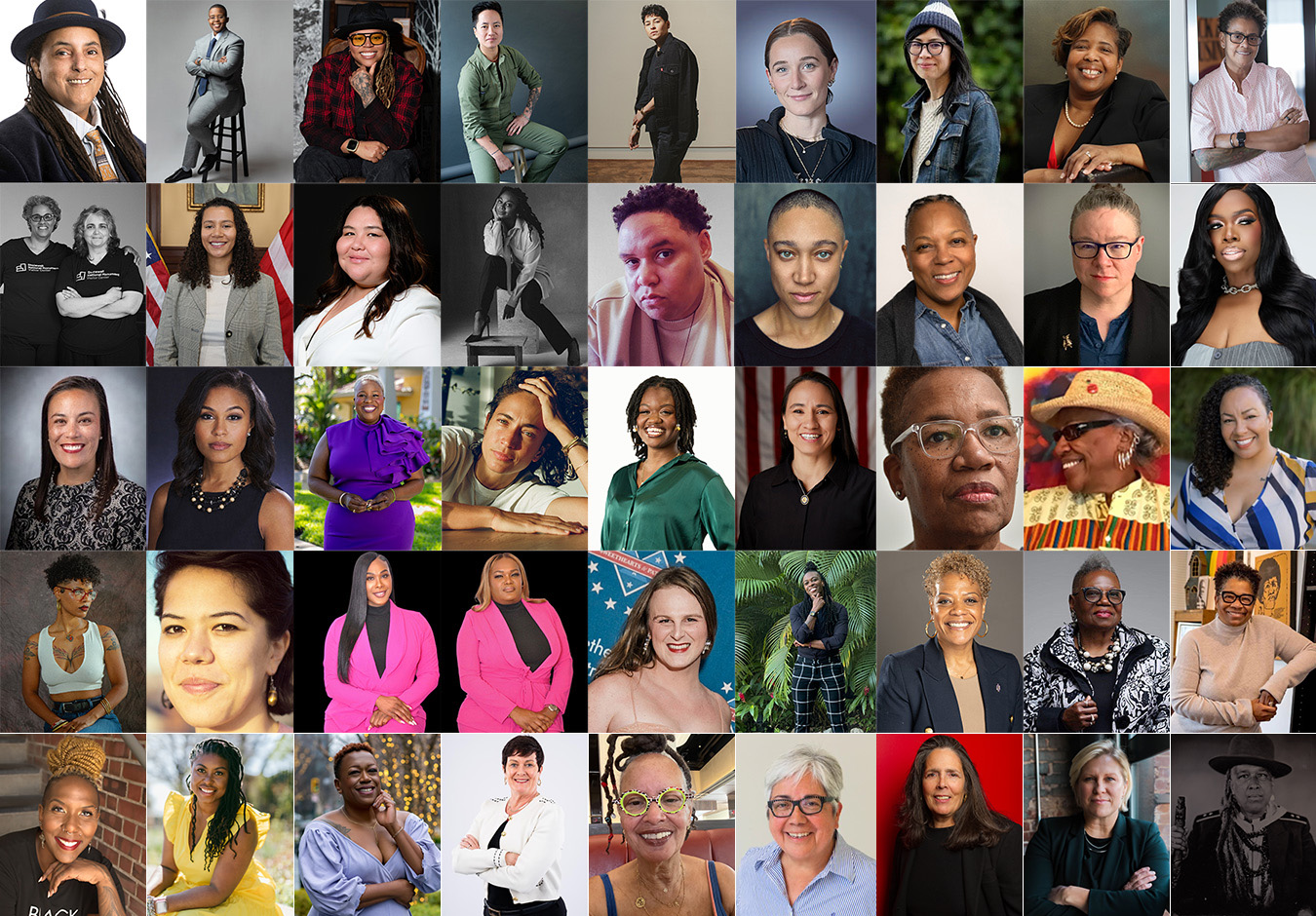
The Torchbearers Awards are more than recognition—they are a continuation of legacy. They honor the quiet architects of progress in our community: those who organize, advocate, build, and protect, often without fanfare but always with purpose. Rooted in a belief in intentional recognition, this honor names those who carry our movements forward—those who make room for others, who remind us that change is both generational and generative. In a time marked by uncertainty and challenge, these leaders push forward with courage, clarity, and an unwavering commitment to expanding opportunity and equity.
This year’s honorees reflect the full breadth of our community, spanning generations, backgrounds, identities, and industries. From Legends, with decades of leadership and having created pathways for others, to Illuminators, who are lighting new paths with creativity and innovation, each Torchbearer represents the power of intergenerational leadership and the strength found in our diversity. They are organizers, advocates, artists, policy leaders, healers, and changemakers whose lived experiences shape a shared vision for equity and liberation.
This award is our love letter to queer and trans women and nonbinary people who carry the flame when it would be easier to let it dim. To those who consistently show up, who use their voice and visibility and stand firm, often without recognition, so that others may live more freely and fully. The Torchbearers Awards celebrates not just what has been done, but the enduring spirit, responsibility, and collective care that ensure the work continues, and that the flame is always passed forward.
Co-Creators of the Torchbearers Awards: Shannon Alston, June Crenshaw, Heidi Ellis
Torchbearers Awards Advisory Board: Aditi Hardikar, Lesley Bryant, Jasmine Wilson-Bryant, Stephen Rutgers
ILLUMINATOR AWARDEES
- Representative Sharice Davids (she/her), (D, KS-03)
— U.S. House of Representatives - Greisa Martinez Rosas (she/her/ella)
— Executive Director, United We Dream - Paola Ramos (she/her)
— Journalist & Correspondent - Meagan A. Fitzgerald (she/her)
— Journalist & Correspondent - Jessica L. Lewis (she/her)
— Founder / Producer, Play Play DC - Savannah Wade (she/her)
— Founder, OAR Agency - Suhad Babaa (she/her)
— Filmmaker/ Former Executive Director of Just Vision - Ashlee Davis (she/her)
— Global Head of Inclusive Outcomes, Ancestry - Jazmine Hughes (she/her)
— Journalist and Former Editor at New York Times Magazine - Queen Adesuyi (they/she)
— Policy Advisor & Organizer, ReFrame Health & Justice - Michele Rayner, Esq. (she/her)
— Civil Rights Attorney, State Representative (Florida House of Representatives) - Gaby Vincent (she/her)
— Sports/Cultural Commentator and Community Leader - Jenny Nguyen (she/her)
— Founder & Owner, The Sports Bra - Denice Frohman (she/her)
— Independent Artist, Poet / Performer - Vida Rangel (she/her)
— Founder, Our Trans Capital - Roxanne Anderson (they/them)
— Executive Director, Our Space - Ann Marie Gothard (she/her)
— Co-Founder & President, Pride Live (Stonewall National Monument Visitor Center) - Diana Rodriquez (she/her)
— Co-Founder & CEO, Pride Live (Stonewall National Monument Visitor Center) - Wendi Cooper (she/her)
— Founder / Executive Director, Transcending Women - Toya Matthews (she/her)
— City of San Antonio, Texas - Mayor Gina Ortiz Jones (she/her)
— Sports/Cultural Commentator and Community Leader - Charity Blackwell (she/her)
— Poet, LGBTQ Advocate & Community Leader - Wilhelmina Indermaur (she/her)
— Director of Communications, Tyler Clementi Foundation - Em Chadwick (she/her)
— CMO, For Them & Autostraddle - Kylo Freeman (they/he)
— CEO, For Them & Autostraddle
LEGEND AWARDEES
- Sheila Alexander-Reid (she/her)
— Executive Director, PHL Diversity, Philadelphia Convention & Visitors Bureau - Cassandra Cantave Burton (she/her)
— Interim Director of Thought Leadership & Senior Research Advisor, AARP - leigh h. mosley (she/her)
— Photographer / Educator, PhotoFlo Photography - Jenn M. Jackson, PhD (they/them)
— Assistant Professor of Political Science; Author & Columnist, Syracuse University - Jordyn White (she/her)
— COO, Washington Prodigy / VP of Leadership Development & Research, HRC Foundation - AJ Hikes (they/them)
— Deputy Executive Director, ACLU - RaeShanda Lias (she/her)
— Digital Creator, RL Lockhart - Donna Payne-Hardy (she/her)
— Educator, EEO Specialist, Founder of NBJC, Former Leader at the Human Rights Campaign - Courtney R. Snowden (she/her)
— Principal, Blueprint Strategy Group - Gaye Adegbalola (she/her)
— Musician & Activist, Musician / Inductee of the Blues Hall of Fame - Cheryl A. Head (she/her)
— Independent Author, Novelist (Crime Fiction) - Letitia Gomez (she/her)
— The American LGBTQ+ Museum, Board Chair - Lynne Brown (she/her)
— Publisher, Washington Blade - Shay Franco-Clausen (She/Her/Ella/Queen)
— Political Strategist and Organizer - Melissa L. Bradley (she/her)
— Founder & Managing Partner, New Majority Ventures - Meghann Burke (she/her)
— Executive Director, NWSL Players Association - Victoria Kirby York, MPA (she/they)
— Director of Public Policy & Programs, National Black Justice Collective - Joli Angel Robinson (she/her)
— CEO, Center on Halsted - Jeannine Frisby LaRue (she/her)
— CEO, Moxie Strategies - Alice Wu (she/her)
— Film Director (Saving Face, The Half of It) / Screenwriter - Storme Webber (she/her)
— Interdisciplinary Artist / Educator, University of Washington - Kim Stone
— CEO of the Washington Spirit, Washington Spirit - Mickalene Thomas
— American Visual Artist, Mickalene Thomas Studio - Erika Lorshbough (any/they/she)
— Executive Director, interACT - J. Gia Loving (she/ella)
— Co-Executive Director, GSA Network

How to navigate shifting tenant expectations

Viktor Orbán ousted in Hungarian elections

Minimal version of ‘Streetcar Named Desire’ heading to Dupont Underground

Comings & Goings

An effort to increase the number of psychiatrists of color
Tenn. lawmakers pass transgender “watch list” bill

LGBTQ groups condemn Trump’s threat to destroy Iranian civilization

Report: Grenell wants Russian ambassadorship

D.C. Council member honored by LGBTQ homeless youth group

Glisten’s 30th annual Day of Silence to take place April 10
-

 Tennessee4 days ago
Tenn. lawmakers pass transgender “watch list” bill
-

 Iran4 days ago
LGBTQ groups condemn Trump’s threat to destroy Iranian civilization
-
The White House4 days ago
Report: Grenell wants Russian ambassadorship
-
District of Columbia4 days ago
D.C. Council member honored by LGBTQ homeless youth group