Arts & Entertainment
Caitlyn Jenner donates more than $50,000 to LGBT charities
The reality star recently took back her support of President Donald Trump

Caitlyn Jenner has donated more than $50,000 to LGBT charities in Arizona following her Washington Post op-ed denouncing her support for President Donald Trump.
Jenner and Caitlyn Jenner Foundation Executive Director Sophia Hutchins appeared in Phoenix to announce the foundation’s donations of $20,000 to the Southwest Center’s Transgender Resource and Navigation Service (TRANS), an organization that helps transgender and non-binary individuals receive health care access, $20,000 to GLSEN Phoenix, the Phoenix chapter of the organization that works toward inclusive school environments for LGBT students, $15,000 to the Arizona Trans Youth and Parent Organization (AZTYPO), a group that helps transgender children and their families, and $30,000 to Mulligan’s Manor, a home for at-risk LGBT youth in Phoenix.
“I want to concentrate on this next generation coming up, the ones that are 5 to 15 to 20 years old, this next generation coming up to make it easier for them. Don’t put all of these challenges out in front of them. Make it more normal,” Jenner told Fox10 Phoenix.
The reality star and former Olympian also marked the occasion on Twitter tweeting: “I had a great time today distributing four grants to extremely deserving organizations in the Phoenix area. I am blessed to be a part of this community.”
I had a great time today distributing four grants to extremely deserving organizations in the Phoenix area. I am blessed to be a part of this community pic.twitter.com/ycJj4aD8yB
— Caitlyn Jenner (@Caitlyn_Jenner) November 2, 2018




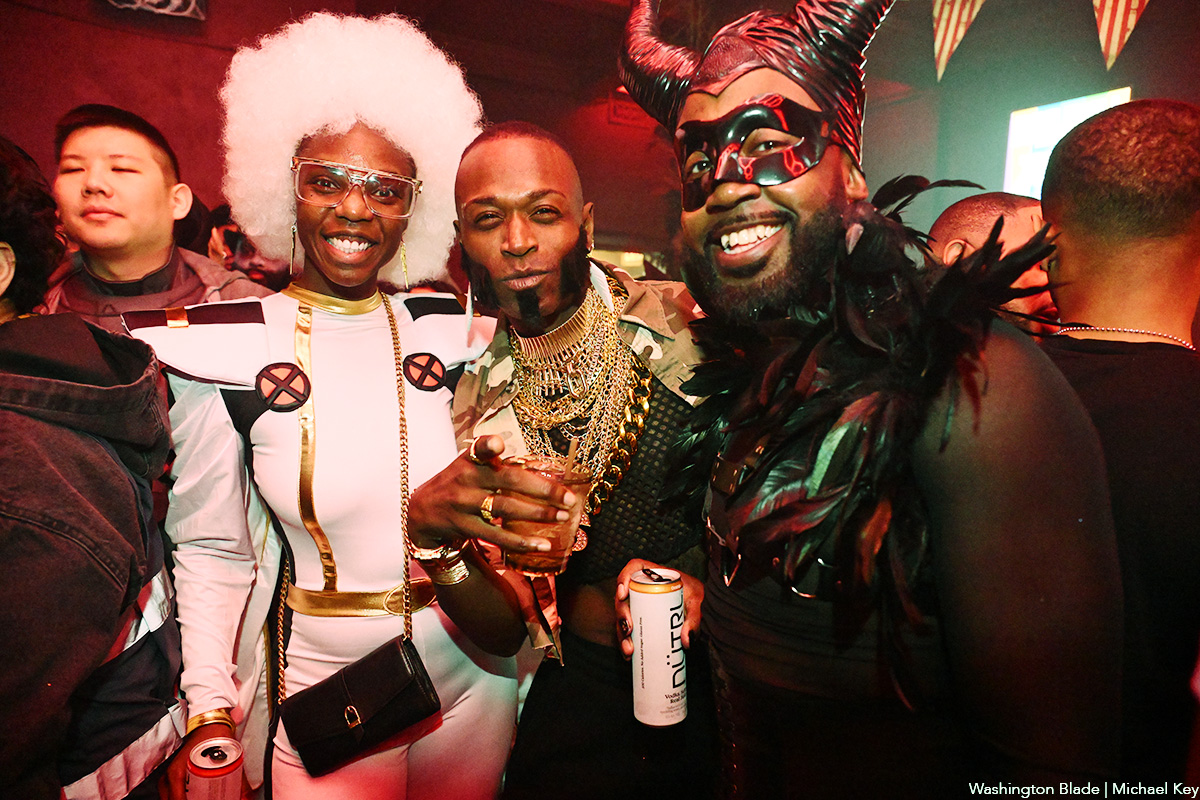
Crush Dance Bar (2007 14th Street, N.W.) was packed on Saturday night for a Halloween costume contest.
(Washington Blade photos by Michael Key)


a&e features
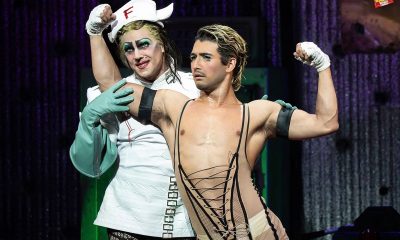
Meet the talented makeup artist behind Broadway’s ‘Rocky Horror’
Sterling Tull remains true to characters while imbuing them with her own eclectic style
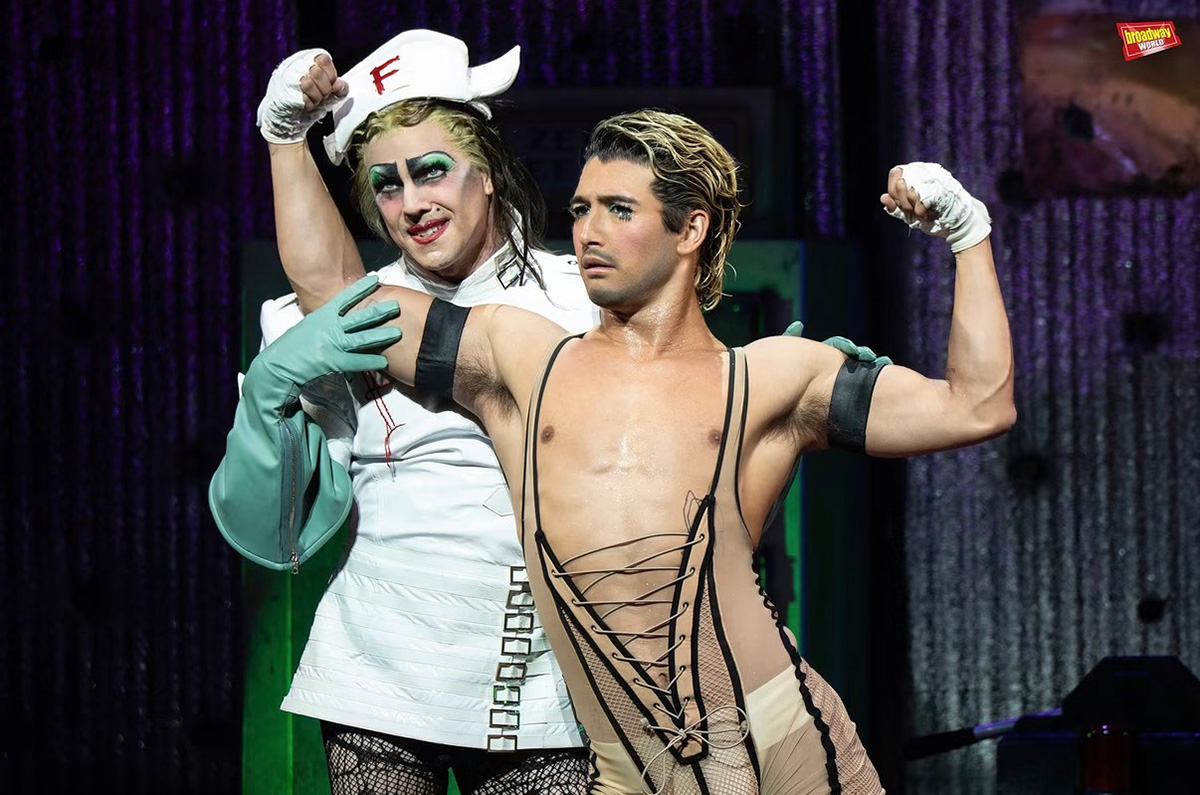
NEW YORK – Before Sterling Tull was creating the makeup for “The Rocky Horror Show” Broadway revival, its mad scientist, Dr. Frank-N-Furter, was watching over her bedroom from a poster on the wall. Purchased by her mother, the poster hung there from the time Tull was 13 until she was 18, offering a glimpse into a world where self-expression was something to celebrate.
Now, as makeup designer and makeup artist for the Broadway show, Tull, a queer transgender artist, brings that world to life eight shows a week.
“Sometimes it doesn’t feel real,” Tull tells the Blade. “I would’ve killed for this job, and I know many others would have too, so I feel very, very lucky and blessed.”
The opportunity arrived in a fittingly theatrical fashion: on Halloween night. Tony-nominated costume designer David Reynoso reached out to interview Tull for the production. Given the incredible opportunity, Tull couldn’t believe what she was reading. “I thought the email was fake at first, ” she explained. “It turns out it wasn’t!”
From there, things fell into place. The email led to an interview, and the interview led to a job, giving Tull the opportunity to translate a deeply personal attachment into an artistic vision. Long before joining the production, she had found something in “Rocky Horror” that extended beyond its eclectic style and audacious characters: a community in which she could recognize herself.
“Over the years, I grew into the culture of Rocky Horror and felt safe in the community,” Tull tells the Blade. “It let me understand that I wasn’t so different, and that, as a little Mormon kid, I could be myself.”
That commitment to being herself now informs the faces audiences encounter onstage. Her challenge was to preserve the characters’ immediate recognizability while allowing for her own artistic spin. Familiarity offers the starting point – Tull uses makeup to make it her own. “I wanted to honor the source material and what fans are expecting from a production of this size with huge audacious makeup looks that capture Club Kid New York culture, New Romantics, English trad goth, and 1970s Studio 54 sleaze,” she tells the Blade.
The designs took shape through collaboration with Reynoso, hair designer Albee Alvarado, director Sam Pinkleton, and associate makeup designer Vee Sadiku, whom Tull affectionately calls her “best friend” and “work wife.” Yet even with that support, sharing her vision came with its own uncertainty. Tull explains, “I would say the scariest part is just hoping that both your collaborators and fans like what you’re creating.”
Behind the performance, however, is time, precision, and a practice shaped by attention to detail. Tull works at the theater six days a week, applying makeup to actors in a way that would be difficult for any makeup artist. She tells the Blade, “The makeup is incredibly ephemeral and applied in a time span that would challenge any makeup artist.”
None of Tull’s work is about ego or adding another credit to her resume. It is about honoring a performance and creating a moment for people to come together, laugh, and enjoy themselves. She respects all those involved, especially the actors who bring the show to life. “It is so important to respect where the actors are every day while honoring the integrity of the work,” Tull says.
Ultimately, the show will end, and the makeup will come off. The next performance will bring another round at the makeup table. Yet that temporary nature gives Tull’s work an intimacy: The world that once helped a young “Rocky Horror” fan feel welcome is now something she helps bring to life for others, one face at a time.
“The Rocky Horror Show” continues through May 30 at Studio 54 theater in Manhattan. Follow Sterling on IG: @SterlingTullNYC.
History
Remembering a gay Revolutionary War hero amid today’s political battles
Friedrich Wilhelm von Steuben’s legacy is prompting reflection on country’s present-day policies

When most people think of Revolutionary War heroes, the powdered wigs and stoic paintings of George Washington or the Marquis de Lafayette come to mind. But there is another hero who was instrumental in securing America’s victory over the British 250 years ago — and he was gay. Historical records indicate that his sexuality was known at the time, too.
The Stonewall National Museum has recently launched a traveling exhibition exploring the life and strategic mind of Friedrich Wilhelm von Steuben, whose contributions were instrumental in securing American independence. The exhibit, Von Steuben: Architect of American Independence, recently left the Human Rights Campaign’s office in downtown D.C., bringing the story of one of America’s LGBTQ heroes to the nation’s capital.
The Washington Blade spoke with Stonewall National Museum President Robert Kesten about von Steuben’s legacy, the importance of preserving LGBTQ history and how the museum secured a federal grant for the exhibition under the Trump-Vance administration’s crackdown on government spending for projects perceived as “too woke” or “too DEI,” particularly under Executive Order 14151, or Ending Radical And Wasteful Government DEI Programs And Preferencing.
The exhibition features a series of poster boards displaying paintings, historical documents and video footage that contrast the way Americans have come to understand von Steuben’s legacy with the historical record, all against the backdrop of the current political climate.
Von Steuben was a member of Prussian society who built a reputation for his military knowledge and strategic thinking before eventually making his way to the 13 colonies. As Kesten explained, his departure from Europe came amid accusations that he had engaged in relationships with younger male lovers, putting him at risk of arrest because of his homosexuality.
According to historical records, von Steuben arrived in the United States with his 17-year-old secretary, Peter Stephen du Ponceau, who was speculated at the time to be his lover.
His relationships with men did not end with his arrival in America.
During the Revolutionary War, von Steuben developed close relationships with Benjamin Walker and William North, two military officers in their 20s.
One of the most significant moments in von Steuben’s military career came at Valley Forge, where he helped transform the Continental Army from a loosely organized group of colonial fighters into a more disciplined fighting force. Working alongside George Washington’s leadership, von Steuben introduced military strategies and training that helped prepare the troops for the battles ahead.
He authored Regulations for the Order and Discipline of the Troops of the United States, also known as the Blue Book, which became the foundational military drill manual of the Continental Army. It outlined infantry drills, marching, firing and reloading, bayonet use, camp sanitation, hygiene and the specific duties of every rank, from private to officer. The manual was used during the army’s transformation at Valley Forge.
After the war, von Steuben formally adopted Walker and North and named them his heirs. Some historians have viewed the adoptions as an indication of his sexuality, providing a legal pathway for him to maintain a lasting connection with the two men.
Despite the circumstances surrounding his personal life, von Steuben’s military expertise helped establish his place in American history. His story also raises questions about how the United States might treat someone with a similar background today.
Kesten pointed to the contrast between von Steuben’s journey to America and the country’s current immigration debate, asking how many potential contributors the country might be turning away.
“What would happen if someone came to the United States who spoke not a word of English upon arrival, had basically no money and no source of income, and was under threat of arrest in their homeland for homosexuality? What would happen if they tried to cross the border today? How many von Steubens are we excluding who went on to be a national hero and one of the founding people of the United States Army?”
For Kesten, von Steuben’s story is about more than recognizing the contributions of one gay military figure. It also demonstrates why LGBTQ people must be included in the broader telling of American history, particularly when their accomplishments have been overlooked or their identities erased.
“It is basically essential to show that everybody is equal. Everybody deserves the same justice and the same opportunity. And when you do that, the best and the brightest do get the jobs that they should get based on their talents and ability,” Kesten said.
He argued that failing to recognize the accomplishments of LGBTQ people can reinforce harmful perceptions about the communities they belong to.
“If you don’t know that these are people doing this work, if you don’t know what their success is, if you don’t know who they are, then you believe that the community that they come from is less than — because that’s what we’re told. And if we are to move forward as human beings, we have to recognize that truth may not always be what we want it to be.”
Kesten believes that understanding LGBTQ history requires looking beyond individual biographies and recognizing how different people’s lives contribute to the larger American story.
“I think that the most important thing is that we do not teach or learn history. We learn biography, we learn important events, we learn traditions, but we don’t learn history,” he said.
“History, from my perspective and from Stonewall’s perspective, is that we are like a very, very densely woven carpet. Every thread in that carpet is a human life. You do not get that full story unless you look at every human life from whatever period you are looking at, and then weave them together with all the other periods,” he explained. “When you start to remove threads, you start to be teaching, learning, writing about selective history, biography, a moment in time devoid of those you leave out.”
Preserving those historical accounts has become increasingly difficult, Kesten said, pointing to funding cuts at both the federal and state levels that have made it harder for museums, academic institutions and archives to conduct the research necessary to document LGBTQ history.
“Very clearly, funding is the biggest issue. The withholding of funds at the national level and at many state levels makes it much more difficult for organizations like ours and other academic institutions, archival institutions, etc., to fund the kind of research that needs to be done,” he said.
Despite those challenges, Kesten said the need to document LGBTQ contributions to American history has only grown more urgent.
“There is definitely a dark cloud, but I am convinced that people in this field — people from the LGBTQ community — understand that it is more important than ever to unearth this information, bring it to the public, and make sure that people understand that people from our community have been around and been contributing. Whether out or closeted, since the beginning of time, and that will eventually come out.”
He also described a broader shift in the political climate surrounding LGBTQ museums and archives, saying the enthusiasm and encouragement that institutions once received have largely disappeared.
“There are periods of history, recent history, when people were more enthusiastic and more interested and more encouraging. That is pretty much gone now,” Kesten said.
He added that growing political pressures, both in the United States and internationally, have made people more hesitant to support or even express curiosity about LGBTQ history.
“I think that there was an excitement because when you start to realize who falls into this community, you are amazed at the talent and the size of that talent pool. Considering that the population is not that large necessarily in the scope of over eight billion people on the planet, but then the political pressures, not only here in the United States but elsewhere around the world, make it much more frightening to be supportive, to be curious, to want to ask questions.”
Against that backdrop, securing federal funding for the von Steuben exhibition was particularly significant for the museum.
Kesten said the museum, like other organizations, had been notified that federal funding would not be available to institutions deemed to promote diversity, equity and inclusion. He noted that Florida also considers the museum a DEI organization.
“My guess is that because we were notified that the federal government wouldn’t be supporting organizations like ours, they consider us DEI,” he said.
The fact that the National Endowment for the Humanities ultimately considered the exhibition worthy of funding was therefore particularly meaningful, Kesten said.
“So the fact that we proposed an exhibit that the NEH felt was worthy of funding spoke volumes of the kind of work that we do as an institution, and we were very thankful for that.”
When preparing the grant application, Kesten said the museum focused on answering the questions it was asked rather than volunteering information that was not requested. That included highlighting von Steuben’s military contributions without downplaying his sexuality in the actual exhibition.
“One thing that we’ve learned in grant applications over the many years that we have been filing them is that you don’t offer information that is not asked for. That usually works against you,” he said.
Kesten acknowledged that emphasizing von Steuben’s sexuality in the application might have worked against the museum’s chances of receiving funding. However, he said his orientation was not directly related to his military service or the contributions the museum was highlighting in its proposal.
“But the point is that his orientation only became important when he was under pressure to leave Europe, which was not directly related to the service that he provided the United States in terms of his role in the Revolutionary War,” Kesten said.
While the museum focused its application on von Steuben’s Revolutionary War service, Kesten emphasized that the exhibition does not shy away from the circumstances that brought him to America.
“We did all of that, but we didn’t shy away from the fact that he left Europe because he was under threat of arrest for having slept with men.”
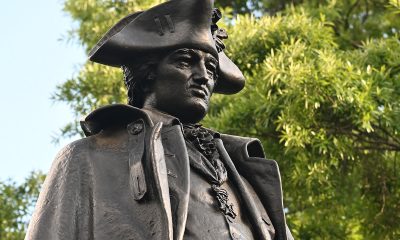
The exhibition’s presence in D.C. also carries particular significance for Kesten. Von Steuben is commemorated with a large statue in Lafayette Park, directly across from the White House, although Kesten said the monument does not fully capture the historical significance of the man it depicts.
“Clearly, it doesn’t say everything about him. It’s not robust in its historic information, but there he stands, in view of the White House,” he said.
While in Washington, Kesten stood in Lafayette Park handing out pamphlets about the exhibition and additional information about von Steuben to people who approached the statue.
With the Nov. 3 election tomorrow, Kesten sees von Steuben’s story as a reminder of the competing visions of America shaping the country’s political debate.
“We have an election coming up on Nov. 3 that is a choice between the America that many of us thought that we were growing up in, and the America that we are becoming. He is a figure that makes very clear what that choice is,” he said.
“There has never been a clearer moment when this kind of exhibit is more important, and it is important for people to know that it sits in the heart of Washington, D.C., as these important decisions are made across the country.”
Kesten also believes journalists have a responsibility to bring attention to exhibitions like this one, particularly when institutions manage to secure funding and preserve LGBTQ history despite the political pressures they face.
“The only thing that I think is important for journalists to focus on is exhibits like this that, against all odds, against all odds, got a grant from someone from an institution that was never supposed to give it, and that the media has not taken advantage of this opportunity, and therefore cut off their nose despite their face,” he said.
He argued that overlooking these stories can undermine the relationship between journalism and the communities it serves, particularly when LGBTQ institutions are working to build public understanding and preserve historical records.
“The relationship between journalism and journalists and the public are essential for us to have the information that we need to make the proper decisions for ourselves and our families and our future.”
The exhibit’s future in Washington remains uncertain as the museum looks for a long-term location to host it. After the holidays, the exhibition is expected to travel to other locations across the country.
For more information about the exhibit, visit stonewall-museum.org.

Stephen Miller, key architect of anti-LGBTQ policies, named White House chief of staff

Escritora trans venezolana reivindica una fe sin exclusiones ante la visita del papa a Sudamérica

Baltimore lawmaker’s ex-treasurer charged with theft of $87K in campaign cash

LGBTQ elected officials, activists around the world welcome U.S. election results

PHOTOS: Halloween at Crush

Meet the talented makeup artist behind Broadway’s ‘Rocky Horror’

Spanberger campaigns in support of Question 2

Remembering a gay Revolutionary War hero amid today’s political battles

LGBTQ+ History Month reminds us: the future we imagine can become reality

Australia’s first gay state governor takes office
-

 a&e features3 days ago
Meet the talented makeup artist behind Broadway’s ‘Rocky Horror’
-
Virginia5 days ago
Spanberger campaigns in support of Question 2
-
History4 days ago
Remembering a gay Revolutionary War hero amid today’s political battles
-
Commentary4 days ago
LGBTQ+ History Month reminds us: the future we imagine can become reality