a&e features
40 Under 40: Queer women of Washington
Celebrating some of the city’s up-and-coming change agents
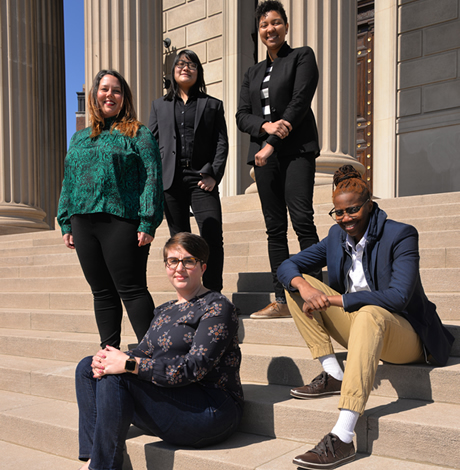
The Washington Blade, in partnership with the Mayor’s Office of LGBTQ Affairs and the Office of Women’s Policies and Initiatives, is proud to present: 40 Queer Women of Washington.
Here we celebrate some of the city’s many inspiring queer women who are the voices of change from a diverse group of industries. Nominations came from our readers; that list was then trimmed to the 40 queer women profiled here. Come meet the 40 Under 40 at a special event on Wednesday, March 27, 6-9 p.m. at the Google office at 25 Massachusetts Avenue. Get tickets online via the Blade’s Facebook page.
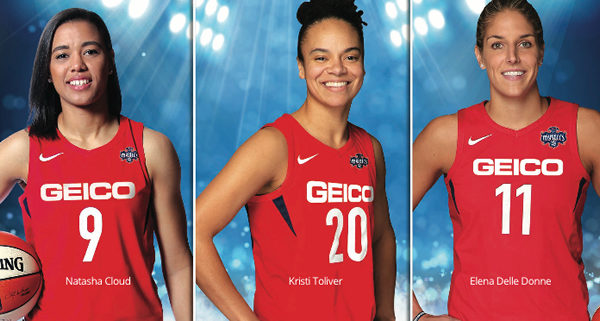
Name: Washington Mystics
Occupation: Professional basketball team WNBA
Passion: Compete at the highest level on the court and bring a WNBA Championship to Washington. We play to excite, inspire and unite the D.C. community — all eight wards. Our passion for the game and this city is reflected in the memory-making experiences we strive to provide to our fans each game day. We invite all to celebrate and share in these moment with us.
What advice would you give to a young woman walking in your shoes? Demonstrating fearless character will lead to your success. Tapping into the power of unified strength that comes with a sisterhood gives you the ability to overcome any challenge or adversity. We are a part of the community we represent and you are a part of us. Celebrate the power and beauty of being a woman.
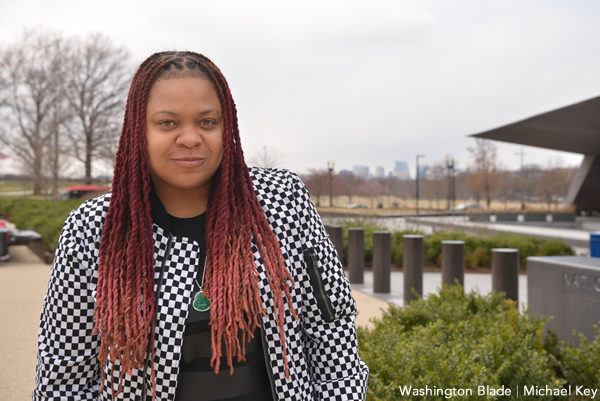
Name: Amina Brown
Occupation: DJ
Passion: Being an entertainer/DJing
What advice would you give to a young woman walking in your shoes? My mother told me I would grow up and have my own business when I was in the fourth grade. I would give young women the same advice that was given to me and it changed the trajectory of my life: “Fall in love with something you enjoy doing and turn it into a business!”
Washington is one of the few major cities in America with a female mayor. What does this mean to you as a queer woman living in the District? I thinks it’s important for women to be represented in the high ranks of corporations and politics. During my speaking engagements at schools, I always encourage our young girls to reach for the stars and never think that gender makes them inadequate in any industry.
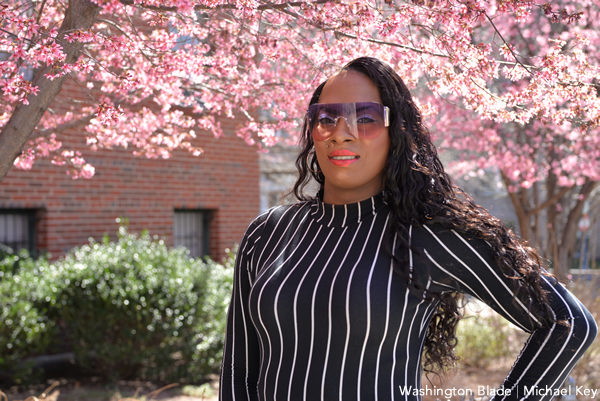
Name: Bela Muney
Occupation: External affairs team
Passion: Helping others in need.
What advice would you give to a young woman walking in your shoes? Never give up on your hopes and dreams. The sky is the limit.
Washington is one of the few major cities in America with a female mayor. What does this mean to you as a queer woman living in the District? It means we’re all here and queer!
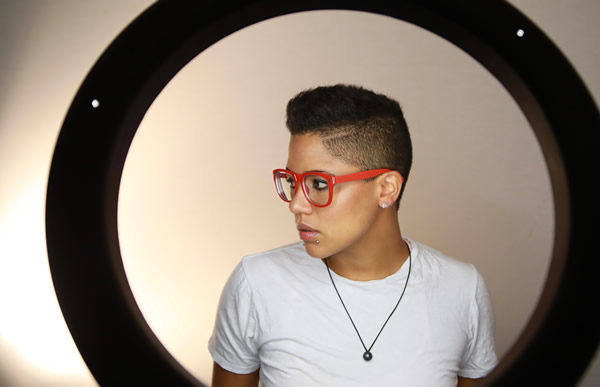
Name: Be Steadwell
Occupation: Musician
Passion: My passion is for telling stories that make queer black folks feel seen and affirmed.
What advice would you give to a young woman walking in your shoes? Someone out there needs to hear your story. Tell it with sincerity, vulnerability and it will change someone’s life.
Washington is one of the few major cities in America with a female mayor. What does this mean to you as a queer woman living in the District? Black women at the center of leadership and politics is exactly what our country and our world needs. I believe the most marginalized communities have the perspective and incentive to look out for all people. Though I don’t agree with everything our mayor does, I’m proud to have her as a leader for our city.
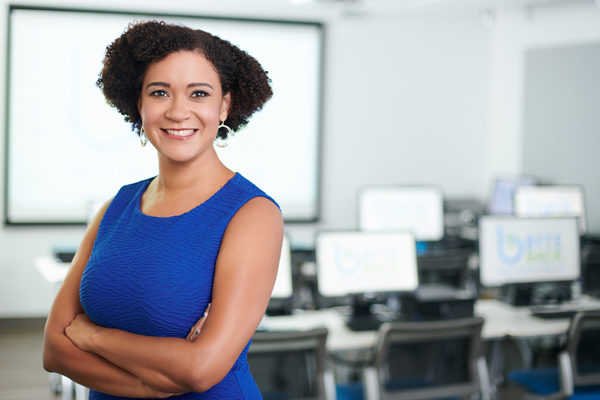
Name: Elizabeth Lindsey
Occupation: Executive director, Byte Back
Passion: Leading an organization that helps people from all backgrounds thrive in the digital economy.
What advice would you give to a young woman walking in your shoes? Be true to who you are. When we’re ourselves, when others see us being authentic and real, there’s nothing we can’t do. There’s such a confidence that comes from using our strengths and doing work that feels natural to us. And if someone — an employer, an investor, a partner — doesn’t want us for who we are, then they’re not the right fit for us.
Washington is one of the few major cities in America with a female mayor. What does this mean to you as a queer woman living in the District? As a queer woman of color, a parent and a leader in the nonprofit sector, I am inspired every day by Mayor Bowser and the other women in D.C. leading our city. It is such a privilege for me to hardly ever be the “only” in D.C. — I’m rarely the only woman, or person of color, or member of the LGBTQ community in a room. And I’m thrilled to raise my daughters in a city like this.
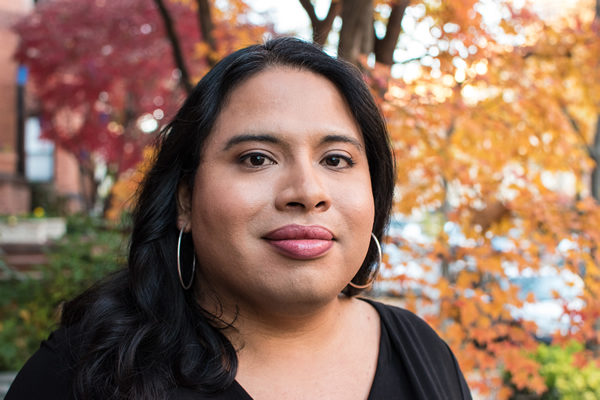
Name: Raffi Freedman-Gurspan
Occupation: Director of external relations, National Center for Transgender Equality
Passion: Social justice and equal opportunity for those who have been most marginalized and historically oppressed including black people, Latinx people, indigenous peoples, women and feminine presenting individuals, LGBTQ folks, people living with disabilities and religious and ethnic minorities in the United States. My passion is to create a better world for all.
What advice would you give to a young woman walking in your shoes? Remember to laugh, remember to have a good cry once in a while and remember to hug those you care for and remind them why they are important to you. Being a strong woman requires knowing yourself, being honest with yourself and asking for the compassionate support you deserve from those whom you love.
Washington is one of the few major cities in America with a female mayor. What does this mean to you as a queer woman living in the District? Having a woman of color mayor as a woman of color myself is tremendously moving, inspirational and something I proudly share with people about our city. Mayor Bowser has been such a great friend of the LGBTQ community and as a queer woman I am proud to live in her city.
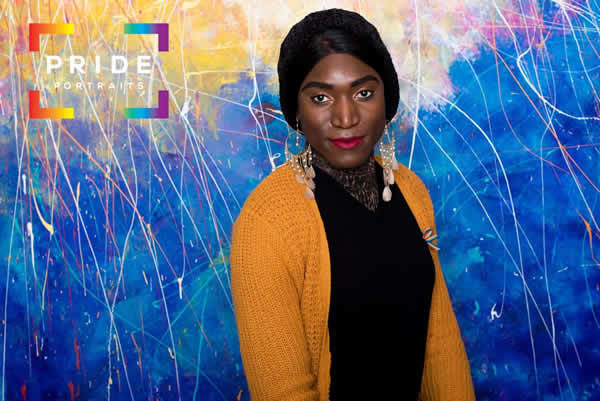
Name: Tiara Gendi
Occupation: Community organizer/trans activist
Passion: Black liberation and protection of LGBTQ+ youth
What advice would you give to a young woman walking in your shoes? In a world that is designed against you, dare to be unapologetically you and do your part.
Washington is one of the few major cities in America with a female mayor. What does this mean to you as a queer woman living in the District? Being a black trans and immigrant woman, having a black woman mayor means there is platform to leverage the safety and meaningful participation of queer women in decision-making processes.
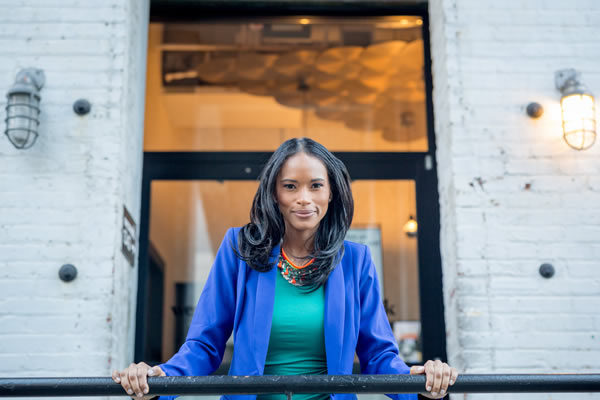
Name: Alesia Lucas
Occupation: National digital manager
Passion: Connecting people
What advice would you give to a young woman walking in your shoes? 1. Always trust your instincts. 2. Have an idea? Don’t wait for someone else to do it. Go for it. 3. Own your “no”; you don’t have to be anywhere or do anything you don’t want to.
Washington is one of the few major cities in America with a female mayor. What does this mean to you as a queer woman living in the District? As a native Washingtonian, having a woman lead our city inspirers me deeply. It shows us what’s possible. They say D.C. is one of the most LGBT-friendly cities in the United States and Mayor Bowser has no doubt contributed to that honor.
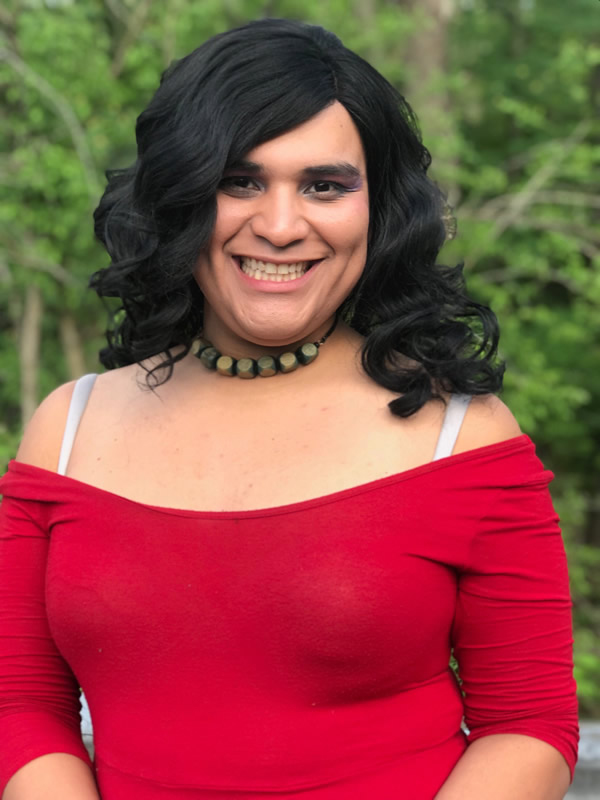
Name: Xemiyulu Manibusan Tapepechul
Occupation: I am an independent artist: a playwright, author, spoken word artist, actor and director.
Passion: I have a passion for healing indigenous transgender, intersex and gender non-conforming communities through the arts.
What advice would you give to a young woman walking in your shoes? It’s OK to not know who you are. It’s OK to discover who you are along your journey. It’s OK to love yourself and celebrate yourself. You got this!
Washington is one of the few major cities in America with a female mayor. What does this mean to you as a queer woman living in the District? It’s important to have representation of cisgender women, transgender women, transgender men, non-binary people and cisgender men of color, in government and other cisgender white male-dominated spaces. As a queer woman living in the capital of the empire, it’s important to see genders that have been in the minority in position of power, that are representing truth, justice and ancestor.
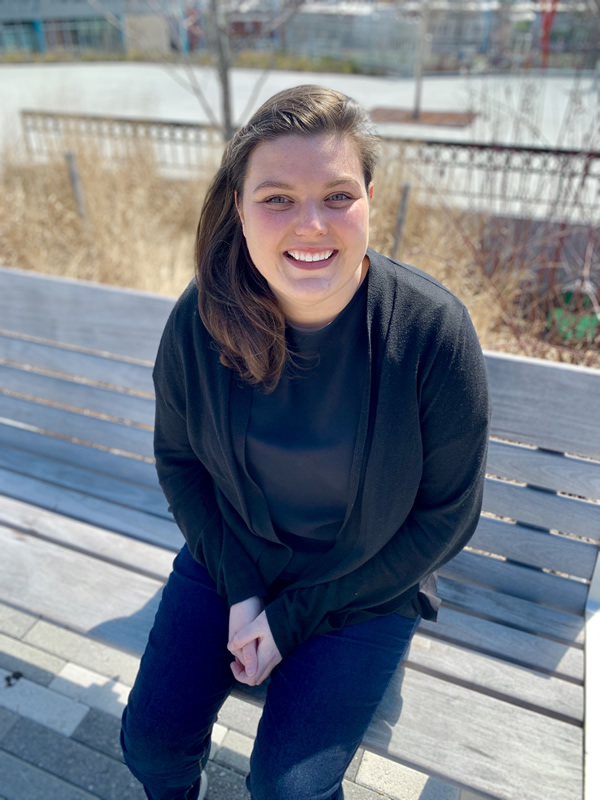
Name: Ashley Trick
Occupation: Community affairs engagement strategist with Capital One
Passion: Serving and elevating diverse communities.
What advice would you give to a young woman walking in your shoes? Actively work to limit the use of “sorry” in your vocabulary, but practice radical candor every day. Women can care personally while also challenging directly.
Washington is one of the few major cities in America with a female mayor. What does this mean to you as a queer woman living in the District? Women’s leadership is imperative. Diversity in leadership breeds innovation and resilience and having a black woman as the mayor of our city sets an important precedent for further leadership. Through women’s innate leadership, they transform, nurture and empower their communities and I am so profoundly proud to work under so many exceptional women.
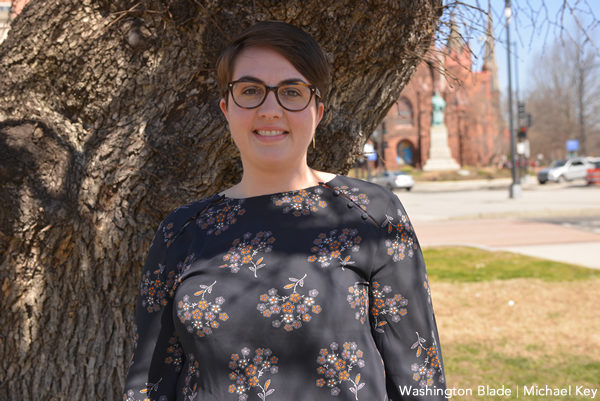
Name: Amanda Dennison
Occupation: Director, programs and partnerships
Passion: I have spent much of my life with my nose in a book, so much so my family feared I wouldn’t know my way around in the real world. I have always been driven by the desire to learn and understand more about the world. Through books I was able to hear other peoples’ stories, learn about communities, my chosen field of work, the world beyond the small town I grew up in. All of those books, and constantly asking “why” or “so what,” have played a big part in shaping my view of the world now and getting to where I am today.
What advice would you give to a young woman walking in your shoes? There are probably three main pieces of advice I would given young women. One: you are worthy and deserve to be here and to be heard. Two: be brave and don’t let the fear of leaving your comfort zone prevent you from chasing your goals and dreams. Three: be unapologetically yourself and take pride in who you are.
Washington is one of the few major cities in America with a female mayor. What does this mean to you as a queer woman living in the District? Seeing Mayor Bowser leading our city and actively supporting the LGBTQ+ community is both empowering and inspiring. As a queer woman living and working in D.C., trying to live my best life and lift up our community, it means everything to have a strong female fighting to give every D.C. resident the opportunity to live their best lives. I know that our mayor supports me, our community and the important work we are trying to accomplish.
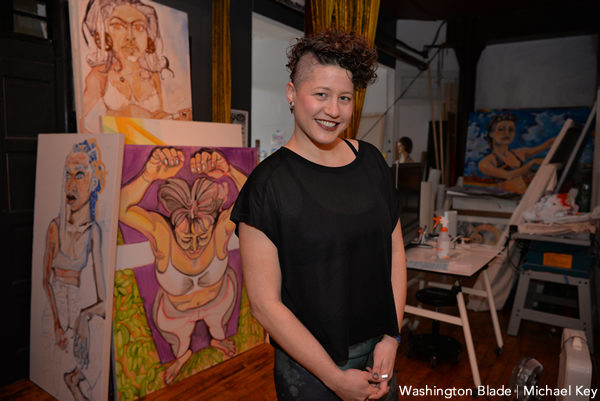
Name: Lisa Marie Thalhammer
Occupation: LOVE artist
Passion: Painting, murals, art and activism.
What advice would you give to a young woman walking in your shoes? Trust your journey, believe in your power and live your dreams in full color.
Washington is one of the few major cities in America with a female mayor. What does this mean to you as a queer woman living in the District? When Mayor Bowser spoke at the Jan 21, 2017 Women’s March on Washington, I felt an immense amount of pride to be a queer Washingtonian woman. I was in the crowd that day with a group carrying my “Strong Women LOVE” artwork, a painting on a 24-foot diameter parachute, which depicts a woman flexing her biceps in front of a rainbow-colored backdrop. I felt synergy with my mayor’s directive to speak up for women and their health care; like I was in that moment for a reason, with a purpose to live out my life’s mission of creating visual art and images that empower and uplift women.
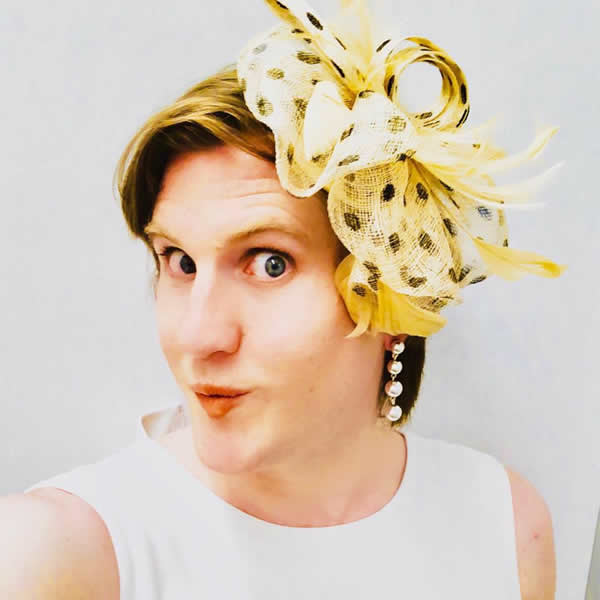
Name: Charlotte Clymer
Occupation: Press secretary for rapid response, Human Rights Campaign
Passion: Justice for marginalized communities, the written word and seeing women present their unapologetic authenticity to the world.
What advice would you give to a young woman walking in your shoes? You are never “not queer enough.” You are never “not woman enough.” The only scarcity that should ever concern you is being yourself. The world doesn’t need a copy. It needs an original. It needs you.
Washington is one of the few major cities in America with a female mayor. What does this mean to you as a queer woman living in the District? Mayor Bowser was one of the first public officials to speak out when I was discriminated against at a D.C. restaurant for being a transgender woman. She is not just my mayor; she is my sister. This is a leader who fights for the queer community.
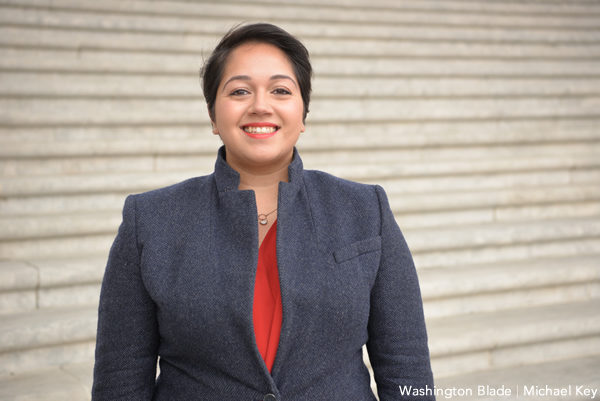
Name: Sharita Gruberg
Occupation: Director, LGBT research and communications project, Center for American Progress
Passion: Making rights a reality.
What advice would you give to a young woman walking in your shoes? No one is ever as confident or certain as they seem. Most of the time we are all just trying our hardest and making it up as we go along. So don’t let doubt stop you!
Washington is one of the few major cities in America with a female mayor. What does this mean to you as a queer woman living in the District? We definitely need more women in every level of public office in this country.
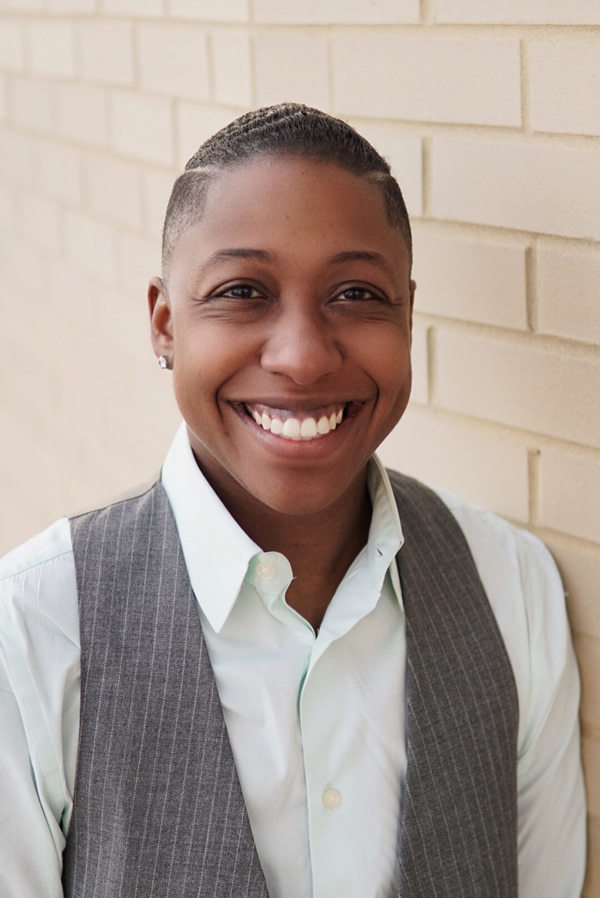
Name: Ebone Bell
Occupation: Founder and editor-in-chief of Tagg Magazine
Passion: Creating events, building community, learning new things and friends and family.
What advice would you give to a young woman walking in your shoes? Keep reaching for the stars! You’re closer than you think.
Washington is one of the few major cities in America with a female mayor. What does this mean to you as a queer woman living in the District? I’m proud to live in a city that continues to be groundbreaking in so many ways. Not only is our mayor leading the charge, but I consistently see LGBTQ women doing the same. D.C. is a beautiful, diverse city.
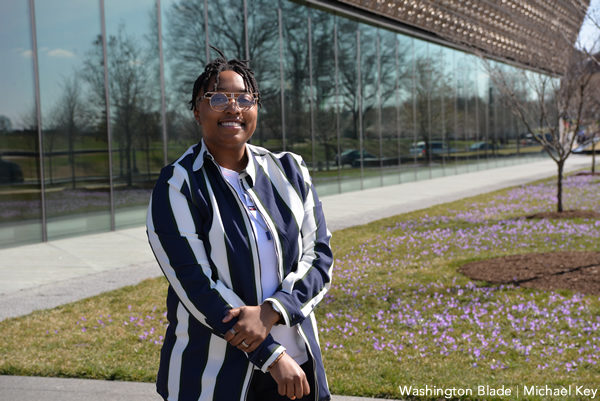
Name: Lanae Spruce
Occupation: Manager of Social Media and Digital Engagement, Smithsonian National Museum of African American History and Culture
Passion: Locating trends on the internet and doing it for the culture. In my free time I am a foodie who loves exploring the local restaurant scene on my travels.
What advice would you give to a young woman walking in your shoes? When you walk into a room, don’t be afraid to be yourself and stand in your own truth. You’ve already made it past the door.
Washington is one of the few major cities in America with a female mayor. What does this mean to you as a queer woman living in the District? I chose to make Washington my home because it has a long history of preserving and championing the rights of queer people. As a queer black woman, it means the world to me that my city has my back.
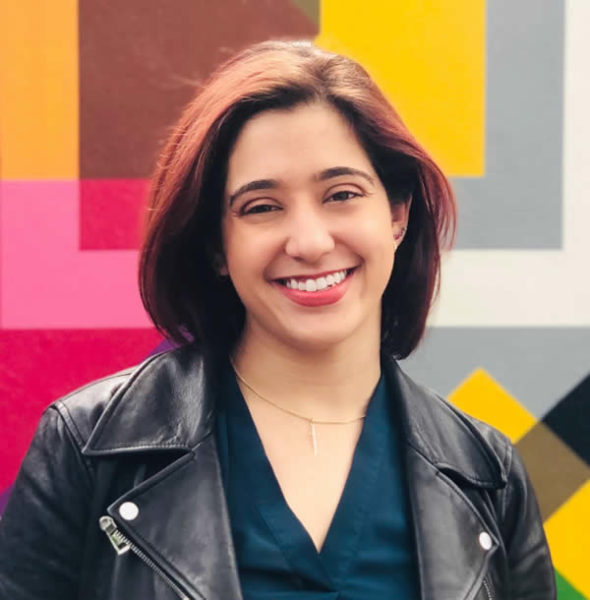
Name: Andrea Pino-Silva
Occupation: Digital strategy and communications manager at The National Center for Lesbian Rights
Passion: I help tell the stories of our queer resistance for a living, and it inspires me every day. I fight for a world where our struggle isn’t our full story and envision a world where every student has access to a safe, equal education free from violence and oppression.
What advice would you give to a young woman walking in your shoes? As a niña, my abuelito always told me: “nunca, nunca, nunca pares de luchar.” He instilled in me a belief, that no matter my upbringing, or how seemingly impossible my goal, it was achievable. Apply to that college. Apply to that job. Write that memoir. Lead that protest. La lucha is in all of us and our resistance and our passion is a gift from our ancestors. Their lucha, and their dreams live on within us.
Washington is one of the few major cities in America with a female mayor. What does this mean to you as a queer woman living in the District? I’ve never lived in any other city led by a woman until moving to D.C., nor have I lived in a city with as many protections for marginalized people. As a queer woman, I feel safer and prouder to live in a city led by a strong woman like Mayor Bowser and feel more confident investing in making this city even better.
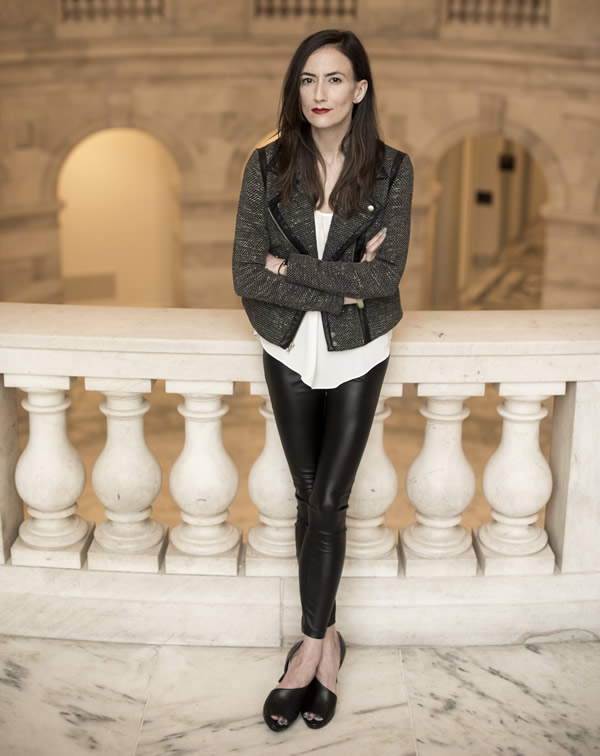
Name: Rebecca Buckwalter-Poza
Occupation: Journalist
Passion: Helping others find their voice.
What advice would you give to a young woman walking in your shoes? Be fearless.
Washington is one of the few major cities in America with a female mayor. What does this mean to you as a queer woman living in the District? It means everything to me, especially as a woman of color. Former Justice Sandra Day O’Connor said, “As women achieve power, the barriers will fall. As society sees what women can do, as women see what women can do, there will be more women out there doing things, and we’ll all be better off for it.”
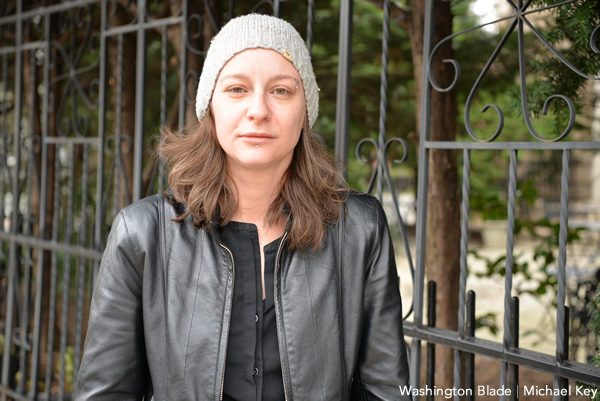
Name: Lina Nicolai
Occupation: Owner
Passion: Little things in life.
What advice would you give to a young woman walking in your shoes? Don’t give up. Work hard.
Washington is one of the few major cities in America with a female mayor. What does this mean to you as a queer woman living in the District? It means that the concerns of women issues are being addressed in policy.
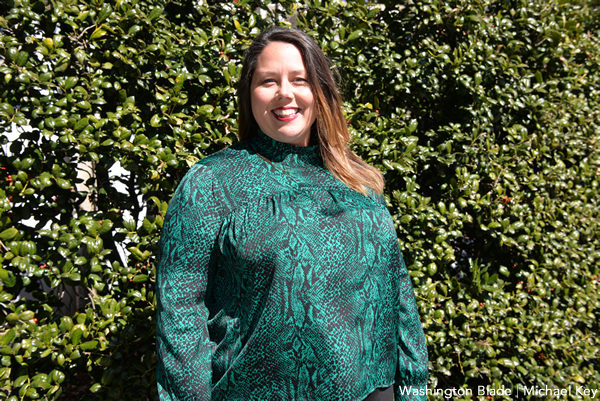
Name: Laura Durso
Occupation: Vice president of the LGBT Research and Communications Project at the Center for American Progress
Passion: Gender equity, fat acceptance, empiricism and music.
What advice would you give to a young woman walking in your shoes? Try new things, care just a little bit less what other people think of you, tell friends you love them, make peace with your body, have confidence in your ability to adapt and change, learn to catch when your brain wants to give in to imposter syndrome and remember how badass you are, spend your time with people and things that nourish your soul, hire people smarter than you, lean on your networks to help you get shit done, believe you can fix things but remember not everything always needs fixing, forge a new path, bring people with you.
Washington is one of the few major cities in America with a female mayor. What does this mean to you as a queer woman living in the District? The ability to govern effectively knows no gender and as a queer woman, I am both proud and comforted to live in a city where voters recognize the talent and leadership that women bring to the table. Electing leaders from diverse backgrounds and experiences opens the door for new conversations to happen and new policies to be enacted that better serve our communities and drive us toward more meaningful change.
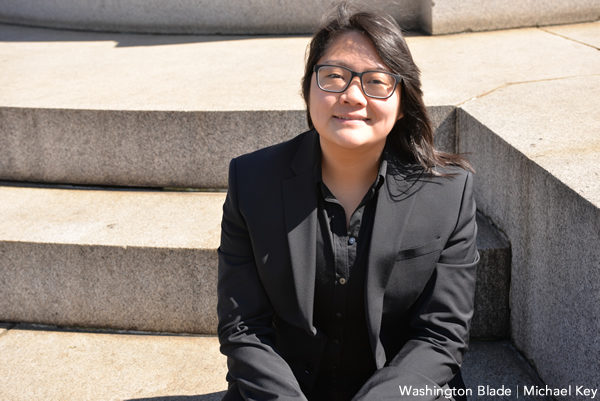
Name: Taissa Morimoto
Occupation: Policy Counsel at the National LGBTQ Task Force
Passion: Playing guitar, crushing the patriarchy, apple juice, the Companion Cube, deconstructing colonialism and long walks on the way to protests.We each have such different life experiences, especially based on our social identities and how we are perceived in our society. I hesitate to give general advice because I can only speak from my own experiences as a queer woman of color who has many privileges. What changed my life, though, was the decision to put my own needs first. And that happened when I moved to D.C., where I was able to be my full self.
What advice would you give to a young woman walking in your shoes? So, for queer women of color in my shoes, I will share what I wish people had told me more often: Don’t ever apologize for who you are and who you are becoming. There are people who will love you for exactly who you are. Let them. Being vulnerable is not weak, it is a sign of growth. Lean into that discomfort. Ask for help, even when you think you can handle it on your own. You are enough. You will always be enough. I am so honored and proud to be in community with you all.
Washington is one of the few major cities in America with a female mayor. What does this mean to you as a queer woman living in the District? It means finally being able to live my full complete self. To me, it means freedom.
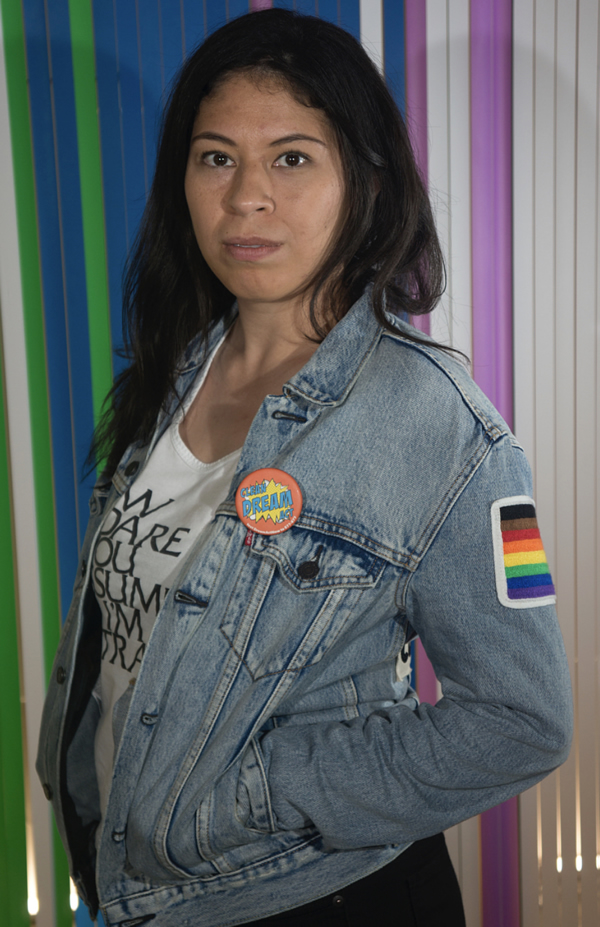
Name: Breanna Diaz
Occupation: Co-director, Pull for Pride
Passion: LGBTQ advocacy via access to typically closed-off spaces, such as powerlifting.
What advice would you give to a young woman walking in your shoes? Remain authentic and accountable to yourself and your community. Always center who you are, your lived experience and your values in your work. Take pride in what you bring to the table.
Washington is one of the few major cities in America with a female mayor. What does this mean to you as a queer woman living in the District? Representation matters and seeing someone of the same gender as myself in a leadership position is empowering.
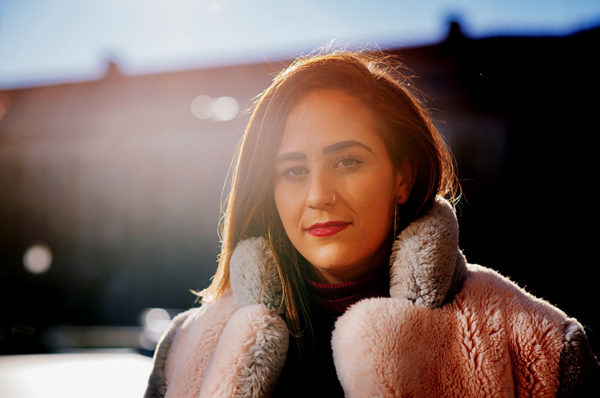
Name: Carlie Steiner
Occupation: Co-owner of Himitsu + Dos Mamis
Passion: Empowering women and making money.
What advice would you give to a young woman walking in your shoes? Buy better shoes with good support.
Washington is one of the few major cities in America with a female mayor. What does this mean to you as a queer woman living in the District? Watching Muriel Bowser break through the glass ceiling by becoming D.C.’s mayor both empowered and inspired me to make the final push to open Himitsu at the age of 25. Now, two-plus years later, she continues to push the boundaries of what is possible. Women serving in positions of leadership and the visibility it provides to young women is paramount. Having a role model like Mayor Bowser who is equally respected and relatable is important to women of all ages, but especially to young girls who can look up to her as an example of a woman is making change and that’s how real progress happens.
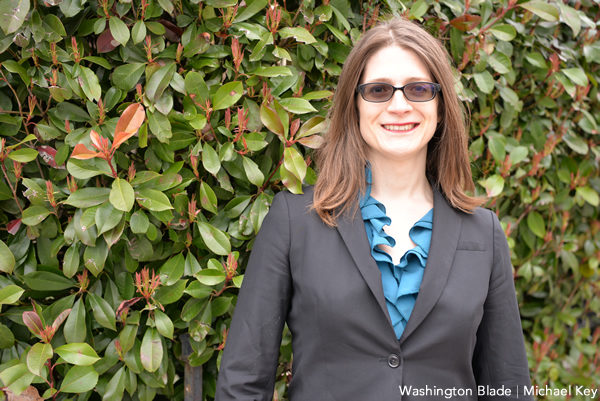
Name: Harper Jean Tobin
Occupation: Lawyer/lobbyist for trans equality
Passion: Improving trans people’s lives and living my own rich life.
What advice would you give to a young woman walking in your shoes? Listen to your passion. Find where you’re best suited to make a difference. Ask for support. Be kind to yourself.
Washington is one of the few major cities in America with a female mayor. What does this mean to you as a queer woman living in the District? We need leaders and public servants who reflect the diversity of our communities today. Women may not necessarily be better leaders, but every conversation is different when the people in the room don’t all look the same.
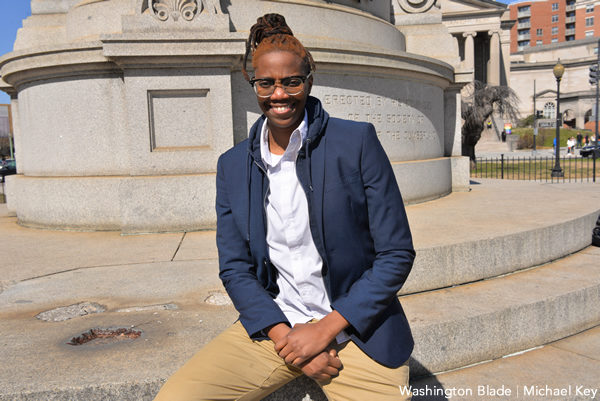
Name: Ashlee Keown
Occupation: Marketing specialist/entrepreneur
Passion: Creating opportunities for people
What advice would you give to a young woman walking in your shoes? Don’t be afraid to try something new and fail. It is also important to adjust your expectations so that you understand that anything that you do will involve growth and failure.
Washington is one of the few major cities in America with a female mayor. What does this mean to you as a queer woman living in the District? It mean we are lucky enough to have someone in office who understands the challenges women and people of color face. Some who has the insight and ability to think about others.
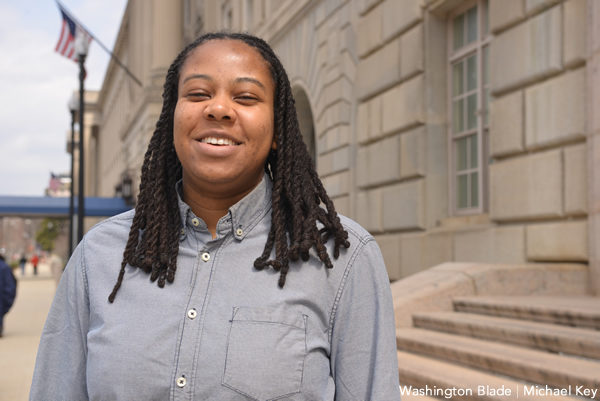
Name: Kyrisha Deschamps
Occupation: Festival producer/operations manager
Passion: Using my skills, experience and access to create opportunities and help others. Also, intentionally finding joy in each day.
What advice would you give to a young woman walking in your shoes? Surround yourself with positive people who support your wild dreams and act as your sounding board. Trust the process and take time for yourself when you need to.
Washington is one of the few major cities in America with a female mayor. What does this mean to you as a queer woman living in the District? I’m a huge fan of women in positions of power. I am very excited about the number of women who are moving into politics to create the change that needs to be seen and felt in the world. As of today, a political career isn’t in the stars for me, but I would love to see more women and LBGTQ leaders in positions of power in government.
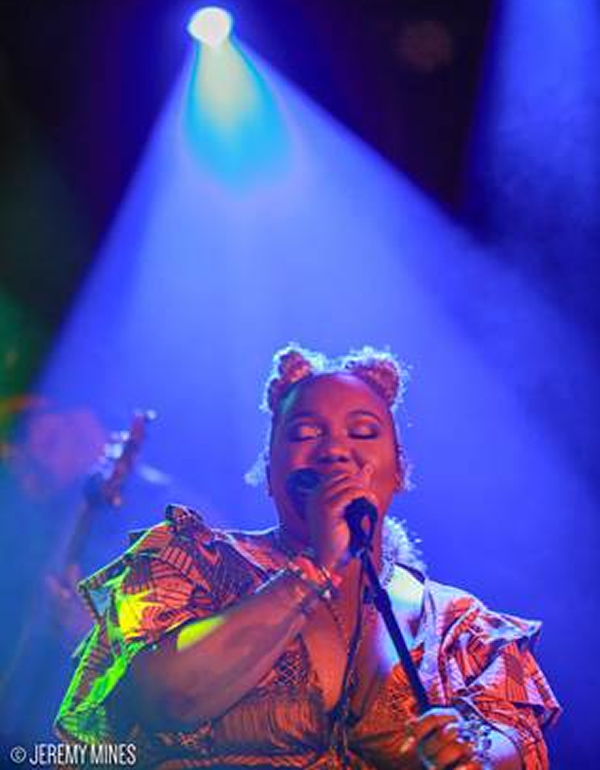
Name: Jennifer Patience Rowe
Occupation: Artist: primary vocalist, poet and actress.
Passion: My passion is facilitating spiritual experiences in secular spaces. I’m passionate about black folks being free. I’m passionate about honoring our grief.
What advice would you give to a young woman walking in your shoes? I would tell young black women that it’s OK to be unsure, its normal to constantly be discovering who you are. That change is the only constant.
Washington is one of the few major cities in America with a female mayor. What does this mean to you as a queer woman living in the District? As a second generation native Washingtonian, it’s beautiful to have experienced all of the changes this city has and is surviving. Having a woman elected mayor has spoken to the great shifts and growth the capital city is capable of seeing.
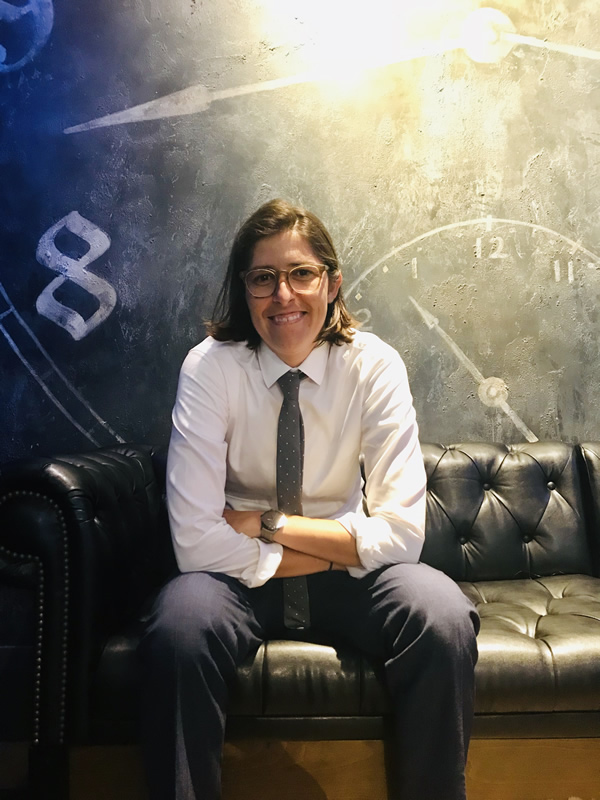
Name: Kristin Lynch
Occupation: Communications director, U.S. Senator Cory Booker (D-NJ)
Passion: Politics, writing, news, sports, avocados, coffee porters
What advice would you give to a young woman walking in your shoes? TDon’t be afraid to defy convention or take the road less traveled – being weird is a good thing. Work hard, be humble, and practice gratitude.
Washington is one of the few major cities in America with a female mayor. What does this mean to you as a queer woman living in the District? Representation matters. When leaders who look differently than what society typically associates with power — i.e. women, people of color, queer individuals — we begin to dismantle our preconceived notions of what a leader should be and reimagine what a leader could be. Having a mayor who is both a woman and a person of color breaks down barriers and shows underrepresented groups that we too can rise to powerful leadership positions, even if we may not always see that truth reflected in our day-to-day lives.
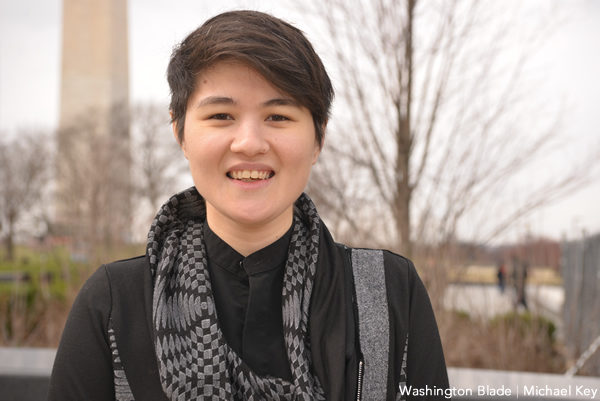
Name: Luella Garies
Occupation: Massage therapist, dance organizer
Passion: A combination of love for partner dancing and of bringing that love to queer women and trans people.
What advice would you give to a young woman walking in your shoes? As a dancer, know that simply by being openly yourself in the very heteronormative world of partner dance, or by breaking gender norms therein, you are a revolutionary. You are changing the world one literal step at a time and that is something to be proud of. As an organizer, someone recently asked me what’s my secret to organizing successful events over the long-term. “Passion,” I said. Actually there are many other answers I could give, but that’s the one I would underscore. You don’t need to be extroverted, popular, talented or wealthy to bring people together. But if you have a dream that lights up your soul and you have an inkling of how to share that with others, you can find a way.
Washington is one of the few major cities in America with a female mayor. What does this mean to you as a queer woman living in the District? To me this is one among many ways that D.C. is setting an example and leading the way for the rest of the country, especially since our mayor is like a governor. It’s all the more reason that we should have full voting rights.
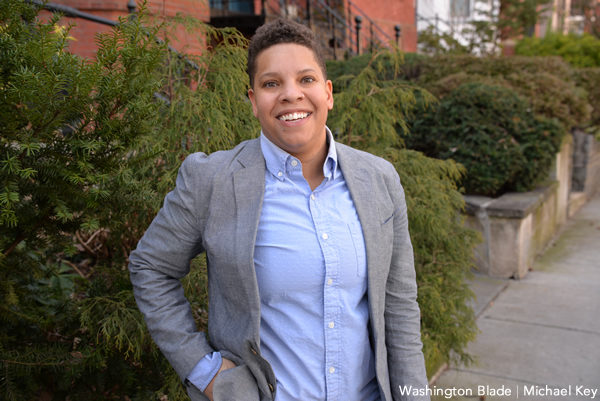
Name: Joy Whitt
Occupation: Presidential Innovation Fellow
Passion: Creating safe, uplifting spaces for women/trans/non-binary folks who are interested in learning about technology.
What advice would you give to a young woman walking in your shoes? Stay true to yourself. Surround yourself with people who will educate and amplify you; pay it forward.
Washington is one of the few major cities in America with a female mayor. What does this mean to you as a queer woman living in the District? As a queer, black woman, it is an incredibly big deal to be a resident of a city led by a black woman. Mayor Bowser represents many of my identities while serving at D.C.’s highest level, and because of that, her initiatives (and council’s policies) create a more inclusive environment for people of color, women, and the LGBTQ community. I lead initiatives in D.C. that create professional and social opportunities for technologists of underrepresented genders (i.e. women, trans and non-binary folks, etc.). Mayor Bowser and the government of D.C. have made these efforts possible by amplifying and celebrating tech inclusion.
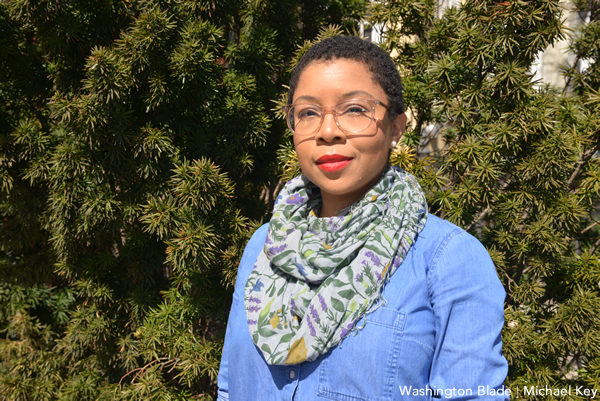
Name: Nicole Armstead-Williams
Occupation: Psychotherapist and mental health advocate
Passion: I’m passionate about dismantling the harmful stigma of mental health, with a particular heartbeat for reducing the risk of suicide and self-harm in QTPOC (queer/trans people of color) communities. I am passionate about creating eco-therapeutic healing spaces for survivors of trauma, loss and grief. I also really get excited about all things rooted in love, wanderlust and long-distance road trips, dogs and growing sweet potatoes.
What advice would you give to a young woman walking in your shoes? To a young woman walking in my shoes, I would say: wear the shoes that are the most authentic fit for you so that you can sustain the walk of your personal dream and journey.
Washington is one of the few major cities in America with a female mayor. What does this mean to you as a queer woman living in the District? Experiencing leadership from not only a woman-identified mayor but a black woman mayor provides me with a greater hope that we as women/women of color can show up, can be seen and affirmed and can support growth as an agent of change. To me, as a queer women living in the District, this means voice and visibility.
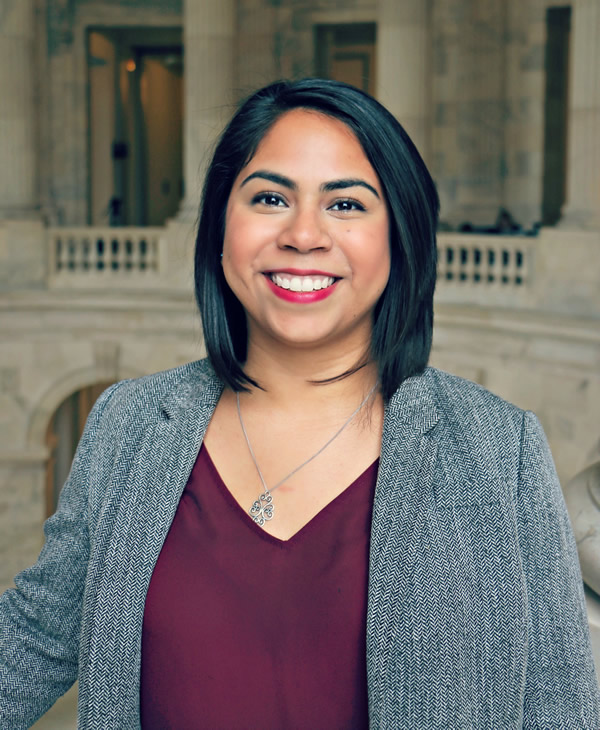
Name: Yesenia Chavez
Occupation: Policy and government affairs specialist
Passion: Developing leadership pipelines of LGBTQ youth and people of color, hiking, traveling and cycling.
What advice would you give to a young woman walking in your shoes? Remember that when you are the only woman of color, the only queer person, or first-generation person in a classroom or a board room, you carry your ancestors into that room with you. Most importantly, once you are in the room, be sure to open the door and pull up a chair for the next generation. When you pull up that chair, be intentional about who you bring to sit there. Start with those who almost never get access to those seats, i.e. trans/gender non-conforming folks, queer people of color, people with disabilities, etc. That is how you make radical change in who gets access to these rooms. We can end being the first or only one in the room if we pull each other up.
Washington is one of the few major cities in America with a female mayor. What does this mean to you as a queer woman living in the District? As a queer Latina, I think it is important to have representation in all levels of government and I value seeing women of color in leadership. I was raised by a Mexican immigrant single-mother in a low-income household and know that is a unique story in comparison to the backgrounds of the voices we typically hear from. I believe it is critical for people who don’t see themselves reflected in leadership, to work to change that because as the saying goes, “If you are not at the table, you are on the menu.” Centering the voices of those of us who are at the intersection of marginalized identities is necessary during the policy-making process to ensure policy has a positive impact on our communities.
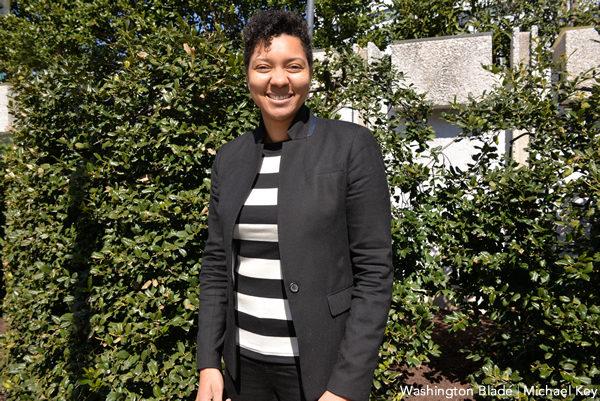
Name: Ashland Johnson
Occupation: Policy lawyer and sports equity advisor
Passion: Creating social equity in and through sports.
What advice would you give to a young woman walking in your shoes? Don’t be afraid to bet on yourself. We as women, especially women of color, invest so much time warding of doubt and working to achieve someone else’s vision of success. You have to make it a priority to invest in you— your goals, your passion, your vision— all day, everyday until it becomes second nature.
Washington is one of the few major cities in America with a female mayor. What does this mean to you as a queer woman living in the District? As a queer woman of color living in D.C., for me having a black female mayor is both an invaluable gift and a necessity. Representation matters. Empowerment matters. Our mayor represents and empowers women, especially women of color everyday she leads our district forward.
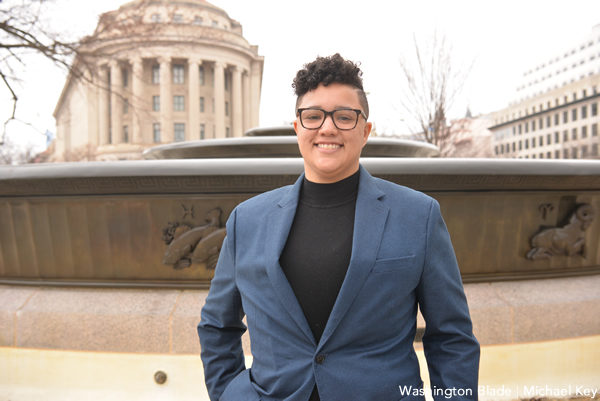
Name: Whitney Washington
Occupation: Attorney/legal fellow
Passion: People are my passion. I love the process of getting to know folks and learning about them. As much as I am willing to get to know absolutely anyone from whatever walk of life, I acknowledge that not all folks are willing to do the same. I understand that to greater society some folks are not worth anything because of who they are or what they may have done in the past. I feel lucky to be able to offer my skill set to show support to the people that society has written off.
What advice would you give to a young woman walking in your shoes? This is a funny question because I still think of myself as a young person. Three things that I remind myself of daily are one: nothing worth doing is easy, but also that the most difficult option is not always the answer — there is often a middle ground; two: I know a lot more than I think I do; and three: I have a lot to learn. Outside of my daily reminders, I think the biggest thing I would tell a younger person is: being a person is a process and that regardless who you are right now, and regardless of whoever you will become, you are valid.
Washington is one of the few major cities in America with a female mayor. What does this mean to you as a queer woman living in the District? The socio-political impact of Muriel Bowser’s position as mayor of Washington cannot be overstated — it is crucial that voices like hers are amplified, especially in our current political climate. As a queer, non-binary individual, this signals to me that this historically black city values its legacy, champions its pioneers and strives to be at the forefront of change in our nation.
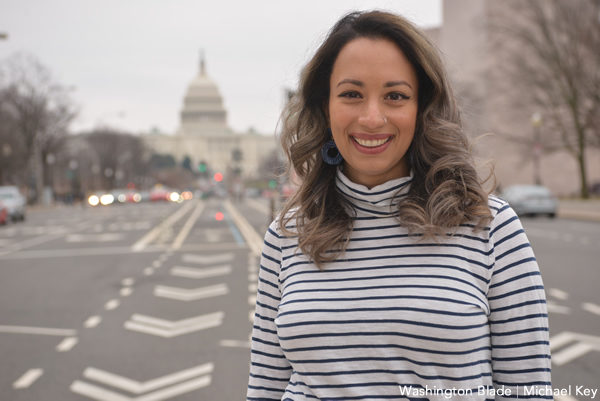
Name: Sarah Horvitz
Occupation: National political director at Run for Something
Passion: Encouraging and supporting young women who want to serve their communities in elected office.
What advice would you give to a young woman walking in your shoes? You aren’t going to be amazing at everything you do on day one. Stay focused on the specific tasks and goals you are trying to accomplish and trust you will get better the more you try. Surround yourself with other women out there who are doing their best and befriend them.
Washington is one of the few major cities in America with a female mayor. What does this mean to you as a queer woman living in the District? I love living in D..C for many reasons (honestly too many to name) but I am especially proud to live in a city with a woman in charge. I know that Mayor Bowser is fighting every day by making political and fiscal decisions that prioritize equity for women and girls, especially people of color and members of the LGBTQ community. She is not only an advocate in our national’s capitol for resident’s of D.C., but is also leading the charge nationally for more representation of marginalized communities in elected office.
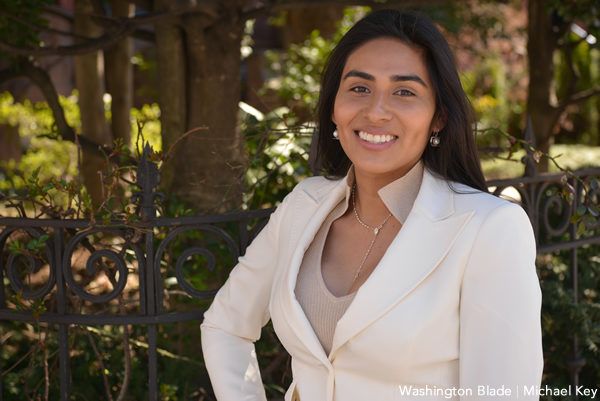
Name: Amber Posadas
Occupation: Specialty support
Passion: Defend the rights of the LGBT community and advocate for those who doesn’t have voice.
What advice would you give to a young woman walking in your shoes? Never give up on your dreams and fight for what you really want in life.
Washington is one of the few major cities in America with a female mayor. What does this mean to you as a queer woman living in the District? It gives me the power to know as a queer woman I too can achieve success.
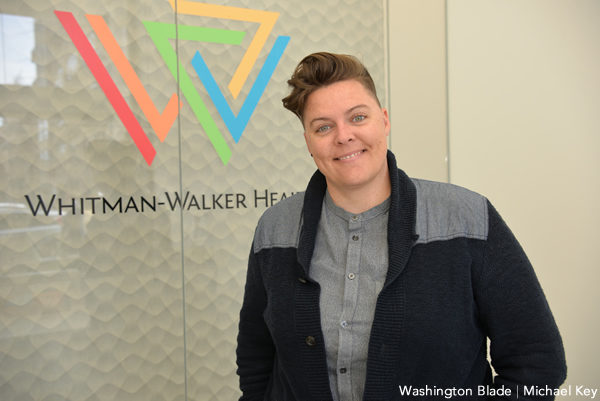
Name: Katie Nicol
Occupation: As senior manager of public benefits and insurance navigation at Whitman-Walker Health, I focus on removing barriers to health care access, particularly for those who identify as LGBTQ, people living with HIV and the immigrant population.
Passion: I’m passionate about helping others, geeking out over insurance eligibility policy and nuance, logistics and the work of Whitman-Walker Health. I have the privilege to be a part of an organization that represents what it means to provide culturally competent care free of stigma and judgement and to serve a patient population I identify with.
What advice would you give to a young woman walking in your shoes? Stay true to your queer self, give yourself room to grow and evolve and don’t take yourself too seriously. Take every opportunity to learn from your experiences, mistakes and from others. Your relationships are your greatest assets — personally and professionally — so nurture those connections. Push yourself outside of your comfort zone and follow your instincts; sometimes your greatest hurdle is fear.
Washington is one of the few major cities in America with a female mayor. What does this mean to you as a queer woman living in the District? In today’s political climate where woman, let alone a woman of color, are marginalized, it’s a reminder that women — regardless if queer or not — are equal to men. It is additionally inspiring to live in a city where a woman of color of color is a true representation of Washingtonians and our values, which include inclusivity for all residents, regardless of immigration, sexual orientation or gender expression.
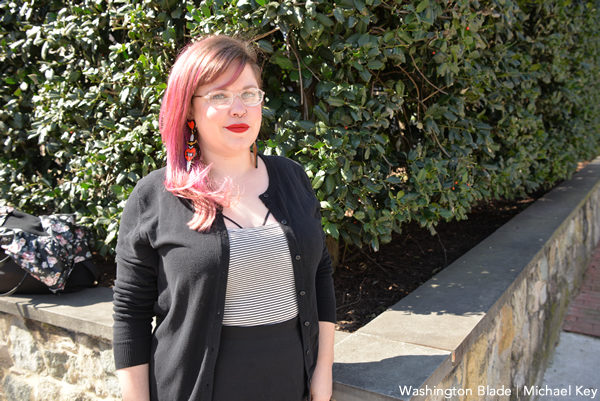
Name: Emily Hammell
Occupation: Events manager for LGBTQ Victory Fund & Institute
Passion: Oh gosh, so many to chose from! My most noteworthy passion is my collection of commemorative plates. But I also love Raquel Raccoon (my three-legged cat), relationship anarchy, tattoos, LGBTQ+ rights, gender and racial equity, sex workers rights and harm reduction.
What advice would you give to a young woman walking in your shoes? Be as out and loud as you’re able to, it matters so much to those who can’t. And if you can’t be out and loud? Please be kind to yourself, you are still part of the queer family and you matter so much.
Washington is one of the few major cities in America with a female mayor. What does this mean to you as a queer woman living in the District? It’s pretty dang inspiring to see a woman of color succeed in the political world. I may not always agree with Mayor Bowser, but I absolutely respect how hard she has worked to climb that ladder.
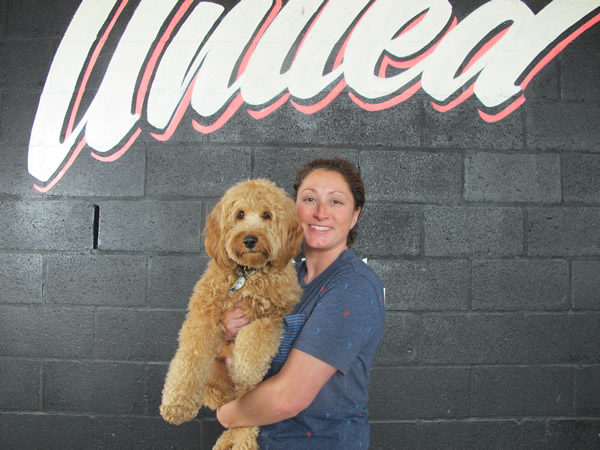
Name: Brittany Rheault
Occupation: Director of sports operations at United Fray
Passion: My passion at work is making fun possible. I have the pleasure of bringing “play” into everyday life with my job. I couldn’t ask for a better profession. As for the rest of my life, my passion is to make people feel included, whether that’s on a dance floor or with my friends, I’m always striving for laughter and fun and connection.
What advice would you give to a young woman walking in your shoes? Hustle. What separates you from the pack is your willingness to step in or step up. Being complacent is never an option. You have to be willing to show up and impress with commitment and work ethic.
Washington is one of the few major cities in America with a female mayor. What does this mean to you as a queer woman living in the District? To me, it’s inspiring that I am living in a city that would not only elect but reelect a female mayor.
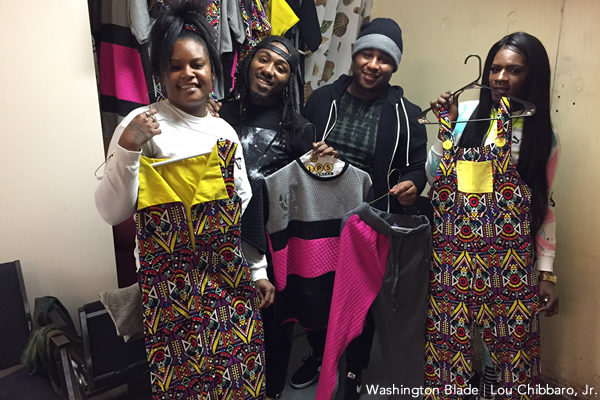
Name: Check It Enterprises; Star Bennett, CEO
Occupation: CEO of Check It Enterprises
Passion: fashion design
What advice would you give to a young woman walking in your shoes? Chase your dreams and never give up.
Washington is one of the few major cities in America with a female mayor. What does this mean to you as a queer woman living in the District? That females have the same ability men have.



a&e features
What ‘Queer Eye for the Straight Guy’ can still teach us
Producer David Collins on lasting impact of hit series
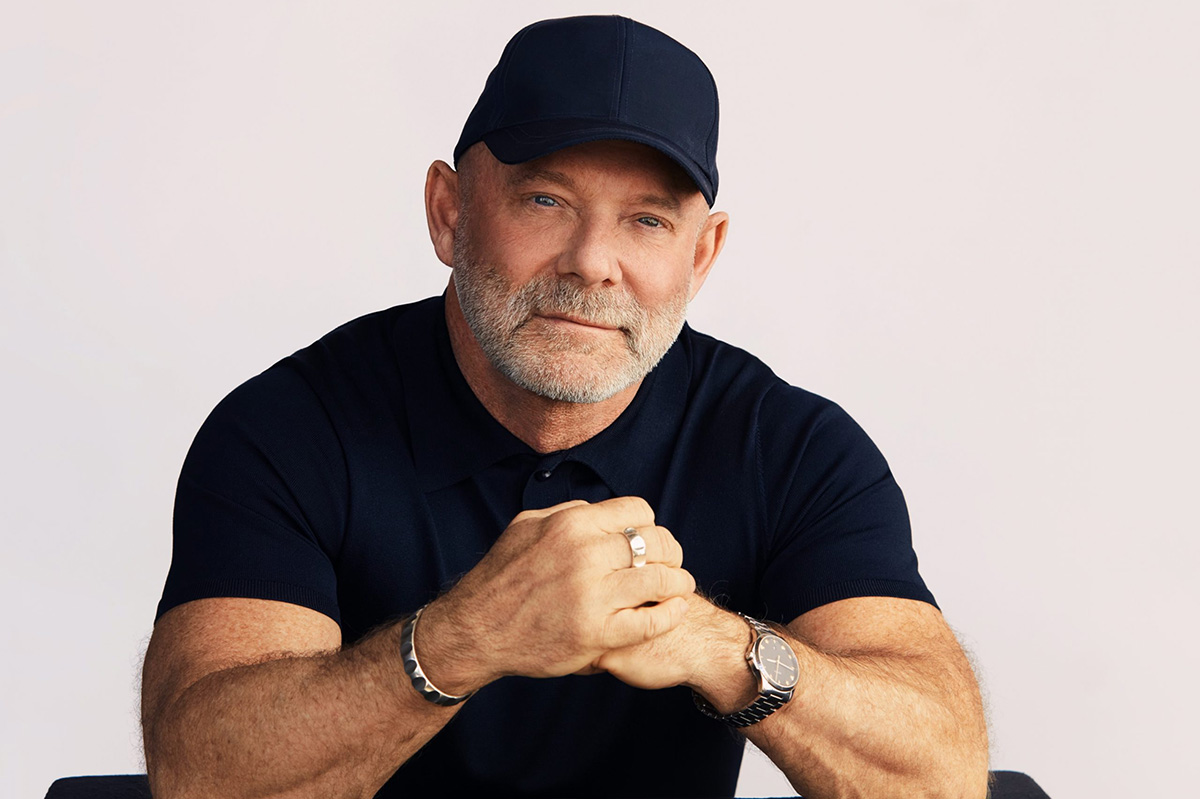
It’s hard to imagine where LGBTQ+ television would be without “Queer Eye for the Straight Guy,” the trailblazing reality series that premiered in 2003.
Each episode of this Emmy-winning show saw a group of gays converge on a struggling man — the titular straight guy — and offer nonstop wit while organizing his endlessly messy life. This program about a group of homosexual helpers took the world by storm, furthering the love of gay television begun by shows like “Will and Grace” but bringing it into the growing medium of reality TV. Of course, it wasn’t perfect; “Queer Eye for the Straight Guy” often cast its experts less as multi-faceted queer folks and more as sources of early 2000s gay jokes. But despite these pitfalls, it’s undeniable that the original program explored the realities of being gay in a way audiences had never seen before. It was a monumental piece of LGBTQ+ representation, and its success is largely owed to the man who fought to get this show made: producer David Collins.
Collins spoke with the Blade from his Los Angeles home, where he’s spent the past few years living with his husband and his two daughters. David spoke fondly of his many years in the industry, detailing how it feels to be such a huge part of LGBTQ+ history. He explained, however, that he didn’t initially set out to alter how queer people were seen on television. “I never went out to make gay television,” said the producer. “I went out to tell great stories.”
“I’m a hillbilly from Ohio, and I thought I was going to be an editor,” David laughed, looking back on his career. “I interned at the Cincinnati Film Office, and I showed up to work my very first day, and the film commissioner was like, ‘Get to the airport right now and pick [someone] up. Don’t talk to them.’ Well, I ended up picking up Jodie Foster.” Collins raved about this car ride that changed his life, with the pair becoming friends and Foster pushing him to become a producer who puts their own media out into the world. Eventually, he did just that, and after learning about the wild new genre that was reality TV, he pitched a series to Bravo: “Queer Eye for the Straight Guy.”
“I was obsessed with Esquire magazine, and they had five categories: fashion, grooming, interior design, culture, food, and wine. So I gave them each a gay, and the Fab Five were born!” Collins said, describing how viewers quickly fell in love with the concept and earned the program four seasons and an Emmy for Outstanding Reality Program. He spoke about how proud he felt creating a show that centered real gay people, not characters in a story, remembering, “To stand in the middle of Times Square and look up and see this massive billboard with the original Queer Eye guys…it wasn’t even a dream come true, because it wasn’t a dream I had even fathomed.”
With his series, people were watching actual gay men and learning the realities of a queer culture that had always been portrayed as a danger to society. Collins tearfully recounted hearing about queer people using the show as a way to connect with their family, saying, “What I’m most proud of that’s come out of Queer Eye [are] the conversations that that series has allowed to have people around their kitchen tables with little boys in Ohio like me who were scared to death that they were going to burn in hell because their pastor was telling them that they were a sinner.”
Now, for all of its trailblazing, the program wasn’t wholly positive; the show’s focus on the central ‘straight guy’ meant it rarely delved into the lives of its Fab Five. Collins regretted that lack of depth but understood that earlier audiences weren’t accustomed to such a nuanced look into queerness — that would have to wait for the reboot.
When “Queer Eye” came out in 2018, audiences were introduced to not only a new Fab Five, but a whole new format (that didn’t rely on a straight person). Now, the series would assist queer folks and allies alike, spotlighting these individuals as well as the queer experts helping them improve their lives. The show has been applauded for its amazing makeovers, but where it truly stands out is its representation, offering a look into individuals across the country and the struggles — along with the immense joys — of being queer in America today.
Fans were disappointed to hear that “Queer Eye” would be ending after its 10th season, but David stressed that they wouldn’t have to be sad for long. “What I will say to you is this: hang tight,” he teased. “There’s yet another version of ‘Queer Eye’ to come, and we’re working on that now.” In the meantime, Collins is continuing his work with new shows like the “House of Stassi,” a series centered on “Vanderpump Rules’”prolific waitress. He’s excited about these new projects, but emphasized that his heart will always belong to “Queer Eye for the Straight Guy” and all that it continues to do for viewers 19 years after its finale.
“It’s not about your new outfit or your new couch or your new whatever. It’s about your humanity,” said Collins, speaking about the core lesson he hopes people take away from the Queer Eye franchise. “It’s about seeing yourself. It’s about dignity. It’s about how confidence breeds success.”
A valuable message that queer folks can benefit from even more now than they did in 2003. And, while it’s unclear just what lies ahead for this franchise, one thing is for sure: “Queer Eye for the Straight Guy” helped people everywhere understand the power that exists within our queerness. It’s a truth that has impacted countless pieces of LGBTQ+ television today, and it’s one that Collins promises to keep alive through whatever hit show he creates next.
a&e features
Jason DePuy on coping with homophobia in ‘Big Brother’ house
First drag queen contestant on CBS show fought to stay positive
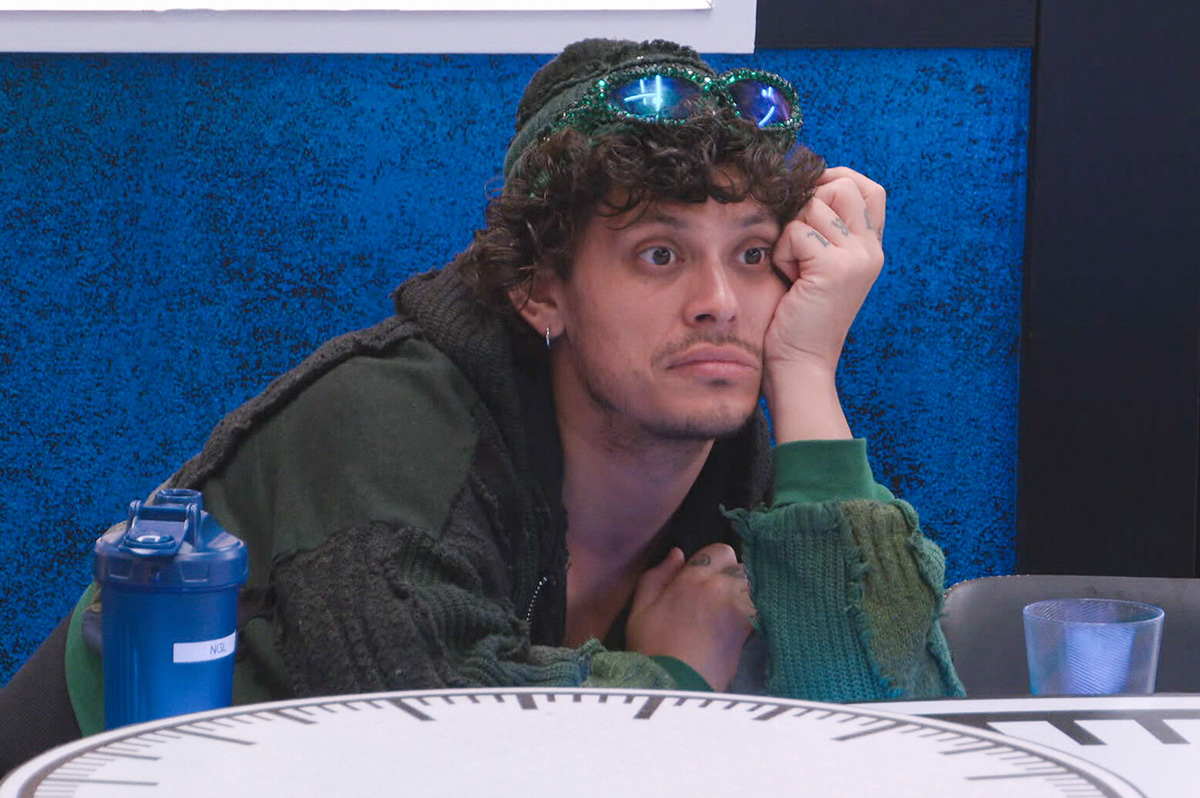
One week after Jason DePuy (known as Salina EsTitties on “RuPaul’s Drag Race”) was bullied and eventually evicted from CBS’s “Big Brother” house, the queer drag performer is still emotionally processing his feelings.
During his 24 days in the reality TV competition, DePuy often had a rough time, with fellow cast member Kamuela “Kamu” Kirk making homophobic comments and feeling isolated.
In a conversation with Head of Household Rick Devens, Kirk left viewers upset when he said, “Bro, miss me with the drag stuff. Miss me. I’m still an MMA guy, and I have an image to uphold.”
Former “Big Brother” contestant Frankie Grande called his words ‘homophobic’ and ‘gross.’ Another comment, where Kirk said he wanted to end DePuy’s career, also received strong backlash online.
Now that he is out of the house, DePuy has been shocked and deeply touched by the love from “Big Brother” fans and former contestants. We chatted with DePuy for this Blade exclusive.
“To know that my community was rallying for me outside the house was the most wonderful thing. Seeing how much people were just wanting to shower me with love was incredible. Even my friends, I went to say hi and give them a hug, and they’re like, ‘Uh, uh, come here.’ They had to hold me and let me know America was feeling for me in a way that I had no idea.”
He added: “To see that reality was just overwhelming, and I couldn’t ask for more.”
Known as a messy player in the house, DePuy often had to fight to stay positive and stand up for himself.
“No one was coming to my rescue. In real life, it’s easy to block people, but in the house, I didn’t have that luxury, so I had to find it within myself to learn how to speak up for myself in a way that wasn’t nasty or biting. I didn’t attack anyone personally, which is what I was the most proud of.”
DePuy acknowledged he has had a history of putting his foot in his mouth when it came to certain “Drag Race”moments, being in the public eye, and making a fool of himself. “I’ve learned my lessons; to see how I handled myself in the ‘Big Brother’ house was amazing.”
While DePuy has been sober for 14 and a half years and has a strong spiritual foundation, in the Big Brother house, he often felt like he couldn’t communicate what he was feeling.
“As a queer person, a person of color, a drag queen, I have to be very careful about how I move. I don’t have the luxury or privilege to just act a certain way or say a certain thing. I have to be very careful; I’m representing me. But who I am is a Latino, a person of recovery, a drag queen, a queer person in the community. I know that there’s a lot of pressure that comes with that. I felt it was safer for me to sit there and just breathe than try to do anything crazy.”
He continued: “I couldn’t speak to the personal attack that was happening in the house, because in my mind I was like, ‘no, this is a game, and I have to play it, put that aside.’”
Not only can viewers watch the episodes, but they can also watch the live feeds of what’s happening. Seeing the fans’ social media posts from people who had watched the episodes and the live feeds also contributed to DePuy realizing that his feelings of discomfort were valid.
“To know that I wasn’t delusional in those moments, that others could see what was happening, has been a lot to take in. Fans and friends let me know the comments made went beyond the game…I’m like, ‘Oh, so my instincts were correct.”
One of the most poignant moments on the live feeds occurred when DePuy was crying, alone in his room, and said how he missed his gay community.
“I really missed my friends. I missed my queer community. We’re so colorful. We’re so loud. We’re so vibrant. We speak off the cuff, and we’re very truthful and honest with how we speak, and it’s fun. We have fun lingo.”
DePuy had to censor his expressions in the house. “Because I can say one thing, but it can mean something different to straight people than it does with my queer brothers and sisters. So, there was a sense of code-switching that I had to do. I had to even put aside some of my queerness in a way sometimes to fit in.”
DePuy was thrilled to be the very first drag queen to ever be cast on the show.
“I’m honored to have been chosen. There’s a million drag queens out there, and to know that I was a contender to come in the house and not even be in drag was like a wow for me. I’m over here in Hollywood, running around these streets with a wig and heels just to make a dollar to survive, and I have to rely on drag to do that. And then to be offered this opportunity and be given the privilege to say, ‘hey, you don’t have to put on the wig for you to be valuable here,’ is just insane to me.”
Prior to his shows, DePuy has been hustling for 15 years, flipping burgers and doing drag at night.
“That has been my life these past since I was 17. So it’s been a long journey; the opportunity to do this out of drag is a very big blessing. I’m honored and grateful to be the representation of my community.”
If you missed Jason on “Big Brother: Unlocked,” the episode can be seen on CBS.com. He will be back on the show for the finale.
a&e features
Rainbows in Revolt on a mission to make LGBTQ artists’ voices heard
Rainbows in Revolt on a mission to make LGBTQ artists’ voices heard
Last month’s Pride celebration in D.C. was so fun. Walking around my first Capital Pride with a $15 lemonade I was loving the madness and the color. Artists and small businesses battling banks you’ve never heard of collecting your personal information so you can spin a wheel to snag free merch. Great music blaring, people actually smiling and enjoying themselves, the “Great” American State Fair could never!
The Monument Stage was on Pennsylvania Avenue, directly in front of the National Gallery of Art and I can’t think of a better venue to see live music. How does someone get on the lineup for Pride? How do we accelerate the visibility of the most talented voices in our community to perform in places like this?
There is certainly not a talent gap, but there is a visibility gap. Chappell Roan went from playing for two people in a parking lot to owning the main stage at Coachella in one year. Whether it is shadowbanning or bias in AI, algorithms have been shown to suppress queer artists. In a digital age, how can queer people break through and show the world how talented they are?
Allison and Matt of Rainbows in Revolt are on a mission to make openly LGBTQ+ artists’ voices heard. Their goal is to find “musicians whose queerness is central to their identity as an artist,” and accelerate them to a place where they can actually reach fans.
The only time queer events seem to be in the spotlight is June, but this should be year round, according to Allison and Matt. Rainbows in Revolt wants to act as a “nucleus” for different sub-communities, finding common ground in the universal language of music.
Matt and Allison founded Rainbows as a way to make cheaper, higher quality merchandise for queer artists. While Rainbows has already pledged 20% of their profits to the LGBTQ+ community, with 10% to Whitman-Walker Health and 10% to LGBTQ+ organizations in need, this is just the beginning of the work that they do.
Rainbows “does the dirty work” that artists normally struggle to do on their own with limited resources. Interviews, artist profiles, social promotion, playlist discovery, radio outreach, and merch-funded support. This work is normally expensive, time consuming, and requires lots of different skills. Musicians don’t want to be editing clips to post online. Standup comedians don’t want to make graphics for their tour dates. They want to write more. They want to focus on their craft.
In addition to helping artists find their audience, Rainbows has built other digital tools to help queer people connect, including an interactive Safe Space Map for most major cities. It is hard to know which places are truly safe and supportive just from a simple Google search. Attitudes and actions change, and there should be a simple way for queer people to find other places that align with them. The Safe Spaces Maps are all up to date, and are tagged and filterable. Instead of relying on forums and word of mouth, Rainbows has created a centralized way to find authentic community quickly.
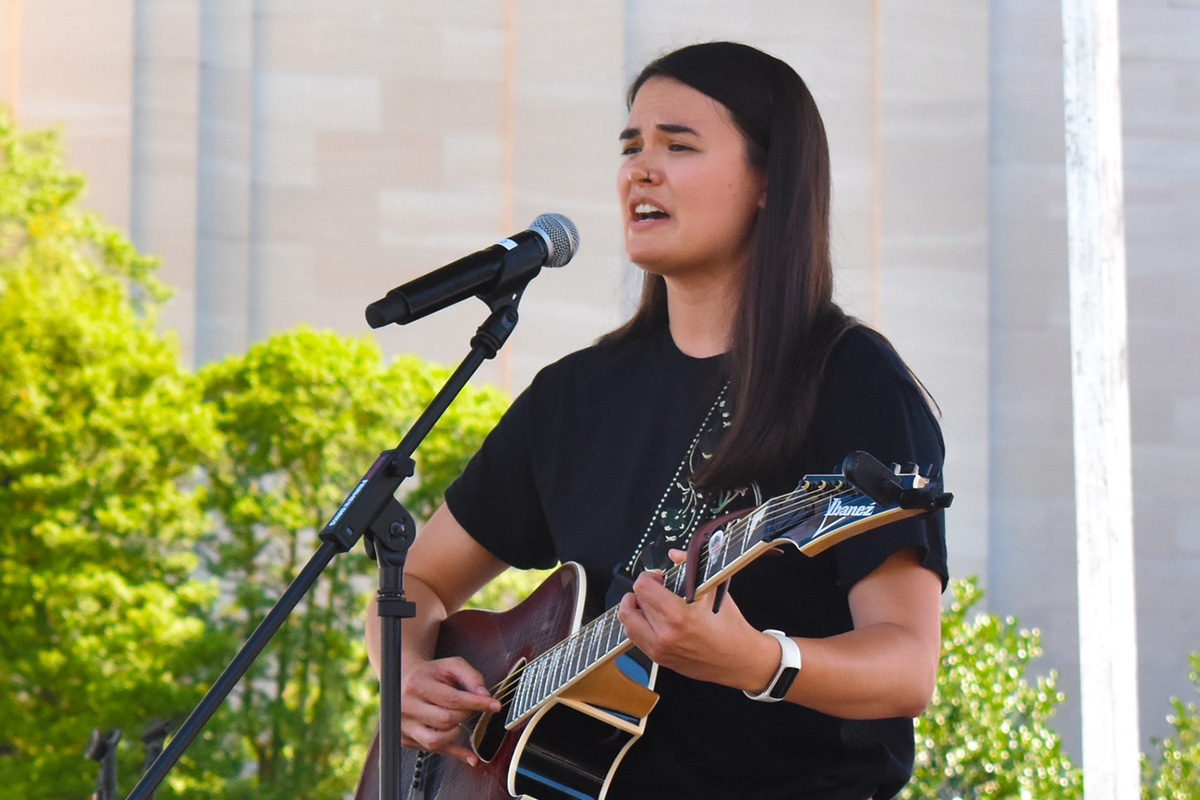
I had a chance to talk with Allison and Matt at Pride where Lily Erin, one of their signature artists, was performing on the Monument stage. Lily Erin is a folk singer who is familiar and forging her own path. Her bittersweet sound echoes through Acadia, and her garb mirrors the New England athletes I grew up with. Gorp Core meets streetwear. A graphic tee, hiking shorts, and creamsicle Jordans.
Her debut single, “Bus Stop,” tells a sad story about unconditional love, and the conditions that still seem to come with it. Graduating into lockdown, Erin needed a new way to connect with herself and others. Lily made “Bus Stop” without an intention to share it, but doing so was a liberation. People have been responding to her honesty around queer-ness, family, and the “ghosts which haunt us” even in the daytime.
Rainbows in Revolt has helped Lily Erin go from bars and backyards to The Monument Stage at Pride. This is a meteoric rise, and a testament to both Erin’s talent and the work of Rainbows to promote her. “A little encouragement goes a long way with early artists,” and by “planting a seed” Rainbows is already seeing their artist garden grow. Community is power, and Erin is a perfect example of how effective simple modern techniques of promotion can be.
A next step for Rainbows is putting on shows themselves. On Oct. 3, Rainbows in Revolt will host an Evening with Ray Boltz at the National City Christian Church. Boltz grew up in the Catholic Church and for many years was the soundtrack to many services, youth camps, and church groups. He was celebrated by millions until he came out in 2008. Allison remembers her community “never playing his music again.”
Rainbows in Revolt is helping him to return to the church, and proving that identity does not need to be exclusive. We live in a complicated world with complicated lines being drawn. Boltz proves that these lines don’t exist, and will be breaking down barriers to bring together communities. To Allison, “a trans woman standing next to a straight white man in church is a powerful teacher.”
The Safe Space maps bridge all types of spaces, and one of the unlikely ones is, perhaps, churches. Matt said that “BYU has only nine safe spaces around their campus and seven of them are churches.” Not all churches are anti-gay, and many times they are the only place for people to find community.
Rainbows in Revolt is just getting started bridging gaps and building community.

New data shows record-high LGBTQ population amid Trump attacks

Dolly Parton dies at 80

Monument to LGBTQ Canadians officially unveiled

The fight to save one of Baltimore’s last gay bars

When home becomes a journey: migration, memory, and the African diaspora

Not all trans people are the same

UPDATE: Impulse Group’s ‘PrEP Pool Party’ cancelled

Queer team brings girl power to fully baked ‘The Wrong Girls’

Comings & Goings