Arts & Entertainment
Delta blasted for straight-washing “Rocketman”
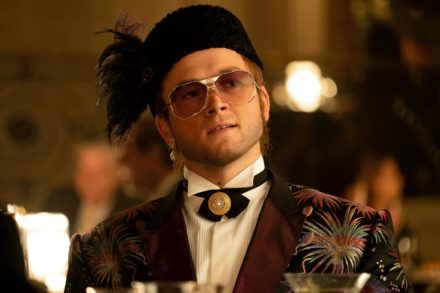
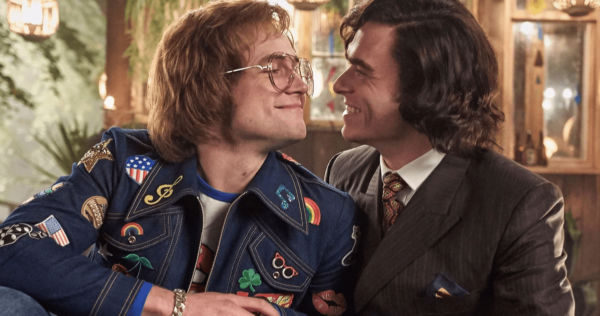
“Rocketman,” the acclaimed musical biopic about Elton John, is making headlines again this week as Delta Air Lines defends itself against accusations of showing straight-washed, edited versions of its inflight movies.
The new controversy began on Tuesday, when an outcry sprang up on social media after Entertainment Weekly’s digital director Shana Naomi Krochma went on Twitter to scold the airline for removing most of the film’s gay content.
“On @Delta today [I] discovered that #Rocketman is stripped of almost every gay reference or scene that [Elton John] fought to keep in the film’s mainstream release, including a simple chaste kiss,” Krochna tweeted.
She followed up with a second tweet which questioned the airline’s decision to edit out same-sex love scenes while leaving in scenes of domestic violence.
“What does it say that the edit left in a scene of John Reid assaulting Elton but removed any evidence of intimacy between them or for that matter Elton and any man? What is that saying is OK?”
“Rocketman,” which deals with the early years of John’s musical career and his struggles with drug and alcohol addiction, has been widely praised for its refusal to shy away from the subject of the singer’s sexuality. The film made news earlier this year when an outcry emerged over pre-release rumors that Paramount Studios had demanded director Dexter Fletcher and producer Matthew Vaughn remove a nude sex scene between actors Taron Egerton and Richard Madden, who portrayed John and Reid, respectively, in the film. Fletcher has denied that the studio made such a demand.
It’s the second time this week Delta has come under fire for removing LGBT content from its inflight movies. On Sunday, actress-turned-director Olivia Wilde blasted the airline for cutting a pivotal same-sex love scene in her film, “Booksmart.”
Responding to a fan on Twitter who had complained about the missing scene, Wilde tweeted, “This is truly a bummer. There is no nudity in this scene. What makes it too obscene for airplane viewing?”
Later that evening, at the Motion Picture Academy’s 11th Annual Governors’ Awards in Los Angeles, she told Variety, “I don’t understand it. There’s censorship, airline to airline, of films, which there must be some kind of governing board to determine. We rate it a certain way. If it’s not X-rated, surely it’s acceptable on an airplane.”
She added, “There’s insane violence of bodies being smashed in half and yet a love scene between two women is censored from the film. It’s such an integral part of this character’s journey. I don’t understand it. My heart just broke. I’m trying to get to the bottom of it; I want people to experience the entire film.”
Then, on Tuesday, Wilde complained on Twitter, “I finally had the chance to watch an edited version of Booksmart on a flight to see exactly what had been censored. Turns out some airlines work with a third party company that edits the movie based on what they deem inappropriate. Which, in our case, is … female sexuality?”
In a lengthy thread, she called out other specific edits made to the film, such as removing or muting the words “vagina” and “genitals,” removing dialogue about masturbation and UTIs, and removing a scene that featured two naked female dolls. The tweets never referenced Delta by name, though many followers and fans were quick to do so in their replies and retweets.
Wilde asked, “What message is this sending to viewers and especially to women? That their bodies are obscene? That their sexuality is shameful?” She went on to add, “ I urge every airline, especially those who pride themselves on inclusivity, to stop working with this third party company, and trust the parental advisory warning to allow viewers to opt out if they choose.”
Delta, which has a long history of commitment to supporting the LGBT community, received similar criticism in 2016, when the in-flight version of Todd Haynes’ Oscar-nominated “Carol” removed a kiss between actresses Cate Blanchett and Rooney Mara.
On Thursday, the airline issued a statement explaining that a third-party company is contracted to provide its own edit of the movie along with the unedited version. If the unedited version contains content that does not meet Delta’s guidelines, the third party’s version is used instead, whether or not parts of the film that don’t violate the guidelines have also been removed.
The airline’s statement said, “Delta’s content parameters do not in any way ask for the removal of homosexual content” from its in-flight movies. We value diversity and inclusion as core to our culture and our mission and will review our processes to ensure edited video content doesn’t conflict with these values.”
No word on whether the unedited versions of “Rocketman” or “Booksmart” will be now made available on Delta flights.





Books
Eliot Glazer’s new book an engaging collection of essays
From growing up gay to turning down ‘Queer Eye’
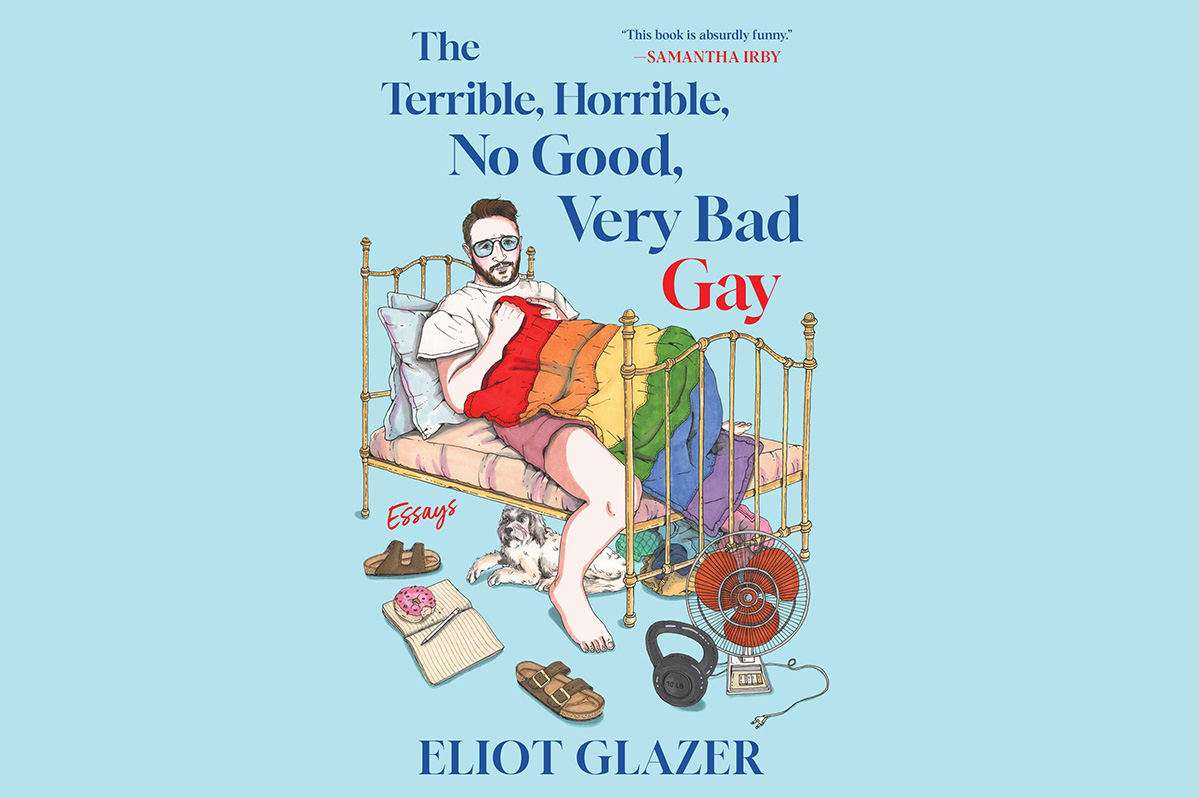
“The Terrible, Horrible, No Good, Very Bad Gay: Essays”
By Eliot Glazer
c.2026, Gallery Books
$28.99/240 pages
You try and you try.
Once, twice, you go back at that thorny issue, the dream you have, the punchline that’s not hitting quite right. Sometimes, time is all you need to make it better, or a new approach, or a second look. And then there are days when you actually get things right, as in “The Terrible, Horrible, No Good, Very Bad Gay” by Eliot Glazer, and it’s all good.

Throughout his life, Eliot Glazer has made mistakes. And it’s OK, everybody trips and falls now and then. In his case, though, he’s perfectly willing to document his failures, foibles, and whoopsies in this book.
He writes of his mother, Sandi, “a Queens-born balabosta” who wouldn’t tolerate laziness in herself or Glazer. He found work as soon as he was legally able to do so, and he had many jobs throughout high school. He was a gardener, ice cream scooper, camp counselor, golf caddy, chocolatier, telemarketer, and video store clerk. The one that fit him best, however, was working at Talbots, a department store for older women, where he found his people.
Even with all those jobs, he was a theater kid in his time off, little though it was. Back then, he was just a boy growing up on Long Island but swagger was important, so swagger he did. He still appreciates a good Broadway show, even the silliest ones.
Glazer says that he had just recently come out when gayness exploded on TV with “Will & Grace” and “Queer Eye for the Straight Guy,” with which he was obsessed. It helped him feel not othered, he says. Producers of the reboot asked him to be a second-generation Eye, but Glazer turned them down, though he thinks he’d have been good at it.
The show helped him with love of décor. His unexpected advisory skills came naturally, through age and wisdom and learning that wild partying isn’t really so much fun.
As for finding love, well, that’s a long, boy-meets-boy-meets-boy story…
So you’re looking for something to easily pick up and put down, something that speaks to your inner impatience? You’ll find that in “The Terrible, Horrible, No Good, Very Bad Gay,” a book that’s practically meant for you to skip around and you don’t have to read everything.
Essays can be like that, which is nice, even refreshing. Author Eliot Glazer is entertaining enough to make things work, engaging enough to keep it moving, and funny enough to make you want more of what he has to say. He’s open with his life and, despite his fame, his writing isn’t lofty; you can expect stories that’ll make you snort and ones with spice, but also some surprisingly tender moments that soften this book in a way that’s just right.
Readers who want a quick, mostly light book to finish will find something appealing in this collection of essays. If you don’t mind a bit of non-linearity and you need a laugh, “The Terrible, Horrible, No Good, Very Bad Gay.” is worth a try.
The Blade may receive commissions from qualifying purchases made via this post.
Out & About
Equality Chamber hosts Pride in Business Expo and Profits & Pours
Entrepreneurs, business leaders, professionals to meet at Mayor’s Office of LGBTQ Affairs

The Equality Chamber of Commerce is bringing together LGBTQ+ entrepreneurs, business leaders, professionals, advocates, and community partners on Thursday, Oct. 15 at 2:30 p.m. at the D.C. Mayor’s Office for LGBTQ Affairs (899 N. Capitol Street, NE).
This is an afternoon and evening focused on one essential question: How do we build businesses and a business community that can thrive? The Pride in Business Expo and Profits & Pours with Stephanie will create a powerful forum for connection, practical knowledge, and economic opportunity at the Mayor’s Office of LGBTQ Affairs. The Pride in Business Expo, taking place from 4-7 p.m., brings the region’s LGBTQ+ business community together to showcase businesses, build relationships, discover resources, and create new opportunities.
Out & About
Learn more about Virginia’s queer history
‘The Remarkable Visibility of Hannah Nokes’ event scheduled for Wednesday
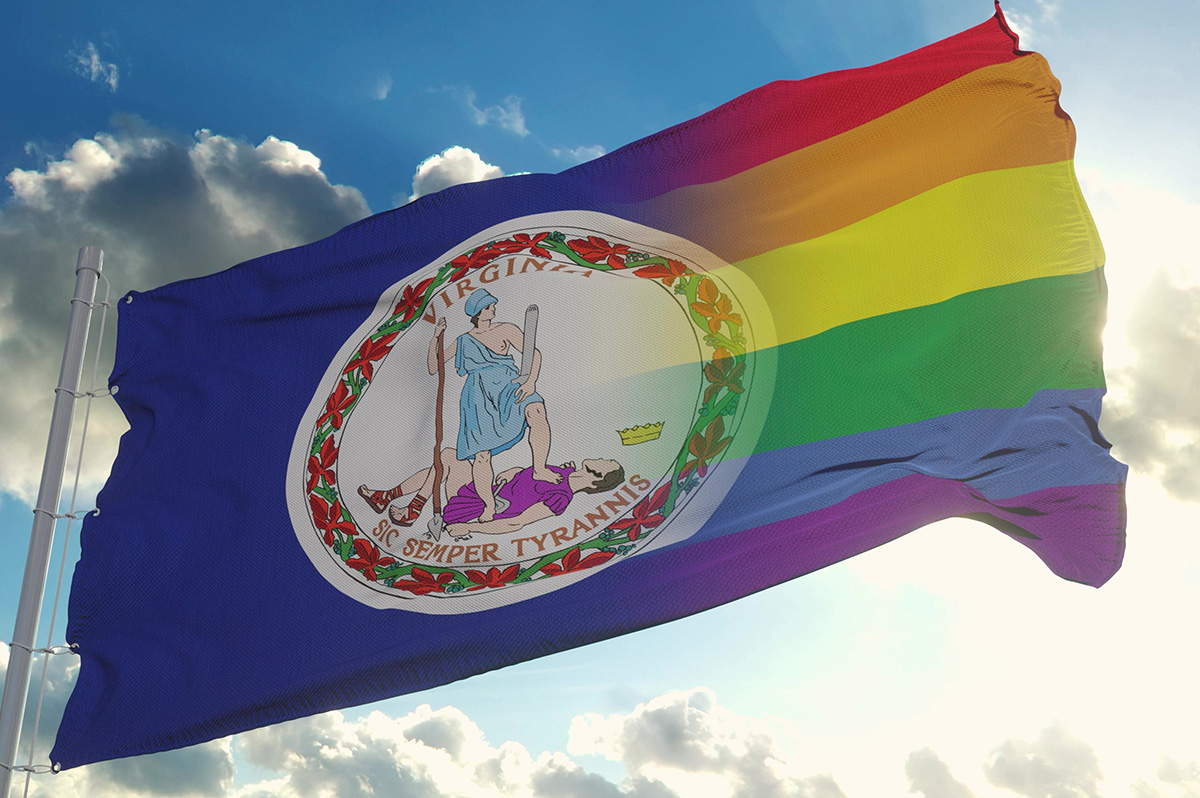
Queer Virginia Contributor Amy Bertsch will host “The Remarkable Visibility of Hannah Nokes” on Wednesday, Oct. 14 at 6 p.m. at Sprouse Rare Book Room inside the Kate Waller Barrett Branch Library (717 Queen St., Alexandria, Va.).
Amy will share the story of Hannah Nokes, an African-American transgender woman who made headlines in 1933 when she testified in a high-profile murder trial. Learn about Nokes’s life, her place in history, and the broader social context of her remarkable story. Her story is among those featured in the book “Queer Virginia: New Stories in the Old Dominion.”
Register at the Alexandria Library website.

Eliot Glazer’s new book an engaging collection of essays

Equality Chamber hosts Pride in Business Expo and Profits & Pours

Learn more about Virginia’s queer history

Annapolis Pride arrives this weekend

Calendar: October 2-8

529 openly LGBTQ candidates running in Brazilian election

Meet the LGBTQ candidates running for U.S. House, Senate

Ana Brnabić becomes world’s first openly lesbian head of state

Vote now! Best Of LGBTQ DC readers’ choice awards

Gay Va. couple hopeful voters will enshrine marriage equality in state constitution
-

 Brazil5 days ago
529 openly LGBTQ candidates running in Brazilian election
-
2026 Midterm Elections4 days ago
Meet the LGBTQ candidates running for U.S. House, Senate
-
Serbia4 days ago
Ana Brnabić becomes world’s first openly lesbian head of state
-
Arts & Entertainment4 days ago
Vote now! Best Of LGBTQ DC readers’ choice awards