Arts & Entertainment
2019 Gift Guide IV: fast, fun and easy
Eliminate stress from your holiday to do list with these last-minute gift ideas
Editor’s note: This is part four of four 2019 Blade holiday gift guides. Previous installments (pop culture, home and hot this year) are online.
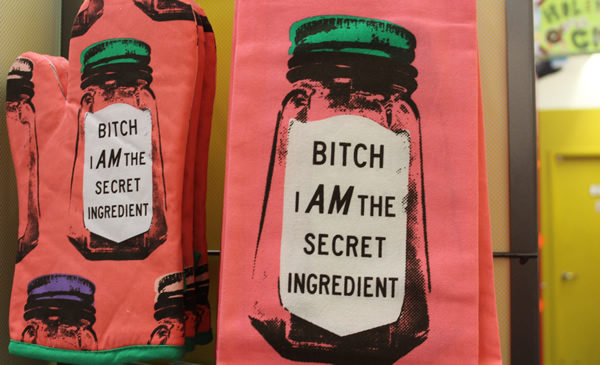
To add extra sauce to any kitchen, these playful oven mitt and apron sets from Chocolate Moose (1743 L St., N.W.) make a laughable and functional stocking stuffer. Most sets run at $13 for mitts and $12 for aprons.
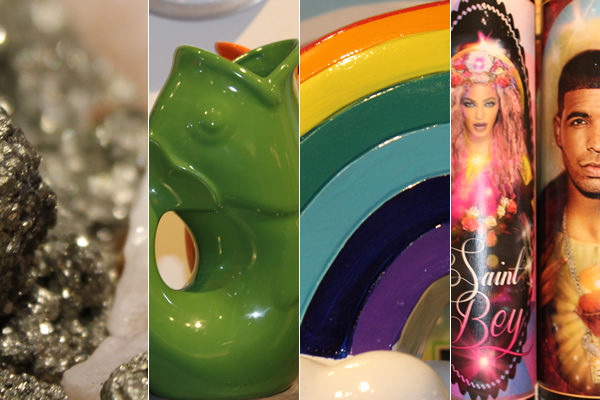
Take a walk into Urban Dwell this season (1837 Columbia Rd., N.W.) to find homey trinkets for all your friends and family who live (or decorate) outside the box. For $3.95, you can collect a bag of Kyanite, Quartz, Fluorite, Citrine and Amethyst to sprawl through your center piece or toss in a clear vase.
For $40 a piece, these GurglePots from Urban Dwell are definitely a conversation starter in any setting.
Also at Urban, these rainbows ( $29.50) and pop art coasters ($12-15 a piece) would add a bold statement to any coffee table.
Who needs an ordinary candle when you can snag one with an icon or a bold statement? The Drake and Beyoncé candles at Urban Dwell run at $24, whereas the others go for $20.
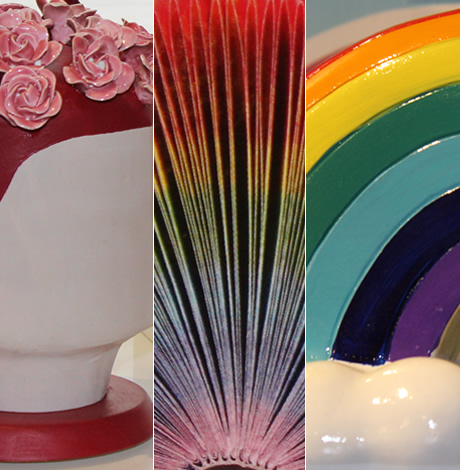
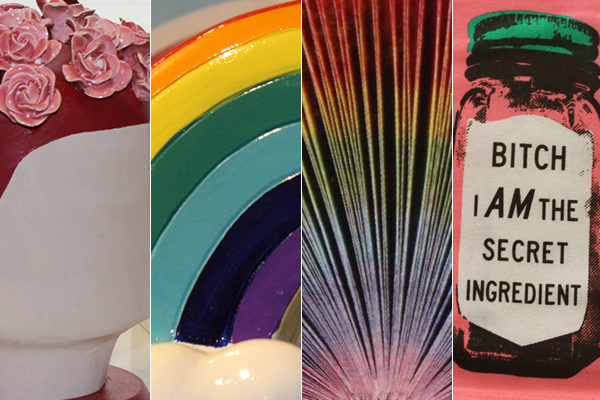
The Circle Gallery (18 State Circle, Annapolis, Md.) offers new showing from local artists that can certainly add personality to your decorating style this season. This set of “The Swim Club” sells for $150 per head/“swim cap.”
This piece, “Aperture to the Void,” is a creative way queer gift givers can challenge or embrace masculinity. It currently runs in The Circle Gallery for $120.
Whether they light up, or include a delicate engraving, these altered books by Nichole Leavy at Circle Gallery redefine how you’ll decorate your library this season. Prices range from $75-200.
Surf’s Up Candle (234 Main St, Annapolis, Md.) adds a beachy twist to an otherwise chilly season. All-natural soy-based candles, with phrases like “Don’t get your tinsel in a tangle” run typically at $10.
These witty hand towels at Surf’s Up go for $10 as well.
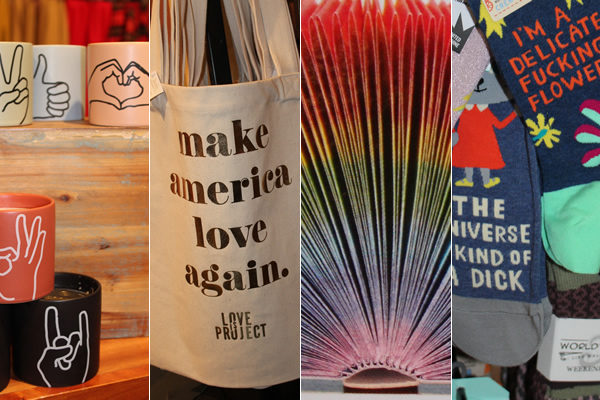
Lou Lou Boutique (locations in Washington, Fairfax, Alexandria and more in the region) offers modern décor and trendy trinkets that make handy grab bag gifts. The graphic mugs sell for $22 and the inspirational bracelet/card sets go for $24.
The boutique has also teamed up with “Love Is” project, which supports artisans in Indonesia, Vietnam, Guatemala, Ecuador, Bhutan and India. A bracelet for your loved one costs $30, as well as the tote.
Lou Lou also offers cute stocking stuffers like a foldable rainbow gratitude notebook ($9.95) and playful graphic ankle socks ($12).
Annapolis Pottery (40 State Cir, Annapolis, Md.) has something colorful for all tastes. These psychedelic vases currently range from $116-264 and the bubble clock opens up any room at $56.95.
Barefoot Dwelling (65 Maryland Ave, Annapolis, Md.), a vintage interior decorating store downtown offers candles such as: “Stay Weird: as if you had a choice” ($25) and “Bad-Ass Bitch Balm” ($4).
Stockings to Stuf, a kiosk in the Francis Scott Key Mall (5500 Buckeystown Pike) in Frederick, Md., has LGBT-themed ornaments such as grooms (sadly no lesbian couples!) and “Love is Love.” $11.99 each.
Also at the Francis Scott Key Mall and other malls in the region, Spencer’s has its own version of a “Love is Love” ornament ($9.99) and equality mug (also $9.99).
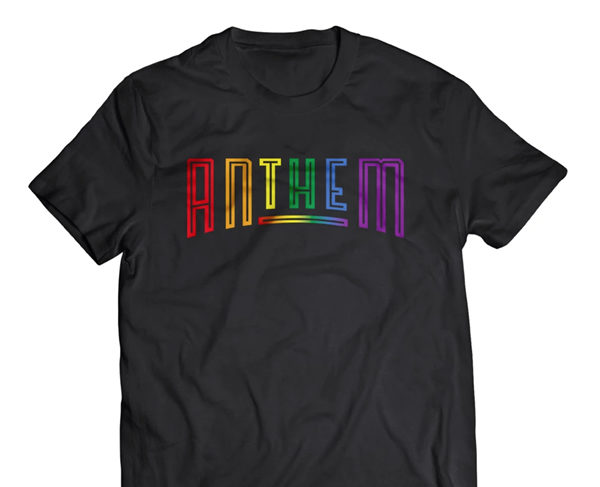
For the local music lover on your list, this Anthem Pride Tee, a black, unisex 100 percent cotton T-shirt, is $20 and celebrates one of D.C.’s hippest venues. Available at the Anthem (901 Wharf St., S.W.) or online at merch.930.com.


a&e features
Gay Men’s Chorus celebrates 45 years at annual gala
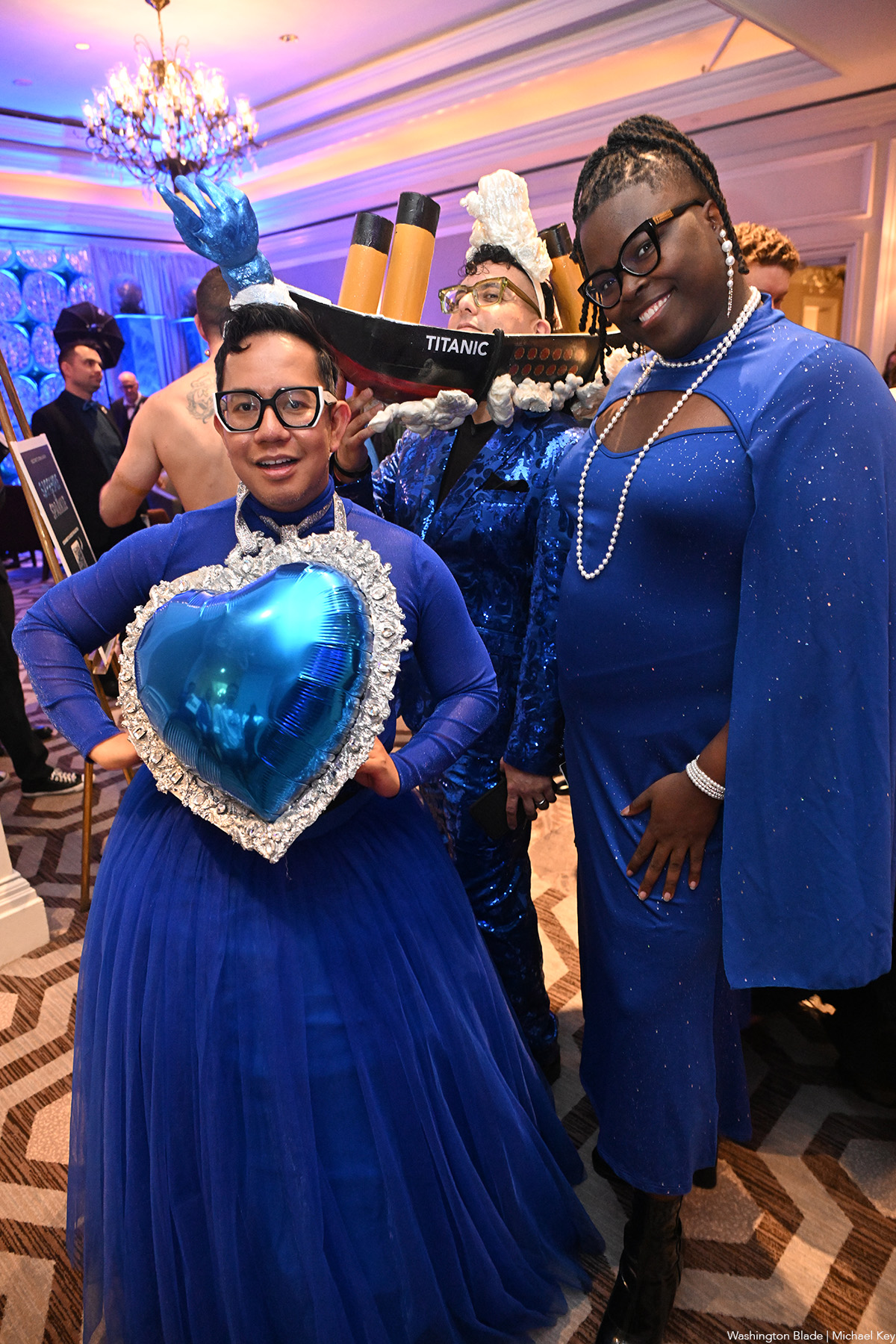
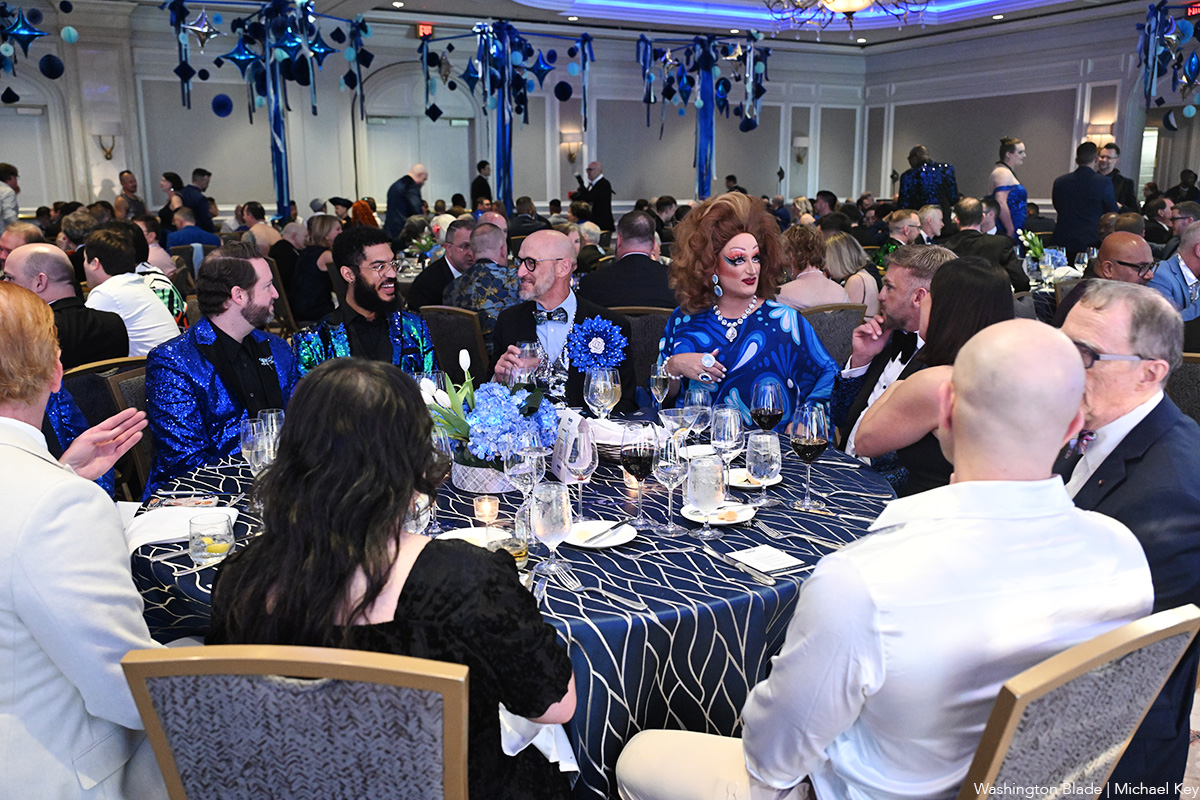
‘Sapphire & Sparkle’ Spring Affair held at the Ritz Carlton
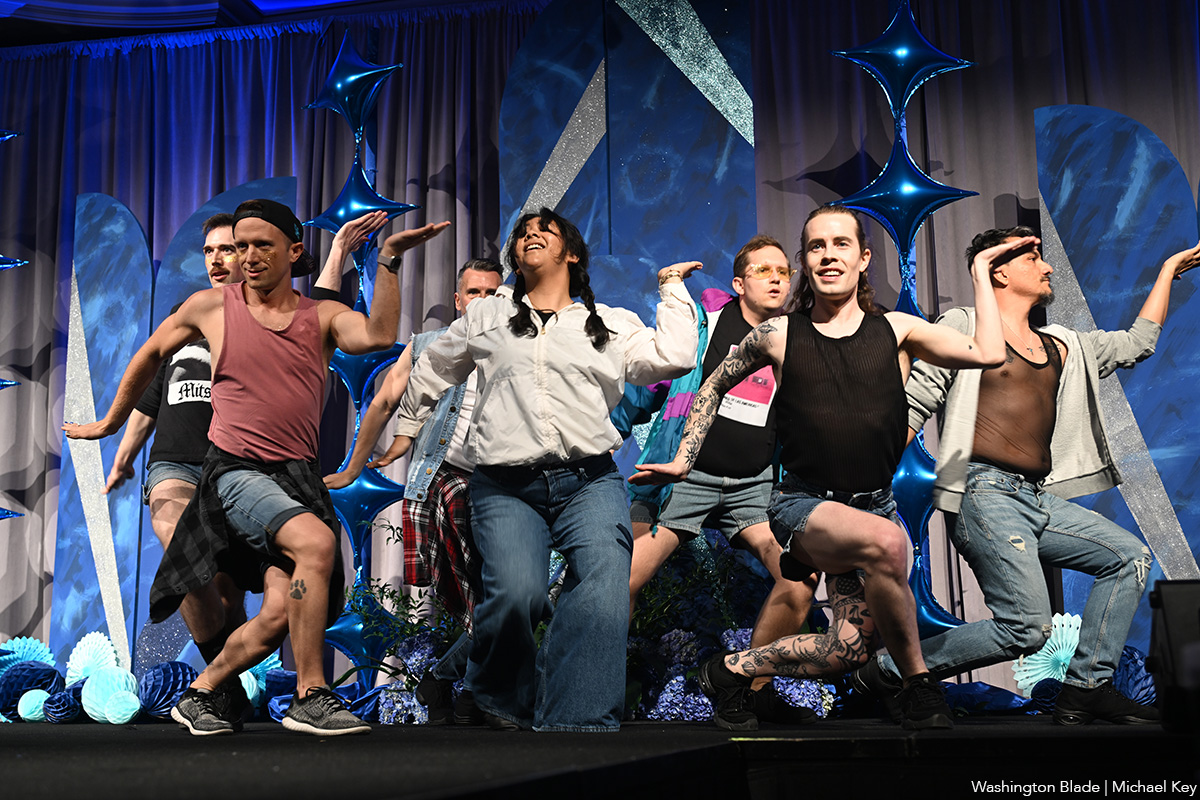
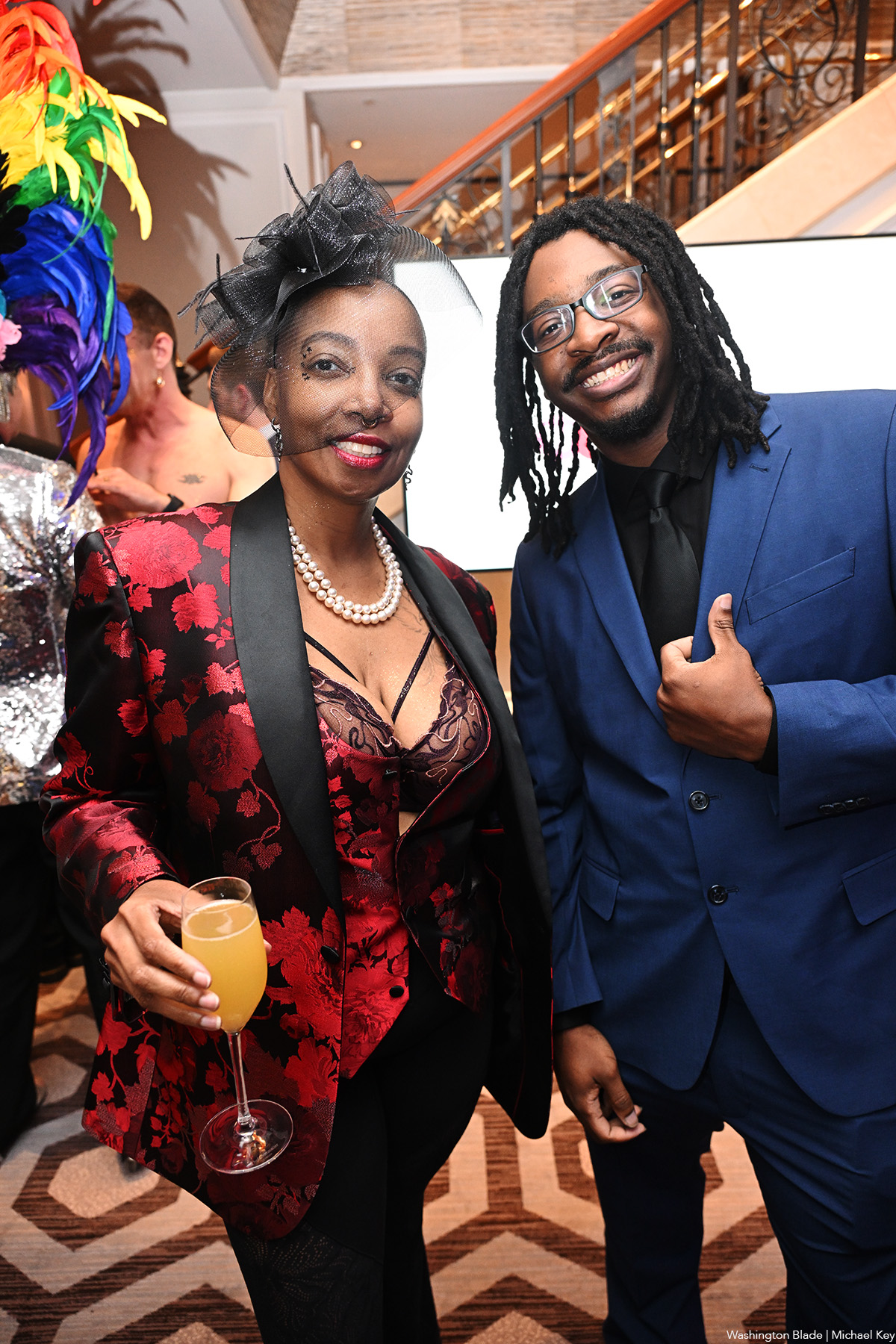
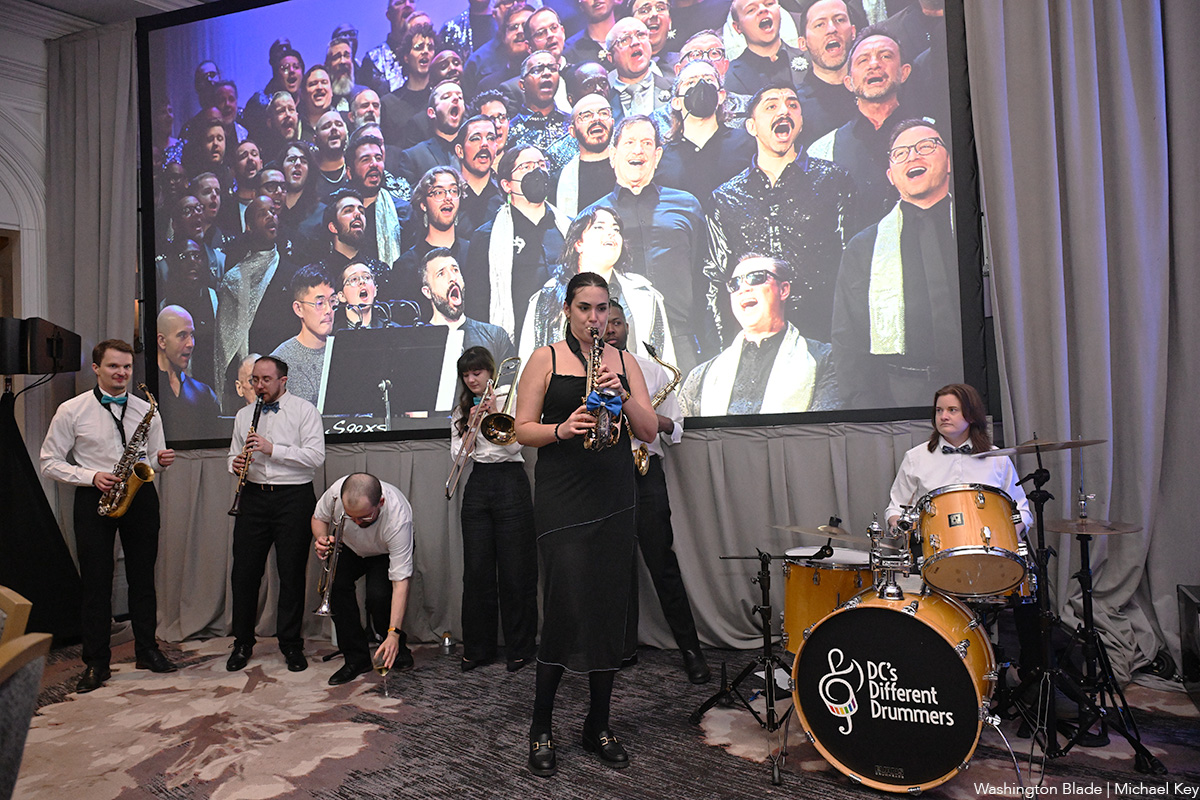
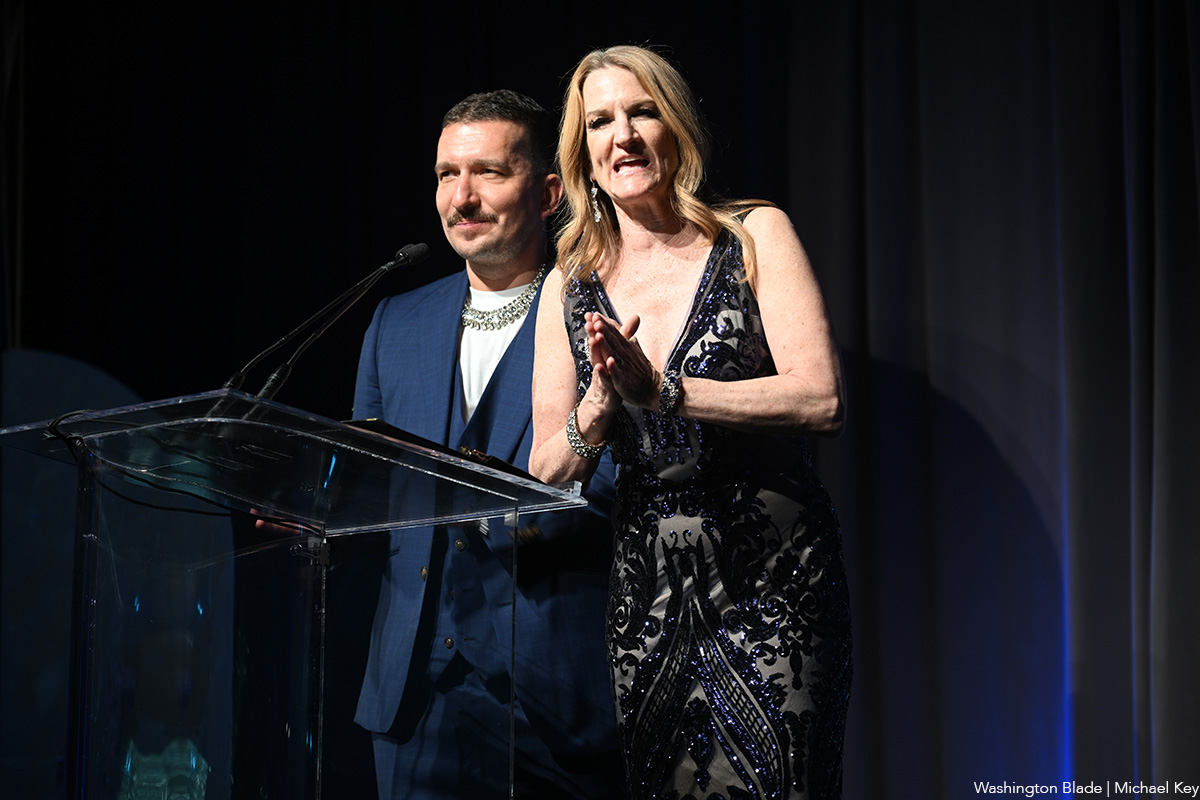
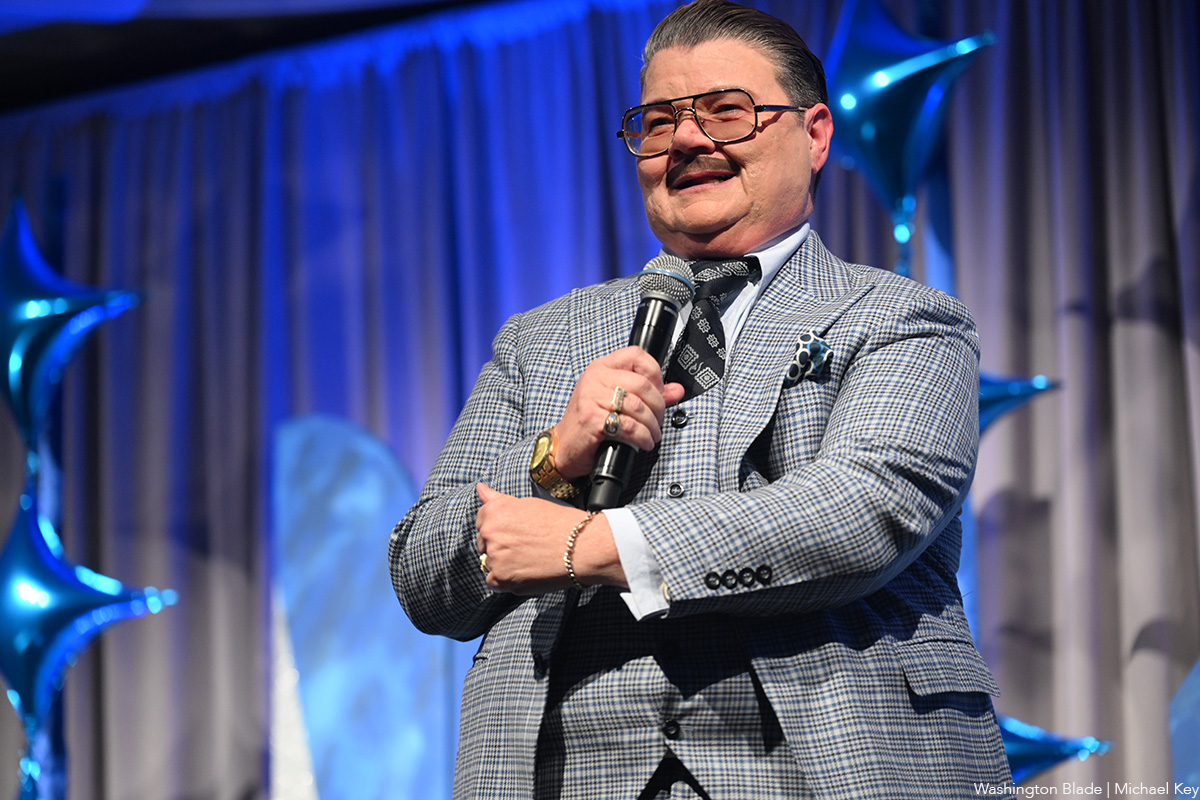
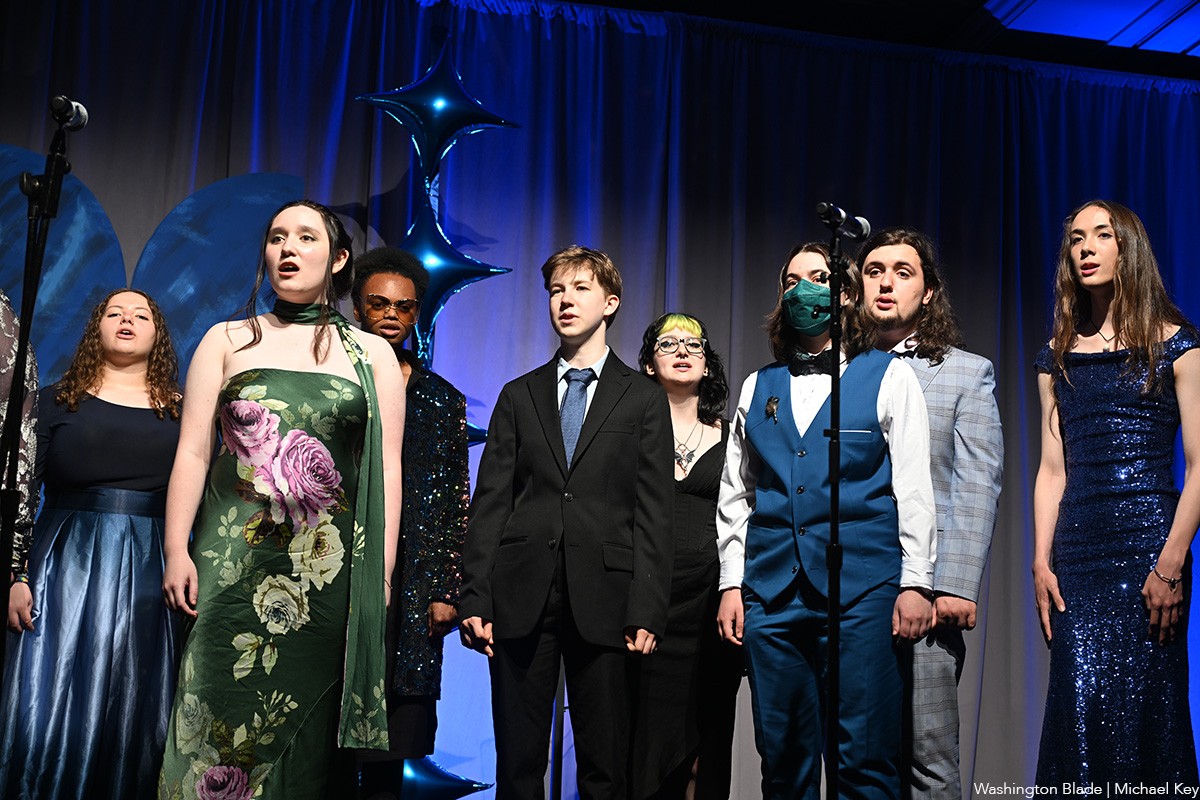
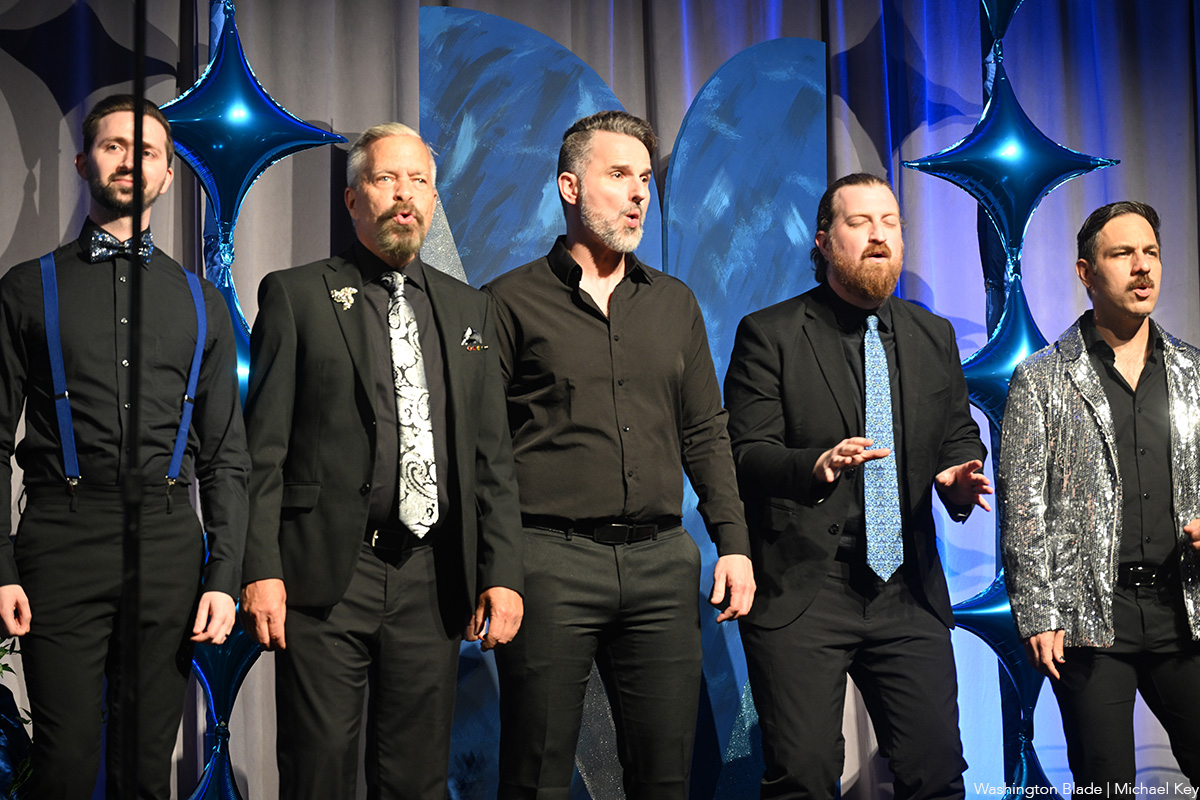
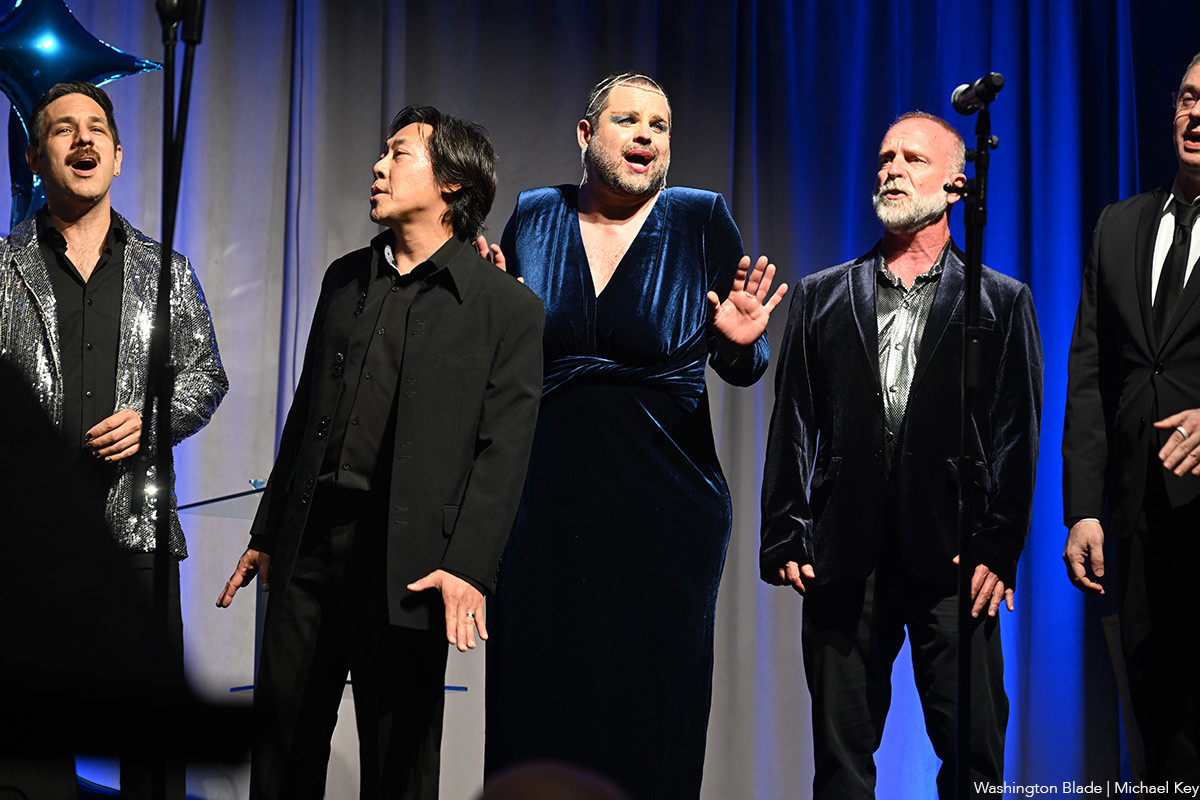
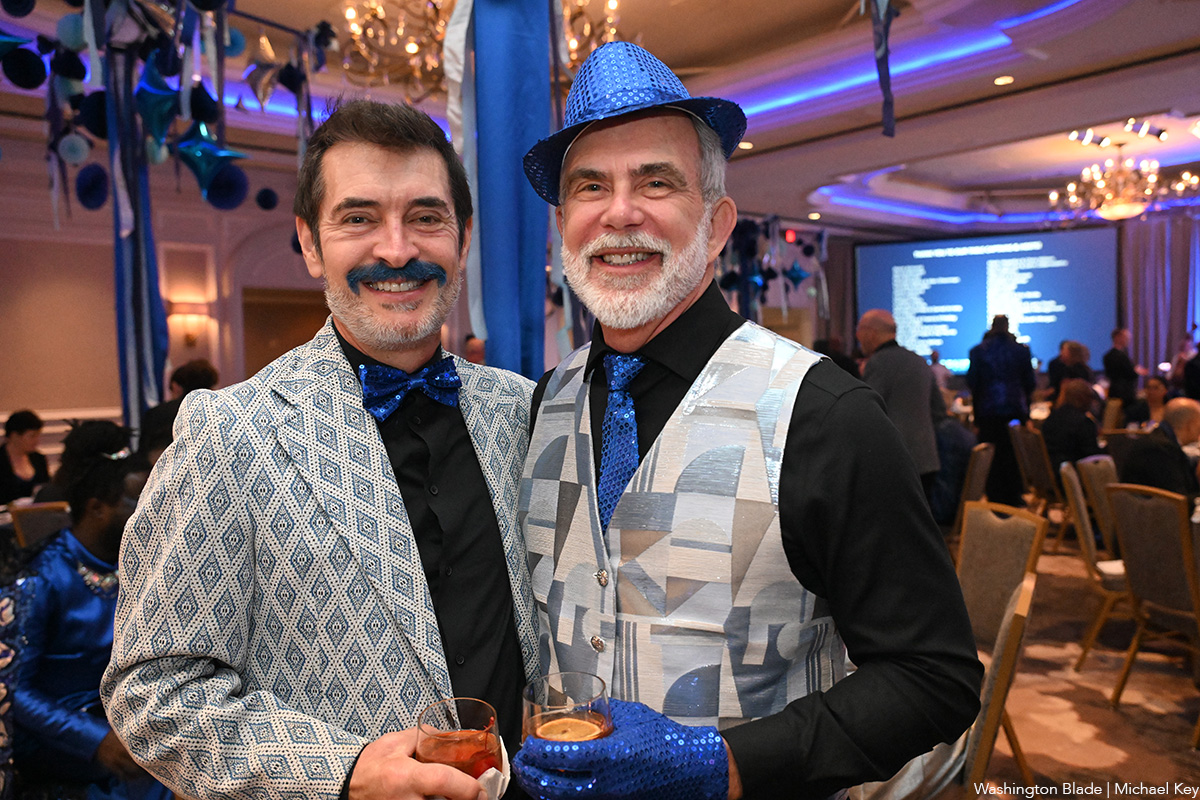
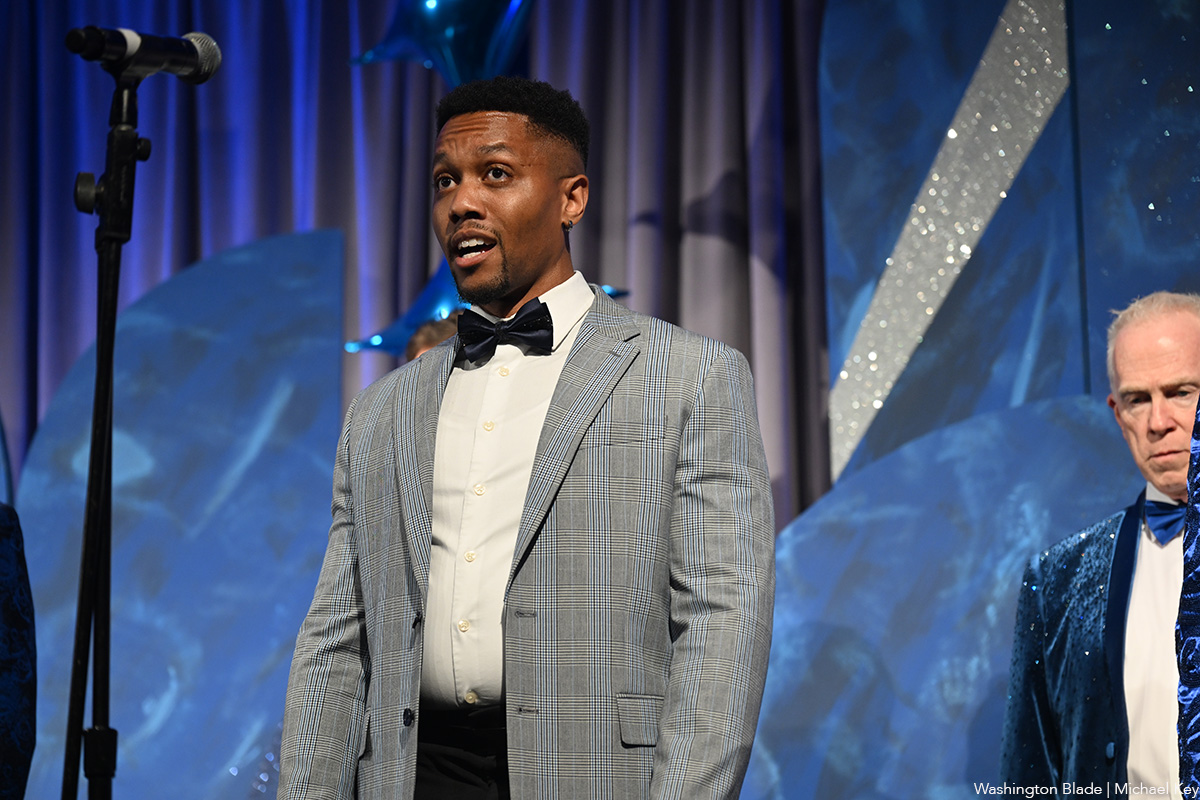
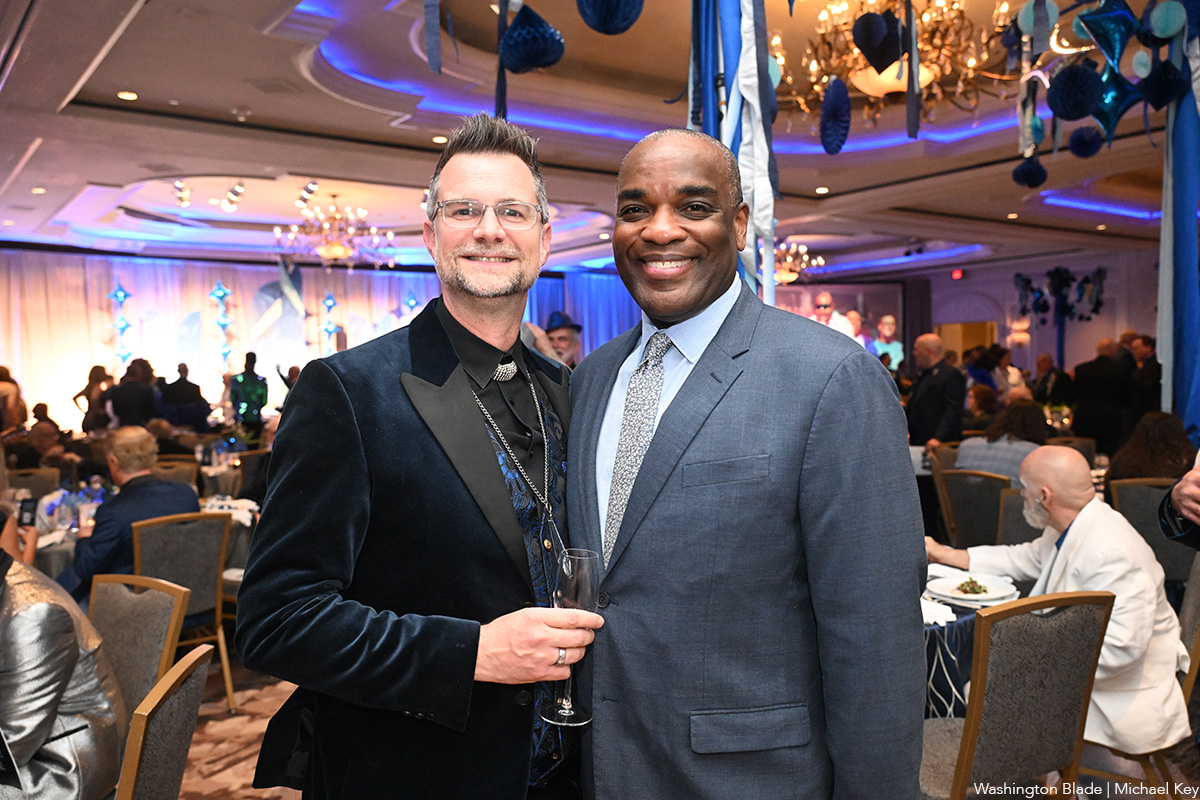
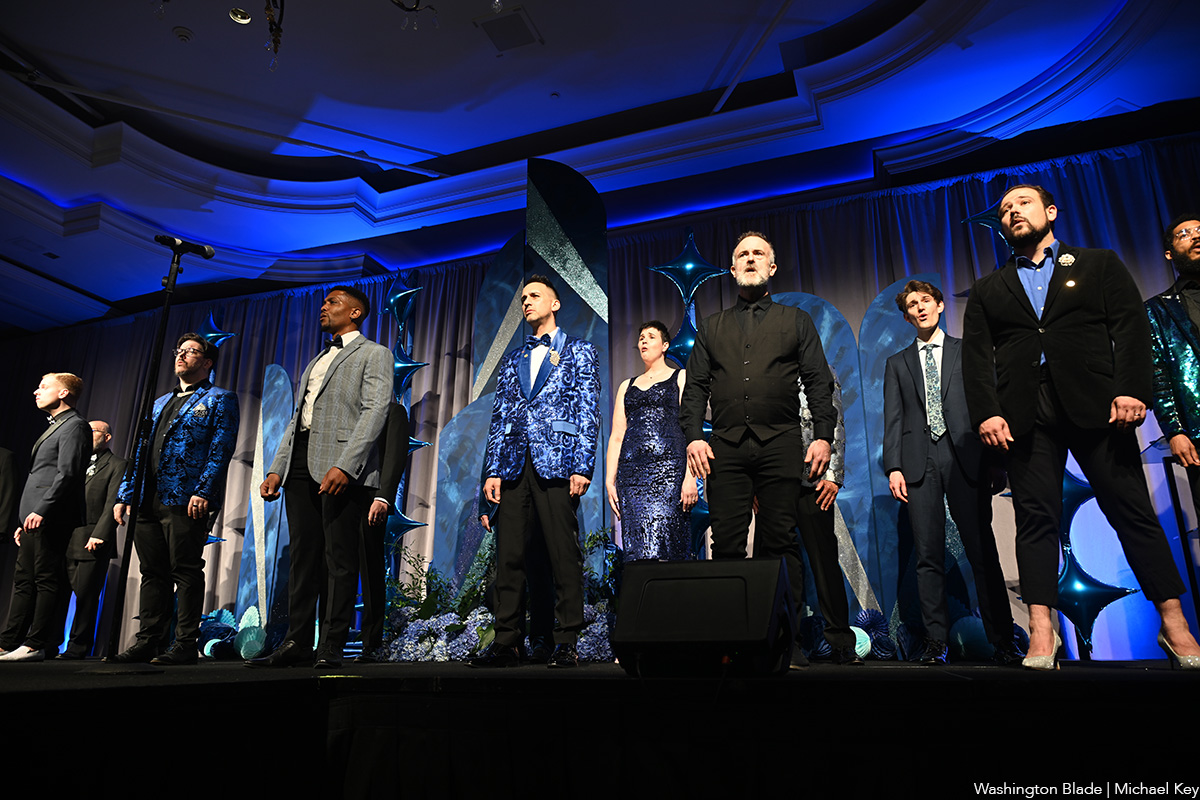
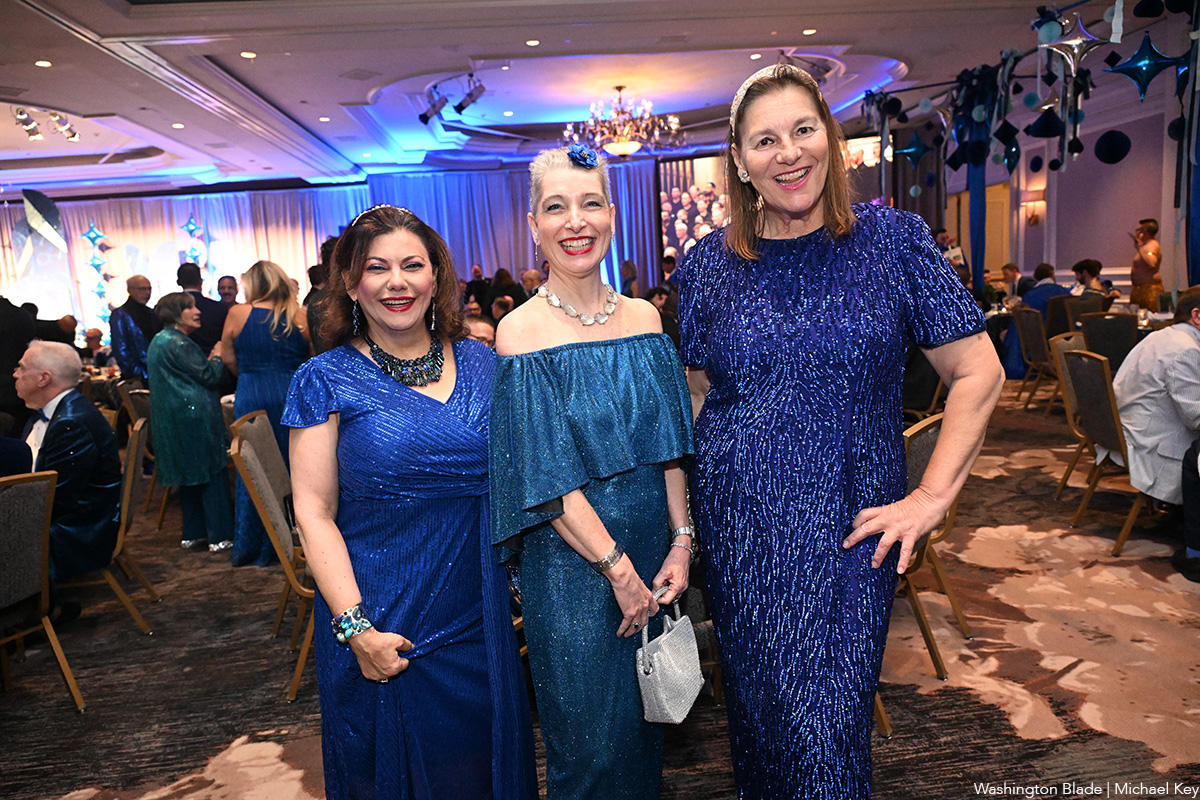
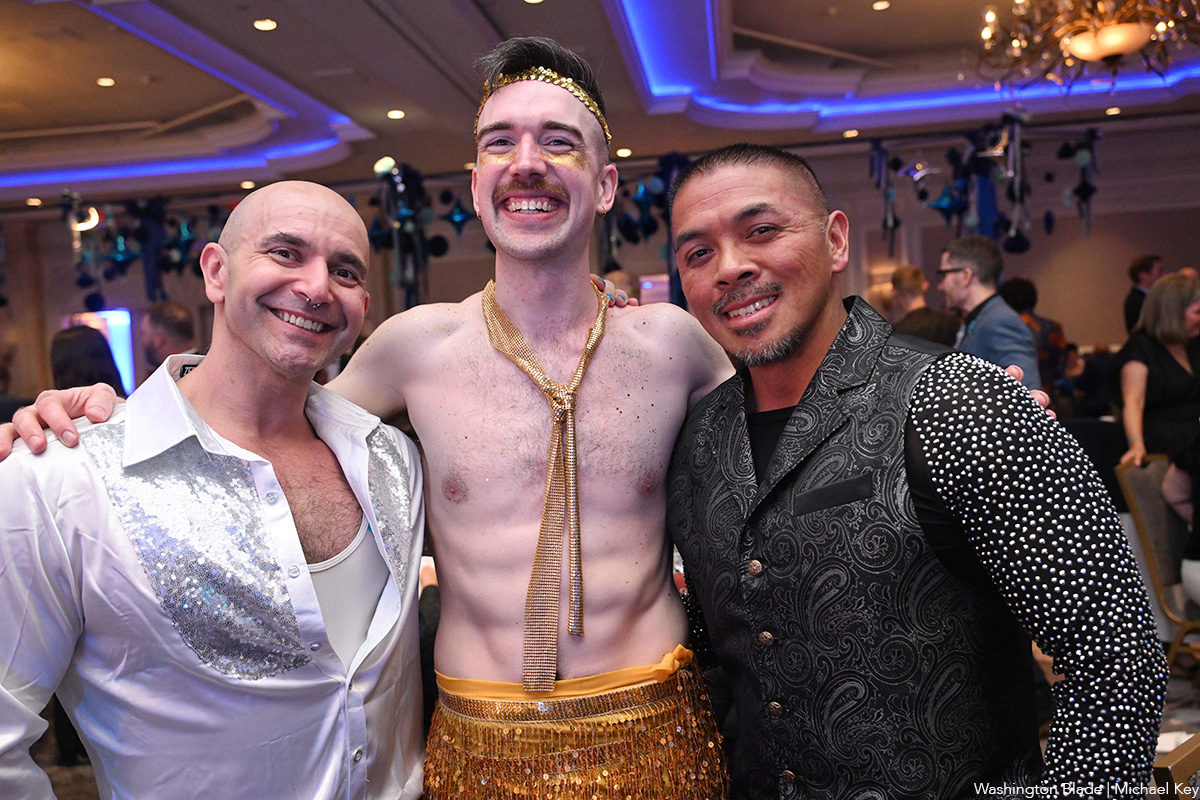
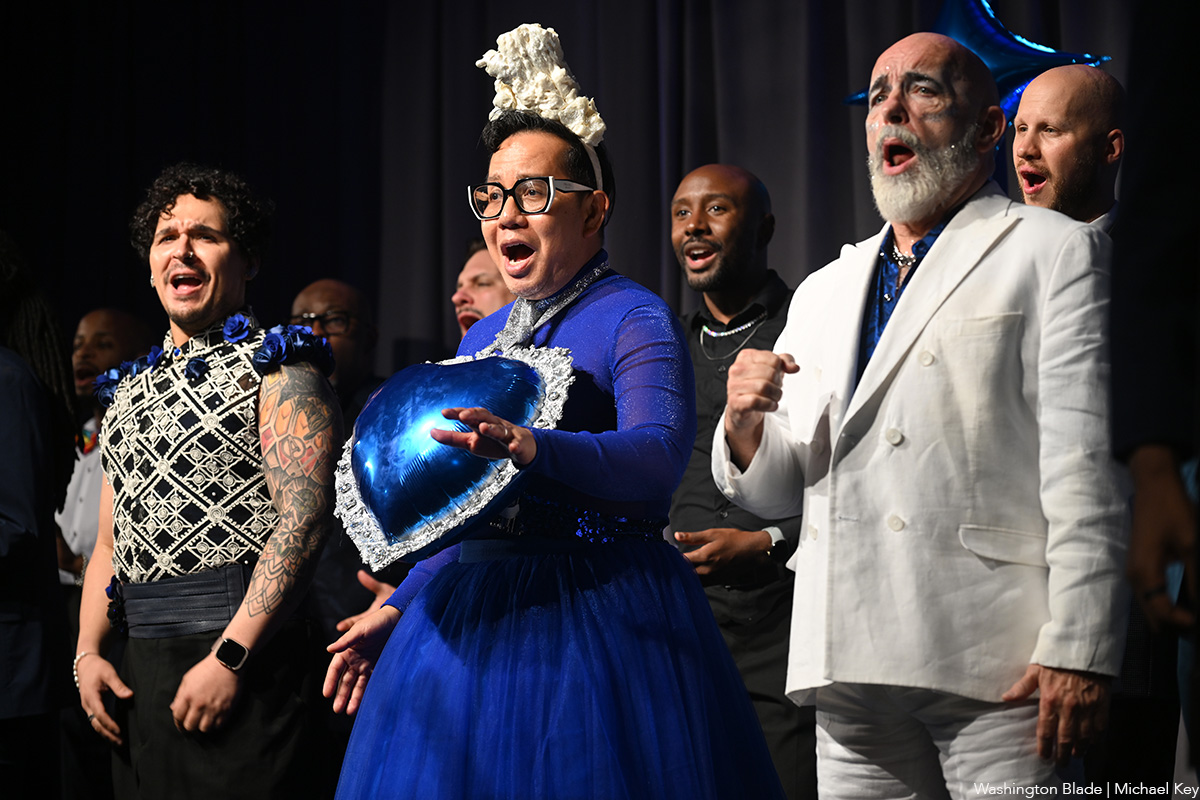
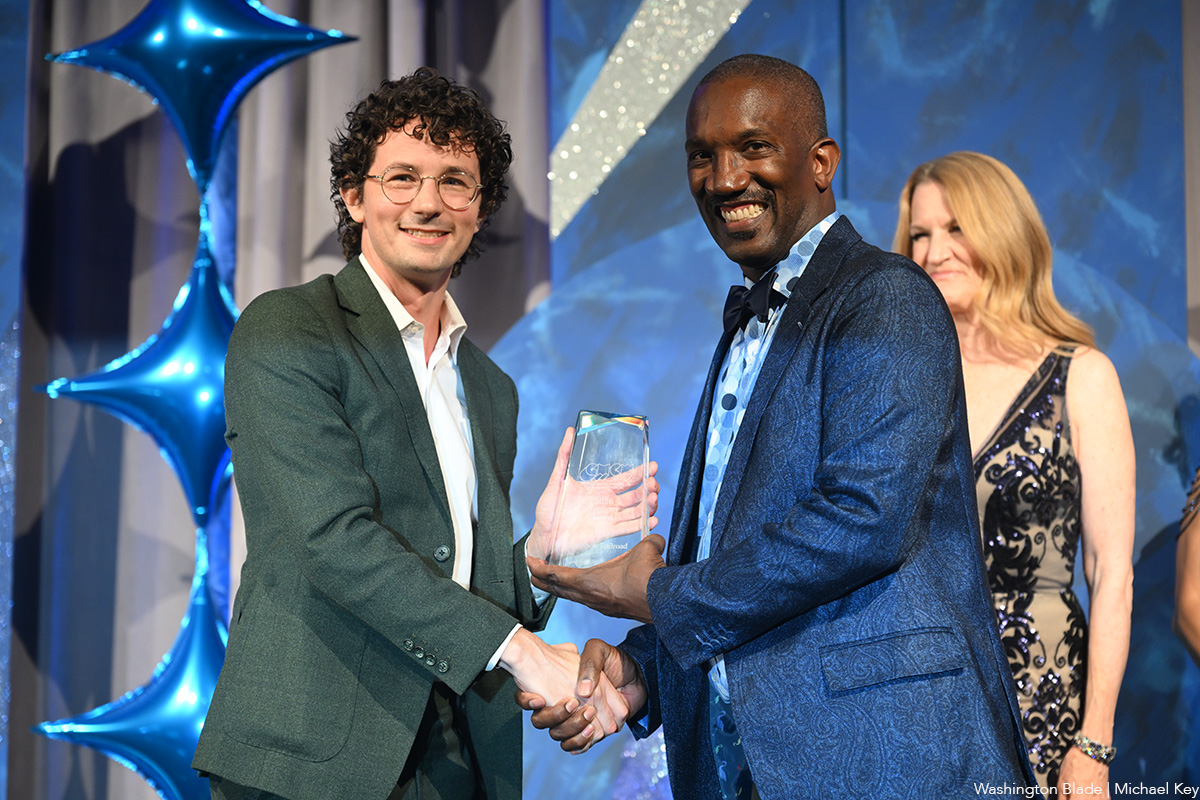
The Gay Men’s Chorus of Washington held the annual Spring Affair gala at the Ritz Carlton Washington, D.C. on Saturday. The theme for this year’s fete was “Sapphire & Sparkle.” The chorus celebrated 45 years in D.C. with musical performances, food, entertainment, and an awards ceremony.
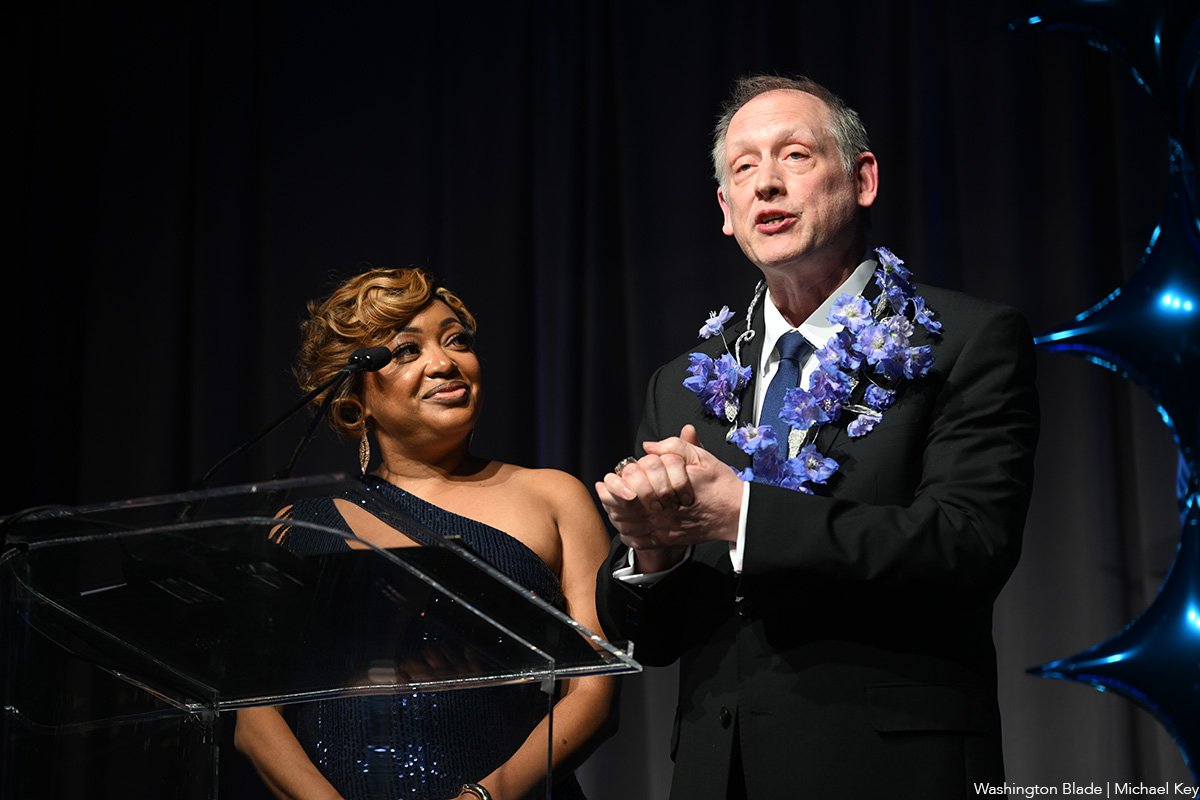
Gay Men’s Chorus of Washington Executive Director Justin Fyala and Artistic Director Thea Kano gave welcoming speeches. Opening remarks were delivered by Spring Affair co-chairs Tracy Barlow and Tomeika Bowden. Uproariously funny comedian Murray Hill performed a stand-up set and served as the emcee.
There were performances by Gay Men’s Chorus of Washington groups Potomac Fever, 17th Street Dance, the Rock Creek Singers, Seasons of Love, and the GenOUT Youth Chorus.
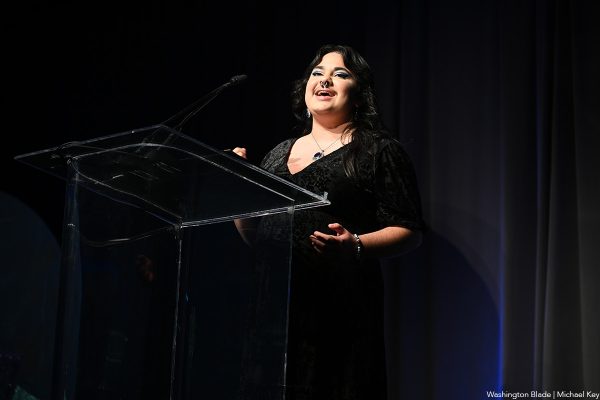
Anjali Murthy, a member of the chorus and a graduate of the GenOUT Youth Chorus, addressed the attendees of the gala.
“The LGBTQ+ community isn’t bound by blood ties: we are brought together by shared experience,” Murthy said. “Being Gen Z, I grew up with Ellen [DeGeneres] telling me through the TV screen that it gets better: that one day, it’ll all be okay. The sentiment isn’t wrong, but it’s passive. What I’ve learned from GMCW is that our future is something we practice together. It exists because people like you continue to show up for it, to believe in the possibilities of what we’re still becoming”
The event concluded with the presentation of the annual Harmony Awards. This year’s awardees included local drag artist and activist Tara Hoot, the human rights organization Rainbow Railroad as well as Rocky Mountain Arts Association Executive Director, Dr. Chipper Dean.
(Washington Blade photos and videos by Michael Key)











Equality Prince William Pride was held at the Harris Pavilion in Manassas, Va. on Saturday, May 16.
(Washington Blade photos by Landon Shackelford)


Photos
PHOTOS: Blade Summer Kickoff Party
Ashley Biden accepts award for Beau Biden at annual Rehoboth fundraiser

The 19th annual Blade Foundation Summer Kickoff Party was held on Friday, May 15 at Diego’s in Rehoboth Beach, Del. An award presentation was held for former Delaware Attorney General Beau Biden. Ashley Biden accepted the award on her brother’s behalf and gave remarks. Other speakers included Delaware state Rep. Claire Snyder-Hall, CAMP Rehoboth Executive Director Dr. Robin Brennan and Washington Blade Editor Kevin Naff. The event was a fundraiser for the Steve Elkins Memorial Fellowship in Journalism.
(Washington Blade photos by Daniel Truitt)


Iran war causes condom shortage in India

U.S. attorney nominee confirmed despite anti-LGBTQ history, no trial experience

Vt. lawmaker equates transgender identity with bestiality

Gay Men’s Chorus celebrates 45 years at annual gala

BREAKING NEWS: Barney Frank dies at 86

Disillusioned about democracy? Think of it as a community garden

Honey, have we been priced out of gay paradise?

IDAHOBiT a reminder we all must stand up against transphobia

PHOTOS: Blade Summer Kickoff Party