a&e features
New web series ‘These Thems’ explores the queer spectrum through comedy
Authentic casting was paramount to creator/writer of YouTube OML production
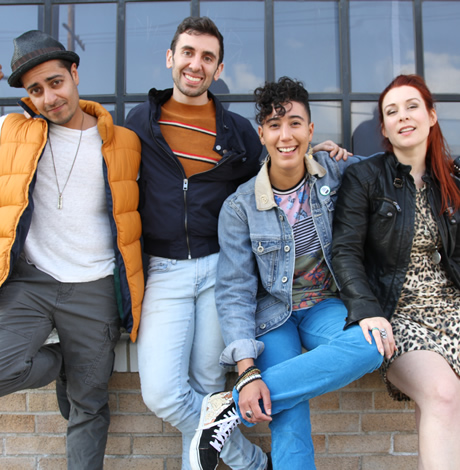
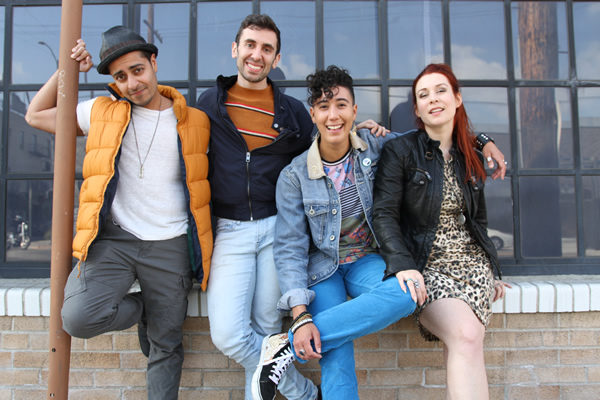
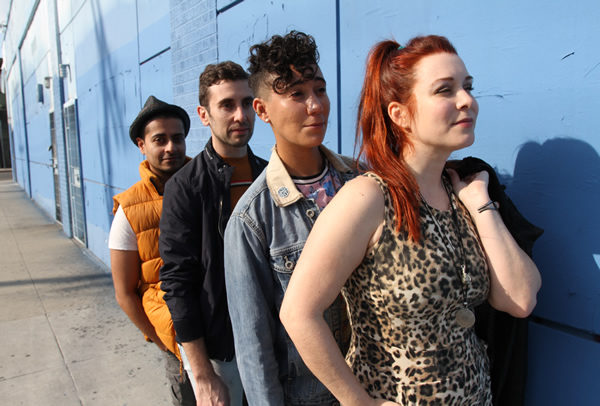
An episodic romantic comedy about a newly out lesbian journeying with nonbinary and transgender friends through New York City’s vibrant queer scene streams Feb. 27 on YouTube’s OML channel.
“These Thems” follows 30-year-old Gretchen and her nonbinary friend and LGBTQ educator Vero as they navigate the increasingly-complex-yet-still-inclusive world of colorful queer community.
Similar to “Pose,” this series features a multitude of transgender, nonbinary and queer characters portrayed by actors who are the same. It’s run by crew members who identify across the queer spectrum.
Series writer, creator and star Gretchen Wylder, who identifies as a queer cisgender femme, and director Jett Garrison, who identifies as transmasculine, recently spoke with the Washington Blade about this show, which both called a “comedy with heart.”
“These Thems” was listed in GLAAD’s “Top Trans Creatives and Stories to Watch in 2019” and has received awards at film festivals in Chicago, Austin, North Carolina and Kansas. It was also screened at Toronto’s Inside Out festival, Atlanta’s Out on Film and Los Angeles’ Outfest.
The series is set to stream Thursdays on OML through mid-April.
WASHINGTON BLADE: Gretchen, can you tell us a little about the show? How would you describe it?
GRETCHEN WYLDER: The show is a queer comedy series that follows four main characters in New York City. We follow a newly out lesbian who is trying to make up for lost time, and a nonbinary/wannabe queer educator who takes Gretchen under their wings. Their best friend is a trans man who is deciding whether or not to out himself at work, and he quickly falls for Gretchen’s best friend who is a cis gay man who is lovelorn and doesn’t really have any experience within the queer world. The audience follows Gretchen’s perspective through her lens of exploring the queer world for the first time.
BLADE: You also named the lead character Gretchen. Was there any special reason?
WYLDER: There’s a lot of actor/writers whom I look up to who have named lead characters after themselves. Lucille Ball, Issa Rae. … And a lot of it is based off my own personal experience. Some of it is based on my own coming out experience, even though I came out 13 years ago. The first episode is inspired by a similar situation.
BLADE: Would you say you’re similar to your character?
WYLDER: Oh, Lord! We’re very similar, ha! I’m a Pisces and I’ve had my run of heartbreak, so we kind of see Gretchen going through the wringer a little bit. But near the end we see Gretchen reclaiming herself, her individuality and her sexuality.
BLADE: What inspired you to create a newly out lesbian navigating the queer world?
WYLDER: I like to think our show draws from and was inspired by “The L Word,” and it was so important to queer representation. But something that we deliver that “The L Word” doesn’t have is a more broad scope of what the queer community looks like. I feel like as enjoyable as it is, it for the most part it seems to focus its lens on cisgendered and conventionally attractive characters facing relationship troubles, and this show focuses more on the broadness of the New York queer community. One thing I never related to with “The L Word” was the predominantly white, feminine, lesbian circles. One thing that I wanted to reflect was queer intersectionality and to show that sometimes it is really difficult to navigate. We all don’t have the answers and we’re all learning and we’re all growing and the characters are just trying their best and experiencing life together — even if it looks different depending on the character.
BLADE: Was it a challenge writing for nonbinary cast members?
WYLDER: Many of my friendships and relationships are with people who identify as nonbinary or trans and I was very active in the queer community in New York City.When I was writing the show, I had four table readings in New York City. I come from a theater background and it comes immediately across from the audience when something is working or isn’t working. I tell you what, there have been so many rewrites of the script because so much of the language was clunky at first. I would get feedback and something wouldn’t work. It was a lot of trial and error.
BLADE: Jett, what drew you to this project?
JETT GARRISON: I read the script and fell in love with the characters, fell in love with the story — the humor. One of the things that drew me to the project was how beautifully Gretchen wrote all of these characters. Gretchen, the character, is having her coming out of sorts, but this is not a coming out story, per se. It is a coming out for folks who are already in the queer community. We have been over the past maybe five years learning a whole new vocabulary that didn’t exist for some of us in our 30s, 40s or 50s. We didn’t have words like nonbinary or trans, so Gretchen gets a new vocabulary and is excited and overwhelmed and she’s trying her best to figure it out. And I feel like everyone, whether they are a straight cis ally or part of the queer community, has had some kind of moment where they are trying to navigate and honoring somebody’s sexuality, identity or humaness in a way that is foreign to them.
BLADE: How did you become involved?
GARRISON: I’ve been a filmmaker for almost 20 years, and primarily as a queer, feminist, female-forward type of storyteller. Gretchen was reaching out to transmasculine, trans male directors because of a central storyline that she knew she wanted to have an extra set of eyes and an extra heart to pay attention to. And I really connected to our transmasculine character, Asher. I knew that I wanted to develop those stories because we haven’t been seen in these storylines or characters.
BLADE: Did being a transmasculine director help with developing the authenticity in those scenes?
GARRISON: When you are a director working with your actors, whether it is in theater or film, you have to build this trust. … We (two of the transmasculine actors) were able to work in my apartment and have a discussion about what each of their identities mean to them and where they come from. Shaan (Dasani) happened to be a good friend of mine and we talk a lot about different experiences and where safety comes into play about being out — whether it’s at work or in public — so we’re constantly in dialogue. So, when you’re on set, you just develop the shorthand. And when you’re asking for subtle changes in a delivery, or maybe a shading of a line, it also incorporates the writer and Gretchen knew she could trust me and our actors to collaborate and make sure it all worked together.
BLADE: As a transmasculine director, what challenges did you face in the industry prior to this project?
GARRISON: I directed quite a bit. I got my MFA at the University of Texas and one of my shorts was nominated for a student Academy Award. But I haven’t done much directing since I transitioned, which was just a few years ago. It’s been a challenge for me because I identified as a butch lesbian and was a member of many female directing initiatives. But once I transitioned, I kind of transitioned myself out of those communities. I transitioned at a time when our trans sisters were doing a good job of elevating their visibility in the media. For us trans masculine folks, that wasn’t the case for a multitude of reasons. Now, a lot of it is coming out and meeting each other and helping try to elevate one another. “These Thems” came along at a perfect time. Episodic directing has been a goal of mine for a while.
BLADE: Does the show include cisgender heterosexual cast and characters? Are there any funny moments that stand out?
GARRISON: We wanted this to be participatory to see how cis-het connect with us and are a part of this world that we all live in. Our gender reveal party episode is hilarious and we didn’t want our cis-het people to come off as dumb or unknowing but learning about this new world along with Gretchen and the rest of us.
BLADE: Gretchen, how did cisgender heterosexual audience members feel about the show? Did they get what you were trying to say?
WYLDER: Cis-het friends who watch the show enjoy it and so did older lesbians and cis-gay men who are not within the trans spectrum and don’t understand it. So, this is a way to watch and learn in a fun comedic way. The character of Gretchen represents anyone, regardless of how they identify, who is new to this new world and faces its challenges in a funny, relatable way. Humor is something that everyone can relate to.



a&e features
New book celebrates 1970s dance music icons
‘A Night at the Disco’ features interviews with Donna Summer, Debbie Harry, more
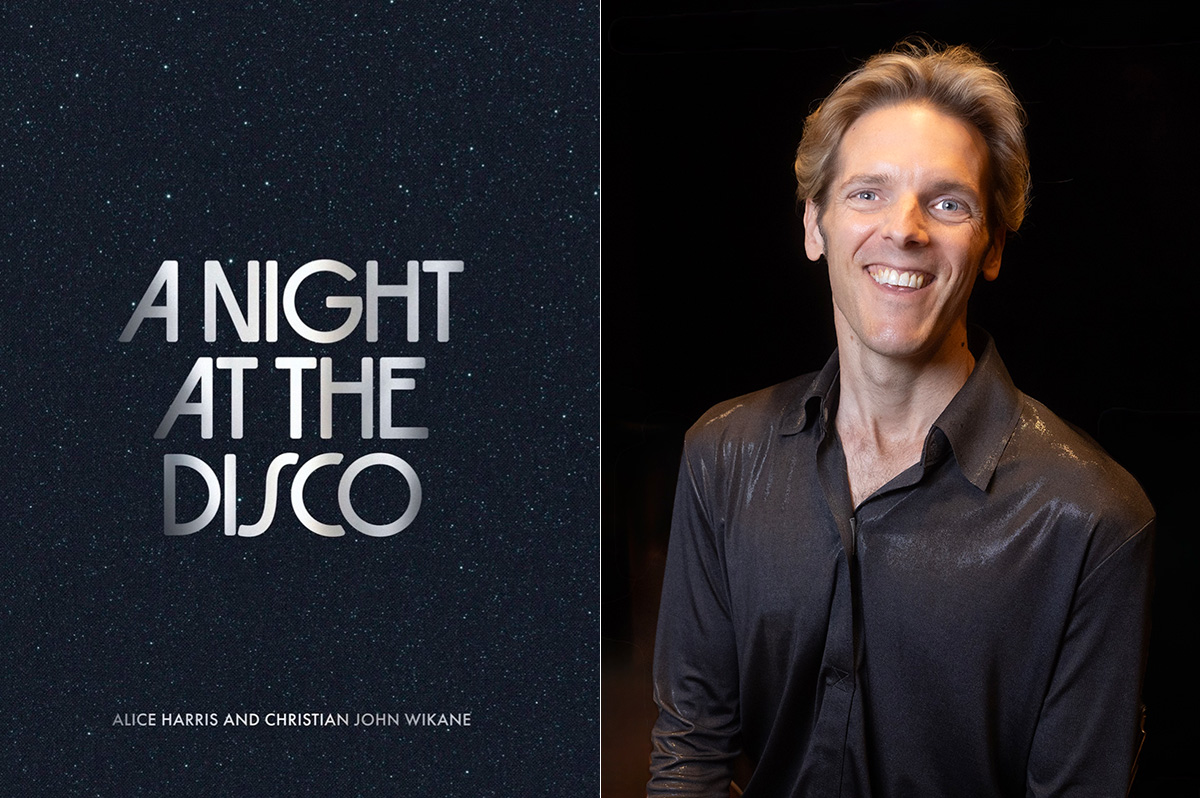
If you’re a fan of 1970s-era dance music, don’t miss the irresistible new book by Christian John Wikane and Alice Harris, “A Night at the Disco,” which revisits more than 90 interviews conducted with some of the biggest names in pop culture.
“A Night at the Disco” (ACC Art Books) was published on March 24, and distributed by Simon & Schuster. It celebrates more than 100 artists who sparked a phenomenon in dance music from 1970-1979 and features excerpts from interviews with everyone from Donna Summer to Debbie Harry.

Lost City Books (2467 18th St., N.W.) will welcome author Christian John Wikane for a book signing and conversation about “A Night at the Disco” on Thursday, April 16 at 6 p.m. Details at lostcitybookstore.com. Bird in Hand Coffee & Books in Baltimore (11 E. 33rd St.) )will also host a Q&A with the author on Wednesday, April 15 at 6 p.m. Details at theivybookshop.com.
Below is an excerpt from “A Night at the Disco.”
“I’ll let in anyone who looks like they’ll make things fun.” Steve Rubell is guiding a New York Times reporter through Studio 54 as resident DJ Richie Kaczor dazzles the crowd with records by CHIC, Odyssey, and T-Connection. “Disco, that’s where the happy people go,” The Trammps sing as dancers spin and twirl underneath tubes of flashing lights. Seven months since Rubell and co-owner Ian Schrager opened Studio 54 in April 1977, it’s welcomed untold numbers of “happy people” … at least those lucky enough to pass through the doors.
“We were part of the chosen few,” says André De Shields, who immortalized the title role in The Wiz on Broadway at the time. “We could show up at Studio 54 and the doorman at the velvet stanchion would look over everyone and point to us from The Wiz to come in, that kind of thing.” As the lead vocalist in the GRAMMY-nominated Dr. Buzzard’s Original Savannah Band, whose debut modernized big band sophistication for the discothèques, Cory Daye had carte blanche in the club. “The energy was like a New Year’s Eve party every night,” she says. “I would go up to the mezzanine and watch the mechanical light pillars go up and down, metallic confetti falling from the ceiling, the spoon and the moon. I was so fascinated and enamored by it.
“When a certain song came on, the people would just rush to the dance floor. There was no contact dancing — the hustle was pretty much on its way out — but it was just an amazing experience to see all the cultures together. It was a fusion of cultures, which described my life and my band, so I was right at home there.”
“Studio 54 was the place,” adds Linda Clifford. “Crazy parties. If you could think it, you would see it. It was like a circus. Just an amazing place to be. I worked 54 so many times. It was like a second home to me. The people there treated me so well. The crowd always seemed to enjoy my show. I always had a good time with them. That was the most important thing: making sure that they had fun.”
Well before Studio 54 opened, disco had become a business juggernaut. “A four billion dollar market and still growing,” Billboard announced in February 1977, with dance music offering more variety than ever. “There is no longer a single, readily identifiable disco beat, but a kaleidoscope of sounds that are melodic and danceable,” Tom Moulton told the magazine. In the clubs, records by veteran artists like Stevie Wonder and the Bee Gees were mixed in with a range of new acts like Grace Jones, Boney M., and The Ritchie Family, while everyone from ABBA to Marvin Gaye scored number one pop hits with songs that had club-centric storylines.
Beyond the charts, disco itself remained as idiosyncratic as ever, especially on several productions by Laurin Rinder and W. Michael Lewis, whose studio creations, El Coco (“Let’s Get It Together,” “Cocomotion”) and Le Pamplemousse (“Le Spank”), joined their own “Lust” from Seven Deadly Sins (1977) among the most tantalizing releases on AVI Records. Rinder & Lewis also produced acts for the newly hatched Butterfly Records in Los Angeles, where Saint Tropez (“On a Rien à Perdre”) and Tuxedo Junction (“Moonlight Serenade”) reflected the duo’s high gloss sound, spanning everything from European sophistication to a more literal translation of the ’40s sensibilities popularized by Dr. Buzzard’s Original Savannah Band.
12-inch singles had also grown as the preferred format to approximate the club music experience at home. Nearly a year after Atlantic Records introduced its series of promotional 12-inch singles for DJs, New York-based Salsoul Records released the industry’s first commercially available 12-inch single, “Ten Percent” by Double Exposure, in May 1976. A year later, T.K. Records was the first label to certify a gold record for a 12-inch single when Peter Brown’s “Do You Wanna Get Funky With Me” tallied one million sales.— Christian John Wikane
(From “A Night at the Disco” by Alice Harris & Christian John Wikane. Published by ACC Art Books.)
The Blade may receive commissions from qualifying purchases made via this post.
a&e features
Award-winning D.C. chef reaching new culinary heights
Anthony Jones of Marcus DC competing on ‘Top Chef’
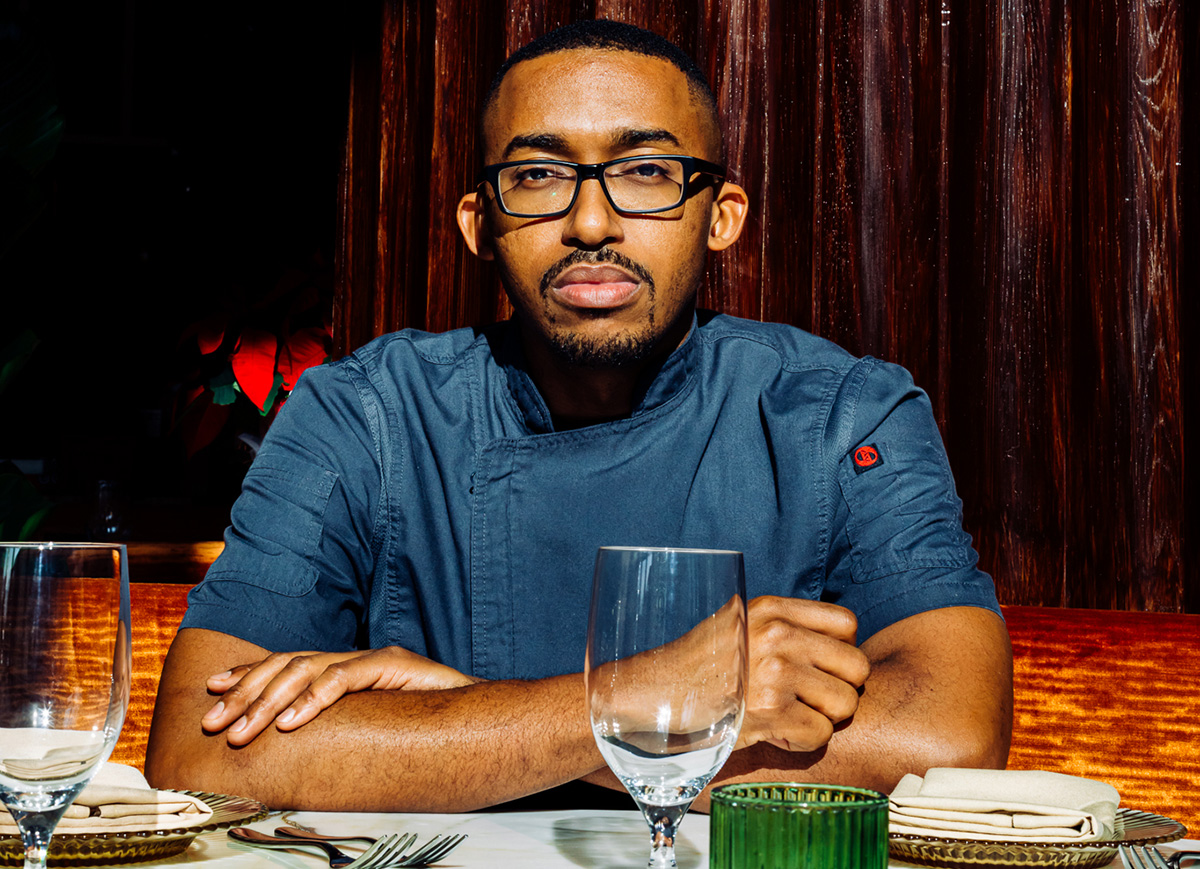
In Anthony Jones’s kitchen, all sorts of flags fly, including his own. Executive chef at award-winning restaurant Marcus DC, Jones has reached culinary heights (James Beard Award semifinalist for Emerging Chef, anyone?), yet he’s just getting started.
Briefly stepping away from his award-winning station, Jones took a moment under a different set of lights. Recently, he temporarily gave up his post at the restaurant for a starring small-screen slot on the latest season of “Top Chef,” which debuted in March. (The show airs weekly on Bravo and Peacock).
Before his strategic slice-and-dice competition, however, Jones, who identifies as gay, draws from his deep DMV roots. In the years before “Top Chef” and the top chef spot at Marcus, he was born and raised in Sunderland, Md., in southern Maryland, near the Chesapeake.
Early memories were steeped in afternoons on boats with his dad bonding over fishing, and wandering the garden of his great-grandparents spread with fresh vegetables and a few hogs. “It was Southern, old-school ethics and upbringing,” he said. “Family and food went hand in hand.” Weekends meant grabbing bushels of crabs, dad and grandma would cook and crack them. Family members would host fish fries for extra cash. In this seafood-heavy youth, Jones managed time to sneak in episodes of the “OG” Japanese “Iron Chef” show, which helped inspire him to pursue a career in the kitchen.
Jones moved to D.C. after graduating from college, ending up at lauded Restaurant Eve, and met famed chef Marcus Samuelson, who brought him to Miami to be part of the opening team for Red Rooster Overtown. After three years, Jones moved back to D.C., where he ran Dirty Habit, reinventing and reimagining the menu, integrating West African flavors and ingredients.
Samuelson, however, wouldn’t let a talent like Jones stay away for too long. Pulling Jones back into his orbit, Samuelson elevated Jones to help him open his namesake restaurant Marcus DC, which has been named a top-five restaurant by the Washington Post. Since then, Jones has been nominated as a semifinalist for the RAMMYs Rising Culinary Star in 2026 and won the Eater DC’s Rising Chef award in 2025.
Samuelson’s Marcus is a tour de force interpreting the Black Diaspora on the plate, from the American South to West Africa, along with his signature “Swedopian” touches. Yet it’s Jones who has deeply informed the plate, elevating his own story to date. Marcus DC is primarily a seafood restaurant, which serves Jones well.
“Where I’m from is seafood heavy, and as I’ve progressed in my career, I’ve moved away from meat.” Veggies and fish are hero dishes. His own dish, Mel’s Crab Rice, was not only lauded by the Washington Post, but is framed by his youth carrying home the crustaceans from Mel’s crab truck. It’s a bowl of Carolina rice, layered with pickled okra, uni béarnaise, and crab. Jones also points to a dish on the opening menu, rockfish and brassica, paying respect to a landmark D.C. institution, Ben’s Chili Bowl. Jones reverse engineered a favorite bowl of chili that’s seafood instead of meat forward, leveraging octopus and rockfish along with different riffs of cauliflower: showing his intellectual, creative, and cultural sides.
While “Top Chef” is showing Jones’s spotlight side, he also lets his identity show at work. “In the kitchen, I make sure we’re inclusive. We don’t tolerate discrimination. Everyone that’s here should feel confident to express themselves. There are so many different flags in the kitchen.”
Jones says that he didn’t fully express his gay identity until fairly recently. He felt reluctant coming out to certain family members, “you’re scared to tell them about being different,” he says, and while that anxiety ate at him, “I’m lucky and fortunate to have unconditional love and that weight off my shoulders.”
Today, “I’m me all the time, Monday to Sunday. I’m honest with people, and my staff is honest with me.”
“Being a chef is hard,” he says, “and being a chef of color is even more difficult.”
Yet his LGBTQ identity is a juggling act, he says. “I need to keep that balance, because once someone finds out something about you, their opinion can change, whether you want it or not.”
Being on a whole season of TV cooking competition, however, might mean millions more might have an opinion of him (Jones has appeared on TV already, on an episode of “Chopped”). To prepare, he says, “I’ve just kept a level head. It’s just an honor to be on top chef with amazing people happy to be there.”
Plus, this season is set in the Carolinas, and Jones attended Johnson & Wales University in Charlotte, N.C. “It’s a full story of my life, now a monumental moment for me.”
Jones also recently was nominated for a James Beard Foundation Award. “JBF has been a north star, a dream for so long. I always had this goal on my wall.”
Being at the top spot at Marcus DC, making waves through his accolades, and cooking on Bravo means that Jones is highly visible. “I think that if someone has a similar background to me, and can see our story, trajectory, and success, they can have more ability to be themselves. This is my goal.”
Back at Marcus, Jones has plenty up his chef’s white’s sleeves. A new spring menu is in the works. He’ll be launching a new tasting menu “dining experience,” he says, and has plans to work on more events and collaborations with chefs and friends to bring in new talent and share the culinary wealth.
a&e features
Introducing the Torchbearers Awards honoring queer, trans women and nonbinary people
Meet the Legends and Illuminators lighting new paths
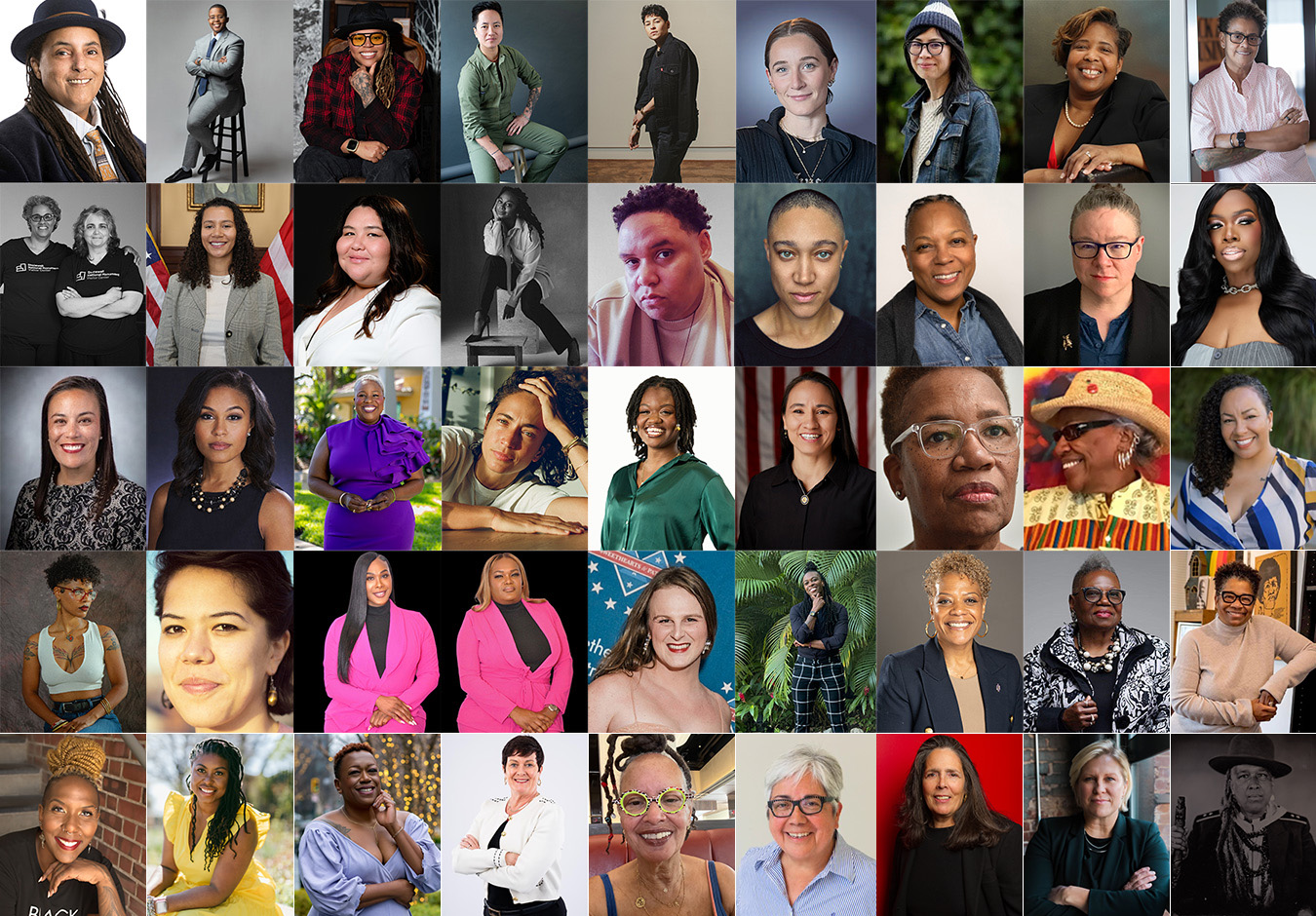
The Torchbearers Awards are more than recognition—they are a continuation of legacy. They honor the quiet architects of progress in our community: those who organize, advocate, build, and protect, often without fanfare but always with purpose. Rooted in a belief in intentional recognition, this honor names those who carry our movements forward—those who make room for others, who remind us that change is both generational and generative. In a time marked by uncertainty and challenge, these leaders push forward with courage, clarity, and an unwavering commitment to expanding opportunity and equity.
This year’s honorees reflect the full breadth of our community, spanning generations, backgrounds, identities, and industries. From Legends, with decades of leadership and having created pathways for others, to Illuminators, who are lighting new paths with creativity and innovation, each Torchbearer represents the power of intergenerational leadership and the strength found in our diversity. They are organizers, advocates, artists, policy leaders, healers, and changemakers whose lived experiences shape a shared vision for equity and liberation.
This award is our love letter to queer and trans women and nonbinary people who carry the flame when it would be easier to let it dim. To those who consistently show up, who use their voice and visibility and stand firm, often without recognition, so that others may live more freely and fully. The Torchbearers Awards celebrates not just what has been done, but the enduring spirit, responsibility, and collective care that ensure the work continues, and that the flame is always passed forward.
Co-Creators of the Torchbearers Awards: Shannon Alston, June Crenshaw, Heidi Ellis
Torchbearers Awards Advisory Board: Aditi Hardikar, Lesley Bryant, Jasmine Wilson-Bryant, Stephen Rutgers
ILLUMINATOR AWARDEES
- Representative Sharice Davids (she/her), (D, KS-03)
— U.S. House of Representatives - Greisa Martinez Rosas (she/her/ella)
— Executive Director, United We Dream - Paola Ramos (she/her)
— Journalist & Correspondent - Meagan A. Fitzgerald (she/her)
— Journalist & Correspondent - Jessica L. Lewis (she/her)
— Founder / Producer, Play Play DC - Savannah Wade (she/her)
— Founder, OAR Agency - Suhad Babaa (she/her)
— Filmmaker/ Former Executive Director of Just Vision - Ashlee Davis (she/her)
— Global Head of Inclusive Outcomes, Ancestry - Jazmine Hughes (she/her)
— Journalist and Former Editor at New York Times Magazine - Queen Adesuyi (they/she)
— Policy Advisor & Organizer, ReFrame Health & Justice - Michele Rayner, Esq. (she/her)
— Civil Rights Attorney, State Representative (Florida House of Representatives) - Gaby Vincent (she/her)
— Sports/Cultural Commentator and Community Leader - Jenny Nguyen (she/her)
— Founder & Owner, The Sports Bra - Denice Frohman (she/her)
— Independent Artist, Poet / Performer - Vida Rangel (she/her)
— Founder, Our Trans Capital - Roxanne Anderson (they/them)
— Executive Director, Our Space - Ann Marie Gothard (she/her)
— Co-Founder & President, Pride Live (Stonewall National Monument Visitor Center) - Diana Rodriquez (she/her)
— Co-Founder & CEO, Pride Live (Stonewall National Monument Visitor Center) - Wendi Cooper (she/her)
— Founder / Executive Director, Transcending Women - Toya Matthews (she/her)
— City of San Antonio, Texas - Mayor Gina Ortiz Jones (she/her)
— Sports/Cultural Commentator and Community Leader - Charity Blackwell (she/her)
— Poet, LGBTQ Advocate & Community Leader - Wilhelmina Indermaur (she/her)
— Director of Communications, Tyler Clementi Foundation - Em Chadwick (she/her)
— CMO, For Them & Autostraddle - Kylo Freeman (they/he)
— CEO, For Them & Autostraddle
LEGEND AWARDEES
- Sheila Alexander-Reid (she/her)
— Executive Director, PHL Diversity, Philadelphia Convention & Visitors Bureau - Cassandra Cantave Burton (she/her)
— Interim Director of Thought Leadership & Senior Research Advisor, AARP - leigh h. mosley (she/her)
— Photographer / Educator, PhotoFlo Photography - Jenn M. Jackson, PhD (they/them)
— Assistant Professor of Political Science; Author & Columnist, Syracuse University - Jordyn White (she/her)
— COO, Washington Prodigy / VP of Leadership Development & Research, HRC Foundation - AJ Hikes (they/them)
— Deputy Executive Director, ACLU - RaeShanda Lias (she/her)
— Digital Creator, RL Lockhart - Donna Payne-Hardy (she/her)
— Educator, EEO Specialist, Founder of NBJC, Former Leader at the Human Rights Campaign - Courtney R. Snowden (she/her)
— Principal, Blueprint Strategy Group - Gaye Adegbalola (she/her)
— Musician & Activist, Musician / Inductee of the Blues Hall of Fame - Cheryl A. Head (she/her)
— Independent Author, Novelist (Crime Fiction) - Letitia Gomez (she/her)
— The American LGBTQ+ Museum, Board Chair - Lynne Brown (she/her)
— Publisher, Washington Blade - Shay Franco-Clausen (She/Her/Ella/Queen)
— Political Strategist and Organizer - Melissa L. Bradley (she/her)
— Founder & Managing Partner, New Majority Ventures - Meghann Burke (she/her)
— Executive Director, NWSL Players Association - Victoria Kirby York, MPA (she/they)
— Director of Public Policy & Programs, National Black Justice Collective - Joli Angel Robinson (she/her)
— CEO, Center on Halsted - Jeannine Frisby LaRue (she/her)
— CEO, Moxie Strategies - Alice Wu (she/her)
— Film Director (Saving Face, The Half of It) / Screenwriter - Storme Webber (she/her)
— Interdisciplinary Artist / Educator, University of Washington - Kim Stone
— CEO of the Washington Spirit, Washington Spirit - Mickalene Thomas
— American Visual Artist, Mickalene Thomas Studio - Erika Lorshbough (any/they/she)
— Executive Director, interACT - J. Gia Loving (she/ella)
— Co-Executive Director, GSA Network

Minimal version of ‘Streetcar Named Desire’ heading to Dupont Underground

Comings & Goings

An effort to increase the number of psychiatrists of color

Calendar: April 10-16

BLUF leather social set for April 10 in Rehoboth

Cuba under pressure and without answers
Tenn. lawmakers pass transgender “watch list” bill

Vance speaks at Orbán rally in Hungary

Amendments to India’s transgender rights law criticized