World
Petition urges White House to develop plan to protect LGBTQ Afghans
Taliban regained control of country on Aug. 15
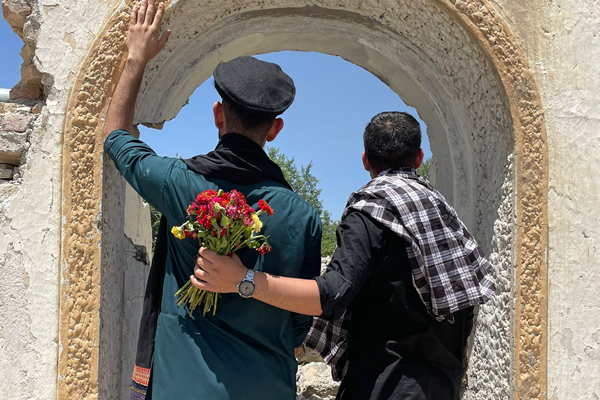
More than 10,000 people have signed a petition that urges the Biden administration to do more to help LGBTQ Afghans who remain in Afghanistan after the Taliban regained control of the country.
The Human Rights Campaign; the Council for Global Equality; Immigration Equality; Rainbow Railroad; the Organization for Refuge, Asylum and Migration and the International Refugee Assistance Project on Friday presented to the White House the petition that urges the administration to adopt “a 10-point action plan … to expedite and ease the refugee and asylum process for LGBTQI Afghans.”
The same six groups last month urged the Biden administration to adopt a plan that would “prioritize the evacuation and resettlement of vulnerable refugee populations, including LGBTQI people, and ensure that any transitory stay in a third country is indeed temporary by expediting refugee processing.” The groups, among other things, asked the White House to “speak out forcefully against human rights abuses by the new Taliban regime and any increased targeting of vulnerable communities, including LGBTQI people, and use existing mechanisms to sanction and hold accountable perpetrators of human rights abuse.”
The Taliban entered Kabul, the Afghan capital, on Aug. 15 and regained control of the country.
A Taliban judge in July said the group would once again execute people if it were to return to power in Afghanistan.
Rainbow Railroad and Immigration Equality are among the other groups that have continued their efforts to evacuate LGBTQ Afghans since American troops completed their withdrawal from the country on Aug. 30. Some of the 50 Afghan human rights activists who Taylor Hirschberg, a researcher at the Columbia Mailman School of Public Health who is also a Hearst Foundation scholar, has been able to help leave the country are LGBTQ.
“We reiterate our call for President Biden to adopt the 10-point policy plan which will expedite and ease the refugee process for LGBTQI Afghans,” said Human Rights Campaign Senior Vice President for Policy and Political Affairs JoDee Winterhof in a press release. “The 10,000+ people who signed our petition have demonstrated that they want the United States, long a beacon of refuge for those fleeing persecution, to take action to protect LGBTQI Afghans—a vulnerable group who risk oppression, even death, simply for who they are or who they love. Now is the time for action.”




Cuba
Cuba bajo presión y sin respuestas
Cubanos no hablan en términos geopolíticos. Hablan de sobrevivir

Las tensiones entre Estados Unidos y Cuba han vuelto a subir de tono. No es algo nuevo, pero este momento se siente distinto. Las medidas más recientes desde Washington buscan cerrar aún más los espacios financieros del gobierno cubano, limitar sus fuentes de ingreso y presionar sectores clave de la economía. No es simbólico. Es una política directa.
Desde Estados Unidos, el mensaje es claro. Se busca provocar cambios que no han ocurrido en más de seis décadas. También hay un componente interno, una presión política que responde a sectores del exilio que llevan años exigiendo una postura más dura. Todo eso forma parte del escenario.
Pero esa es solo una parte.
Del lado cubano, la respuesta sigue un patrón conocido. El gobierno habla de agresión externa, de guerra económica, de un embargo que se endurece. Cada medida se convierte en argumento para reforzar su narrativa y cerrar filas. No hay espacio para reconocer errores propios. Todo apunta hacia afuera.
Mientras tanto, la vida en la isla va por otro camino.
La crisis energética que hoy vive Cuba no empezó con estas medidas. Lleva años acumulándose. El sistema eléctrico está deteriorado, sin mantenimiento suficiente, con fallas constantes. Los apagones no son nuevos. Lo que ha cambiado es la frecuencia y la duración.
Durante años entró petróleo a Cuba, especialmente desde Venezuela. Hubo acuerdos. Hubo suministro. Y aun así, la vida del cubano no mejoró. La electricidad seguía fallando, el combustible seguía racionado, el transporte seguía siendo un problema diario.
Entonces la pregunta sigue siendo la misma.
Si el petróleo estaba entrando, ¿por qué nada cambiaba?
¿Dónde fue a parar ese recurso?
¿Dónde está el dinero que generó?
Hoy se habla de restricciones al petróleo como si fueran la causa principal de la crisis. No lo son. Empeoran una situación ya frágil, pero no la explican completamente.
Hay una historia más larga que no se puede ignorar.
Lo mismo ocurre con las brigadas médicas.
Durante años se presentaron como un gesto de solidaridad internacional. Y en muchos casos lo fueron. Médicos cubanos trabajaron en condiciones difíciles, salvaron vidas, sostuvieron sistemas de salud en otros países. Eso es real.
Pero también funcionaron como una de las principales fuentes de ingreso del Estado cubano.
Muchos de esos profesionales no recibían el salario completo por su trabajo. Una parte significativa quedaba en manos del gobierno. En algunos casos, ni siquiera tenían control sobre el dinero que generaban.
Y hay algo más duro.
Si uno de esos médicos decidía no regresar a Cuba, ese dinero no llegaba a su familia. Se quedaba retenido.
Hoy varios países están revisando o cancelando esos acuerdos. Y otra vez, la respuesta oficial es señalar hacia afuera. Pero la pregunta sigue siendo inevitable.
¿Se está perdiendo un modelo de cooperación o un sistema que dependía del control sobre sus propios profesionales?
Dentro de Cuba, la conversación suena diferente.
La gente no habla en términos geopolíticos. Habla de sobrevivir. De cómo llegar al final del día. De los apagones, de la comida que no alcanza, del transporte que no aparece, de una vida que cada vez se hace más difícil.
Hay quienes miran las medidas de Estados Unidos con cierta expectativa. No porque quieran más escasez, sino porque sienten que el sistema no cambia por sí solo. Hay una sensación de estancamiento que pesa.
Pero esa expectativa convive con una realidad concreta.
Las sanciones no golpean primero a quienes toman decisiones. Golpean al ciudadano común. Al que hace la fila. Al que pierde la comida por falta de electricidad. Al que no tiene cómo moverse.
Esa es la contradicción.
El gobierno cubano pide solidaridad internacional. Y la recibe. Países que envían ayuda, organizaciones que se movilizan, voces que defienden a la isla.
Pero hay otra pregunta que también está ahí.
¿Esa ayuda llega realmente al pueblo?
La falta de transparencia en la distribución de recursos es parte del problema. Porque no se trata solo de lo que entra, sino de lo que realmente llega a quienes lo necesitan.
Reducir lo que pasa en Cuba a un conflicto entre dos gobiernos es no querer ver el cuadro completo.
Aquí hay responsabilidades compartidas, pero no iguales.
Estados Unidos ejerce presión con efectos reales sobre la economía cubana. Eso no se puede negar. Pero dentro de la isla hay un sistema que ha tenido décadas para corregir, para abrir, para responder a su gente, y no lo ha hecho.
Esa parte no se puede seguir esquivando.
Yo escribo esto como cubano. Desde lo que vi, desde lo que viví y desde la gente que sigue allá tratando de resolver el día.
Porque al final, más allá de lo que se diga entre gobiernos, la realidad es otra.
Cuba hoy está más apretada, sí. Pero también lleva años arrastrando problemas que nadie ha querido enfrentar de verdad.
Y mientras eso siga así, da igual lo que venga de afuera. El problema sigue estando adentro.
Iran
LGBTQ groups condemn Trump’s threat to destroy Iranian civilization
Ceasefire announced less than two hours before Tuesday deadline

The Council for Global Equality is among the groups that condemned President Donald Trump on Tuesday over his latest threats against Iran.
Trump in a Truth Social post said “a whole civilization will die tonight” if Tehran did not reach an agreement with the U.S. by 8 p.m. ET on Tuesday.
Iran is among the handful of countries in which consensual same-sex sexual relations remain punishable by death.
Israel and the U.S. on Feb. 28 launched airstrikes against Iran.
One of them killed Supreme Leader Ayatollah Ali Khamenei. Iran in response launched missiles and drones against Israel and other countries that include Kuwait, Bahrain, Qatar, the United Arab Emirates, Jordan, Saudi Arabia, Azerbaijan, and Cyprus.
Gas prices in the U.S. and around the world continue to increase because the war has essentially closed the Strait of Hormuz, a strategic waterway that connects the Persian Gulf and the Gulf of Oman through which roughly 20 percent of the world’s crude oil passes.
Trump less than 90 minutes before his deadline announced a two-week ceasefire with Iran that Pakistan helped broker.
“We the undersigned human rights, humanitarian, civil liberties, faith-based and environmental organizations, think tanks and experts are deeply alarmed by President Trump’s threat regarding Iran that ‘a whole civilization will die tonight’ if his demands are not met. Such language describes a grave atrocity if carried out,” reads the statement that the Council for Global Equality more than 200 other organizations and human rights experts signed. “A threat to wipe out ‘a whole civilization’ may amount to a threat of genocide. Genocide is a crime defined by the Genocide Convention and by the Rome Statute of the International Criminal Court as committing one or more of several acts ‘with intent to destroy in whole or in part a national, racial or religious groups as such.'”
The statement states “the law is clear that civilians must not be targeted, and they must also be protected from indiscriminate or disproportionate attacks.”
“Strikes on civilian infrastructure — such as the recent attack on a bridge and the attacks President Trump is repeatedly threatening to carry out to destroy power plants — have devastating consequences for the civilian population and environment,” it reads.
“We urge all parties to respect international law,” adds the statement. “Those responsible for atrocities, including crimes against humanity and war crimes, can and must be held accountable.”
The Alliance for Diplomacy and Justice, Amnesty International USA, Human Rights Watch, the American Civil Liberties Union, the NAACP, MADRE, and the Robert and Ethel Kennedy Human Rights Center are among the other groups that signed the letter.
Hungary
Vance speaks at Orbán rally in Hungary
Anti-LGBTQ prime minister trailing ahead of April 12 vote
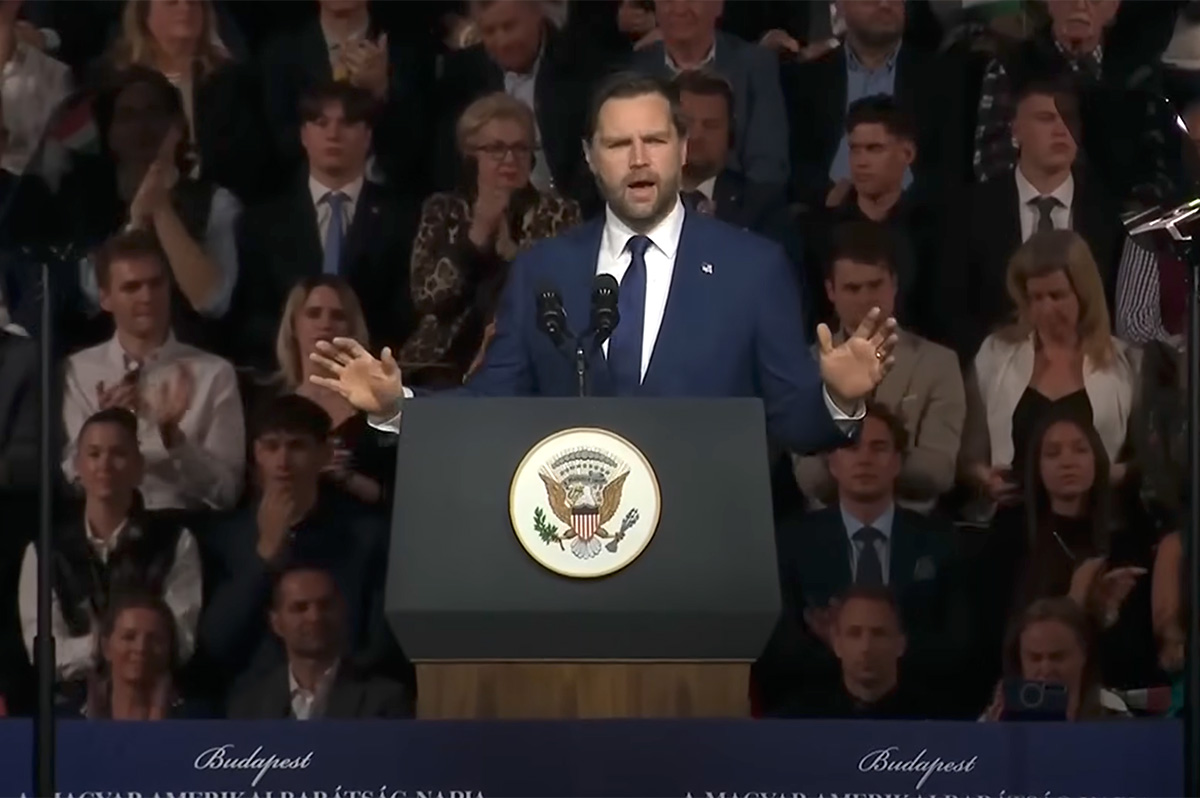
Vice President JD Vance on Tuesday urged Hungarians to support Prime Minister Viktor Orbán in the country’s April 12 elections.
“We have got to get Viktor Orbán re-elected as prime minister of Hungary,” Vance told Orbán supporters who gathered at Budapest’s MTK Sportpark.
Vance and Orbán on Tuesday met before they held a press conference in Budapest. Orbán also spoke at the rally.

The U.S. vice president after he took to the stage called President Donald Trump, who told the crowd he is “a big fan of Viktor” and is “with him all the way.” Vance, as he did during Tuesday’s press conference with Orbán, criticized the European Union.
“We want you to make a decision about your future with no outside forces pressuring you or telling you what to do. I’m not telling you exactly who to vote for, but what I am telling you is that the bureaucrats in Brussels, those people should not be listened to,” said Vance. “Listen to your hearts, listen to your souls, and listen to the sovereignty of the Hungarian people.”
Vance in his speech noted “across the West, we’ve got a small band of radicals” who, among other things, “condemn children to mutilization and sterilization in the name of gender care.” Vance also criticized a “far-left ideology given quarter in university circles, in the media, and in our entertainment industry, and increasingly among bureaucrats on both sides of the Atlantic.”
Vice President JD Vance speaks at MTK Sportpark in Budapest, Hungary, on April 7, 2026
Orbán has been in office since 2010. He and his Fidesz-KDNP coalition government have faced widespread criticism over its anti-LGBTQ crackdown.
A Hungarian activist with whom the Washington Blade previously spoke said it is “impossible to change your gender legally in Hungary” because of a 2020 law that “banned legal gender recognition of transgender and intersex people.” Hungarian MPs the same year effectively prohibited same-sex couples from adopting children and defined marriage in the country’s constitution as between a man and a woman.
The European Commission in 2022 sued Hungary, which is a member of the EU, over the country’s anti-LGBTQ propaganda law.
Hungarian lawmakers in March 2025 passed a bill that banned Pride events and allowed authorities to use facial recognition technology to identify those who participate in them. MPs later amended the Hungarian constitution to ban public LGBTQ events.
Upwards of 100,000 people last June defied the ban and marched in Budapest’s annual Pride parade.
Polls indicate Orbán is trailing Péter Magyar and his center-right Tisza party ahead of the April 12 election. Vance at Tuesday’s rally told Orbán supporters that he and Trump “want you to make a decision about your future with no outside forces pressuring you or telling you what to do.”
“I’m not telling you exactly who to vote for, but what I am telling you is that the bureaucrats in Brussels, those people should not be listened to,” said Vance. “Listen to your hearts, listen to your souls, and listen to the sovereignty of the Hungarian people.”
“Unlike some of the leadership of Brussels, I’m not threatening you or telling you that we’re going to withhold funds to which you’re legally entitled,” he added. “You will make the decision about Hungary’s future.”
Magyar on Tuesday appeared to dismiss Vance’s comments.
“No foreign country may interfere in Hungarian elections. This is our country. Hungarian history is not written in Washington, Moscow, or Brussels — it is written in Hungary’s streets and squares,” said Magyar on his X account.
A spokesperson for the Háttér Society, a Hungarian LGBTQ rights group, told the Blade that neither Magyar, nor his party have reached out to the organization.
The spokesperson said the group does not “campaign directly for them or for any other political party.” The Háttér Society, however, is encouraging LGBTQ Hungarians to vote.
“Ahead of election day, we will encourage everyone on our social media channels to go out and vote, as this is the only way we can act against a system that has been working against the LGBTQI community for many years,” said the spokesperson.

Report: Grenell wants Russian ambassadorship
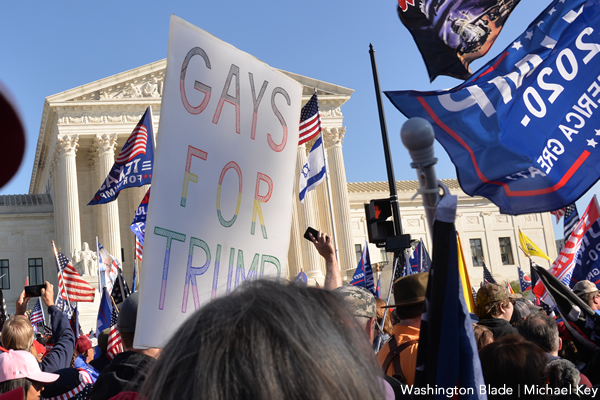
Log Cabin Republicans to honor Scott Presler

Cuba bajo presión y sin respuestas
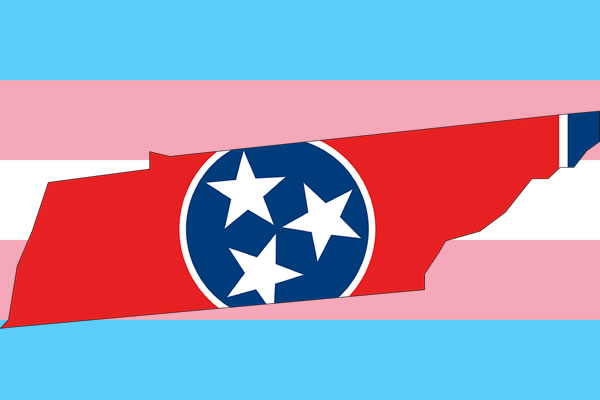
Tenn. lawmakers pass transgender “watch list” bill