U.S. Supreme Court
U.S. Supreme Court ruling allows Biden administration to end MPP
Trump-era policy placed LGBTQ asylum seekers at increased risk
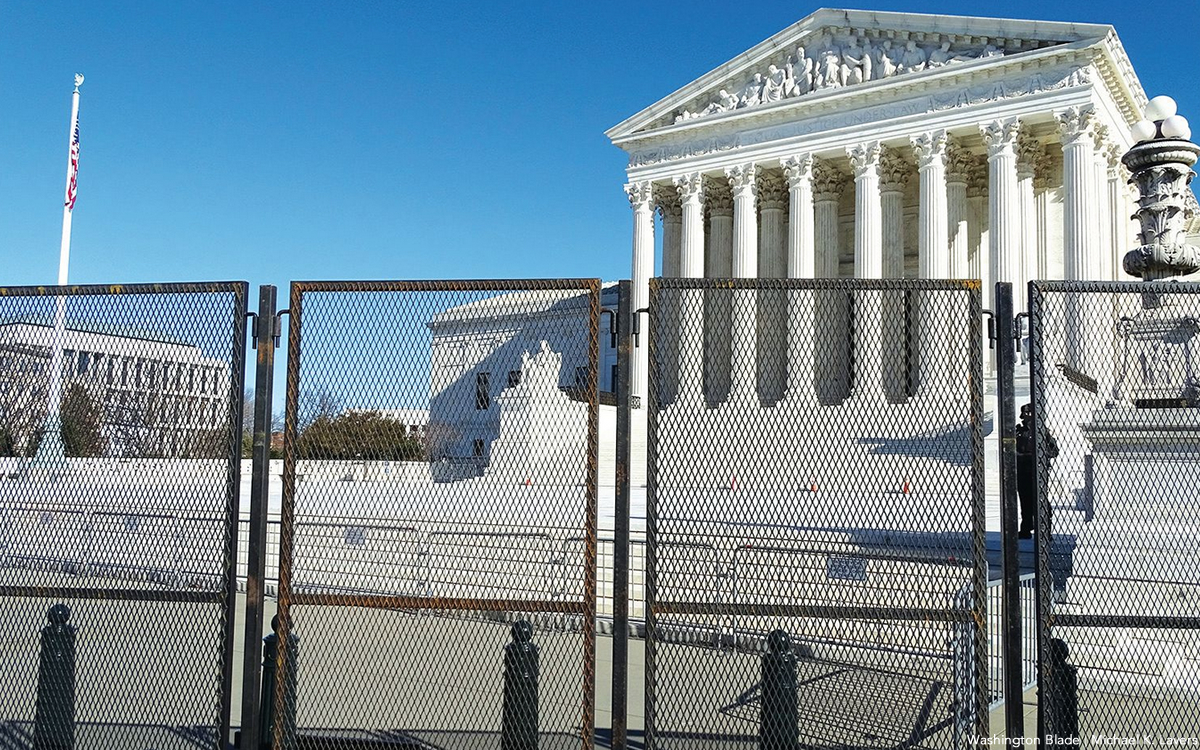
The U.S. Supreme Court on Thursday in a 5-4 ruling said the Biden administration can end a policy that forced asylum seekers to pursue their cases in Mexico.
The previous White House’s Migrant Protection Protocols program, which became known as the “Remain in Mexico” policy, took effect in 2019.
The Biden administration suspended MPP enrollment shortly after it took office in January 2021. The program was to have ended six months later, but a federal judge in Texas ordered MPP’s reinstatement after the state and Missouri filed suit against the Biden administration.
Thursday’s ruling sends the Texas and Missouri case back to lower courts.
“As Secretary Mayorkas concluded in October 2021 after a thorough review, the prior administration’s Migrant Protection Protocols (MPP) has endemic flaws, imposes unjustifiable human costs and pulls resources and personnel away from other priority efforts to secure our border,” said the Department of Homeland Security in a statement. “We welcome the Supreme Court’s decision affirming that the Secretary has the discretionary authority to terminate the program, and we will continue our efforts to terminate the program as soon as legally permissible.”
U.S. Sen. Alex Padilla (D-Calif.) also welcomed the ruling.
“Today’s Supreme Court decision correctly acknowledges the Biden administration’s authority to end the unlawful and cruel ‘Remain in Mexico’ program,” he said in a statement. “For more than three years, this horrifying policy has denied asylum seekers their right to due process and subjected them to crimes like rape, kidnapping and torture in northern Mexican border cities while they await their court hearings.”
Advocates sharply criticized MPP, in part, because it made LGBTQ and intersex asylum seekers who were forced to live in Tijuana, Ciudad Juárez, Reynosa, Matamoros and other Mexican border cities even more vulnerable to violence and persecution based on their sexual orientation and gender identity.
TransLatin@ Coalition President Bamby Salcedo on Thursday told the Washington Blade the Supreme Court ruling “will certainly impact our community in a positive way.”
“We know that people who have to remain in Mexico to wait continue to be victims of violence,” said Salcedo. “This is definitely a step in the right direction and we’re grateful that this happened in this way.”
Emilio Vicente, communications and policy director of Familia: TQLM, an organization that advocates on behalf of transgender and gender non-conforming immigrants, echoed Salcedo.
“We’re glad to finally have some good news from the Supreme Court after horrible rulings on abortions, climate change, Native American rights,” said Vicente. “Ending ‘Remain in Mexico’ will allow LGBTQ+ asylum seekers who face increased discrimination and abuse during the journey to the U.S., to be able to seek asylum here.”
Abdiel Echevarría-Cabán is a South Texas-based immigration attorney and human rights law and policy expert who the LGBTQ+ Bar in 2021 recognized as one of its 40 best LGBTQ lawyers who are under 40.
He told the Blade on Thursday the Supreme Court ruling is “a victory we must celebrate.” Echevarría-Cabán also said MPP placed LGBTQ and intersex asylum seekers at increased risk.
“Refugees in general, but especially LGBT refugees, are extremely vulnerable to other type of harms such as kidnappings by cartel members, extortion, physical and psychological abuses from Mexican law enforcement authorities and third parties given the high levels of discrimination for LGBT refugees in Mexico,” said Echevarría-Cabán.
The Supreme Court issued its ruling a day after the Justice Department filed charges against four people in connection with the deaths of 53 migrants who were found in the back of a tractor trailer truck in San Antonio.
The Biden administration in April announced its plans to terminate Title 42, a Centers for Disease Control and Prevention rule that closed the Southern border to most asylum seekers and migrants because of the pandemic. Title 42 was to have ended on May 23, but a federal judge ruled against the White House.
“This decision isn’t the end of the fight for ensuring that people seeking asylum get asylum but it’s an important step in protecting vulnerable people,” Vicente told the Blade after Thursday’s ruling. “President Biden must follow through on his commitment to end MPP and protect all asylum seekers.”
Salcedo noted to the Blade the “system, as it is, particularly when it comes to trans women, needs to be completely changed so that we can be at a better place as a community.” Padilla in his statement urged the Biden administration “to do everything in its power to swiftly end ‘Remain in Mexico’ once and for all.”
“Misguided and inhumane Trump-era policies like ‘Remain in Mexico’ and Title 42 have only decimated an already broken immigration system,” he said. “We must keep working to restore the lawful processing of asylum seekers at the border, in keeping with America’s most deeply held values as a nation of immigrants.”
The Department of Homeland Security in its statement notes Title 42 remains in place.
“The department also continues to enforce our immigration laws at the border and administer consequences for those who enter unlawfully, and will continue the court-mandated enforcement of the Centers for Disease Control and Prevention’s Title 42 public health order,” it reads.



U.S. Supreme Court
Colo. activists condemn SCOTUS conversion therapy ruling
8-1 decision could have sweeping implications
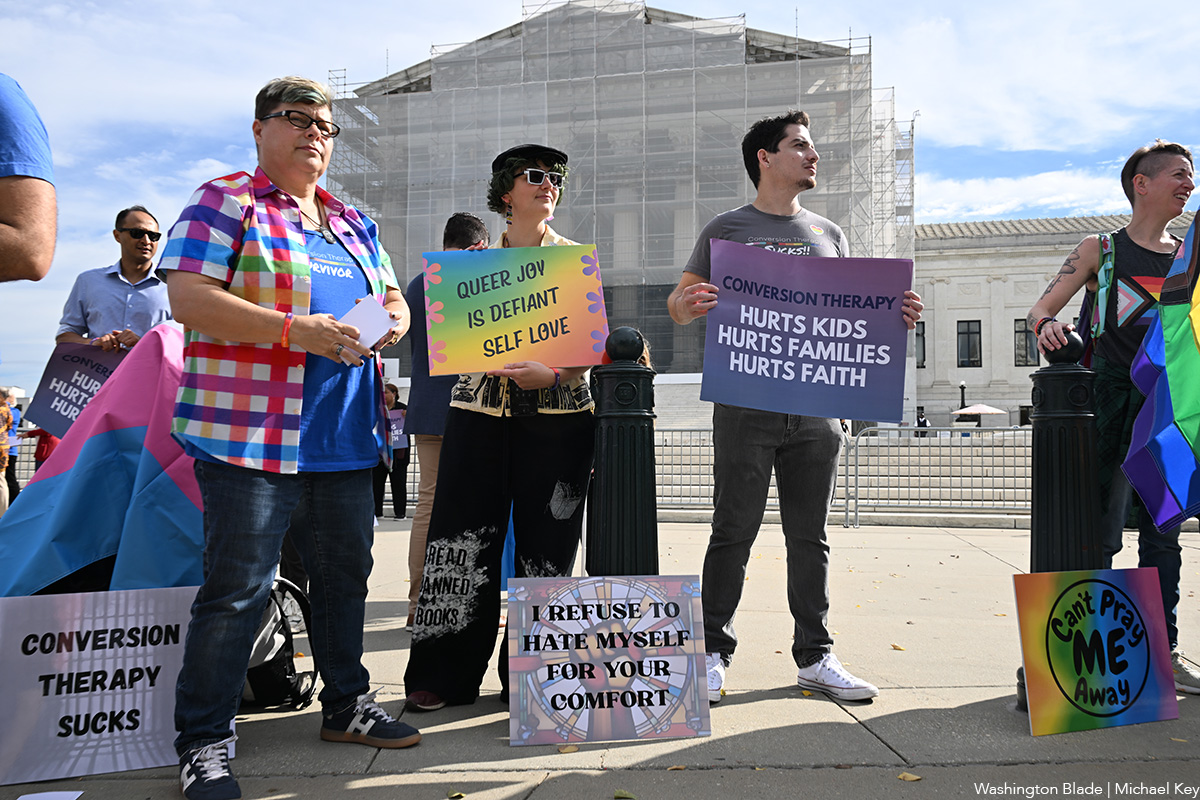
The Supreme Court ruled in Chiles v. Salazar that a Colorado law banning conversion therapy is unconstitutional, striking down the state’s 2019 statute and potentially impacting similar laws across the country. Religious advocates have hailed Tuesday’s decision as a victory for the First Amendment and evangelical Christians, while LGBTQ activists warn it could lead to increased harm for LGBTQ youth.
The conservative majority, joined by two progressive members of the court, sided 8–1 with Kaley Chiles on March 31 in what some critics are calling a landmark ruling for religious zealots, placing the teachings of the Bible above established medical consensus. Chiles, a Christian therapist who practices what she describes as “faith-based talk therapy for children,” challenged Colorado’s House Bill 19-1129, a law prohibiting licensed professionals from engaging minors in efforts to change their sexual orientation or gender identity through conversion therapy. She successfully argued that she and her clients have a constitutional religious right to choose the type of therapy they seek, effectively nullifying the Colorado law banning conversion therapy.
When the court heard oral arguments in October 2025, early questions indicated that the justices were likely to rule against the state in a matter involving LGBTQ rights, making this the fourth major LGBTQ rights case to come from Colorado since 1996.
In 1996, the Supreme Court overruled state initiative Amendment 2 in Romer v. Evans, which tried, but ultimately failed to restrict rules on gay people’s protected status in Colorado. Then in 2018, SCOTUS presided over Masterpiece Cakeshop v. Colorado Civil Rights Commission, when a Lakewood baker refused to make a cake for a gay client, which the state argued violated it’s civil rights commission order, but the court sided with the baker, ruling the commission had violated his Christian beliefs. In 2023 the court ruled in 303 Creative LLC v. Elenis that a Denver-based web designer is legally allowed to refuse to make wedding websites for same-sex couples, and successfully arguing she was constitutionally protected under the First Amendment.
Chiles, who practices in Colorado Springs, combines traditional psychological approaches — including cognitive, behavioral, psychodynamic, and humanistic therapies — with Christian beliefs. She argued that the law violated her First Amendment rights by restricting her ability to practice therapy aligned with her religious values, as well as limiting the rights of clients seeking that form of care.
Conversion therapy, widely discredited by major medical and psychological associations, is defined as practices that attempt to change a person’s sexual orientation or gender identity. Under Colorado law, providers found in violation could face fines up to $5,000, suspension, or loss of licensure.
Lower courts — including a district court and the 10th Circuit — previously upheld the law, finding it regulated professional conduct rather than speech and therefore required only minimal constitutional scrutiny. However, the Supreme Court, with three Trump-appointed justices, determined that the lower courts failed to apply “sufficiently rigorous First Amendment scrutiny,” raising concerns about violations of both the Establishment Clause and the Free Exercise Clause. The ruling sends the case back to a lower court for further review.
The decision reflects a broader trend in recent years, with the current court — often referred to as the Roberts Court — more frequently siding with religious liberty claims, particularly those involving Christian plaintiffs.
To better understand the implications of the ruling, the Washington Blade spoke with Colorado-based LGBTQ advocacy organization Rocky Mountain Equality, which has spent decades organizing, educating, and providing services across the state.
Founded in 1994 as Boulder Pride, the organization has since expanded into a statewide force addressing LGBTQ issues, including healthcare, housing, and youth services. Now operating as Rocky Mountain Equality, the group saw a 62 percent increase in 2024 operating revenue, growing to more than $3.765 million while running the Equality Center of the Rocky Mountains in Boulder.
Mardi Moore, the chief executive officer of Rocky Mountain Equality, sat down with the Blade to discuss the ruling and its impact on the broader LGBTQ community, calling it both expected and deeply concerning.
“When the ruling came out today, I think we all knew it wasn’t going to be a winning battle after hearing arguments, but the 8-1 decision made me sad, and honestly, it’s turning into anger,” Moore told the Blade on Tuesday morning. “This is a really sad day — not just for LGBTQ kids, but for all kids in Colorado.”
Moore explained that the law passed with support from Colorado lawmakers and felt like progress toward making the state safer for LGBTQ residents.
While oral arguments were being heard in October, the Blade spoke to a group of conversion therapy survivors who came to the nation’s capital to protest the ban’s removal and support one another. Their stories detailed the emotional and physical toll of conversion therapy.
“We all know the horror stories, and we know conversion therapy is pseudoscience,” she continued. “About a decade ago, Colorado passed a bill — under the leadership of then-Rep. Daniel Ramos — that banned conversion therapy with religious exceptions, which was a huge step forward.”
That step forward now feels like a step back, Moore suggested. While the ruling currently applies to Colorado, she warned it could embolden similar legal challenges nationwide.
“In our initial reading, this ruling only impacts Colorado and isn’t a broader issue for other states. But that doesn’t mean people who oppose LGBTQ rights won’t start fighting state by state,” Moore said. She pointed to the state’s history, including the fight against Amendment 2. “Here in Colorado, we’re used to these battles — we fought Amendment 2, and we’re still fighting now. There are two ballot measures this November: one targeting gender-affirming care for minors, and another banning trans youth from sports at all levels.”
These ballot measures, Moore explained, represent another attempt to restrict trans youth. One would limit gender-affirming surgeries for minors — procedures that research shows are extremely rare — while another would restrict sports participation based on sex assigned at birth.
“These efforts are trying to wipe trans kids off the map. This ruling is sickening — the religious right is still very active, and people who think voting doesn’t matter need to understand that presidents shape Supreme Courts.”
Moore emphasized that while national advocacy is critical, the fight increasingly comes down to local organizing and direct support.
“Here at Rocky Mountain Equality, we advocate for the community, train providers, and support people who have gone through conversion therapy. We have a strong youth program and will continue supporting young people in every way we can.”
“Colorado may seem progressive, but it’s still a purple state,” she added. “Messaging that works in Denver doesn’t always reach families who might send their kids to conversion therapy.”
The timing of the ruling — released on Trans Day of Visibility — also drew criticism.
“Releasing this decision on Trans Day of Visibility feels calculated. It takes a day meant for joy and turns it into another setback,” Moore said.
When asked about next steps, Moore pointed to state-apponited officials who support LGBTQ rights are likely reviewing options.
“I don’t have specifics yet on organized legal responses, but our attorney general, Phil Weiser, argued this case,” she said. “I imagine his office is reviewing every possible option right now.”
Despite the opinion dropping so recently, the emotional toll is already being felt.
“I texted a colleague this morning who went through conversion therapy — it was a sad emoji kind of day,” she said, also referencing a similiar feeling to the one she has now the case of Alana Chen, a University of Colorado Boulder student who died by suicide after experiencing conversion therapy.
“Her story devastated so many, including her mother,” she shared, adding that despite her death “is still advocating for young people” in the battle over conversion therapy — one that feels like it is getting worse with each ruling, with no end in sight.
“I think the real battle started this morning at kitchen tables. There are parents telling their kids, ‘I told you being queer was wrong — the Supreme Court says so,’” Moore said. “Those are the conversations we don’t hear, but they’re happening.”
Rocky Mountain Equality says it will continue focusing on direct support, specifically in rural communities which will face a particularly difficult time as LGBTQ rights become restricted.
“When people reach out to us from rural communities, we help connect them with affirming providers — locally if possible, or in places like Boulder County. We also help with financial support so they can access care. This work is about meeting people where they are,” she explained. “We’re working with organizations across the state, including in more conservative areas like Mesa County. The environments are very different, but we collaborate to share resources and support each other. Leading an organization right now is incredibly tough work.”
The organization is also mobilizing politically ahead of the ballot measures, using the anger from this case as fuel for the long hual to getting LGBTQ rights protected.
“Just last night, we had over 100 people at a kickoff event in Boulder for our campaign to defeat these ballot measures. People signed up to volunteer, donate, and write letters. We’re going to fight to make sure Colorado doesn’t become a ‘hate state’ again,” she said.
Moore also explained that as Colorado has become a leading destination for affirming healthcare and LGBTQ rights, people from more conservative neighboring states are seeking care there. She added that if the Centennial State can provide access to specialized care that has been politicized elsewhere, it should work to protect those services.
“People are coming to Colorado from surrounding states for gender-affirming care, abortion access, and support. We’re not going to let a small group of hateful voices take that away.”
She called on allies to take action, regardless of how small or meaningless it might seem at first.
“People can help by having conversations in their own communities about the value of every person. They can connect others with resources and support systems,” she said. “And for Colorado specifically, they can donate, share our work, and stand in solidarity.”
Moore drew parallels from past crises the LGBTQ community has had faced, yet many of the LGBTQ people she faught with in the seemingly impossible times of the past are still here and still fighting, emphasizing the community’s resilience..
“I was telling my staff — I’m an old dyke, and I remember the fight during the AIDS crisis. We were trying to make sure people were fed, cared for, and treated, all while our rights were under attack. We lost many lives, but we made it through — and we will again,” she recalled.
“They think if they attack us from every direction, they can erase us, but they’ve only made us stronger. We will continue supporting LGBTQ youth and all children who deserve protection from unregulated, harmful practices like conversion therapy.”
Other LGBTQ advocates also spoke out about the ruling’s impact.
Carl Charles, a member of the Elayne Cassidy Nicholas Memorial Counsel for Trans and Nonbinary Rights at Lambda Legal, issued a statement following the court’s ruling, while touching on and his personal experience with conversion therapy.
“I know firsthand the long-lasting harms of conversion therapy, having been subjected to it when I was 15 years old. This practice did not change my sexual orientation or gender identity. Instead, it destroyed important relationships and created shame and fear that took time and effort to undo. For many survivors, it is a reverberating life-long harm,” he said as he shared his story to the world via a friend-of-the-court brief with the Conversion Therapy Survivor Network, detailing the harms of conversion therapy they experienced.
“I am fortunate to have been able to transcend the trauma of that experience, to celebrate my identity as a transgender man, and to nurture a loving relationship with my husband. But so many young people do not have the familial or community support to withstand the impact of this unethical practice. LGBTQ+ youth do not need to be changed. Rather, like all youth, they need to be supported and celebrated for the unique and important people they are becoming.”
Human Rights Campaign President Kelley Robinson issued a statement following announcement of the court’s verdict, condemning the homophobic ruling as thinly veiled intolerance as masquerading a religious right fight. Before the case was heard, the HRC submitted amicus brief detailing how the legislation in question was not religous in nature, but is regulatory speech restriction that helping LGBTQ Americans.
“The court has weaponized free-speech in order to prioritize anti-LGBTQ+ bias over the safety, health and wellbeing of children,” her statement reads. “So-called ‘conversion therapy’ is pseudoscience, not real therapy. It has been condemned by every mainstream medical and mental health association and harms families, traumatizes children, and robs people of their faith communities. It is cruel and should never be offered under the guise of legitimate mental healthcare. To undermine protections that keep kids and families safe from these abusive practices is shocking — and our children deserve better.”
U.S. Supreme Court
Supreme Court rules against Colo. law banning conversion therapy for minors
8-1 decision could have sweeping impact
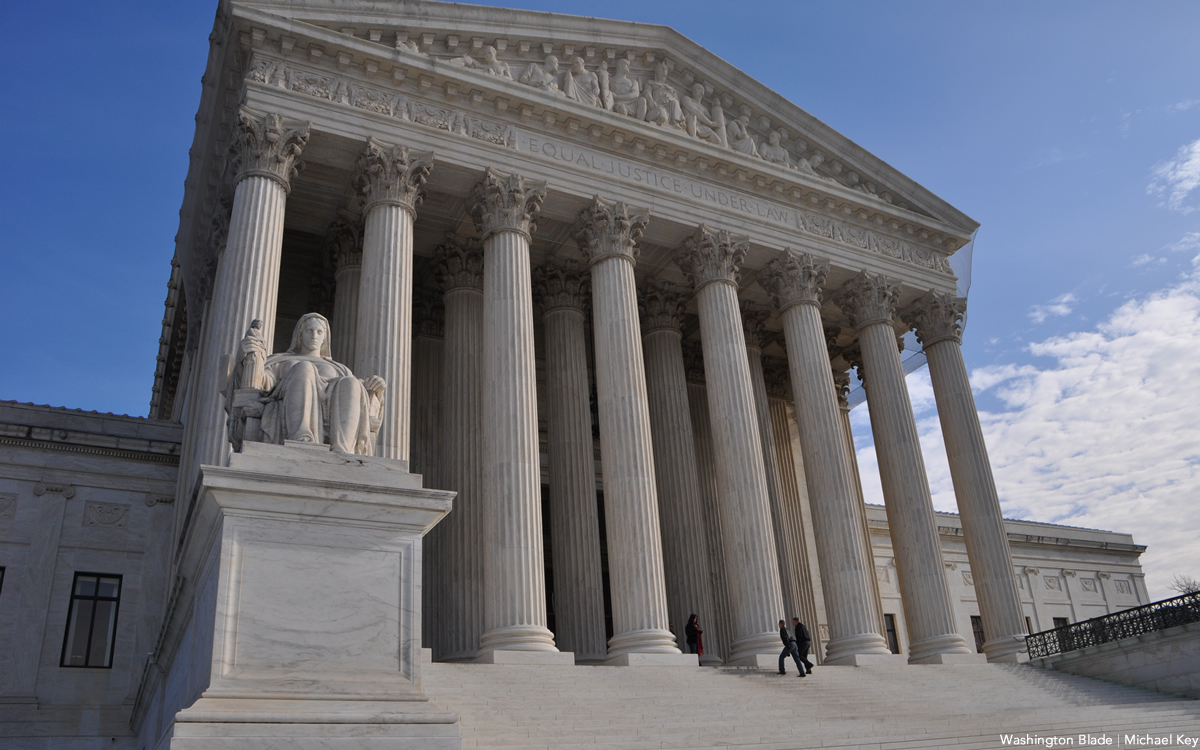
The U.S. Supreme Court on Tuesday ruled against a Colorado law that bans so-called conversion therapy for minors.
The justices last October heard oral arguments in Chiles v. Salazar. Today they ruled 8-1 in favor of Kaley Chiles, a Christian therapist who challenged the 2019 law.
In the case, which was heard by the justices in October 2025, Chiles successfully argued to the court that the law restricting this type of therapy was unconstitutional, leading to it being struck down.
The Supreme Court ultimately found that lower state and federal courts has “erred by failing to apply sufficiently rigorous First Amendment scrutiny,” ultimately reversing the widely discredited “medical” treatment that has support by a very narrow margin of mental health specialists — specifically religious and socially conservative ones. This is despite the fact that Colorado state officials have never enforced the measure in practice, and included a religious exemption for people “engaged in the practice of religious ministry.” The now moot law carried fines of up to $5,000 for each violation and possible suspension or revocation of a counselor’s license.
In the ruling, the court said the law, that specifically applies to talk therapy “impermissibly” interferes with free speech rights of Americans, and despite it being “regard[ed] its policy as essential to public health and safety, but the First Amendment stands as a shield against any effort to enforce orthodoxy in thought or speech in this country,” Justice Neil Gorsuch wrote for himself and seven other justices from across the ideological spectrum who overturned the low court’s ruling. He went on to add that the original ban “trains directly on the content of her speech and permits her to express some viewpoints but not others,” sending it back down to a lower court.
Only Justice Ketanji Brown Jackson dissented, which included an in depth summary of her departure from the other eight justices, explaining her fears about the verdict — and its eventual chilling effect on legislation that could attempts to restrict regulatory speech for religious attitudes— despite that these regulations are often made as a direct creation of years of essentially unanimous research, and are vetted though regulatory boards for specific jobs.
“This decision might make speech-only therapies and other medical treatments involving practitioner speech effectively unregulatable,” Jackson wrote on page 32 of the 35-page opinion issued by court in response to her opposing eight members comments on the bench.
Since the ruling late Tuesday morning, a slew of LGBTQ advocacy groups, as well as groups promoting LGBTQ discrimination, have issued statements on the direct impact this will have across the country for LGBTQ people.
Democratic Senator, running for reelection in Colorado, John Hickenlooper issued a condemnation of the practice on his X account. “Conversion therapy is cruel and inhumane, plain and simple. This SCOTUS decision is dangerous for LGBTQ+ Americans,” Our LGBTQ+ community deserves safety, acceptance, and love. We won’t ever let up in our fight for a better nation.”
Conversion therapy is cruel and inhumane, plain and simple. This SCOTUS decision is dangerous for LGBTQ+ Americans.,” the former governor said on the platform. “Our LGBTQ+ community deserves safety, acceptance, and love. We won’t ever let up in our fight for a better nation.”
Polly Crozier, director of family advocacy at GLBTQ Legal Advocates & Defenders (GLAD Law), provided a statement to the Washington Blade on the court’s decision.
“Today’s Supreme Court ruling limited Colorado’s statute that preemptively shielded minors from conversion therapy, but it leaves open avenues for states to protect families from harmful, unscrupulous, and misleading practices that divide parents from their children and put LGBTQ+ youth at risk,” Crozier wrote, pointing to the overwhelming evidence on conversion therapy that argues this type of regulatory legislation is helping those suffering rather than harming. “The evidence is clear that conversion practices lead to increased anxiety, depression, and suicidality. This is a dangerous practice that has been condemned by every major medical association in the country. Today’s decision does not change the science, and it does not change the fact that conversion therapists who harm patients will still face legal consequences, and that family advocates, mental health practitioners, and all of us who care about the wellbeing of youth will continue working to shield LGBTQ+ young people and their families from this dangerous practice.”
Human Rights Campaign President Kelley Robinson, who leads the nation’s largest LGBTQ advocacy group, also provided a statement, calling the courts choice a “reckless decision.” The statement also points out how their own data (from the group’s philanthropic arm of the organization) was cited in Brown Jackson’s dissent in the amicus brief.
“The court has weaponized free-speech in order to prioritize anti-LGBTQ+ bias over the safety, health and wellbeing of children,” her statement reads. “So-called ‘conversion therapy’ is pseudoscience, not real therapy. It has been condemned by every mainstream medical and mental health association and harms families, traumatizes children, and robs people of their faith communities. It is cruel and should never be offered under the guise of legitimate mental healthcare. To undermine protections that keep kids and families safe from these abusive practices is shocking — and our children deserve better.”
Liberty Counsel, a nonprofit, tax-exempt Christian ministry that uses litigation to promote evangelical Christian values and limit LGBTQ protections, which was designated as a hate group by the Southern Poverty Law Center, was also cited in the court’s amicus brief, but in support of overturning the law.
“The U.S. Supreme Court’s resounding decision in Chiles v. Salazar is a major victory for the integrity of the counseling profession,” Mat Staver, founder and chairman of Liberty Council said today. “This ruling ensures the government cannot strip the First Amendment away from licensed counselors and dictate a state-mandated ideology between counselor and client. Talk therapy is speech, and the government has no authority to restrict that speech to just one viewpoint. Counseling bans can now be struck down nationwide so that people can get the counseling they need.”
GLAAD, one of the nation’s oldest non-profit organizations focused on LGBTQ advocacy and cultural change issued a statement pon the verdict, emphasizing what multiple advocate groups have said — this decision will impact an already vulnerable youth population at an elevated high risk.
“The court once again prioritized malice over best practice medicine,” Sarah Kate Ellis, president and CEO of GLAAD said in a statement. “In the face of this harmful decision, we need to amplify the voices of survivors of this dangerous and disproven practice, and continue to hold anyone who peddles in this junk science liable.”
Truth Wins Out, an organization that works towards “advancing liberty and democracy through protecting the rights of LGBTQ people and other minorities” called out the court’s majority opinion for its potential for religious extremism and spread of disinformation.
“This ruling is a profound failure of both logic and moral responsibility that confuses ‘free speech’ with ‘false speech’,” Wayne Besen, the executive director of Truth Wins Out said in a comment. ” It opens the door for quackery to flourish and allows practitioners of a thoroughly debunked practice to continue harming LGBTQ youth under a thin veneer of legitimacy
Adrian Shanker, the former Deputy Assistant Secretary for Health Policy at Health and Human Services under President Joe Biden who also led LGBTQ policy at the agency spoke about the detrimental impact this will have on rules and regulations within the healthcare field that are supposed to be inherently secular by nature.
“No matter what the Supreme Court decided today, it is irrefutable that conversion therapy is harmful to the health and wellbeing of LGBTQI+ youth,” Shanker told the Blade, continuing the Trump-Vance administration’s choice to no longer formally support LGBTQ inclusive policy. “That’s why in the Biden administration we advanced policies to safeguard youth from this harmful practice.”
In an consistently updated document started in 2018 that cites the major harms risks conversion therapy poses to LGBTQ people, the Trevor Project, the leading suicide prevention and crisis intervention organization for LGBTQ young people, included that the federal government’s own research proved the practice at best questionable and at worst deadly.
In a 2023 report entitled Moving Beyond Change Efforts: Evidence and Action to Support and Affirm LGBTQI+ Youth, the U.S. Department of Health and Human Services’ Substance Abuse and Mental Health Services Administration stressed that “[sexual orientation and gender identity] change efforts are harmful practices that are never appropriate with LGBTQI+
youth, and efforts are needed to end these practices,” the summary of the fight against conversion therapy in the U.S. reads.
More than 20 states and D.C. banned the widely discredited practice for minors prior to the Supreme Court’s ruling.
The Blade last October spoke to conversion therapy survivors after the justices heard oral arguments in the Chiles case.
U.S. Supreme Court
Competing rallies draw hundreds to Supreme Court
Activists, politicians gather during oral arguments over trans youth participation in sports
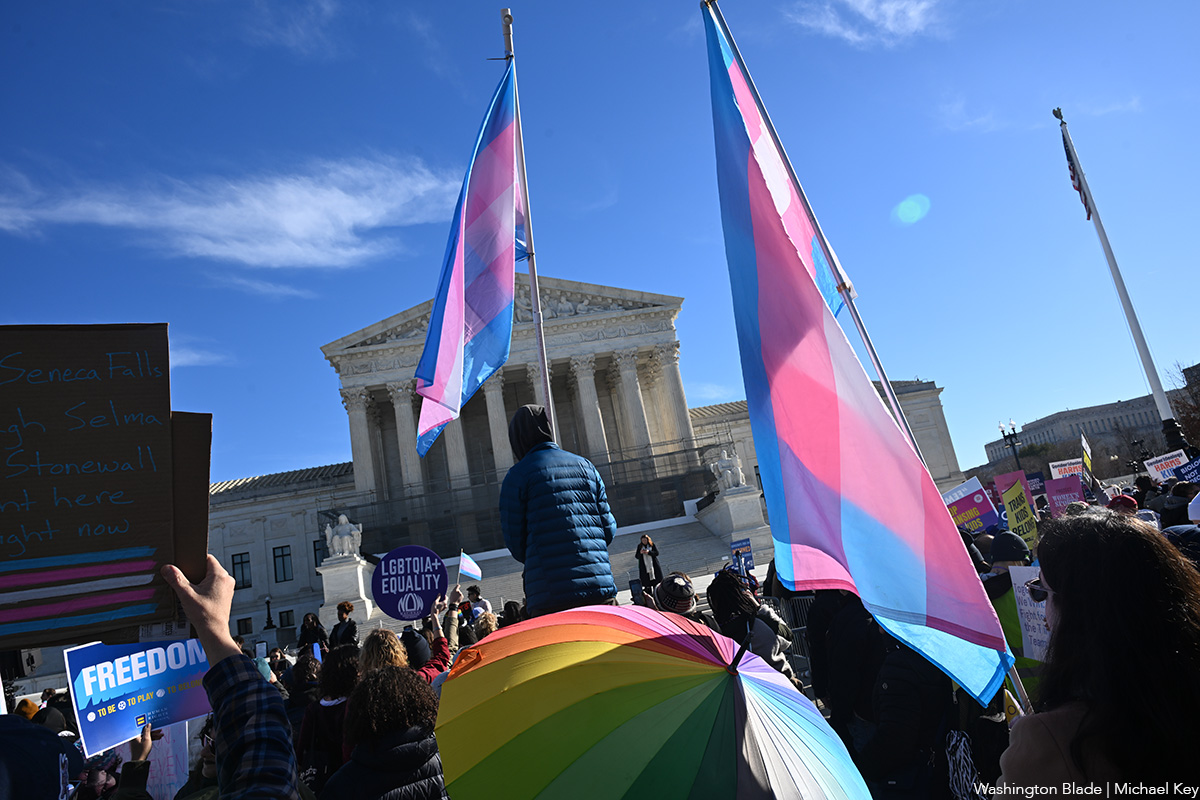
Hundreds of supporters and opponents of trans rights gathered outside of the United States Supreme Court during oral arguments for Little v. Hecox and West Virginia v. B.P.J. on Tuesday. Two competing rallies were held next to each other, with politicians and opposing movement leaders at each.
“Trans rights are human rights!” proclaimed U.S. Sen. Ed Markey (D-Mass.) to the crowd of LGBTQ rights supporters. “I am here today because trans kids deserve more than to be debated on cable news. They deserve joy. They deserve support. They deserve to grow up knowing that their country has their back.”
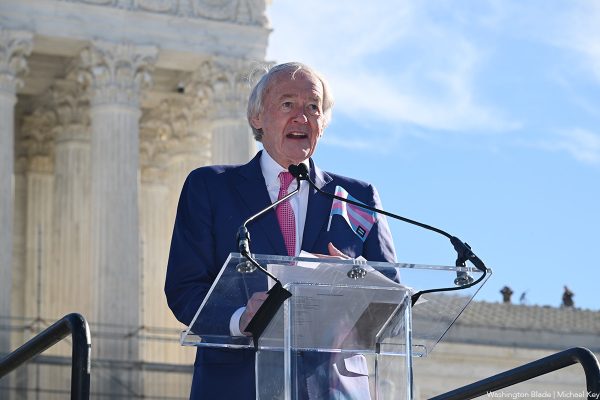
“And I am here today because we have been down this hateful road before,” Markey continued. “We have seen time and time again what happens when the courts are asked to uphold discrimination. History eventually corrects those mistakes, but only after the real harm is done to human beings.”
View on Threads
U.S. Education Secretary Linda McMahon spoke at the other podium set up a few feet away surrounded by signs, “Two Sexes. One Truth.” and “Reality Matters. Biology Matters.”
“In just four years, the Biden administration reversed decades of progress,” said McMahon. “twisting the law to urge that sex is not defined by objective biological reality, but by subjective notion of gender identity. We’ve seen the consequences of the Biden administration’s advocacy of transgender agendas.”
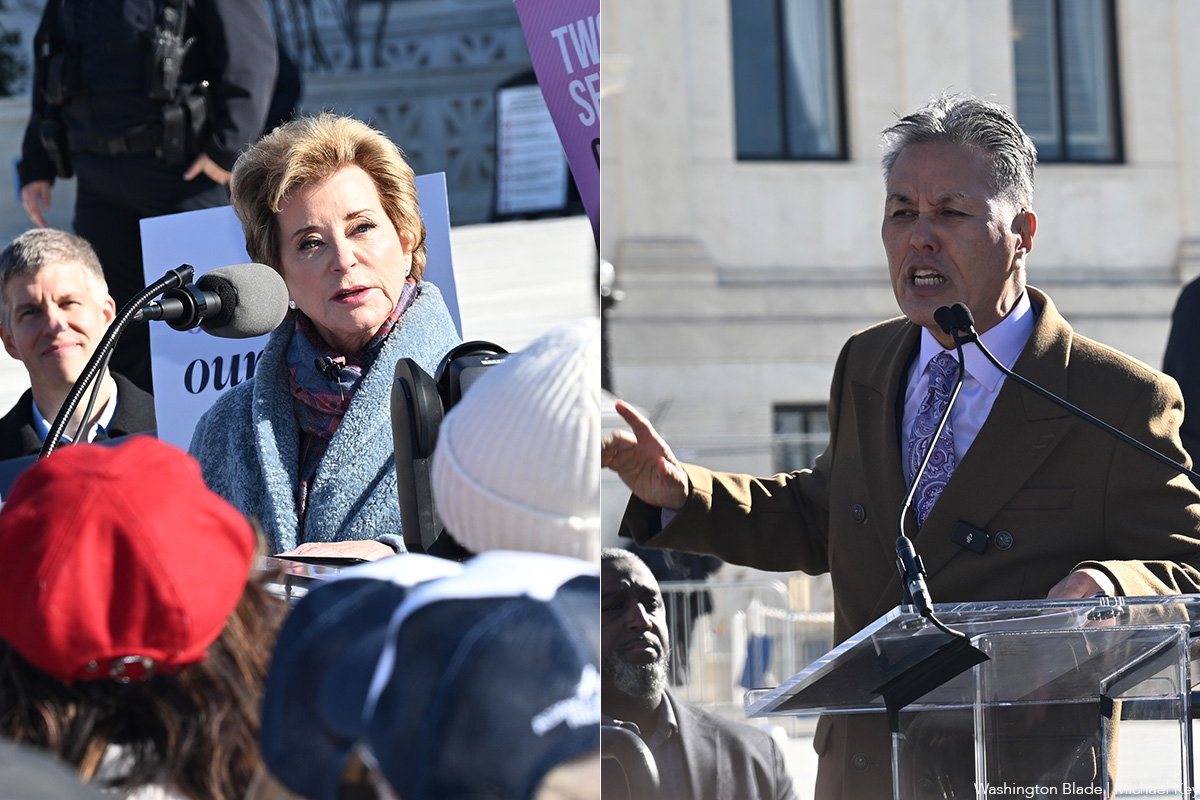
U.S. Rep. Mark Takano (D-Calif.), chair of the Congressional Equality Caucus, was introduced on the opposing podium during McMahon’s remarks.
“This court, whose building that we stand before this morning, did something quite remarkable six years ago.” Takano said. “It did the humanely decent thing, and legally correct thing. In the Bostock decision, the Supreme Court said that trans employees exist. It said that trans employees matter. It said that Title VII of the Civil Rights Act protects employees from discrimination based on sex, and that discrimination based on sex includes discrimination based on gender identity and sexual orientation. It recognizes that trans people have workplace rights and that their livelihoods cannot be denied to them, because of who they are as trans people.”
“Today, we ask this court to be consistent,” Takano continued. “If trans employees exist, surely trans teenagers exist. If trans teenagers exist, surely trans children exist. If trans employees have a right not to be discriminated against in the workplace, trans kids have a right to a free and equal education in school.”
Takano then turned and pointed his finger toward McMahon.
“Did you hear that, Secretary McMahon?” Takano addressed McMahon. “Trans kids have a right to a free and equal education! Restore the Office of Civil Rights! Did you hear me Secretary McMahon? You will not speak louder or speak over me or over these people.”
Both politicians continued their remarks from opposing podiums.
“I end with a message to trans youth who need to know that there are adults who reject the political weaponization of hate and bigotry,” Takano said. “To you, I say: you matter. You are not alone. Discrimination has no place in our schools. It has no place in our laws, and it has no place in America.”

Police mental health struggles gain growing attention
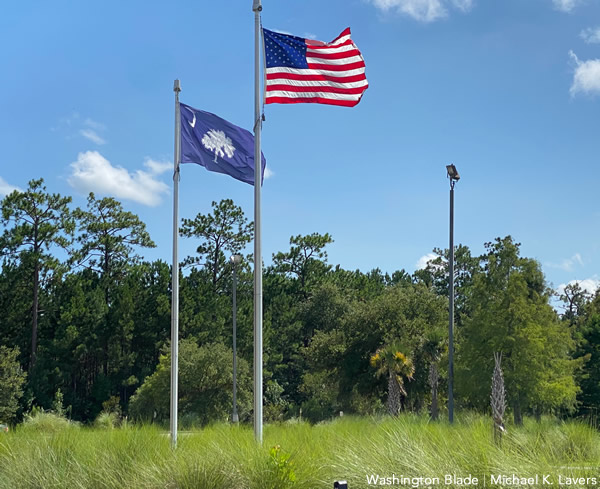
Man faces first S.C. ‘hate intimidation’ charge

Trump budget would codify expanded global gag rule

D.C. is the place for the Democratic Socialists of America

Key lifestyle changes can help patients cope with diabetes

VIDEO: Gay journalist detained for booing Trumps at ‘Chicago’ opening night

Pam Bondi ousted as attorney general

Idaho Gov. signs harshest anti-trans bathroom bill in the country

JD Vance to travel to Hungary next week

Mayor Bowser signs bill requiring insurers to cover PrEP
-

 The White House5 days ago
VIDEO: Gay journalist detained for booing Trumps at ‘Chicago’ opening night
-
The White House5 days ago
Pam Bondi ousted as attorney general
-
Idaho5 days ago
Idaho Gov. signs harshest anti-trans bathroom bill in the country
-
Hungary5 days ago
JD Vance to travel to Hungary next week