White House
Megan Rapinoe among 17 Presidential Medal of Freedom recipients
White House ceremony to take place July 7

The White House on Friday released President Joe Biden’s selection of recipients for bestowing the nation’s highest civilian honor, the Presidential Medal of Freedom. The awards will be presented at the White House on July 7.
Included among the seventeen honorees are Megan Rapinoe, the out Olympic gold medalist and two-time Women’s World Cup champion. She also captains OL Reign in the National Women’s Soccer League. She is a prominent advocate for gender pay equality, racial justice and LGBTQ rights.
Also selected by the president for a posthumous recognition was Richard Trumka, the powerful labor leader and longtime Democratic ally of the LGBTQ community who passed away last August. Trumka had led the AFL-CIO since 2009 and who throughout his career, was an outspoken advocate for LGBTQ Americans, social and economic justice.
The Presidential Medal of Freedom is the Nation’s highest civilian honor, presented to individuals who have made exemplary contributions to the prosperity, values, or security of the U.S., world peace, or other significant societal, public or private endeavors.

The following individuals will be awarded the Presidential Medal of Freedom:
Simone Biles
Simone Biles is the most decorated American gymnast in history, with a combined total of 32 Olympic and World Championship medals. Biles is also a prominent advocate for athletes’ mental health and safety, children in the foster care system and victims of sexual assault.
Sister Simone Campbell
Sister Simone Campbell is a member of the Sisters of Social Service and former Executive Director of NETWORK, a Catholic social justice organization. She is also a prominent advocate for economic justice, immigration reform and healthcare policy.
Julieta García
Dr. Julieta García is the former president of The University of Texas at Brownsville, where she was named one of Time magazine’s best college presidents. Dr. García was the first Hispanic woman to serve as a college president and dedicated her career to serving students from the Southwest Border region.
Gabrielle Giffords
Former Congresswoman Gabby Giffords was the youngest woman ever elected to the Arizona state Senate, serving first in the Arizona legislature and later in Congress. A survivor of gun violence, she co-founded Giffords, a nonprofit organization dedicated to gun violence prevention.
Fred Gray
Fred Gray was one of the first black members of the Alabama State legislature since Reconstruction. As an attorney, he represented Rosa Parks, the NAACP and Martin Luther King, who called him “the chief counsel for the protest movement.”
Steve Jobs (posthumous)
Steve Jobs (d. 2011) was the co-founder, chief executive and chair of Apple, Inc., CEO of Pixar and held a leading role at the Walt Disney Company. His vision, imagination and creativity led to inventions that have, and continue to, change the way the world communicates, as well as transforming the computer, music, film and wireless industries.
Father Alexander Karloutsos
Father Alexander Karloutsos is the former Vicar General of the Greek Orthodox Archdiocese of America. After over 50 years as a priest, providing counsel to several U.S. presidents, he was named by His All Holiness Ecumenical Patriarch Bartholomew as a protopresbyter of the Ecumenical Patriarchate.
Khizr Khan
Khizr Khan is a Gold Star father and founder of the Constitution Literacy and National Unity Center. He is a prominent advocate for the rule of law and religious freedom and served on the United States Commission on International Religious Freedom under President Biden.
Sandra Lindsay
Sandra Lindsay is a New York critical care nurse who served on the front lines of the COVID-19 pandemic response. She was the first American to receive a COVID-19 vaccine outside of clinical trials and is a prominent advocate for vaccines and mental health for health care workers.
John McCain (posthumous)
John McCain (d. 2018) was a public servant who was awarded a Purple Heart with one gold star for his service in the U.S. Navy in Vietnam. He also served the people of Arizona for decades in the U.S. House of Representatives and U.S. Senate and was the Republican nominee for president in 2008.
Diane Nash
Diane Nash is a founding member of the Student Nonviolent Coordinating Committee who organized some of the most important civil rights campaigns of the 20th century. Nash worked closely with Martin Luther King, who described her as the “driving spirit in the nonviolent assault on segregation at lunch counters.”
Megan Rapinoe
Megan Rapinoe is an Olympic gold medalist and two-time Women’s World Cup champion. She also captains OL Reign in the National Women’s Soccer League. She is a prominent advocate for gender pay equality, racial justice and LGBTQI+ rights.
Alan Simpson
Alan Simpson served as a U.S. senator from Wyoming for 18 years. During his public service, he has been a prominent advocate on issues including campaign finance reform, responsible governance and marriage equality.
Richard Trumka (posthumous)
Richard Trumka (d. 2021) was president of the 12.5-million-member AFL-CIO for more than a decade, president of the United Mine Workers, and secretary-treasurer of the AFL-CIO. Throughout his career, he was an outspoken advocate for social and economic justice.
Wilma Vaught
Brigadier General Wilma Vaught is one of the most decorated women in the history of the U.S. military, repeatedly breaking gender barriers as she rose through the ranks. When she retired in 1985, she was one of only seven women generals in the Armed Forces.
Denzel Washington
Denzel Washington is an actor, director, and producer who has won two Academy Awards, a Tony Award, two Golden Globes, and the 2016 Cecil B. DeMille Lifetime Achievement Award. He has also served as National Spokesman for the Boys & Girls Clubs of America for over 25 years.
Raúl Yzaguirre
Raúl Yzaguirre is a civil rights advocate who served as CEO and president of National Council of La Raza for thirty years. He also served as U.S. Ambassador to the Dominican Republic under President Barack Obama.





White House
Trump-Vance administration’s LGBTQ brain drain: what you need to know
Several high profile figures have left government since January 2025
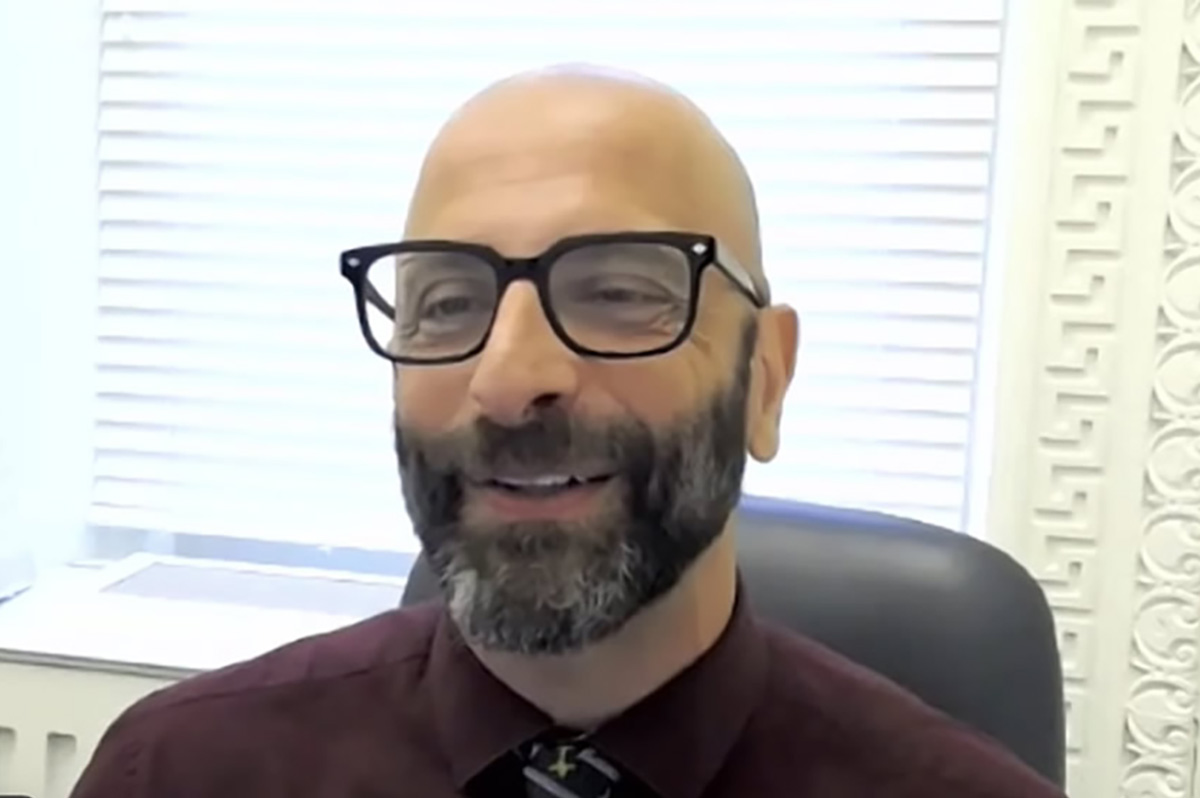
Uncloseted Media published this article on Aug. 21.
By SPENCER MACNAUGHTON and HOPE PISONI | Since President Donald Trump regained office in January 2025, he and his administration have waged an all-out war against the LGBTQ community.
This has led queer Americans to move to other countries at unprecedented rates — Rainbow Railroad, a Canadian nonprofit that supports LGBTQ asylum seekers, reported receiving a huge increase in inquiries from the U.S. last year.
The same pattern is playing out within the government. And it’s leading to a brain drain of competent queer employees and allies who are either resigning or being fired, often because of their LGBTQ identity or their belief that queer people deserve basic human rights.
Here are six examples of federal workers who had a messy exit from Trump 2.0:
Demetre Daskalakis
- WHAT HE DID: Dr. Daskalakis is one of the foremost LGBTQ health professionals in the U.S. Under Trump’s first term, he was appointed director of the Division of HIV/AIDS Prevention at the Centers for Disease Control and Prevention. Under Biden, he also served as the deputy response coordinator for mpox at the White House.
- WHAT HAPPENED: While he continued a lot of this work under Trump 2.0, he didn’t last long. In August 2025, he resigned from the CDC, writing in his resignation letter that he was “unable to serve in an environment that treats CDC as a tool to generate policies and materials that do not reflect scientific reality and are designed to hurt rather than to improve the public’s health.”
- BOTTOM LINE: I recently interviewed Daskalakis, where he told me that leadership from RFK Jr.’s Health and Human Services Department justified HIV cuts by saying the virus is “just too woke.”
Julia Curlee
- WHAT SHE DID: Julia Curlee worked in intelligence for nearly two decades between the CIA and the National Security Council. Earlier this week, she wrote an article in The Atlantic explaining how she had served as Mike Pence’s daily briefer and the NSC’s director for intelligence programs. During Trump 1.0, she briefed the president on Air Force One.
- WHAT HAPPENED: Curlee told CNN this week that in Trump’s second term, her treatment by the federal government transformed. She was no longer allowed to use the women’s bathroom on federal property and had to leave her workplace to relieve herself. Her passport was also reissued to read “male,” which led to complications when traveling abroad. In March 2025, less than 70 days into Trump’s second term, Curlee says she received a call while at a rib joint in Virginia with her family informing her that her White House tour was over and that they couldn’t tell her why. She continued to work for the CIA for some months, but she later resigned.
- BOTTOM LINE: Curlee wrote that moments after she learned she was fired from the White House, she saw a post from right-wing political activist Laura Loomer that read “A transgender, Biden holdover who hates President Trump is still working in the NSC intel office. I’m told there are several NSC staffers who have complained that this trans Biden holdover hasn’t been fired yet, but nothing is being done about it.”
Marc Seawright
- WHAT HE DID: Marc Seawright worked for more than eight years at the U.S. Equal Employment Opportunity Commission. Most recently, he served as the EEOC’s director of information governance and strategy, where he oversaw tech policy to help combat workplace harassment and discrimination.
- WHAT HAPPENED: During Trump 2.0, Seawright was ordered to develop technology that would erase any mention of LGBTQ identities from EEOC outreach materials. “[My expertise] was being leveraged to perpetuate discrimination against people like me,” he told the Associated Press. In that article, Seawright and other transgender and gender nonconforming federal employees described their “fear, grief, frustration, and distress working for the federal government at a time when it rejects them — often with no clear path for recourse or support.”
- BOTTOM LINE: Seawright quit in June, citing a hostile work environment. “It became overwhelming. It felt insurmountable,” he told the AP. He has now hired lawyers at Katz Banks Kumin and has filed a discrimination complaint.
David Maltinsky
- WHAT HE DID: Until 2025, Maltinsky worked for more than 16 years at the FBI as an intelligence specialist. In 2025, he was training to become a special agent, but three weeks ahead of graduation, he was fired.
- WHAT HAPPENED: On Oct. 1, he was delivered a letter from FBI Director Kash Patel informing him that he was being fired for an “inappropriate display of political signage.” The signage in question, according to Maltinsky, was a Pride flag displayed in his work station at a previous post in Los Angeles. The flag had been given to him by the FBI’s LA Field Office, and Maltinsky says he had been told by multiple supervisors that displaying it would not be a violation.
- BOTTOM LINE: Maltinsky is currently suing the FBI and the Department of Justice, arguing that his firing constituted unlawful discrimination.
Mary Brinkmeyer
- WHAT SHE DID: Brinkmeyer had been working as a psychologist for the Department of Veterans Affairs since 2008. She held multiple leadership roles, including the LGBTQ veteran care coordinator at the Hampton VA Medical Center. She established the first military support group for trans servicemembers and was awarded Navy Psychology Civilian Psychologist of the Year in 2016.
- WHAT HAPPENED: Following an early Trump executive order directing the federal government to purge any practices promoting “gender ideology,” Brinkmeyer says staff at her workplace were told to remove all LGBTQ-affirming materials from both public and private areas, as well as to identify “anything in medical records, training materials, or patient resources that could be considered ‘gender ideology.’” When she refused to comply and confronted her supervisor, she says her concerns were dismissed.
- BOTTOM LINE: Brinkmeyer resigned in February 2025, stating that she “didn’t want to be complicit in something that I knew was wrong.”
Amy Paris
- WHAT SHE DID: Paris was the second-highest ranking trans woman in the federal government, serving as a deputy digital services lead in the HHS Department, where she oversaw the safety of organ donations. Prior to that, she worked in a number of tech-related roles across the federal government since the Bush administration. She helped create cross-agency spending trackers, streamlined unemployment insurance during the pandemic and implemented trans-inclusive policies like gender-neutral passports.
- WHAT HAPPENED: Paris was fired as part of a string of mass layoffs across the federal government in February 2025. While the HHS did not publicly comment on why she was fired, Paris says she was told it was because of her performance, despite the fact that she got a 4.75 out of five on her last performance review and was praised for her work by multiple Biden administration officials.
- BOTTOM LINE: Paris told the 19th she suspected her firing was politically motivated, saying the Trump administration is “trying to sow discord and disrupt confidence in the workings of the federal government.”
White House
White House targets gender-affirming care funding, states fight back
Attorneys general from Md. and elsewhere are fighting directives
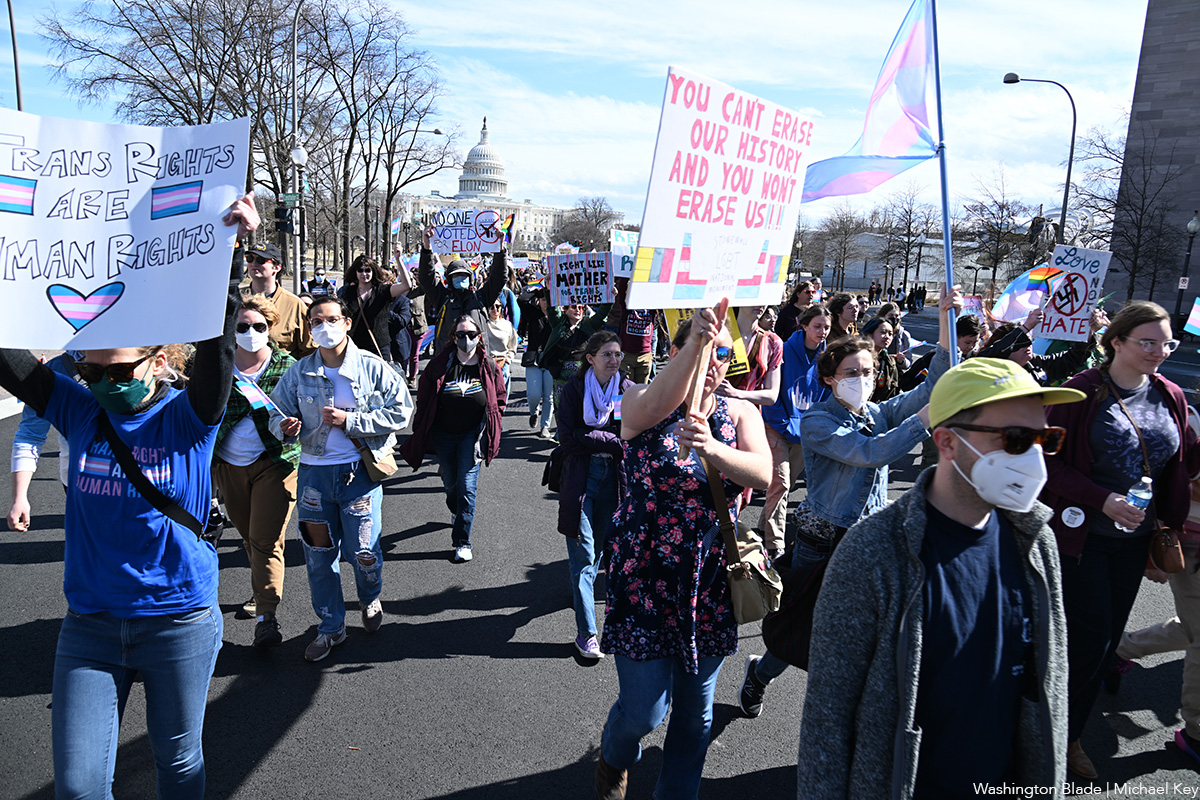
The Centers for Medicare and Medicaid Services announced last week that federal funding could no longer be used to pay for gender-affirming care through Medicaid or the Children’s Health Insurance Program.
The rule prohibits federal Medicaid dollars from covering puberty blockers, hormone therapy, and rare instances of surgery for enrollees under the age of 18 in the Medicaid program and under the age of 19 in CHIP. It does not prohibit coverage of counseling or psychotherapy as part of gender-affirming care.
The decision to restrict what healthcare is covered by federal dollars is part of a longer, more aggressive stance the Trump-Vance administration is taking toward LGBTQ healthcare.
Since taking the White House back for his second term, Trump has signed three executive orders that directly target transgender Americans. They include Executive Order 14168, “Defending Women From Gender Ideology Extremism and Restoring Biological Truth to the Federal Government” that requires the federal government to recognize only a person’s sex at birth, not their gender identity; Executive Order 14183, “Prioritizing Military Excellence and Readiness,” which attempts to remove transgender service members from the military and prevent them from enrolling; and an executive order that helped spur this change by restricting gender-affirming care.
The administration’s choice to villainize gender-affirming care, despite it being considered a best medical practice recommended by nearly every major medical group for gender dysphoria or gender incongruence, including the American Medical Association, American Academy of Pediatrics, and American Psychological Association, comes as KFF, a source for health policy research and polling data, estimates about 130,000 young trans people with Medicaid or CHIP coverage could be impacted by the policy.
“Today, we are ending federal taxpayer funding for sex-rejecting procedures on children,” U.S. Department of Health and Human Services Secretary Robert F. Kennedy, Jr., said last week when announcing the change. “These interventions carry serious risks and can cause irreversible harm. The federal government will no longer use Medicaid and CHIP dollars to fund procedures that fail to meet the evidentiary standard our children deserve.”
“Children deserve our protection, not experimental interventions that pose serious risks and convey no proven benefits,” said CMS Administrator Mehmet Oz. “By cutting off federal funds for these sex-rejecting procedures, we’re following the science, saving taxpayer dollars, and, most importantly, protecting children from potentially irreversible harm so they can truly flourish.”
The administration’s push is having a chilling effect on state healthcare legislation — more states now prohibit gender-affirming care than ever before. States with gender-affirming care restrictions jumped from four in 2023 to 27 states today.
The funding change has been met with fierce pushback from LGBTQ advocates, health experts, and government officials across the country before the rule goes into effect.
Some of the first actions against this policy began in July 2025.
Twenty-one states have attempted to restrict this effort in some fashion from going through as the White House intends. They include Arizona, California, Colorado, Connecticut, Delaware, Illinois, Maryland, Massachusetts, Maine, Michigan, Minnesota, Nevada, New Mexico, New Jersey, New York, Oregon, Rhode Island, Vermont, Washington, and Wisconsin, as well as Pennsylvania Gov. Josh Shapiro on behalf of his state.
The coalition of attorneys general filed lawsuits challenging nine separate provisions of the final rule, arguing that they would make it harder for consumers to get coverage through the ACA, increase costs for states, and weaken key ACA protections.
The U.S. District Court for the District of Massachusetts on Aug. 15 struck down a key provision of a Trump-Vance administration final rule that would have excluded coverage of certain types of gender-affirming care as essential health benefits under the Affordable Care Act. Essential health benefits are subject to the ACA’s financial protections, including limits on out-of-pocket costs.
“Everyone deserves access to health coverage,” said California Attorney General Rob Bonta. “The Trump administration tried to exclude gender-affirming care from qualifying as an essential health benefit. We fought back, and the court’s ruling means this care can — and in many states must — qualify for the ACA’s financial protections, ensuring transgender people have an equal opportunity to benefit from the ACA.”
“The Trump administration tried to make essential care unaffordable for transgender Marylanders by stripping it out of the ACA’s cost protections,” said Maryland Attorney General Anthony Brown. “We fought to keep that care covered, and we won. My Office will always defend Marylanders’ right to the care they need.”
The final rule at issue — the “Marketplace Integrity and Affordability” rule — was proposed by the Trump-Vance administration in March 2025, purportedly to “curb ACA enrollment fraud” and reduce federal spending on subsidies that help consumers afford ACA coverage. Among other changes, the rule would have removed certain types of gender-affirming care from the ACA’s 10 essential health benefit categories.
“This president would rather target young people than lower costs or expand access to health care. It is reprehensible that our federal government is intent on hurting and isolating the adolescents it is supposed to protect. I will use every tool at my disposal to fight this proposal and protect transgender Americans and their families,” said New York Attorney General Letitia James in December after the policy was announced.
In addition to state government resistance to the change, multiple LGBTQ advocates have committed to protecting the right to healthcare for LGBTQ children.
Rocky Mountain Equality CEO Mardi Moore affirmed those in Colorado would continue to help people most at risk if the change goes through.
“First, to the families impacted by this news: you will not be cut off immediately. The rule takes effect Oct. 13, 2026, and providers can continue to bill Medicaid and CHIP for youth already receiving gender-affirming care for up to six months after that. Rocky Mountain Equality is here, and we can help you understand your options to continue your child’s care.
“This is discrimination dressed up as rule-making. Government healthcare policy should expand what people can access, not strip away care that families and doctors have already determined is medically necessary,” Moore added. “We’ve seen this pattern before with other kinds of essential care, and it rarely stops with just one restriction. Any effort to ban or limit care opens the door for more restrictions on more kinds of care.”
The Human Rights Campaign, the largest LGBTQ lobbying group in the U.S., issued multiple statements following the announcement, and has filed a similar lawsuit against the federal government for prohibiting gender-affirming care to federal employees using federal health plans.
HRC President Kelley Robinson said taking a hard stance against what the administration is presenting as a win for the American people that will ultimately restrict healthcare options for thousands of Americans.
“Every young person is entitled to the health care that they, their parents, and their medical providers agree that they need, without politicians interfering with these important and highly personal decisions. And yet, rather than working to make healthcare more affordable and accessible, the Trump administration continues to obsess over the healthcare needs of trans youth, this time by cutting off health insurance coverage for those who rely on Medicaid and CHIP to access that care,” Robinson said. “The Trump administration is terrorizing trans youth and their families with these kinds of actions, and it has to stop.”
White House
HRC files class action over federal ban on gender-affirming care coverage
Lawsuit filed Monday challenges White House effort to restrict care

The Human Rights Campaign Foundation, the nonprofit sister organization to the largest LGBTQ human rights lobbying and advocacy organization in the U.S., along with law firms Correia & Puth and Cohen Milstein Sellers & Toll, filed a class action lawsuit against the government as it attempts to restrict gender-affirming healthcare for federal employees.
The suit, filed on Monday, alleges that the Office of Personnel Management, run by Trump appointee Scott Kupor, is discriminating against LGBTQ federal employees (and their families and retired employees) by prohibiting health insurance coverage for gender-affirming care under the Federal Employees Health Benefits and Postal Service Health Benefits plans. There are five plaintiffs named in the complaint, but it extends to others who have those healthcare plans.
The document asserts that OPM’s prohibition on coverage for “gender transition” care in the FEHB and PSHB programs violates Title VII, the federal law that prohibits discrimination based on sex, race, color, religion, or national origin.
The policy, which was implemented on Jan. 1 following the 2025 issuing of Program Carrier Letter, mandated that insurance providers in these programs deny any coverage for gender-affirming care. In February, HRC filed a federal complaint with OPM over the change in healthcare policy, which was ultimately passed to the Equal Employment Opportunity Commission for review. That complaint is now an officially filed class action lawsuit in the U.S. District Court for the District of Columbia.
Research from the Williams Institute at UCLA Law, a think tank that collects data and conducts research on issues related to sexual orientation and gender identity, indicates that this policy denying gender-affirming care will impact healthcare access for at least 39,400 current and former federal employees and their dependents.
Human Rights Campaign President Kelley Robinson released a statement following the lawsuit’s filing.
“Our message to the Trump administration is simple: we’ll see you in court,” said Robinson. “Healthcare access should never be weaponized to advance discrimination — and the denial of coverage for critical healthcare based simply on who you are blatantly violates the rights of all of us.”
Gender-affirming care has been under constant attack by the Trump-Vance administration since its return to the White House, despite the practice being considered as extensively evidence-based but also supported by nearly every major medical organization. This type of care is provided to all people—not just transgender people—and includes things such as social affirmation, including using correct names and pronouns and wearing clothing that matches a person’s gender identity; mental health support, such as counseling to reduce depression and anxiety; and, in some cases, medical interventions such as reversible puberty blockers or hormone therapy when deemed medically appropriate.
“Federal employees have been through the wringer with the Trump administration,” said Cathy Harris, partner at Correia & Puth. “We draw the line at blatant discrimination to deny healthcare to our nation’s dedicated civil servants.”
“This odious policy is the latest example of the Trump administration’s obsession with targeting transgender people, using shameful and cruel tactics to threaten their employment, their health, and the well-being of themselves and their families,” Robinson added. “OPM’s actions will not go unchallenged, and we’ll continue to fight so that federal employees and their families receive the dignity they deserve.”
This is not the first time the White House has directly attacked gender-affirming care.
In January 2025, the administration issued Executive Order 14187, titled “Protecting Children from Chemical and Surgical Mutilation.” The order directs federal agencies to restrict gender-affirming medical care — including puberty blockers, hormone therapy, and surgeries — for individuals under the age of 19.
For more information on how to get involved with the lawsuit, visit hrc.org.

Furries take over the Metro

A roundup of fall events not to be missed

Activists protest outside Turkish Embassy in D.C.

Republican challenger misgenders McBride during forum, forced to leave

Queer mega stars coming to D.C. this fall

Dolly Parton biography puts her hardships into context

PHOTOS: SMYAL Fall Brunch

Fashion icon Bob Mackie dead at 87

Dozens detained after Turkish authorities raid LGBTQ groups, businesses