News
Marco Rubio: Same-sex marriage bill ‘a stupid waste of time’
Schumer signals plan to bring measure to Senate floor
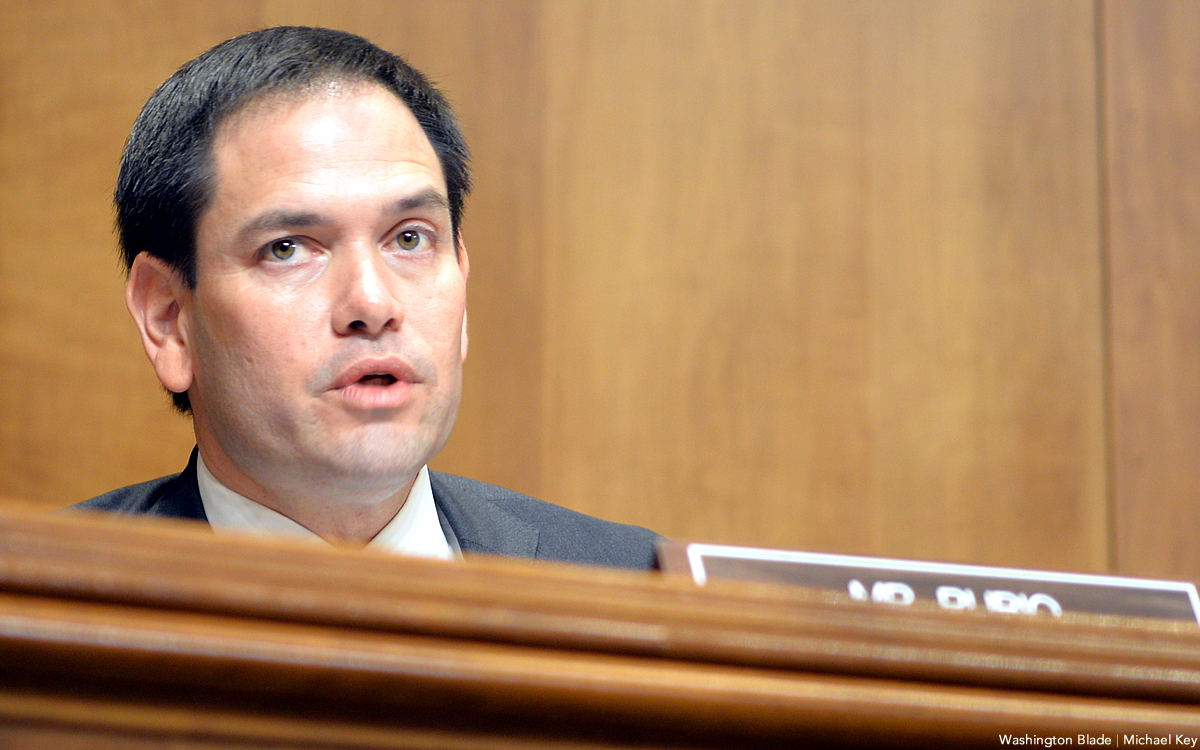
Sen. Marco Rubio (R-Fla.) left no question Wednesday about where he stands on legislation to codify same-sex marriage, telling reporters the measure is a “stupid waste of time.”
“That bill’s not important. It’s a waste of our time on a non issue,” Rubio said, according to Business Insider’s Bryan Metzger. “But I know plenty of gay people in Florida that are pissed off about gas prices.”
Rubio’s remarks are consistent with his comment in previous years in opposition to same-sex marriage. As a presidential candidate in 2015, Rubio said the U.S. Supreme Court’s 2015 ruling in Obergefell v. Hodges is “not settled law” and compared the decision to Roe v. Wade, which justices recently overturned in the Dobbs decision.
The Florida Republican was asked his views on the Respect for Marriage Act, which the House approved Tuesday on a bipartisan basis in an effort to protect same-sex marriage after the ruling in the Dobbs case, as reporters on Capitol Hill sought to determine whether sufficient GOP support exists in the Senate to end a filibuster.
Senate Majority Leader Charles Schumer (D-N.Y.) said on the Senate floor Wednesday he was counting votes and plans to bring the measure to a floor vote.
Sen. Mitt Romney (R-Utah), now a critic of former President Trump but formerly a champion of a proposed constitutional amendment that would have banned same-sex marriage nationwide, said the House bill was “unnecessary,” according to Politico’s Burgess Everett.
“I haven’t given consideration to that legislation, in part because the law isn’t changing and there’s no indication that it will,” Romney was quoted as saying.
“I was really impressed by how much bipartisan support it got in the House,” Schumer said, according to the Washington Post. “I want to bring this bill to the floor, and we’re working to get the necessary Senate Republican support to ensure it would pass.”
Republicans who signaled support for the legislation include Sen. Rob Portman (R-Ohio), who said he’d seek to co-sponsor the Senate version of the bill, and Sen. Thom Tillis (R-N.C.), who told reporters he “probably will” vote for it.
One Democratic holdout may be Sen. Joe Manchin (D-W.Va.), who once had the distinction of being the only member of the Senate Democratic caucus not to have come out in favor of same-sex marriage.
Manchin, however, signaled general support for the Respect for Marriage Act when asked Wednesday about the legislation, according to CNN’s Manu Raju.
“I haven’t seen the final print but I don’t have a problem,” Manchin was quoted as saying.





District of Columbia
Bowser, Office of LGBTQ Affairs announce LGBTQ+ History Month events
High Heel Race to take place Oct. 27
D.C. Mayor Muriel Bowser and the D.C. Mayor’s Office of LGBTQ Affairs have announced they will join the local LGBTQ community in celebrating LGBTQ+ History Month throughout October.
An Oct. 2 joint statement from Bowser and the Office of LGBTQ Affairs says the celebration will include several events in partnership with D.C. LGBTQ organizations and LGBTQ businesses. It says among the events will be a “Birthday Bash” celebrating the 20th anniversary of the Office of LGBTQ Affairs.
“Throughout October, Washingtonians are invited to honor the people, places, movements, and milestones that have shaped the District’s LGBTQIA+ community and the community’s ongoing contributions to Washington, D.C.,” the statement says.
“LGBTQIA+ History Month is a reminder that our history is not simply something we look back on — it is something we continue to make,” Japer Bowles, director of the Office of LGBTQ Affairs said in the statement.
Bowles added that in celebrating the 20th anniversary of the Office of LGBTQ Affairs “we honor the generations of advocates, artists, organizers, businesses, and residents who built our community and continue to shape its future. This milestone is an opportunity to celebrate how far we have come while continuing to build a more welcoming, inclusive and connected Washington, D.C.”
Equality Forum, the Philadelphia-based group that initiated the nationwide annual LGBTQ+ History Month in October, has said it recognizes the history, achievements, and contributions of LGBTQ people and the organizations they have led to advance the rights of LGBTQ people.
The statement released by Bowser and the D.C. Mayor’s Office of LGBTQ Affairs says these are among the upcoming events planned for October:
The Relationship Lab: A Healthy Relationships Series
Join us for an engaging series exploring what makes relationships healthy and how to recognize the signs when they’re not. Facilitated by DC SAFE in partnership with MOLGBTQA (The Mayor’s Office of LGBTQ Affairs.)
- When: Tuesday, Oct. 6, 13, and 20, 6-7:30 p.m.
- Where: 899 North Capitol St. N.E.
- RSVP: The Relationship Lab
MOLGBTQA Birthday Bash
Join us for the 20th Anniversary Celebration! We will be hosting an upbeat gathering, highlighting community leaders, advocates, artists, and institutions who have advanced LGBTQIA+ progress in Washington, D.C. over the last two decades. This event will highlight key milestones and the contributions of LGBTQIA local community partners with live entertainment and free refreshments.
- When: Thursday, Oct. 15, 6-9 p.m.
- Where: Penn Social (801 E St. N.W.)
- RSVP: s.dc.gov/MOLGBTQABday
Mayor’s LGBTQ+ Advisory Committee
Come get to know the newest members of the Mayor’s LGBTQ+ Advisory Committee. This diverse group of leaders, business owners, and advocates advise the mayor and Director Bowles on issues relating to DC’s LGBTQIA+ community and the Office of LGBTQ Affairs.
- When: Monday, Oct. 19, 6-7 p.m.
- Where: DC LGBTQ+ Community Center (1827 Wiltberger St., N.W.)
- RSVP: s.dc.gov/LGBTQMACoct
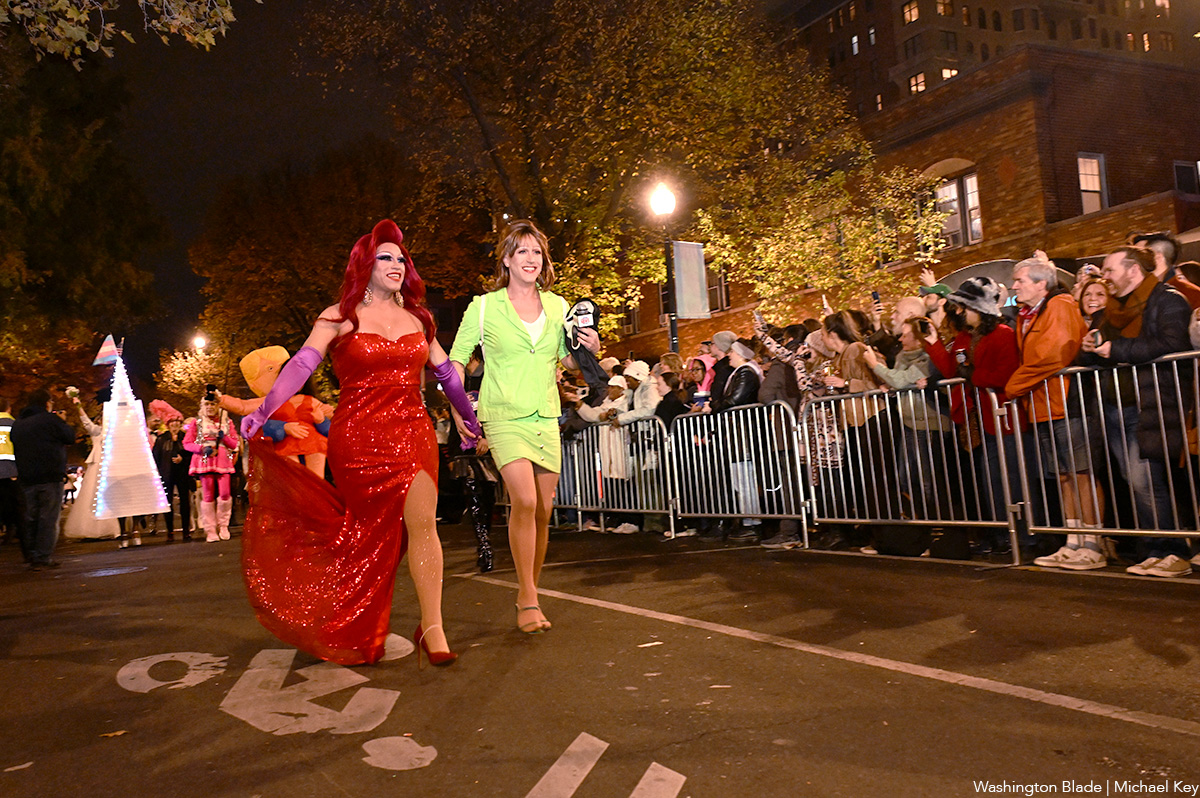
39th Annual 17th Street High Heel Race
Join us for the High Heel Race, cheering the queens, kings, and our community members as they sprint down 17th Street in heels, creativity, and pure D.C. spirit. From lively drag performances to thousands of neighbors filling the street, don’t miss this D.C. night!
- When: Tuesday, Oct. 27, 6-10 p.m.
- Where: 17th Street between R and P Streets, N.W.
- RSVP: s.dc.gov/2026HHR
What appeared to be the first LGBTQ+ History Month-related event to take place in D.C., called PRIDEtoberfest, was held Saturday, Oct. 3 from noon to 11:30 p.m. at the city’s Wunder Garten outdoor beer garden and event facility at 1101 First St., N.E. A flyer announcing the event says the Capital Pride Alliance and the Mayor’s Office of LGBTQ Affairs were among the event’s participants.
“We proudly attended, tabled, and I gave remarks at the Pridetoberfest this weekend,” Japer Bowles, director of the LGBTQ Affairs Office told the Blade.”
Brazil
Transgender woman elected to Brazilian Chamber of Deputies
Thabatta Pimenta is first trans person from northeast Brazil elected to Congress
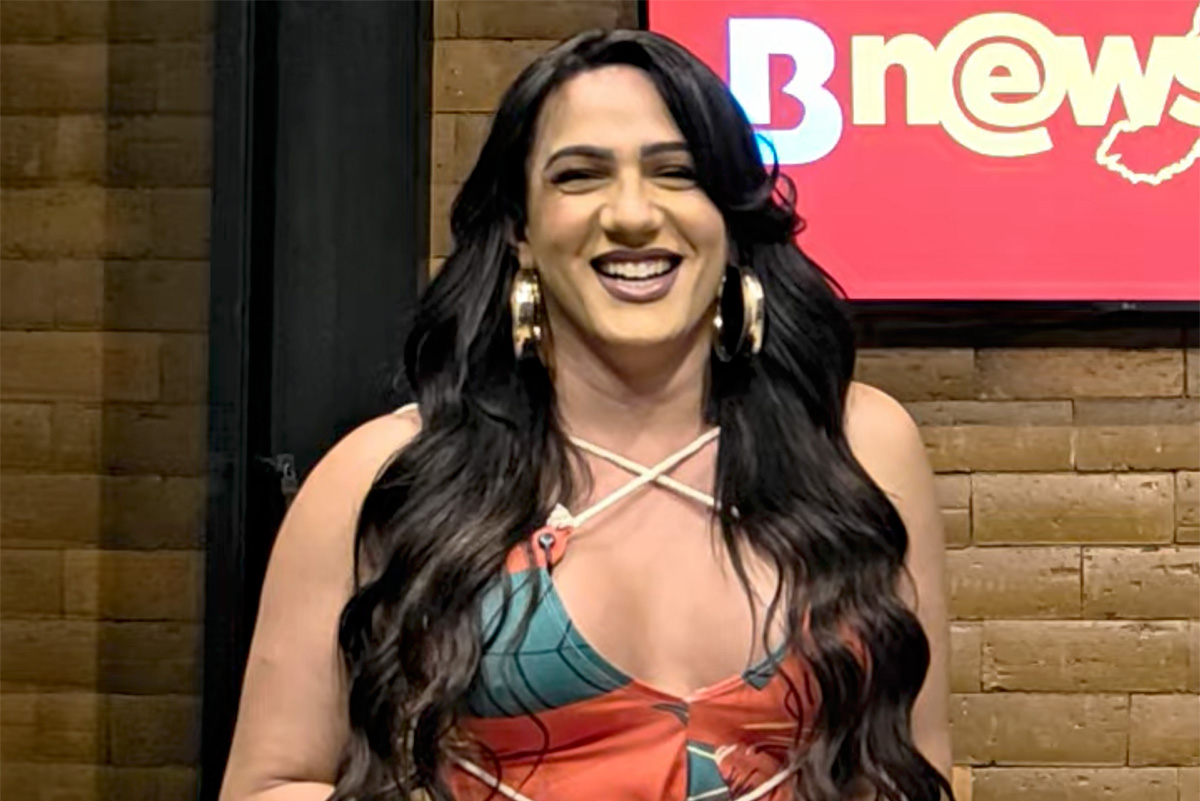
SÃO PAULO — Voters in Brazil’s Rio Grande do Norte state on Sunday elected a transgender woman to the country’s Chamber of Deputies.
Natal Municipal Councilwoman Thabatta Pimenta, who is a member of the Green Party, won with 92,743 votes. She is the first trans woman from northeast Brazil elected to the country’s Congress.
Pimenta became emotional when she was speaking to her supporters after she won. Her brother Ryan, who has cerebral palsy, was by her side.
“This victory belongs to the people of Rio Grande do Norte,” she said. “It is a victory built from the ground up … the people themselves rose up, and you saw the result: today they elected the first female travesti federal deputy from northeast Brazil.”
Pimenta will join Erika Hilton, a travesti member of the leftist Socialism and Liberty (PSOL) party who was a sex worker before her election to the São Paulo Municipal Council, and Duda Salabert, a trans woman and fellow PSOL member from Minas Gerais state, in the Chamber of Deputies.
Hilton on Sunday won re-election with 1,596,472 votes, the most any female member of Congress has received in Brazilian history. Dudabert also won re-election with 215,192 votes.
“Thank you Minas Gerais,” said Dudabert on social media after she won re-election.
❤️ REELEITA!!! Obrigada Minas Gerais! Com muito trabalho, aumentamos nossa votação! Muito orgulho em ser, pela segunda eleição consecutiva, a terceira candidatura mais votada de Minas Gerais para o cargo de deputada federal. E mostramos novamente que é possível fazer uma campanha “lixo zero”- sem imprimir santinhos, bandeiras ou adesivos. Muito feliz! Obrigada Minas ! Obrigada Brasil
— Duda Salabert 5️⃣0️⃣5️⃣0️⃣ (@DudaSalabert) October 5, 2026
Five openly bisexual Chamber of Deputies candidates also won their races on Sunday.
• Guilherme Cortez, a PSOL member in São Paulo state
• Dandara Tonatzin, a member of President Luiz Inácio Lula da Silva’s Workers’ Party in Minas Gerais state
• Anielle Franco, a Workers’ Party member in Rio de Janeiro state
• Maria Marighella, a Workers’ Party member in Bahia state
• Giovana Mondardo, a Brazilian Communist Party member in Santa Catalina state
Fabio Félix, a gay PSOL member of the Chamber of Deputies who represents the Federal District in which Brasília, the country’s capital, is located won re-election with 224,224 votes. Two gay men also won their Chamber of Deputies campaigns.
• Rick Azevedo, a PSOL member from Rio de Janeiro state
• Fabricio Rosa, a Workers’ Party member from Goiás state
Daiana Santos, a lesbian Brazilian Communist Party member who represents Rio Grande do Sul state in the Chamber of Deputies, won re-election with 114,315 votes.
Two lesbian women won their Chamber of Deputies campaigns.
• Rosa Amorin, a Workers’ Party member from Pernambuco state
• Bella Gonçalves, a Workers’ Party member from Minas Gerais who is a member of the Belo Horizonte Municipal Council
Samanda de Lula, a lesbian Workers’ Party member, will represent Rio Grande do Norte in the Brazilian Senate.
Rio de Janeiro Municipal Councilwoman Mônica Benício, who is a PSOL member, came up short in her bid for the Senate. Her then-partner, Rio de Janeiro Municipal Councilwoman Marielle Franco, and her driver, Anderson Gomes, were assassinated on March 14, 2018.
Fabiano Contarato, a gay senator from Espíritu Santo state who is a member of the Workers’ Party, also lost his re-election bid.
“I receive the election results with respect and serenity,” he said on social media. “The popular will is sovereign, and democracy must always be respected.”
Jean Wyllys is a gay former member of the Chamber of Deputies who previously represented Rio de Janeiro state. He resigned in 2019 and fled Brazil after he received death threats. Wyllys this year ran to represent São Paulo state in the Chamber of Deputies, but he did not win his race.
VoteLGBT, an organization that seeks to increase LGBTQ representation in Brazilian politics, noted 529 openly LGBTQ candidates ran in the election. The group on Sunday said 35 of them won their races across the country.
Lula and Sen. Flávio Bolsonaro, whose father is former President Jair Bolsonaro, will face off in the presidential election’s second round on Oct. 25.
The Washington Blade will update this article.
Brazil
Lula, Flávio Bolsonaro to face off in second round of Brazilian presidential election
Neither man received at least 50 percent of the vote on Sunday
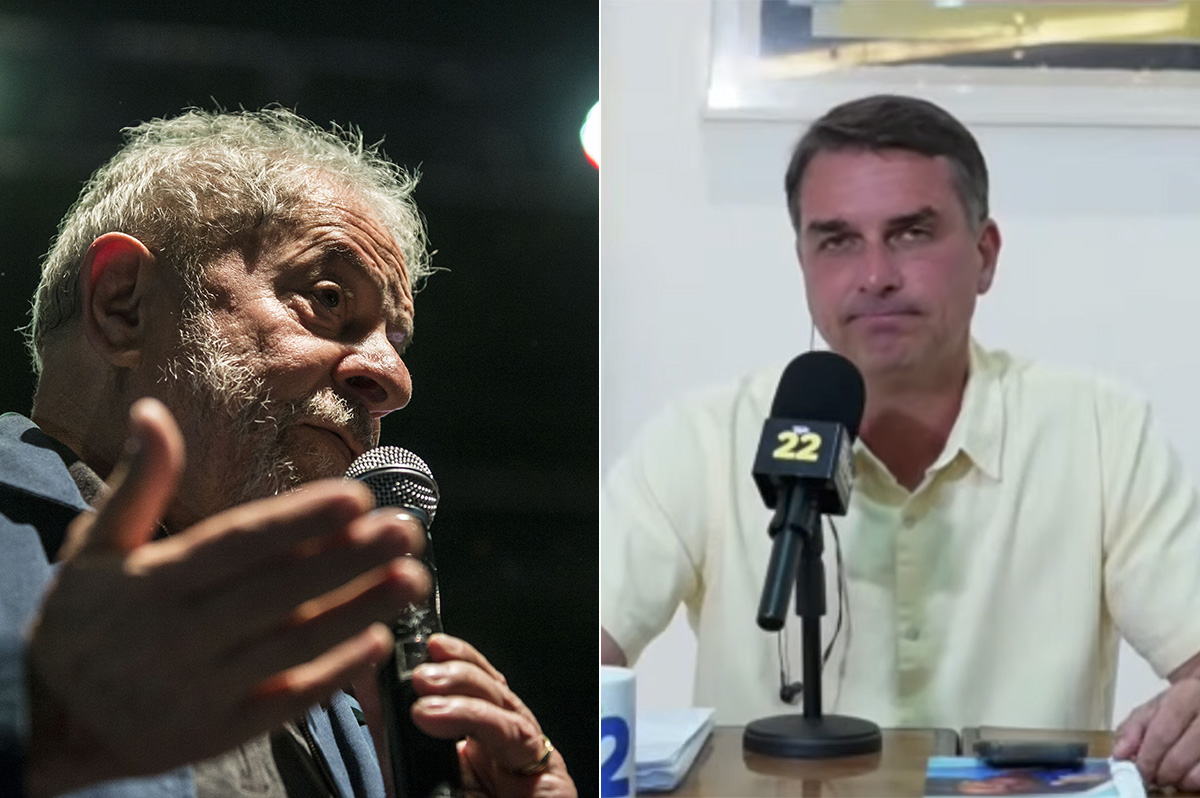
SÃO PAULO — President Luiz Inácio Lula da Silva will face off against Sen. Flávio Bolsonaro in the second round of Brazil’s presidential election on Oct. 25 after neither man received more than 50 percent of the vote in the first round that took place on Sunday.
Bolsonaro was ahead of Lula by a 47.03-45.16 percent margin with 100 percent of the vote counted.
Lula in 2022 defeated Bolsonaro’s father, then-President Jair Bolsonaro, in that year’s presidential election.
The Brazilian Supreme Court last year sentenced Bolsonaro — who repeatedly targeted LGBTQ Brazilians and other groups while in office — to more than 27 years in prison for his role in an attempted coup that saw thousands of his supporters storm the Congress, presidential palace, and the Supreme Court itself on Jan. 8, 2023. Bolsonaro is currently serving his sentence at his home in Brasília, the country’s capital, because of his poor health. His son has pledged to pardon him if he becomes the country’s next president.
Lula, who leads Brazil’s leftist Workers’ Party, was Brazil’s president from 2003-2010.
Sergio Moro, a judge who Jair Bolsonaro later tapped as his government’s Justice and Public Security Minister, in 2017 sentenced Lula to 9 1/2 years in prison after his conviction on money laundering and corruption charges that stemmed from Operation Car Wash.
The Supreme Court in November 2019 ordered Lula’s release.
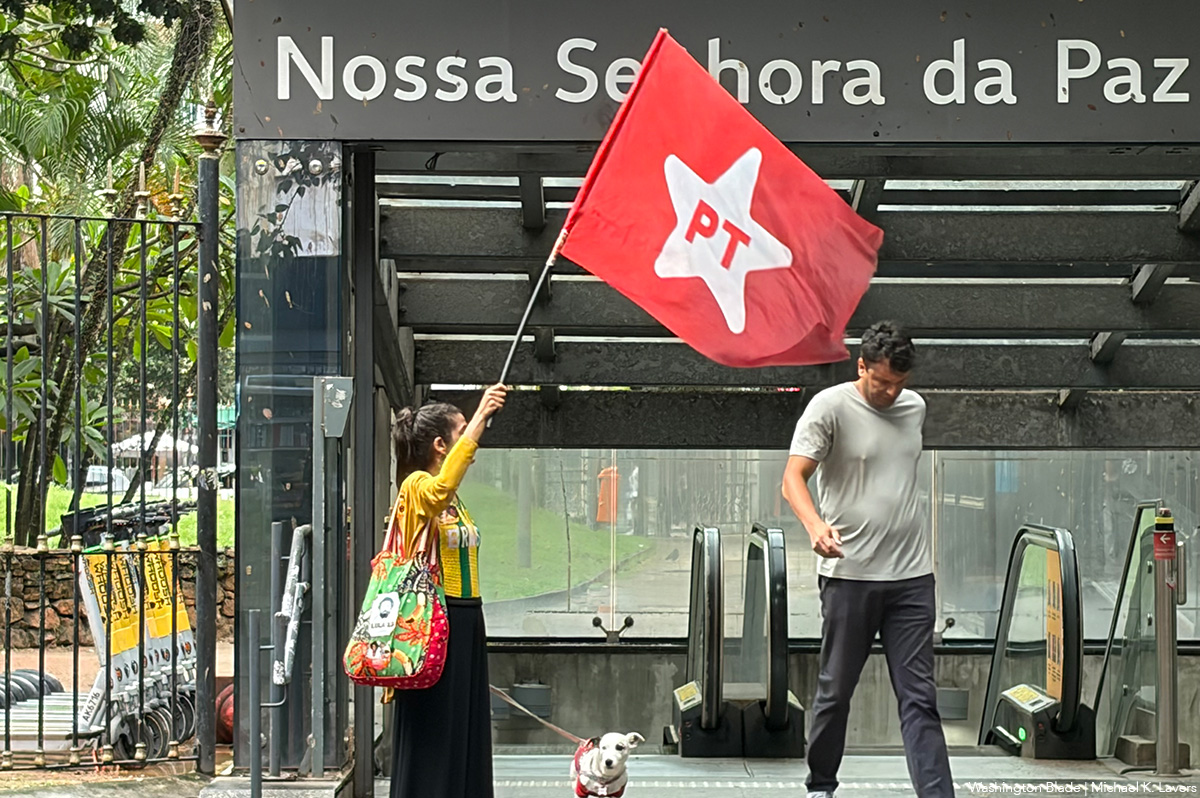
VoteLGBT, an organization that seeks to increase LGBTQ representation in Brazilian politics, noted 529 openly LGBTQ candidates ran in this year’s election. More than 100 of them are either transgender or travesti.
The Washington Blade will cover the results of these races when they become available.

Bowser, Office of LGBTQ Affairs announce LGBTQ+ History Month events

PHOTOS: Winchester Pride

Evan Low is not the leader the Victory Fund needs at this moment

Transgender woman elected to Brazilian Chamber of Deputies

Lula, Flávio Bolsonaro to face off in second round of Brazilian presidential election

Gay Va. couple hopeful voters will enshrine marriage equality in state constitution

Victory Fund board investigates former staffers’ allegations against CEO Evan Low

LGBTQ community must vote in big numbers

Calif. governor signs 6 pro-LGBTQ bills, vetoes 1

The right to be an ordinary transgender man
-

 Virginia4 days ago
Gay Va. couple hopeful voters will enshrine marriage equality in state constitution
-
LGBTQ Non-Profit Organizations4 days ago
Victory Fund board investigates former staffers’ allegations against CEO Evan Low
-
Opinions4 days ago
LGBTQ community must vote in big numbers
-
California4 days ago
Calif. governor signs 6 pro-LGBTQ bills, vetoes 1