Maryland
Two nonbinary candidates elected to Md. Democratic Central Committee
Tia Hopkins and Antonio Bowens won respective races in August
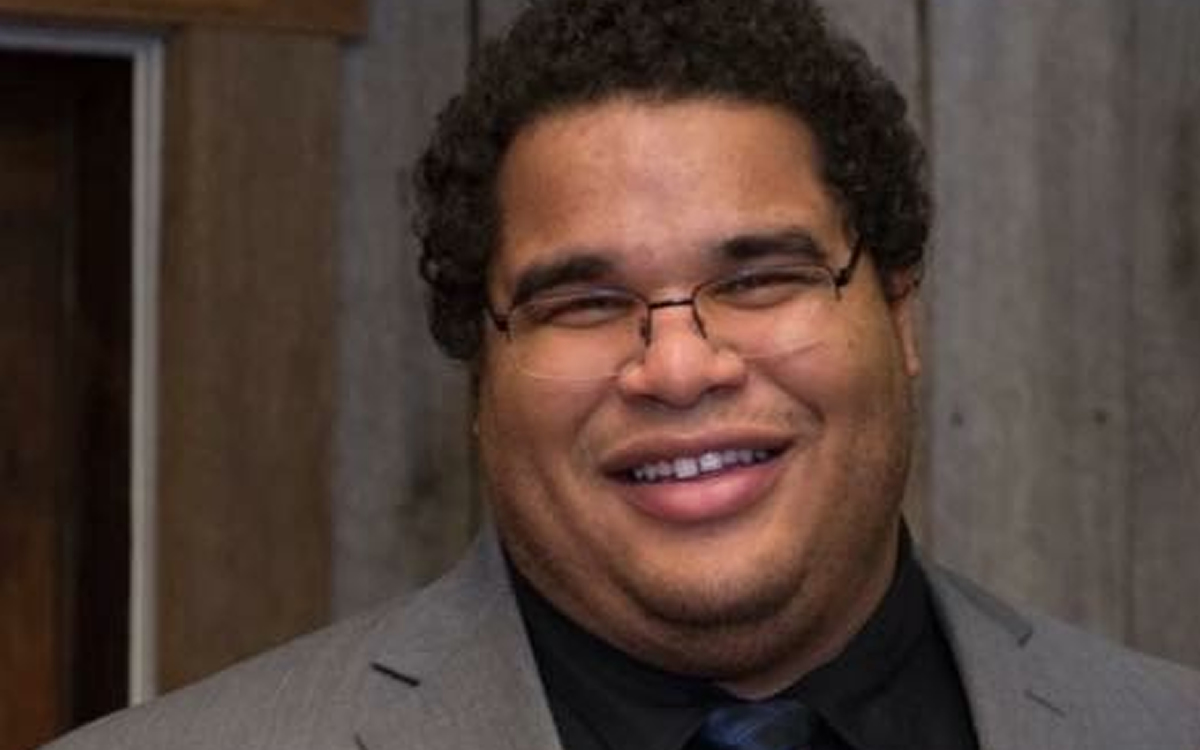
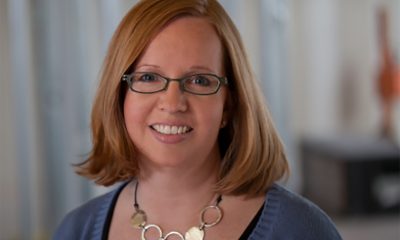
Tia Hopkins and Antonio Bowens last month became the first openly nonbinary candidates elected to the Maryland Democratic Central Committee.
Hopkins was elected to represent District 40 in Baltimore City, and in an interview with the Baltimore Banner they said that the community’s response has been overwhelmingly positive.
“Everyone has welcomed me with open arms,” Hopkins said. “All the remarks were positive. One person wanted a better explanation of what gender neutral is. It’s people wanting to educate themselves. Obviously, I look female, and I changed my gender to nonbinary. It’s about them understanding that change.”
Bowens was re-elected to represent Frederick County. After winning election in 2018 on the male ticket, they decided to run under the newly created nonbinary option in 2022.
“I tried to be truthful to myself and register as nonbinary,” Bowens said. “The best way to advocate for minority voices is to be active in Frederick politics.”
Bowens said that one of their goals as a committee member is to prepare potential candidates — especially LGBTQ and nonbinary candidates — for success in future elections.
“I want to get in and get the bench filled — to get these people ready and give them the tools to be successful candidates,” they said.
A third nonbinary candidate, Jo Riedel, was unsuccessful in their race to represent Harford County on the committee. Before running for the central committee, Riedel was active in Harford County Democratic politics as a treasure and advisor to the house of delegates candidate.
However, despite their familiarity with Harford County politics, Riedel faced significant pushback as a nonbinary candidate.
“I could have very easily run as a male candidate. I really didn’t ever entertain that thought,” Riedel said. “There were transphobic comments made by other party members, to the point where one of the party officers had to make the point that we’re not going to use Republican talking points on our fellow members.”
Riedel even described an incident at a candidate forum where another Democrat accused them of having multiple personality disorder, because they were wearing a “they/them” button.
Although Riedel’s own election bid was unsuccessful, Riedel said they were proud to be one of the first three Maryland candidates openly designated as nonbinary, and excited for the two other candidates who were elected.
“I am very, very happy and excited for both of them, that they were elected, because they’re good candidates, you know, and not just because they’re nonbinary,” they said.
As Maryland’s Democratic moves forward from this historic first, Riedel stressed there is still more internal work to be done, even as party members celebrate a victory for the nonbinary candidates.
“As a party, we still have work to do, and we’re going to have to address that if we expect to continue to reach out to the queer community,” they said.



Maryland
Supreme Court ruling against conversion therapy bans could affect Md. law
Then-Gov. Larry Hogan signed statute in 2018
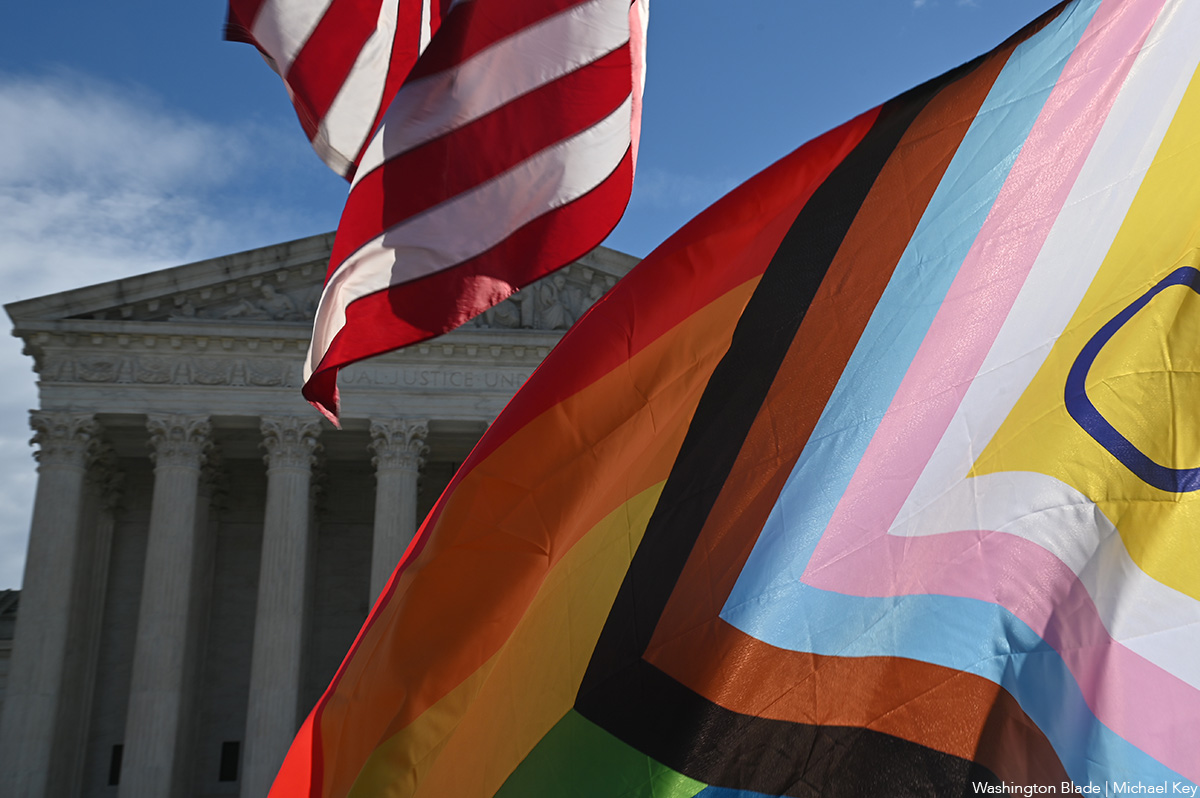
By PAMELA WOOD, JOHN-JOHN WILLIAMS IV, and MADELEINE O’NEILL | The U.S. Supreme Court on Tuesday ruled against a law banning “conversion therapy” for LGBTQ kids in Colorado, a ruling that also could apply to Maryland’s ban on the discredited practice.
An 8-1 high court majority sided with a Christian counselor who argues the law banning talk therapy violates the First Amendment. The justices agreed that the law raises free speech concerns and sent it back to a lower court to decide whether it meets a legal standard that few laws pass.
Justice Neil Gorsuch, writing for the court’s majority, said the law “censors speech based on viewpoint.” The First Amendment, he wrote, “stands as a shield against any effort to enforce orthodoxy in thought or speech in this country.”
The rest of this article can be read on the Baltimore Banner’s website.
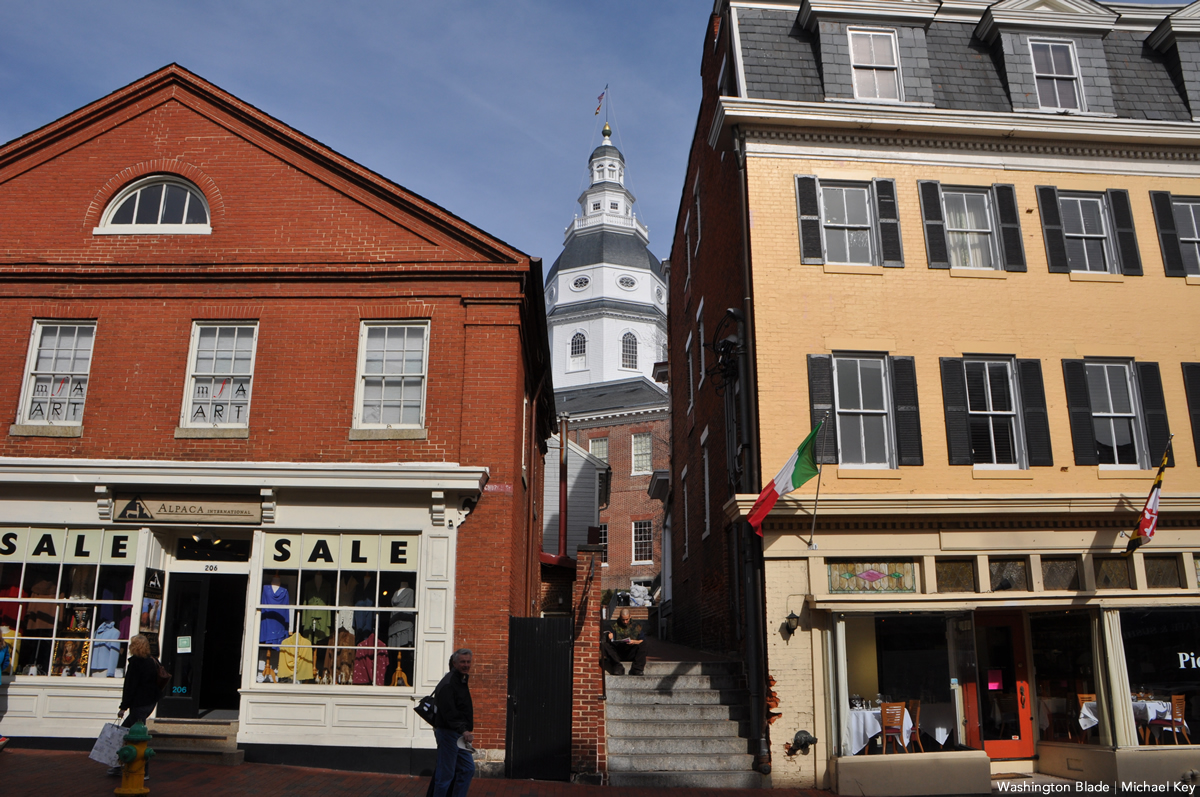
Maryland’s legislative caucuses outlined their legislative priorities heading into the final weeks of the 2026 General Assembly during a joint press conference on March 24.
The press conference was titled “We are Maryland,” where a representative for each of the legislative caucuses outlined priorities.
State Del. Kris Fair (D-Frederick County) of the LGBTQ+ Caucus opened the press conference with a statement on the unity of Maryland’s caucus.
“Together we can show our state and our community a different world, one where we mutually support one another and through that support uplift every Marylander,” he said.
In a press conference on March 5, the LGBTQ+ Caucus outlined its top legislative priorities. Fair highlighted two of those bills again during the “We are Maryland” press conference.
The first of the two highlighted pieces of legislation was Senate Bill 626 and House Bill 1589.
The bills would simplify the process of updating an individual’s birth certificate and align the Department of Health and DMV systems to reflect those changes. The bill is being led by state Sen. Clarence Lam (D-Anne Arundel and Howard Counties) and state Del. Ashanti Martinez (D-Prince George’s County).
The second piece of legislation is Senate Bill 950 and House Bill 1209, which would update and modernize laws and regulations around so-called conversion therapy. The bills have failed to pass either chamber thus far. They are being led by state Sen. Cheryl Kagan (D-Montgomery County) and state Del. Bonnie Cullison (D-Montgomery County).
(The U.S. Supreme Court on Tuesday ruled against a Colorado law that bans so-called conversion therapy for minors. Maryland is among the U.S. jurisdictions that prohibit the widely discredited practice for anyone under 18.)
Martinez and Lam have introduced bills in their respective chambers that would expand PrEP access in Maryland. Martinez did not attend the press conference, and Fair did not mention it when he spoke.
State Del. N. Scott Phillips (D-Baltimore County) represented the Black Caucus during the press conference. State Del. Dana Jones (D-Anne Arundel County) spoke on behalf of the Women’s Caucus, State Del. Teresa Woorman (D-Montgomery County) represented the Latino Caucus, and State Del. Lily Qi (D-Montgomery County) represented the Asian-American and Pacific Islander Caucus. State Del. Jared Solomon (D-Montgomery County) represented the Jewish Caucus, and state Del. Sean Stinnett (D-Baltimore County) represented the Muslim Caucus during the press conference.
Solomon ended the press conference by explaining the importance of all the caucuses coming out together.
“We are stronger when we’re together, and many of these issues that we have talked about, again, impact all of us,” said Solomon.
Cameroon
Gay Cameroonian immigrant will be freed from ICE detention — for now
Ludovic Mbock’s homeland criminalizes homosexuality
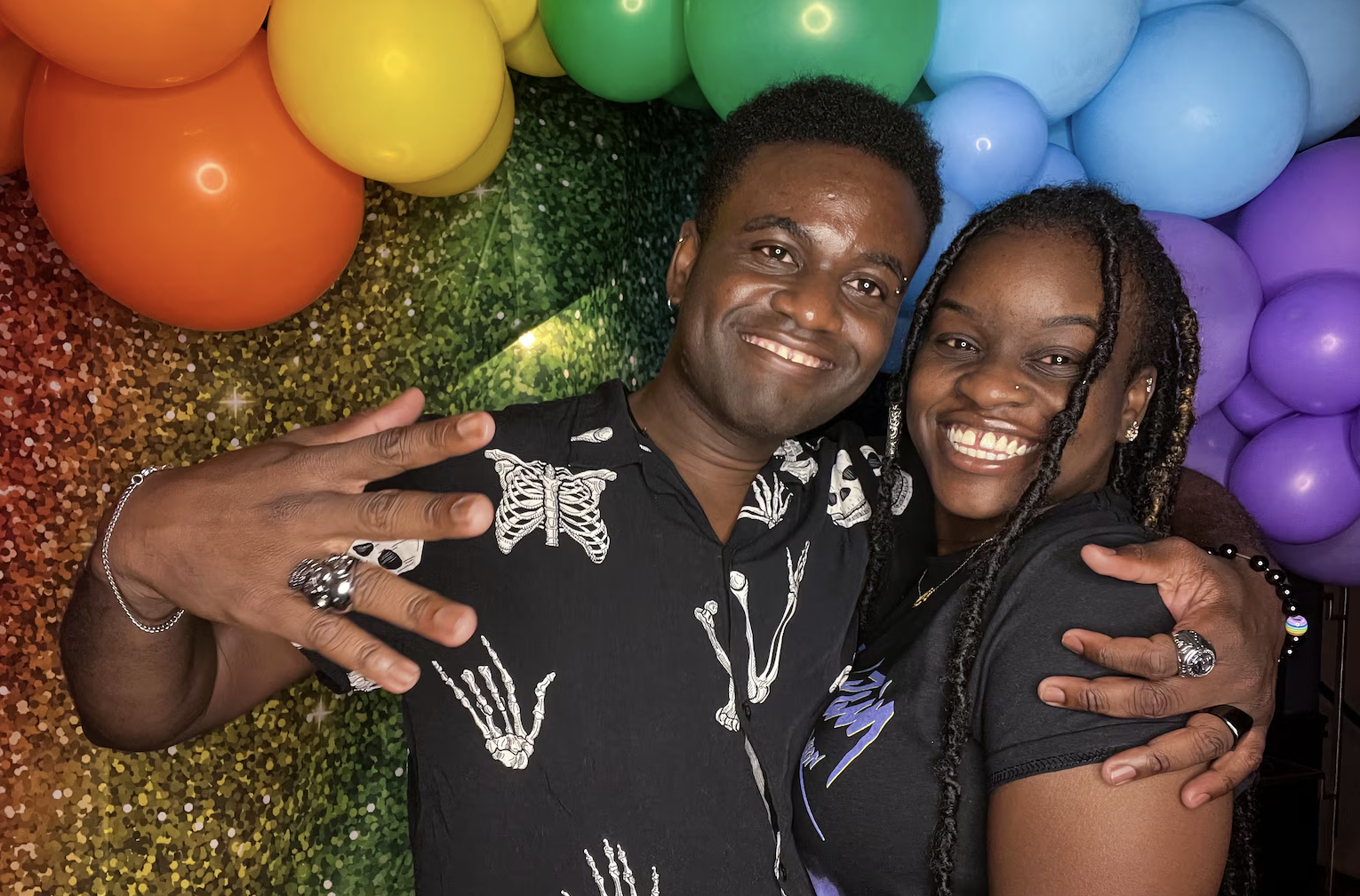
By ANTONIO PLANAS | An immigration judge on Friday issued a $4,000 bond for a Cameroonian immigrant and regional gaming champion held in federal immigration detention for the past three weeks.
The ruling will allow Ludovic Mbock, of Oxon Hill, to return to Maryland from a Georgia facility this weekend, his family and attorney said.
“Realistically, by tomorrow. Hopefully, by today,” said Mbock’s attorney, Edward Neufville. “We are one step closer to getting Ludovic justice.”
The rest of this article can be found on the Baltimore Banner’s website.

Vance speaks at Orbán rally in Hungary

White House ends protections for trans students in multiple school districts

Amendments to India’s transgender rights law criticized

Cuba under pressure and without answers

Police mental health struggles gain growing attention

Belarusian lawmakers approve bill to crackdown on LGBTQ rights

How new barriers to health care coverage are hitting D.C.

Kenyan advocacy groups launch LGBTQ voter mobilization campaign

Calendar: April 3-9