South America
Meet Argentina’s special envoy for LGBTQ and intersex rights
Alba Rueda is a transgender woman, long-time activist
Editor’s note: The Washington Blade interviewed Alba Rueda before the murder of Alejandra Ironici, a prominent transgender activist, in Santa Fe on Aug. 22 and the attempted assassination of Vice President Cristina Fernández de Kirchner in Buenos Aires on Sept. 1.
Argentina is a pioneer in the implementation of laws and public policies that support LGBTQ and intersex rights.
The country in 2010 became the first in South America to extend marriage rights to same-sex couples. Argentina in 2021 became the second country in the Americas to offer nonbinary national ID cards.
A transgender rights law and a labor quota for trans people, among other things, have been implemented since then. These initiatives, in most cases, have inspired neighboring countries to recognize LGBTQ and intersex people.
Argentina this year created a position within the country’s Foreign Affairs Ministry that focuses exclusively on the promotion of LGBTQ and intersex rights abroad.
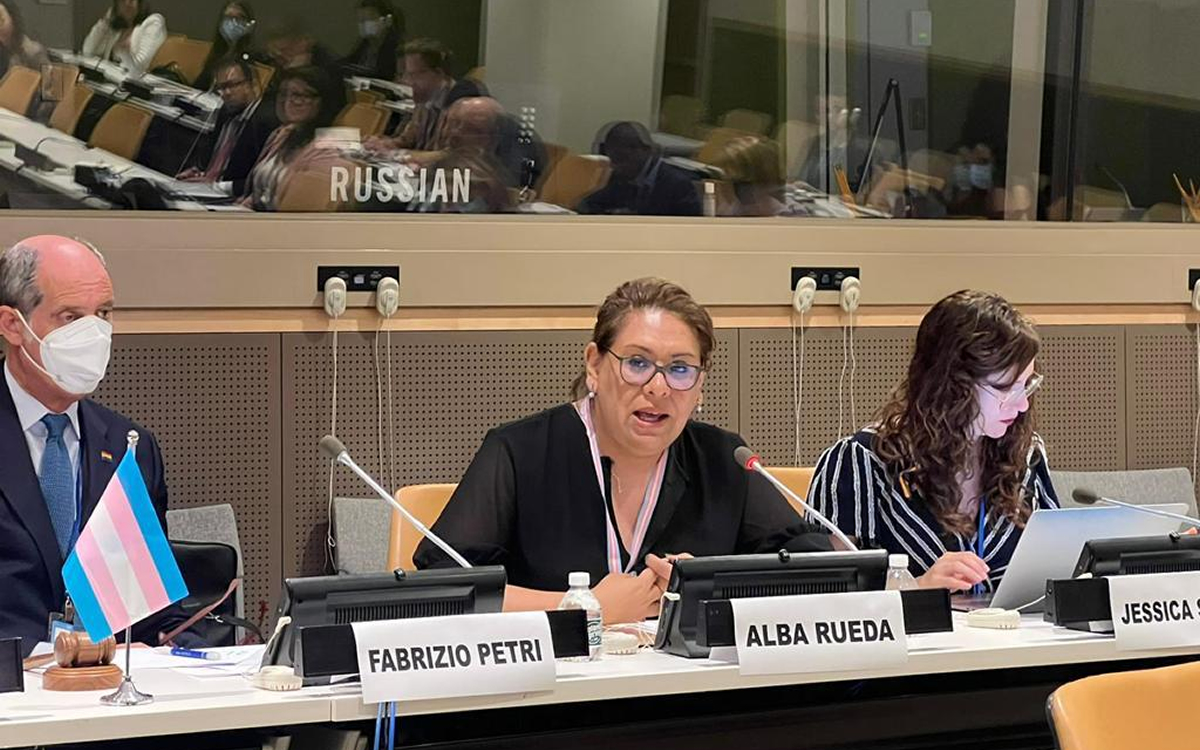
Alba Rueda, a well-known queer activist, on May 2 became Argentina’s first-ever Special Representative on Sexual Orientation and Gender Identity. The U.S., the U.K., Italy and Germany are the four other countries with people in their respective governments who specifically promote LGBTQ and intersex rights abroad.
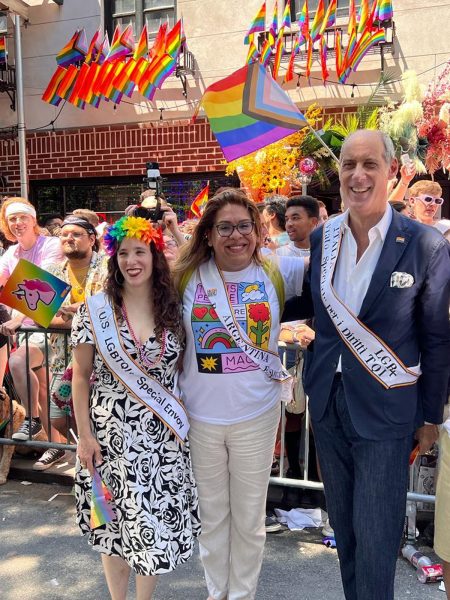
Rueda, 46, is a trans woman who was born in Salta province in northern Argentina.
She moved to Buenos Aires with her family when she was a teenager. Rueda became an activist at an early age and has held various public positions over the last two decades.
Rueda was previously Argentina’s first undersecretary of diversity policies in the Women, Gender and Diversity Ministry. She is the first trans woman to hold a senior position in the country’s government.
Rueda explained to the Washington Blade that her position is one “that deals exclusively with foreign policy regarding diversity policies.”
“We are within the State’s structure,” she said. “We are in a very unique position within this ministry’s political agenda.”
For her, the advances in LGBTQ and intersex rights in Argentina have great relevance because activists and the movements of which they are a part had good strategies that influenced the political arena.
“The trasvestí and transgender community knew how to anchor (themselves) in the militancy of human rights,” she said. “The 2012 gender identity law is undoubtedly a milestone for all of Latin America because of its content. [It is] one of the first laws that set very high standards of rights in the world and that were really developed by the trans community in the sociopolitical organizations in which we participate.”
Rueda recalled that in 2006, before any legislation in favor of sexual and gender diversity took effect, the trans population won a legal battle when the Supreme Court ruled Asociación Lucha por la Identidad Travesti (ALITT), a trans advocacy group, could obtain legal status.
“This was a fundamental step within the political agenda and from then on a whole process of decriminalization began,” Rueda recalled to the Blade.
The advancement of LGBTQ and intersex rights in Argentina since then has not stopped, and that is why Rueda wants to replicate this work in countries across South America and around the world. Argentina, in fact, over the last year has hosted a variety of Global Equality Caucus-led workshops that have focused on the elimination of so-called conversion therapy.
“We are a team under my leadership, where we are working integrally with the Ministry of Foreign Affairs, carrying out different lines of work to strengthen the multilateral policies that our country has around certain agendas, as in the United Nations, for example,” she emphasized.
Regarding her efforts with other Latin American countries, Rueda said she will work to improve the quality of life of LGBTQ and intersex people based on efforts in Argentina.
“We are going for a coordination of State policy around LGBT rights, around living conditions; not only the promotion of rights, but of public policies that modify the structure of that inequality around living conditions,” Rueda stressed.
“There are several countries in Latin America and the Caribbean that do not have a gender identity law. With equal marriage, with a trans labor quota law and what we have here is not only an experience around public policies, but the evidence that this really strengthens and prevents other types of violence,” she added. “This is basically Argentina’s contribution to Latin American cooperation.”
Finally, she stressed that “it has to do precisely with the strengthening of a line of work which is to demonstrate the evidence that the greater the rights and recognition, the better not only the quality of democracy, but also the better the living conditions of our community and the reduction of violence.”



Colombia
Claudia López criticizes Trump over threats against Colombian president
Presidential candidate would become country’s first lesbian head of government
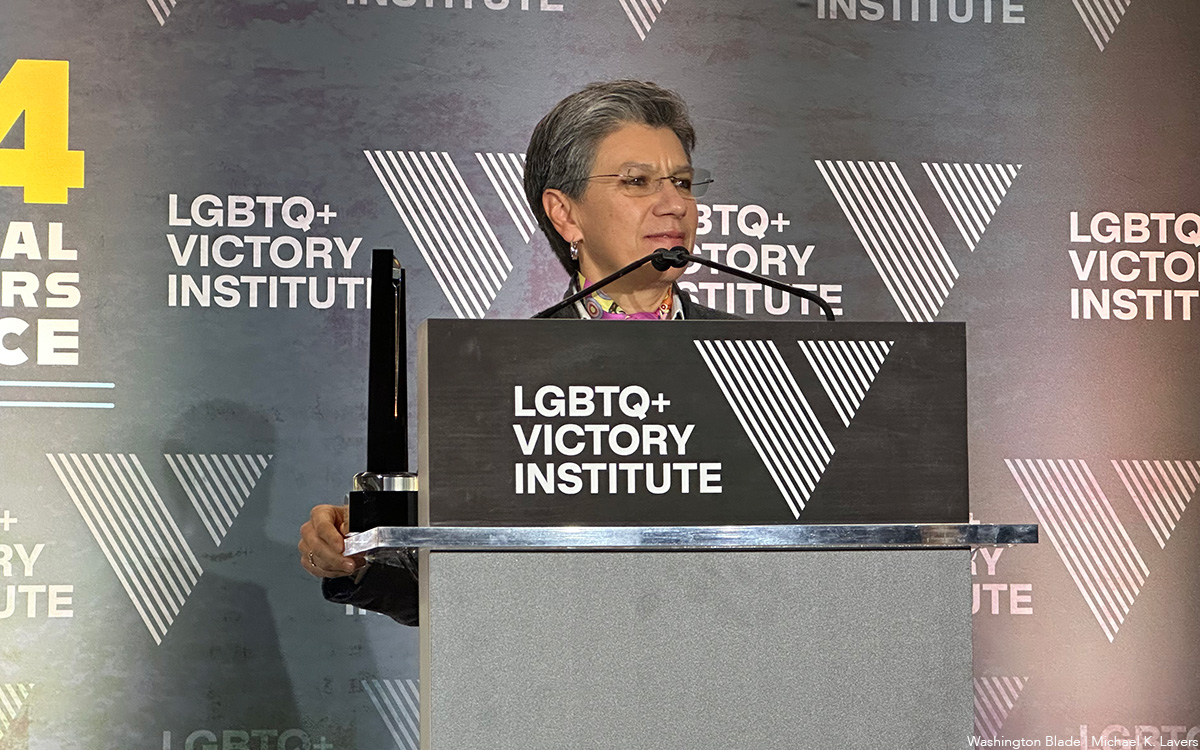
BOGOTÁ, Colombia — Colombian presidential candidate Claudia López has criticized President Donald Trump after he suggested the U.S. will target Colombian President Gustavo Petro.
“Colombia is very sick, too, run by a sick man, who likes making cocaine and selling it to the United States, and he’s not going to be doing it very long,” Trump told reporters on Air Force One on Sunday.
Trump made the comments a day after American forces carried out an overnight operation and seized now former Venezuelan President Nicolás Maduro and wife, Cilia Flores, at their home in Caracas, the Venezuelan capital.
Maduro and Flores on Monday pleaded not guilty to federal drug charges in New York.
Petro is a former Bogotá mayor and senator who was once a member of the M-19 guerrilla movement that disbanded in the 1990s. He has urged Colombians to take to the streets and “defend national sovereignty.”
“Colombians are the ones who decide who governs Colombia,” said López on her X account. “President Gustavo Petro won free elections and has a constitutional mandate.”
López did not mention Trump by name in her comment.
The first-round of Colombia’s presidential election will take place on May 31. The country’s 1991 constitution prevents Petro from seeking re-election.
López in 2019 became the first woman and first lesbian elected mayor of Bogotá, the Colombian capital and the country’s largest city. She took office on Jan. 1, 2020, less than a month after she married her wife, Colombian Sen. Angélica Lozano.
“This year we will decide at the polls what direction (the country) is heading and what leadership will advance Colombia,” said López in her X post. “Supporting soft dictatorships and attacking democracies is an absurd and unacceptable political action by the United States towards Colombia, Venezuela, and Latin America.”
Quién gobierna en Colombia lo decidimos los colombianos.
El presidente @petrogustavo ganó unas elecciones libres y tiene un mandato constitucional. Este año decidiremos en las urnas qué rumbo y a cargo de qué liderazgo avanza Colombia.
Sostener dictablandas y atacar democracias… https://t.co/K61G2QUcck— Claudia López Hernández (@ClaudiaLopez) January 5, 2026
López would be Colombia’s first female president if she wins the election. López would also become the third openly lesbian woman elected head of government — Jóhanna Sigurðardóttir was Iceland’s prime minister from 2009-2013 and Ana Brnabić was Serbia’s prime minister from 2017-2024.
The LGBTQ+ Victory Institute in 2024 honored López at its annual International LGBTQ Leaders Conference in D.C. The Washington Blade interviewed her during the gathering.
Colombia
Blade travels to Colombia after U.S. forces seize Maduro in Venezuela
Former Venezuelan president, wife seized on Saturday
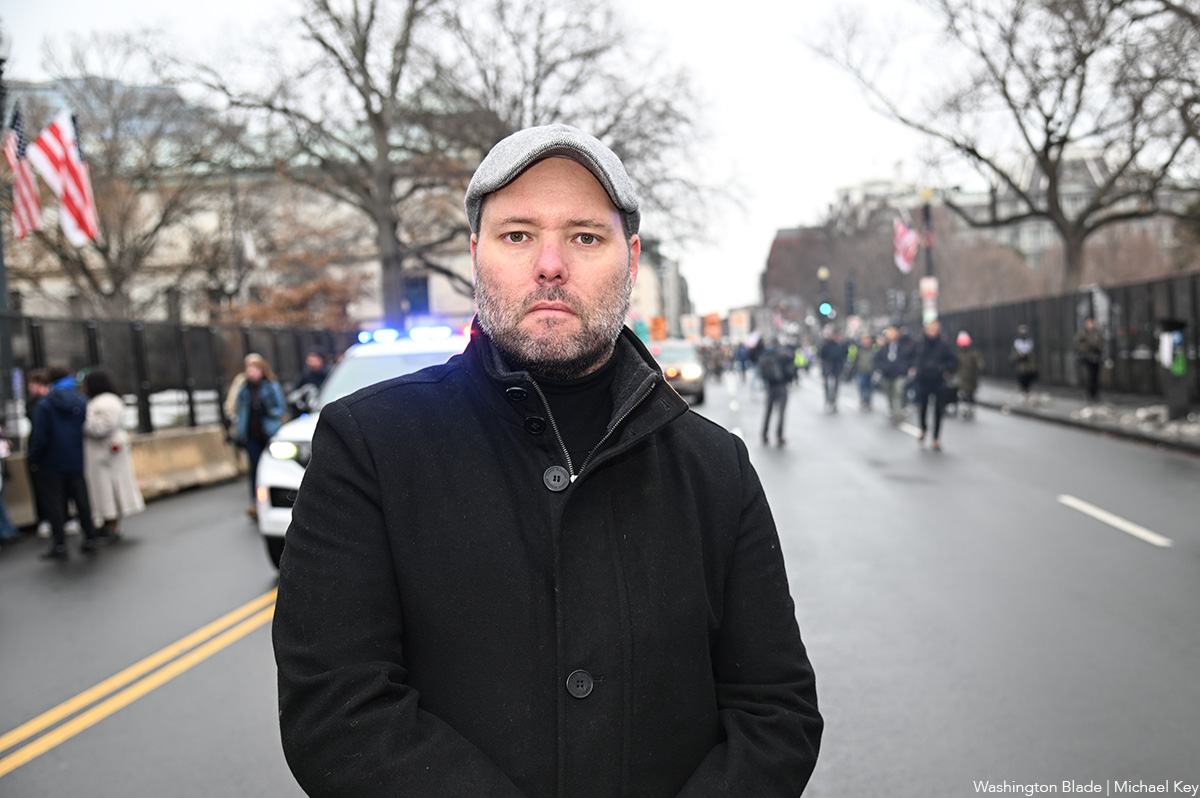
Washington Blade International News Editor Michael K. Lavers will be on assignment in Colombia through Jan. 10.
Lavers arrived in Bogotá, the Colombian capital, on Monday. American forces two days earlier carried out an overnight operation and seized now former Venezuelan President Nicolás Maduro and wife, Cilia Flores, at their home in Caracas, the Venezuelan capital.
Maduro and Flores on Monday pled not guilty to federal drug charges in New York.
Maduro in 2013 became Venezuela’s president after his predecessor, Hugo Chávez, died.
The country’s ongoing economic and political crises have prompted millions of Venezuelans to flee to neighboring Colombia and other countries throughout Latin America and around the world. The seizure of Maduro and Flores threatens to further destabilize Venezuela and the broader region.
The Washington Blade, which has reported from Colombia several times over the last decade, has interviewed several LGBTQ Venezuelan opposition leaders. The Blade has also extensively covered the plight of LGBTQ Venezuelans and Venezuelans with HIV/AIDS who have left their country because of violence, persecution, discrimination, and a lack of medications.
“LGBTQ Venezuelans in Colombia and elsewhere have a unique perspective on the events that have transpired in their homeland over the last two days, and how they continue to reverberate throughout the hemisphere,” said Lavers. “It is critically important for the Washington Blade to document the situation in the region as it continues to evolve and to show how it will impact LGBTQ communities.”
“The Blade has a long history of covering the plight of LGBTQ communities around the world and this trip reflects our commitment to the region,” said Blade Editor Kevin Naff. “This reporting will help shine a light on the challenges facing LGBTQ Venezuelans and those living with HIV and how they are coping with the unfolding events.”
Lavers last reported from Colombia in 2021. His coverage included a trip to Cúcuta, a Colombian city that is on the country’s border with Venezuela.
Chile
Far-right José Antonio Kast elected Chile’s next president
Advocacy group declares ‘state of alert’ over president-elect’s opposition to LGBTQ rights
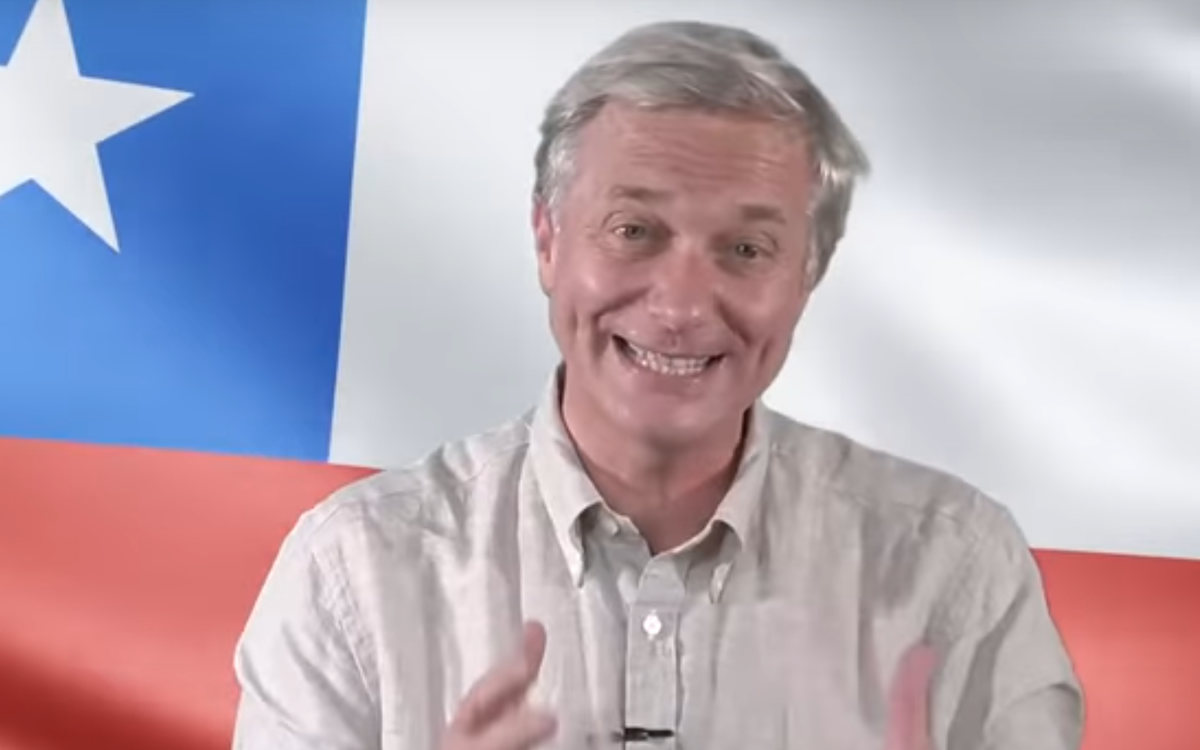
José Antonio Kast on Sunday won the second round of Chile’s presidential election.
Kast is the far-right leader of the Republican Party who was a member of the country’s House of Deputies from 2002-2018. He defeated Jeannette Jara, a member of the Communist Party of Chile who was former labor and social welfare minister in outgoing President Gabriel Boric’s government, by a 58.2-41.8 percent margin.
The election’s first round took place on Nov. 16.
Kast and Jara faced each other in the runoff after no candidate received at least 50 percent of the vote in the first round. Kast will take office on March 11.
“Under his leadership, we are confident Chile will advance shared priorities to include strengthening public security, ending illegal immigration, and revitalizing our commercial relationship,” said U.S. Secretary of State Marco Rubio on Sunday in a statement. “The United States looks forward to working closely with his administration to deepen our partnership and promote shared prosperity in our hemisphere.”
The Washington Blade has previously reported Kast has expressed his opposition to gender-specific policies, comprehensive sex education, and reforms to Chile’s anti-discrimination laws. The president-elect has also publicly opposed the country’s marriage equality law that took effect in 2022.
The Movement for Homosexual Integration and Liberation, a Chilean LGBTQ and intersex rights group known by the acronym Movilh, in a statement acknowledged the election result. Movilh also declared a “state of alert, given this leader’s (Kast’s) public and political trajectory, characterized for decades by systematic opposition to laws and policies aimed at equality and nondiscrimination of LGBTIQ+ individuals.”
“We urge the president-elect and far-right sectors that follow him to understand and internalize (the fact) that the rights of LGBTIQ+ people are inscribed in the universality of human rights, and they are not built upon an ideology or a political trend,” said Movilh in its statement. “This is not, and never has been, a left-wing or right-wing issue, although some on both sides have gone to great lengths to suggest otherwise, without any basis other than their own partisan or electoral aspirations.”
Organizado Trans Diversidades, a group that advocates on behalf of trans and nonbinary Chileans, on social media said it will “continue the fight for our community’s human rights.”

PHOTOS: Freddie’s Follies

Imperial Court of Washington drag group has ‘dissolved’

What to watch for in 2026: midterms, Supreme Court, and more

A reminder that Jan. 6 was ‘textbook terrorism’

Claudia López criticizes Trump over threats against Colombian president

D.C.’s 10 best theater productions of 2025

A look back at the best books of 2025

The year in photos

Safer Ways to Pay for Online Performances and Queer Events