State Department
Blinken speaks at U.N. LGBTI Core Group event
Gathering took place on eve of U.N. General Assembly
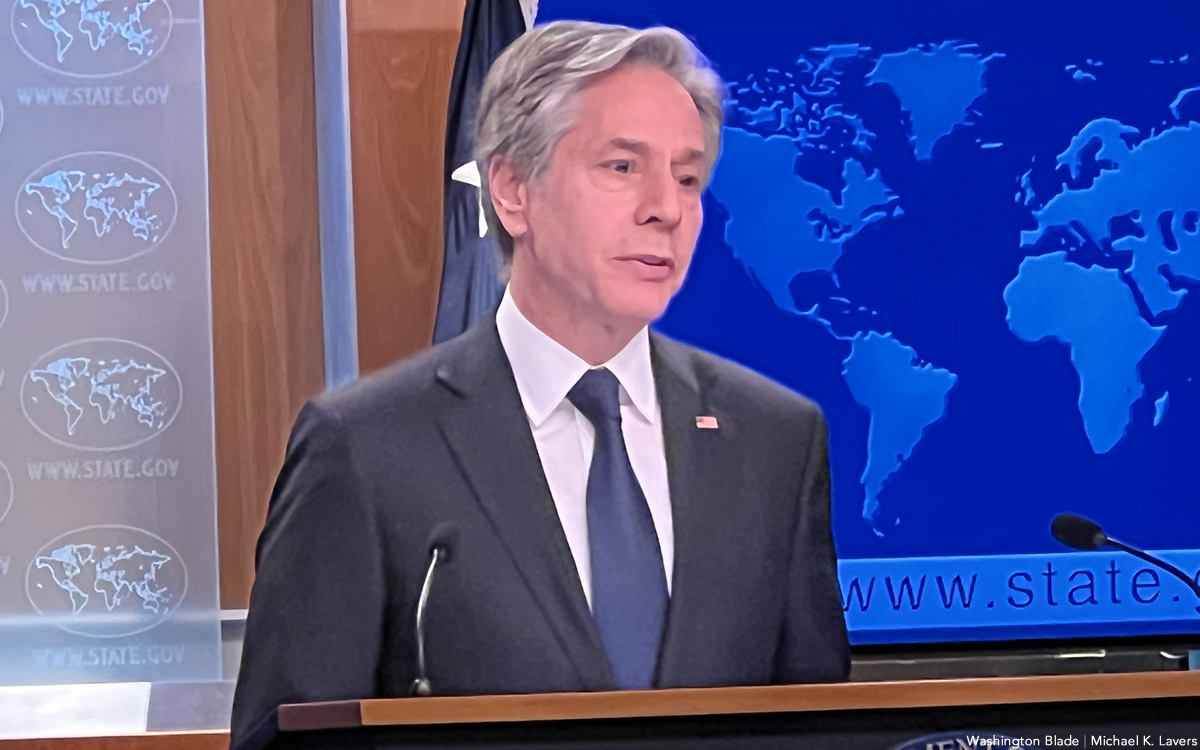
Secretary of State Antony Blinken on Monday spoke at an LGBTQ and intersex rights event that took place on the eve of the U.N. General Assembly.
Blinken in his remarks at the LGBTI Core Group, a group of U.N. countries that have pledged to support LGBTQ and intersex rights, noted the meeting took place at “a time when the movement for equality is showing some encouraging momentum.”
He pointed to the decriminalization of consensual same-sex sexual acts over the summer in St. Kitts and Nevis and Antigua and Barbuda. Blinken also noted the Vietnamese Health Ministry’s announcement last month that it no longer considers LGBTQ people to be sick.
“At the same time, for that progress, which is real and which is worth underscoring, we know that people worldwide continue to experience alarming levels of violence, discrimination, isolation,” said Blinken. “Risks are the highest for people with disabilities, people of color, refugees and LGBTQI+ women. Transgender people are often denied access to legal identity documents that reflect their names and gender markers. Intersex people, including minors, continue to be subjected to unnecessary surgeries without their consent.”
Blinken further stressed that members of the U.N. LGBTI Core Group and countries around the world “have work to do to ensure that LGBTQI+ people have the same rights, the same protections as all other people.”
“Defending these rights is central to the health of our democracies,” he said. “Any system where some groups are treated as ‘less than’ simply because of who they are is fundamentally flawed.”
President Joe Biden in February 2021 signed a memo that committed the U.S. to promoting LGBTQ and intersex rights abroad as part of his administration’s overall foreign policy. The White House four months later appointed Jessica Stern as its special envoy for the promotion of LGBTQ and intersex rights overseas.
The State Department in April began to issue passports with “X” gender markers. The White House’s efforts in support of LGBTQ and intersex rights abroad now includes marriage equality in countries where activists say such a thing is possible through legislation or the judicial process.
Blinken in his speech noted Biden in June issued a sweeping executive order that, among other things, prohibits the use of federal funds to support so-called conversion therapy. The ceremony, which occurred during the White House’s annual Pride reception, took place against the backdrop of the passage of Florida’s “Don’t Say Gay” law and efforts in several other states across the country to curtail the rights of transgender students.
“Standing up for LGBTQI+ people is a top priority for our administration,” said Blinken.
Blinken also referenced the 1969 Stonewall riots.
“Everything we’re doing builds on the work of literally generations of advocates who have — and still are — risking so much to put LGBTQI+ people and their rights on the map,” he said. “And I have to say, as I read the history, learn the history, hear of experiences, I’m quite in awe of generations of advocates who have done so much to put us where we are today. The work we’re doing is only possible because of the work they did — but not only the work they did, the courage that they showed.”
“The 1969 protest at the Stonewall Inn marked a turning point in our nation’s struggle for LGBTQI+ rights and helped galvanize the global movement,” added Blinken. “This is something that is seared into the memories, seared into the consciousness of so many of us. And particularly for me as a native New Yorker, it’s something that I have seen and been inspired by for many, many years.”
Blinken further noted “Stonewall is also a stark reminder of all the places worldwide where people are still subject to abuse simply for being themselves.”
State Department spokesperson Ned Price, Icelandic Prime Minister Katrín Jakobsdóttir; Permanent Brazilian Representative to the U.N. João Genésio de Almeida Filho, Peruvian Foreign Minister Cesar Landa Arroyo, Norwegian Foreign Minister Anniken Huitfeldt and OutRight Action International Executive Director Maria Sjödin are among those who attended the event alongside Stern and Victor Madrigal-Borloz, the independent U.N. expert on LGBTQ and intersex issues.






State Department
Democracy Forward files FOIA request for State Department bathroom policy records
April 20 memo outlined anti-transgender rule
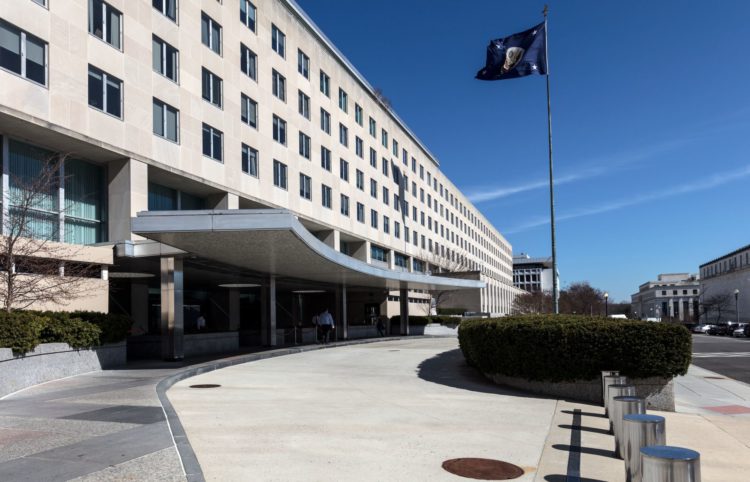
Democracy Forward on Tuesday filed a Freedom of Information Act request for records on the State Department’s new bathroom policy.
A memo titled “Updates Regarding Biological Sex and Intimate Spaces, Including Restrooms” that the State Department issued on April 20 notes employees can no longer use bathrooms that correspond with their gender identity.
“The administration affirms that there are two sexes — male and female — and that federal facilities should operate on this objective and longstanding basis to ensure consistency, privacy, and safety in shared spaces,” State Department spokesperson Tommy Piggot told the Daily Signal, a conservative news website that first reported on the memo. “In line with President Trump’s executive order this provides clear, uniform guidance to the department by grounding policy in biological sex as determined at birth.”
President Donald Trump shortly after he took office in January 2025 issued an executive order that directed the federal government to only recognize two genders: male and female. The sweeping directive also ordered federal government agencies to “effectuate this policy by taking appropriate action to ensure that intimate spaces designated for women, girls, or females (or for men, boys, or males) are designated by sex and not identity.”
Democracy Forward’s FOIA request that the Washington Blade exclusively obtained on Tuesday is specifically seeking a copy of the memo that details the State Department’s new bathroom policy. Democracy Forward has also requested “all” memo-specific communications between the State Department’s Bureau of Global Public Affairs and the Daily Signal from April 1-21.
State Department
State Department implements anti-trans bathroom policy
Memo notes directive corresponds with White House executive order
The State Department on April 20 announced employees cannot use bathrooms that correspond with their gender identity.
The Daily Signal, a conservative news website, reported the State Department announced the new policy in a memo titled “Updates Regarding Biological Sex and Intimate Spaces, Including Restrooms.”
The State Department has not responded to the Washington Blade’s request for comment on the directive.
“The administration affirms that there are two sexes — male and female — and that federal facilities should operate on this objective and longstanding basis to ensure consistency, privacy, and safety in shared spaces,” State Department spokesperson Tommy Piggot told the Daily Signal. “In line with President Trump’s executive order this provides clear, uniform guidance to the department by grounding policy in biological sex as determined at birth.”
President Donald Trump shortly after he took office in January 2025 issued an executive order that directed the federal government to only recognize two genders: male and female. The sweeping directive also ordered federal government agencies to “effectuate this policy by taking appropriate action to ensure that intimate spaces designated for women, girls, or females (or for men, boys, or males) are designated by sex and not identity.”
The Daily Signal notes the new State Department policy “does not prohibit single-occupancy restrooms.”
State Department
Report: US to withhold HIV aid to Zambia unless mineral access expanded
New York Times obtained Secretary of State Marco Rubio memo
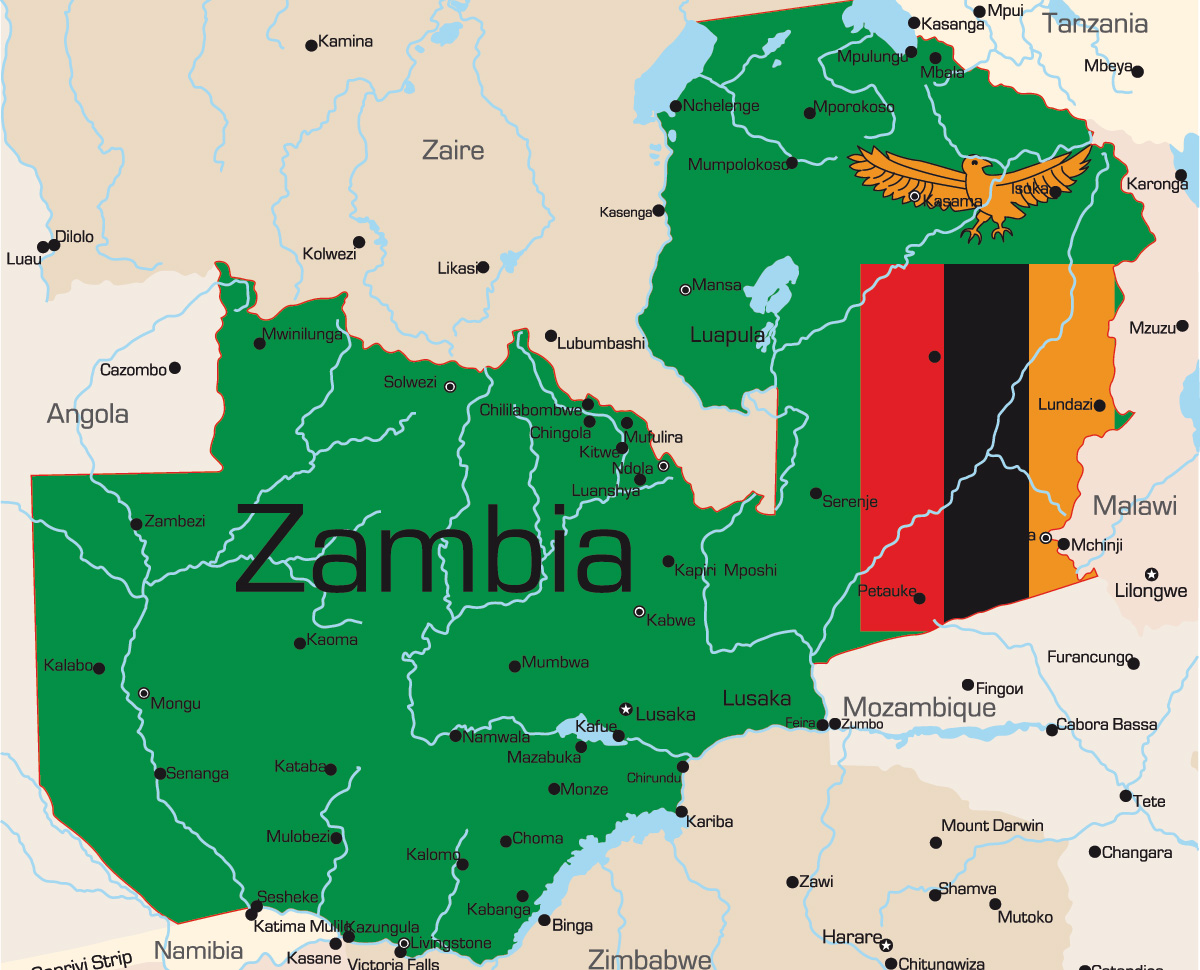
The State Department is reportedly considering withholding assistance for Zambians with HIV unless the country’s government allows the U.S. to access more of its minerals.
The New York Times on Monday reported Secretary of State Marco Rubio in a memo to State Department’s Bureau of African Affairs staffers wrote the U.S. “will only secure our priorities by demonstrating willingness to publicly take support away from Zambia on a massive scale.” The newspaper said it obtained a copy of the letter.
Zambia is a country in southern Africa that borders Tanzania, Malawi, Mozambique, Zimbabwe, Botswana, Namibia, Angola, and the Democratic Republic of Congo.
The Times notes upwards of 1.3 million Zambians receive daily HIV medications through PEPFAR. The newspaper reported Rubio in his memo said the Trump-Vance administration could “significantly cut assistance” as soon as May.
“Reports of (the) State Department withholding lifesaving HIV treatment in return for mining concessions in Zambia does not make us safer, stronger, or more prosperous,” said U.S. Sen. Jeanne Shaheen (D-N.H.), the ranking member of the Senate Foreign Relations Committee, on Tuesday. “Monetizing innocent people’s lives further undermines U.S. global leadership and is just plain wrong.”
The Washington Blade has reached out to the State Department for comment.
Zambia received breakthrough HIV prevention drug through PEPFAR
Rubio on Jan. 28, 2025, issued a waiver that allowed PEPFAR and other “life-saving humanitarian assistance” programs to continue to operate during a freeze on nearly all U.S. foreign aid spending. HIV/AIDS service providers around the world with whom the Blade has spoken say PEPFAR cuts and the loss of funding from the U.S. Agency for International Development, which officially closed on July 1, 2025, has severely impacted their work.
The State Department last September announced PEPFAR will distribute lenacapavir in countries with high prevalence rates. Zambia two months later received the first doses of the breakthrough HIV prevention drug.
Kenya and Uganda are among the African countries have signed health agreements with the U.S. since the Trump-Vance administration took office.
The Times notes the countries that signed these agreements pledged to increase health spending. The Blade last month reported LGBTQ rights groups have questioned whether these agreements will lead to further exclusion and government-sanctioned discrimination based on sexual orientation and gender identity.

The LGBTQ real estate map is being redrawn

I’m 66, he’s 27. Is it love or am I being played?

What’s frightening is also funny in ‘Venus’

‘Lizzie Borden’ might be the best ‘Monster’ yet

Comings & Goings

For lesbian victims of domestic violence, competent care is scare

United States Conference on HIV/AIDS grapples with federal budget cuts

Washington Blade responds to concerns over White House pool duties

Gov. Whitmer to serve as keynote speaker for Saturday’s HRC National Dinner

Spike in HIV cases prompts Fiji to declare national emergency
-

 National5 days ago
For lesbian victims of domestic violence, competent care is scare
-
Health5 days ago
United States Conference on HIV/AIDS grapples with federal budget cuts
-
Commentary4 days ago
Washington Blade responds to concerns over White House pool duties
-
LGBTQ Non-Profit Organizations4 days ago
Gov. Whitmer to serve as keynote speaker for Saturday’s HRC National Dinner