European Union
More than 20K attend Slovakia vigil after LGBTQ bar shooting
Two people killed outside establishment in Bratislava on Oct. 12
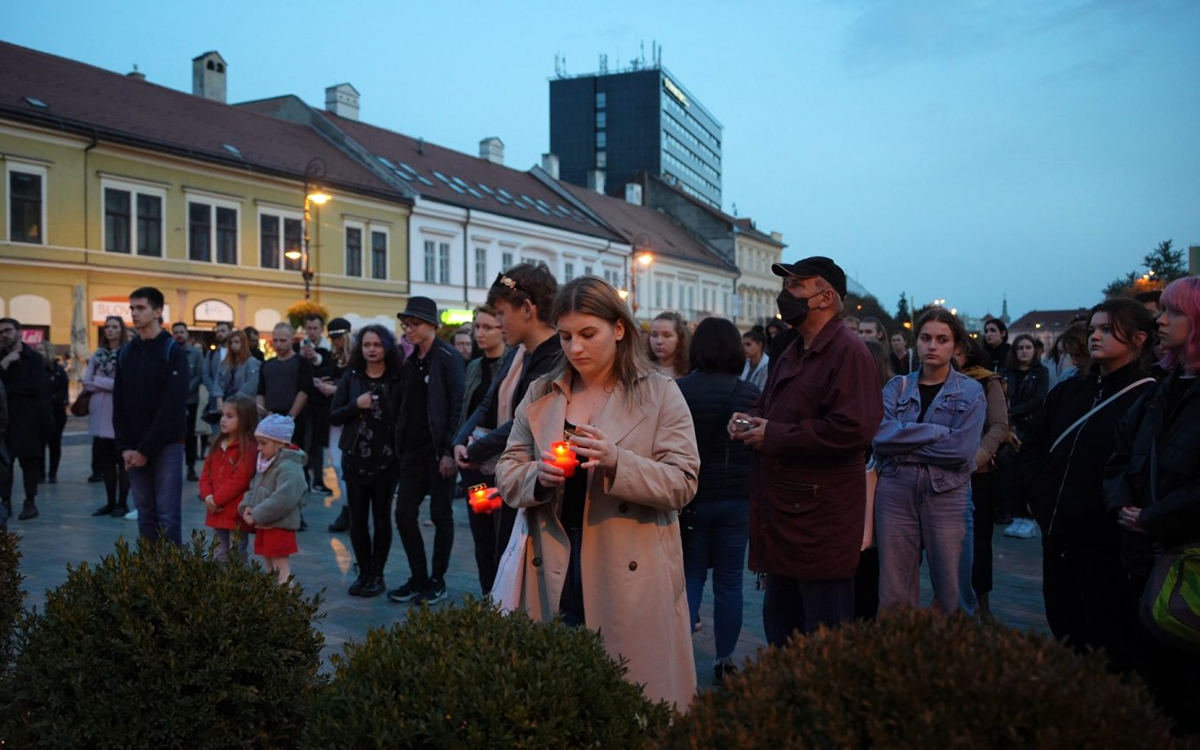
A vigil held Friday evening in the Slovakian capital city to honor the two victims killed and a third who was badly wounded in a shooting outside of the Tepláreň bar, a popular LGBTQ establishment in the old city, was also attended by the nation’s president and the European Parliament’s vice president.
Organized by the Iniciatíva Inakosť, an LGBTQ NGO, there were more than an estimated 20,000 people, according to officials. The murders shook the tight-knit Slovakian LGBTQ community and its allies.
Slovakia is a fairly conservative European Union member country where same-sex marriage is not legal.
A spokesperson for the Polícia Slovenskej republiky, the country’s national police force, said that his agency has classified the shootings as premeditated murder, motivated by hatred of a sexual minority.
19-year-old Juraj Krajcik, the radicalized son of a prominent member of the far-right extremist Vlast party, had left social media posts filled with anti-Semitic and anti-LGBTQ messages including a so-called “manifesto” which the gunman had posted prior to the rampage.
Krajcik, who had an online history of hate-filled rhetoric had posted a picture of himself outside the Tepláreň bar this past August along with other writings and posts that led Polícia Slovenskej republiky investigators to conclude that the crime was planned.
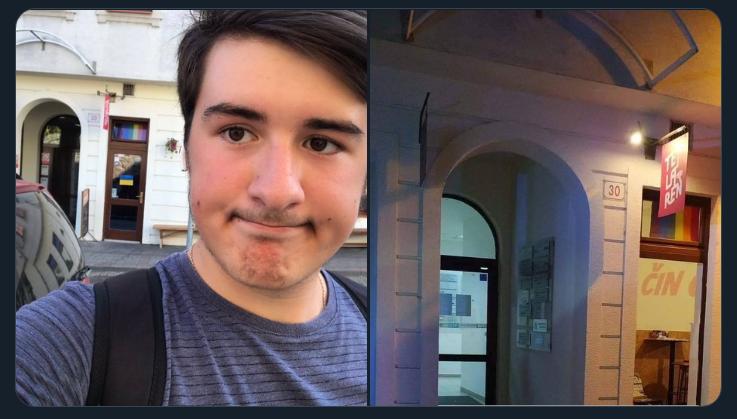
According to Polícia Slovenskej republiky, the gunman was outside of the bar for nearly an hour before opening fire at around 7 p.m. local time on Oct. 12. Investigators said multiple rounds were fired but did not disclose the number nor the weapon used. Police say he was found dead from a self-inflicted gunshot.
During the vigil for the shooting victims, Slovak President Zuzana Caputova told the crowd, “I’m sorry that our society was not able to protect your loved ones,” adding, “You belong here, you are valuable for our society.”
BBC Europe reported that European Parliament Vice President Michal Simecka was also at Friday’s event. Simecka expressed his determination to have the European legislature discuss the murders during a session next week.
“To express our sympathy, but also to call on the Slovak authorities to take clear steps to put an end to the language of hatred towards LGBTI people,” he said.
In addition to political leadership at Friday evening’s vigil, Elena Martinčoková, the president of the Association of Parents and Friends of LGBTI+ people, spoke expressing her grief and anger towards the environment in the country that fostered far-right hate.
In a Facebook post published by Košice PRIDE, she told the crowd;
“I’m going through a lot of pain. Since I heard about this tragedy, I’m in spirit with the parents of the murdered children. They were adults, but they were mainly children, grandchildren, cousins, friends, colleagues who will be greatly missed and the wound and pain the survivors will feel will never heal.
Many tragedies affect us in life, some of them cannot be prevented. Yes to some of them. And this is exactly the one that could have been prevented. Long-term and intensively spreading and inciting hatred towards LGBT+ people in our public space. It is hatred that blinds people, prevents them from thinking sober.
Certain people are responsible for this tragedy. They are the ones who are intensively and increasingly inciting and spreading hatred towards the LGBTI community. They are all over the place. In the National Council of Slovakia, in government, among many church representatives, in extremist groups, among disinformation spreaders and those who do not have credible information, or when they have it, they do not understand them or do not want to understand. I hope this tragedy will not leave the public indifferent. We must act, we must act now. We will not be quiet. We are not going to be intimidated.”
Video via România liberă, a Romanian daily newspaper founded in 1943 and currently based in Bucharest:





European Union
Poland’s top court rejects recognition of same-sex marriages from other EU countries
Ruling sets up potential clash with bloc

Poland’s top court this week rejected the recognition of same-sex marriages legally performed in other EU countries.
The EU Court of Justice in Luxembourg last November ruled in favor of a same-sex couple who challenged Poland’s refusal to recognize their German marriage. Poland’s Supreme Administrative Court in March reaffirmed the decision.
The couple, who lives in Poland, brought their case to Polish courts in 2019. The Supreme Administrative Court referred it to the EU Court of Justice.
The Polish government in May announced it will recognize same-sex marriages legally performed in other EU countries. Polish President Karol Nawrocki on July 17 vetoed bills that would have extended rights to same-sex couples.
The Constitutional Tribunal ruling, which it issued on July 28, was unanimous and final. It also sets up a potential clash between it and the EU Court of Justice.
European Union
European Commission says all EU countries should ban conversion therapy
Recommendation ‘an important step forward for LGBTI rights across Europe’

The European Commission on Wednesday said all European Union countries should ban so-called conversion therapy.
The recommendation comes weeks after the European Parliament voted in favor of prohibiting the widely discredited practice across the EU. More than 1.2 million people signed a campaign in support of the ban that ACT (Against Conversion Therapy) LGBT launched in 2024 through the EU’s European Citizens Initiative framework.
“We warmly welcome today’s commitment from the European Commission to a recommendation on ending conversion practices, an important step forward for LGBTI rights across Europe,” said ILGA Europe in a statement.
Seven EU countries — Belgium, Cyprus, France, Malta, Norway, Portugal, and Spain — have banned conversion therapy outright.
Greece in 2022 banned the practice for minors. German lawmakers in 2020 passed a law that prohibits conversion therapy for minors and for adults who have not consented to undergoing the widely discredited practice.
ILGA Europe said the European Commission’s recommendation “highlights how much work remains to be done.”
“Ending conversion practices cannot stop at symbolic commitments or fragmented national approaches,” stressed the advocacy group. “We need coordinated EU action, proper training for professionals, and survivor-centered support systems that recognize the serious harm these practices cause.”
“More than one million people supported the European Citizens’ Initiative calling for change,” added ILGA Europe. “The message is clear: conversion practices are not therapy or belief, they are a form of violence that Europe can and should end.”
European Union
European Parliament backs EU-wide conversion therapy ban
More than 1.2 million people backed campaign
The European Parliament on Wednesday voted in favor of banning so-called conversion therapy across the European Union.
ACT (Against Conversion Therapy) LGBT in 2024 launched a campaign in support of the ban through the EU’s European Citizens Initiative framework. More than 1.2 million people ultimately signed it.
The proposed ban had the support of 405 MEPs. The European Commission is expected to formally respond to it by May 18.
Seven EU countries — Belgium, Cyprus, France, Malta, Norway, Portugal, and Spain — have banned conversion therapy outright.
Greece in 2022 banned the practice for minors. German lawmakers in 2020 passed a law that prohibits conversion therapy for minors and for adults who have not consented to undergoing the widely discredited practice.

Center Arts Gallery celebration, auction to take place on Oct. 17

Comings & Goings

‘Hidden in Plain Sight:’ The story of Odessa Madre

‘Governments that attack LGBTQ+ rights learn from each other’

Horror genre has evolved into space to explore queer identity

ICC unseals arrest warrants for Taliban officials accused of persecuting LGBTQ people, women

Physician: addiction doesn’t always look the way you think it does

Calendar: October 9-15

Solidarity beyond the parade: the actual cost of Pride

Essential queer horror classics for Halloween
-

 Afghanistan5 days ago
ICC unseals arrest warrants for Taliban officials accused of persecuting LGBTQ people, women
-
District of Columbia4 days ago
Physician: addiction doesn’t always look the way you think it does
-
Calendar4 days ago
Calendar: October 9-15
-
Opinions4 days ago
Solidarity beyond the parade: the actual cost of Pride