Europe
Pope Emeritus Benedict XVI dies at 95
Retired pontiff resigned in 2013
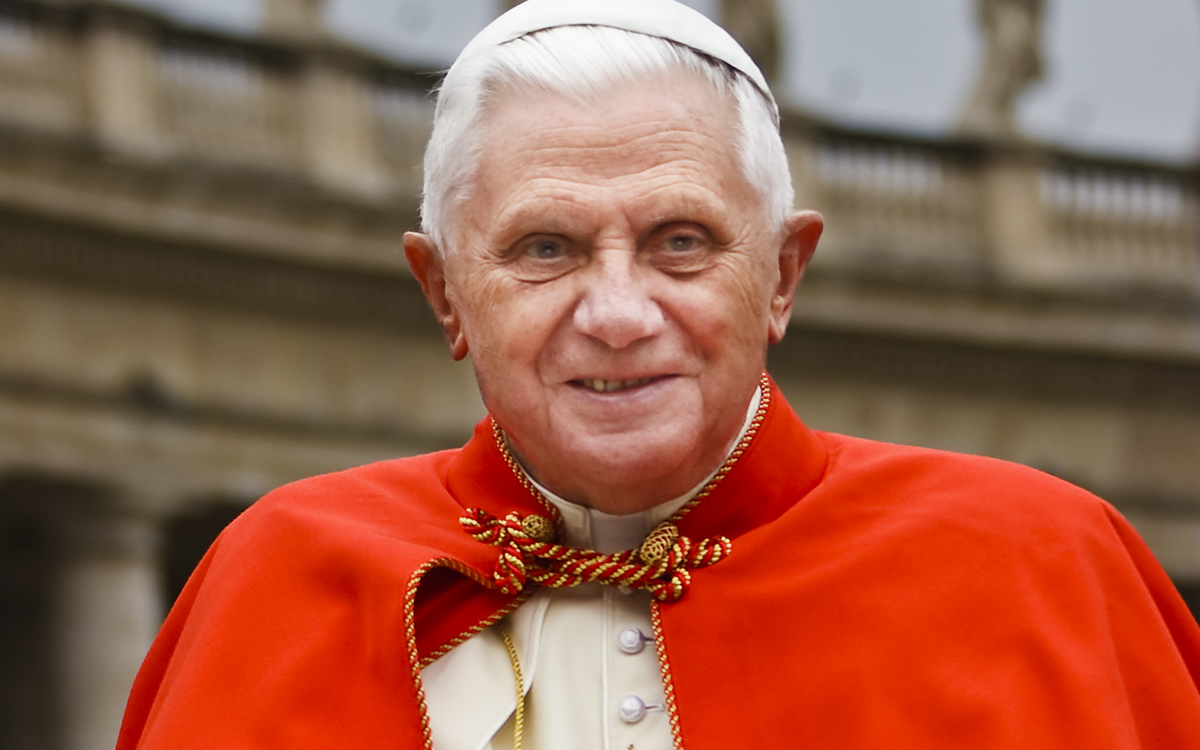
The Vatican on Saturday announced Pope Emeritus Benedict XVI died at the age of 95.
Vatican spokesperson Matteo Bruni said Benedict passed away at 9:34 a.m. local time (3:34 a.m. ET) at the Mater Ecclesiae Monastery in the Vatican.
Benedict was born Joseph Ratzinger in Marktl Am Inn in Germany’s Bavaria state on April 16, 1927.
The Associated Press notes Benedict in his memoirs acknowledged his forced enlistment in the Hitler Youth in 1941 and his desertion from the German army just before the end of World War II.
Benedict and his brother, Georg, in 1951 were ordained as priests. He became Munich’s bishop in 1977 and then-Pope Paul VI in 1980 elevated him cardinal.
Benedict assumed the papacy on April 19, 2005, after Pope John Paul II died. Benedict on Feb. 11, 2013, became the first pope to resign since Pope Gregory XII stepped down from the papacy in 1415. His successor, Pope Francis II, on Wednesday said Benedict was “very ill.”
Benedict described gay men and lesbians as ‘intrinsically disordered’
Benedict as the prefect of the Vatican’s Congregation for the Doctrine of the Faith enforced the Catholic Church’s moral doctrine.
He wrote in a 1986 letter that gay men and lesbians are “intrinsically disordered.” Benedict also said in the same document that gay organizations could no longer use church property.
Benedict described marriage rights for same-sex couples as “a manipulation of nature” and categorized marriage equality efforts around the world as a threat to “human dignity and the future of humanity itself.” Activists during Benedict’s papacy also criticized the Vatican’s opposition to condom use as a way to stop the spread of HIV/AIDS.
Benedict during his papacy faced scathing criticism over his handling of clergy sex abuse in the Catholic Church. The Vatican’s finances also came under scrutiny.
“Benedict’s approach to gay and lesbian issues was clearly hindered by the fact that he did not understand the human dimension of love and relationship that characterizes same-gender couples and individuals,” said Francis DeBernardo, executive director of New Ways Ministry, a Maryland-based organization that ministers to LGBTQ and intersex Catholics, in a statement. “He relied on centuries-old, abstract philosophical and theological ideas instead of learning about more recent understandings of sexuality. Most importantly, he failed to listen to the lived experiences of real people.”
“While clearly a man of faith seeking to act with good intentions; his resistance to engaging the lives, love and faith of actual human beings means he will be remembered as a church leader who did not listen pastorally to those the church serves,” added DeBernardo in his statement. “In contrast, Pope Francis, his successor, has called for pastoral leaders to be listeners and learners, particularly in ministry with those on the margins of church and society, such as LGBTQ+ people.”
Marianne Duddy-Burke, executive director of Dignity USA, an LGBTQ and intersex Catholic organization, in her statement also acknowledged Benedict’s anti-LGBTQ legacy.
“The death of any human being is an occasion of sorrow. We pray for Pope Benedict’s soul and express our condolences to his family, friends and loved ones,” said Duddy-Burke. “However, his death also calls us to reflect honestly on his legacy. Benedict’s leadership in the church, as pope and before that as head of the Vatican’s Congregation for the Doctrine of the Faith (CDF), caused tremendous damage to LGBTQIA+ people and our loved ones. His words and writings forced our community out of Catholic churches, tore families apart, silenced our supporters and even cost lives. He refused to recognize even the most basic human rights for LGBTQIA+ people. Many of us experienced the most harsh and blatant religiously justified discrimination of our lives as a result of his policies.”
The Vatican says Benedict’s body will be in St. Peter’s Basilica on Monday “so the faithful can pay their respects.” His funeral is expected to take place on Jan. 5.
.





Turkey
House Democrats urge White House to confront Turkish government over anti-LGBTQ crackdown
More than 60 lawmakers signed letter to Secretary of State Marco Rubio

More than 60 House Democrats on Thursday called upon the Trump-Vance administration to confront the Turkish government over its anti-LGBTQ crackdown.
Turkish authorities last month detained dozens of people during raids that targeted the country’s LGBTQ community, advocacy groups, and HIV/AIDS service organizations. Journalists were among those taken into custody outside an Istanbul courthouse on Sept. 15 during a protest against the raids that are part of the government’s “My Family Is Safe” campaign.
Council for Global Equality is among the groups that organized a protest outside the Turkish Embassy in D.C. on Sept. 18.
View on Threads
U.N. High Commissioner for Human Rights Volker Türk on Sept. 21 during a U.N. LGBTI Core Group event that took place on the sidelines of the U.N. General Assembly specifically referenced Turkey.
The Core Group is a group of U.N. member states that have pledged to support LGBTQ and intersex rights.
The U.S. withdrew from the Core Group after the Trump-Vance administration took office. The White House has not publicly commented on Turkey’s anti-LGBTQ crackdown.
“These developments warrant an urgent diplomatic response from the United States to protect the rights of freedom of expression, association, and assembly for all Turkish citizens, regardless of their sexual orientation or gender identity,” reads the letter the lawmakers sent to Secretary of State Marco Rubio. “We therefore urge you to use all available channels to raise these concerns directly with the Turkish government; press for the immediate release of those arrested and detained for their legitimate human rights activities; and ensure that the U.S. Embassy in Ankara closely monitors related judicial proceedings.”
“We further urge the Department to press Turkish authorities to cease efforts to criminalize LGBTQI+ organizations and advocacy and to affirm the right of all people to peacefully assemble,” it adds.
Arizona Congresswoman Yassamin Ansari and U.S. Rep. Dina Titus (D-Nev.) spearheaded the letter. House Speaker Emerita Nancy Pelosi (D-Calif.); House Foreign Affairs Ranking Member Gregory Meeks (D-N.Y.); Del. Eleanor Holmes Norton (D-D.C.); Delaware Congresswoman Sarah McBride, and U.S. Rep. Mark Takano (D-Calif.), who chairs the Congressional Equality Caucus, are among the 65 House Democrats who signed the letter.
“The United States must be a leader in defending human rights and what is happening in Turkey demands an urgent diplomatic response. It’s absolutely appalling to see LGBTQI+ people and the organizations that stand up for their rights be targeted by the (President Recep Tayyip) Erdogan regime,” said Ansari in a press release. “I stand proudly with the LGBTQI+ community here and abroad and will continue to fight for their right to live openly, freely, and without fear, anywhere and everywhere.”
The press release notes the Human Rights Campaign, the Council for Global Equality, and the Planned Parenthood Federation of America support the letter.
“Turkey’s attacks on its LGBTQI+ community are a disturbing reminder that the fight for equality and human rights does not stop at our borders. No one should be silenced or detained for simply being who they are or peacefully demanding dignity and freedom,” said HRC Government Affairs Senior Director Jennifer Pike Bailey. “We are grateful to Representatives Ansari and Titus for recognizing that the fight for LGBTQI+ equality is global and that, even amid the many challenges facing our community here at home, we cannot turn our backs on LGBTQI+ people facing persecution abroad.”
A State Department spokesperson on Friday told the Washington Blade that “as a matter of policy, we do not comment on congressional correspondence.”
Serbia
Ana Brnabić becomes world’s first openly lesbian head of state
Former Serbian prime minister succeeded President Aleksandar Vučić on Monday
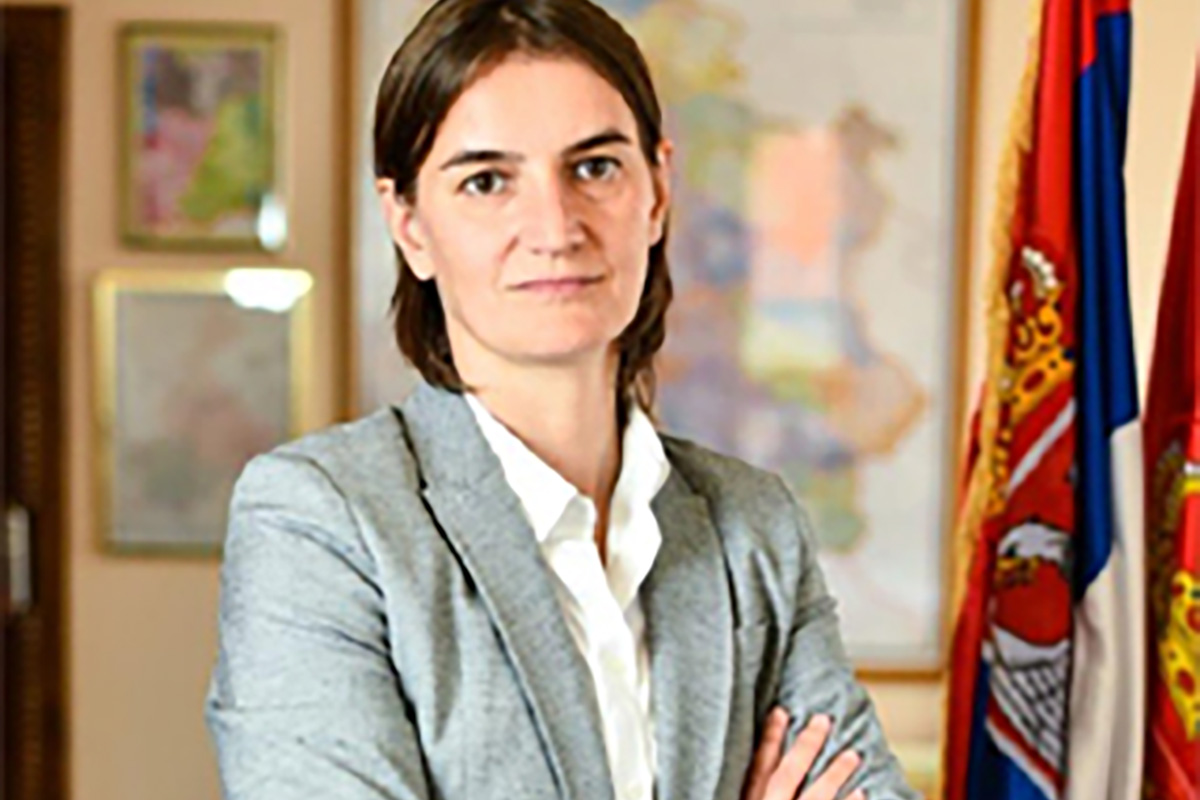
Ana Brnabić on Monday became the world’s first openly lesbian head of state after Serbian President Aleksandar Vučić resigned.
Brnabić was the country’s prime minister from 2017-2024. She was most recently the president of the Serbian National Assembly.
Vučić resigned ahead of parliamentary elections that will take place on Oct. 25. Media reports indicate Vučić could become Serbia’s next prime minister if his Serbian Progressive Party can successfully form a new government. Brnabić until then will be the country’s acting president.
Former Irish Prime Minister Leo Varadkar, who became his country’s first openly gay head of government in 2017, praised Brnabić.
“Congratulations to Ana Brnabić on becoming the world’s first lesbian head of state (president of Serbia),” said Varadkar on social media. “She visited while in her previous office and is a friend of Ireland.”
Congratulations to Ana Brnabic on becoming the world's first lesbian head of state (President of Serbia). She visited while in her previous office and is a friend of Ireland. 12 countries have now had gay or lesbian head of state/government. So far, all in Europe – the… https://t.co/TBpmeeEs9I
— Leo Varadkar (@LeoVaradkar) September 29, 2026
Former Icelandic Prime Minister Jóhanna Sigurðardóttir in 2009 became the world’s first openly lesbian head of government. Former San Marino Captain Regent Paolo Rondelli in 2022 became the world’s first openly gay head of state.
Andorran Prime Minister Xavier Espot Zamora, Dutch Prime Minister Rob Jetten, and Latvian President Edgars Rinkēvičs are openly gay. Former Luxembourgish Prime Minister Xavier Bettel, former French Prime Minister Gabriel Attal, and former Belgian Prime Minister Elio Di Rupo are also gay.
Varadkar was Ireland’s prime minister from 2017-2020 and again from 2022-2024.
Netherlands
Dutch prime minister visits Stonewall Inn
Rob Jetten is the Netherlands’ first openly gay prime minister
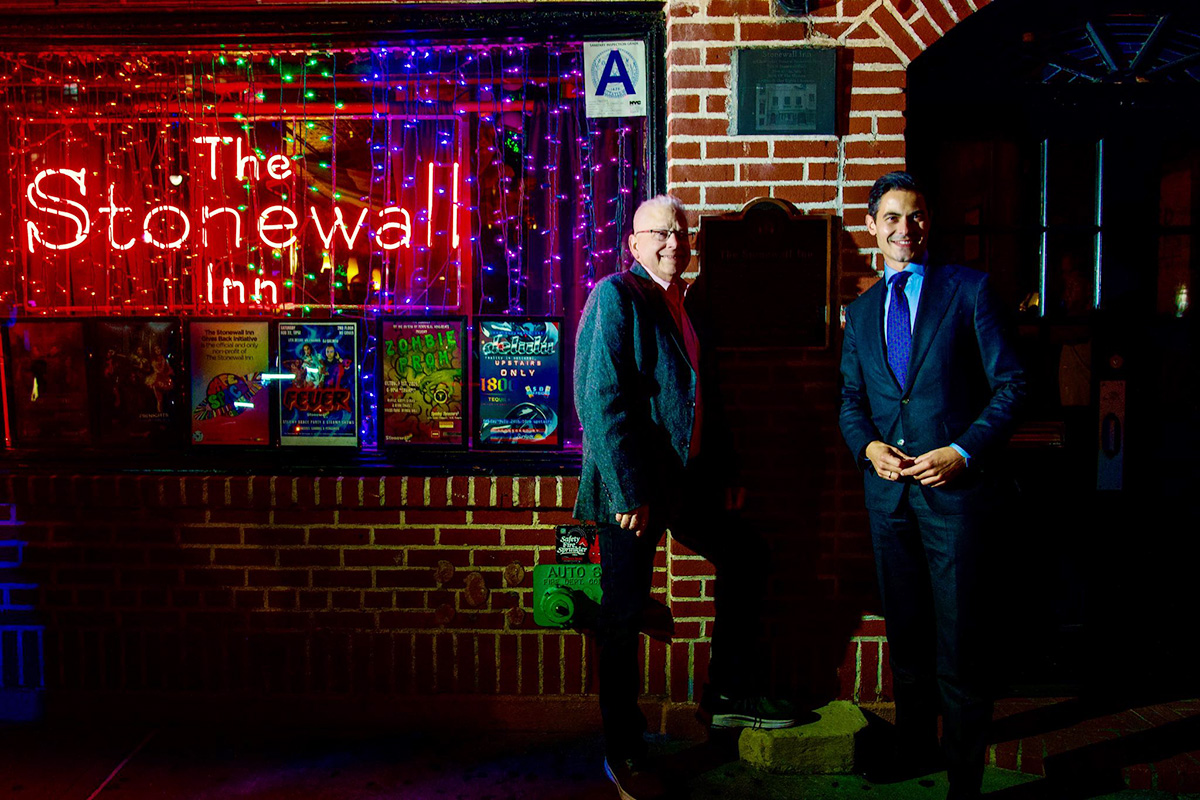
Dutch Prime Minister Rob Jetten on Monday visited the Stonewall Inn in New York.
“The Stonewall Inn is not just a gay bar in New York, but the place where in 1969 riots took place as a reaction to years of discrimination and police violence,” wrote Jetten on X. “This is seen as the starting point of the global LGBTIQ+ emancipation and activism. Nowadays, the bar is a national monument, dedicated to the LGBTIQ+ rights movement.”
“For me, it is impressive and moving to be here tonight. And also fitting, because the defense of human rights is an important part of our foreign policy,” he added. “The Netherlands stands alongside the Stonewall Inn community when it comes to everyone’s right to live openly, safely, and with pride, no matter who you are or who you love.”
De Stonewall Inn is niet zomaar een gay bar in New York, maar de plaats waar in 1969 rellen plaatsvonden als reactie op jarenlange discriminatie en geweld van de politie. Dit wordt gezien als startpunt van de wereldwijde lhbtiq+-emancipatie en activisme. Tegenwoordig is de bar… pic.twitter.com/hJmFYjF91Z
— Rob Jetten (@MinPres) September 23, 2026
Jetten in February became the Netherlands’s first openly gay prime minister.
He opened last month’s World Pride Human Rights Conference in Amsterdam. Jetten also participated in a panel with former Irish Prime Minister Leo Varadkar, former San Marino Captain Regent Paolo Rondelli, and other current and former heads of government who are gay or lesbian.
Jetten is scheduled to speak to the U.N. General Assembly on Thursday.
(Editor’s note: Jetten visited New York’s LGBT Community Center with New York City Mayor Zohran Mamdani before he left the city.)

Center for Black Equity honors leaders, activists at BE. Gala

In ‘The Lost Brontë,’ a complicated lie can lead to danger

CAMP Rehoboth Block Party returns Oct. 18

Essential queer horror classics for Halloween

Solidarity beyond the parade: the actual cost of Pride

10 years later, we still can’t shake Barry Jenkins’s ‘Moonlight’

‘Some Like It Hot’ a wild ride at renovated Bernard Family Theatre

D.C.’s LGBTQ homeless facilities face possible hit from Trump funding cuts

Trump uses anti-trans slur against Democratic Senate candidate

U.S. int’l trade negotiator, consultant James Bedore dies at 82
-

 Movies5 days ago
10 years later, we still can’t shake Barry Jenkins’s ‘Moonlight’
-
Theater5 days ago
‘Some Like It Hot’ a wild ride at renovated Bernard Family Theatre
-
District of Columbia5 days ago
D.C.’s LGBTQ homeless facilities face possible hit from Trump funding cuts
-
2026 Midterm Elections5 days ago
Trump uses anti-trans slur against Democratic Senate candidate