European Union
French student dies by suicide after anti-gay bullying
Lucas, 13, lived in small town in northeastern France

A 13-year-old student, the victim of homophobia and bullying at his school, was buried Saturday, a week after he died by suicide. The death shook Golbey, a small town of around 8,000 people in northeastern France.
Identified only as Lucas, the young boy was a student at the Louis Armand College (a rough equivalent to an American middle school) in Golbey.
According to the French LGBTQ media outlet Têtu.com and media outlet ici par France Bleu et France 3, Valérie Dautreme, the academic director of the national education services in the Vosges, labeled the news “terrible” and acknowledged Lucas and his mother reported “mockery” related to the teenager’s sexual orientation from the first parent-teacher meeting last fall.
While the family has yet to comment on the circumstances leading to their son’s death, Dautreme says “the situation was taken very seriously by the establishment, by the head teacher,” claiming that school staff and peer groups intervened. She then said that in regards to the initial reporting of the bullying that “for us, and I mean at this stage, the situation had been resolved: Lucas said afterwards that things had settled down, that he was no longer being teased.”
Referring to his suicide she noted, “obviously, the investigation is in progress and for the moment, these are only incomplete elements.”
“The family is destroyed by grief. The boy’s mother is asking for justice, she wants the investigation to identify those responsible so that they are punished — underlined the family’s attorney, Catherine Faivre. “Lucas had expressed that he was gay and his classmates were aware of it.”
The case drew the attention of French first lady Brigitte Macron, who has intervened taking up the cause against bullying in the nation’s schools using Lucas’ case to spotlight the need for reform and prevention.
“I am in favor of raising the awareness of teaching staff and those who work in universities and high schools to better identify cases of harassment,” Macron told Le Parisien.
A portion of the teen’s diary was publicly disclosed in which he had written “I want to end it,” press accounts noted that he kept the diary locked in his desk drawer in his bedroom. The diary’s existence was disclosed as part of the ongoing investigation into the teen’s death by Frédéric Nahon, the local prosecutor who noted in press accounts that the teenager’s diary was examined by the investigators who found there are no direct allusions to the reasons for the suicide.
Nahon said that the first interrogations of the family’s acquaintances and neighbors confirmed the existence of repeated homophobic teasing and insults. Nahon is trying to determine “the exact content of the insults, the duration over time of the bullying acts and any omissions by those who were aware of the facts.” No criminal complaints have been filed.
According to the most recent statistics every year in France 700,000 students are victims of harassment at school.
Last February France’s Parliament adopted a new law that will make school bullying a criminal offence, which either students or staff can be prosecuted for Euronews reported.
Those found guilty under the new legislation face a €45,000 ($48,685.50) if the victim of bullying is unable to attend schools for up to eight days.
But more serious incidents can be punished with up to 10 years imprisonment and a fine of €150,000 ($162,285) for longer periods of school absence or if the victim commits suicide or attempts to.
“Homophobia kills,” openly gay Transportation Minister Clément Beaune said to French media outlets after learning of the teen’s suicide.
The Louis Armand College, which has 697 students, is involved in the national pHARe system to fight against bullying and its teachers are trained and students are also required to take classes to prevent bullying.
A crowd-fundraiser to defray funeral costs for the family was able to raise €7,554 ($8,182.76).
***************************************************************************************
The Trevor Project provides a safe, judgment-free place to talk for LGBTQ youth at 1-866-488-7386.
If you or anyone you love is experiencing mental health issues or suicidal thoughts, please reach out for help. You can call or text the number 988, which will direct you to the National Suicide Prevention Lifeline.
It is free and available 24 hours a day.




Bulgaria
Top EU court issues landmark transgender rights ruling
Member states must allow name, gender changes on ID documents
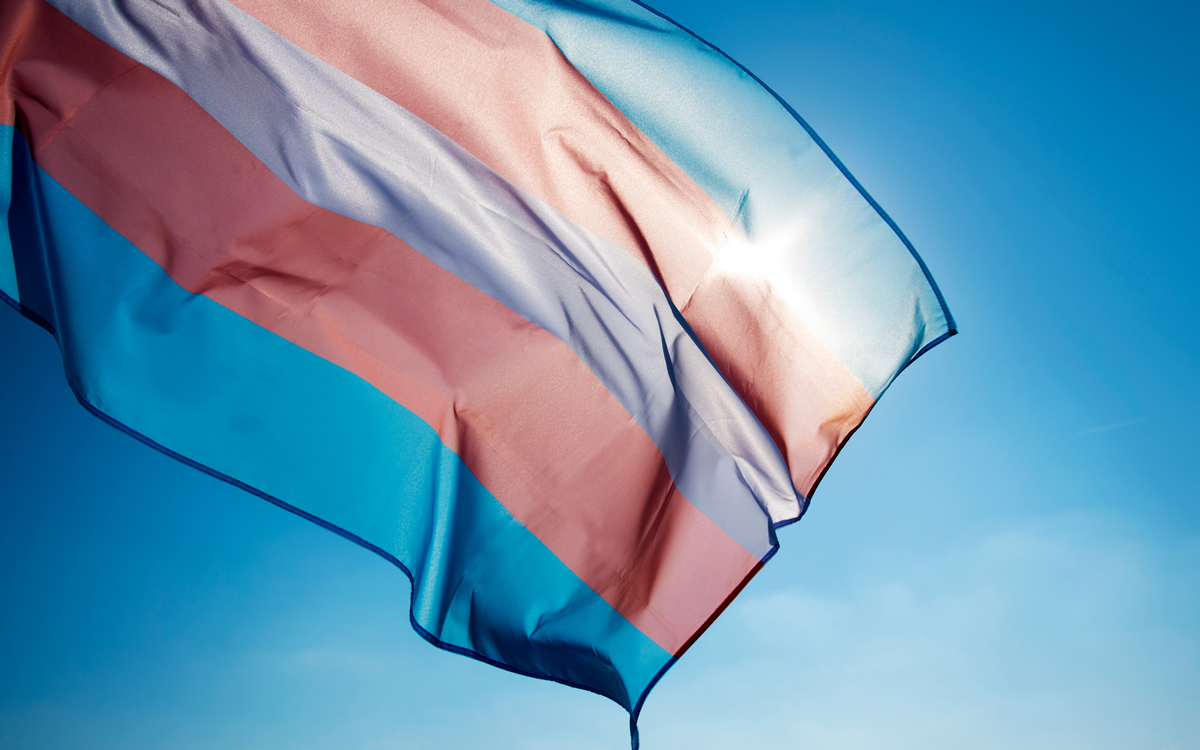
The European Union’s highest court on Thursday ruled member states must allow transgender people to legally change their name and gender on ID documents.
The EU Court of Justice in Luxembourg issued the ruling in the case of “Shipova,” a trans woman from Bulgaria who moved to Italy.
“Shipova” had tried to change her gender and name on her Bulgarian ID documents, but courts denied her requests for nearly a decade.
A ruling the Bulgarian Supreme Court of Cassation issued in 2023 essentially banned trans people from legally changing their name and gender on ID documents. Two Bulgarian LGBTQ and intersex rights groups — the Bilitis Foundation and Deystvie — and ILGA-Europe and TGEU – Trans Europe and Central Asia supported the plaintiff and her lawyers.
“Because her life in Italy also depended on her Bulgarian documents, the lack of documents reflecting her lived gender creates an obstacle to her right to move and reside within EU member states,” said the groups in a press release. “This mismatch between her gender identity and expression and her gender marker in her official documents leads to discrimination in all areas of life where official documents are required. This includes everyday activities such as going to the doctor and paying for groceries by card, finding employment, enrolling in education, or obtaining housing.”
Denitsa Lyubenova, a lawyer with Desytvie, in the press release said the case “concerns the dignity, equality, and legal certainty of trans people in Bulgaria.” TGEU Senior Policy Officer Richard Köhler also praised the ruling.
“Today, the EU Court of Justice has taken an important step towards a right to legal gender recognition in the EU,” said Köhler. “Member states must allow their nationals living in another member state to change their gender data in public registries and identity cards to ensure they can fully enjoy their freedom of movement. National laws or courts cannot stand in their way.”
“Thousands of trans people in the EU are breathing a sigh of relief today,” added Köhler.
European Union
European Parliament resolution backs ‘full recognition of trans women as women’
Non-binding document outlines UN Commission on the Status of Women priorities
The European Parliament on Feb. 11 adopted a transgender-inclusive resolution ahead of next month’s U.N. Commission on the Status of Women meeting.
The resolution, which details the European Union’s priorities ahead of the meeting, specifically calls for “the full recognition of trans women as women.”
“Their inclusion is essential for the effectiveness of any gender-equality and anti-violence policies; call for recognition of and equal access for trans women to protection and support services,” reads the resolution that Erin in the Morning details.
The resolution, which is non-binding, passed by a 340-141 vote margin. Sixty-eight MPs abstained.
The commission will meet in New York from March 10-21.
A sweeping executive order that President Donald Trump signed shortly after he took office for a second time on Jan. 20, 2025, said the federal government’s “official policy” is “there are only two genders, male and female.” The Trump-Vance administration has withdrawn the U.S. from the U.N. LGBTI Core Group, a group of U.N. member states that have pledged to support LGBTQ and intersex rights, and dozens of other U.N. entities.
European Union
Top EU court: Poland must recognize same-sex marriage from other European countries
Activists celebrate landmark decision
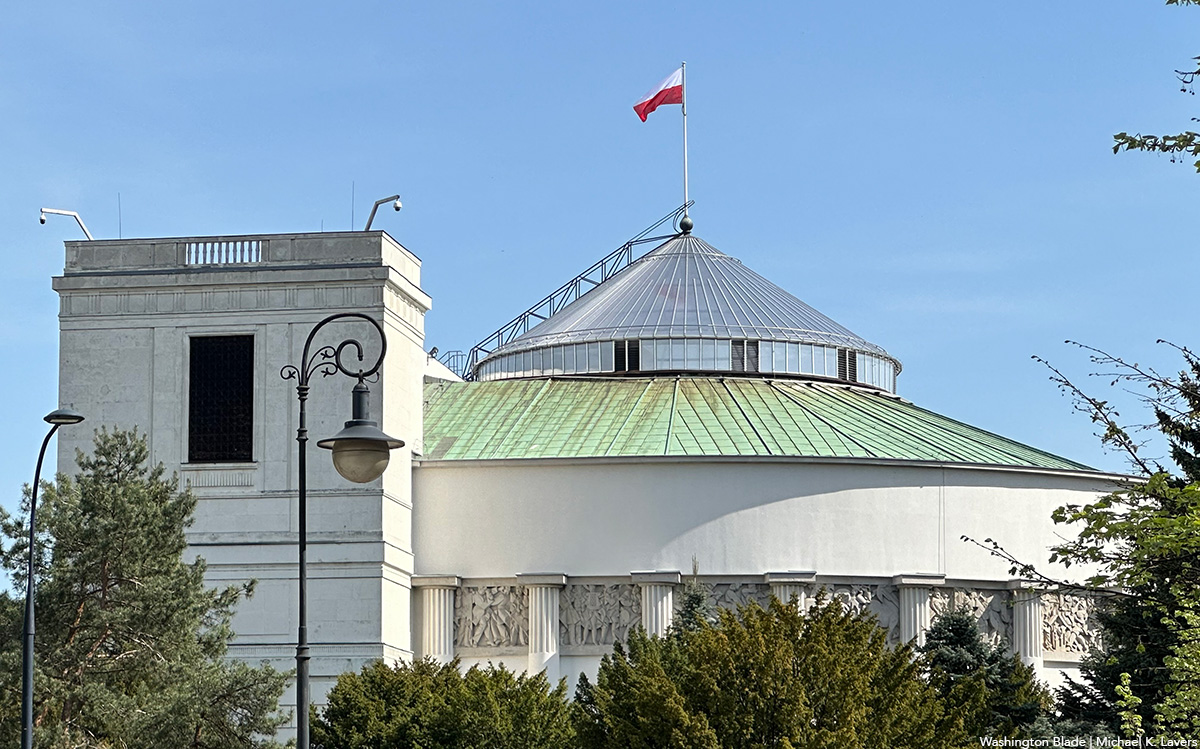
The European Union’s top court on Tuesday ruled member states must recognize same-sex marriages legally performed in other member states.
The EU Court of Justice in Luxembourg ruled in favor of a couple who challenged Poland’s refusal to recognize their German marriage.
ILGA-Europe notes Polish authorities refused “to transcribe into the civil register a certificate of same-sex marriage concluded” in Germany “between a Polish citizen and a Polish-German citizen … on the grounds that Polish law does not allow same-sex marriage.”
The couple who lives in Poland brought their case to Polish courts. The Polish Supreme Administrative Court referred it to the EU Court of Justice.
“Today’s ruling of the Court of Justice of the EU is of key importance not only for the couple involved in the case, but also for the entire LGBT+ community in Poland,” said the Campaign Against Homophobia, a Polish LGBTQ and intersex rights group, in response to the decision. “It clearly states that refusing to transcribe a marriage concluded abroad is incompatible with EU law. Therefore, regardless of the absence of registered partnerships and marriage equality, Poland must ensure the possibility of effective transcription.”
“With this judgment, the CJEU clearly states that the recognition of marriage status is key to enjoying EU citizens’ fundamental right to freedom of movement across the EU,” added ILGA-Europe Advocacy Director Katrin Hugendubel. “The EC now needs to ensure that this judgment is implemented quickly by the Polish state and across the EU.”
Sixteen EU countries — Ireland, Portugal, Spain, France, Luxembourg, Belgium, the Netherlands, Germany, Denmark, Austria, Slovenia, Malta, Greece, Sweden, Finland, and Estonia — have extended full marriage rights to same-sex couples. Poland, Romania, Bulgaria, and Slovakia are the EU countries with no legal recognition of same-sex couples.

Calendar: April 10-16

BLUF leather social set for April 10 in Rehoboth

Celebrations of life planned for Sean Bartel

The ‘X’ returns to court

LGBTQ community explores arming up during heated political times

D.C. is the place for the Democratic Socialists of America

PHOTOS: The Bonnet Ball

Key lifestyle changes can help patients cope with diabetes

Trump budget would codify expanded global gag rule