European Union
Former Irish prime minister: Europe is leader in global LGBTQ rights movement
Leo Varadkar in 2017 became Ireland’s first gay head of government.
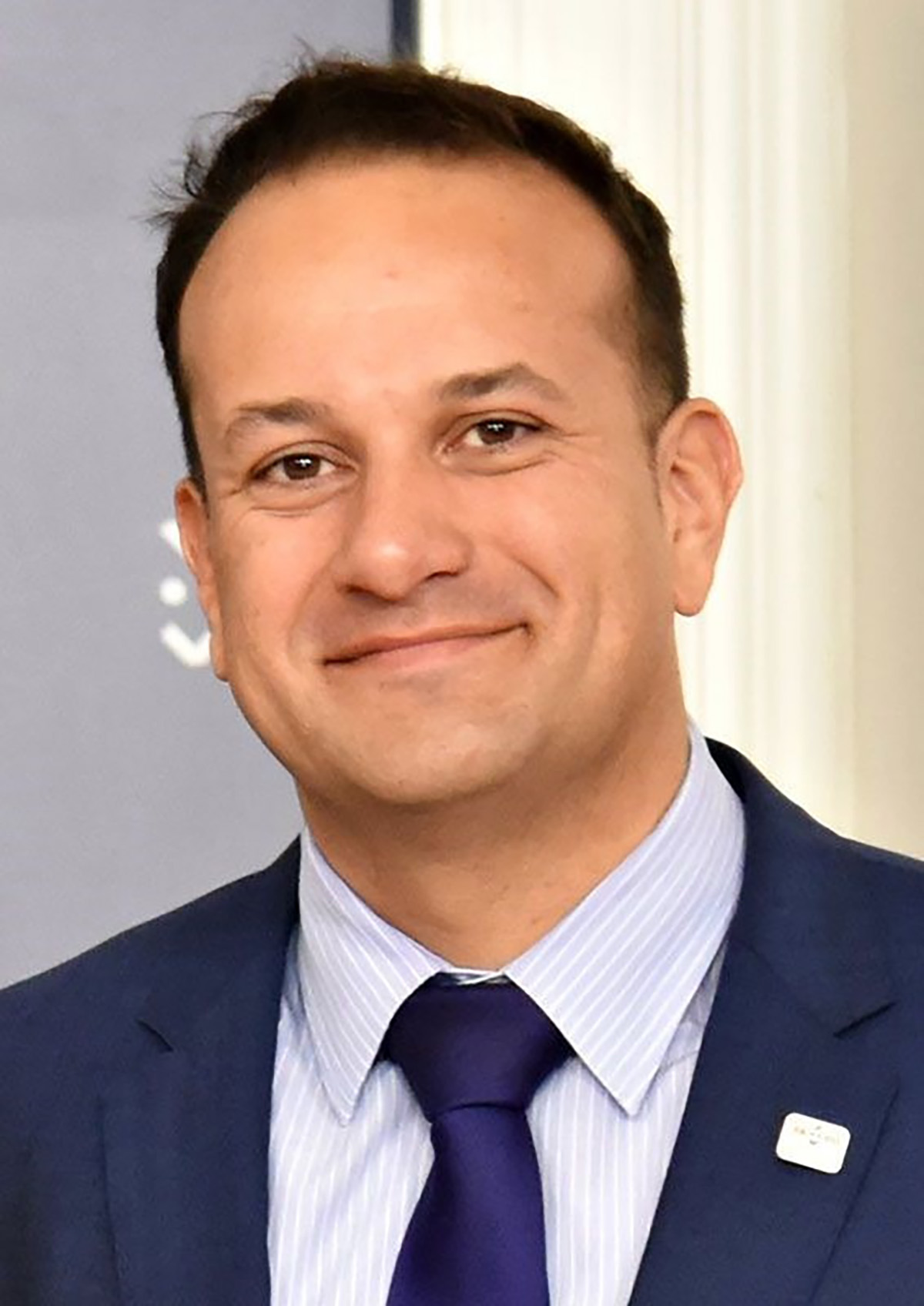
CAMBRIDGE, Mass. — Former Irish Prime Minister Leo Varadkar earlier this month said Europe is now at the forefront of the global LGBTQ and intersex rights movement.
“In many ways, Europe is the light,” he told the Washington Blade on Oct. 20 during an interview that took place near Harvard University. “It’s holding up against anti-LGBTQ policies.”
Varadkar, 46, in 2017 became Ireland’s first gay prime minister.
He stepped down in 2020 after his center-right party, Fine Gael, lost 15 parliament seats in the general election, but he remained in the government. Varadkar, whose father was born in Mumbai, in 2022 once again became prime minister.
Varadkar in 2024 resigned and stepped down as Fine Gael’s leader.
The Harvard Kennedy School’s Carr-Ryan Center for Human Rights on Oct. 16 announced Varadkar’s appointment as a senior fellow for its Global LGBTQI+ Human Rights Program for the 2025-2026 academic year. He — along with former Massachusetts Gov. Deval Patrick and former acting Treasury Secretary David Lebryk — are also Hauser Leaders at the Harvard Kennedy School’s Center for Public Leadership for this year’s fall semester.
Varadkar during his fellowship will focus on LGBTQ and intersex rights within the EU.
He sat down with the Blade on the same day he spoke at Harvard’s Weatherhead Center for International Affairs. Varadkar on Tuesday participated in an event in Brussels that focused on LGBTQ and intersex rights in the EU.
New EU LGBTQ strategy ‘not wonderful, but at least it was done’
The European Commission on Oct. 8 released an LGBTQ and intersex rights strategy that focuses on three specific areas:
- Protecting LGBTIQ+ people (from hate-motivated harassment and violence, from discrimination, from conversion practices)
- Empowering LGBTIQ+ people through (equality bodies, rainbow families, promoting inclusion at workplace)
- Engaging society to advance LGBTIQ+ equality by (calling on all EU countries to adopt national strategies, improving the data collection and analysis, launching an ‘LGBTIQ+ Policy Forum’)
“It’s not wonderful, but at least it was done,” said Varadkar. “You won’t see that done in China, Russia, or even the United States, unfortunately.”
“Europe needs to hold the line, but also we want to focus on places where there is backsliding, like Bulgaria, like Slovakia,” he added, while also referring to the Czech Republic and Hungary.
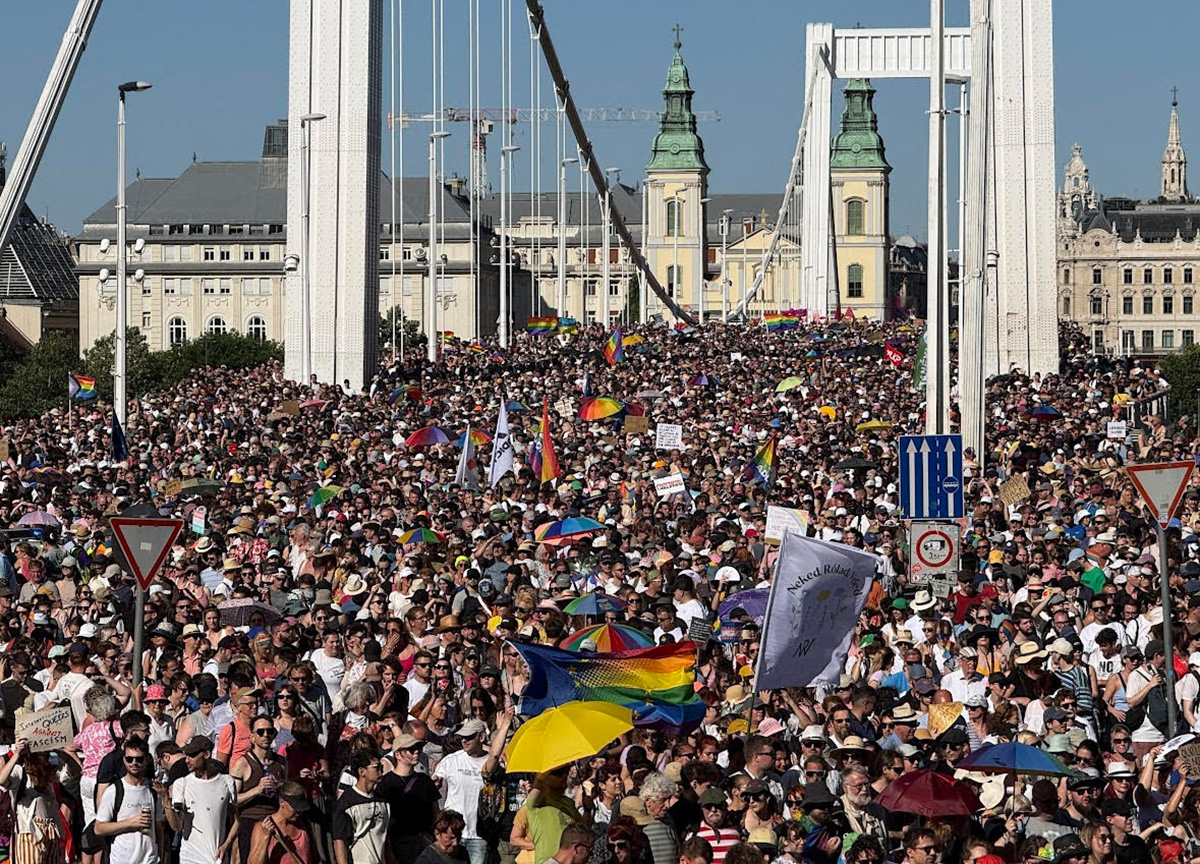
Varadkar is among those who participated in this year’s Budapest Pride, even though Hungarian Prime Minister Viktor Orbán’s government banned public LGBTQ events.
“It wasn’t just a regular Pride protest, and in Eastern Europe Pride is still a protest, very much so … they’re met by football hooligans, and police who aren’t necessarily there to support there to protect them,” Varadkar told the Blade. “This time, everyone joined in: students, unions, families, even more moderate political forces that might not always want to be associated with the LGBT cause, but it became about freedom of expression and became about free speech, and that’s why there was such a big turnout.”
Varadkar since he left office has also traveled to Bulgaria to support the country’s LGBTQ activists. Varadkar also spoke to the Blade about Russia and the Kremlin’s efforts to “influence and destabilize European societies.”
Russia in 2022 launched its war against Ukraine.
“One of the ways they do that is through election interference and misinformation online, and they’ve identified this as an issue that can divide European societies,” said Varadkar, specifically referring to the Russian government’s opposition to LGBTQ rights and its overall human rights record. “[Russian President Vladimir] Putin has very much embraced the idea of traditional values and Russian Orthodox Christianity, and he’s using that as a wedge issue in Central and Eastern Europe.”
“So as ever our fight is part of a bigger fight that’s linked to things like democracy, human rights, academic freedom, press freedom,” added Varadkar. “We’re on the front line in the same battle, in my view.”
He also said the EU needs to be pragmatic in how it responds to Orbán and other anti-LGBTQ leaders.
“[The EU] is in a bit of a dilemma as to how it acts, how it does withdraw funding sometimes from countries if they’re in breach of the standards around the rule of law,” said Varadkar.
The European Commission in 2021 threatened to withhold funding to local and regional governments in Poland that declared themselves “LGBT-free zones.” The European Commission in 2022 sued Hungary over a law that a press release notes “singles out and targets content that ‘promotes or portrays’ what it refers to as ‘divergence from self-identity corresponding to sex at birth, sex change or homosexuality’ for individuals under 18.”
“Some of the more nationalist and populist leaders in Central and Eastern Europe; there’s nothing they want more than a fight with Brussels, these Western European elites … trying to impose their ideology on our country,” Varadkar told the Blade. “So that’s why I think the European Union has to be smart as to how it acts.”
European Commission President Ursula von der Leyen is among those who condemned the Budapest Pride ban. Varadkar told the Blade he “was disappointed there wasn’t more action” from Brussels “in relation to why Budapest Pride was being banned.”
Varadkar praises Sarah McBride
Ireland is among the countries that have issued travel advisories for transgender and nonbinary people who are planning to visit the U.S. since the Trump-Vance administration took office.
President Donald Trump shortly after his inauguration issued a sweeping executive order — Defending Women from Gender Ideology Extremism and Restoring Biological Truth to the Federal Government — that, among other things, bans the State Department from issuing passports with “X” gender markers. Trump in his inaugural speech also said the federal government will only recognize two genders: male and female.
Trump in February issued another executive order that bans trans women and girls from female sports teams. U.S. Citizenship and Immigration Services in August announced it will ensure “male aliens seeking immigration benefits aren’t coming to the U.S. to participate in women’s sports.”
The promotion of LGBTQ and intersex rights abroad was a cornerstone of the Biden-Harris administration’s overall foreign policy.
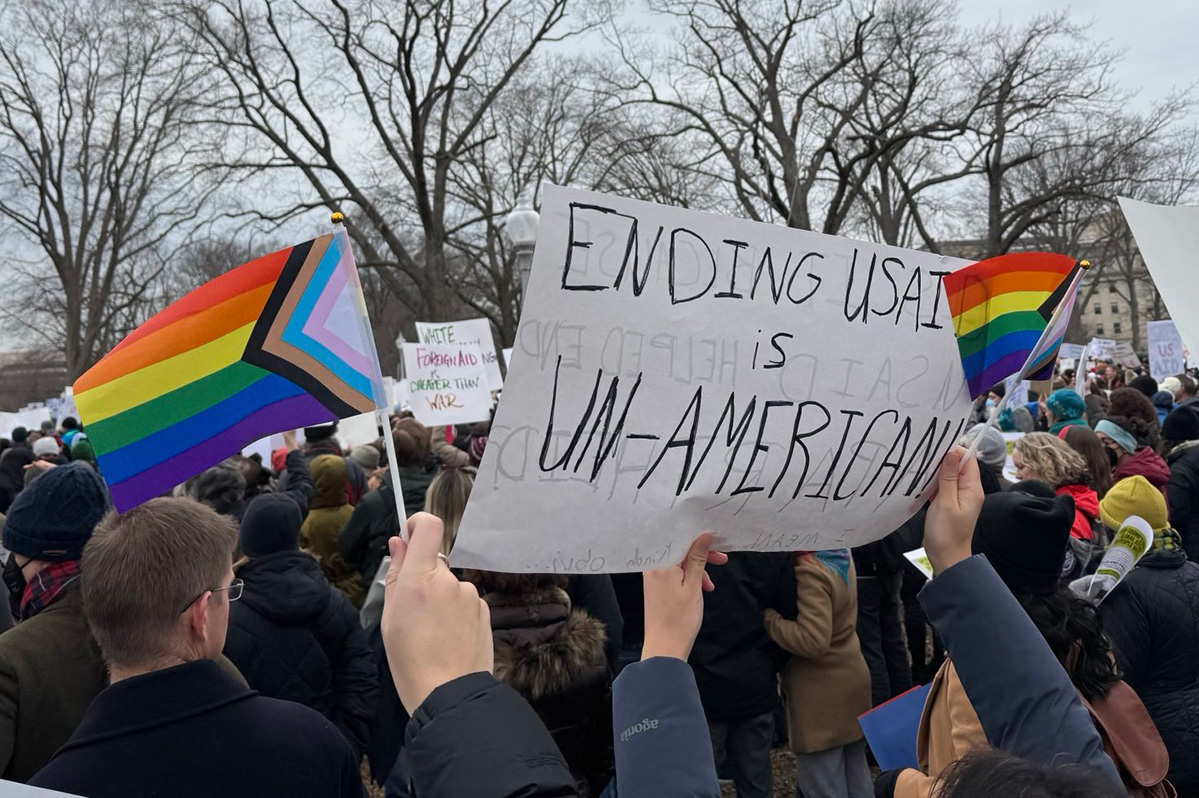
Secretary of State Marco Rubio on Jan. 24 directed State Department personnel to stop nearly all U.S. foreign aid spending for 90 days in response to an executive order that Trump signed after his inauguration. Rubio later issued a waiver that allowed PEPFAR and other “life-saving humanitarian assistance” programs to continue operating after bowing to pressure, but the Blade has reported PEPFAR-funded programs in Kenya and other African countries have been forced to suspend services and even shut down because of gaps in U.S. funding.
Rubio in March announced 83 percent of U.S. Agency for International Development contacts had been cancelled, and the State Department would administer the remaining programs. USAID officially shut down on July 1.
The global LGBTQ and intersex rights movement has lost more than an estimated $50 million in funding since the Trump-Vance administration took office.
“It has an impact, particularly on organizations in the Global South and in Central and Eastern Europe,” said Varadkar.
Varadkar told the Blade he is working with the Global Development Project and other philanthropic organizations to “fill some of the gap” in funding.
He said the current situation “demonstrates why we should never be too dependent on any government or corporations.” Varadkar also spoke more broadly about the Trump-Vance administration and its policies.
“I’m a guest in this country. I’m not here to tell you what to do. The American people decide who the president is. I don’t, but I am genuinely disappointed to see the backsliding on human rights and academic freedom and free speech here in America,” said Varadkar.
“What do I associate America with? I associate it with being one of the homes of democracy and helping to spread it around the world. I associate it with free speech, sometimes even saying any crazy thing you want. And I associate it with as being the birthplace of the LGBT liberation movement. I think of Stonewall. I think of the Castro,” he added. “It all started here, long before anyone in Ireland could ever imagine homosexual acts being decriminalized, let alone a gay person being the head of government.”
“To me this is where it all started,” said Varadkar. “It’s particularly worrying that things appear to be going in the wrong direction here, and that has impacts in the rest of the world too, that Americans might be very aware of.”
Varadkar also said he admires U.S. Rep. Sarah McBride (D-Del.), who in 2024 became the first openly trans person elected to Congress.
“She’s there for everyone in Delaware, and yes, she is trans too,” Varadkar told the Blade. “She’s willing to be a leader, but I think as LGBT leaders, we should make sure that our causes are part of the wider welfare and society and not separate.”






European Union
Poland’s top court rejects recognition of same-sex marriages from other EU countries
Ruling sets up potential clash with bloc

Poland’s top court this week rejected the recognition of same-sex marriages legally performed in other EU countries.
The EU Court of Justice in Luxembourg last November ruled in favor of a same-sex couple who challenged Poland’s refusal to recognize their German marriage. Poland’s Supreme Administrative Court in March reaffirmed the decision.
The couple, who lives in Poland, brought their case to Polish courts in 2019. The Supreme Administrative Court referred it to the EU Court of Justice.
The Polish government in May announced it will recognize same-sex marriages legally performed in other EU countries. Polish President Karol Nawrocki on July 17 vetoed bills that would have extended rights to same-sex couples.
The Constitutional Tribunal ruling, which it issued on July 28, was unanimous and final. It also sets up a potential clash between it and the EU Court of Justice.
European Union
European Commission says all EU countries should ban conversion therapy
Recommendation ‘an important step forward for LGBTI rights across Europe’
The European Commission on Wednesday said all European Union countries should ban so-called conversion therapy.
The recommendation comes weeks after the European Parliament voted in favor of prohibiting the widely discredited practice across the EU. More than 1.2 million people signed a campaign in support of the ban that ACT (Against Conversion Therapy) LGBT launched in 2024 through the EU’s European Citizens Initiative framework.
“We warmly welcome today’s commitment from the European Commission to a recommendation on ending conversion practices, an important step forward for LGBTI rights across Europe,” said ILGA Europe in a statement.
Seven EU countries — Belgium, Cyprus, France, Malta, Norway, Portugal, and Spain — have banned conversion therapy outright.
Greece in 2022 banned the practice for minors. German lawmakers in 2020 passed a law that prohibits conversion therapy for minors and for adults who have not consented to undergoing the widely discredited practice.
ILGA Europe said the European Commission’s recommendation “highlights how much work remains to be done.”
“Ending conversion practices cannot stop at symbolic commitments or fragmented national approaches,” stressed the advocacy group. “We need coordinated EU action, proper training for professionals, and survivor-centered support systems that recognize the serious harm these practices cause.”
“More than one million people supported the European Citizens’ Initiative calling for change,” added ILGA Europe. “The message is clear: conversion practices are not therapy or belief, they are a form of violence that Europe can and should end.”
European Union
European Parliament backs EU-wide conversion therapy ban
More than 1.2 million people backed campaign
The European Parliament on Wednesday voted in favor of banning so-called conversion therapy across the European Union.
ACT (Against Conversion Therapy) LGBT in 2024 launched a campaign in support of the ban through the EU’s European Citizens Initiative framework. More than 1.2 million people ultimately signed it.
The proposed ban had the support of 405 MEPs. The European Commission is expected to formally respond to it by May 18.
Seven EU countries — Belgium, Cyprus, France, Malta, Norway, Portugal, and Spain — have banned conversion therapy outright.
Greece in 2022 banned the practice for minors. German lawmakers in 2020 passed a law that prohibits conversion therapy for minors and for adults who have not consented to undergoing the widely discredited practice.

Center for Black Equity honors leaders, activists at BE. Gala

In ‘The Lost Brontë,’ a complicated lie can lead to danger

CAMP Rehoboth Block Party returns Oct. 18

Essential queer horror classics for Halloween

Solidarity beyond the parade: the actual cost of Pride

10 years later, we still can’t shake Barry Jenkins’s ‘Moonlight’

‘Some Like It Hot’ a wild ride at renovated Bernard Family Theatre

D.C.’s LGBTQ homeless facilities face possible hit from Trump funding cuts

Trump uses anti-trans slur against Democratic Senate candidate

U.S. int’l trade negotiator, consultant James Bedore dies at 82
-

 Movies5 days ago
10 years later, we still can’t shake Barry Jenkins’s ‘Moonlight’
-
Theater5 days ago
‘Some Like It Hot’ a wild ride at renovated Bernard Family Theatre
-
District of Columbia5 days ago
D.C.’s LGBTQ homeless facilities face possible hit from Trump funding cuts
-
2026 Midterm Elections5 days ago
Trump uses anti-trans slur against Democratic Senate candidate