Virginia
Miyares: Va. school boards must adhere to new trans, nonbinary student guidelines
Districts in Northern Virginia have defined rules
Virginia Attorney General Jason Miyares on Thursday said school boards must adhere to the state’s new guidelines for transgender and nonbinary students.
Miyares in a letter to Republican Gov. Glenn Youngkin said the guidelines “comply with the Equal Protection Clause, Title IX and the VHRA” (the Virginia Human Rights Act) and “local school boards are required to adopt policies that are consistent with them.”
The Virginia Department of Education last month released the new guidelines.
One section states “schools shall defer to parents to make the best decisions with respect to their children.”
“Parents are in the best position to work with their children and, where appropriate, their children’s health care providers to determine (a) what names, nicknames and/or pronouns, if any, shall be used for their child by teachers and school staff while their child is at school, (b) whether their child engages in any counseling or social transition at school that encourages a gender that differs from their child’s sex, or (c) whether their child expresses a gender that differs with their child’s sex while at school,” it reads.
Another section notes “schools shall keep parents informed about their children’s well-being.”
“To ensure parents are able to make the best decisions with respect to their child, school personnel shall keep parents fully informed about all matters that may be reasonably expected to be important to a parent, including, and without limitation, matters related to their child’s health, and social and psychological development,” it reads. “Parents’ rights are affirmed by the U.S. Supreme Court that characterized a parent’s right to raise his or her child as ‘perhaps the oldest of the fundamental liberty interests recognized by this court.’ Troxel v. Granville, 530 U.S. 57, 65 (2000). This requirement is, of course, subject to laws that prohibit disclosure of information to parents in certain circumstances including, for example, Code of Virginia § 22.1-272.1(B) (prohibiting parental contact where student is at imminent risk of suicide related to parental abuse or neglect.)”
The guidelines further state “schools shall serve the needs of all students” and the Virginia Department of Education “is committed to working with school divisions to ensure a positive, safe and nurturing learning environment for all students.”
“Each student’s individual needs should be taken into consideration by his or her school, and divisions should develop policies that encourage schools to account for these individual needs, with due sensitivity to the needs of other students and the practical requirements of the teaching and learning environment,” reads the guidelines. “Schools should attempt to accommodate students with distinctive needs, including transgender students. A team of appropriate school staff and other caregivers should collaborate with the student’s parents or with an eligible student to identify and implement such reasonable accommodations or modifications (if any), considering the resources and staff available in the school and school divisions, as well as the rights and needs of other students and of school staff.”
The guidelines further state “single-user bathrooms and facilities should be made available in accessible areas and provided with appropriate signage, indicating accessibility for all students.”
“To ensure that all students have access to a learning environment in which they feel comfortable and safe, where state or federal law requires schools to permit transgender students to share otherwise sex-segregated facilities (such as bathrooms or locker rooms) with students of the opposite sex, parents should be given the right to opt their child out of using such facilities, and the child should be given access to alternative facilities that promote the child’s privacy and safety,” reads the guidelines. “Eligible students should be given the same right to opt out.”
Arlington County Public Schools, Fairfax County Public Schools and Prince William County Schools have announced they will not implement the new guidelines. NBC Washington on Thursday reported Miyares’ opinion is “nonbinding.”





Virginia
Virginia Anti-Violence Project struggles to fill federal funding gaps
Group has lost 54 percent of funding since 2020
A loss of federal funding has threatened to adversely impact the Virginia Anti-Violence Project’s work in the state.
The group’s mission is to assist LGBTQ and BIPOC (Black, Indigenous and people of color) victims of domestic, sexual, interpersonal, and state violence with direct support, education, and advocacy. The VAVP seeks to build a future where LGBTQ and BIPOC individuals can live freely without a sense for worry about violence.
“Virginia Anti-Violence Project helps to close the distance between services existing and LGBTQIA+ survivors actually being able to reach safety, stable housing, and support that they can trust,” VAVP Executive Director Ebony Clark told the Washington Blade on Tuesday. “Our mission is to provide direct services and advocacy to LGBTQ+ survivors across Virginia.”
Clark said obtaining state and federal funds has become increasingly difficult.
“One of the reasons that we can talk about is politics and how you know queer diverse, queer communities are targets when it comes to politics, and so that may be a reason why the funding is decreasing in in very niche areas, but overall, state funding, federal funding has been lost or significantly reduced when it comes to culturally specific marginalized populations,” Clark said. “The bigger picture is that funding that was purposed for diversity, equity, inclusion, marginalized populations, or you know culturally competent programming, those funds have been strategically reduced or eliminated on state and federal levels overall.”
Even more so with the current Trump-Vance administration.
Data shows federal funding for one “major federal victim-services funding stream in” Virginia has dropped 54 percent over the last six years: from $25.1 million in fiscal year 2020 to $11.6 million in fiscal year 2026.
Clark noted some federal funding has been denied due to VAVP’s DEI policies — it has had to “water down” their language. These cuts have forced VAVP to limit housing and economic support, which has resulted in fewer resources for its clients.
The organization has set up a goal for receiving between $250,000-$300,000 a year that would allow it to operate — and focus on client housing.
“Housing is fundamental to safety,” Clark told the Blade. “If you know leaving violence puts someone on the street or forces them back to the person harming them, that means the crisis isn’t over. So there needs to be other prevention strategies and reactive strategies in place to be able to prevent further violence from folks.”
VAVP has set up a link for anyone who is interested in making a donation. It is here.
The VAVP website is also accepting donations.
Virginia
Winsome Earle-Sears ‘Life and Marriage Tour’ to include Northern Va. stops
Voters to consider marriage equality, reproductive rights referenda in November
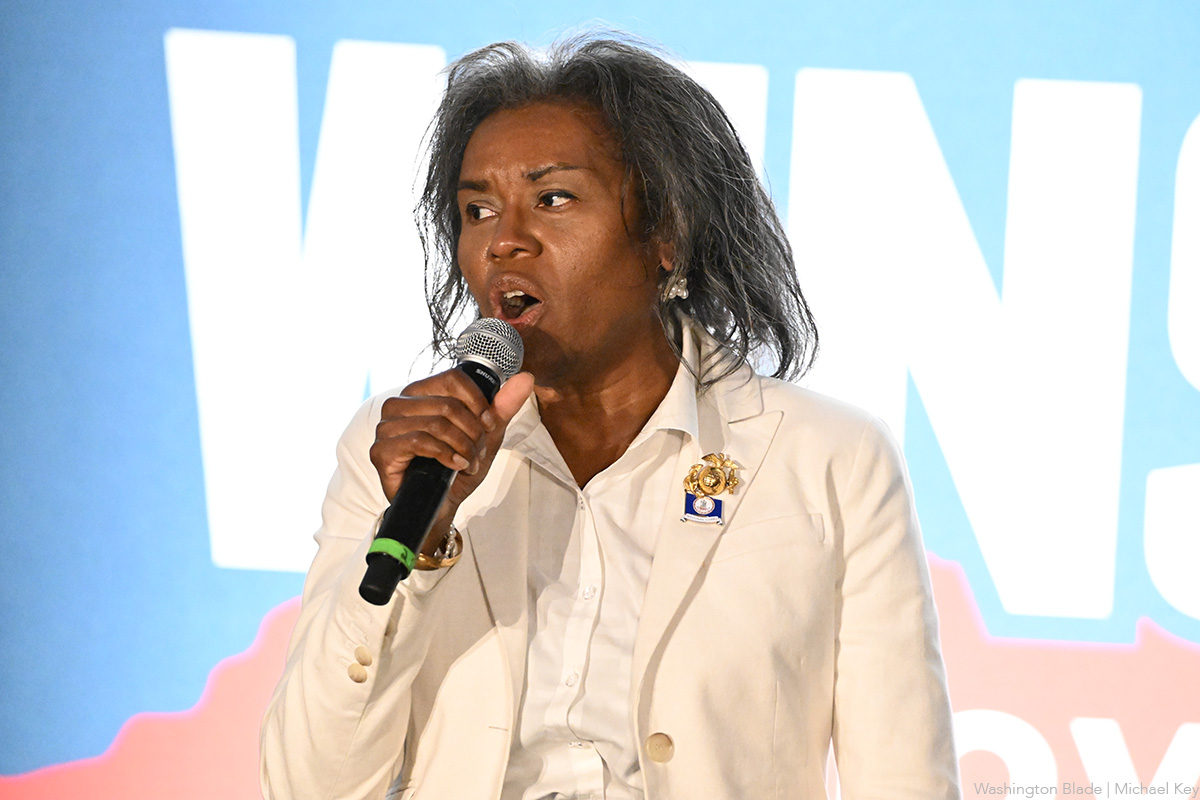
Former Virginia Lt. Gov. Winsome Earle-Sears has announced her campaign against efforts to enshrine marriage equality and reproductive rights in the state constitution will make several stops in Northern Virginia.
Her “Life and Marriage Tour” will include stops in Manassas, Winchester, and Harrisonburg. Earle-Sears said the “Life and Marriage Tour” will also travel to Virginia Beach, Lynchburg, Roanoke, Charlottesville, and other cities across Virginia “throughout September and October.”
The announcement did not include specific dates.
“Virginia, you’ve been asking where the Life and Marriage Tour is headed — here’s a look at our current tour locations,” she said on X on Tuesday. “We’ll be traveling across the commonwealth throughout September and October, and we’re still building the journey.”
Current Gov. Abigail Spanberger, a Democrat, last November defeated Earle-Sears, a Republican, in the race to succeed Republican Glenn Youngkin.
Voters in 2006 approved the Marshall-Newman Amendment, which defined marriage in Virginia as between a man and a woman.
Same-sex couples have been able to legally marry in Virginia since 2014. Youngkin a decade later signed a bill that codified marriage equality in state law.
Two successive legislatures must approve a proposed constitutional amendment before it can go to the ballot.
Spanberger signed bills that finalized the marriage equality and reproductive rights referenda’s language.
The referenda will take place on Nov. 3.
Virginia
Doug Ollivant to face Eugene Vindman in Va. 7th Congressional District
Republican defeated challengers in Tuesday’s primary
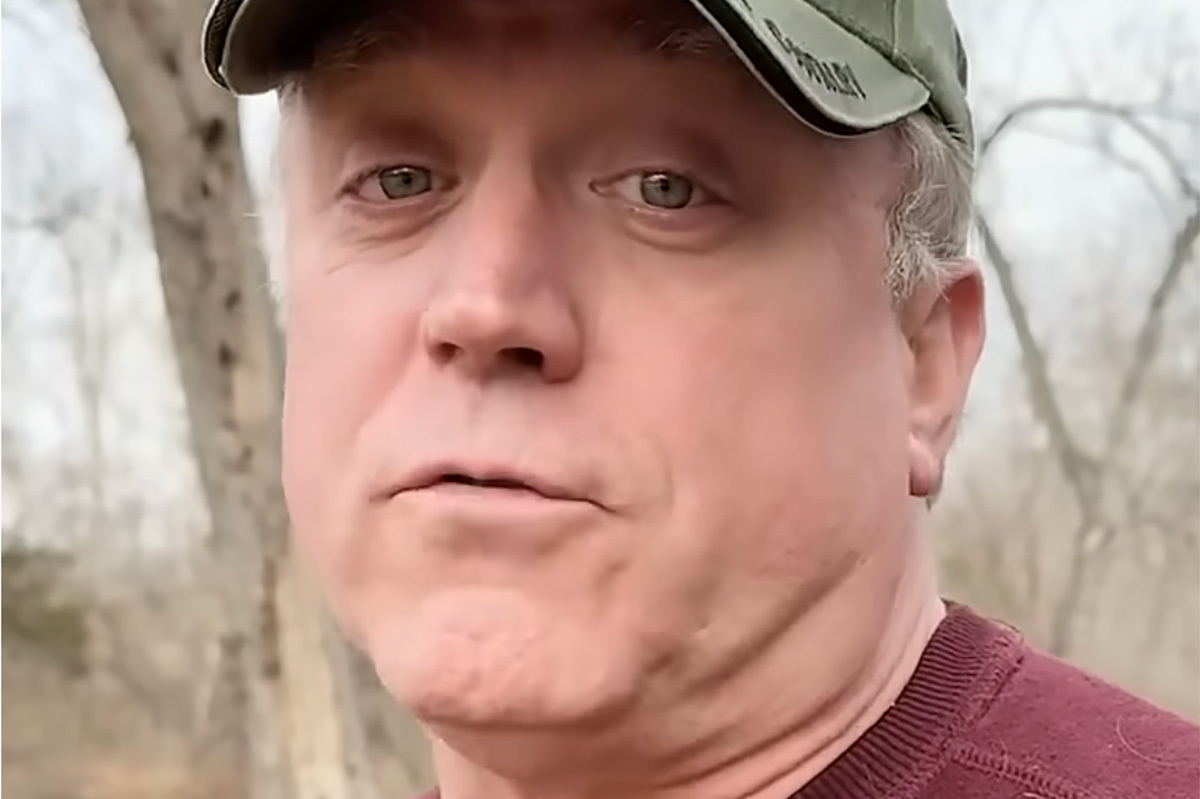
Republican Doug Ollivant will face off against incumbent U.S. Rep. Eugene Vindman (D-Va.) in Virginia’s 7th Congressional District.
Ollivant defeated his Republican opponents in Tuesday’s primary. Vindman ran unopposed.
Vindman in 2024 ran to succeed then-Congresswoman Abigail Spanberger in the U.S. House of Representatives after she ran for governor. Spanberger succeeded Republican Gov. Glenn Youngkin in 2025.
U.S. Sen. Mark Warner (D-Va.) on Tuesday easily won his primary. All other Democratic incumbent members of Congress from Northern Virginia also won their respective primaries.

Charles Bowers, former owner of Baltimore gay bar the Hippo, dies

Being a female firefighter comes with unique risks, and rewards

Writing a play about Lincoln leads down a rabbit hole to a closet

Trump-appointed judge restores White House TV pool access