Colombia
Colombia avanza hacia la igualdad para personas trans
Fue aprobado en Comisión Primera de la Cámara la Ley Integral Trans
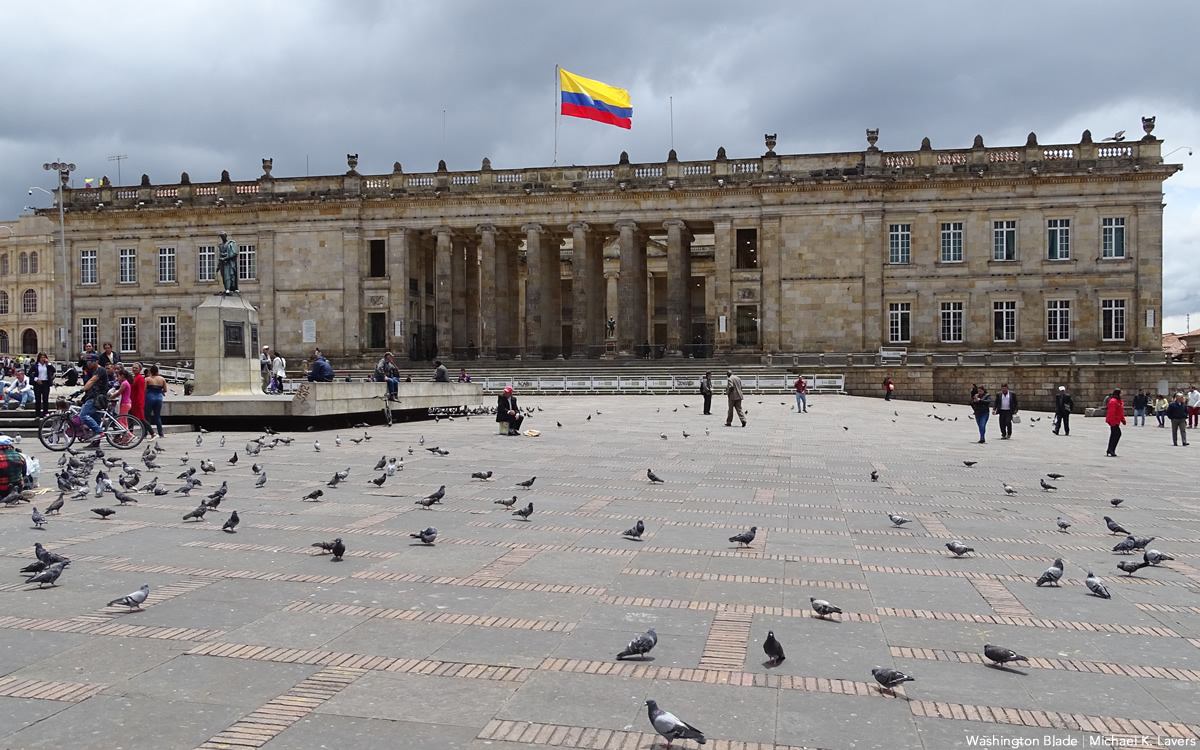
En un hecho histórico para los derechos humanos en Colombia, la Comisión Primera de la Cámara de Representantes aprobó en primer debate el Proyecto de Ley 122 de 2024, conocido como la Ley Integral Trans, que busca garantizar la igualdad efectiva de las personas con identidades de género diversas en el país. Esta iniciativa, impulsada por más de cien organizaciones sociales defensoras de los derechos LGBTQ, congresistas de la comisión por la Diversidad y personas trans, representa un paso decisivo hacia el reconocimiento pleno de derechos para esta población históricamente marginada.
La Ley Integral Trans propone un marco normativo robusto para enfrentar la discriminación y promover la inclusión. Entre sus principales ejes se destacan el acceso a servicios de salud con enfoque diferencial, el reconocimiento de la identidad de género en todos los ámbitos de la vida, la creación de programas de empleo y educación para personas trans, así como medidas para garantizar el acceso a la justicia y la protección frente a violencias basadas en prejuicios.
Detractores hablan de ‘imposición ideológica
Sin embargo, el avance del proyecto no ha estado exento de polémicas. Algunos sectores conservadores han señalado que la iniciativa representa una “imposición ideológica”. La senadora y precandidata presidencial María Fernanda Cabal anunció públicamente que se opondrá al proyecto de Ley Integral Trans cuando llegue al Senado, argumentando que “todas las personas deben ser tratadas por igual” y que esta propuesta vulneraría un principio constitucional. Estas declaraciones anticipan un debate intenso en las próximas etapas legislativas.
El proyecto también establecelineamientos claros para que las instituciones públicas respeten el nombre y el género con los que las personas trans se identifican, en concordancia con su identidad de género, y contempla procesos de formación y sensibilización en entidades estatales. Además, impulsa políticas públicas en contextos clave como el trabajo, la educación, la cultura y el deporte, promoviendo una vida libre de discriminación y con garantías plenas de participación.
¿Qué sigue para que sea ley?
La Ley aún debe superar varios debates legislativos, incluyendo la plenaria en la Cámara y luego el paso al Senado; pero la sola aprobación en Comisión Primera ya constituye un hito en la lucha por la igualdad y la dignidad de las personas trans en Colombia. En un país donde esta población enfrenta altos niveles de exclusión, violencia y barreras estructurales, este avance legislativo renueva la esperanza de una transformación real.
Desde www.orgullolgbt.co, celebramos este logro, invitamos a unirnos en esta causa impulsándola en los círculos a los que tengamos acceso y reiteramos nuestro compromiso con la visibilidad, los derechos y la vida digna de las personas trans. La #LeyIntegralTrans bautizada “Ley Sara Millerey” en honor de la mujer trans recientemente asesinada en Bello, Antioquia (ver más aquí); no es solo una propuesta normativa: es un acto de justicia que busca asegurar condiciones reales para que todas las personas puedan vivir con libertad, seguridad y respeto por su identidad.




Colombia
Claudia López wins primary in Colombian presidential race
Former Bogotá mayor’s wife lost reelection bid on Sunday
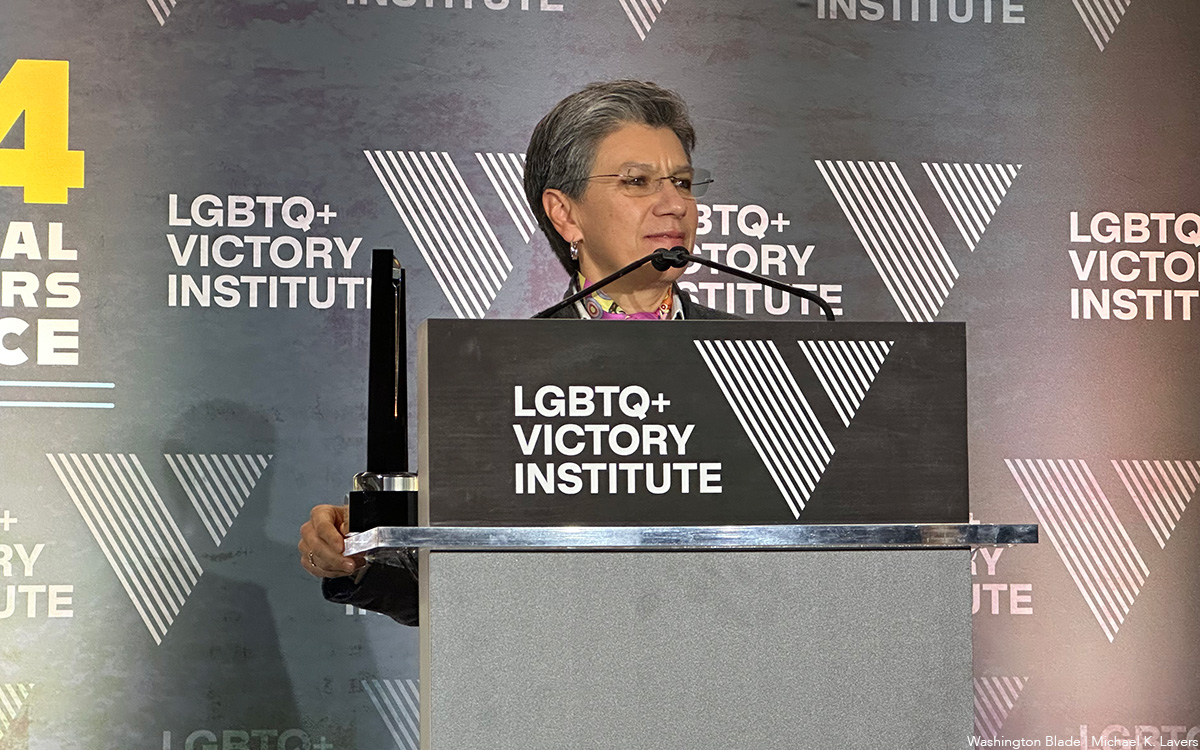
Former Bogotá Mayor Claudia López on Sunday won her primary in the race to succeed Colombian President Gustavo Petro.
López, a centrist who is running as an independent, defeated Leonardo Huerta in the “Consulta de las Soluciones” primary.
López was the Colombian capital’s mayor from 2020-2023. She was a member of the Colombian Senate from 2014-2018.
López is running to succeed Petro, the country’s first leftist president who cannot seek a second consecutive term under Colombia’s constitution. Other presidential candidates who won their respective parties’ primaries on Sunday include Sen. Iván Cepeda, a member of Petro’s Historic Pact party, and Sen. Paloma Valencia of the conservative Democratic Center, the country’s main opposition party that former President Álvaro Uribe leads.
Juan Daniel Oviedo, who finished second in the Democratic Center’s primary, is openly gay.
The first-round of Colombia’s presidential election will take place on May 31.
Polls indicate López is trailing Cepeda and Valencia, who are considered the two frontrunners.
A second round will take place is no candidate receives at least 50 percent of the vote on May 31. López would become Colombia’s first female and first lesbian president if she wins the election.
López’s wife loses Senate seat
Colombia’s congressional elections also took place on Sunday.
Former Congressman Mauricio Toro, a member of the center-left Green Alliance party, in 2018 became the first openly gay man elected to Colombian Congress when he won a seat in the House of Representatives.
He lost his reelection bid in 2022. Voters on Sunday elected Toro for a second term.
Congresswoman María del Mar Pizarro, a bisexual Historic Pact member, won re-election.
Caribe Afirmativo, a Colombian LGBTQ and intersex rights group, notes only two of the 33 openly LGBTQ congressional candidates won their respective races. Among those who lost is Sen. Angélica Lozano, a bisexual woman who in 2018 became the first openly LGBTQ person elected to the Colombian Senate.
Lozano is married to López.
Lozano in a message posted to her Instagram page expressed “heartfelt gratitude to everyone for their support and love.”
“I will end my work in Congress on a high note by ensuring (the) child support and service contractor protection bills will become a reality in June,” she said.
Colombia
LGBTQ Venezuelans in Colombia uncertain about homeland’s future
US forces seized Nicolás Maduro and his wife on Jan. 3
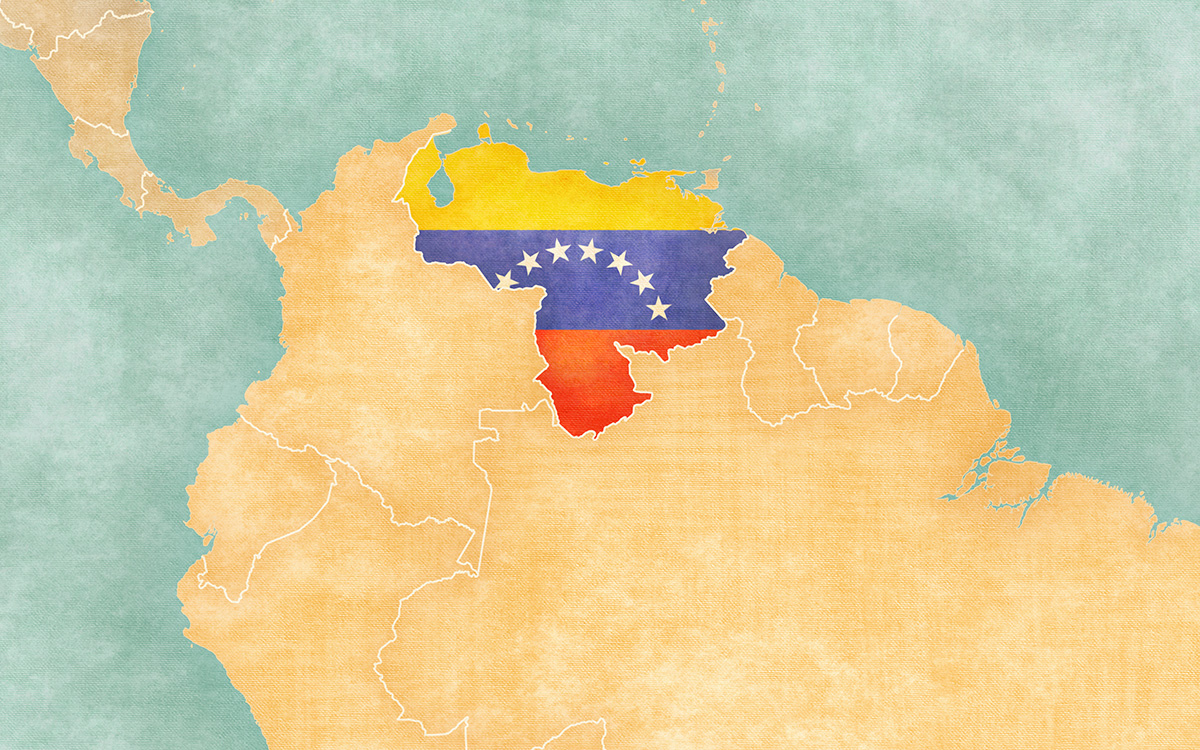
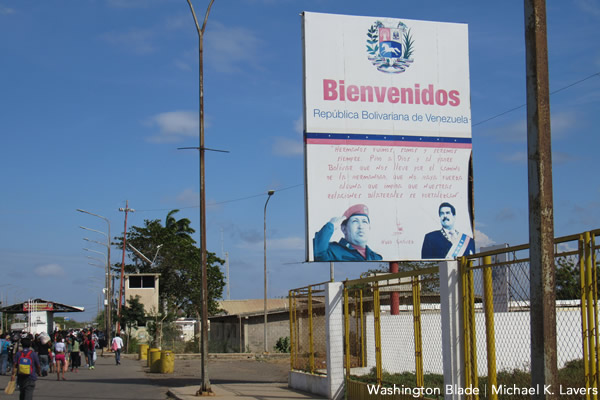
BOGOTÁ, Colombia — LGBTQ Venezuelans who live in Colombia remain uncertain about their homeland’s future in the wake of now former-President Nicolás Maduro’s ouster.
José Guillén is from Mérida, a city in the Venezuelan Andes that is roughly 150 miles from the country’s border with Colombia. He founded an LGBTQ organization that largely focused on health care before he left Venezuela in 2015.
Guillén, whose mother is Colombian, spoke with the Washington Blade on Jan. 9 at a coffee shop in Bogotá, the Colombian capital. His husband, who left Venezuela in 2016, was with him.
“I would like to think that (Venezuela) will be a country working towards reconstruction in a democracy,” said Guillén, responding to the Blade’s question about what Venezuela will look like in five years.
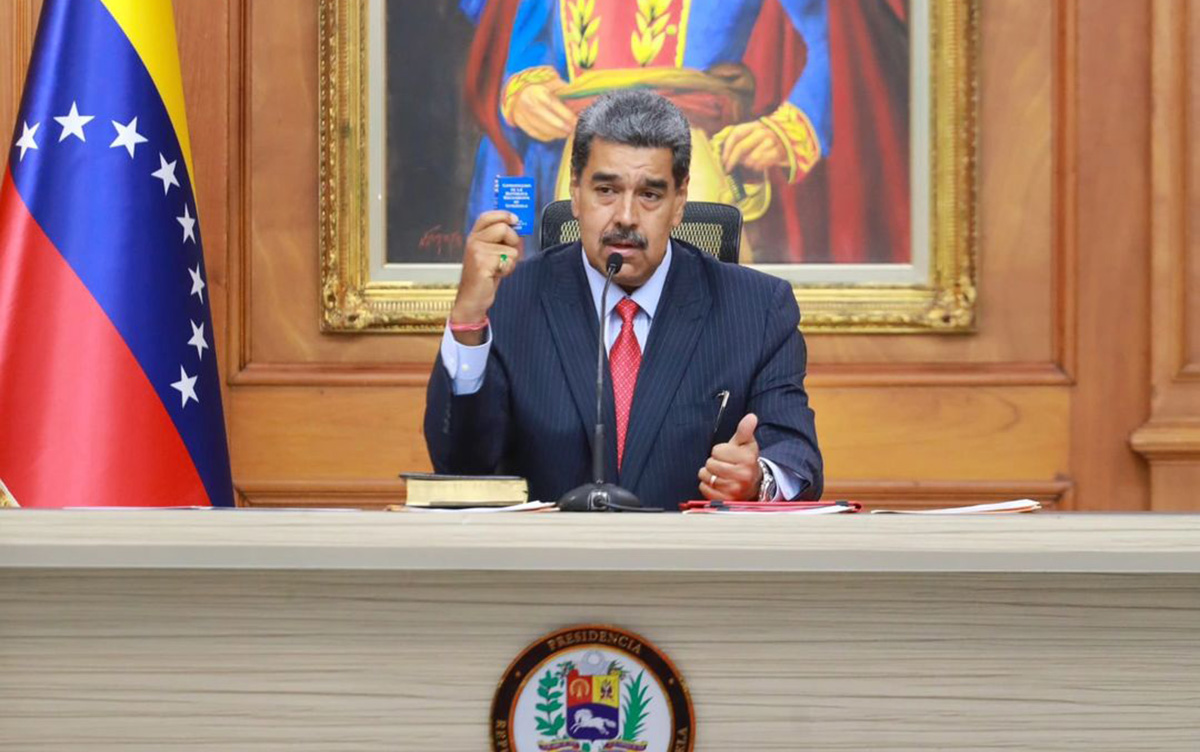
American forces on Jan. 3 seized Maduro and his wife, Cilia Flores, at their home in Caracas, the Venezuelan capital, during an overnight operation.
Maduro and Flores on Jan. 5 pleaded not guilty to federal drug charges in New York. The Venezuelan National Assembly the day before swore in Delcy Rodríguez, who was Maduro’s vice president, as the country’s acting president.
Hugo Chávez died in 2013, and Maduro succeeded him as Venezuela’s president. Subsequent economic and political crises prompted millions of Venezuelans to leave the country.
The Blade in 2021 reported Venezuelan authorities raided HIV/AIDS service organizations, arrested their staffers, and confiscated donated medications for people with HIV/AIDS. Tamara Adrián, a member of the Venezuelan opposition who in 2015 became the first openly transgender person elected to the National Assembly, told the Blade she had to take security precautions during her campaign because government supporters targeted her.
The Blade on Jan. 8 spoke with a Venezuelan AIDS Healthcare Foundation client who said Maduro’s ouster “is truly something we’ve been waiting for for 26 or 27 years.” Another Venezuelan AHF client — a sex worker from Margarita Island in the Caribbean Sea who now lives in Bogotá — echoed this sentiment when she spoke with the Blade two days later.
“I love the situation of what’s happening,” she said during a telephone interview.
Sources in Caracas and elsewhere in Venezuela with whom the Blade spoke after Jan. 3 said armed pro-government groups known as “colectivos” were patrolling the streets. Reports indicate they set up checkpoints, stopped motorists, and searched their cell phones for evidence that they supported Maduro’s ouster.
“In the last few days, it seems there are possibilities for change, but people are also very afraid of the government’s reactions and what might happen,” Guillén said.
“Looking at it from an LGBT perspective, there has never been any recognition of the LGBT community in Venezuela,” he noted. “At some point, when Chávez came to power, we thought that many things could happen because it was a progressive government, but no.”
Luis Gómez is a lawyer from Valencia, a city in Venezuela’s Carabobo state. He and his family since he was a child have worked with autistic children through Fundación Yo Estoy Aquí, a foundation they created.
Gómez was in high school in 2013 when Maduro succeeded Chávez. He graduated from law school in 2018. Gómez in November 2020 fled to Colombia after he became increasingly afraid after his mother’s death that authorities would arrest him because of his criticism of the government.
The Colombian government in December 2025 recognized him as a refugee.
Gómez during a Jan. 9 interview in Bogotá discussed his initial reaction to Maduro’s ouster.
“I’m 28 years old, and 27 of those years have been in dictatorship,” Gómez told the Blade. “I had never experienced anything like this, which is why it had such a strong impact on me.”
Gómez said he initially thought the operation to seize Maduro and Flores was similar to an attempted coup that Chávez led in 1992. Gómez added he quickly realized Jan. 3 was different.
“The last thing we thought would happen was that Maduro would be wearing an orange jumpsuit in prison in New York,” he told the Blade. “It’s also important that those of us outside (of Venezuela) knew about it before those inside, because that’s the level of the lack of communication to which they have subjected all our families inside Venezuela.”
Gómez said Maduro’s ouster left him feeling “a great sense of justice” for his family and for the millions of Venezuelans who he maintains suffered under his government.
“Many Venezuelans, and with every reason, around the world started celebrating euphorically, but given our background and our understanding, we already knew at that moment what was coming,” added Gómez. “Now a new stage is beginning. What will this new stage be like? This has also generated uncertainty in us, which the entire citizenry is now experiencing.”
Trump ‘puts us in a very complex position’
U.S. chargé d’affaires Laura Dogu on Jan. 31 arrived in Caracas to reopen the American embassy that closed in February 2019.
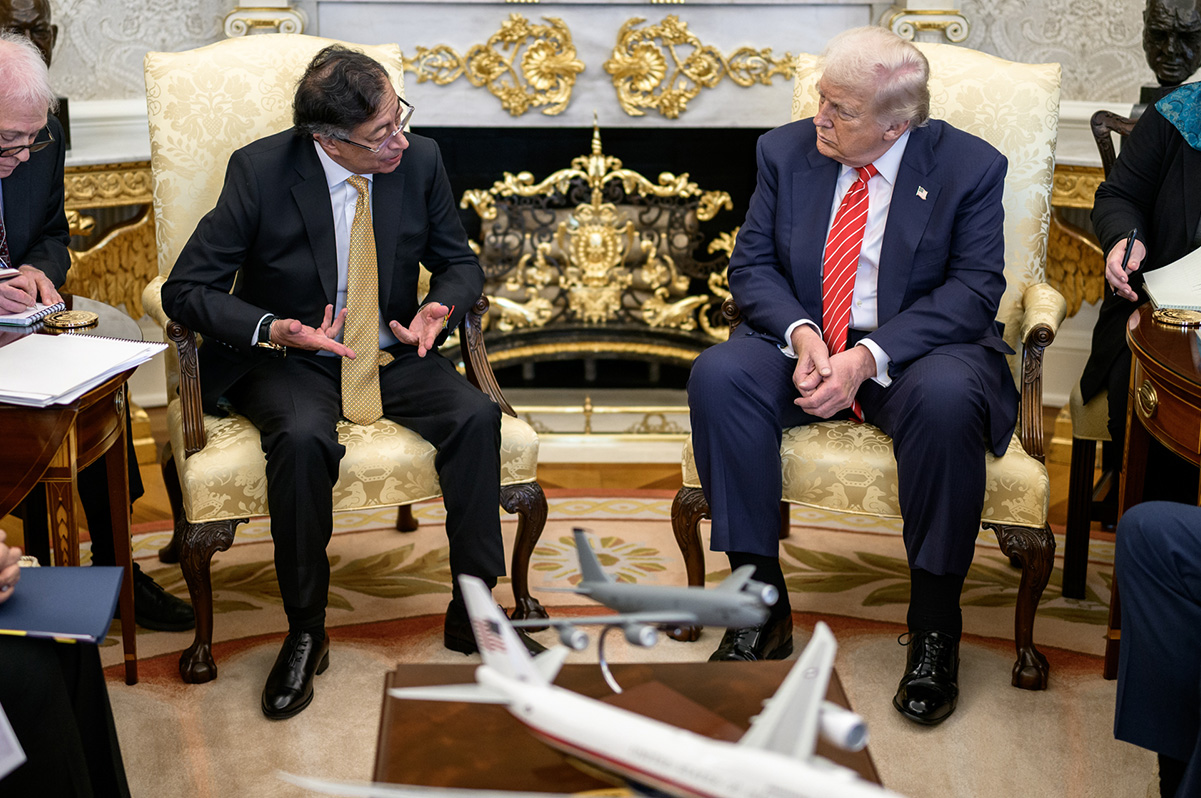
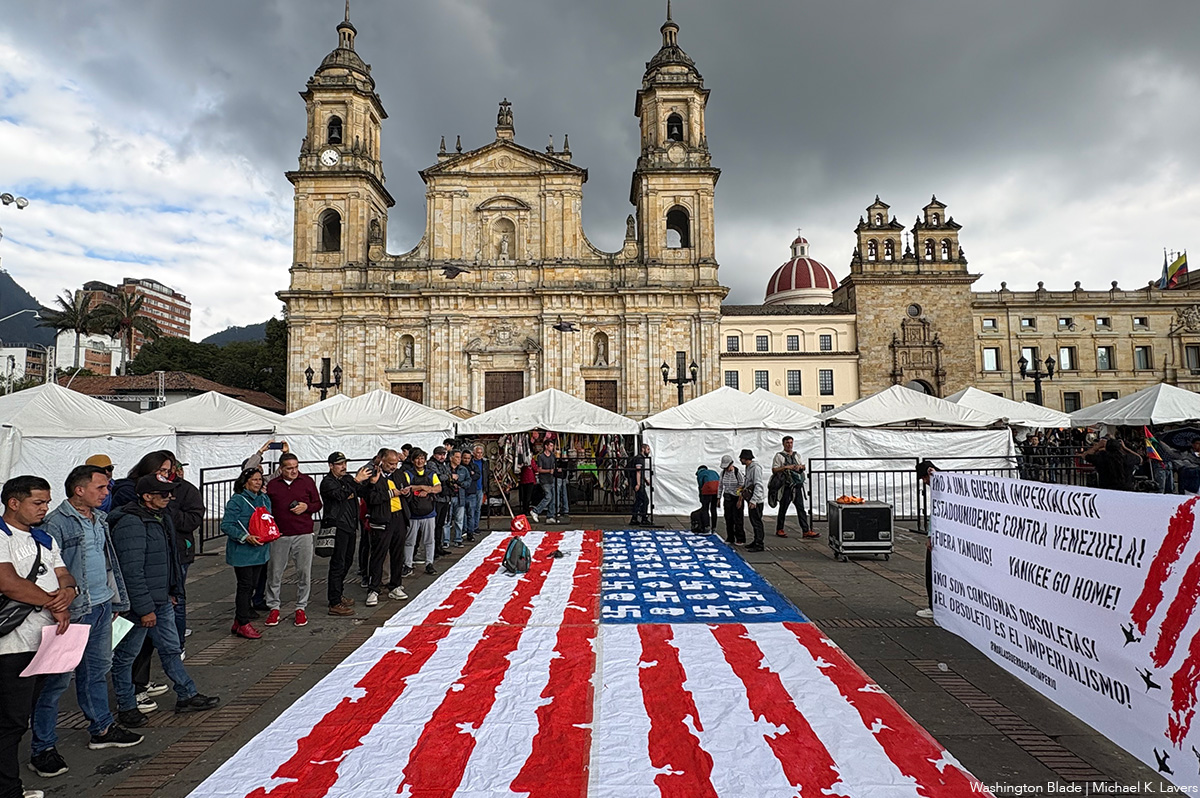
Tens of thousands of people on Jan. 7 gathered in Bogotá and elsewhere in Colombia to protest against President Donald Trump after he threatened Colombian President Gustavo Petro, who was once a member of the now disbanded M-19 guerrilla movement. The two men met at the White House on Tuesday.
Both Gómez and Guillén pointed out Rodríguez remains in power. They also noted her brother, Jorge Rodríguez, is currently president of the National Assembly.
“Delcy has been a key figure in the regime for many years,” said Guillén. “In fact, she was one of the toughest people within the regime.”
Gómez and Guillén also spoke about Trump and his role in a post-Maduro Venezuela.
“Donald Trump, especially in this second term, has played a very particular role in the world, especially for those of us who, genuinely, not falsely or hypocritically, truly defend human rights,” said Gómez. “It puts us in a very complex position.”
Gómez told the Blade the operation to seize Maduro and Flores was “not an invasion for us.”
“It’s not a military intervention,” said Gómez. “It was the beginning, or I would even dare to say the end of the end.”
He acknowledged “there are interests at play, that the United States doesn’t do this for free.” Gómez added U.S. access to Venezuelan oil “for us, at this point, is not something that matters to us.”
“Venezuelans have received nothing, absolutely nothing from the resources generated by oil. We live without it,” he said. “The only ones getting rich from the oil are the top drug traffickers and criminals who remain in power.”
Guillén pointed out the U.S. “has always been one of the biggest buyers of oil from Venezuela, and perhaps we need that closeness to rebuild the country.”
“I also feel that there is a great opportunity with the millions of Venezuelans who left the country and who would like to be part of that reconstruction as well,” he said.
“Logically it’s sad to see the deterioration in the country, the institutions, even the universities in general,” added Guillén. “Those of us who are outside the country have continued to move forward and see other circumstances, and returning to the country with those ideas, with those new approaches, could provide an opportunity for change. That’s what I would like.”
Editor’s note: International News Editor Michael K. Lavers was on assignment in Colombia from Jan. 5-10.
Colombia
Gay Venezuelan opposition leader: Country’s future uncertain after Maduro ouster
Yendri Velásquez fled to Colombia in 2024 after authorities ‘arbitrarily detained’ him
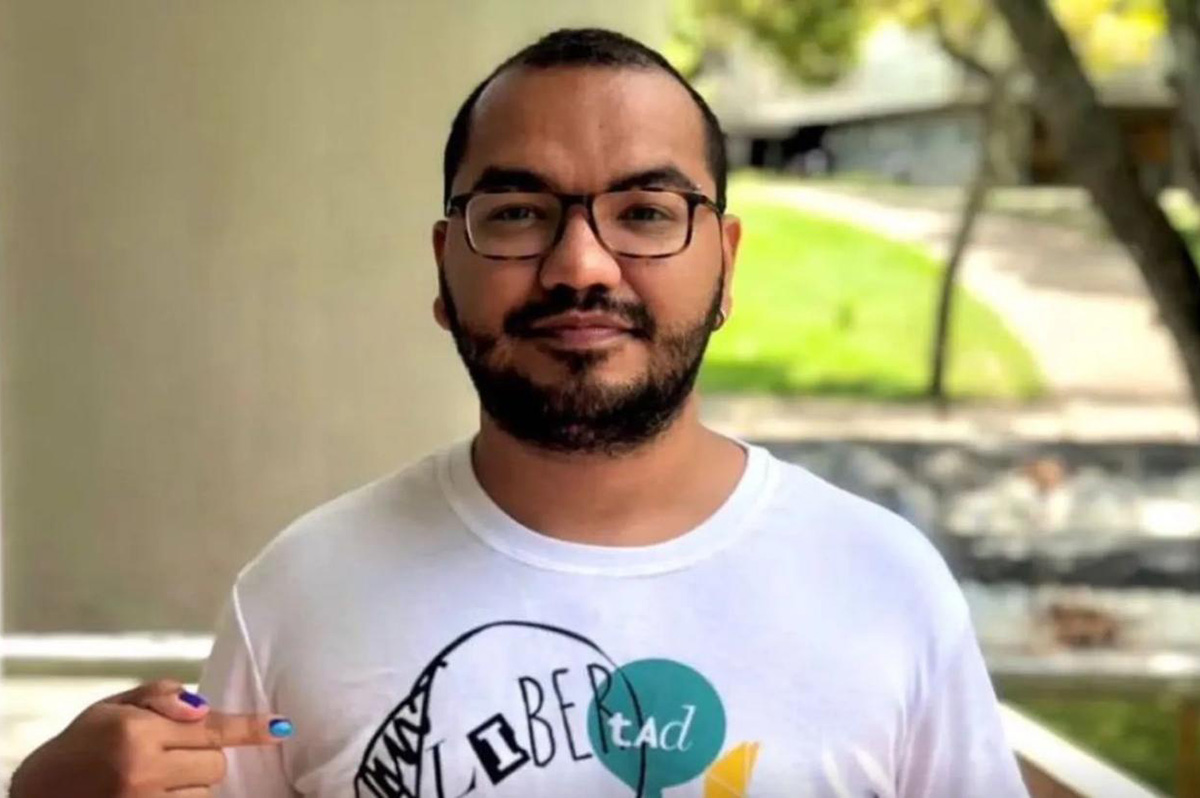
A gay Venezuelan opposition leader who currently lives in Colombia says his country’s future is uncertain in the wake of now former President Nicolás Maduro’s ouster.
The Washington Blade spoke with Yendri Velásquez on Thursday, 12 days after American forces seized Maduro and his wife, Cilia Flores, at their home in Caracas, the Venezuelan capital, during an overnight operation.
Maduro and Flores on Jan. 5 pleaded not guilty to federal drug charges in New York. The Venezuelan National Assembly the day before swore in Delcy Rodríguez, who was Maduro’s vice president, as the country’s acting president.
Velásquez, who lives in the Colombian capital of Bogotá, described the events surrounding Maduro’s ouster as “very confusing.”
“It was a very surprising thing that left me in shock,” Velásquez told the Blade. “We also thought, at least from the perspective of human rights, that the United States was going to respect international law and not go to the extreme of bombing and extracting Maduro.”
“Other questions also arise,” he added. “What could have been done? What else could have been done to avoid reaching this point? That is the biggest question posed to the international community, to other countries, to the human rights mechanisms we established before Trump violated international law, precisely to preserve these mechanisms and protect the human rights of Venezuelan people and those of us who have been forced to flee.”
Velásquez three years ago founded the Venezuelan Observatory of LGBTIQ+ Violence. He also worked with Tamara Adrián, a lawyer who in 2015 became the first openly transgender woman elected to the Venezuelan National Assembly, for more than a decade.
Members of Venezuela’s military counterintelligence agency, known by the Spanish acronym DGCIM, on Aug. 3, 2024, “arbitrarily detained” Velásquez as he was trying to leave the country to attend a U.N. human rights event in Geneva.
Velásquez told the Blade he was “forcibly disappeared” for nearly nine hours and suffered “psychological torture.” He fled to Colombia upon his release.
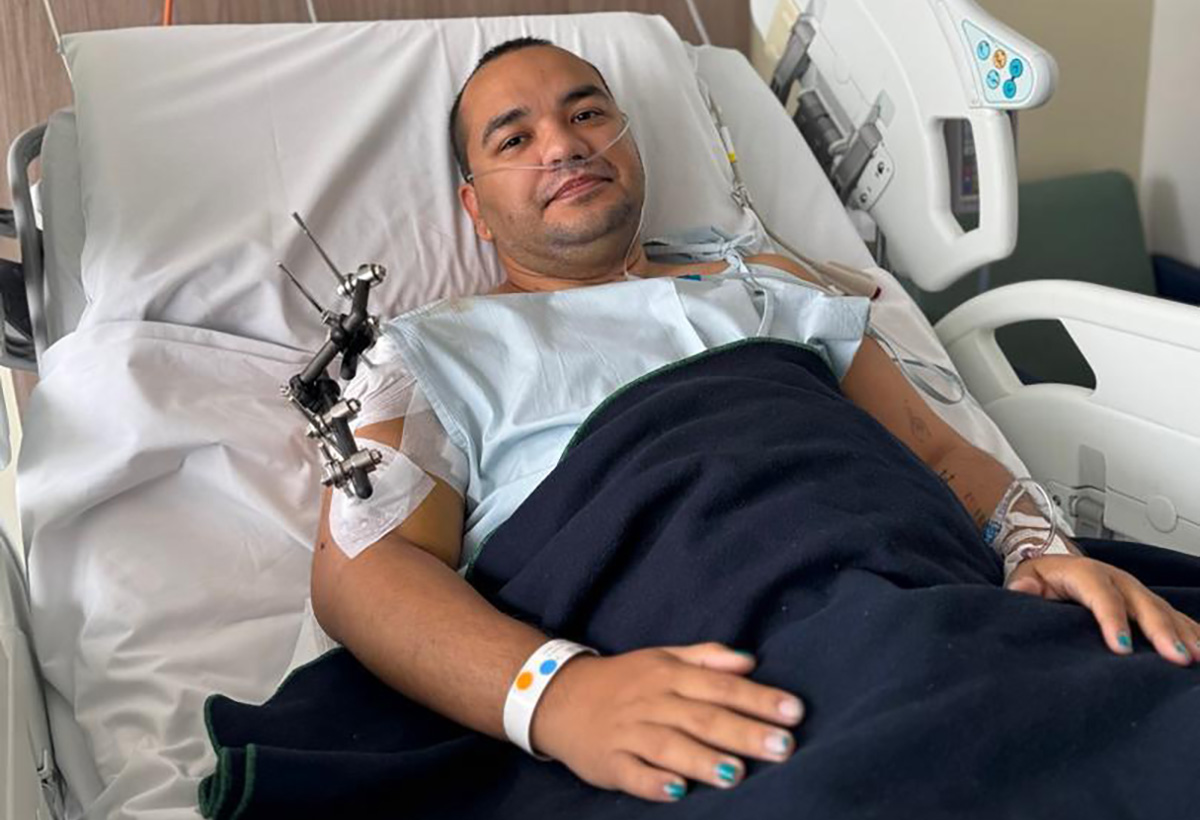
Two men on Oct. 14, 2025, shot Velásquez and Luis Peche Arteaga, a Venezuelan political consultant, as they left a Bogotá building.
The assailants shot Velásquez eight times, leaving him with a fractured arm and hip. Velásquez told the Blade he has undergone multiple surgeries and has had to learn how to walk again.
“This recovery has been quite fast, better than we expected, but I still need to finish the healing process for a fractured arm and complete the physical therapy for the hip replacement I had to undergo as a result of these gunshots,” he said.
María Corina Machado, who won the 2025 Nobel Peace Prize, and other Venezuelan opposition leaders said Maduro’s government targeted Velásquez and Peche. Colombian President Gustavo Petro and his government also condemned the attack.
Colombian authorities have yet to arrest anyone in connection with the attack.
Velásquez noted to the Blade he couldn’t sleep on Jan. 3 because “of the aches and pains” from the shooting. He said a friend who is “helping me out and looking after my things” was the one who told him about the operation the U.S. carried out to seize Maduro and Flores.
“He said, ‘Look at this! They’re bombing Caracas! And I was like, ‘What is this?'” recalled Velásquez.
White House ‘not necessarily’ promoting human rights agenda
Velásquez noted Rodríguez “is and forms part of the mechanisms of repression” that includes DGCIM and other “repressive state forces that have not only repressed, but also tortured, imprisoned, and disappeared people simply for defending the right to vote in (the) 2024 (election), simply for protesting, simply for accompanying family members.” Velásquez told the Blade that “there isn’t much hope that things will change” in Venezuela with Rodríguez as president.
“Let’s hope that countries and the international community can establish the necessary dialogues, with the necessary intervention and pressure, diplomatically, with this interim government,” said Velásquez, who noted hundreds of political prisoners remain in custody.
He told the Blade the Trump-Vance administration does not “not necessarily” have “an agenda committed to human rights. And we’ve seen this in their actions domestically, but also in their dealings with other countries.”
“Our hope is that the rest of the international community, more than the U.S. government, will take action,” said Velásquez. “This is a crucial moment to preserve democratic institutions worldwide, to preserve human rights.”
Velásquez specifically urged the European Union, Colombia, Brazil, and other Latin American countries “to stop turning a blind eye to what is happening and to establish bridges and channels of communication that guarantee a human rights agenda” and to try “to curb the military advances that the United States may still be considering.”
Velásquez told the Blade he also plans to return to Venezuela when it is safe for him to do so.
“My plan will always be to return to Venezuela, at least when it’s no longer a risk,” he said. “The conditions aren’t right for me to return because this interim government is a continuation of Maduro’s government.”
Editor’s note: International News Editor Michael K. Lavers was on assignment in Bogotá, Colombia, from Jan. 5-10.

Kristi Noem ‘devastated’ as husband’s alleged fetish spending surfaces

Colo. activists condemn SCOTUS conversion therapy ruling

Is Ghana’s selective justice a human rights contradiction?

Supreme Court ruling against conversion therapy bans could affect Md. law

Glisten report details hostile climate for LGBTQ students

‘Out for McDuffie’ event held at D.C. gay bar

The Oscar-losing performance that’s too good to miss

‘Jonah’ an undeniably compelling but unusual memory play

PHOTOS: ‘No Kings’ rally and march