District of Columbia
Washington Spirit scores big on and off the field with Pride, community, and inclusion
The Washington Spirit CEO sits down with the Blade to discuss LGBTQ+ visibility, how the team fosters community engagement, and efforts to empower LGBTQ young leaders.
Washington, D.C. is a major sports town. From the Nationals to the Capitals, basketball to tennis, if you want to watch professional sports, D.C. has some of the best around.
One team that has scored big in recent years – especially among the LGBTQ community – is the Washington Spirit, the DMV’s professional women’s soccer team. From last year’s record-breaking season, all-star athletes, and commitment to uplifting LGBTQ youth in D.C. with donations to local organizations like SMYAL, the Spirit is infectious.
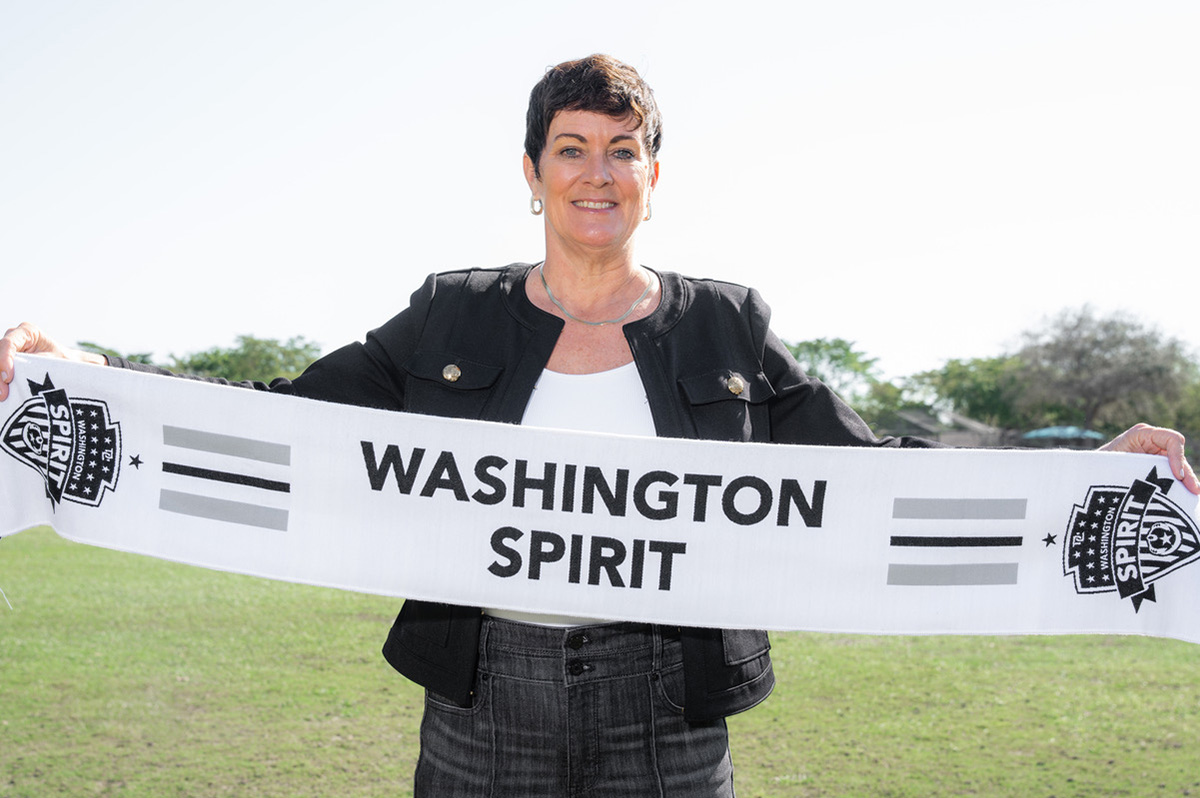
Last year was a big year for the team for another reason as well: For the first time in the team’s history, the Spirit announced it would have its first CEO, Kim Stone. For more than 30 years, Stone has held many roles across the country in making good sports venues great. Most recently, she was president of UBS Arena in Elmont, N.Y. (home of the New York Islanders), a crucial member of business operations for the Miami HEAT, and part of the team at the Chase Center in San Francisco.
With such an accomplished past, it should come as no surprise that even with just a year under her belt, she has helped make the Spirit “one of the most successful NWSL clubs” in many ways – most notably by “expanding revenue, partnerships, staff,” and arguably the most important way – growing the fanbase.
One way Stone and the entire Spirit team have been able to grow the fanbase – like breaking the record for attendance at their home of Audi Field – has been through partnerships and themed games. On Sunday, Aug. 31, the Spirit will take on the Chicago Stars Football Club for one of the most anticipated games of the year – the annual Pride match.
The Spirit has had multiple out players in recent years including current midfielder Leicy Santos and, from 2021 to 2024, defender Anna Heilferty. In addition to having a history of star queer players that make the Pride game extra special, the purchase of a specialty Pride ticket will grant Spirit Squadron members (aka the Spirit fanbase) a free Washington Spirit Pride fanny pack, complete with a classic rainbow Pride flag strap and the logo in the colors of the progressive Pride flag.
And, just like last year, there is a long lineup of spectacular and spiritful drag talent: Shi-Queeta-Lee, Delila B. Lee, Bootsy Omega, Capri Bloomingdale, Kabuki B. Lee, and D.C. drag legends including Tula, Twix, and Citrine the Queen. One new thing about this year’s Pride game is the inclusion of popular DMV LGBTQ influencer QueerTalkDC, who has been promoting the game and will be posting about it to her more than 28k followers.
In honor of the upcoming Pride game, the Spirit recently donated $10,000 to SMYAL to support their scholarship program, helping LGBTQ+ students take the next step in their educational and career journeys. SMYAL’s scholarships recognize outstanding and unapologetic LGBTQ+ student leaders who have demonstrated personal growth and a commitment to creating positive change in their schools or communities, reflecting the same spirit of inclusion and empowerment that the team celebrates on the field.
In anticipation of the game, the Washington Blade sat down with Stone to discuss what it means to be the team’s first CEO, why the Pride match is especially meaningful to her as a proud lesbian, and how the team’s talent for fostering all types of community at Audi Field is important to creating a great fanbase.
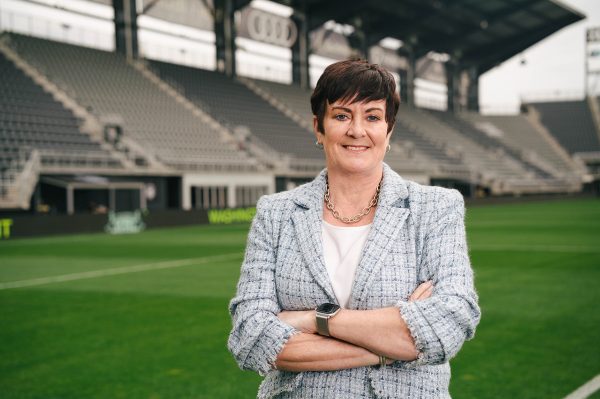
When asked how she found the club’s atmosphere, Stone was quick to point out it was more than just about watching women play top-tier soccer – it’s about fostering community.
“We’re not just a soccer club, we’re building a culture of belonging, where every fan, every player, every staff member knows they’re valued,” Stone said, explaining that to create it she – and the team as a whole – work toward making this a place for everyone. “Inclusion doesn’t just happen by accident—it’s something we lead with every day. You either have culture by design, or you have culture by default, and we’re intentional about creating a Spirit family where everyone belongs.”
Stone explained that it must start from the top down – and recognized it begins with her leading and living authentically as a gay executive in a traditionally male-dominated field.
“I don’t lead despite being gay—I lead authentically because of it, and because visibility matters,” she said. “Having a community of fans that embraces everyone is so important, and I want to make sure that when people come to our matches, they feel welcomed, celebrated, and seen.”
That success in living authentically has helped her inside the industry as well. She explained that by becoming more comfortable discussing her relationship with her wife, Karla Jones Stone, even just around the water cooler, has helped make her a better CEO and leader.
“Being open about my lifestyle has helped me be a better leader. It’s brought me more joy and allowed me to lead authentically. When I first came out in Miami, I no longer had to hide who I was or call my wife my ‘best friend.’ That ability to live openly made all the difference—not just personally, but professionally too.”
That radical acceptance, which many in the LGBTQ community strive for, is exactly what makes this themed game so special, Stone explained. The simplicity of feeling not only represented but also celebrated while enjoying something as community-building as sports – which can often be daunting to get into as a queer person – is why the team holds these specialty theme nights.
“Hosting a Pride match is a celebration of my community, where I belong and where I find a sense of inclusion. For two and a half hours, we can help people have fun, feel safe, and just be who they are without judgment. That’s what makes Pride Night so powerful.”
While the Pride game is a chance to uplift LGBTQ members of the “Spirit Squadron,” the energy Stone and the whole team hope to exude is one of welcoming for all – regardless of race, gender identity, sexuality, or background.
“Everybody is welcome, and there’s a real sense of belonging. For especially our gay community, the Spirit can be a safe place to come together, laugh, have fun, and celebrate who we are.”
She went on to explain that when she first looked into joining the Spirit as a member of the business operations team, what sold her was the vibrancy of the fans.
“When I first came to a Spirit match, I looked around and saw the diversity of the crowd and thought, ‘Oh boy, we can really work with this.’”
And the Spirit’s celebration of identity doesn’t stop with the LGBTQ community at the Pride game either. On Sept. 28, the Spirit will celebrate Hispanic Heritage with “entertainment and activations” that will highlight the diversity, cultural heritage, and contributions of the Hispanic community in the DMV and across soccer.
Stone went on to explain that providing a platform for people to watch others perform at the highest caliber—like the Spirit has done—can be tremendous for creating and supporting self-worth.
“Once you see it, you can be it. Whether it’s little girls wanting to emulate our players, or gay people wanting to see elite athletes at their best—representation matters. When people can see themselves reflected in leadership and on the field, they know it’s possible for them, too.”
That representation has also fueled an undeniable connection between the team and its fans, one that continues to grow with every season.
“I’m so impressed with the DMV’s love of this team. We pack Audi Field to the point we now call it ‘Rowdy Audi’—our fans do such a great job supporting us. It’s unlike anything else I’ve experienced in sports, and it makes me proud to be part of this community.”
For Stone, the power of the Spirit isn’t just about wins and losses—it’s about what the game itself can represent.
“Sports is the great unifier. People can come together at a match and leave their political affiliations and biases at the door. That’s why these moments of celebration—like Pride Night—matter so much. It’s about being together, cheering, and feeling part of something bigger than yourself.”
And being only three miles from the White House, Stone remarked it was difficult to see a return of hostility by those in charge of the government, with LGBTQ community members often as targets.
“Here we are, having to fight again,” she said, explaining the attitude coming from the White House is not as positive as it used to be and is being felt across political and social spectrums. “Even once you’re granted something, it can still be taken away from you. For a long time, I felt like people didn’t see me as a gay executive or a woman executive—they just saw me as an executive. But the tenor of the country has changed, and that’s why visibility and inclusion in spaces like sports matter more than ever.”
Stone highlighted the importance of solidarity between women’s soccer and the LGBTQ community.
“The LGBTQ+ community in D.C. has always been on the front lines of change, and women’s soccer is the same. Together, we’re a pretty unstoppable force… I invite the Blade readers and fans to come to our matches or follow us on social media—because we can support each other. After all, a rising tide lifts all boats.”
Tickets are available at washingtonspirit.com/tickets/.

District of Columbia
D.C. Black Pride theme, performers announced at ‘Speakeasy’
Durand Bernarr to headline 2026 programming
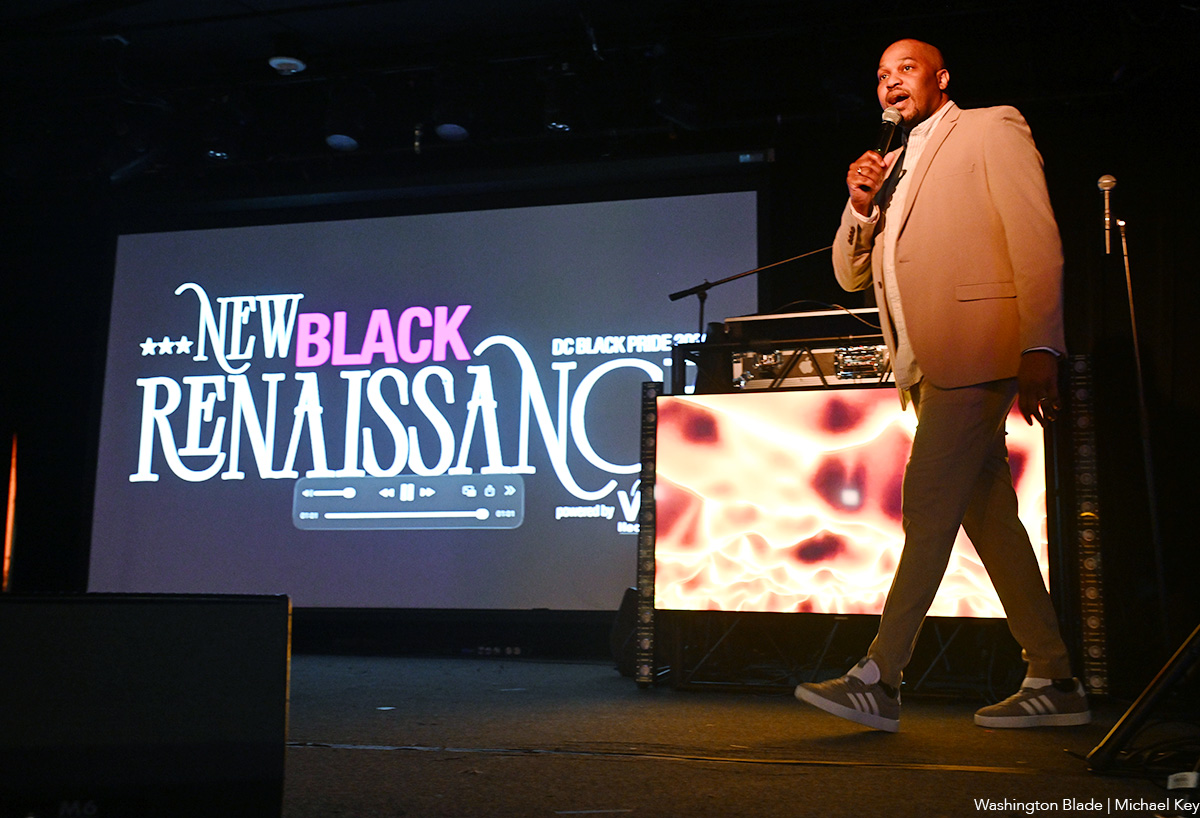
The Center for Black Equity held its 2026 DC Black Pride Theme Reveal event at Union Stage on Monday. The evening, a “Speakeasy Happy Hour,” was hosted by Anthony Oakes and featured performances by Lolita Leopard and Keith Angelo. The Center for Black Equity organizes DC Black Pride.
Kenya Hutton, Center for Black Equity president and CEO, spoke following the performances by Leopard and Angelo. Hutton announced this year’s theme for DC Black Pride: “New Black Renaissance.”
Performers for 2026 DC Black Pride were announced to be Bang Garcon, Be Steadwell, Jay Columbus, Bennu Byrd, Rue Pratt and Akeem Woods.
Singer-songwriter Durand Bernarr was announced as the headliner for the 2026 festivities. Bernerr gave brief remarks through a video played on the screen at the stage.
DC Black Pride is scheduled for May 22-25. For more information on DC Black Pride, visit dcblackpride.org.
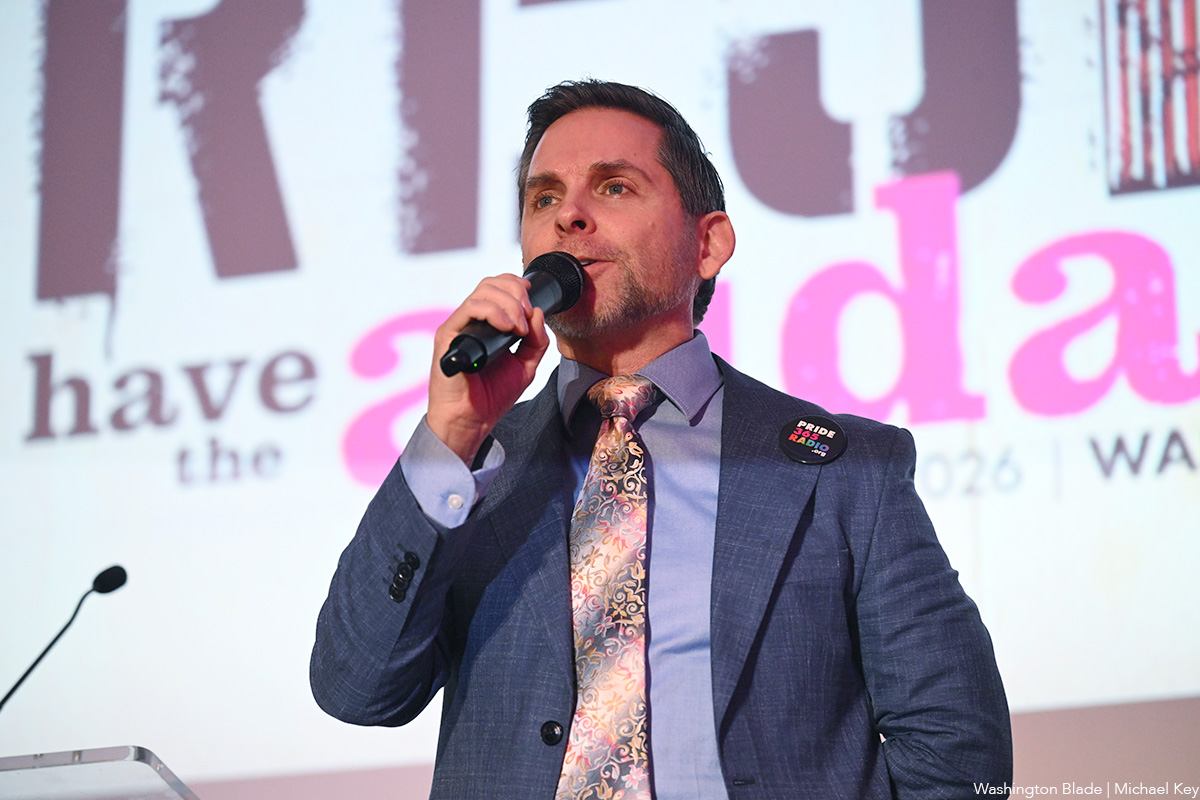
In an official statement released at the reveal event Capital Pride Alliance described its just announced 2026 Pride theme of “Exist, Resist, Have the Audacity” as a “bold declaration affirming the presence, resilience, and courage of LGBTQ+ people around the world.”
The statement adds, “Grounded in the undeniable truth that our existence is not up for debate, this year’s theme calls on the community to live loudly and proudly, stand firm against injustice and erasure, and embody the collective strength that has always defined the LGBTQ+ community.”
In a reference to the impact of the hostile political climate, the statement says, “In a time when LGBTQ+ rights and history continue to face challenges, especially in our Nation’s Capital, where policy and public discourse shape the future of our country, together, we must ensure that our voices are visible, heard, and unapologetically centered.”
The statement also quotes Capital Pride Alliance CEO and President Ryan Bos’s message at the Reveal event: “This year’s theme is both a declaration and a demand,” Bos said. “Exist, Resist, Have Audacity! reflects the resilience of our community and our responsibility to protect the progress we’ve made. As we look toward our nation’s 250th anniversary, we affirm that LGBTQ+ people have always been and always will be part of the United States’s history, and we will continue shaping its future with strength and resolve,” he concluded.
District of Columbia
Capital Pride board member resigns, alleges failure to address ‘sexual misconduct’
In startling letter, Taylor Chandler says board’s inaction protected ‘sexual predator’
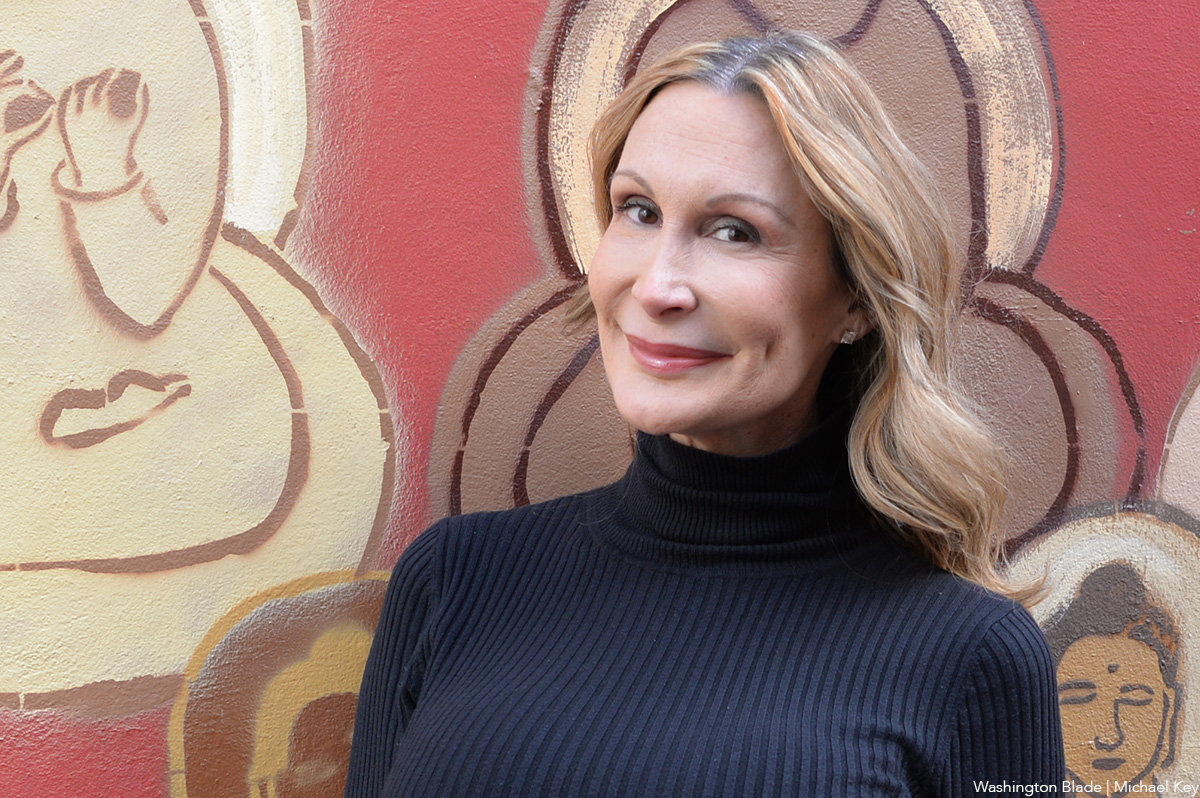
Taylor Lianne Chandler, a member of the Capital Pride Alliance Board of Directors since 2019 who most recently served as the board’s secretary, submitted a letter of resignation on Feb. 24 that alleges the board has failed to address instances of “sexual misconduct” within the Capital Pride organization.
The Washington Blade received a copy of Chandler’s resignation letter one day after she submitted it from an anonymous source. Chandler, who identifies as transgender and intersex, said in an interview that she did not send the letter to the Blade, but she suspected someone associated with Capital Pride, which organizes D.C.’s annual LGBTQ Pride events, “wants it out in the open.”
“It is with a heavy heart, but with absolute clarity, that I submit my resignation from the Capital Pride Alliance Board of Directors effective immediately,” Chandler states in her letter. “I have devoted nearly ten years of my life to this organization,” she wrote, pointing to her initial involvement as a volunteer and later as a producer of events as chair of the organization’s Transgender, Gender Non-Conforming, and Intersex Committee.
“Capital Pride once meant something profound to me – a space of safety, visibility, and community for people who have often been denied all three,” her letter continues. “That is no longer the organization I am part of today.”
“I, along with other board members, brought forward credible concerns regarding sexual misconduct – a pattern of behavior spanning years – to the attention of this board,” Chandler states in the letter. “What followed was not accountability. What followed was retaliation. Rather than addressing the substance of what was reported, officers and fellow board members chose to chastise those of us who came forward.”
The letter adds, “This board has made its priorities clear through its actions: protecting a sexual predator matters more than protecting the people who had the courage to come forward. … I have been targeted, bullied, and made to feel like an outsider for doing what any person of integrity would do – telling the truth.”
In response to a request from the Blade for comment, Anna Jinkerson, who serves as chair of the Capital Pride board, sent the Blade a statement praising Taylor Chandler’s efforts as a Capital Pride volunteer and board member but did not specifically address the issue of alleged sexual misconduct.
“We’re also aware that her resignation letter has been shared with the media and has listed concerns,” Jinkerson said in her statement. “When concerns are brought to CPA, we act quickly and appropriately to address them,” she said.
“As we continue to grow our organization, we’re proactively strengthening the policies and procedures that shape our systems, our infrastructure, and the support we provide to our team and partners,” Jinkerson said in her statement. “We’re doing this because the community’s experience with CPA must always be safe, affirming, empowering, and inclusive,” she added.
In an interview with the Blade, Chandler said she was not the target of the alleged sexual harassment.
She said a Capital Pride investigation identified one individual implicated in a “pattern” of sexual harassment related behavior over a period of time. But she said she was bound by a Non-Disclosure Agreement (NDA) that applies to all board members and she cannot disclose the name of the person implicated in alleged sexual misconduct or those who came forward to complain about it.
“It was one individual, but there was a pattern and a history,” Chandler said, noting that was the extent of what she can disclose.
“And I’ll say this,” she added. “In my opinion, with gay culture sometimes the touchy feely-ness that goes on seems to be like just part of the culture, not necessarily the same as a sexual assault or whatever. But at the same time, if someone does not want those advances and they’re saying no and trying to push you away and trying to avoid you, then it makes it that way regardless of the culture.”
When asked about when the allegations of sexual harassment first surfaced, Chandler said, “In the past year is when the allegation came forward from one individual. But in the course of this all happening, other individuals came forward and talked about instances – several which showed a pattern.”
Chandler’s resignation comes about five months after Capital Pride Alliance announced in a statement released in October 2025 that its then board president, Ashley Smith, resigned from his position on Oct. 18 after Capital Pride became aware of a “claim” regarding Smith. The statement said the group retained an independent firm to investigate the matter, but it released no further details since that time. Smith has declined to comment on the matter.
When asked by the Blade if the Smith resignation could be linked in some way to allegations of sexual misconduct, Chandler said, “I can’t make a comment one way or the other on that.”
Chandler’s resignation and allegations come after Capital Pride Alliance has been credited with playing the lead role in organizing the World Pride celebration hosted by D.C. in which dozens of LGBTQ-related Pride events were held from May through June of 2025.
The letter of resignation also came just days before Capital Pride Alliance’s annual “Reveal” event scheduled for Feb. 26 at the Hamilton Hotel in which the theme for D.C.’s June 2026 LGBTQ Pride events was to be announced along with other Pride plans.

Liza Minnelli makes surprise appearance at GLAAD Media Awards

Fla. Senate passes ‘Anti-Diversity’ bill that could repeal local LGBTQ protections

Capital Pride must be transparent about sexual misconduct investigation

Ugandan activist named Charles F. Kettering Foundation fellow

13 HIV/AIDS activists arrested on Capitol Hill

Arlington LGBTQ bar Freddie’s celebrates 25th anniversary

Supreme Court deals blow to trans student privacy protections

D.C. Black Pride theme, performers announced at ‘Speakeasy’

Why innovation matters for Black health

Peter Thiel’s expanding power — and his overlap with Jeffrey Epstein
-

 Virginia4 days ago
Arlington LGBTQ bar Freddie’s celebrates 25th anniversary
-
National3 days ago
Supreme Court deals blow to trans student privacy protections
-
District of Columbia3 days ago
D.C. Black Pride theme, performers announced at ‘Speakeasy’
-
Opinions3 days ago
Why innovation matters for Black health