Venezuela
Advocacy groups join Venezuela earthquake relief efforts
Back-to-back quakes on June 24 killed more than 4,500 people
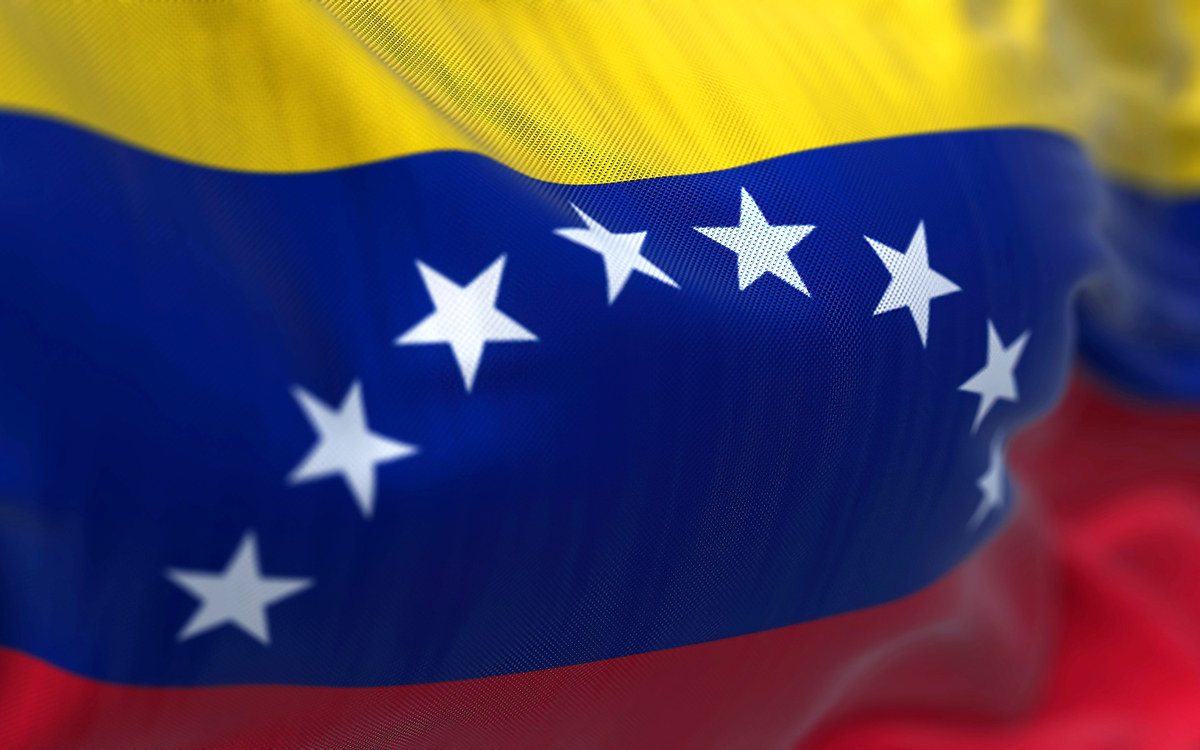
Advocacy groups have joined the relief efforts in Venezuela after two back-to-back earthquakes devastated large swaths of the country on June 24.
The magnitude 7.2 and 7.5 earthquakes caused widespread damage in Caracas, the Venezuelan capital, and elsewhere in the country.
Officials in the South American country say the earthquakes killed more than 4,500 people and left more than 16,000 others injured. La Guaira state on Venezuela’s Caribbean coast in which the country’s main international airport is located is one of the hardest hit areas.
Yonatan Matheus, a Venezuelan LGBTQ rights activist who currently lives in the U.S., was born and raised in La Guaira.
He wrote on his website that relatives and close friends who still live in the state have lost their homes. Matheus in his post that the Washington Blade published on Monday also said the earthquakes killed two gay men he knew.
“Their names reminded me that behind every statistic lie stories, personal bonds, and life plans,” he wrote. “They also made me think of all those people whose lives and deaths are unlikely to make headlines — especially those who lived on the margins for years, with little visibility and without full recognition of their dignity.”
“They reminded me that emergencies never affect everyone equally,” added Matheus. “Those already facing greater vulnerability often bear an even heavier burden during the recovery process.”
The earthquakes struck less than six months after American forces seized then-Venezuelan President Nicolás Maduro and his wife, Cilia Flores, at their home in Caracas during an overnight operation.
Maduro and Flores on Jan. 5 pleaded not guilty to federal drug charges in New York. The Venezuelan National Assembly the day before swore in Delcy Rodríguez, who was Maduro’s vice president, as the country’s acting president.
Hugo Chávez died in 2013, and Maduro succeeded him as Venezuela’s president. Subsequent economic and political crises prompted millions of Venezuelans to leave the country.
Rodríguez has faced criticism over the Venezuelan government’s response to the earthquakes.
AIDS Healthcare Foundation Latin America Bureau Chief Patricia Campos in a message she sent to Michael Weinstein, the group’s president, on June 29 described the government’s response as “uncoordinated, poor, and delayed, influenced by political interests.”
“The number of fatalities continues to rise, and many shelters have been set up in public spaces to help those in need,” said Campos. “Hospitals and morgues are working tirelessly beyond their capacity, demonstrating the community’s resilience. Fortunately, international rescue teams have arrived, offering much-needed assistance to recover those still trapped in the debris.”
AHF has clinics in Cúcuta, a Colombian city that is a few miles from the country’s border with Venezuela, and elsewhere in Colombia.
Campos told Weinstein that AHF Colombia “has been communicating with” more than half of the 1,080 “of our patients in care who live in Venezuela.” Campos also noted AHF relief supplies arrived in Venezuela with the 11/13 Foundation, another NGO, and they had been distributed.

New York-based AID FOR AIDS International, an HIV/AIDS service organization that works in Venezuela, has launched an earthquake relief fund.
The Venezuela Earthquake Emergency Relief Fund has thus far raised $55,893.39. It hopes to raise $250,000.
“All donations will go directly to our network of local partners on the ground in Venezuela, who are working to assess the most urgent needs and provide emergency support to affected communities — including but not limited to medicines, food, water, and shelter,” says AID FOR AIDS International.
The group adds “the scale of destruction is the greatest challenge.”
“La Guaira has been catastrophically damaged, and Caracas continues to deteriorate — with looting, businesses closing due to insecurity, widespread power outages, and hospitals overwhelmed with injured patients but critically lacking supplies,” it says. “Reaching affected communities quickly and safely is not easy under these conditions.”
“Our challenge is immediacy,” added AID FOR AIDS International, which is working with its colleagues in Venezuela and students at the country’s Universidad Central de Venezuela who are part of the relief efforts. “Through the strategic partnerships we have already established with trusted organizations on the ground in Venezuela, we are positioned to mobilize resources directly and efficiently, ensuring that every dollar reaches the families in the affected areas.”
Other groups, such as Venezolanos en Barranquilla, which is based in the Colombian city of Barranquilla, have also joined the relief effort.
Barranquilla Vice President Juan Carlos Viloria in an interview with the Washington Post accused the Venezuelan government of “systematic negligence” by restricting “access to the most affected zones.” Venezolanos en Barranquilla nevertheless continues to work with the Catholic Church and other NGOs to mobilize rescue workers and to facilitate the distribution of food, water, generators, and other items in La Guaira and Caracas.
“Despite this situation, we are continuing to do everything for our people,” Viloria told the Blade last week.




Noticias en Español
Un terremoto también se vive desde el exilio
Yonatan Matheus se nació en La Guaira, la zona venezolana más afectada por los sismos
El 24 de junio de 2026, dos terremotos sacudieron Venezuela y alteraron la vida de miles de personas en cuestión de segundos. Para gran parte del mundo fue una noticia que ocupó titulares durante algunos días. Para quienes nacimos allí, el tiempo pareció detenerse. Antes de pensar en la magnitud del sismo o en el número de viviendas afectadas, hubo una pregunta que desplazó cualquier otra: ¿estarán bien quienes amo?
Los desastres naturales no solo transforman los territorios; también modifican la manera en que quienes vivimos en el exilio nos relacionamos con el lugar al que seguimos llamando hogar. La distancia no reduce el dolor ni la preocupación por quienes permanecen allí. Cada llamada sin responder, cada fotografía y cada mensaje recuerdan que existen vínculos que sobreviven a las fronteras, al tiempo y a la propia migración.
Lo primero que hice fue llamar a mi familia en La Guaira. Durante esos minutos comprendí, una vez más, que también existen terremotos que se sienten desde el exilio. La incertidumbre crece con cada llamada que no entra y con cada mensaje que permanece sin respuesta.
Cuando finalmente logré comunicarme, confirmé que familiares y personas cercanas habían perdido sus hogares, que distintas zonas de La Guaira enfrentaban graves afectaciones y que comunidades como Carayaca, El Junko y otros sectores del oeste del estado también sufrían las consecuencias de los terremotos. Aunque algunas de estas localidades registraron daños estructurales de menor magnitud que las zonas más devastadas, sus habitantes también vieron alterada su vida cotidiana por la interrupción de servicios, las dificultades de acceso y la profunda interdependencia social, económica y comunitaria que caracteriza a La Guaira.
Algunos miembros de mi comunidad también habían fallecido. Entre ellos estaban dos hombres gays a quienes conocía. Sus nombres me recordaron que detrás de cada cifra existen historias, afectos y proyectos de vida. También me hicieron pensar en todas aquellas personas cuyas vidas y muertes difícilmente ocuparán un titular, especialmente quienes durante años vivieron en los márgenes, con escasa visibilidad y sin el pleno reconocimiento de su dignidad. Me recordaron, además, que las emergencias nunca afectan a todas las personas por igual y que quienes ya enfrentaban mayores condiciones de vulnerabilidad suelen soportar una carga aún más pesada durante la recuperación.
El país del que uno sale nunca desaparece
Nací y crecí en La Guaira. Allí permanecen buena parte de mi historia, mi familia, mis amistades y una comunidad que sigue formando parte de quien soy. Hace diez años tuve que salir de Venezuela y solicitar asilo en Estados Unidos como consecuencia de la persecución que enfrenté por ser un hombre gay y defensor de derechos humanos. Con el tiempo comprendí que el exilio no consiste únicamente en cambiar de país. También significa aprender a vivir con la certeza de que una parte de nosotros permanecerá siempre en el lugar del que tuvimos que partir.
Cada celebración familiar, cada crisis y cada tragedia confirman que seguimos perteneciendo a ese territorio. Las personas refugiadas y migrantes no dejamos de vivir las emergencias de nuestros países de origen; simplemente las vivimos de otra manera. Mientras otras personas pueden desplazarse para abrazar a sus familias o participar directamente en las labores de ayuda, quienes estamos lejos intentamos acompañar desde la incertidumbre, con la impotencia de saber que el corazón permanece donde el cuerpo ya no puede estar.
Quizá esa sea una de las dimensiones menos visibles del desplazamiento forzado. Vivimos las tragedias de nuestro país a la distancia, con menos posibilidades de actuar físicamente, pero con el mismo dolor y con un profundo sentido de responsabilidad hacia las personas y los lugares que siguen formando parte de nuestra historia.
Cuando una casa representa toda una vida
Después de una emergencia suele repetirse una frase bien intencionada: “Lo importante es que todos están vivos; lo material se recupera.” Aunque busca transmitir esperanza, también puede invisibilizar una realidad profundamente humana. En Venezuela, una vivienda rara vez representa únicamente una construcción. Es el resultado de años de trabajo, sacrificios compartidos y sueños familiares. En sus paredes también habitan recuerdos, fotografías, documentos y la memoria de quienes la construyeron.
Cuando un terremoto destruye un hogar, también altera el proyecto de vida de una familia. Por eso no basta con volver a levantar edificios. Es necesario crear las condiciones para que las personas recuperen estabilidad, seguridad y la posibilidad de imaginar nuevamente un futuro. Como trabajador social, estoy convencido de que los territorios no vuelven a ponerse de pie únicamente con cemento. También necesitan confianza, organización, apoyo mutuo y espacios donde las personas puedan elaborar el duelo y fortalecer nuevamente sus redes de apoyo.
Ese proceso tampoco ocurre en igualdad de condiciones para todas las personas. Los desastres suelen profundizar desigualdades que ya existían antes de la emergencia. Las personas adultas mayores, la niñez, las personas con discapacidad, quienes viven con enfermedades crónicas o con VIH y muchas personas LGBTQ, especialmente aquellas que enfrentan pobreza, discriminación o redes de apoyo limitadas, suelen encontrar mayores obstáculos para acceder a servicios, restablecer sus medios de vida o volver a sentirse seguras. Una respuesta verdaderamente humanitaria no consiste únicamente en llegar primero; consiste en asegurar que nadie quede atrás cuando comienza el largo camino para reconstruir su vida.
Cuando la emergencia deja de ser noticia
Las primeras horas después de un desastre suelen despertar lo mejor de una sociedad. Vecinas y vecinos organizan rescates, personas voluntarias distribuyen alimentos, equipos de salud trabajan sin descanso y miles de ciudadanos, dentro y fuera del país, buscan la manera de ayudar. Esa movilización espontánea representa uno de los recursos más valiosos frente a cualquier crisis y demuestra que, incluso en contextos de profunda polarización, la vida humana sigue siendo capaz de convocar encuentros.
Sin embargo, para quienes sobrevivieron, el verdadero desafío apenas comienza cuando la emergencia deja de ocupar los titulares. Mientras los medios dirigen su atención hacia otras noticias y las donaciones disminuyen, miles de familias siguen intentando recuperar sus hogares, restablecer sus medios de vida y reorganizar una cotidianidad profundamente alterada. La crisis termina mucho antes para la opinión pública que para quienes continúan enfrentando sus consecuencias.
En la acción humanitaria suele describirse un fenómeno conocido como fatiga de la compasión. En términos generales, hace referencia a la disminución progresiva de la atención pública y de parte de la movilización solidaria conforme una crisis deja de ocupar el centro de la conversación. No significa que desaparezca la voluntad de ayudar, sino que nuevas urgencias desplazan rápidamente a las anteriores. El riesgo es que los territorios afectados queden solos precisamente cuando enfrentan la etapa más compleja de volver a levantarse.
Las principales organizaciones humanitarias recuerdan que reparar edificios constituye sólo una parte del proceso. También es indispensable fortalecer la salud mental, ofrecer apoyo psicosocial, recuperar el tejido comunitario y garantizar que la población participe activamente en las decisiones sobre su propio futuro. Una vivienda puede reconstruirse en algunos meses; recuperar la sensación de seguridad, la confianza o el sentido de pertenencia suele requerir mucho más tiempo.
Esta realidad resulta especialmente importante para quienes ya enfrentan condiciones de vulnerabilidad antes del terremoto. Las personas adultas mayores, la niñez, las personas con discapacidad, quienes viven con VIH y muchas personas LGBTQ suelen encontrar mayores barreras para acceder a servicios, mantener sus tratamientos, recuperar sus ingresos o reconstruir sus redes de apoyo. Las emergencias no crean esas desigualdades, pero con frecuencia las hacen más visibles y profundas. Por eso, una recuperación verdaderamente sostenible no consiste únicamente en volver al punto donde estábamos antes del desastre, sino en aprovechar ese proceso para reducir brechas históricas y fortalecer la inclusión.
Como trabajador social, prefiero hablar de una resiliencia consciente. No de una resiliencia que exige fortaleza permanente o invita a ocultar el dolor bajo la idea de que “hay que seguir adelante”, sino de aquella que reconoce las pérdidas, entiende que el duelo necesita tiempo y acepta que pedir ayuda también forma parte del camino. Ninguna comunidad debería sentirse obligada a reconstruirse sola, ni ninguna persona a demostrar que ya superó una tragedia antes de estar preparada para hacerlo.
Permanecer también es una forma de ayudar
El exilio me impidió estar físicamente en La Guaira durante los días posteriores a los terremotos, pero no me impidió asumir la responsabilidad de acompañar desde donde hoy me encuentro. Durante esas semanas utilicé mis plataformas para verificar información antes de compartirla, visibilizar localidades que históricamente han recibido menor atención —como Carayaca, El Junko y otros sectores del oeste del estado— y promover mensajes centrados en las necesidades de la población afectada.
Ese compromiso también dio origen a la serie documental La Guaira: Antes y Después, un esfuerzo por documentar cómo cambiaron distintos espacios y contribuir a que no desaparezcan de la memoria colectiva cuando termine la cobertura periodística. Más que registrar la destrucción, busca recordar que detrás de cada fotografía existen familias que seguirán necesitando apoyo mucho después de que las cámaras se hayan ido.
Creo profundamente que comunicar con responsabilidad también es una forma de acción humanitaria. Verificar antes de publicar, evitar la desinformación y mantener visibles a los territorios históricamente olvidados constituye una manera concreta de acompañar el proceso de recuperación y fortalecer el compromiso colectivo desde la distancia.
La solidaridad que decide quedarse
Los terremotos del 24 de junio de 2026 dejarán cicatrices visibles en edificios, carreteras y viviendas. Otras permanecerán en silencio, acompañando a familias que deberán reconstruir no solo sus hogares, sino también su sensación de seguridad, sus proyectos de vida y la confianza en el futuro.
Como venezolano, guaireño, refugiado y defensor de derechos humanos, esta experiencia reforzó una convicción que ha guiado buena parte de mi trabajo: las personas deben permanecer en el centro de cualquier respuesta humanitaria. Ninguna diferencia política, institucional o ideológica debería ser más importante que proteger la vida, aliviar el sufrimiento y garantizar que quienes enfrentan mayores condiciones de vulnerabilidad reciban el acompañamiento que necesitan para volver a empezar con dignidad.
Los terremotos dejan de sentirse cuando la tierra deja de temblar. El olvido comienza cuando dejamos de mirar. Entre una cosa y otra existe un largo camino que exige memoria, compromiso sostenido y la decisión colectiva de no abandonar a quienes siguen intentando levantarse cuando el resto del mundo ya ha seguido adelante. Porque una sociedad no termina de recuperarse cuando reconstruye sus edificios; lo hace cuando todas las personas tienen la oportunidad de volver a vivir con seguridad, esperanza y la certeza de que nadie quedó atrás.
Yonatan Matheus (He/Him/Él) es defensor de derechos humanos LGBTQ y trabajador social y activista. Trabaja en la intersección entre Migración, Justicia Social y respuesta al VIH.
Este comentario salió en el sitio web de Yonatan el 6 de julio.
Federal Government
Gay Venezuelan man ‘forcibly disappeared’ to El Salvador files claim against White House
Andry Hernández Romero had asked for asylum in US
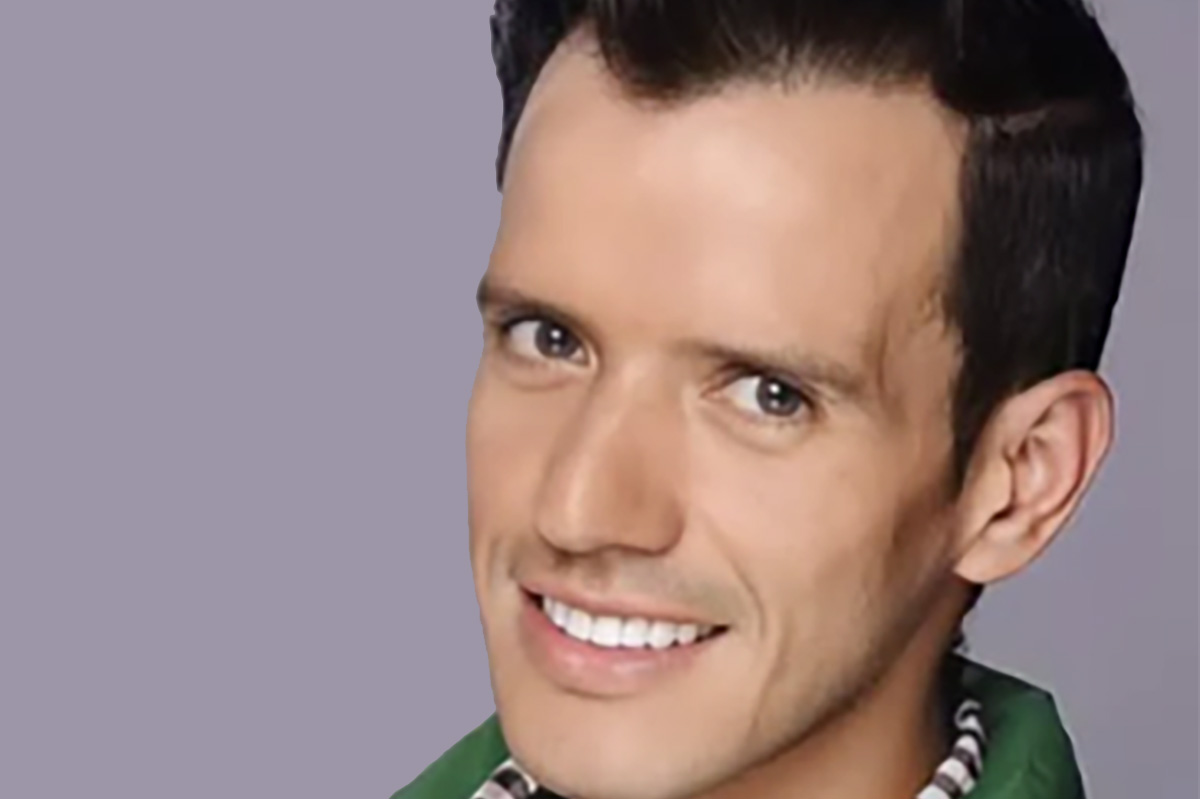
A gay Venezuelan asylum seeker who the U.S. “forcibly disappeared” to El Salvador has filed a claim against the federal government.
Immigrant Defenders Law Center, who represents Andry Hernández Romero, on Friday announced their client and five other Venezuelans who the Trump-Vance administration “forcibly removed” to El Salvador under the Alien Enemies Act of 1798, filed “administrative claims” under the Federal Tort Claims Act.
The White House on Feb. 20, 2025, designated Tren de Aragua, a Venezuelan gang, as an “international terrorist organization.”
President Donald Trump less than a month later invoked the Alien Enemies Act of 1798, which the Associated Press notes allows the U.S. to deport “noncitizens without any legal recourse.” The White House then “forcibly removed” Hernández, who had been pursuing his asylum case in the U.S., and more than 250 other Venezuelans to El Salvador.
Immigrant Defenders Law Center disputed claims that Hernández is a Tren de Aragua member.
Hernández was held at El Salvador’s Terrorism Confinement Center, a maximum-security prison known by the Spanish acronym CECOT, until his release on July 18, 2025. Hernández, who is back in Venezuela, claims he suffered physical and sexual abuse while at CECOT.
“As a Venezuelan citizen with no criminal record anywhere in the world, I would like to tell not only the government of the United States but governments everywhere that no human being is illegal,” said Hernández in the Immigrant Defenders Law Center press release. “The practice of judging whole communities for the wrongdoing of a single individual must end. Governments should use their power to help every person in the nation become more aware and informed, to strengthen our cultures and build a stronger generation with principles and values — one that multiplies the positive instead of destroying unfulfilled dreams and opportunities.”
Immigrant Defenders Law Center filed claims on behalf of Hernández and the five other Venezuelans less than three months after American forces seized then-Venezuelan President Nicolás Maduro and his wife, Cilia Flores, at their home in Caracas, the Venezuelan capital.
Maduro and Flores have pleaded not guilty to federal drug charges. Delcy Rodríguez, who was Maduro’s vice president, is Venezuela’s acting president.
‘Due process and accountability cannot be optional’
Immigrant Defenders Law Center on Friday also made the following demands:
- The Trump administration must officially release the names of all people the United States sent to CECOT to ensure that everyone has been or will be released.
- The federal government must clear the names of the 252 men wrongfully labeled as criminal gang members of Tren de Aragua.
- DHS (Department of Homeland Security) must end the practice of outsourcing torture through third‑country removals, restore humanitarian parole, and rebuild a functioning, humane asylum system.
- DHS must reinstate Temporary Protected Status for all individuals who cannot safely return to their home countries, halt mass deportations and unlawful raids and arrests, and guarantee due process for everyone navigating the immigration system.
- Congress must pass the Neighbors Not Enemies Act, which would repeal the Alien Enemies Act.
“In all my years as an immigration attorney, I have never seen a client simply vanish in the middle of their case with no explanation,” said Immigration Defenders Legal Fund Legal Services Director Melissa Shepard. “In court, the government couldn’t even explain where he was — he had been disappeared.”
“When the government detains and transfers people in secrecy, without transparency or access to the courts, it tears at the basic protections a democracy is supposed to guarantee,” added Shepard. “What this experience makes painfully clear is that due process and accountability cannot be optional. They are the only safeguards standing between people and the kind of lawlessness our clients suffered. We must end third country transfers, restore the asylum system, and humanitarian parole, and reinstate temporary protective status so this nightmare never happens again.”
Colombia
LGBTQ Venezuelans in Colombia uncertain about homeland’s future
US forces seized Nicolás Maduro and his wife on Jan. 3
BOGOTÁ, Colombia — LGBTQ Venezuelans who live in Colombia remain uncertain about their homeland’s future in the wake of now former-President Nicolás Maduro’s ouster.
José Guillén is from Mérida, a city in the Venezuelan Andes that is roughly 150 miles from the country’s border with Colombia. He founded an LGBTQ organization that largely focused on health care before he left Venezuela in 2015.
Guillén, whose mother is Colombian, spoke with the Washington Blade on Jan. 9 at a coffee shop in Bogotá, the Colombian capital. His husband, who left Venezuela in 2016, was with him.
“I would like to think that (Venezuela) will be a country working towards reconstruction in a democracy,” said Guillén, responding to the Blade’s question about what Venezuela will look like in five years.
American forces on Jan. 3 seized Maduro and his wife, Cilia Flores, at their home in Caracas, the Venezuelan capital, during an overnight operation.
Maduro and Flores on Jan. 5 pleaded not guilty to federal drug charges in New York. The Venezuelan National Assembly the day before swore in Delcy Rodríguez, who was Maduro’s vice president, as the country’s acting president.
Hugo Chávez died in 2013, and Maduro succeeded him as Venezuela’s president. Subsequent economic and political crises prompted millions of Venezuelans to leave the country.
The Blade in 2021 reported Venezuelan authorities raided HIV/AIDS service organizations, arrested their staffers, and confiscated donated medications for people with HIV/AIDS. Tamara Adrián, a member of the Venezuelan opposition who in 2015 became the first openly transgender person elected to the National Assembly, told the Blade she had to take security precautions during her campaign because government supporters targeted her.
The Blade on Jan. 8 spoke with a Venezuelan AIDS Healthcare Foundation client who said Maduro’s ouster “is truly something we’ve been waiting for for 26 or 27 years.” Another Venezuelan AHF client — a sex worker from Margarita Island in the Caribbean Sea who now lives in Bogotá — echoed this sentiment when she spoke with the Blade two days later.
“I love the situation of what’s happening,” she said during a telephone interview.
Sources in Caracas and elsewhere in Venezuela with whom the Blade spoke after Jan. 3 said armed pro-government groups known as “colectivos” were patrolling the streets. Reports indicate they set up checkpoints, stopped motorists, and searched their cell phones for evidence that they supported Maduro’s ouster.
“In the last few days, it seems there are possibilities for change, but people are also very afraid of the government’s reactions and what might happen,” Guillén said.
“Looking at it from an LGBT perspective, there has never been any recognition of the LGBT community in Venezuela,” he noted. “At some point, when Chávez came to power, we thought that many things could happen because it was a progressive government, but no.”
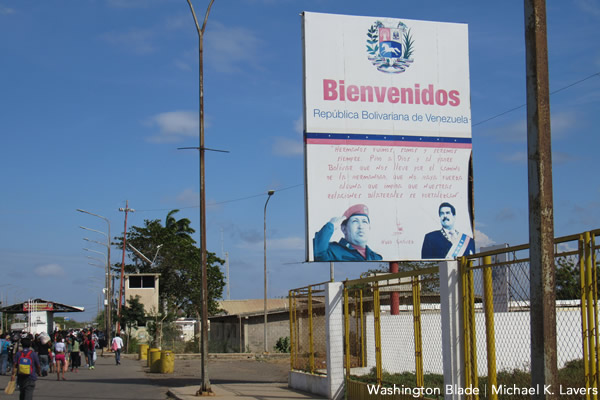
Luis Gómez is a lawyer from Valencia, a city in Venezuela’s Carabobo state. He and his family since he was a child have worked with autistic children through Fundación Yo Estoy Aquí, a foundation they created.
Gómez was in high school in 2013 when Maduro succeeded Chávez. He graduated from law school in 2018. Gómez in November 2020 fled to Colombia after he became increasingly afraid after his mother’s death that authorities would arrest him because of his criticism of the government.
The Colombian government in December 2025 recognized him as a refugee.
Gómez during a Jan. 9 interview in Bogotá discussed his initial reaction to Maduro’s ouster.
“I’m 28 years old, and 27 of those years have been in dictatorship,” Gómez told the Blade. “I had never experienced anything like this, which is why it had such a strong impact on me.”
Gómez said he initially thought the operation to seize Maduro and Flores was similar to an attempted coup that Chávez led in 1992. Gómez added he quickly realized Jan. 3 was different.
“The last thing we thought would happen was that Maduro would be wearing an orange jumpsuit in prison in New York,” he told the Blade. “It’s also important that those of us outside (of Venezuela) knew about it before those inside, because that’s the level of the lack of communication to which they have subjected all our families inside Venezuela.”
Gómez said Maduro’s ouster left him feeling “a great sense of justice” for his family and for the millions of Venezuelans who he maintains suffered under his government.
“Many Venezuelans, and with every reason, around the world started celebrating euphorically, but given our background and our understanding, we already knew at that moment what was coming,” added Gómez. “Now a new stage is beginning. What will this new stage be like? This has also generated uncertainty in us, which the entire citizenry is now experiencing.”
Trump ‘puts us in a very complex position’
U.S. chargé d’affaires Laura Dogu on Jan. 31 arrived in Caracas to reopen the American embassy that closed in February 2019.
Tens of thousands of people on Jan. 7 gathered in Bogotá and elsewhere in Colombia to protest against President Donald Trump after he threatened Colombian President Gustavo Petro, who was once a member of the now disbanded M-19 guerrilla movement. The two men met at the White House on Tuesday.
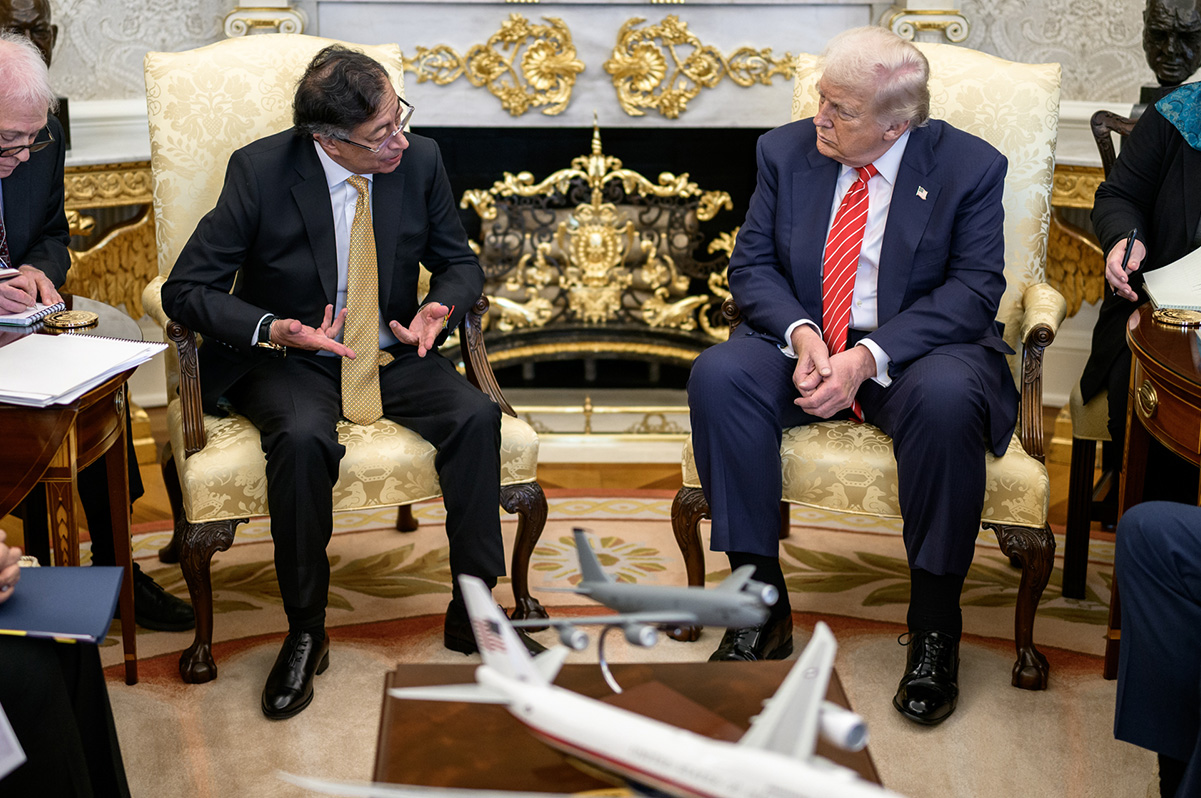
Both Gómez and Guillén pointed out Rodríguez remains in power. They also noted her brother, Jorge Rodríguez, is currently president of the National Assembly.
“Delcy has been a key figure in the regime for many years,” said Guillén. “In fact, she was one of the toughest people within the regime.”
Gómez and Guillén also spoke about Trump and his role in a post-Maduro Venezuela.
“Donald Trump, especially in this second term, has played a very particular role in the world, especially for those of us who, genuinely, not falsely or hypocritically, truly defend human rights,” said Gómez. “It puts us in a very complex position.”
Gómez told the Blade the operation to seize Maduro and Flores was “not an invasion for us.”
“It’s not a military intervention,” said Gómez. “It was the beginning, or I would even dare to say the end of the end.”
He acknowledged “there are interests at play, that the United States doesn’t do this for free.” Gómez added U.S. access to Venezuelan oil “for us, at this point, is not something that matters to us.”
“Venezuelans have received nothing, absolutely nothing from the resources generated by oil. We live without it,” he said. “The only ones getting rich from the oil are the top drug traffickers and criminals who remain in power.”
Guillén pointed out the U.S. “has always been one of the biggest buyers of oil from Venezuela, and perhaps we need that closeness to rebuild the country.”
“I also feel that there is a great opportunity with the millions of Venezuelans who left the country and who would like to be part of that reconstruction as well,” he said.
“Logically it’s sad to see the deterioration in the country, the institutions, even the universities in general,” added Guillén. “Those of us who are outside the country have continued to move forward and see other circumstances, and returning to the country with those ideas, with those new approaches, could provide an opportunity for change. That’s what I would like.”
Editor’s note: International News Editor Michael K. Lavers was on assignment in Colombia from Jan. 5-10.

Essential queer horror classics for Halloween

Solidarity beyond the parade: the actual cost of Pride

Physician: addiction doesn’t always look the way you think it does

Calendar: October 9-15

ICC unseals arrest warrants for Taliban officials accused of persecuting LGBTQ people, women

Bessent says Trump chose him for his qualifications, not his sexuality

10 years later, we still can’t shake Barry Jenkins’s ‘Moonlight’

‘Some Like It Hot’ a wild ride at renovated Bernard Family Theatre

D.C.’s LGBTQ homeless facilities face possible hit from Trump funding cuts

Trump uses anti-trans slur against Democratic Senate candidate
-

 Federal Government5 days ago
Bessent says Trump chose him for his qualifications, not his sexuality
-
Movies4 days ago
10 years later, we still can’t shake Barry Jenkins’s ‘Moonlight’
-
Theater4 days ago
‘Some Like It Hot’ a wild ride at renovated Bernard Family Theatre
-
District of Columbia4 days ago
D.C.’s LGBTQ homeless facilities face possible hit from Trump funding cuts