Bars & Parties
‘Change their minds and change the world!’
Saturday’s AIDS Walk to feature Lynda Carter
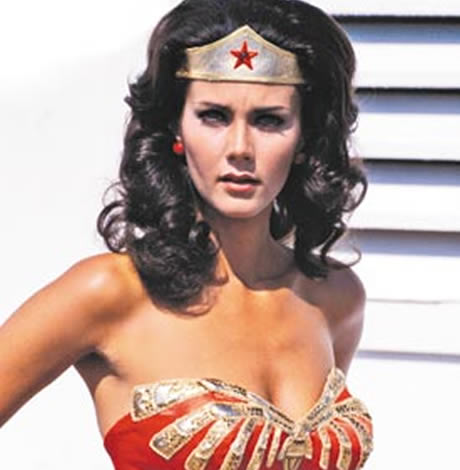
Lynda Carter in her iconic role. (Photo courtesy of CBS)
Whitman-Walker Clinic has a little magic up its sleeve for this year’s AIDS Walk Washington this weekend. Lynda Carter — and does she really need an introduction? — is this year’s celebrity grand marshal.
“We felt that as a long-time D.C. resident and as someone who has had a substantial following in the LGBT community since the 1970s, Lynda Carter would be a great choice to lead this year’s Walk,” says Chip Lewis, Whitman-Walker’s director of communications. “And she has brought a tremendous amount of energy and excitement to this year’s event already.”
The Walk, in its 24th year, is Whitman-Walker’s biggest fundraiser of the year and typically accounts for about 5 percent of its total operating funds. Walkers and runners secure sponsors for their participation. Last year the Clinic set a $1 million goal and raised about $900,000 with 6,028 walkers, 1,108 runners, 484 teams and 450 volunteers. A thank-you ad that from Whitman-Walker that ran in the Blade the week after last year’s event mentioned the importance of the Walk.
Thanking participants, the Clinic’s director, Don Blanchon, and board chair, June Crenshaw, wrote, “You have brought more than just medical care to our patients. You have brought hope back to their lives.”
NBC Channel 4 anchor Craig Melvin will emcee. The Gay Men’s Chorus will perform the national anthem and gay singer Peter Fox will perform a new song, “Change the World,” that he’s selling to benefit the walk. The National Danish Performance Team and Kaution Dance Kru will perform after the walk. Registrations for runners will be taken until 1 p.m. online Friday. Walkers can register online until 8 p.m. Friday. After that, registrations will be taken at the Warner Building (12th and E, N.W.) beginning at 7 a.m. Saturday.
During an interview with the Blade, Carter talked about why she’s participating, her longtime popularity with gays and lesbians and, oh yeah, she also graciously indulged us with some behind-the-scenes details of a certain famous TV show she did back in the ’70s.
“I’m just a big believer in civil rights and you know, civil rights are civil rights and it’s really as simple as that,” the actress/singer says during a phone chat from the office of her Potomac, Md., home. “We are all what we are. I can’t ever make myself a small person. Unless I cut off my feet, I will never be under 5 feet. I have blue eyes. I will never have dark brown eyes. I am what I am and that’s that. I just think, ‘Get over yourselves.’ Not the gay and lesbian community, but the supposedly straight community — who are as kinky as all get out — I’m just astounded that [someone’s sexual orientation] matters to anybody. It’s such a non-issue in my own heart and mind … That’s part of who you are and it’s such a small part of your life. You’ve got family and friends, a job, dreams. You also happen to be gay. So what?”
Carter, who’s lent her name to everything from irritable bowel syndrome to breast cancer, says there are lots of reasons she agreed to participate this year — she considers the Washington area, where she’s lived for decades, home.
“Oh yeah, I’m definitely supporting my home territory,” she says. “One in 20 people in D.C. have HIV. That’s shocking. But it’s not exclusive to my feelings to D.C. If I can bring even one person to this event who would not have come to the table otherwise, then at least I’ve contributed something. But hopefully I’ll bring a lot more.”
She also says she’s been touched by the gay adulation and devotion she’s enjoyed for many years.
“The AIDS Walk, well, sadly, it has been so tied to the gay and lesbian community,” Carter says. “They’ve been so vilified and this vilification that’s been heaped upon them in connection with HIV has really led to the belief among many heterosexuals and many young people that it doesn’t apply to them. They think, ‘Oh, I don’t lead a dangerous life.’ But that’s really a great disservice. There are great strides being made in treating HIV, but there’s also a false sense that maybe it really isn’t a big deal anymore or even a certain degree of complacency.”
Carter says supporting AIDS and gay causes resonates with her because of her strong belief in equal rights for everyone.
“I’m very outspoken and justice issues just get to me,” she says. “I’m for equal rights and AIDS and HIV is an equal opportunity disease. However people with AIDS are discriminated against even though AIDS itself doesn’t discriminate. It’ll get anybody.”
Looking back on ‘Wonder Woman’
Though it’s been more than 30 years since “Wonder Woman’s” original run, Carter embraces the show and its legion of gay fans. It’s so popular with gays, there was even a 2008 book (“The Q Guide to Wonder Woman”) by gay author Mike Pingel that explored the show’s queer appeal and sensitivities. Carter, still stunning at 59, talked at length with the Blade about the show, its legacy and how she remembers it now.
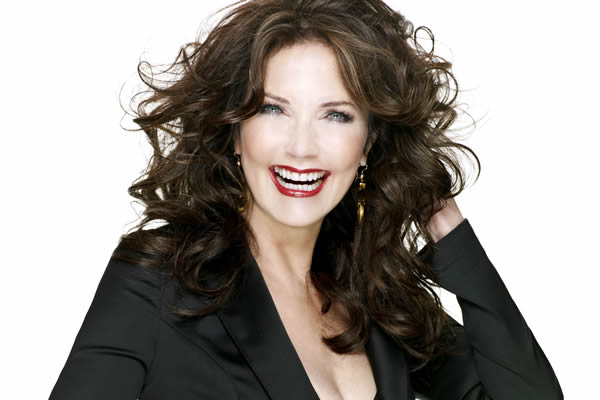
Lynda Carter (Photo by Karl Simone)
WASHINGTON BLADE: You did a few voiceovers and appeared in some of the “making of” featurettes when the show came out on DVD a few years ago. Did you watch it again?
LYNDA CARTER: No, I didn’t really. I tried to show my kids once in awhile and my niece and nephew, but I didn’t sit down and watch it myself, not that at all. I really love her and I really think she’s great and I particularly love the idea of her. So there’s so many things I like about it but I’m busy living my life now, so I don’t think about it a lot. It’s a little like something really outstanding in your life that everybody talks about and that is wonderful and you loved doing it, whether it was graduating at the top of your class or getting a big grant or winning the race or whatever and people admire it so much about you, but within yourself, even though you acknowledge it, you’re busy doing other things so you only really think about it when somebody else brings it up.
BLADE: Did you keep many of the dolls and TV Guide covers and that kind of stuff?
CARTER: I have a few things here in the house. A phone and I’m looking right now in my den at a pillow the cameraman’s wife hand stitched. It really doesn’t look like her, but it’s such a cool thing and I’ve kept it all these years. I’m trying to preserve some things for my children. They might want to look at them or sell them, but it certainly is a big piece of my life and continues to be.
BLADE: But a lot of it is in storage?
CARTER: Yes. I have hired some wonderful people who work for me and one of their jobs was to try to consolidate all the “Wonder Woman” memorabilia and get it all in one place. Some of the really valuable stuff, I have someplace else.
BLADE: So did you feel after three seasons the concept had run its course or would you have liked the show to have run longer? Were you ready to move on to other things after three seasons?
CARTER: No, no, no. We all thought it would go on a lot longer. It came as a big surprise because we were doing fine in the ratings. I only found this out later, many years ago, but I heard a CBS producer say he was tired of being teased and that they were calling it the “super hero” network so he canceled everything that was of that genre. I think there might have been three or four. I think the “Hulk” was the only one they kept. I think it was really an arbitrary decision.
BLADE: Your hair got quite a bit longer over the run. Did you intentionally grow it out?
CARTER: Oh yeah, that was on purpose. Your hair takes quite a beating, actually, on a show, so we also started putting pieces on. This was before the age of extensions but we used to have a wonderful wig maker, Renata, and she made specific pieces for specific things. So it saved me some time in the makeup chair.
BLADE: When did you realize the show had so many gay fans? During its run or later?
CARTER: It was quite a while ago. My children were small. There was this wonderful young woman. She was talking to me. Very enthused. She started calling up her girlfriends saying, ‘She doesn’t even know.’ We had a great laugh about it. I really had no idea for a long time. And also that it’s big with both gay men and lesbians, which I understand is somewhat unusual and I think that’s very cool as well. They’re just the most loyal people. Just great. And I totally get why they feel that way about the character. It’s the secret self. The part of them that no one understands. There’s this powerful person just waiting to get out, to be accepted and acknowledged.
BLADE: Watching the shows again on DVD, it’s obvious you played it straight, unlike the old “Batman” show where it was obviously played as camp. Was that a conscious decision you made right at the beginning?
CARTER: Oh absolutely. I believed in her. It was that simple. If I was making fun of her, no one would believe it. She was just a regular girl. She didn’t think all that much of it. But I just loved the character and I treated her with dignity.
BLADE: What are your memories of working with Lyle Waggoner?
CARTER: Oh, he was great. Just a great guy. A wonderful person. Both he and his wife, Sharon. He was a pro. I having nothing but great things to say.
BLADE: Would he have stayed for a fourth season? It seems he was being phased out toward the end of the third season. As if maybe they were re-launching the show with another new setting.
CARTER: Yeah, I don’t really know what that was about. I wasn’t part of any of [those decisions]. That wasn’t anything I really knew about. You’re working so many long hours, there isn’t a lot of time to think about those things. I know it was tough and we were all in a state of shock [when it wasn’t renewed].
BLADE: Who was your favorite of the mothers? (Wonder Woman’s mother was played by Cloris Leachman, Carolyn Jones and Beatrice Straight at various times during the series’ run.) That was quite a group of actresses — two Academy Award winners.
CARTER: I think Cloris was my all-time favorite. And I also loved Red Buttons when he did the show.
BLADE: Was Cloris not available the second time they wrote her into the series?
CARTER: I think that was correct. She may have been doing Mary’s show or there was some reason she couldn’t do it.
BLADE: How about a trivia question?
CARTER: OK.
BLADE: Do you know who was the only actor who played a villain on both “Batman” and “Wonder Woman”?
CARTER: Hmmm. Not sure.
BLADE: Frank Gorshin. He was in your Christmas episode and also was the Riddler on “Batman.”
CARTER: Oh, interesting. I also did another film with him. Just a small little film that didn’t do anything. But he was a great guy.
BLADE: What do you think of Wonder Woman’s new look in the comics? Have you seen it?
CARTER: Yes, they showed it to me before it came out. You know, people don’t really like change but she was gonna get hip and put on a little jacket and leggings but not look like a Barbie doll. When we did our show, they had me jumping around in different outfits so it’s fine. She may stay in it or it may just be for the time being, but overall I take it with a very good attitude.
BLADE: Yes, and your costume changed significantly when it went from ABC to CBS.
CARTER: Right.
BLADE: It appears the years have been very kind to you. Just great genes or do you have a certain moisturizer you swear by or what?
CARTER: Thank you. It’s really smoke and mirrors. I’m always working on it and I try to keep my weight down and I’m kind of terrified of going under the knife. I’m not saying I never will but I just know so many amazing women who have all the money they could ever want and now they don’t even look like themselves. I don’t know why that is. Back in the early days there was this nose doctor in Hollywood and all of a sudden it seemed like everybody had the same nose. It was kind of scary.
BLADE: Are you planning more recording and singing?
CARTER: Yes. I’m already booked for the Jazz and Lincoln Center and the Kennedy Center next year. And we have a new album in the can but we probably won’t release it till after the first of the year.
BLADE: Jazz standards, covers or what?
CARTER: Covers but they’re really trying to sing the music I’m attracted to with a different, unique approach. I have a great producer, Kyle Lehning, who brings a lot of imagination to it. It takes you awhile to realize you know the song. The feel might have changed, the tempo or it’s just got a different groove.
BLADE: Like you did with “Where Did Our Love Go,” that old Supremes song? It was a few lines before I realized I knew what you were singing.
CARTER: Right. Because otherwise what’s the point of even doing it?
Editor’s note: Carter’s album “At Last” is available here.


Bars & Parties
Lesbian Bar Project co-founder: purity politics could destroy our remaining spaces
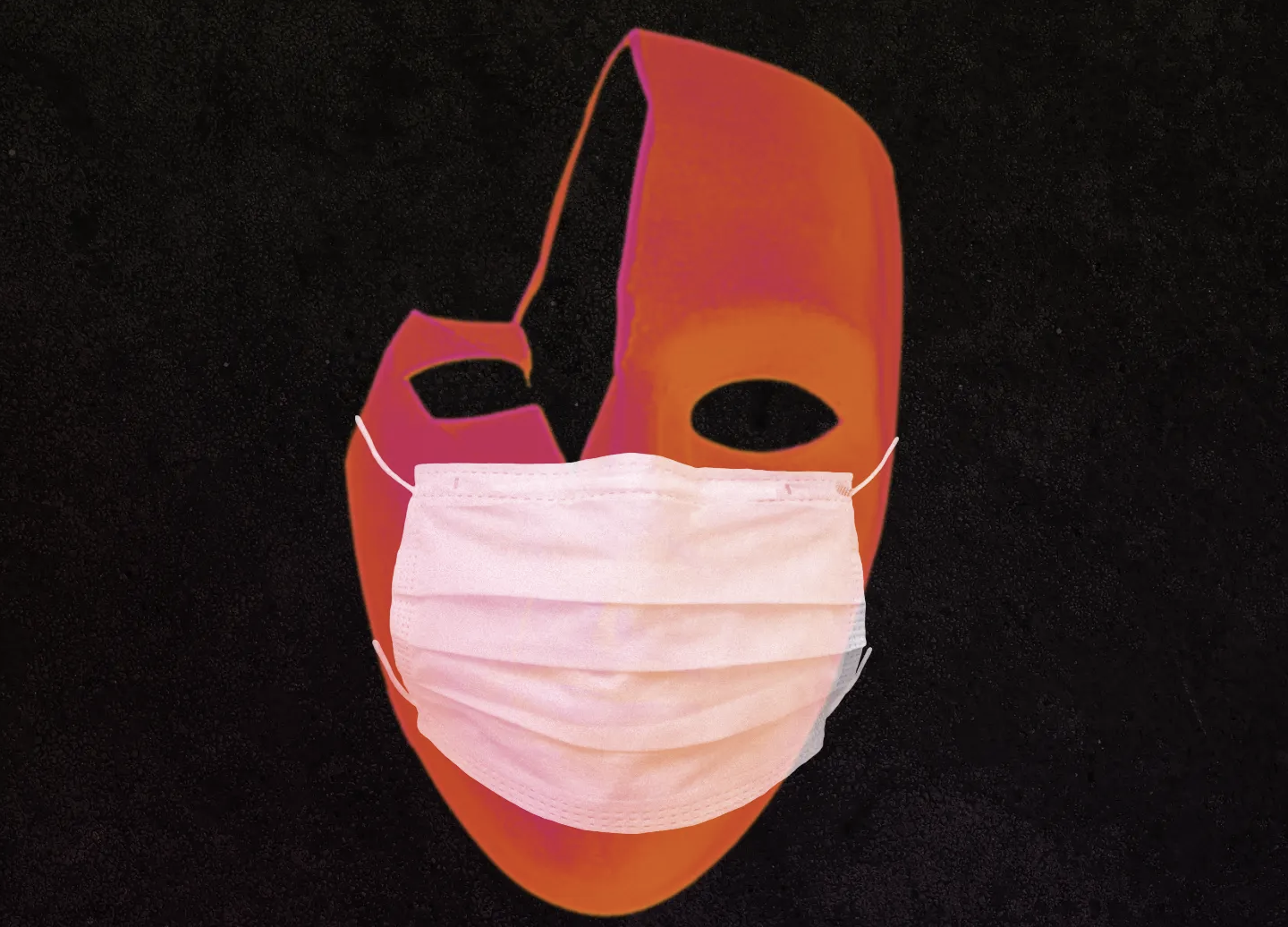
Last Ditch’s decision to lift its mask requirement for one night a week has sparked intra-queer controversy
Uncloseted Media published this story on Sept. 29
By ERICA ROSE and THE LESBIAN BAR PROJECT | As a professional lesbian and Massachusetts native, I’ve recently been asked by a lot of folks what I think about the saga unfolding at Last Ditch. The now-viral story, first reported by the Boston Globe, centers on a Western Massachusetts lesbian bar that lifted its mask requirement for one night a week to help drum up business.
The decision ignited an intra-queer controversy that has been feasted on by media outlets across the political spectrum — from the New York Post to LGBTQ Nation — and is even reportedly being eyed for a Hollywood adaptation. Apparently nothing is more entertaining than a bunch of lesbians and queers fighting with each other over KN-95s.
What has been lost in all of the chatter and media coverage is the very real possibility that Last Ditch, which just opened in April 2025, will have to close its doors. The venue’s one remaining founder, Jackie Matellian, revealed in a community Zoom meeting that she’s working four jobs, is now solely responsible for the bar’s $50,000 business loan and is struggling to keep up with the bills. So as we laugh about the controversy’s similarity to a “Portlandia” skit and how one of the bar’s founders left to enroll in clown school, we forget that yet another lesbian bar is facing an existential crisis — and this time the call is coming from inside the house.
In 2020, my friend Elina Street and I created The Lesbian Bar Project, an Emmy-, Webby- and GLAAD Media Award-winning docuseries and initiative that tells the stories of lesbian queer bars around the world. We were moved to act because at the time there were only an estimated 16 lesbian bars in the United States, and the pandemic threatened to bring that number down even further.
There are now more sapphic bars than there were just before the pandemic — about 36 of them in total — but this is down from approximately 200 in 1980. Maybe that doesn’t mean much to you, but for the millions of sapphics living in the U.S., this number is calamitous.
As the world laughs at lesbians and sapphics, I want to take a second and tell you what I feel when I walk into one of these bars, which are all unique and irreplaceable in their own way: I feel seen.
Sometimes I think Cubbyhole in New York City’s West Village neighborhood knew I was gay before I did. When I walked in there for the first time, before I was even out, I was transfixed by the colorful array of tchotchkes hanging from the ceiling and how the women standing next to me were completely unafraid to express their desire for one another. I knew the minute I was ready to come out, I had a home. I also felt the joy of a new couple falling in love at Seattle’s Wildrose, the quiet confidence of a short king lining up her shot at the pool table at Ginger’s in Brooklyn and the kick of cayenne pepper in Julie Mabry’s crawfish at Houston’s Pearl Bar.
Lesbian bars don’t just serve lesbians; they serve queer folks across the spectrum, including bisexual, pansexual and trans people. As Elina and I traveled across the U.S. and Europe and to parts of Latin America to document the bar owners, staff and patrons that make up the ecosystems of these spaces, we also became uniquely acquainted with the factors that threaten their existence: gentrification, wage gaps, sexism, environmental disasters, gun violence, rising insurance premiums and political administrations working to annihilate queer people and their families.
Lesbian bar owners, like all leaders and entrepreneurs, are imperfect. There have been significant issues over the years at lesbian bars: employee harassment, racism, lack of accessibility, sexual assault and transphobia. All bar owners should be held accountable and should listen to their communities to evolve into safer and more equitable spaces. I also acknowledge my privilege: I am able-bodied, white, cis and from a family system that loves me for who I am. Not everyone has that.
Queer people, especially trans and bisexual people, are suffering from disproportionately high levels of depression, and our mental health system isn’t equipped to support them. Immunocompromised people and long COVID are real, and many of my friends are suffering to this day. The people with the least safety net are often the ones for whom a bar closing costs the most. And yet, as we’re seeing with Last Ditch, the queer community often lashes out at each other. It’s also the mainstream media taking the internal conflict and making a mockery out of it, distracting from the real possibility that this bar could close due to financial pressures. A bar that many people loved and needed is facing extinction. Perhaps it’s safer to dissent with one another than with the larger forces trying to eradicate us, but in doing so, we risk destroying the few spaces we have left.
Due to the constraints of purity politics — some in good faith, some not so much — lesbian bar owners, almost all of whom are queer women themselves, are forced to be everything for everyone, similarly to how women are forced to be everything for everyone. By asking these bars to uphold impossible standards — standards very few other third spaces are asked to consider — we all end up losing.
I want to move as a community toward dialogue, compassionate dissent and collaboration to make our spaces better with the goal of keeping them OPEN and thriving, rather than destroying them from the inside with expectations that are arguably unattainable.
While I have your attention — for this fleeting second of the news cycle — may I urge us to spearhead a way to keep these small businesses afloat without attacking our own community along the way? Bar owners are left with an impasse: They want to be community-centered, but they also have to make money to keep their doors open. Sometimes they might make business decisions that don’t work for everyone — and that’s partly because different patrons have different priorities and want different things — but these owners deserve the opportunity for productive dialogue. We have to work with them and with each other to keep our spaces open, to keep them growing.
Lesbian bars raised me into the queer woman I am today. One thing I think about as I reflect on the six years of work we’ve done to document these spaces is that shared, unspoken language I have with a stranger the moment we both walk into one of these bars: the nod, the ease, the not having to explain ourselves. I don’t want to lose that, and neither should you.
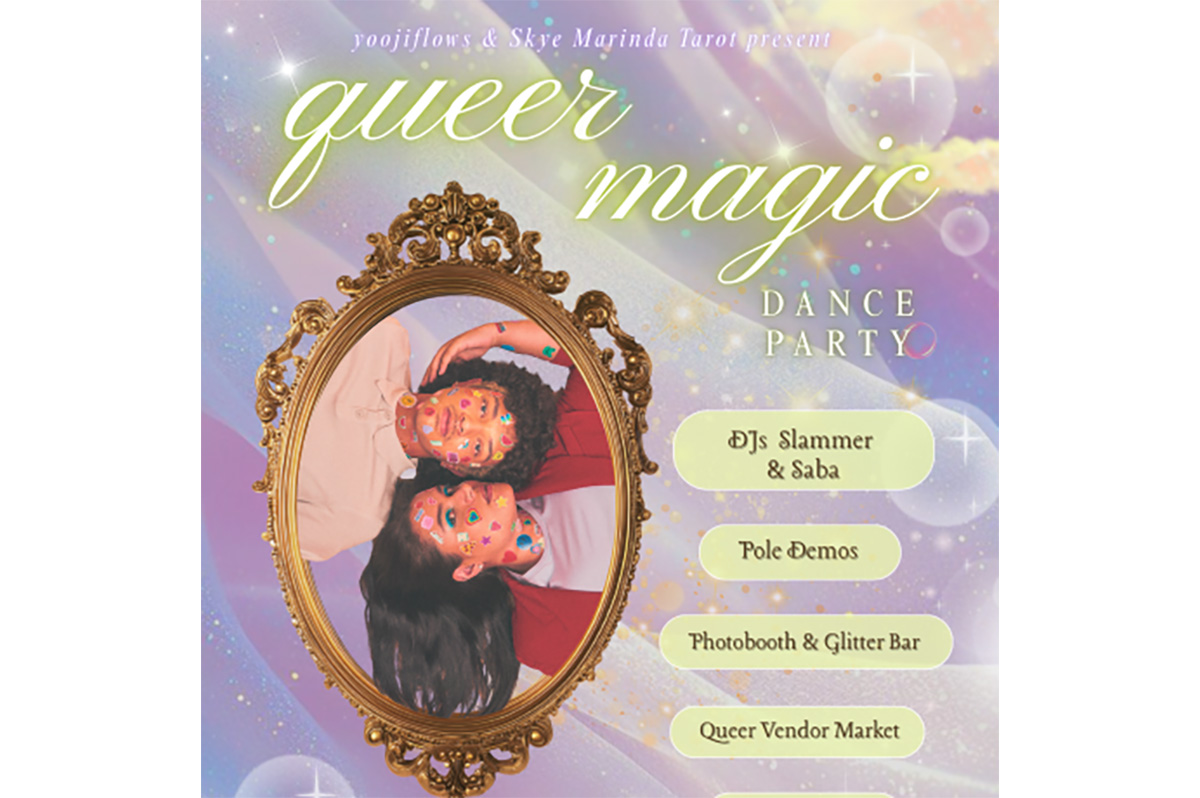
Celebrate the start of Pride month at the Queer Magic Dance Party at the Black Cat on Saturday, June 6. Doors open at 9 p.m.
There will be pole performances and demonstrations, a free photo booth with glitter bar, a queer vendor market, tarot readings by Skye Marinda Tarot, a drag performance by Sapphica, and dancing to a blend of smooth R&B, Afrobeats, hip-hop and pop by Slammer & Saba. Tickets are $20 at the door or $15 (plus fees) in advance, purchased here.
Bars & Parties
Here’s where to watch ‘RuPaul’s Drag Race’ with fellow fans
Entertainers TrevHER and Grey host event with live performance
Spark Social Events will host “Ru Paul’s Drag Race S18 Watch Party Hosted by Local Drag Queens” on Friday, Jan. 23 at 8 p.m.
Drag entertainers TrevHER and Grey will provide commentary and make live predictions on who’s staying and who’s going home. Stick around after the show for a live drag performance. The watch party will take place on a heated outdoor patio and cozy indoor space.
This event is free and more details are available on Eventbrite.

Essential queer horror classics for Halloween

Solidarity beyond the parade: the actual cost of Pride

Physician: addiction doesn’t always look the way you think it does

Calendar: October 9-15

ICC unseals arrest warrants for Taliban officials accused of persecuting LGBTQ people, women

Alianza para la Inclusión fortalece la defensa de derechos LGBTQ en Centroamérica

The facts about Victory Fund’s investigation and the path forward

In Ga., 2 trans candidates believe voters are ready for them

Bessent says Trump chose him for his qualifications, not his sexuality

‘Some Like It Hot’ a wild ride at renovated Bernard Family Theatre
-

 Central America5 days ago
Alianza para la Inclusión fortalece la defensa de derechos LGBTQ en Centroamérica
-
Opinions5 days ago
The facts about Victory Fund’s investigation and the path forward
-
Georgia5 days ago
In Ga., 2 trans candidates believe voters are ready for them
-
Federal Government4 days ago
Bessent says Trump chose him for his qualifications, not his sexuality