Arts & Entertainment
Trey chic
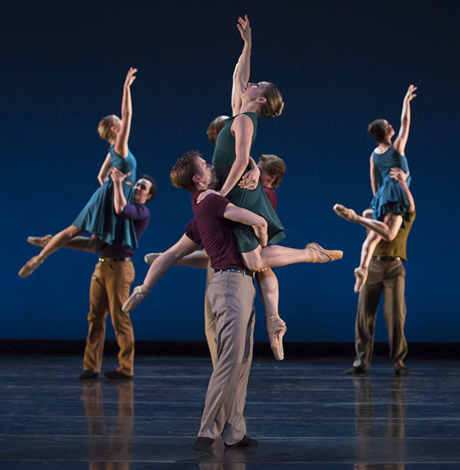
Boise-based dance outfit at Harmon Hall this weekend

Trey McIntyre Project
8 p.m. tonight; 2 and 8 p.m. Saturday
Washington Performing Arts Society
at Sidney Harman Hall
610 F Street N.W.
Tickets $25-$75,
Wpas.org or shakespearetheatre.org/tickets
202-547-1122
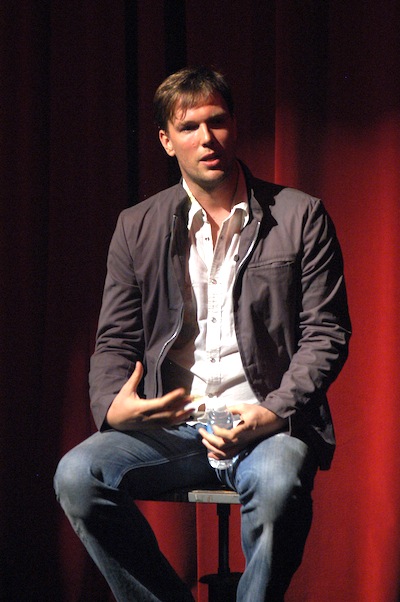
Trey McIntyre (Photo courtesy of Trey McIntyre Project)
When the Trey McIntyre Project performs tonight in Washington, viewers, obviously, will have a sense of what they’re in for. But that’s not always the case in Boise, Idaho, where the company is based.
The 41-year-old Trey McIntyre chose the unlikely locale after a nationwide search for a host city and, all things considered, found Boise the best fit. His dancers have made a splash there by launching what they call “SpUrgans” — spontaneous urban performances — where McIntyre says, “we will go into an office or into a park, or into a restaurant, do our dance and get out,” basically, guerilla-style dance done with a boom-box for music and flying feet and swiveling hips, startling observers.
The whole point of a “SpUrban,” he says, is to surprise, to connect viscerally and unexpectedly, site-specific however, seeing the dance environment writ large — to go directly where people live and work in the community itself. His dancers also perform at games of the Idaho Stampede, the local NBA team, where they sold 300 tickets to one performance.
This weekend’s performance, of course, will be less out of the blue.
At Harman Hall, McIntyre promises a high-profile presentation of three works, two of them — “Ma Maison” (2008) and “The Sweeter End” (2011) — he choreographed to be performed to the recorded music he commissioned from the New Orleans jazz band, Preservation Hall, in two salutes to “the Big Easy,” a city he has grown to love.
The brightly colored “Ma Maison” costumes feature Mardi Gras-style skeleton costumes and the dance is inspired by ritual and celebration of both death and the afterlife. “The Sweeter End” premiered in New Orleans in February. The troupe will also perform “In Dreams” (2007), a darkly lyrical ballet he created for five dancers set to the music of Roy Orbison songs, including the eponymous “In Dreams,” a song McIntyre remembered from its use in the 1986 film by David Lynch, “Blue Velvet.”
McIntyre is famed already after a star-studded career of more than two decades as a choreographer, with his canon of more than 80 works of contemporary ballet, set to scores as varied as classical music (Beethoven and Chopin), rock ‘n’ roll (from the Beatles and Beck to Roy Orbison), folk (Peter, Paul and Mary) and jazz (Preservation Hall Jazz Band).
McIntyre says he never came out per se. His parents asked him about it when he was 14 and matter of factly started dating a boy. The Wichita, Kan., native established his dance career after leaving home at 17 for the Houston Ballet Company. By 19 he was hired, enjoying a long run there that lasted until 2008 by which time he had been working as a choreographer, his own dancing days ending in the mid-’90s.
McIntyre’s partner of eight years, 29-year-old John Michael Schert, met in New York and knew early on they’d form a company together. It began in 2005 as a summer touring company and was established in 2008 as a full-time company, now with 10 dancers.
The dancers — now five males (including Schert) and five females, salaried for 35 weeks a year and with full health benefits — are happily settled in Boise. Now in their third year there, they are also touring with upcoming concerts at Harman Hall in Washington tonight and Saturday, hosted by the Washington Performing Arts Society (WPAS), and were scheduled to participate in a community “engagement” outreach with the Washington Ballet School, Maryland Youth Ballet and the Duke Ellington School for the Arts.
The company will also host tonight a free warm-up class and WPAS-sponsored performance for local schools at Harman Hall of excerpts from the three dances to be performed there tonight and Saturday.
Since arriving in Boise three years ago, the city has taken the Trey McIntyre Project to heart, bestowing a grant of $25,000 on the company, by far the city’s largest arts award ever, and naming the Project its first official cultural ambassador. Affiliated with Boise State University, which is renovating a 450-seat campus theater to make it suitable for dance, and housed for offices and studio space at Foothills School of Arts and Sciences, McIntyre and the company’s dancers have become virtual rock stars, recognizable wherever they go and showered with free gifts.
In 2005, the company began as a summer touring troupe, until landing on its feet full-time in Boise three years ago. Its now funded on a $1.5 million annual budget and boasts a blue ribbon national board and an advisory council with stars like Shirley MacLaine, Tony Award-winning actor Alan Cumming, and Lar Lubovich, legendary artistic director of the Lar Lubovich Dance Company.



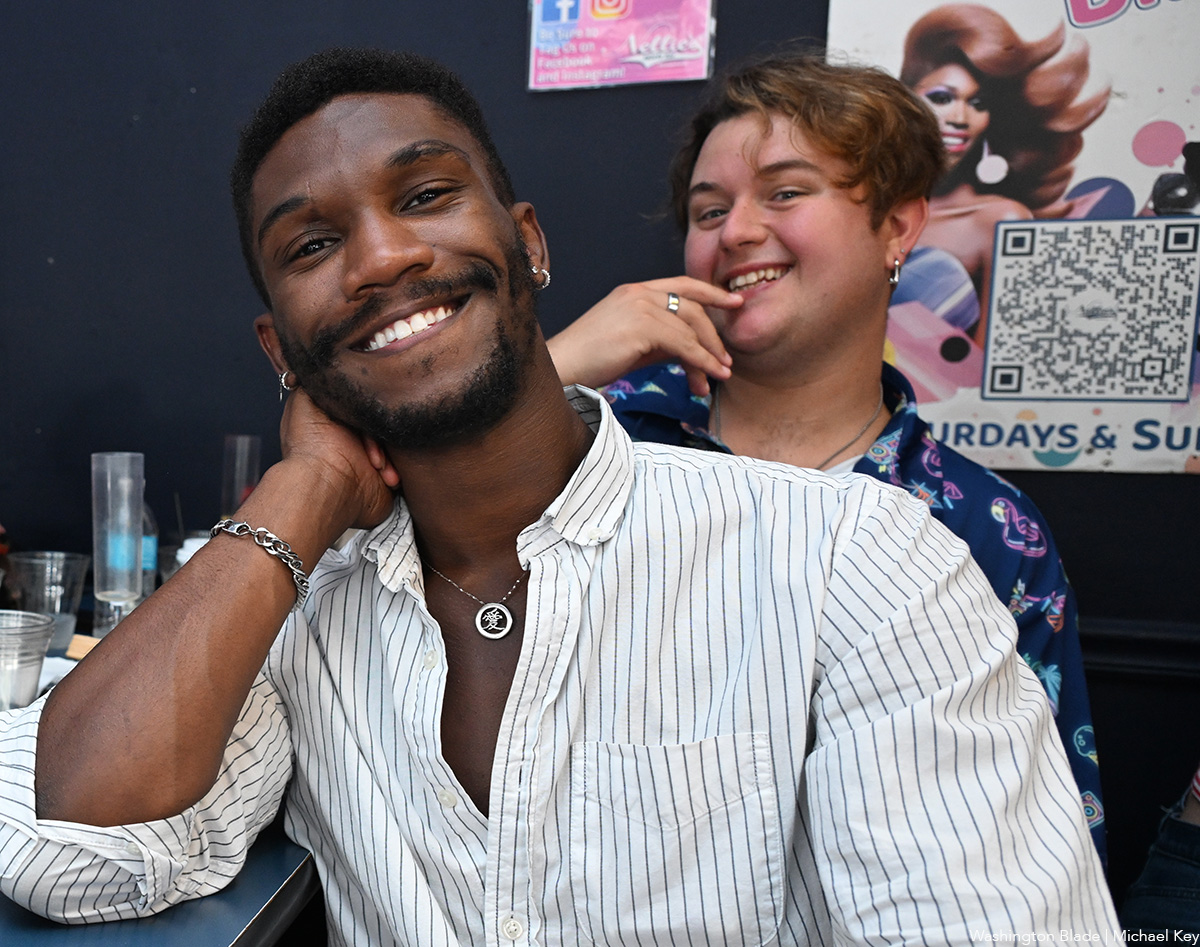
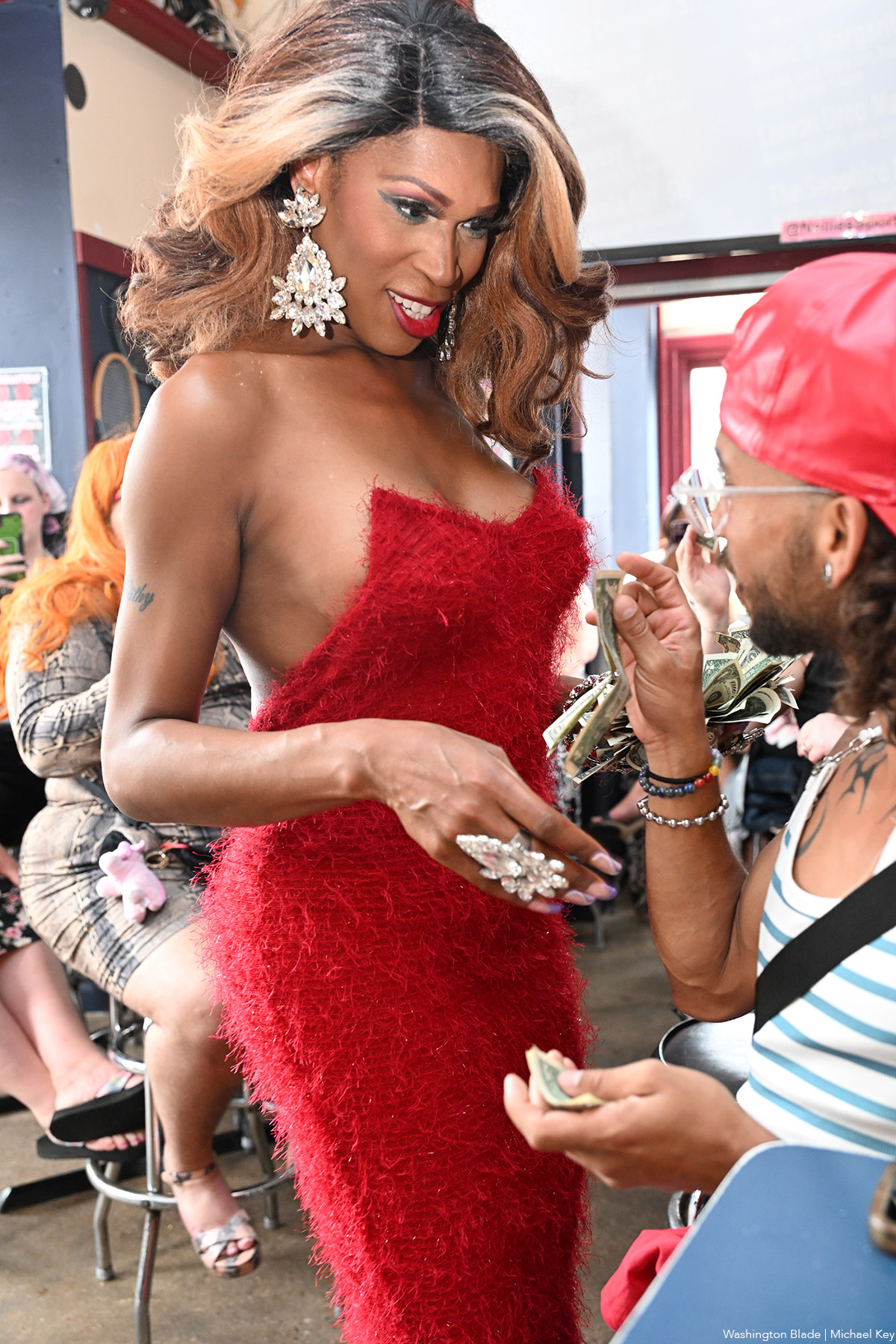
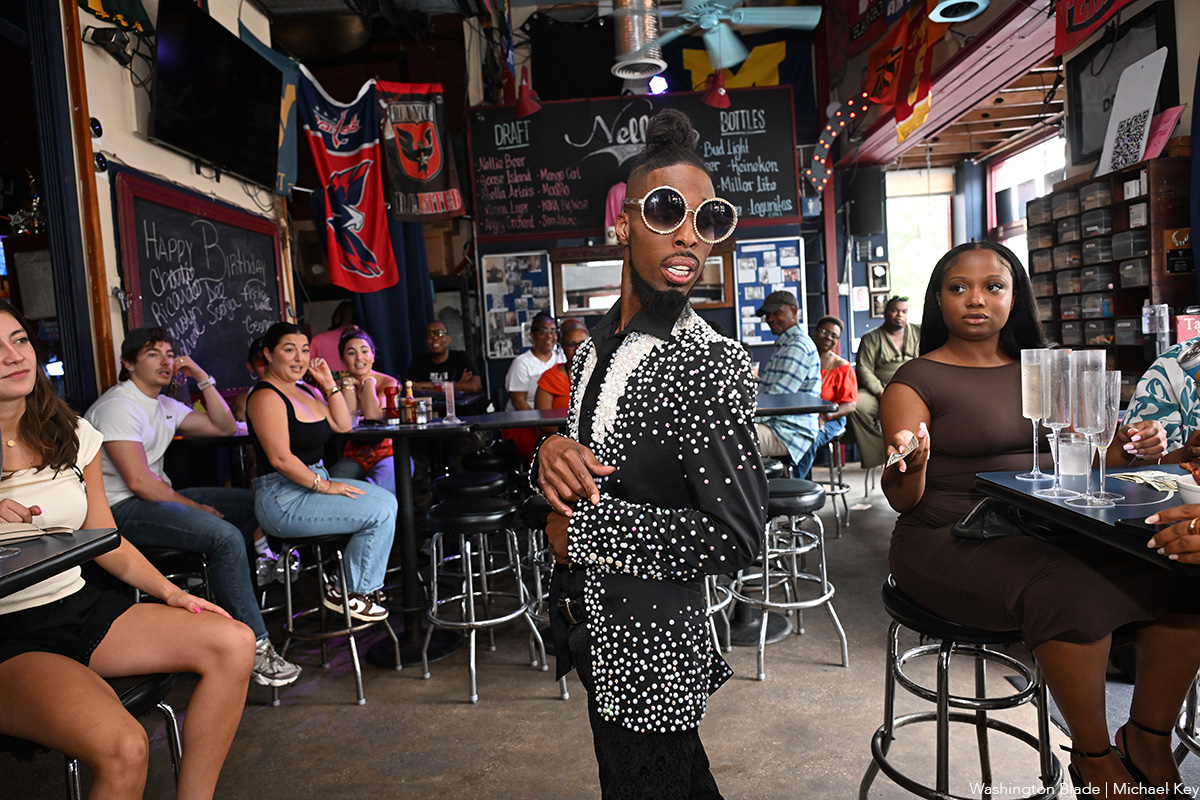
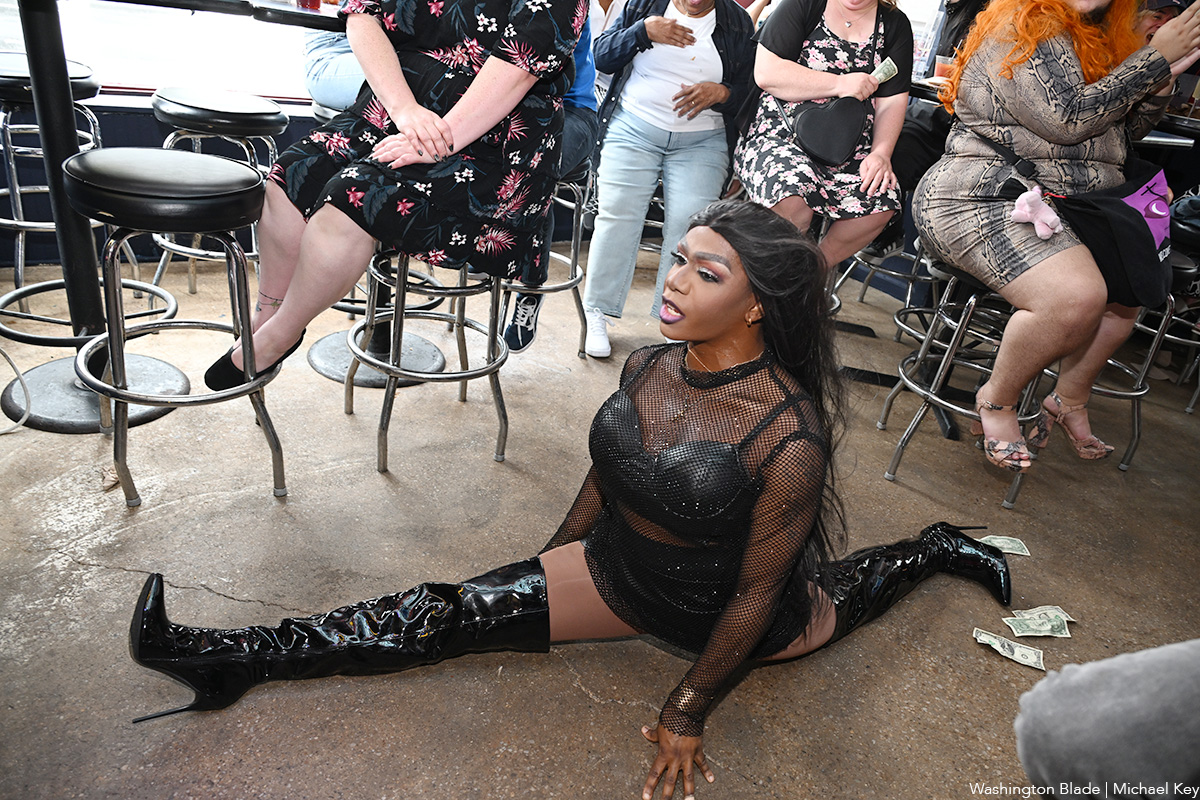
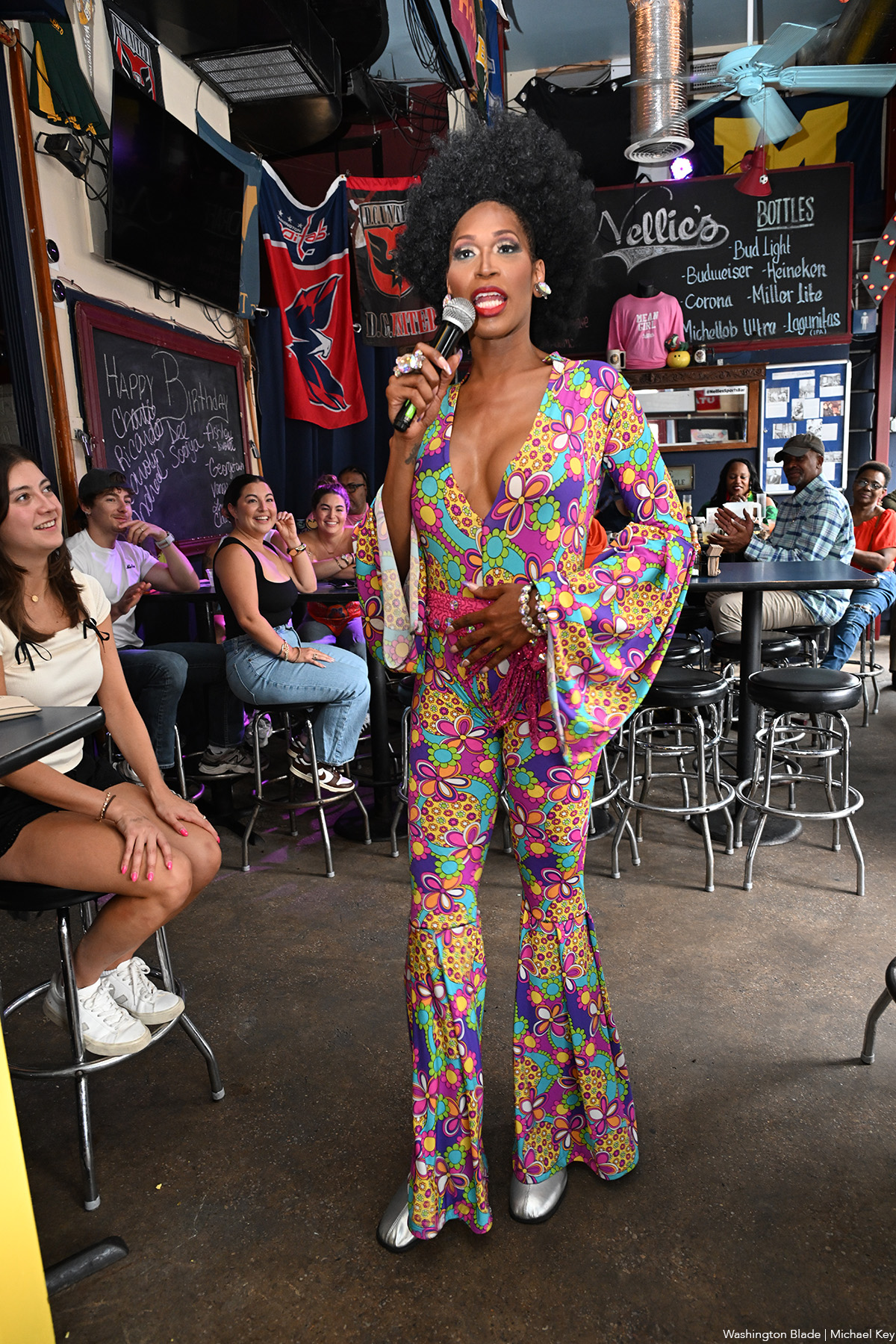
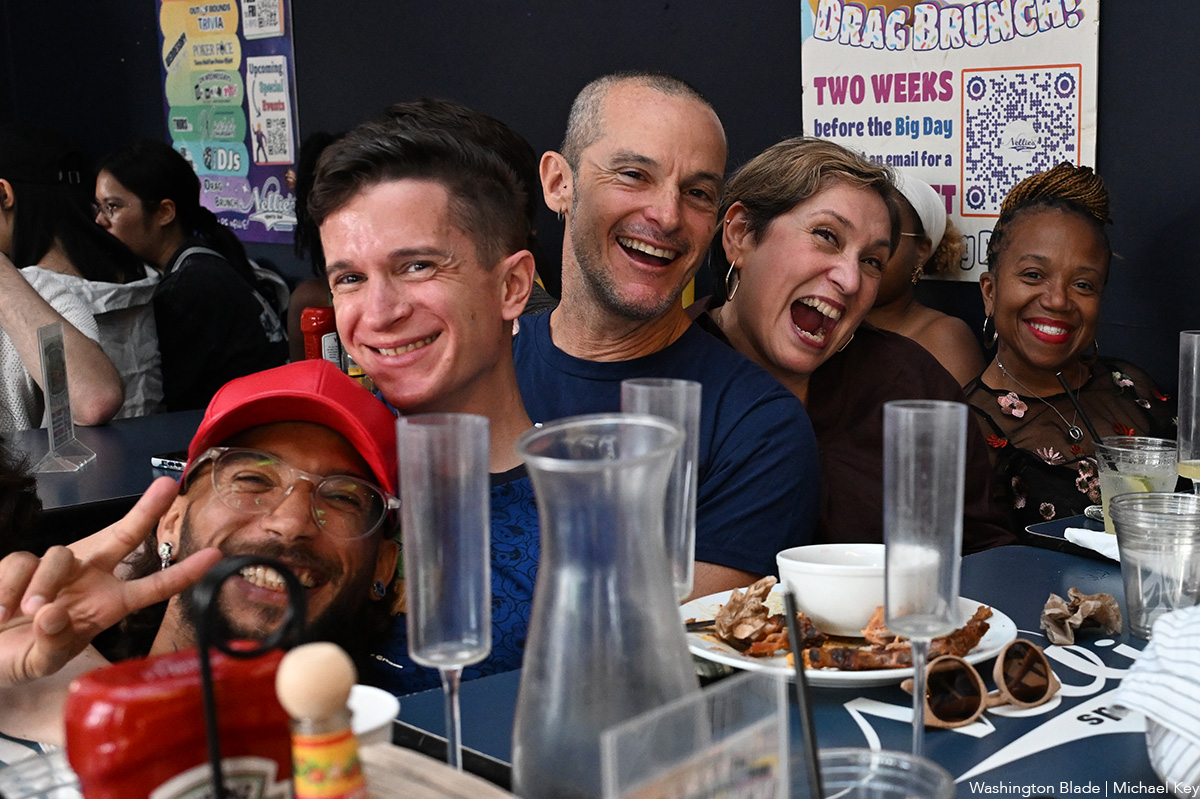
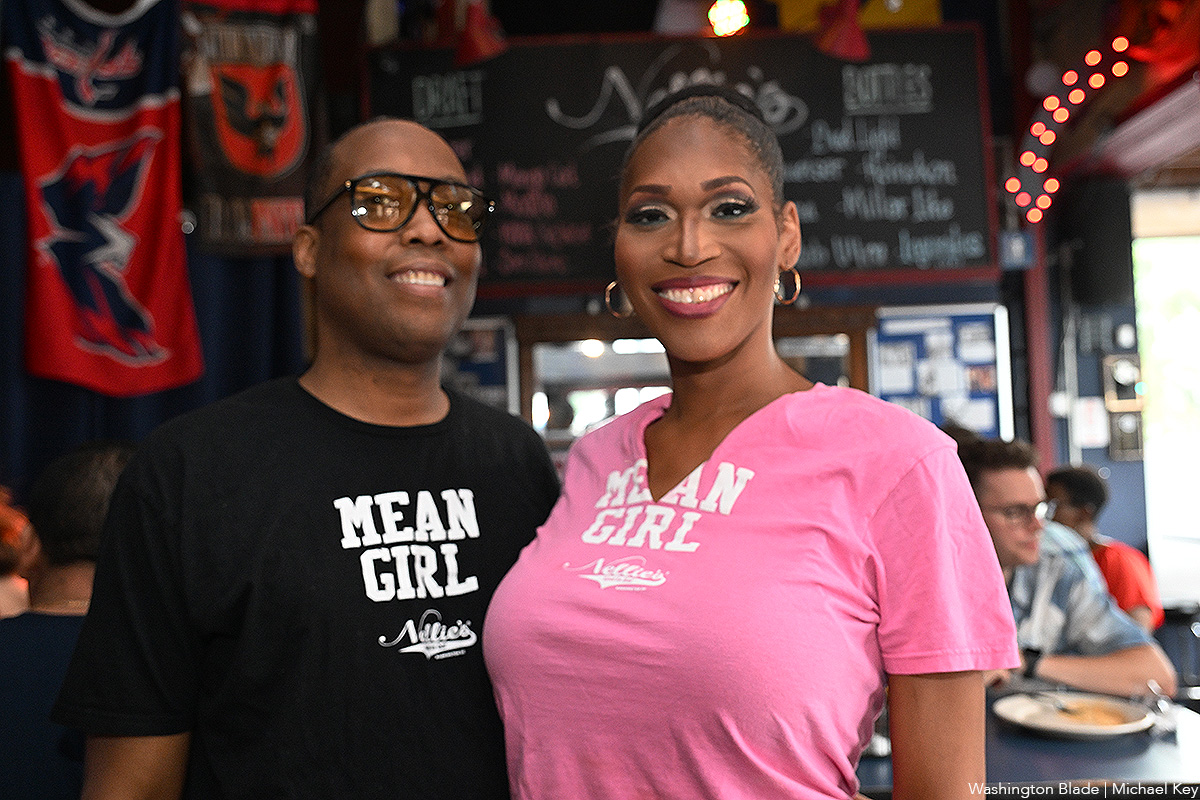
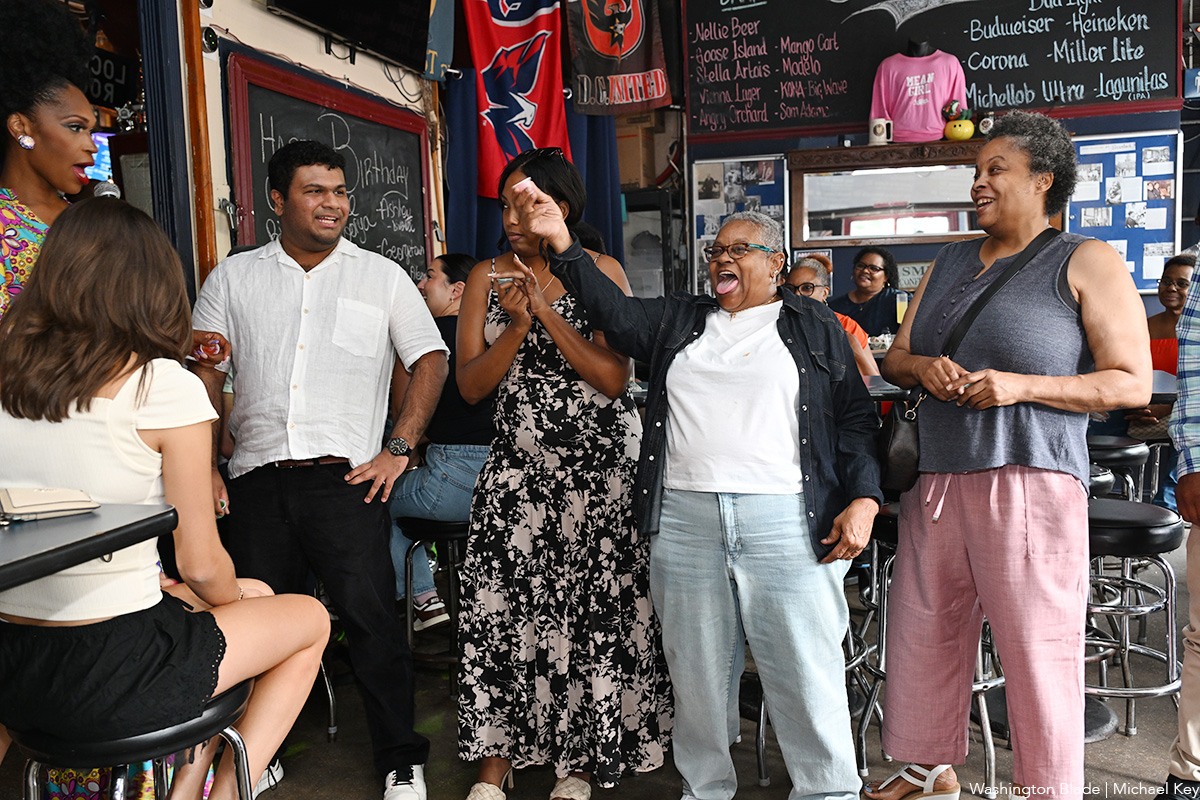
Deja Diamond hosted Nellie’s Drag Brunch on Sunday at Nellie’s Sports Bar.
(Washington Blade photos by Michael Key)






Movies
‘Maddie’s Secret’ defies campy expectations
An over-the-top, old-school melodrama combined with modern satire
Sometimes, when you think you know what to expect from a movie, it doesn’t match those expectations. What do you do then?
I’m not talking about the unmet expectations of fans, like those who complain that Kubrick’s “The Shining” made sweeping changes from Stephen King’s novel, or start a social media campaign trashing the latest “Star Wars” or “Marvel” film because of a plot twist they don’t like. Those are complaints about content, about a story not going the way it is “supposed” to go.
I’m referring to the expectations we have when we walk into a movie thinking that it’s going to have a particular tone, a specific style, a familiar formula – essentially that it is going to easily fit into a comfortable box, and stay there. What happens when it doesn’t?
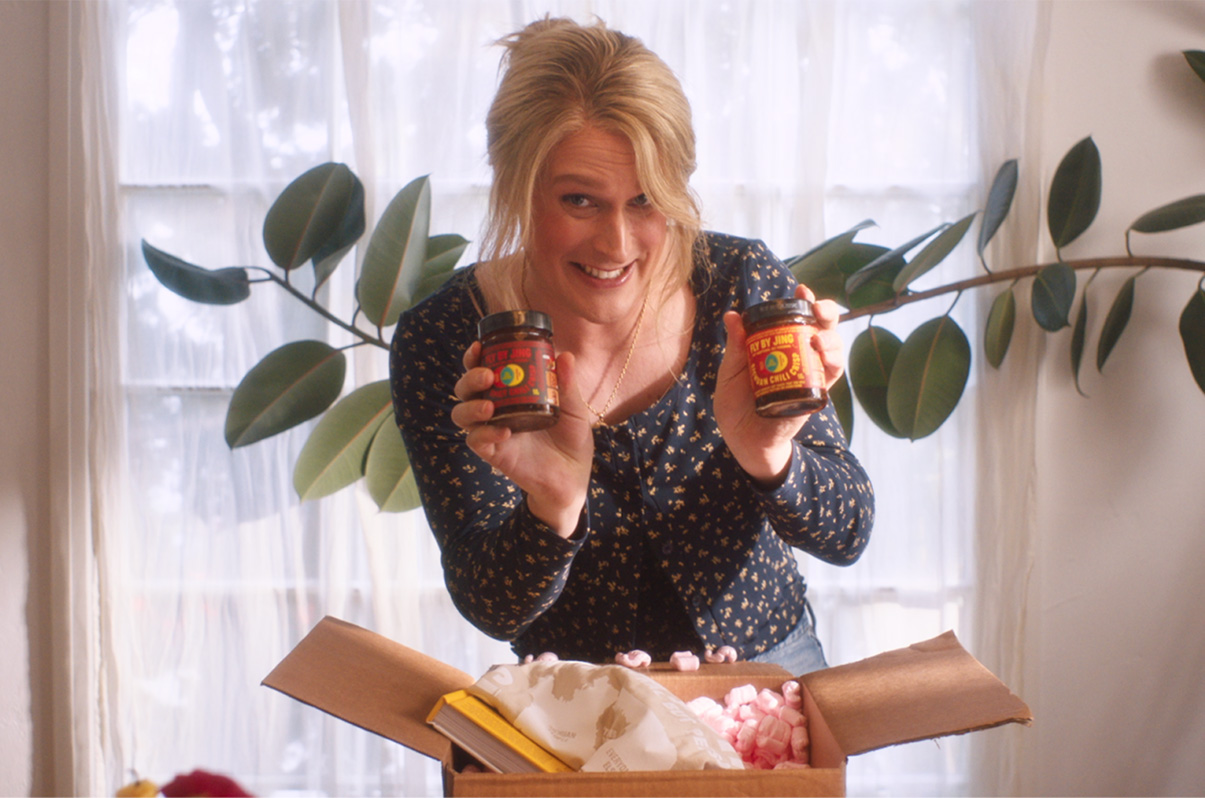
That’s the question I found myself asking as I watched “Maddie’s Secret,” the directorial debut from gay actor/comedian John Early, which is now screening in a limited theatrical release. It’s the story of a humble housewife whose doting husband persuades her to turn her love of cooking into a career as a virally popular “food influencer,” only to find that her sudden success triggers traumatic feelings from her childhood; clearly a contemporized hybrid of the melodramatic “woman’s pictures” of Old Hollywood and the “Afterschool Special” style cautionary dramas of ‘70s/’80s TV, it has all the earmarks of being an exercise in “camp” – especially since Early himself stars as Maddie.
To put it plainly, it’s an over-the-top old-school melodrama combined with modern-day satire of online social media fame, with a gay man in a dress playing the lead. What could be campier than that?
And it is campy, make no mistake. Yet at the same time, somehow, it isn’t. From its opening scene (which shows us Maddie as she jogs to her dishwashing job at the headquarters of an LA test kitchen/content studio named “Gourmaybe”), we expect things to get wacky. The ingredients are definitely present for it, like her aggressively butch co-worker/BFF Deena (Kate Berlant), who is clearly nursing a serious “girl crush”; bitchy TikTok star Emily (Claudia O’Doherty), who demeans her and ridicules her ambitions of being a chef; and boss Zach (Connor O’Malley), a womanizing corporate “bro” who enthusiastically embraces all the toxic traits we associate with that description.
As the story opens up beyond her workplace, there are more elements that feel ripe for the kind of histrionic humor we might expect from a film by John Waters, or the stylish old-school parody of Charles Busch, or even the radicalized sexual transgression of Bruce La Bruce: Maddie’s adorably bearish husband Jake (Eric Rahill) could be made into a goofy caricature with a food fetish, and her estranged, abusive mother Beverlee (Kristen Johnston in a deliciously grotesque performance) is easily monstrous enough to be at the campy center of any “hag horror” from the ‘60s.
And when we finally discover her “secret” (spoiler alert: it’s an eating disorder that returns when the pressures of being a popular social media chef bring up old feelings about her relationship with food), it’s easy to imagine a different filmmaker taking the whole thing in a thoroughly savage direction; the potential for tasteless, excessive, and deliberately juvenile comedy might be limitless, in the hands of a director unafraid of being branded “offensive.”
It’s hard not to see all these possibilities on hand as we watch Early’s film – which he also wrote – and (for myself, anyway) hard not to hope they all play out to maximum outrageous effect.
They don’t. Instead, “Maggie’s Secret” does something so unexpected that it feels, at first, like a mistake: it decides to play things straight.
It’s still a comedy, make no mistake, but it’s not the kind of comedy we think it’s going to be. It doesn’t go for over-the-top anarchy; it doesn’t go for the bitch-slapping catfight between rival divas, or for the running parade of filthy double-entendres, or for the absurd “gross-out” humor that might have emerged from its scenes of binge-and-purge overeating. Well, okay, maybe it does go for that last one, a little bit.
What all this comes down to, perhaps, is that the film gets its laughs – and there are quite a lot of them – without making fun of itself or, more importantly, its characters. The comedy here is built into the story; it comes from its send-up of social media influencers, corporate content creation, media tie-ins, and all the other interlocked microcosms of our “new, now, next” digital culture; it comes from the foibles and fumbles of its characters as they pursue their objectives in the story, from the qualities and quirks of their personalities, from their simply being funny because they feel like being funny; and yes, it sometimes comes from the obvious cliches of form that we recognize, the plot formulas and sudden revelations and shocking twists that have emerged time and time again in these kinds of domestic melodramas, but it does so good-naturedly, in a way that feels like laughing “with” the movie than laughing “at” it.
It also never diminishes or ridicules the seriousness of Maddie’s eating disorder, nor the experiences that come for her when she (spoiler alert, again) ends up going into an inpatient facility to be treated for it; though these later scenes come populated with their own set of stereotypical characters, ready to be exploited, the movie may poke gentle fun, but it humanizes them, too, helping build the film toward an emotional climax that leaves us with the kind of satisfying uncertainty we don’t quite expect from a movie like this one.
Most significantly, perhaps, it never gets its laughs out of the fact that Maddie is being played by a man – and it’s this that makes Early’s film feel more profound than we expect it to be. It’s not a “drag” movie, or a cross-dressing comedy, or anything to do with Maddie’s gender at all. She is a woman, presented without exaggeration or irony, and she just happens to be portrayed by a male actor instead of a female one. There’s no joke involved, just an excellent performance.
This is an apt approach, considering that Early cites Waters’ 1974 “Female Trouble” as his inspiration for “Maddie’s Secret.” Though he sets aside the extremes of that classic in favor of nuance and kindness, he takes his cue from its star – the incomparable Divine, who never called himself a drag queen but considered himself an actor playing a part. Early does the same, and it makes his film into a kind of full-circle moment in queer “underground” cinema (if a premiere at the 2025 Toronto International Film Festival, where “Maddie’s Secret” screened to enthusiastic response, can be called “underground”) which pays homage to the legacy of a past icon while picking up the mantle and carrying it in a new – and unexpected – direction.
That’s the thing about expectations: sometimes they are left unfulfilled – and in answer to my own question, as I watched this uniquely winning queer indie gem, what happens just might be something wonderful.
Books
Bros + romance + fantasy = ‘Bromantasy.’
New book a romp full of humor, dragons, kings, and adventure
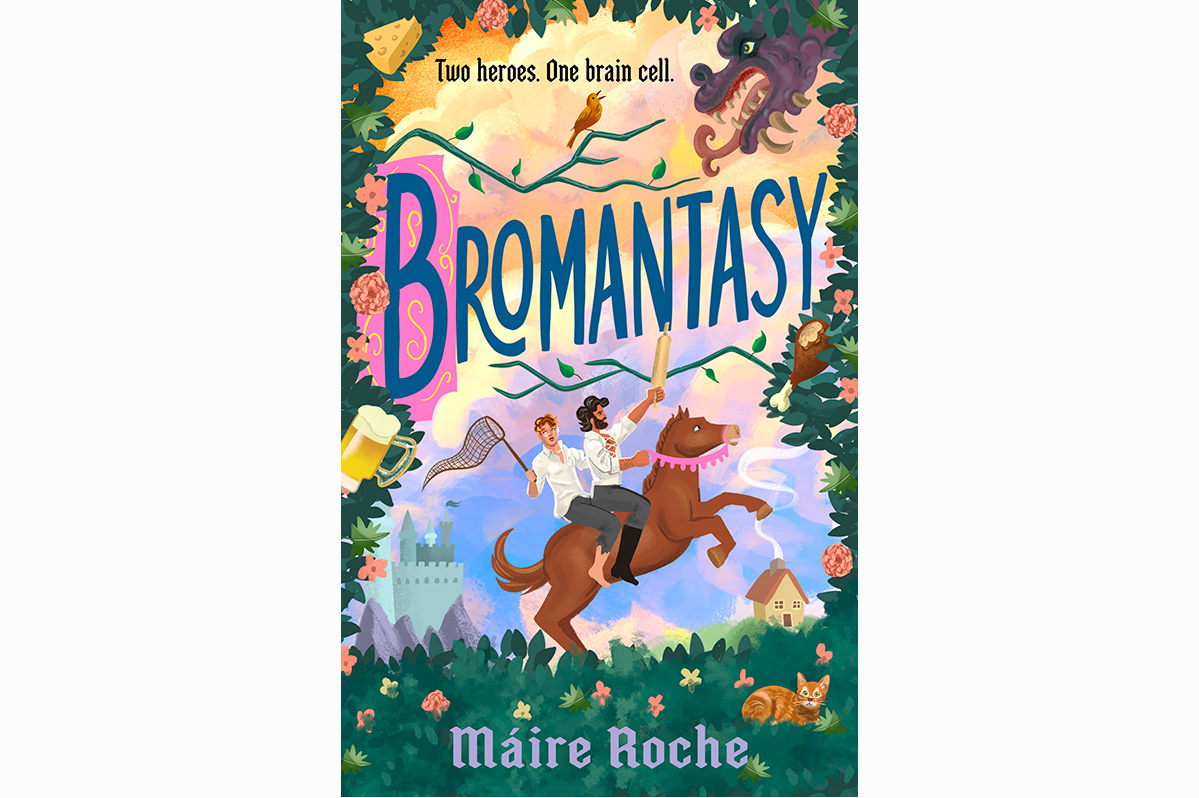
‘Bromantasy’
By Maire Roche
c.2026, G.P. Putnam’s Sons
$20/339 pages
“Danger” just happens to be your middle name.
Any fray, any tussle, anytime anybody needs help, they count on you to step in and save the day. You’re brave, smart and strategic, kind to old people, children, and small animals and, as in the new book “Bromantasy” by Maire Roche, dragons.

Of all the things there were to do – preserving food, keeping house for himself and his best friend Morningthall “Mo” Elmthorn, advanced skincare, and drinking at the local tavern down the road – the one thing Juniper O’Reilly couldn’t resist was a good brawl. It happened so often that Juniper honestly looked forward to it, though Mo wasn’t a fan.
Mo was more grown-up, calm, thoughtful, able, and Juniper loved him for it. He loved Mo, in fact, since they were little boys. He loved Mo in ways that they didn’t talk about, so they kept a wall between their bedrooms in their cottage.
Except for that one time.
They didn’t talk about that, either.
Instead, as they did often, on a warm fall night, Juniper and Mo went to the tavern, where mead was served and they could learn about the king’s weekly quests. There, Juniper could also find a good brawl, which is how he and Mo accidentally got into trouble: Juniper trounced one of the king’s men and was forced into a quest.
He didn’t want to fight dragons and he felt bad that Mo had been dragged along. He felt even worse leaving their farm, sleeping on the ground, wearing the same clothes every day, and not having enough skincare product along. A campfire added to the problem. A roving, lying prince, also in search of dragons, didn’t help. And though a quest was no place for a child, Juniper and Mo found a frightened little girl they had no choice but to protect.
A child with strange eyes, sharp teeth, and fire on her breath.
“And just like that, Juniper and Mo had a dragon.”
Bros + romance + fantasy = “Bromantasy.” It also could equal one of two other things: a romp full of humor, dragons, kings, princes, and adventure.
Or it could equal a whole lot of eye-rolling.
It’s a fact that this book is funny, in the way that a 1980s high school comedy movie is funny – meaning that it’s dippy, giddy, and very caricaturish but you’ll laugh quite often. The story contains everything you want in a fantasy romance (a “romantasy”), including human-like alternate species, a life-changing journey, and plenty of nudge-nudge-wink skirting around the attraction the two main characters have for one another. It’s a decent story, convoluted in just the right way. Purely, it’s an escape.
So why wouldn’t you want to read it? See above, and depending on your favorite reading genre. High-brow literature, this ain’t.
For the right reader, “Bromantasy” is a decent-enough vacation read, something not too taxing or hard on the brain. It’s for novel lovers, dragon hunters, king’s questers, princes, and romantics. For everyone else, this tale is just middling.
The Blade may receive commissions from qualifying purchases made via this post.

Russian LGBTQ rights group to shut down

PHOTOS: Nellie’s Drag Brunch

Remembering Barbara ‘Boo’ Price, a pioneering force in women’s music

‘Maddie’s Secret’ defies campy expectations

Bros + romance + fantasy = ‘Bromantasy.’

Will Michigan save the GOP?

Treat our political opponents as neighbors not enemies

Supreme Court ruled Boy Scouts could exclude James Dale. Now he says that same rule protects LGBTQ scouts from Trump

Beloved pastor, AIDS activist Rainey Cheeks dies at 74

Live music drag cabaret set for Shaw’s Tavern
-

 Opinions5 days ago
Will Michigan save the GOP?
-
Opinions5 days ago
Treat our political opponents as neighbors not enemies
-

 Pentagon5 days ago
Supreme Court ruled Boy Scouts could exclude James Dale. Now he says that same rule protects LGBTQ scouts from Trump
-
Obituary4 days ago
Beloved pastor, AIDS activist Rainey Cheeks dies at 74